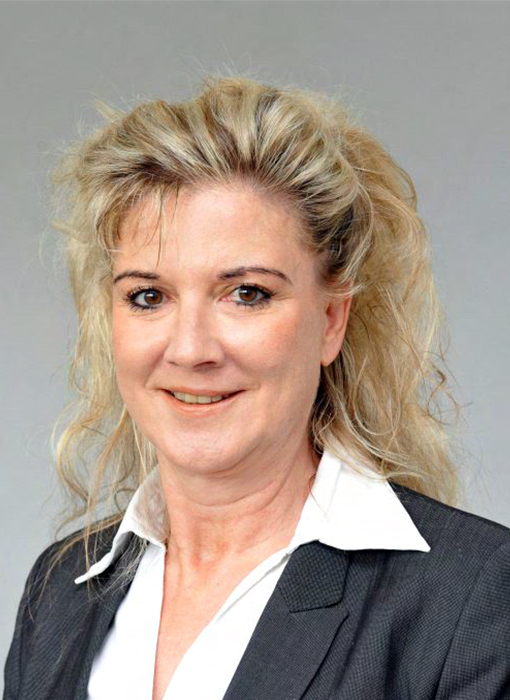
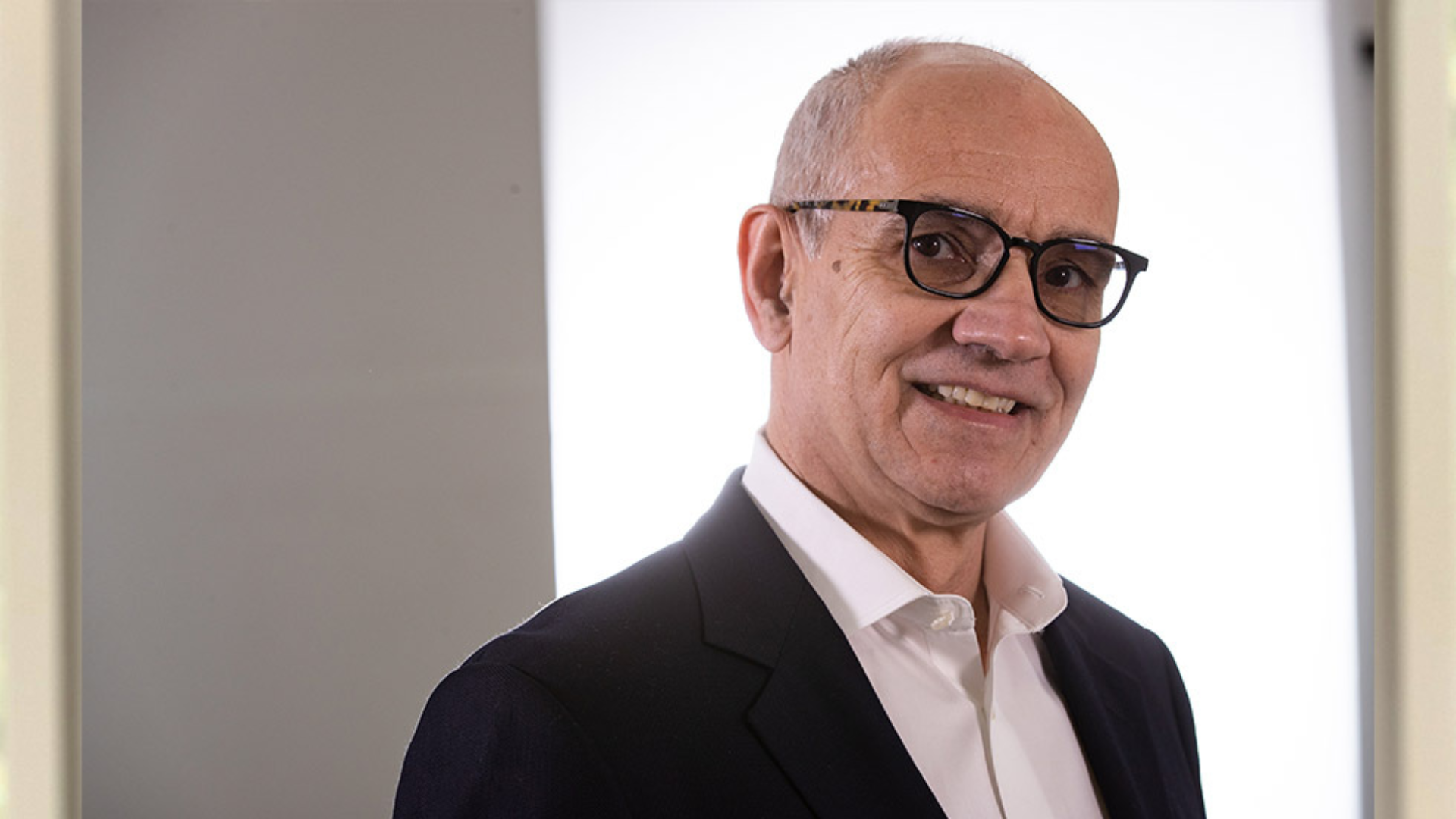
Karim Ahmed is a Principal Lecturer at the Nottingham Trent University within the Nottingham Business School , affiliated with the Department of Strategy, Analytics and Operations . His expertise includes Project Management , Sustainability , and Supply Chain Management , with a focus on practical applications in VUCA conditions and sustainable operations. Dr. Ahmed is a certified Prince2 and Agile PM Practitioner with over a decade of experience in teaching and industry. He leads the MSc Project Management program, emphasizing stakeholder alignment, efficient execution, and innovation in managing complex projects. His research explores the intersection of sustainability, supply chain resilience, and strategic decision-making, particularly in multinational contexts. Recent publications highlight his work on fuzzy logic in sustainability assessment, gamification in education, and multi-criteria decision models for supply chain optimization. Collaborations span institutions like Loughborough and Sheffield, with fieldwork in Egypt, Iraq, and the UK.
Jorge Louçã is a Full Professor in the Department of Information Science and Technology at ISCTE-IUL, where he has been a faculty member since 2000. He is also an Integrated Researcher at ISTAR-Iscte, the Research Center in Information Sciences, Technologies and Architecture, and leads the research group The Observatorium . He holds a PhD in Computer Science and Artificial Intelligence from Université Paris Dauphine and the University of Lisbon, and completed his Aggregation in Complexity Sciences in 2019. PhD in Computing – University of Lisbon & Université Paris-Dauphine (2000) Master’s in Informatique: Intelligent Systems – Université Paris-Dauphine (1995) Aggregation in Complexity Sciences – ISCTE-IUL (2019) His research centers on computational modeling of social systems, focusing on data-intensive analysis of human communication, knowledge generation in large networks, and the dynamics of complex systems. He founded the Doctoral Program in Complexity Sciences and has been instrumental in advancing the field through international collaborations such as the UNESCO Unitwin network for the Complex Systems Digital Campus and participation in the Conference on Complex Systems (CCS/ECCS). The recent publications highlight a strong interdisciplinary focus, combining network science, data analysis, and social theory. Key themes include the modeling of malaria transmission, information diffusion in social media, structural inequality in education, and the dynamics of opinion and popularity. His work often employs agent-based models, temporal network analysis, and entropy-based measures, reflecting a deep integration of computational and theoretical approaches. Research Methods for Doctorate in Complexity Sciences Advanced Topics in Complexity Sciences Data Science Fundamentals Development for the Internet and Mobile Applications Web Interfaces for Data Management Advanced Network Analysis Jorge Louçã has supervised over a dozen doctoral and master’s students, with completed theses on topics such as malaria modeling, information diffusion, temporal networks, and social inequality. His research has been supported by projects like NESS (Non-Equilibrium Social Science in ICT and Economics), reflecting his leadership in interdisciplinary science. He has held significant academic management roles, including Director of the Department of Information Science and Technology and head of multiple degree programs. His work continues to bridge computer science, social science, and policy, positioning him as a key figure in the global complexity science community.
Martin Hilbert is a Professor at the University of California, Davis, jointly affiliated with the Department of Communication and Computer Science. He is a leading scholar in digital technology, algorithmic systems, and computational social science, and chairs the campus’s designated emphasis in Computational Social Science. His work bridges theory and practice, integrating information theory with social science to understand the digital age. Education: Ph.D., Communication, Annenberg School of Communication, University of Southern California, 2012 Ph.D., Economics and Social Sciences, Friedrich-Alexander University Erlangen-Nuremberg, Germany, 2006 Dipl.-Kfm. (Master of Business Administration), Friedrich-Alexander University Erlangen-Nuremberg, Germany, 2003 Professor Hilbert's research focuses on the digital transformation of society, using formal tools from information theory to analyze AI and algorithmic systems. His work spans digital ethics, cognitive biases, and the evolution of communication in networked environments. He is particularly known for his pioneering study on global information capacity and early warnings about algorithmic manipulation in politics. His recent publications reveal a consistent trend of applying information-theoretic frameworks to social and digital phenomena, with a strong emphasis on measuring algorithmic impact, digital inequality, and the interplay between human cognition and automated systems. His work frequently appears in high-impact journals across disciplines, reflecting its interdisciplinary nature. Professor Hilbert has made significant contributions to public policy, having designed the first digital action plan for Latin America and the Caribbean at the United Nations and served as an Economic Affairs Officer for 15 years. His technical assistance has reached over 20 countries and major corporations. He is also an innovator in digital education, with online courses taken by over 100,000 students worldwide. Advising and Grants: Chairs the Designated Emphasis in Computational Social Science at UC Davis Teaches graduate and undergraduate courses in information theory, digital technology, and computational social science Has received research support through academic and policy-oriented grants (specifics not listed) Labs and Teams: He is associated with the Center for Computational Science (C2) and the Center for Science and Society (CSS) at UC Davis, which support interdisciplinary research on digital systems and their societal implications. These centers foster collaboration between computer scientists, social scientists, and policymakers.
Dr. Mirzet Šeho is a Senior Lecturer at the School of Business, Monash University Malaysia, where he contributes significantly to teaching, research, and academic leadership. With nearly fifteen years of combined industry and academic experience, he has established himself as a leading voice in Islamic finance, fintech, and financial economics. He plays a pivotal role in developing innovative fintech curricula that blend academic rigor with real-world industry insights. PhD in Islamic Finance, International Centre for Education in Islamic Finance (2018) Dr. Šeho's research centers on Islamic finance and banking, corporate finance, financial economics, and fintech. His work explores critical issues such as the stability of dual-banking systems, the impact of interest rates on Islamic financial instruments, and the role of finance in energy justice and sustainable development. He actively investigates how diversification strategies influence bank risk and returns, particularly in mixed financial environments. His recent publications, primarily from 2020 to 2024, reflect a strong trend toward empirical and policy-relevant research in Islamic and conventional banking systems. These works frequently appear in high-impact journals such as the Pacific Basin Finance Journal and International Review of Finance , with a methodological emphasis on econometric modeling, including GMM techniques. The interdisciplinary nature of his research is evident in contributions linking finance with energy justice and sustainable development goals. Dr. Šeho has been honored with three major scientific awards: Best Paper Award by the Journal of Muamalat and Islamic Finance Research (2016) Pacific-Basin Finance Journal Best Paper Award (2018) Pacific-Basin Finance Journal Best Paper Award (2019) He is actively involved in academic advising, currently accepting PhD students, and has contributed to research grants and projects through collaborative international research. His academic service includes peer review for journals like Applied Finance Letters and Journal of International Financial Markets, Institutions and Money , editorial responsibilities, and participation in major conferences such as the 14th Financial Markets and Corporate Governance Conference 2024, where he served as both speaker and session chair. Dr. Šeho is affiliated with research networks focusing on Islamic finance and fintech, collaborating with scholars from Malaysia, Bosnia and Herzegovina, and beyond. His work is disseminated not only in scholarly outlets but also through press and media features, demonstrating his commitment to public engagement and policy impact.
Prof. Petra Ahrweiler is a full professor of Sociology of Technology and Innovation at the Johannes Gutenberg University Mainz (since 2013), with a focus on social simulation and innovation policy. She previously served as Director of the EA European Academy for Technology Assessment (2013–2017) and held a professorship at University College Dublin. Her research explores technology-society interactions, innovation networks, and AI ethics, emphasizing participatory approaches and policy modeling. She leads initiatives like the TISSS LAB and Sensorithm Digital Transformation Lab, focusing on AI, climate action, and societal impact. A recipient of fellowships from acatech and AcademiaNet, she also served as ESSA President (2020–2022). Education: PhD in Social Sciences from the Free University of Berlin (on AI), Habilitation from the University of Bielefeld (simulation in science studies). Former roles include research at MIT (USA) and leadership at the Innovation Research Unit (IRU), UCD. Research Interests: Her work bridges sociology and computational modeling, addressing topics like participatory AI, innovation dynamics, and policy simulation. Recent foci include culture-sensitive AI, climate action catalysts, and pandemic response modeling. She co-leads major projects such as AI FORA, CECAN, and PEERE, advancing interdisciplinary collaboration. Awards & Leadership: Acatech and AcademiaNet fellowships, ESSA presidency, and leadership in international research consortia. Her work emphasizes ethical AI, societal engagement, and systemic innovation. Labs & Teams: Core leader of TISSS LAB (Technology Innovation & Simulation Science) and the Sensorithm Lab, which develop adaptive sensor systems and participatory AI tools. Collaborates globally on digital transformation and social simulation.
Vallari Chandna is a Professor of Management and Associate Dean at the Austin E. Cofrin School of Business, University of Wisconsin-Green Bay. She holds a Ph.D. in Organizational Theory (2016) and MBA (2011) from the University of North Texas, along with a BA.LL.B. (Honors) from RSTMN University, India (2007). Her research focuses on strategy, entrepreneurship, and sustainability, with particular interests in digital entrepreneurship, temporary organizations, cybersecurity, degrowth, and inter-organizational relationships. Education: Ph.D. in Organizational Theory, University of North Texas (2016) MBA in Organizational Behavior and Human Resources, University of North Texas (2011) BA.LL.B. (Honors) from RSTMN University, India (2007) Her research has appeared in journals like Journal of Business Research , Technovation , and Business Horizons . She explores topics such as crowdfunding equity, digital ecosystems, and sustainable enterprise frameworks. Vallari actively collaborates with students on research, including co-authoring book chapters and conference papers. Her 2023-2025 publications examine: Gender disparities in crowdfunding Strategic control in organizations Value co-creation in platform ventures Regulatory compliance for crowdfunding Cybersecurity challenges for startups Temporal organization frameworks Notable award: Current Young Professionals of Green Bay Future 15 (2023) for professional and community impact. She contributes to academic governance as former Chair of the Marketing & Management Department (2019-2022), former Chair of the MS-Management program (2019-2022), and active participant in university committees including Faculty Senate. Vallari serves as Associate Editor for the International Journal of Project Management and Productivity Assessment and sits on editorial boards for journals on sustainable entrepreneurship and strategic decision sciences.
Dr. Yusuf AKKOCA, currently a Lecturer at the Faculty of Economics and Administrative Sciences, Kırşehir Ahi Evran Üniversitesi, holds a PhD in Management and Organization from Ankara Yıldırım Beyazıt University (2014-2019) and an MSc from the University of Connecticut (2011-2013). His academic career at Kırşehir Ahi Evran Üniversitesi (2014-present) includes roles such as Research Assistant, Academic Advisor, and committee memberships in EFQM Model and Bologna Process initiatives. Education : PhD (Management and Organization, Ankara Yıldırım Beyazıt University), MSc (USA, University of Connecticut), BSc (Başkent University, Management Information Systems) His research focuses on Organizational Behavior , Strategic Leadership , and Human Resources , with publications analyzing talent management, organizational commitment, and the impact of job stress. His work spans interdisciplinary areas like defensive medicine in healthcare, organizational ethics, and digital transformation in Industry 4.0. Key publications include studies on competitive intelligence mediation (2025), personality traits and organizational commitment (2023), and Taylor's iron casting experiments (2021). Collaborations with scholars like Fatih Ferhat Çetinkaya and Musa Özata highlight his team-oriented research approach.
Desiderio Juan García Almeida is a Professor at the University of Las Palmas de Gran Canaria within the Department of Economics and Business Management . His research focuses on entrepreneurship, tourism management, knowledge transfer, and organizational behavior. He actively collaborates with the GIR Business Organization and Management research group and contributes to European sustainability and education initiatives. Research Interests : Entrepreneurship, Tourism Management, Knowledge Transfer, Hospitality Innovation, Organizational Behavior, Family Business Succession, Sustainable Development Collaborations : Extensive work with José Luis Ballesteros Rodríguez , Pedro Manuel Calero Pérez , and others in hospitality, tourism, and business education Publications : Over 73 publications, including articles in high-impact journals like International Journal of Contemporary Hospitality Management and Journal of Knowledge Management , focusing on knowledge dynamics, tourism entrepreneurship, and organizational growth Projects : Involved in Erasmus+ programs for circular economy education and studies on post-pandemic economic recovery in tourism His work bridges knowledge management with entrepreneurial practices , particularly in island economies and the hospitality sector. He examines how education and experience influence business succession and innovation, and how frontline employees drive change through creativity and motivation. His recent articles explore transgenerational entrepreneurship in the Canary Islands and immigrant entrepreneur knowledge in tourism, while earlier works analyze training transfer, communication quality, and Bologna process adaptations in European business education.
Dr. Julia Hahn is a Scientific Associate at the Karlsruhe Institute of Technology (KIT), working within the Institute for Technology Assessment and Systems Analysis (ITAS) in the Research Group 'Sociotechnical Futures and Policies'. She serves as co-project leader for the 'Participatory Procedures and Processes in Research Organizations' (PaFo) project and leads the HGF project 'Airborne transmission of the SARS coronavirus – from basic research to efficient air purification systems (CORAERO)'. Her work spans across multiple institutions including German Electron Synchrotron (DESY), German Aerospace Center (DLR), and other Helmholtz Association members. Dr. Hahn completed her doctorate in 2019 at KIT's Faculty of Humanities and Social Sciences with her thesis 'Towards a Global Technology Assessment - Insights from Cases in Germany, China, India and Beyond'. She earned her Master's degree in Applied Cultural Studies from Leuphana University Lüneburg in 2010, followed by a research assistant position there before joining ITAS in 2011. Her research focuses on the intersection of technology, society, and governance, with particular emphasis on global technology assessment frameworks. She examines how participatory procedures can enhance technology assessment processes and influence research agendas. Her work explores responsible research and innovation (RRI) from both theoretical and practical perspectives, analyzing how different institutional contexts shape approaches to responsibility in science and technology. Dr. Hahn investigates policy engagement mechanisms that connect scientific knowledge with decision-making processes, particularly during crises and periods of rapid technological change. Her research often addresses the challenges of transnational technology governance in an increasingly interconnected world. Analysis of Dr. Hahn's recent publications reveals strong thematic continuity in technology assessment methodology, with increasing attention to crisis contexts and pandemic response. Her work demonstrates a clear evolution from national to global technology assessment frameworks, with growing emphasis on comparative international studies. The publications show consistent interdisciplinary collaboration across social sciences, engineering, and health disciplines, reflecting her commitment to transdisciplinary approaches. Recent work increasingly integrates digital methods like bibliometric analysis while maintaining strong theoretical grounding in sociotechnical systems theory. Dr. Hahn has been instrumental in several significant projects including 'Piloting RRI in Industry' (PRISMA), 'Responsible Industry', 'Responsible Research and Innovation in Practice' (RRI Practice), and the 'Citizens' Dialogue on Future Technologies'. Her project work demonstrates consistent engagement with both theoretical frameworks and practical implementation of technology assessment methodologies. She has contributed to multiple European collaborative projects including PACITA (Parliaments and Civil Society in Technology Assessment), showing her commitment to strengthening democratic technology governance across borders. As part of her role at ITAS, Dr. Hahn contributes to the institute's mission of conducting integrated technology assessment that provides 'continuous reflection' for research projects, analyzing social, legal, and ethical implications while considering public trust and acceptance. Her work with the globalTA network demonstrates her commitment to international collaboration in technology assessment.
Dr. Wolfgang Eppler is a Researcher at the Institute for Technology Assessment and Systems Analysis (ITAS) at the Karlsruhe Institute of Technology (KIT), where he has been working since 2023. His research focuses on the societal implications of digital technologies, particularly artificial intelligence and digital transformation. Prior to his current position, he served in various leadership roles related to staff representation at KIT and its predecessor institutions. Dr. Eppler received his education at the University of Stuttgart, where he completed his computer science studies from 1980 to 1986. He then worked as a research assistant at the University of Karlsruhe and the Research Center for Information Technology (FZI) from 1987 to 1993, during which time he earned his doctorate on the topic of "Pre-structuring of neural networks with fuzzy logic." Dr. Eppler's research spans multiple domains at the intersection of technology and society. His early work focused on neural networks, fuzzy logic, and their applications in areas such as electronic noses, medical imaging, and high-energy physics data processing. In recent years, his research has shifted toward technology assessment, particularly examining the societal impacts of artificial intelligence, digital transformation, and the governance of emerging technologies. His interdisciplinary approach combines technical expertise with social science perspectives to address complex questions about the role of technology in society. Analysis of Dr. Eppler's recent publications reveals a strong focus on the ethical, governance, and societal implications of artificial intelligence. His 2024-2025 work addresses critical issues such as EU AI regulation, generative AI for technology assessment, the grounding of large language models, and algorithmic bias. This represents an evolution from his earlier technical work on neural networks and data processing systems toward more policy-oriented research that bridges technical and social dimensions of technological change. Throughout his career, Dr. Eppler has been actively involved in institutional governance and staff representation. From 2009 to 2023, he served as Chairman of the Staff Council at KIT, and from 2005 to 2009 as Chairman of the Works Council at the Karlsruhe Research Center. His publications on university governance, particularly regarding the KIT merger and models for democratic science institutions, reflect his practical experience and theoretical interest in participatory decision-making in academic settings. Dr. Eppler is a member of the Research Group "Digital Technologies and Social Change" at ITAS, where he contributes to projects examining the societal dimensions of technological innovation. His interdisciplinary background enables him to bridge technical and social science perspectives in assessing emerging technologies.
Jörg Büechl serves as Professor of Strategy and International Management at ESB Business School, Reutlingen University, where he holds dual appointments as Study Dean for the M.Sc. Business Psychology & Business Transformation program (Graduate School Ostwürttemberg) and for B.A./M.A. Business Studies targeting Small and Medium-sized Enterprises. His academic leadership extends from prior roles including Adjunct Professor of International Business at Tübingen University and Professor of Human Resource Management at Aalen University, alongside industry experience at Daimler Mobility and Robert Bosch. Research centers on cross-cultural organizational dynamics , particularly China-Germany business relations, with seminal work on intercultural trust development between Chinese subordinates and German supervisors. Key thematic pillars include agile transformation in SMEs (examining digitization barriers during crises like COVID-19), family business leadership (analyzing succession through family dynamics), and remote work impacts through Eastern-Western cultural lenses. His methodology emphasizes empirical validation of theoretical models in real-world multinational settings. Publication trends (2021-2025) reveal escalating focus on AI integration in HR processes (2025), China-Africa business ecosystems (2024), and pandemic-driven organizational agility (2022-2024). Over 70% of recent work connects digital transformation with human factors—employee satisfaction, trust mechanisms, and leadership adaptation—demonstrating consistent interdisciplinary bridging of technical and behavioral domains. As Study Dean, Büechl directs academic programming for business transformation curricula while leveraging his China Centrum Tübingen affiliation (where he headed the Competence Cluster for Chinese Business Culture) to infuse global perspectives into German business education. His industry background in post-merger integration and Asian market consulting directly informs applied research on SME competitiveness during disruptive change.
Vince Castillo serves as an Assistant Professor in the Department of Marketing & Logistics at The Ohio State University's Max M. Fisher College of Business, where he bridges academic research with industry applications in supply chain innovation. His work addresses critical modern challenges including last mile delivery optimization, sustainable operations, and AI integration, with media features on NPR's Marketplace and The World from PRX highlighting his practical impact. His academic foundation includes: PhD in Supply Chain Management from the University of Tennessee (2018) MBA in Supply Chain Management and Finance from the University of San Diego (2014) BS in Civil Engineering from the Colorado School of Mines (2006) Dr. Castillo's research portfolio demonstrates exceptional focus on human-centered logistics and resilient supply chains . Key themes include: Technology Integration : Applying AI and simulation modeling to optimize delivery networks and educational frameworks Sustainability Transformation : Developing frameworks for ethical sourcing and carbon footprint reduction Geopolitical Adaptation : Analyzing supply chain vulnerabilities in conflict zones like Ukraine Behavioral Dynamics : Studying driver engagement and customer tipping effects in gig economy platforms His publication trajectory from 2018-2025 reveals accelerating innovation, particularly in generative AI applications for supply chain education and real-time adaptation to geopolitical disruptions. Recent work emphasizes the interdependence of technological solutions and human factors in achieving operational resilience. Professor Castillo actively shapes future supply chain leaders through courses including Logistics Analytics (BUSML 4382), Supply Chain Sustainability and Resilience (BUSOBA 7395), and Building a Sustainable Supply Chain (BUSML 4385). His industry-engaged teaching approach prepares students for complex challenges in e-commerce operations, risk management, and sustainable logistics strategy implementation.
L. Jason Anastasopoulos is an Associate Professor of Public Administration and Policy and Statistics (by courtesy) at the University of Georgia's School of Public and International Affairs (SPIA). He holds dual appointments as a Faculty Fellow at the Benson-Bertsch Center for International Trade and Security (formerly CITS) and a faculty affiliate at the Institute for Artificial Intelligence, with additional affiliation at USC’s Civic Leadership Education and Research Initiative. His research centers on the political economy of technology, investigating how political institutions adapt to technological change and its implications for democratic governance. Key focus areas include AI’s impact on bureaucracy, causal inference methodologies, machine learning applications in social science, historical analysis of democratic backsliding during technological transitions, and the evolving political role of central banks. His methodological work emphasizes Bayesian approaches and computational techniques for improving empirical analysis in political science. Recent publications reveal a dominant trend in integrating artificial intelligence with public administration and political economy, spanning temporal causal inference frameworks, comparative AI governance across sectors, historical technological disruptions (e.g., rural electrification), and algorithmic bias in public services. His work consistently bridges theoretical political science with cutting-edge computational methods, particularly natural language processing and deep learning applications for policy analysis. Dr. Anastasopoulos has mentored eight graduate students across International Affairs, Political Science, Public Administration, and Statistics programs. His advisees include tenure-track professors at Ripon College, University of Florida, and California State University, alongside industry professionals at Lockheed Martin and the Tampa Bay Rays. He actively contributes to interdisciplinary research through leadership roles at the Benson-Bertsch Center for International Trade and Security and UGA’s Institute for Artificial Intelligence.
Jeffrey S. Russell is a Vice Provost for Lifelong Learning, Dean of the Division of Continuing Studies, and Professor of Civil and Environmental Engineering at the University of Wisconsin–Madison. He leads initiatives for lifelong learners, nontraditional students, and online degree programs, including precollege, summer, and international student partnerships. His academic career spans teaching, research, and leadership in construction engineering and project management. Education: Ph.D. and MS in Civil Engineering from Purdue University, BS from the University of Cincinnati. Dr. Russell’s research focuses on construction management , innovative project delivery systems , and construction automation and robotics . His work addresses challenges in project scheduling, resource allocation, and diversity in engineering education. Google Scholar highlights his contributions to out-of-sequence construction analysis, project readiness models, and PM competency frameworks. His publications emphasize agile methodologies , risk mitigation , and data-driven decision-making in construction. These works span themes like project lifecycle optimization , team collaboration , and educational reform . Scientific Awards: ASCE OPAL Lifetime Achievement Award, NSF Presidential Young Investigator, ASEE Glen L. Martin Best Paper Award, and multiple ASCE and NSPE honors. Dr. Russell mentors students and professionals, advocating for lifelong learning and diversity in engineering . He co-founded UW–Madison’s Construction Engineering and Management Program and has received recognition for teaching and leadership, including ASCE’s Distinguished Member and Huber Prize.
Dr. Rick Hackett is a Professor in Human Resources and Management at the DeGroote School of Business, McMaster University, and holds the prestigious Canada Research Chair (Tier 1) in Organizational Behaviour and Human Performance. As a Fellow of the Canadian Psychological Association and a member of McMaster’s Health Leadership Academy, he bridges psychological theory with practical leadership and HRM applications. Research Focus: Executive/managerial assessment and leadership development. HR recruitment, testing, and selection processes. Work attitudes, absenteeism, and performance assessment. Workplace ethics, including regular communication of ethics policies. Healthcare leadership challenges, emphasizing agility, integrity, and systems-wide thinking. Publication Trends: His recent work explores AI in HRM, workplace humor dynamics, HR strategy alignment with business goals, and the psychological underpinnings of tyrannical vs. virtuous leadership. Articles frequently examine moral identity, ethical behavior, and cross-cultural organizational citizenship. Scientific Awards: Canada Research Chair (Tier 1) in Organizational Behaviour and Human Performance. Fellow of the Canadian Psychological Association. Additional Contributions: Former President of the Canadian Society for Industrial and Organizational Psychology. Associate Editor of the Journal of Business & Psychology and former Editor-in-Chief of the Canadian Journal of Administrative Sciences . Consulting for global organizations like IBM China, RCMP, and General Motors on leadership and HRM. Leadership workshops on effective teams and HR resource planning.