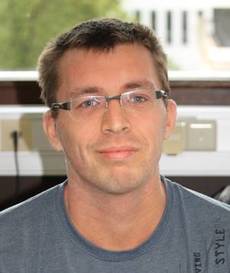
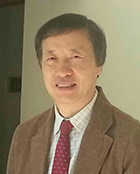
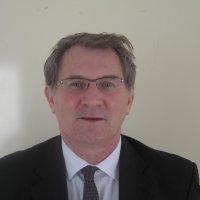
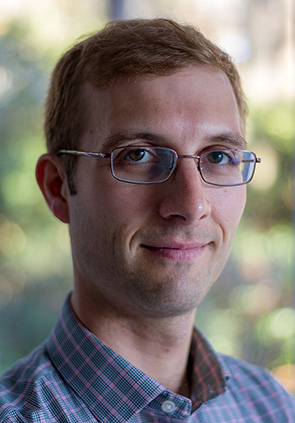
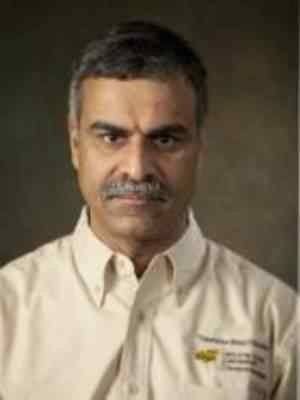
Associate Professor Martin Schäler is part of the Database Research Group at the Department of Computer Science, University of Salzburg. His research focuses on Scientific Data Management, Hardware-sensitive Database Tuning, Time Series Analytics, and Data Provenance. He holds a Dr.-Ing. (PhD) from Otto-von-Guericke University Magdeburg (2014), where he also completed his Master's degree in 2010. Prior to his current position, he was a post-doctoral researcher at the Karlsruhe Institute of Technology's DBIS group (2015-2020). His work emphasizes optimizing database systems through hardware-aware techniques and efficient query processing. Notable contributions include studies on main-memory storage structures, semantic change analysis in text data, and encryption methods preserving distance metrics. He has published in top venues such as IEEE TKDE, VLDB, and ICDE. His academic trajectory includes roles as a research assistant, scientific coordinator, and postdoc researcher before securing his tenure-track position at Salzburg University in 2020. Current research trends show a focus on bridging theoretical database advancements with real-world hardware constraints.
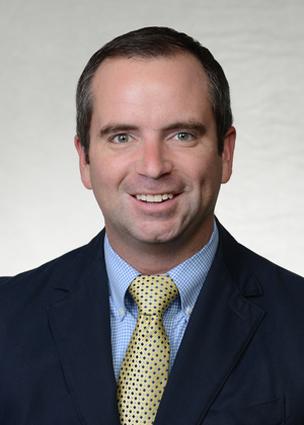
Christoph Koch is an Associate Professor at Technische Universität Wien specializing in databases and artificial intelligence. His research spans database theory, complexity theory, and logic in computer science, with a focus on XML processing, query optimization, and parallel data science techniques. Lead projects: KnowledgeGraph (2020–2028), HINT (2012–2017), Weblearn (2005–2008) Developed the Lixto visual extraction system and contributed to DLV knowledge representation framework Supervised T. Lukasser's diploma thesis on XPath query processing
G.C. Christodoulou, PhD, is a researcher in the Department of Electrical Engineering, Mathematics and Computer Science, focusing on data-intensive systems. His work spans cloud computing, stream processing, and interval data management, with recent publications addressing transactional cloud applications, stateful dataflows, and indexing innovations. Current affiliation: Electrical Engineering, Mathematics and Computer Science (data-intensive systems) Key collaboration networks: University of X, academic institutions in cloud computing Research Interests Christodoulou's research centers on optimizing cloud computing infrastructures and stream processing systems. His studies explore transactional stateful functions, autoscaling mechanisms, and data migration challenges. He also contributes to indexing frameworks for interval data, including hierarchical structures and temporal database efficiency. Article Trends Recent work highlights transactional consistency in cloud applications, dynamic dataflow execution, and scalable interval indexing. His publications emphasize cloud-native architectures, stream processing benchmarks, and temporal query optimization, reflecting a focus on bridging distributed systems with database innovation.
John Bochanski is an Associate Professor of Computer Science & Physics at Rider University, specializing in using large astronomical surveys to study the formation and evolution of the Milky Way galaxy. He is actively involved in major astronomical projects including the Sloan Digital Sky Survey (SDSS) and the Large Synoptic Survey Telescope (LSST) Science Collaborations. His educational background includes a Ph.D. in Astronomy from the University of Washington (2008), an M.S. in Astronomy from the same institution, and a B.S. in Astronomy & Astrophysics from Villanova University, where he graduated magna cum laude. Bochanski's research focuses on galactic structure and kinematics using cool, red stars as tracers. He employs large surveys like SDSS and Gaia to study two key regimes in the Milky Way: using cool red dwarfs to examine galactic structure near the Sun, and utilizing brighter red giants to investigate the distant Milky Way halo. His work is particularly relevant to upcoming surveys with the Nancy Grace Roman Space Telescope and the Vera Rubin Observatory. Supported by the LSST Discovery Alliance in cooperation with Princeton University's Department of Astrophysical Sciences, his research spans stellar kinematics, low-mass stars, and advanced data analysis techniques. His publication record shows a consistent focus on galactic structure, brown dwarfs, and large astronomical surveys, with recent work centered on SDSS-V and Gaia data analysis. The trend in his publications demonstrates increasing involvement in large-scale collaborative projects and data-intensive astronomy. Corporation for Science Advancement - Scialog Fellow (2018) Namesake of Main–belt asteroid 141414 Bochanski (2002 AK205) (2012) MIT Spot Award (2009, 2010) Elected to Phi Beta Kappa (2002) Jason Cardelli Memorial Undergraduate Research Award (2002) National Barry M. Goldwater Scholar (2001) Elected to Phi Kappa Phi (2001) Elected to Sigma Pi Sigma Physics (2000) Bochanski has held positions at multiple prestigious institutions including Rider University, Haverford College, Pennsylvania State University, and MIT. His current research is supported by the LSST Discovery Alliance, indicating significant grant funding for his work. He has mentored numerous students through his position as Program Founder & Director of Computer Science at Rider University since 2016. His technical expertise includes working with the FIRE (Magellan FIRE) spectrograph and developing data analysis pipelines for large astronomical surveys. His work with the Sloan Digital Sky Survey and Gaia mission data places him at the forefront of modern galactic astronomy research.
Samuel Madden is the MIT College of Computing Distinguished Professor and CS Head in the Electrical Engineering and Computer Science (EECS) Department at Massachusetts Institute of Technology. He leads the Systems that Learn Initiative and co-directs both the Data Systems and AI Lab (DSAIL) and the Data Systems Group (DSG) at MIT's Computer Science and Artificial Intelligence Laboratory (CSAIL). Professor Madden's research focuses on database systems, including main memory databases, data warehousing/analytics, querying video data, and machine learning for data systems. His recent projects include Palimpsest (a declarative system for optimizing AI workloads), BRAD (simplifying cloud data processing), self-organizing data containers, and VaaS (Video Analytics as a Service). His work bridges traditional database systems with emerging AI technologies, exploring how learned models can improve data management efficiency. His research has resulted in numerous influential systems including C-Store (column-oriented database), CarTel (mobile sensor network system), BlinkDB (approximate query processing), Silo (main memory transaction processing), and Datahub (versioned data platform). These projects have significantly impacted both academic research and industry database technologies. ACM Fellow (2020) SIGMOD Edgar H. Codd Innovations Award (2024) Multiple 'Test of Time' awards from VLDB, SIGMOD, SIGMOBILE, and SenSys MIT TR35 Outstanding Researcher Under 35 (2005) Sloan Fellowship (2007) NSF CAREER Award (2005) Professor Madden actively advises six current PhD students and has mentored numerous successful researchers who now hold positions at leading universities and tech companies. His lab maintains strong industry connections through the Data Systems and AI Lab, providing students with opportunities to work on real-world data challenges. As Chief Scientist of Cambridge Mobile Telematics and advisor to several database startups, he ensures his research remains grounded in practical applications while pushing the boundaries of database system design. His recent publications demonstrate a clear trajectory toward tighter integration between AI and database systems, with significant contributions in cloud data infrastructure, video analytics, and learned query optimization techniques that are shaping the next generation of data management systems.
Dr. Daniel H. Sandweiss is a Professor at the University of Maine , with appointments in Anthropology , Earth and Climate Sciences , and Global Policy . Holding a Ph.D. from Cornell University (1989) , he specializes in maritime adaptations and climate change impacts on ancient Latin American societies, particularly in Peru . His career spans fieldwork in Peru , Central America , and Cuba , focusing on El Niño prehistory and its global climatic implications. As founder of Andean Past (1987) and former editor of multiple journals, he has led significant academic organizations including the Society for American Archaeology (President-Elect since 2024). His Presidential Recognition Awards (SAA: 2008, 2012, 2019) and 2022 Distinguished Maine Professor title highlight his contributions. He directs Climate Change Institute research and curates at the Hudson Museum . His 2024 publications on El Niño archaeology and shell remains extend his work on coastal adaptations , monumental architecture , and mollusk analysis . Current projects include Holocene upwelling patterns , early maritime settlements , and beach ridge sequences linked to tectonic activity. 2024: U.S. National Academy of Sciences member 2022: Distinguished Maine Professor 2017: University of Maine Presidential Research Award 2016: Rip Rapp Archaeological Geology Award Dr. Sandweiss has served as Dean and Associate Provost for Graduate Studies (2005-2014) and directed the School of Policy and International Affairs . He currently co-chairs the Journal of Archaeology and Education advisory board and leads Phi Kappa Phi (President, 2024). His 1995 book on Túcume pyramids remains a landmark publication.
Eva Zangerle is a Professor at Universität Innsbruck, Austria, with a focus on recommender systems, music information retrieval, and data science. She actively contributes to multi-method evaluation frameworks and collaborative research initiatives like PAN (Plagiarism Authorship Verification) workshops. Key research areas: Recommender Systems Evaluation, Music Emotion Recognition, Authorship Analysis Major collaborations with institutions like Zenodo, ACM, CEUR-WS.org, and RecSys conferences Her recent work explores graph neural networks for music recommendation, style change detection in multi-author texts, and cross-domain user modeling. Articles emphasize temporal modeling, multimodal data fusion, and ethical considerations in algorithmic systems. Eva leads tasks in PAN workshops and contributes to open-access datasets. She collaborates with researchers like Christine Bauer, Alan Said, and Günther Specht on improving evaluation practices in recommender systems.
Jennifer Mapes is an Assistant Professor in the Department of Geography at Kent State University, located in Kent, Ohio. Her research focuses on urban sustainability, global change impacts on local outcomes, and small-town redevelopment, particularly in the context of Kent’s downtown revitalization. She holds a B.A. from SUNY Geneseo (2000), an M.S. from Penn State (2005), and a Ph.D. from the University of Southern California (2009). Her research interests bridge global and local scales, emphasizing how socio-economic and environmental changes affect small cities. She is currently writing a book titled The New American Small Town , drawing on her dissertation research in Western U.S. towns. Her work integrates qualitative methods and GIS tools to explore community dynamics and sustainable development. Recent publications highlight her focus on urban sustainability, GIS applications, and small-town resilience. She has collaborated on projects like Main Street Kent’s downtown map kiosks and the Kent GIS database. Notable awards include the 2017 Volunteer of the Year recognition for community engagement. Her teaching spans Human Geography, Qualitative Methods, and Urban Sustainability. She actively contributes to interdisciplinary initiatives, such as reclaiming urban spaces for sustainability and analyzing voting patterns in small towns through big data.
Arthur Lee is a Research Professor and Chair of the Department of Computer Science at SUNY Korea, a campus of Stony Brook University. He holds a BS, MS, and PhD in Computer Science from the University of Utah and Stanford University. Previously, he held academic roles at Korea University (7 years, 2 years as Chair), University of Utah (5 years), and Claremont McKenna College (12 years, 2 years as Chair). His industry experience includes roles at Sandia National Laboratories, Xerox PARC, Evans & Sutherland, and SAP Labs. Research interests focus on programming languages (object-oriented and dynamic), database systems (main-memory row/column-stores for distributed big data), and data science. He has authored over 35 peer-reviewed publications and delivered 10+ tutorials internationally. Awards include the Keck Endowed Professorship and the 2004 Outstanding Teaching Award. Teaching responsibilities at SUNY Korea include courses such as CSE 114, CSE 214, CSE 305, and advanced graduate courses (CSE 526, CSE 532). He served as Editor-in-Chief of the Journal of the Korea Computer Graphics Society and maintains membership in ACM.
László Szarka is a Professor at the Department of History within the Faculty of Education at J. Selye University in Komárno, Slovakia. He has been serving at the university since 2006 and holds the academic position of Professor. His research focuses on Central European history, national minorities, and political and social developments during the 20th century, with particular expertise in Slovak-Hungarian relations and the historical dynamics of ethnic communities in the region. University: J. Selye University Faculty: Faculty of Education Department: Department of History Position: Professor Email: szarkal@ujs.sk Office: T410 Professor Szarka's academic journey began with his university education at Comenius University in Bratislava, Faculty of Philosophy, where he studied history and Hungarian language and literature (1971-1976). He completed his doctoral studies at the Hungarian Academy of Sciences in Budapest (1992-1995) and obtained his habilitation from Debrecen University in 2007. His scholarly credentials include the titles Dr. habil. and CSc., reflecting his significant research contributions. His research interests center on three main areas: Slovak and Hungarian social and political history during the dualism period; national movements in Eastern and Central Europe in the 19-20th centuries; and nation states and national minorities in Central Europe between the two World Wars. His scholarly approach combines historical analysis with examination of political and social dynamics that shaped ethnic relations in the region. Professor Szarka has made significant contributions to understanding the complex interactions between majority and minority populations in Central Europe, particularly regarding Hungarian minorities in Slovakia. His publication record is extensive, with 168 scholarly outputs documented in the CREPČ2 database and 196 citations. His recent work has focused on nationalism, historical memory, and ethnic relations in Central Europe, including the 2023 publication 'Nationalisms in Action: The Great War and Its Aftermath in East Central Europe' and the 2024 work 'Ťažké dedičstvo spoločnej uhorskej minulosti.' His research shows a consistent pattern of examining how historical events and policies have shaped contemporary ethnic relations and national identities in the region. Member of Hungarian Society of History Teachers (since 1996) Member of Central European Cultural Society (since 1998) Co-chair of Hungarian-Slovak Historical Commission (2000-2014) Member of Hungarian-Slovak Historical Commission (since 2014) Member of international editorial boards for multiple historical journals Vice-president of Hungarian Historical Society (since 2010) Member of European Network of Remembrance and Solidarity (2014-2019) Professor Szarka has led and participated in numerous research projects funded by VEGA, Horizon2020, and other national and international funding agencies. His current projects include 'Reformovaná kresťanská cirkev na Slovensku v rokoch socializmu (1948–1989)' (2020-2023) and 'Inclusion4Schools. Partnerstvo školy a komunity na zvrátenie nerovnosti a vylúčenia' (2020-2025). These projects reflect his ongoing commitment to examining historical and contemporary issues related to ethnic relations, minority rights, and educational inclusion in Central Europe.
Blair C. Armstrong is an Assistant Professor in the Department of Psychology at the University of Toronto, with undergraduate and graduate appointments at its Scarborough and main campuses, respectively. He is also an Affiliated Researcher at the Basque Center on Cognition, Brain, and Language (BCBL). His research focuses on cognitive and neural mechanisms in word comprehension and semantic memory, particularly ambiguous word processing, cross-linguistic differences, and integration of computational modeling with empirical methods (e.g., behavioral and electrophysiological techniques). He develops tools like Chronset (speech onset detection), eDom (homonym dominance ratings), and SOS (stimulus optimization), often involving Python and MATLAB scripts for data processing. Scientific contributions include databases such as UNION (merged SUBTL and CMU Pronunciation Dictionary) and EsPal (Spanish lexical norms). His work emphasizes open-source software under GPL and Creative Commons licenses to advance psycholinguistic research methodologies.
Dr. Tanya Beaulieu is an Associate Professor of Management Information Systems at the University of Maine's Maine Business School. She holds a Ph.D. from Washington State University and has over 20 years of industry experience in software development and consulting. Her research focuses on online communities, crowdfunding, and technology's role in entrepreneurship. Dr. Beaulieu has been recognized with awards including the 2024 Carol B. Gilmore Memorial Service Award and the 2023 Extraordinary Service Award from SIG GTM. She serves on editorial boards for Information Systems Research and previously led Journal of the Association for Information Systems as Managing Editor. Her educational background includes a Ph.D. in Management Information Systems (2015), complemented by professional certifications in software development. She teaches courses focused on information systems and technology for business applications. Dr. Beaulieu's research spans digital transformation challenges in rural business, post-data breach customer behavior, and cryptocurrency media narratives. Her work frequently addresses intersections between technology adoption and human behavior in both academic and corporate contexts. Dr. Beaulieu has secured grants for online course development and research initiatives, demonstrating her commitment to innovative educational practices. Her invited presentations include discussions on blockchain technology and visualizing computer-mediated conversations. Her professional service includes conference organizing roles and peer review activities in top journals like MIS Quarterly and Journal of Computer Information Systems .
Prof. Veit Köppen holds the Professorship for Library Science - Technologies, Systems and Services at the University of Applied Sciences Potsdam (since 2023). He previously served as Director for Digital Development and Network Affairs at the Central and State Library of Berlin (2020-2023), and held leadership roles in IT and academic research at institutions like Otto von Guericke University Magdeburg and Humboldt University Berlin. His research focuses on database technology, data management, business process optimization, and library information systems. Notable contributions include work on multi-dimensional index structures, learning analytics metadata models, and FAIR data principles. He chairs the Departmental Council and represents library interests at Potsdam. His expertise spans digital transformation, data warehousing, and privacy-preserving systems. Over 50 peer-reviewed publications reflect his interdisciplinary impact across library science, computer science, and business informatics.
Prakash Ramanan is a Professor at the School of Computing within the College of Engineering at Wichita State University. His research focuses on algorithms, distributed computing, database systems, and XML processing. He holds an office at 208 Jabara Hall on the university's main campus. His academic interests include parallel algorithms, MapReduce frameworks, computational complexity, and query processing in XML databases. His work spans theoretical algorithm analysis to practical implementations in distributed systems. Ramanan's publications emphasize algorithmic efficiency, lower bounds analysis, and optimization techniques. His recent work addresses MapReduce-based matrix multiplication and XPath query evaluation over XML streams. Earlier contributions include foundational studies on tree patterns, join operations, and parallel computing. No scientific awards or grants are explicitly listed in the provided information. He currently advises no listed students or supervisees. His research activities involve collaborations in distributed systems and database query optimization.
Clément Pit-Claudel is an assistant professor at École Polytechnique Fédérale de Lausanne (EPFL) in the School of Computer and Communication Sciences, Department of Computer Science. He leads the SYSTEMF lab which he founded in January 2023. Prior to joining EPFL, he was a PhD candidate at MIT with Adam Chlipala and subsequently worked as a senior applied scientist at Amazon AWS. His academic journey began at École Polytechnique in France, followed by doctoral studies at MIT. Dr. Pit-Claudel's research focuses on programming languages, compilers, and formal verification, with broader interests spanning systems engineering, hardware design languages, security, performance engineering, databases, and type theory. His work centers around three main axes: extensible compilation (teaching compilers domain-specific optimization tricks), hardware design languages and verification, and tooling for proof assistants. He has developed several influential systems including Elk (a linear-time engine for JavaScript regexes), Warblre (a Coq translation of JS regex specification), Fiat (a library for correct-by-construction refinement), Narcissus (for verified binary encoders/decoders), F2F (a program extraction framework), Rupicola (a compiler-construction toolkit), Kôika (a rule-based hardware design language), Cuttlesim (a fast hardware simulator), and Alectryon (a literate programming system for Coq). His publications span top venues including PLDI, POPL, ICFP, ASPLOS, and SLE, with recent work focusing on verified JavaScript regular expressions, foundational integration verification of cryptographic servers, and relational compilation techniques. His research aims to build small, fast, and completely verified components for critical systems through a combination of machine-checked proofs, hardware-software co-design, low-level compiler engineering, and new tools for interactive theorem proving. His notable awards include the Distinguished Artifact award at SLE 2020 for 'Untangling Mechanized Proofs,' the William A. Martin Memorial Thesis Award from MIT in 2016, and the Frederick C. Hennie III Teaching Award from MIT in 2016. He has served on program committees for numerous conferences including PLDI, POPL, ICFP, and SPLASH, and has organized workshops such as the Coq Workshop and Proof Systems. As an educator, he teaches 'Software Construction' (undergraduate level, ~400 students) and 'Interactive Theorem Proving' (graduate level) at EPFL. His teaching philosophy emphasizes hands-on learning, continuous assessment through oral examinations, and designing assignments that lead students to build concrete artifacts they can be proud of. His approach is informed by hundreds of hours of in-class instruction in Europe and the US, resulting in stellar student reviews and multiple teaching awards.