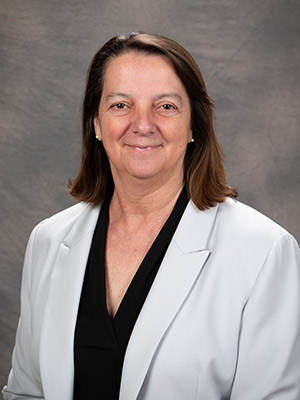
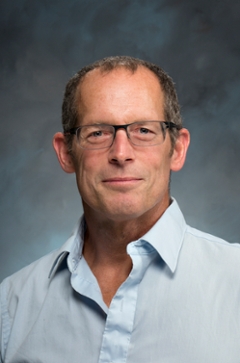
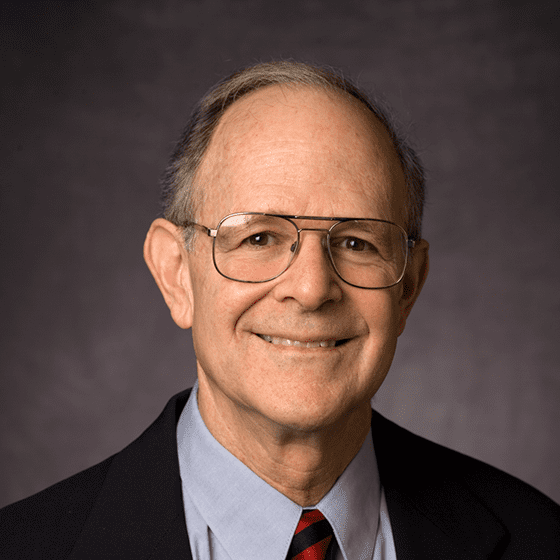
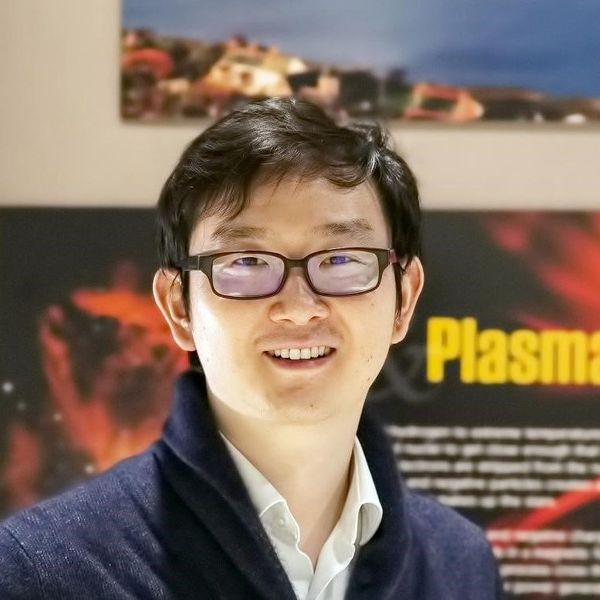
Julie M. Schoenung is Wofford Cain Chair III and Professor in Materials Science & Engineering and Mechanical Engineering at Texas A&M University. A National Academy of Engineering member, her research develops advanced materials including high-entropy ceramics through innovative synthesis and additive manufacturing techniques. She leads investigations into sustainable materials development for circular economy applications.
Gilbert 'Rip' Collins is the Tracy Hyde Harris Professor of Mechanical Engineering and Physics at the University of Rochester, holding dual appointments in the Hajim School of Engineering & Applied Sciences and the Laboratory for Laser Energetics (LLE). He also serves as Associate Director of Science, Technology and Academics at LLE, Distinguished Scientist at LLE, and Director of the NSF-funded Center for Matter at Atomic Pressures (CMAP). His research focuses on extreme states of matter, including planetary interiors, high-energy-density plasmas, and thermonuclear fusion processes. Collins earned his PhD in 1989 from Ohio State University. His work leverages facilities like the Omega Laser at LLE to recreate astrophysical conditions, exploring topics such as phase separation in giant planets, quantum matter at atomic pressures, and laboratory astrophysics experiments. He collaborates globally to advance understanding of exoplanet structure, stellar evolution, and fusion energy control. Key affiliations: Laboratory for Laser Energetics, Center for Matter at Atomic Pressures (CMAP), Omega Laser Facility Research highlights: Hydrogen-rich superconductors, planetary core dynamics, radiation-dominated plasmas Leadership roles: HED Experiments Group Lead at LLE, co-director of international collaborations His team includes graduate students and scientists investigating topics ranging from collisionless shocks to exoplanet mass-radius relationships. Collins’ contributions bridge fundamental physics with applied energy research, supported by grants from the NSF Physics Frontier Center and other national agencies.
Jesse Liu is an Assistant Professor of Physics at the New York University College of Arts & Science , joining in Spring 2025. He collaborates with the ATLAS Experiment at CERN and leads the NYU Experimental Particle Physics group. Research Interests: Liu's work bridges fundamental particle physics and detector innovation. He investigates Tau-lepton electromagnetic dipoles via photon collisions at the LHC High-luminosity LHC silicon tracker upgrades Dark matter searches through collider experiments and the BREAD axion detection project Cosmic ray physics using ATLAS data Recent Publications focus on tau magnetic moment measurements, detector thermal stress mitigation, and cosmic ray signature analysis. His work has been featured in Phys. Rev. D , Phys. Rev. Lett. , and JINST . Outreach & Mentorship: Liu actively engages in public science communication through Pint of Science talks The Conversation articles School visits to CERN First-gen student mentorship at NYU CU*iP Contact: Office at 726 Broadway, Room 852, New York City. Email: jesse.liu2@nyu.edu
David A. Hammer is the J. Carlton Ward, Jr., Professor of Nuclear Energy Engineering and Professor of Electrical and Computer Engineering at Cornell University's College of Engineering. He has been a faculty member since 1977 and has held visiting positions at Imperial College London, Applied Materials, Inc., and the Paris Observatory. His work bridges nuclear engineering, plasma physics, and electromagnetics. His research focuses on high energy density plasmas generated by pulsed power systems, particularly through wire explosions, X-pinches, and gas-puff Z-pinches. Key areas include inertial confinement fusion, magneto-Rayleigh-Taylor instabilities, and plasma diagnostics using visible and X-ray spectroscopy, laser-based methods, and electro-optical instruments. He also explores the application of X-pinch radiation for biomedical radiography. His recent publications reveal a strong emphasis on Z-pinch and hybrid X-pinch dynamics, plasma turbulence, magnetic field diagnostics using Faraday rotation and Zeeman splitting, and the development of advanced imaging and spectroscopic techniques. His work frequently involves the COBRA pulsed-power generator and addresses fundamental questions in plasma stability, implosion dynamics, and radiative collapse. Distinguished Career Award, Fusion Power Associates Board of Directors (2018) Cornell College of Engineering Teaching Award (2006, 1998) Cornell IEEE Professor of the Year Award (2006) McCormack Advising Award (2005) IEEE Plasma Science and Applications Committee Award (2004) Hammer has advised numerous graduate students and led experimental campaigns involving plasma diagnostics, liner implosions, and laboratory astrophysics. His work is supported by grants from agencies interested in fusion energy, plasma science, and advanced diagnostics. He has developed innovative platforms, including 3D-printed plasma loads, to study turbulent plasma jets and magnetization. His lab at Cornell is a key facility for high-energy-density plasma research. He leads a research group focused on plasma diagnostics and pulsed power experiments, operating the COBRA generator and developing novel measurement techniques. His team investigates plasma instabilities, magnetic field generation, and the transition from radial implosions to collimated jets, with implications for both fusion and astrophysics.
Chuanfei Dong is an Assistant Professor of Astronomy at Boston University's College of Arts & Sciences and of Electrical and Computer Engineering at the College of Engineering. His research focuses on understanding plasma physics and its applications to space science, planetary atmospheres, and fusion energy. Dong joined BU in January 2023 after working as a staff scientist at the Princeton Plasma Physics Laboratory. Education: B.S. in Space Science from University of Science and Technology of China M.S. in Earth and Atmospheric Sciences from Georgia Institute of Technology M.S.E. in Nuclear Engineering and Radiological Sciences from University of Michigan M.S. in Planetary and Space Sciences from University of Michigan Ph.D. in Scientific Computing from University of Michigan Research Interests: Dr. Dong's research spans multiple disciplines within space physics and plasma science. His primary interests include Star-Terrestrial Planet Interactions in our Solar System and beyond, magnetic reconnection and turbulence phenomena, wave-particle interactions in space plasmas, and applications of physics-informed machine learning to plasma problems. He also investigates high-intensity laser-plasma interactions with applications to fusion energy research. His work bridges the gap between theoretical plasma physics and observational space science, with particular focus on planetary atmospheres, solar wind interactions, and exoplanet habitability. Dong's interdisciplinary approach combines computational modeling, observational data analysis, and theoretical frameworks to address fundamental questions in space physics. Research Trends: Dong's recent publications demonstrate a strong focus on applying advanced computational techniques to space plasma physics problems. His work spans solar system bodies including Earth, Mars, Mercury, and the Moon, with increasing attention to exoplanet systems. A notable trend is the integration of machine learning approaches with traditional plasma physics modeling, particularly for complex phenomena like Landau damping and magnetic reconnection. His research has significant implications for understanding atmospheric evolution, space weather, and potential habitability of planetary bodies. Scientific Awards: DOE Early Career Research Award (2023) - $875,000 grant for plasma turbulence research Alfred P. Sloan Research Fellow (2024) Metcalf Travel Award Advising and Grants: Dr. Dong mentors undergraduate research assistants and plans to expand his research group with the support of his DOE Early Career Award, which will fund a graduate student and postdoctoral researcher. His research is supported by the Department of Energy and has connections to NASA missions including MAVEN (Mars) and BepiColombo (Mercury). Dong is also involved with the Mauve telescope project as BU institutional PI. His work has been featured in numerous media outlets including Phys.org, Science Daily, and German TV program zdf/3sat. Labs and Teams: Dr. Dong leads a research group focused on computational plasma physics at Boston University. He collaborates with researchers at Princeton Plasma Physics Laboratory and is involved with multiple NASA missions. His team develops advanced computational models to simulate space plasma phenomena, with particular expertise in magnetohydrodynamics (MHD), particle-in-cell methods, and physics-informed machine learning approaches. Dong is also affiliated with BU's Hariri Institute for Computing.
Roman Samulyak is a Professor in the Department of Applied Mathematics and Statistics at Stony Brook University. He holds a Ph.D. from NJIT in Applied and Computational Mathematics with specializations in Hydro- and Electrodynamics. His research develops advanced numerical algorithms for modeling complex physical systems in high-energy physics and fusion energy. Research spans computational methods for magnetohydrodynamics, plasma physics, nuclear fusion/fission systems, and particle accelerator design. Current applications include disruption mitigation in tokamaks and laser-driven particle acceleration. Recent publications demonstrate strong focus on plasma-based accelerators and fusion reactor modeling, particularly pellet ablation dynamics, laser wakefield acceleration, and MHD simulations of tokamak plasmas. Research utilizes high-performance computing resources for large-scale simulations. Office location is Math Tower 1-108 at Stony Brook University.
Bhuvana Srinivasan is a Professor in the Department of Aeronautics and Astronautics at the University of Washington, directing the PLASMAWISE Laboratory. Previously, she held the rank of Associate Professor and served as Director of the Plasma Dynamics Computational Laboratory at Virginia Tech, supported by the Crofton Faculty Fellowship. Her research focuses on fusion energy, plasma-based propulsion, and computational plasma physics, with an emphasis on plasma-material interactions and instabilities across diverse plasma regimes. She has authored over 30 peer-reviewed publications and secured grants from the NSF, DOE, and AFOSR. Education: Ph.D. in Aeronautics and Astronautics, University of Washington (specializing in computational plasma physics) M.S. in Aeronautics and Astronautics, University of Washington B.S. in Aerospace Engineering and Mechanical Engineering, Illinois Institute of Technology Research Interests: Her work spans fusion energy concepts, plasma propulsion systems, high-energy-density plasma instabilities, and ionospheric dynamics. Key areas include plasma-surface interactions in fusion devices, magnetic field effects on plasma mixing, and algorithm development for fluid-kinetic models. She emphasizes high-fidelity multi-fluid simulations using discontinuous Galerkin methods. Awards & Recognition: NSF CAREER Award (2019-2024) Crofton Faculty Fellow (Virginia Tech, 2021-2023) Dean’s Outstanding Assistant Professor (Virginia Tech, 2017) Amelia Earhart Fellowship (Zonta International, 2007-2009) Advocacy & Leadership: She chairs DEI initiatives in academic departments and serves on national committees including the DOE Fusion Energy Sciences Advisory Committee and the APS Division of Plasma Physics Executive Board. Her work bridges computational plasma physics with societal impact, including fusion energy democratization and space exploration propulsion systems.
Georg Stadler is a Professor of Mathematics and Computer Science at New York University's Courant Institute. His research focuses on computational inverse problems, uncertainty quantification, and PDE-constrained optimization, driven by applications in climate modeling, geophysics, and plasma physics. He holds a PhD from the University of Graz (2004) and has been recognized with awards including the Gordon Bell Prize (2015) and the SIAM Computational Science & Engineering Best Paper Prize (2019). Education: Ph.D. (Dr.), Mathematics, University of Graz, Austria, 2004. M.S. (Mag.), Mathematics, University of Graz, Austria, 2001. M.S., Mathematics and Geometry Education, Graz University of Technology and University of Graz, 2001. Research Interests: Large-scale PDE solvers, Bayesian inverse problems, extreme event probability estimation, and optimization under uncertainty. Applications in climate (sea/land ice, tsunamis), plasma physics (fusion), and computational earth science (mantle flow, plate tectonics). Recent Research Trends: His work emphasizes scalable algorithms for high-dimensional Bayesian inverse problems, with applications to tsunamis, stellarator coil design, and ice sheet dynamics. Recent articles highlight advancements in extreme event probability estimation and robust multigrid solvers for incompressible Stokes equations. Awards: Gordon Bell Prize (2015) for extreme scalability of implicit solvers. SIAM Best Paper Prize (2019) for computational science contributions. Young Scientist ASCINA Award and Springer CSE Prize (2011). Advising & Grants: Current PhD student Sonia Reilly and former advisees include Chen Li and Shanyin Tong. His research is supported by NSF, ONR MURI, and the Simons Foundation. He co-leads the Computational Mathematics and Scientific Computing Seminar at Courant. Labs & Collaborations: Active in Courant’s interdisciplinary groups, focusing on high-performance computing and inverse problems. Collaborates with institutions like UT Austin on mantle dynamics and fusion energy projects.
Matthew R. Edwards is an Assistant Professor of Mechanical Engineering at Stanford University, affiliated with the School of Engineering. His research focuses on high-power lasers and plasma physics, developing optical diagnostics for fluids and plasmas, and exploring light-matter interactions. He holds a PhD and prior degrees from Princeton University in Mechanical and Aerospace Engineering, followed by a Lawrence Fellowship at Lawrence Livermore National Laboratory. Education : PhD in Mechanical and Aerospace Engineering, Princeton University (2019) MA in Mechanical and Aerospace Engineering, Princeton University (2015) BSE in Mechanical and Aerospace Engineering, Princeton University (2012) Research Interests : Edwards' work bridges mechanical engineering and plasma physics, emphasizing ultrafast laser-plasma interactions, plasma-based optical components, and applications in energy science. His lab, the SAPPHIRE Laser Laboratory, explores femtosecond laser technologies for creating novel optical elements (e.g., plasma gratings, holographic lenses) and advancing laser-driven particle acceleration, fusion research, and diagnostic tools. Key areas include: Design of plasma-based optical components for high-power laser control Simulation of laser-matter interactions at relativistic intensities Development of compact light and particle sources Research Trends : His recent articles (2024–2025) highlight advancements in plasma gratings, relativistic birefringence, and laser wakefield acceleration. Notable contributions include ionization-based compression of ultrafast laser pulses and polarization control in underdense plasmas. Awards/Grants : No awards explicitly listed, but his Lawrence Fellowship indicates prior recognition. His work aligns with grants in plasma physics and laser technology. Labs/Teams : He leads the SAPPHIRE Laser Laboratory , collaborating with the PULSE Institute and National Ignition Facility (NIF) on plasma optics and high-energy laser applications.
Dr. Ian Abel is an Associate Research Scientist at the Institute for Research in Electronics & Applied Physics (IREAP) at the University of Maryland, where he has been since 2018. His expertise spans fusion energy, plasma physics, and computational modeling. Abel holds a B.A. in Mathematics (2006) and M.S. in Applied Mathematics (2007) from the University of Cambridge, followed by a Ph.D. in Theoretical Physics from the University of Oxford (2012). His research focuses on magnetically confined fusion systems, particularly edge dynamics in tokamaks and innovative centrifugal mirror concepts. He has contributed to the development of gyrokinetic simulation tools like the GX code and the MaNTA transport model. Abel’s work also explores machine learning applications in plasma turbulence analysis and centrifugal mirror fusion reactor design for space propulsion. His research leverages advanced numerical methods, including GPU-native algorithms and adjoint-based optimization techniques for plasma equilibria. Key projects include the Centrifugal Mirror Fusion Experiment (CMFX), where he investigates plasma confinement and transport phenomena. His publications emphasize interdisciplinary approaches, integrating computational fluid dynamics, statistical physics, and high-performance computing to address challenges in fusion energy and plasma dynamics. While no specific awards are listed, his contributions to gyrokinetic turbulence modeling and centrifugal confinement systems are central to current fusion research.
Wilson Miller serves as Associate Professor of Radiology and Medical Imaging within the Department of Radiology and Medical Imaging at the University of Virginia School of Medicine. His research bridges advanced medical imaging physics with clinical pulmonary and neurological applications, maintaining active collaborations across radiology, pulmonology, and neurosurgery departments. Dr. Miller's research program centers on two transformative domains: hyperpolarized gas MRI for pulmonary disease characterization and focused ultrasound for neurological interventions. In pulmonary imaging, he pioneers hyperpolarized xenon-129 and helium-3 MRI techniques to map regional lung function in COPD, asthma, and lung transplantation, identifying novel imaging biomarkers for early disease detection and treatment monitoring. His neurological work develops focused ultrasound protocols for blood-brain barrier opening to enhance therapeutic delivery for cerebral cavernous malformations and brain tumors, with recent publications demonstrating lesion regression and improved drug penetration. Analysis of his 2023-2025 publications reveals accelerating integration of molecular techniques with imaging, particularly transcriptomic analysis of rejection in lung transplants and immune response mapping in glioblastoma. His work increasingly emphasizes multimodal assessment combining hyperpolarized gas MRI with histological and molecular validation, while maintaining a secondary research thread in spin-polarized fusion physics for energy applications. Scientific Awards: No specific awards documented in source materials Dr. Miller actively mentors graduate students and postdoctoral researchers within the Medical Imaging PhD program, though individual advisee names were not provided in source texts. His research program likely operates through NIH-funded R01 grants from the National Heart, Lung, and Blood Institute (NHLBI) and National Institute of Neurological Disorders and Stroke (NINDS), supported by collaborative infrastructure from the University of Virginia's Radiology Research Division. His laboratory operates advanced 3T MRI systems with hyperpolarized gas delivery capabilities and preclinical focused ultrasound platforms, collaborating with the UVA Brain Immunology and Glia Center and Lung Repair and Regeneration Consortium. Current projects include developing AI-enhanced analysis of hyperpolarized gas MRI for COPD endotyping and optimizing microbubble parameters for focused ultrasound-mediated drug delivery to brain lesions.
Edison P. Liang is the Andrew Hays Buchanan Professor of Astrophysics at Rice University, where he has served since 1991. Previously, he held positions at Stanford University, Michigan State University, and Lawrence Livermore National Laboratory (LLNL), where he led research groups in plasma physics and astrophysics. His research focuses on relativistic plasma physics, high-energy density physics, laser-plasma interactions, and high-energy astrophysical phenomena. He earned his BA (1967) and PhD (1971) in Physics from UC Berkeley, supported by the UC Science Fellowship and Anthony Scholarship. Key professional milestones include: Recipient of the British SRC Senior Visiting Scientist Fellowship (1974) Co-founder of the High Energy Density Laboratory Astrophysics (HEDLA) conference series Contributor to major NAS and SAUUL reports on High Energy Density Physics Organized over a dozen international astrophysics conferences Current research emphasizes computational modeling of relativistic plasmas, laboratory astrophysics, and antimatter creation using intense lasers. His group collaborates on both theoretical and experimental projects, with active involvement in HEDP applications to fusion, gamma-ray generation, and medical physics. Recent studies include relativistic jet dynamics, magnetic reconnection mechanisms, and shock-driven particle acceleration processes. Awarded over 300 peer-reviewed publications and conference proceedings, Liang is a Fellow of the American Physical Society and holds honorary memberships in Sigma Xi and Phi Beta Kappa. His group advises current graduate students Kyle Perez and Brandon Cage, with notable alumni including Guy Hilburn and Yingchao Lu. Research infrastructure includes advanced computational simulations and collaborations with national labs like LLNL.
Alan Kaptanoglu is a Professor leading the Plasma Physics Group at New York University's Courant Institute. His research focuses on the intersection of applied mathematics, scientific machine learning, and nuclear fusion. He develops theoretical and computational tools for plasma modeling, control, and optimization in complex dynamical systems. Key areas include stellarator design optimization, machine learning-driven MHD simulations, and reactor-scale plasma confinement solutions. His work advances fusion energy research through innovations in magnetic field shaping, coil optimization, and data-driven modeling of plasma behavior. Research interests span plasma turbulence analysis, magnetohydrodynamics, and the application of physics-informed neural networks (PINNs). He explores how magnetic geometry influences plasma stability and turbulence using machine learning techniques. His team addresses challenges in fusion reactor design, such as minimizing Lorentz forces in electromagnetic coils and optimizing permanent magnet configurations for stellarators. Recent work emphasizes data-driven methods for discovering interpretable models in fluids and plasmas, including reduced-order modeling and sparse regression approaches. He collaborates on projects like the DIII-D tokamak and ITER, advancing fusion energy solutions through interdisciplinary computational and experimental efforts. His group's contributions bridge plasma physics with advanced mathematics and machine learning to tackle grand challenges in energy and astrophysical systems. Advising and grants are not explicitly detailed in the provided texts, but his leadership role suggests active mentorship in graduate research. The NYU Plasma Physics Group serves as a hub for cutting-edge research, hosting internships, summer schools, and collaborations with industry/academic partners.
Mark Koepke is the Robert C. Byrd Professor of Physics at West Virginia University, affiliated with the College of Arts & Sciences. He specializes in plasma physics, with a focus on space plasma processes, nonlinear dynamics, and dusty plasma phenomena. His research bridges laboratory experiments and space/astrophysical systems, addressing plasma wave instabilities, fusion energy, and plasma-material interactions. Research Interests: His work investigates plasma instabilities in space and laboratory settings, including velocity-shear-driven instabilities, stationary inertial Alfven waves, and nonlinear dynamics. He explores applications in fusion energy, atmospheric pressure plasmas, and granular charging in industrial systems. His experiments utilize devices like the WVU Q-machine and collaborate with facilities such as the DIII-D National Fusion Facility and SLAC. Key Contributions: His studies validate theoretical models of space plasma dynamics, with applications to auroral ionospheres and magnetic confinement fusion. He has pioneered techniques like the magnetically insulated baffled probe for plasma diagnostics and contributed to understanding ion-cyclotron waves and periodic pulling phenomena in driven oscillators. Awards and Honors: Recipient of prestigious fellowships from the Institute of Physics (UK), American Physical Society, and Japanese Society for the Promotion of Science. He has held visiting positions at institutions like Oxford and Imperial College London, and chaired committees for organizations like the American Physical Society and the DOE. Advising and Collaborations: Collaborates globally on projects involving plasma diagnostics, fusion energy, and astrophysical plasma analogues. His work integrates experimental, computational, and theoretical approaches, with contributions to both fundamental plasma physics and applied technologies like plasma-based material processing. Labs/Teams: Leads experimental plasma physics research at WVU, using the Q-machine and other devices. Collaborates with international teams at facilities like UCLA’s Large Plasma Device, SLAC, and the National Energy Technology Laboratory.
Lukas Graber is an Associate Professor and Sutterfield Family Early Career Professor at Georgia Tech's School of Electrical and Computer Engineering (ECE). His primary affiliations include the Plasma and Dielectrics Laboratory, focusing on high-voltage engineering, superconductivity, and cryogenic systems. He holds a Ph.D. and M.S. from ETH Zurich (2009 and 2002), with postdoctoral and research faculty experience at Florida State University's Center for Advanced Power Systems. His technical expertise spans gas-insulated switchgear, superconducting power cables, and high-speed mechanical switches. Key research areas include dielectric materials for supercritical fluids, fault current limiters, and insulation coordination for power systems. He has authored/co-authored 40+ publications and holds multiple patents in energy-related technologies. Research interests emphasize commercialization of novel energy technologies, with a focus on cryogenic electronics and eco-friendly alternatives to SF 6 . Notable awards include the ETG Innovation Prize (2010) and Electrosuisse Best Paper Award (2009). His work integrates fundamental research with applied engineering solutions for naval, aerospace, and grid systems. Labs/Teams: Director of the Georgia Tech Plasma and Dielectrics Laboratory, collaborating on projects like the TESLA Breaker and cryogenic link systems for aircraft propulsion. Active in IEEE and the Cryogenics Society of America.