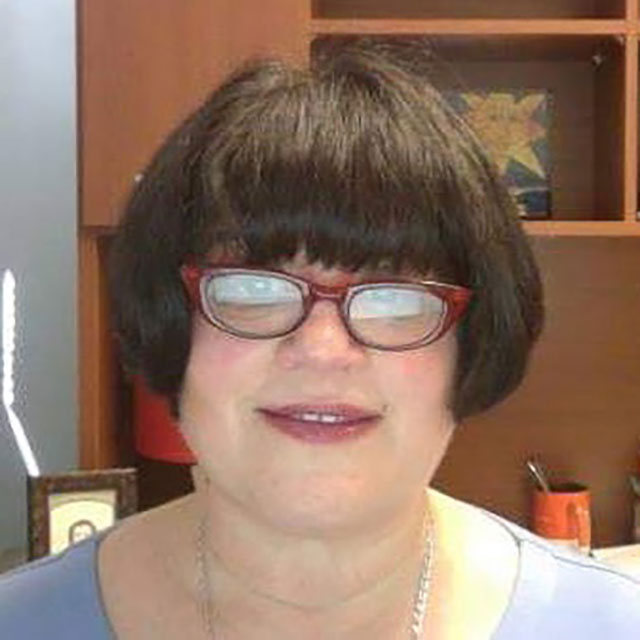
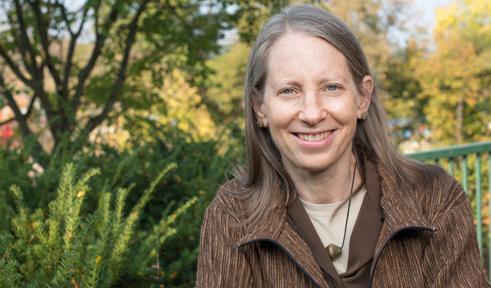
Linda Curcio-Nagy is an Associate Professor of History at the University of Nevada, Reno, specializing in colonial Mexican history. Her work focuses on cultural and religious dimensions of 16th-17th century Mexico. She teaches courses on Latin American history, ethnohistory, and religion. Education: B.A. in International Affairs & Latin American Studies, George Washington University M.A. in Hispanic Literature (Latin American Poetry/Prose) Ph.D., Tulane University (1993) Research Interests: Explores cultural identity formation through religious practices and festivals in colonial Mexico. Current projects include analyses of masculinity, magic, and inquisition dynamics. Her book Grave Sins of Sensuality in Colonial Mexico is nearing completion. Teaching & Awards: Recipient of prestigious teaching awards including the Alan Bible Award and Edward Liewen Prize. Teaches courses ranging from Aztec history to women's roles in Latin America. Courses include HIST 228, 344, 347, and capstone seminars on religion and gender. Grants & Projects: Directed Tulane's Summer in Mexico program and Latin American Curriculum Resource Center. Active in curriculum development and resource curation for Latin American studies.
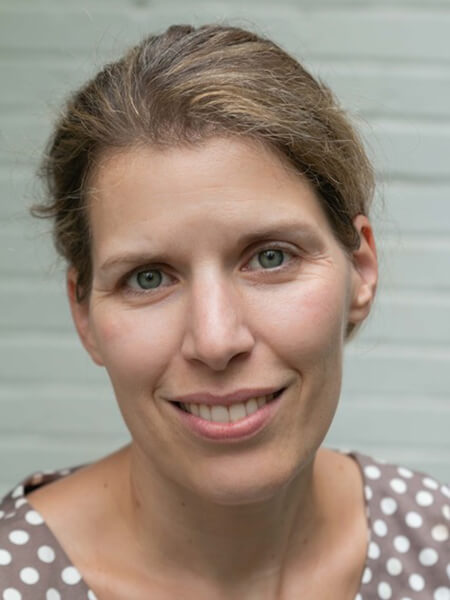
Dr. Monika Amsler is a Senior Research Assistant in the Department of Ancient History and the Classical Tradition at the University of Bern's Institute of History. Her research focuses on the intersection of late antique religious texts, medical practices, and literary culture, with a particular emphasis on the Babylonian Talmud and intertextuality. She explores topics such as Talmudic medical recipes, magical practices, and the material culture of late antiquity, including incantation bowls and manuscripts. Her work bridges disciplines like religious studies, medical history, and book culture, analyzing how knowledge was constructed and transmitted across textual and ritual practices. She actively reviews scholarly works, contributing to debates on comparative religion, critical theory, and queer methodologies in religious studies. Key research areas include the analysis of Talmudic legal texts, the role of magic in household medicine, and the interplay between imperial discourse and magical language. Her publications highlight innovative approaches to understanding late antique epistemology and the dynamics of textual communities. Office: Unitobler, Muesmattstrasse 45, Room D 404.
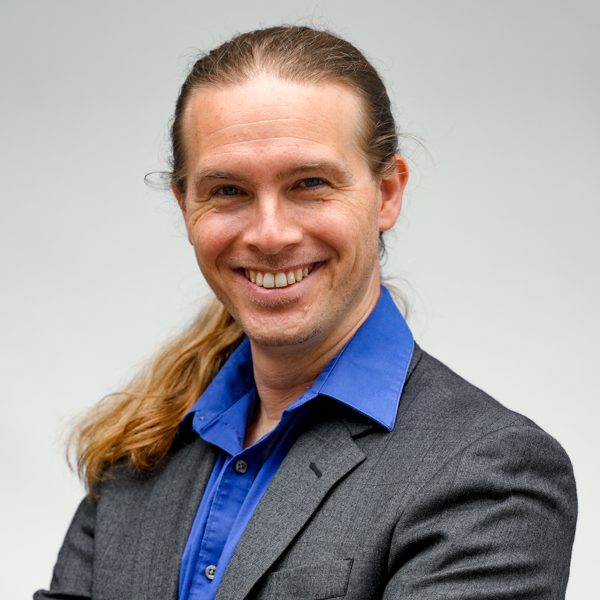
Dr. Maxwell Paule is an Associate Professor of Ancient and Classical Studies at Earlham College. He teaches Latin, courses on ancient magic, Greek theater, and film, and maintains a TikTok presence (@profmaxwell) discussing antiquity and academia. His research critiques modern misinterpretations of ancient Greece/Rome, particularly in media, emphasizing how these narratives reflect contemporary biases. Educated at Oberlin College (B.A.), The Ohio State University (M.A., Ph.D.), he focuses on classical reception in modern culture. Education: Ph.D., The Ohio State University M.A., The Ohio State University B.A., Oberlin College Research Interests: Dr. Paule examines myths about antiquity propagated in social media, such as claims about Roman contact with the Americas or Plato’s athletic prowess. He critiques latent white supremacy in works like Percy Jackson , interrogates ancient witchcraft in Roman texts, and explores pedagogical innovations like gamifying Latin instruction. His book Rome isn’t Real , co-authored with students, challenges popular historical inaccuracies. Advising & Grants: Collaborative research with four Earlham students on his book project. Active in Society of Classical Studies and Antiquity in Media Studies . Labs/Teams: Leads a research team focused on classical reception studies, integrating student contributions to academic projects and public-facing critiques of historical misrepresentations.
Bradley K. Storin is an Associate Professor of Religious Studies at Louisiana State University, jointly appointed in the Department of History and affiliated with Classics. He serves as Undergraduate Advisor for Religious Studies and Director of the Master of Arts in the Liberal Arts Program. His research focuses on late antique Christianity (100-600 CE), particularly religious cultures, hagiography, and patristic literature. Education: B.A. in Classics and Religious Studies, University of Texas at Austin (2003) M.T.S., Candler School of Theology at Emory University (2005) Ph.D. in Religious Studies, Indiana University (2012) Research Interests: History of early Christian thought and institutions Epistolary culture of the Cappadocian Fathers Hagiographical narrative strategies Syriac monastic literature Late antique asceticism and violence Recent Scholarship Trends: Recent work emphasizes textual analysis of late antique religious texts, particularly focusing on how violence, identity, and authority are constructed in hagiographic and epistolary traditions. His edited volumes reflect a commitment to making foundational early Christian texts accessible through new translations and critical apparatuses. Awards: 2023 Manship Summer Research Fellowship 2017 Tiger Athletic Foundation Teaching Award 2016 LSU HSS Nicholson Award Teaching & Academic Leadership: Teaches courses on early Christianity, theories of religion, and interdisciplinary liberal arts. Oversees the MA in Liberal Arts Program, integrating humanities and social sciences. Active in curriculum development for interdisciplinary religious studies programs.
Emma Quilty is a Research Fellow at Monash University's Centre for Excellence for the Elimination of Violence Against Women (CEVAW), focusing on technology-facilitated violence and gendered aspects of technology design. She holds a PhD in Social Anthropology and has affiliations with the ARC Centre of Excellence for Automated Decision-Making and Society. Her work bridges feminist science studies, critical technology analysis, and climate justice, with notable contributions to understanding gender dynamics in automated systems (e.g., the 'Pod Man' concept). Education: PhD in Social Anthropology 1st Class BA Honours Research Interests: Emma's interdisciplinary research explores how technology intersects with gender, race, and power. She critically examines automated decision-making, trust in AI, and the entanglement of climate action with colonial histories. Her book Witch Power: Hexing the Patriarchy with Feminist Magic (2025) redefines witchcraft as a feminist resistance movement. She also co-authored Can We Trust Technology? (2025), addressing ethical dilemmas in tech design. Grants & Projects: Principal Investigator for the 2024 TFGBV Train the Trainer Evaluation project in Fiji ARC Linkage Project on Net Zero Precincts, leading ethnographic fieldwork Contributor to the Future Automated Mobilities project, producing reports and a nominated film She’s Not Alone Labs/Teams: Active in CEVAW and the Future Automated Mobilities research group at Monash.
Dr. hab. Maciej Münnich, prof. KUL is a Professor at the John Paul II Catholic University of Lublin , affiliated with the Faculty of Humanities and the Department of Ancient, Byzantine and Medieval History . His academic work bridges ancient Near Eastern studies and contemporary Middle Eastern political analysis. Academic Leadership: Editor-in-Chief of Scripta Biblica et Orientalia (2009-2024), organizer of 17 national conferences, and manager of multiple NCN/MNISw-funded projects. Research Trajectory: Specializes in Ugaritic rituals, biblical archaeology, and modern security dynamics of the Middle East, with a focus on Saudi Arabia and non-state actors. Publications demonstrate interdisciplinary expertise: peer-reviewed books on Ugaritic texts (2024), journal articles analyzing ancient divination (2023) and political reforms (2019), and conference contributions on topics from Mesopotamian homosexuality (2021) to contemporary geopolitical challenges (2025). His Resheph - god of the ancient Orient (2011) and Czy istniało królestwo Dawida? (2014) have become reference works. Scientific Recognition : 2011: Inner Reward 4th Degree Individual Award 2008: European Association of Biblical Studies member Public Engagement: Regular contributor to Defence24 and Gość Niedzielny , with popular science articles on topics like Aleppo's destruction (2016) and Iron Age agriculture (2011). Organized 9th Lublin Science Festival (2011) and participated in radio interviews on ancient history.
Prof. Dr. Soham Al-Suadi is a full Professor of New Testament at the Faculty of Theology, University of Rostock , a position she has held since July 2017. She has held leadership roles including Dean of the Faculty of Theology (2021–2023), Pro-Dean, Study Dean, and head of the interdisciplinary Department 'Knowledge - Culture - Transformation'. She is currently a university senator. Her academic journey includes assistantships at Wuppertal and Bern, and interim professorships at Vienna and Rostock. Education: Master of Theology, University of Basel (2008) Dr. theol., University of Basel (2010) – Dissertation: Essen als Christusgläubige – die Heterotopie paulinischer Mahlgemeinschaften Habilitation, University of Bern (2015) – Inspiration und Auslegung – Synchron-literarische Motivinterpretation vom Geist inspirierter Rede im Lukasevangelium Her research interests span New Testament exegesis , particularly the Pauline letters and Gospels, ritual studies (meals, baptism), gender studies , and digital humanities . She leads the DFG-funded project GenderVarianten , which examines gender constructions in textual traditions using digital and interdisciplinary methods. She promotes data literacy and computational theology through her 'Greeks, Geeks and Gender' forum. Her publications reflect a strong interdisciplinary trend, combining theology, social sciences, and digital tools. She has edited volumes on early Christian meals, rituals, emotions, and digitalization. Her recent work explores ritual dynamics, digital exegesis, and the ethics of textual transmission. Scientific Contributions: Co-founder of the Rostock Network with Richard DeMaris and Richard Ascough, organizing annual conferences on ritual in early Christianity. Host of international visiting fellows such as Eric Stewart (Mare Balticum Fellow 2023) and Richard DeMaris . Advocate for open science and digital education in theology. She has advised on and contributed to numerous collaborative research projects and publications, particularly in the areas of ritual, emotion, and digital theology. She has no listed awards in the provided text. She is actively engaged in interdisciplinary research teams and leads initiatives at the intersection of theology and computer science.
Liliana Leopardi is an Associate Professor of Art and Architecture and serves as Chair of the Art and Architecture department at Hobart and William Smith Colleges in Geneva, NY. She holds a Ph.D. in Art History from the Institute of Fine Arts at New York University (2007), with additional graduate training in Psychology. Her academic career includes prior appointments as Assistant Professor at Chapman University and the University of Georgia’s Cortona Summer Studies Abroad program. Ph.D., Art History, Institute of Fine Arts – N.Y.U., 2007 M.A., Art History, Institute of Fine Arts – N.Y.U., 2000 M.A., Psychology, California Graduate Institute, 1995 B.A., Psychology, University of Southern California, 1992 Her research centers on Renaissance visual culture, with a focus on magic, material culture, ornament, and the healing properties of gems (lithotherapy). She investigates how sensory experience, gender, and symbolic meaning intersect in early modern art and artifacts. Her scholarship bridges art history, medical humanities, and cultural studies, particularly in the context of magical and devotional objects. The trend in her publications reveals a sustained engagement with Renaissance perceptions of the body, materiality, and the occult. Her work frequently analyzes engraved gems, amulets, and treatises on lapidary science, situating them within broader frameworks of gender, power, and sensory aesthetics. She has contributed significantly to understanding the cultural significance of ornament and the psychological dimensions of Renaissance art. Her notable scholarly awards and recognitions include peer-reviewed publications with major academic presses such as Penn State University Press, Routledge, and De Gruyter. She is an active member of the College Art Association, the Renaissance Society of America, the American Association for Italian Studies, and Societas Magica. Leopardi has advised numerous student projects through independent studies and honors theses in Art History. She has taught a wide array of courses, including Introduction to Western Art , Michelangelo, Bernini and Caravaggio , Love and Death in Ancient Egypt , and Renaissance Women and Men: Constructing Gender in the Renaissance . Her teaching emphasizes visual analysis, historical context, and interdisciplinary inquiry. She has contributed essays to museum exhibition catalogues, including works for the Hobart and William Smith Davis Gallery and the Castelvecchio Museum in Verona. Her public scholarship includes educational writings for ContextTravel.com and Rick Steves’ travel guides, demonstrating a commitment to making art history accessible beyond the academy.
Dr. Carine van Rhijn is an Associate Professor in Medieval History at Utrecht University's Faculty of Humanities, Department of History and Art History. She serves as Head of Medieval History and is affiliated with the Humanities Research Institute for History and Art History. Her scholarly work focuses on the cultural history of the early medieval period, with particular expertise in manuscripts, local religious practices, knowledge systems, and beliefs. Her research interests span Medieval History, Early Middle Ages, Carolingian Period studies, Medieval Manuscripts, Pastoral Care, Medieval Religions, Cultural History, Divination Practices, and Archaeology. Dr. van Rhijn has established herself as a leading scholar on Carolingian religious reforms, particularly examining how these reforms were implemented at the local level through priests and pastoral care. Her work often explores the intersection of religious authority, local knowledge, and everyday practices in the early medieval world. Analysis of her recent publications (2023-2025) reveals a consistent focus on medieval knowledge systems, particularly divination practices, prognostication, and the cultural significance of manuscripts. Her research demonstrates a strong interest in how religious reforms, particularly during the Carolingian period, were experienced and adapted at the local level. She frequently examines the relationship between official religious doctrine and local practices, with special attention to how priests functioned as knowledge brokers in early medieval society. Dr. van Rhijn has made significant contributions through her monograph Leading the Way to Heaven: Pastoral Care and Salvation in the Carolingian Period (2022) and her edited volume Rethinking the Carolingian Reforms (2023). She has also co-edited important works including Men in the Middle: Local Priests in Early Medieval Europe (2016) and Religious Franks: Religion and Power in the Frankish Kingdoms (2016). As Senior Lecturer and Head of Medieval History, Dr. van Rhijn plays an active role in teaching and academic leadership at Utrecht University. Her scholarly approach combines meticulous manuscript study with broader cultural analysis, offering nuanced perspectives on how religious reforms were implemented and adapted in local contexts during the early medieval period.
Scott Bryon Noegel is a Full Professor at the University of Washington, affiliated with the Department of Near Eastern Languages and Civilization, Jewish Studies Program, Comparative Religion Program, and History Department (Adjunct). His work bridges ancient Near Eastern studies, Egyptology, and biblical scholarship, with a focus on literary devices like wordplay, dream interpretation, and religious symbolism. He has held leadership roles including Chair of his department (2006-2015) and co-founded the Seattle chapter of the American Research Center in Egypt. Education: Ph.D. in Near Eastern Studies from Cornell University (1994), M.A. in Hebrew and Assyriology (1993), B.A. in Hebrew Studies and History (1989) His research spans ancient magic, divination, and interdisciplinary approaches to Near Eastern texts, reflected in over 200 presentations and collaborations. Key projects include the Okeanos digital resource and co-edited volumes on Afroasiatic linguistics. His articles reveal patterns in dream exegesis, poetic repetition, and cross-cultural religious motifs. Scientific Awards: 2016 Honorary Ph.D. in Letters (University of Wisconsin) 2007 Crossdisciplinary Conversation Award (Simpson Center) 2006 Course Development Award (UW Jewish Studies) Multiple NEH and state arts grants He actively engages public audiences through lectures, media appearances, and digital humanities initiatives, while serving on editorial boards and as co-editor-in-chief of Religion Compass .
Tola Rodrick serves as an Assistant Professor at the University of Alabama at Birmingham in the Department of History within the College of Arts and Sciences. Her academic work focuses on the late ancient Mediterranean and early medieval world, with particular expertise in religious and social history. Education: B.A. from University of California, Berkeley M.Litt. in Philosophy from University of St. Andrews M.A. in Religious Studies from Duke University Ph.D. in History and Religious Studies from Indiana University Dr. Rodrick's research explores the construction of identity and socialization processes within competing social groups in late antiquity, with special attention to gender-related strategies for negotiating transitions between social groups. Her work examines cultural competition in group dynamics and amplifies historically marginalized voices within ancient contexts. She specializes in the intersection of philosophical education and religious practices, particularly examining how traditional philosophical educational practices influenced early monastic training in Egypt. Her current book project, Beginning the Philosophical Life: The Earliest Stages of Monastic Training in Late Ancient Egypt , investigates the initial steps of monastic training and socialization in fourth- and fifth-century Egypt, highlighting connections to traditional philosophical educational practices throughout the Roman Empire, including spiritual exercises and other elements of identity construction. Dr. Rodrick maintains regular office hours on Wednesdays from 2:45-3:45 p.m. in Heritage Hall 360K and can be reached at (205) 934-8695.
Laura Nasrallah is the Buckingham Professor of New Testament Criticism and Interpretation at Yale University, with a joint appointment in the Department of Religious Studies. Her research integrates New Testament studies with archaeology, focusing on early Christian rituals, material culture, and their intersections with colonialism, gender, and power dynamics. She holds affiliations with Yale’s Divinity School and collaborates with institutions like Harvard University Press and Mohr Siebeck. Her major works include Ancient Christians and the Power of Curses (2024), analyzing ritual objects through Black artistic frameworks; Archaeology and the Letters of Paul (2019), contextualizing Paul’s letters through archaeology; and Christian Responses to Roman Art and Architecture (2010), examining early Christian engagement with imperial spaces. She co-edits volumes on Thessaloniki and Cyprus, blending archaeology with religious studies. Her publications (2003–2021) address topics like curse tablets, Paul’s socio-economic contexts, and early Christian responses to Roman aesthetics. She pioneered the HarvardX online course on Paul’s letters, emphasizing digital pedagogy. Current projects include a 1 Corinthians commentary and studies on ancestral justice and envy.
Louise Nyholm Kallestrup is a Professor in the Department of Culture and Language at the University of Southern Denmark (SDU). She is an internationally recognized scholar in early modern European history, with a focus on witchcraft, religious authority, and state formation in Denmark and Italy. Her research bridges Scandinavian and Mediterranean historical contexts, particularly through comparative studies of inquisitorial practices and magical beliefs. Education: PhD in History, University of Southern Denmark, dissertation: En komparation af trolddom og trolddomsforfølgelser i Danmark og Italien (2007) Cand.mag. in History, Aalborg University (2001) Her research interests include the history of early modern Europe, late medieval and early modern Denmark, witchcraft in Europe, the Roman Inquisition, Renaissance and Counter-Reformation Italy, and medieval and early modern Rome. She is particularly known for her work on the intersection of religious orthodoxy, state power, and gender in witchcraft trials. Her recent publications and editorial projects, including the upcoming six-volume A Cultural History of Magic (2025), reflect a broad chronological and thematic engagement with magic from antiquity to modernity. These works demonstrate a trend toward interdisciplinary, transnational, and longue durée approaches to the cultural history of belief and the supernatural. Scientific Awards: Velux Grant - Core Group Projects (2021) Kallestrup has been actively involved in supervising PhD students and leading major research projects, such as GODWIT: Godly Power and Witchcraft in the Danish Realms (1559–1660) , funded by private foundations. She has also contributed significantly to public discourse through 186 press and media appearances, discussing historical witchcraft trials and their contemporary relevance. Her work combines rigorous archival research with public engagement, making her a leading figure in both academic and public history. She holds an external lectureship at Aarhus University and participates in international research networks, indicating a strong collaborative presence in the field of early modern religious and cultural history.
Diane Ciekawy is an Associate Professor in the Department of Sociology and Anthropology at Ohio University’s College of Arts and Sciences. She is also affiliated with African Studies and International Studies, reflecting her deep engagement with the socio-political and cultural dynamics of Africa, particularly coastal Kenya. Ph.D. in Anthropology from Columbia University (1992) Her research centers on political anthropology, the anthropology of religion, healing, witchcraft, colonialism, human rights, and development. She critically examines how moral authority, tradition, and power intersect in postcolonial African contexts, especially among the Mijikenda people. Her work explores ethical discourse, invented traditions, and the politicization of spiritual practices. The body of her publications reveals a sustained focus on the interplay between witchcraft, statecraft, media representation, and human rights in Kenya. Her articles frequently analyze how oathing, cleansing, and accusation function as technologies of power and resistance. She often collaborates with leading scholars such as George C. Bond and Peter Geschiere, contributing to foundational texts in the anthropology of witchcraft and postcolonial governance. Diane Ciekawy has not been publicly awarded any scientific honors in the provided text. She has advised numerous students through advanced seminars such as the Anthropology of Witchcraft and Reflexive Anthropology, though specific names are not listed. Her teaching includes core courses like Introduction to Cultural Anthropology and Cultures and Peoples of Africa. While no grants are mentioned, her extensive publication record in academic presses and journals indicates sustained research activity. No specific research labs or collaborative teams are mentioned in the available text.
Antonio De Diego González is an Assistant Professor of Philosophy at the University of Málaga, specializing in Islamicate epistemologies, African thought, and intercultural philosophy. With a 2016 Ph.D. from Universidad de Sevilla summa cum laude , he bridges Islamic mysticism with contemporary philosophical debates. Ph.D. in Philosophy (2016), Universidad de Sevilla MA in Advanced Historical Studies (2015) His research explores Islamic intellectual history through the lens of Sufi communities in Africa and their global diasporas. Key focus areas include: Epistemology of vision in Islamic spirituality Comparative analysis of Afro-Asian philosophical traditions Digital transformation of Sufi knowledge systems Recent publications demonstrate thematic coherence across: 2025 - Digital Sufism and Tijaniyya epistemology 2024 - Ibn Arabī's metaphysics of light 2023 - Muhammad Iqbal's transcendental anthropology Awards: International Mention for Ph.D. Thesis Extraordinary Prize, Universidad de Sevilla He engages in multidisciplinary collaborations , connecting Islamic studies with Latin American studies and Western esoteric traditions, while maintaining a critical perspective on modernity's impact on spiritual traditions.