Jennifer Hasty is a Lecturer at the University of Pennsylvania's School of Arts & Sciences , specializing in cultural anthropology with a focus on media, politics, and corruption in West Africa, particularly Ghana. Research Trends : Her work spans democratization processes, journalistic ethics, political economy of corruption, and cultural memory. Google Scholar publications from 2002-2024 reveal a trajectory examining media's role in state-building , symbolic political practices , and existential anthropological frameworks . Scientific Awards : Fulbright Specialist for media and electoral politics Collaborations : Partnering with Africa Center for International Law and Accountability (Accra, Ghana)
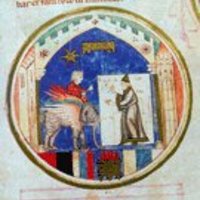
Alejandro Garcia Aviles is a Professor of Medieval Art at the Universidad de Murcia in Spain, affiliated with the Department of History of Art within the Faculty of Arts and Humanities . His research focuses on medieval visual culture, particularly the intersections of art, magic, and religion in medieval Europe. He holds a PhD from the Universidad de Murcia (1995) with a thesis on medieval astrological miniatures. Research Groups: Visual Studies: Images, Texts, Contexts; Catalogación-Escultura y Arquitectura Key Interests: Iconography, medieval astrology, alchemical imagery, idolatry, and the cultural history of magic. Publications include seminal works on Alfonso X's manuscripts, the role of planetary imagery in medieval politics, and the visual representation of magical practices. His co-authored books explore topics like the profane within sacred art and the power dynamics of medieval images. Recent research highlights include analyzing the Libro de Astromagia and Aurora Consurgens manuscripts, as well as investigating the demonization of idols in Romanesque art. He has contributed to international conferences on medieval Iberian art and co-organized colloquia on transnational medieval artistic exchanges. His work bridges art history, theology, and cultural studies, offering critical insights into how medieval societies conceptualized the sacred, the profane, and the supernatural through visual media.
Irene Skovgaard Smith is an Associate Professor in Organisational Anthropology at the Norwich Business School, University of East Anglia. She holds a PhD from Copenhagen Business School and a Master’s in Social Anthropology from the University of Copenhagen. Her research focuses on social relations within organisations, particularly processes of identity formation, moral disengagement, transnationalism, and mobility. She is a member of the Employment Systems and Institutions research group and serves on the editorial board of the Journal of Organizational Ethnography . Her work examines how organisations suspend ethical accountability, construct alterity, and manage transnational dynamics. Key themes include organisational moral disengagement, cosmopolitan identity, and the impact of globalisation on workplace relations. She has conducted fieldwork in diverse settings, including Scandinavian consulting firms and multinational corporations. Recent research highlights include studies on the Grenfell Tower cladding scandal’s organisational ethics failures and pandemic-era cross-border immobility patterns. Her methodologies emphasize ethnographic approaches, combining immersive fieldwork with sociological theory. Irene has been a visiting researcher at the University of Turku and actively contributes to peer review for journals such as Journal of Business Ethics and Journal of Classical Sociology . Her work has been widely cited in both academic and media contexts, addressing topics like post-Brexit academic experiences and the human impact of travel restrictions.
Herbert Tucker is the John C. Coleman Professor in the Department of English at the University of Virginia, within the College of Arts & Sciences. He specializes in 19th-century British literature, with a focus on poetry, prosody, and Victorian intellectual culture. His scholarly work spans Romantic and Victorian poetics, epic form, dramatic monologue, and literary influence. His research interests include Victorian poetry , 19th-century British literary form , prosody , epic poetry , Shakespeare reception , and literary theory . He explores how poetic form conveys meaning, how writers engage with tradition, and how literature reflects cultural and philosophical concerns of the era. His work often bridges literary analysis with intellectual and cultural history. The recent articles reflect a deep engagement with poetic form , manuscript studies , literary influence , and the aesthetics of charm and enchantment . His scholarship appears in leading journals such as Critical Inquiry , Victorian Studies , and New Literary History , demonstrating sustained contributions to Victorian and Romantic studies. American Academy of Arts & Sciences Member Fulbright Scholar Donald J. Gray Prize National Humanities Center Fellow MLA-ACLS Fellow Whiting Fellow Danforth Fellow Shannon Center Fellow International Senior Research Fellow (Durham) Distinguished Visiting Fellow (Queen Mary) Herbert Tucker has served as Associate Editor of New Literary History since 1996 and Series Editor of Victorian Literature and Culture since 1989, indicating long-standing mentorship and editorial leadership. He has held visiting professorships at Williams College, Massey University, and Yale, and has delivered lectures globally. His projects include For Better for Verse , an interactive prosody tutorial, showcasing innovation in pedagogy and technology. He is affiliated with the New Literary History editorial team and the Victorian Literature and Culture series, both based at the University of Virginia. His work with the Shannon Center for Advanced Studies and the Teaching and Technology Initiative reflects engagement with interdisciplinary research and digital humanities.
Scott B. Noegel is a Full Professor at the University of Washington, Seattle, affiliated with the Department of Near Eastern Languages and Civilization, Jewish Studies Program, Comparative Religion Program, and History Department (Adjunct). His work bridges Ancient Near Eastern Studies, Biblical Exegesis, and Digital Humanities. Education: Ph.D. in Near Eastern Studies from Cornell University (1994), with a focus on Hebrew Bible and Assyriology, and an Honorary Ph.D. in Letters from University of Wisconsin, Milwaukee (2016) Research Interests include: Wordplay and Literary Devices in Ancient Texts Oneiromancy (Dream Interpretation) in the Ancient Near East Intercultural Exchange between the Mediterranean and Ancient Near East Visual Semiotics in Egyptian Hieroglyphs Divinatory Practices and Magic in Biblical and Mesopotamian Traditions Recent Publications focus on comparative analyses of Ugaritic, Mesopotamian, and Biblical texts, with emphasis on linguistic ambiguity, animal symbolism, and scribal creativity. His 2021 monograph “Wordplay” in Ancient Near Eastern Texts explores punning across Sumerian, Akkadian, and Hebrew traditions. Scientific Awards & Grants 2016 Honorary Ph.D. in Letters (University of Wisconsin, Milwaukee) 2007 Crossdisciplinary Conversation Award (Simpson Center for Humanities) 2003 Graduate School Fund for Excellence and Innovation Grant Multiple NEH and NYSCA Grants for Digital Humanities Projects Teaching & Outreach: Directed digital course development for Hebrew Bible studies and co-founded the Seattle Arts Commission's Technology Initiatives. Served as Scholar in Residence and guest lecturer on Ancient Near Eastern topics globally.
Prof. Dr. Piotr Kubasiak is an academic at the University of Regensburg and the Catholic Academy in Vienna, serving as Chair Deputy for Liturgical Studies since October 2024. He holds a doctorate in Catholic Theology from the University of Vienna (2019, with distinction) and a habilitation in progress at Albert-Ludwigs-Universität Freiburg (2025). His academic journey includes studies at the Päpstliche Universität des Johannes Paul II. in Krakau, Universität Regensburg, and Universität Wien. Education: Habilitation (2025, Freiburg), Dr. theol. (2019, Vienna), Master's (Wien, Regensburg), Päpstliche Universität Krakau. Kubasiak's research bridges political theology, liturgical dogmatics, and the interplay of existential philosophy with Christian traditions. His work examines historical theology, particularly through figures like Krzysztof Michalski and Jan Patočka, and explores themes of compassion, theodicy, and the Church's role in civil society. His recent publications and lectures focus on liturgical creeds, sacramental theology, and the Church's response to crises (e.g., pandemic, Ukraine war). Articles span topics from historical dogmatics to Nietzschean interpretations, emphasizing interdisciplinary connections between theology, philosophy, and cultural heritage. Scientific Awards: Dissertationspreis 2019 (University of Vienna), Krzysztof Michalski Junior Visiting Fellow 2018, Bronisław Geremek Fellow 2017. Kubasiak co-edited The Flame of Eternity (Nietzsche interpretations, 2022) and contributes to theological education through the "THEOLOGISCHE KURSE" program. He integrates liturgical practices with contemporary societal challenges, advocating for prayer and practical engagement during crises.
Zarina Muhammad is a Singapore-based Lecturer in Fine Arts at LASALLE College of the Arts, holding an MA in Art History from Open University and BA (Hons) in Fine Arts from LASALLE. She specializes in contemporary art practice, historiography, and cultural theory in Southeast Asia. Current research focuses on cultural translations of ritual magic, Southeast Asian mythologies, animism, and folk religion Active in interdisciplinary collaborations exploring sacred sites and cross-cultural witchcraft narratives Her work bridges art practice with ethnographic research, examining contested histories at the intersections of: Witchcraft and myth-making Magico-religious systems Gender-based archetypes Ethno-medicine and monstrosity Key projects address intergenerational and interregional translations of cultural narratives, with participatory performances in Singapore, Indonesia, Cambodia, and Japan. Collaborative lecture performances include A rational Taxonomies at ICA Singapore and Sea Charms and Ceremonies at Objectifs Centre.
Andrzej Wicher serves as Associate Professor and Head of the Department of Acoustics within the Faculty of Physics and Astronomy at Adam Mickiewicz University (UAM) in Poznań, Poland. His academic leadership extends to membership on the Council of Disciplines of Physical Sciences and Astronomy since 2016, and previous service as Deputy Director of the Institute of Acoustics (2016-2019). Internationally, he holds an honorary Adjunct Professor position at La Trobe University in Melbourne, Australia. Wicher's research spans psychoacoustics, audiology, and auditory neuroscience, with particular focus on tinnitus mechanisms, otoacoustic emissions (especially DPOAE), binaural hearing phenomena, and speech intelligibility assessment. His work integrates clinical applications with fundamental auditory system modeling, recently expanding into environmental noise impacts—particularly wind turbine acoustics—on cognitive functions. This research portfolio reflects through 15+ recent publications showing consistent interdisciplinary connections between auditory diagnostics, neurological assessment, and real-world sound environments. His scientific contributions are recognized through multiple Rector's Awards for both organizational and scientific activities at UAM (2015-2024). As an active member of the Polish Academy of Sciences' Committee on Acoustics, European Acoustical Society, and Polish Acoustical Society, he contributes to the global acoustics community while co-organizing major conferences including the Open Seminar in Acoustics and Fechner Day. Wicher's teaching program includes specialized courses in psychoacoustics, hearing diagnostics, and auditory system analysis. His research infrastructure benefits from international collaborations with institutions including University of Cambridge, Tohoku University, University of Manchester, and University of Minnesota, supported through national (NCN) and international (EU FP6, NOR/POLNOR) grants.
Yukiyo Kasai is an Associate Professor of Central Asian History of Religions at Ruhr-Universität Bochum (RUB), affiliated with the Center for Religious Studies (CERES). She holds a Ph.D. from Free University Berlin (2005) and a post-doctoral habilitation from RUB (2021). Her research focuses on the history of Uyghur Buddhism, manuscript studies, and religious dynamics in pre-Islamic Central Asia, with particular attention to Turkic and Iranian cultural interactions. She has held fellowships at the Fritz Thyssen Foundation, DFG, and the Berlin-Brandenburg Academy of Sciences. Key roles include coordinating the RELIGUR project and serving as Research Associate for BuddhistRoad. Her work bridges textual analysis, material culture, and socio-political contexts, with expertise in Old Uyghur, Sogdian, and Brāhmī scripts. Awards include the 2011 Preis für Geisteswissenschaften from Göttingen Academy. She contributes to interdisciplinary projects like the Turfan Studies Academy and has edited major volumes on Buddhist transmission and Central Asian religious history. Publications span 20+ years, emphasizing Buddhist colophons, translation practices, and interreligious contacts. Her research highlights the role of Buddhism in Uyghur legitimation, pilgrimage networks, and textual hybridity. Current projects examine Sino-Uyghur religious exchanges and the cultural significance of talismans and sacred sites.
Martti Nissinen is a Professor of Old Testament studies at the University of Helsinki's Faculty of Theology (since 2007). He holds a Doctor of Theology degree from the University of Helsinki (1992) and has served in various academic leadership roles, including directing the Academy of Finland's Centre of Excellence 'Changes in Sacred Texts and Traditions' (2014–2019). His research focuses on ancient Near Eastern prophecy, gender studies (particularly masculinity and homoeroticism in biblical and Akkadian texts), and the historical context of religious texts. Education: PhD in Theology (1992), University of Helsinki. Earlier roles include Academy of Finland Research Fellow (1994–2002), Assistant Professor (1985–1994), and translator for the Finnish Bible Translation Commission (late 1980s). Research interests include comparative analysis of prophecy across cultures, textual criticism, and the intersection of gender with religious expression. He has authored influential works like Prophets and Prophecy in the Ancient Near East and Homoeroticism in the Biblical World , and edited over 50 volumes. Recent work explores sexual agency in Akkadian literature, methodological debates in biblical studies, and integrative approaches to Levantine studies. His 2024 article 'Beyond Binaries' critiques reductionist historiography of the region. Awards: Honorary Member of the Society for Old Testament Study, member of the Finnish Academy of Science and Letters, and Knight, First Class of the Order of the White Cross (2016). Advising: Supervises doctoral programs in Theology and Gender Studies. Collaborates internationally through projects like WritHist21 and the CSTT Center. Active in over 40 universities globally and serves on editorial boards for journals like Vetus Testamentum . Labs/Teams: Lead researcher in multiple Academy of Finland-funded projects, including 'Galilee in the Iron Age' and 'Society and Religion in the Ancient Near East'. Oversees interdisciplinary teams involving archaeologists, linguists, and religious scholars.
Michael Taussig (b. 1940) is a renowned anthropologist and professor at Columbia University and The European Graduate School (EGS). His work critiques capitalist cultural narratives through ethnographic studies, blending fact and fiction to challenge academic objectivity. Influenced by Frankfurt School critical theory and post-structuralism, he explores commodity fetishism, colonialism, and the interplay between state power and magical practices. Education: Bachelor's in Medicine, University of Sydney PhD in Anthropology, London School of Economics His research focuses on commodity fetishism (e.g., indigenous rituals in Colombia), colonial terror (shamanism and state violence), and the magic of modern states . Notable works include The Devil and Commodity Fetishism in South America (1980) and Magic of the State (1997). Articles and books analyze themes like colonialism, shamanism, and the symbolic power of states. His writing style, termed 'fictocriticism,' merges ethnography with narrative experimentation. Advising & Grants: No specific advisees or grants listed in available texts. His contributions lie in theoretical innovation and ethnographic methodological experimentation. Labs/Teams: None explicitly mentioned, though collaborations with critical theorists and anthropologists are implied through his interdisciplinary work.
Professor Raminder Kaur is Professor of Anthropology and Cultural Studies at the School of Global Studies, University of Sussex. She serves as Co-Director of the Sussex Asia Centre and has held leadership roles including Director of Doctoral Studies and Director of Equality, Diversity and Inclusion at the School of Global Studies. She is a Fellow of both the RSA (Royal Society for Arts) and RAI (Royal Anthropological Institute), where she serves on the RAI Film Committee organizing international film festivals. Her academic training includes a BA (Combined Hons) in Social Anthropology and Art and Archaeology and PhD from SOAS, University of London. She has held Research Fellowships at Brunel University, University of East Anglia, University of Manchester, and University of Erfurt. Her research spans Cultural Studies, Sociology, Anthropology, and Communication and Media Studies with focus areas including migration, race/ethnicity/gender, arts and aesthetics, heritage, public culture, censorship, religion and politics, human rights, energy, renewables, and 'cultures of sustainability'. Professor Kaur's scholarly output demonstrates a strong integration of visual anthropology, ethnographic methods, and social justice concerns. Her recent work explores censorship in South Asia, identity formation, liminal spaces, religious festivals, and the relationship between tradition and transformation. She uniquely bridges academic scholarship with creative practice through theatre, film, and multimedia production. Her research has been recognized with significant awards: Eurocities Award for Cooperation in Gdansk (2007) for the MCAAH report 'Delivering Shared Heritage' Fellowship in the Royal Society for the encouragement of the Arts, Manufactures and Commerce Fellowship in the Royal Anthropological Institute Professor Kaur has successfully supervised numerous doctoral students working on South Asian studies, migration, and cultural studies topics. She currently leads the POWERE project (Participation of Women in Renewable Energy) funded by UKRI, Pilgrimonics funded by Leverhulme Trust, and CO-POWeR (Consortium on Practices of Wellbeing and Resilience in BAME Families and Communities) funded by UKRI. Her creative work through Sohaya Visions includes theatre productions like EXODUS: ASIA, AFRICA, EUROPE; breaDth; and films including DISHOOM INDIA and PEOPLEBOROUGH that explore themes of identity, migration, and social justice.
J. Brent Crosson is an Associate Professor in the Department of Religious Studies at the University of Texas at Austin, with cross-appointments in Anthropology and affiliations with Latin American Studies and African and African Diaspora Studies. He teaches courses including Non-Human Agency, Religion and the Environment, and Science/Magic/Religion across multiple departments. Dr. Crosson earned his Ph.D. from UC Santa Cruz and has established himself as a socio-cultural anthropologist specializing in the intersections of religion, science, and politics in the Caribbean. His research examines how practices labeled as 'obeah' challenge and transform Western categories of religion, science, and law, particularly in Trinidad where he has conducted long-term ethnographic research. Crosson's interdisciplinary research spans Africana Religions, Religion and Science, Caribbean Studies, African and South Asian Diasporas, Anthropology of Race, Science and Technology Studies, Energy, and Colonial Regulation of Religion. His work reveals how spiritual practices reframed as 'science' by practitioners unsettle established Western categories and reveal new perspectives on power, justice, and knowledge production in postcolonial contexts. His publications demonstrate consistent focus on Trinidad as a critical site for understanding the intersections of religion, race, and energy politics, with particular attention to obeah practices, petroleum extraction, and spiritual work as forms of knowledge production that challenge Western epistemological boundaries. 2021 Clifford Geertz Prize from the Society for the Anthropology of Religion Shortlisted for the Albert J. Raboteau Prize for best book in Africana religions Question of the Social Sciences award from Small Axe journal Award-winning ethnographic poetry published in American Religion and Anthropology and Humanism Crosson's research bridges religious studies, anthropology, and science and technology studies, developing innovative approaches like 'altered solidarities' that challenge conventional understandings of racial divisions in the Caribbean. His current project, 'The Other Anthropocene,' examines climate change, religion, migration, and energy conceptions, with particular focus on Trinidad as perhaps the world's oldest petro-state and its implications for understanding the climate crisis through Caribbean perspectives.
Matt Garite serves as an Assistant Teaching Professor in the Department of Literature at Wake Forest University, teaching courses such as ENG 150: Literature Interprets the World from his office in Tribble Hall (C5E). Contact details include phone (336) 758-7243 and email garitema@wfu.edu. Education PhD, University at Buffalo (Dissertation: "Green Futures: A Cultural History of Ecotopia from the Cold War to the Present") MA, Syracuse University BA, Syracuse University Research Interests Garite's scholarship centers on post-WWII American literature, science fiction, film, Marxism, ecocriticism, critical theory, and cultural studies. His work critically examines utopian/dystopian narratives through intersections of environmental crises, corporate power structures, and media ideologies, consistently applying Marxist and ecocritical frameworks to analyze cultural production. Publication Trends His publications demonstrate evolving engagement with cultural artifacts—from contemporary art exhibitions to digital games—revealing persistent analysis of transparency, ritual, and interactivity as ideological constructs. The corpus reflects methodological consistency in deconstructing power dynamics within media forms while bridging literary analysis with political economy. Scientific Awards No scientific awards, fellowships, or medals were documented in the source material. Advising and Grants Information regarding graduate student mentorship, research grants, or funded projects was not provided in the available text. Research Infrastructure No laboratories, research centers, or collaborative teams associated with Garite were mentioned in the source documentation.
Dr. Joanna Malita-Król is a scholar affiliated with the Institute of Religious Studies at Jagiellonian University's Faculty of Philosophy. Her work bridges cultural and religious studies, focusing on contemporary Paganism, magic, Japanese Heian culture, and popular culture. She holds a PhD from Jagiellonian University's Department of Comparative Civilization Studies and Institute of Religious Studies. Research Interests: Contemporary Pagan practices (Wicca, Druidism) Ritual spaces and urban religious expression Lived religion and cultural hybridity Japanese culture (especially Heian period literature) Key Projects: Digital analysis of minority religions in Polish media (POB Heritage project) Impact of pandemic on Catholic collective practices (with Dr. Joanna Krotofil) Courses Taught: Introduction to Contemporary Paganism Methodologies in Religious Studies Genji Culture and Heian Aesthetics Languages: Fluent in English, Italian, and Japanese (N3 certified).