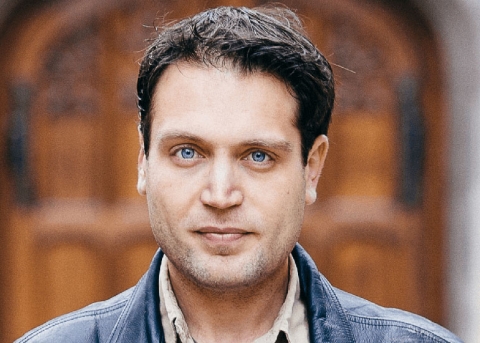
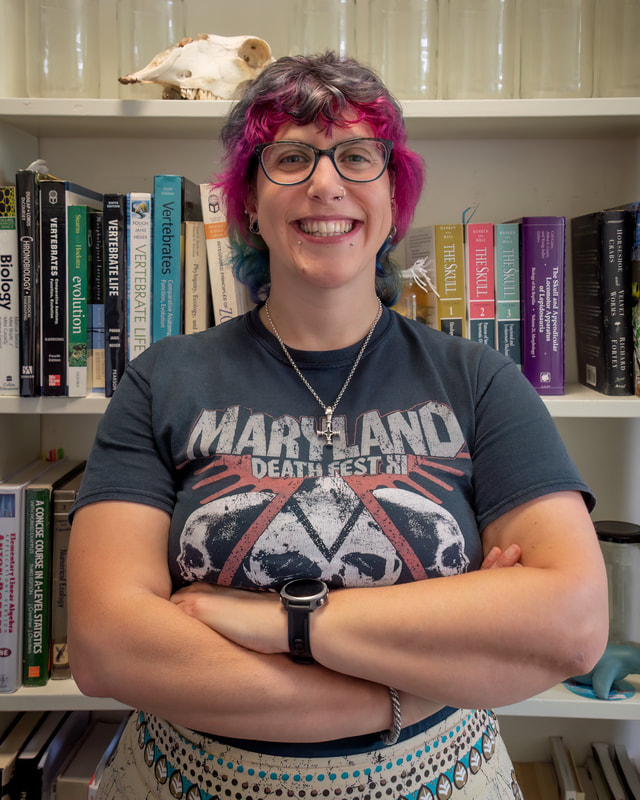
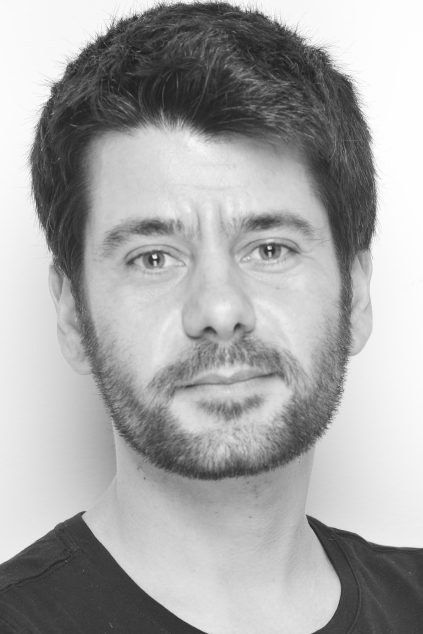
Professor Tom Ezard is an evolutionary ecologist and Associate Dean for Education at the University of Southampton. He is affiliated with the Department of Ocean and Earth Science and contributes to research groups including the Institute for Life Sciences and Southampton Marine and Maritime Institute. His work focuses on bridging micro- to macroevolutionary processes, scaling ecological dynamics across individuals, populations, and ecosystems, and applying demography to conservation and life history evolution. Research interests include the integration of ecological and evolutionary dynamics under environmental change. Notable projects include NERC Advanced Fellowships and collaborations on domestication genetics and species delimitation using 3D imaging. He supervises multiple PhD students in areas such as marine biology and computational ecology. Publications highlight innovative methods in 3D feature extraction, satellite tracking of migratory birds, and redefining life history frameworks beyond the 'fast-slow' continuum. External roles include serving on the British Ecological Society Council (2017–2023).
John Damuth: Research Biologist & Evolutionary Theorist John Damuth holds a research faculty appointment at the **full Professor level** as a **Research Professor** in the Department of Ecology, Evolution, and Marine Biology at the University of California, Santa Barbara (UCSB). His academic journey includes a B.A. in Anthropology (Yale, 1974), M.S. and Ph.D. in Evolutionary Biology (University of Chicago, 1976 and 1982). **Research Focus**: Damuth is renowned for integrating evolutionary biology, ecology, and vertebrate paleontology to explore large-scale patterns. Key themes include: - **Allometry**: Scaling of body size, energy use, and population density. - **Multilevel Selection**: Co-developed contextual analysis frameworks. - **Paleoecology**: Reconstructing ancient ecosystems using fossil data. - **Nonadaptive Selection**: Co-authored a seminal book (2024) arguing for ecological laws arising from nonadaptive processes. **Awards & Fellowships**: Notable recognitions include the **Edward P. Bass Distinguished Environmental Scholar** (Yale, 2019–2020), **STIAS Fellowship** (South Africa, 2012), and NSF grants totaling over $300k for database initiatives (e.g., ETE Database). **Publications**: Over 60 peer-reviewed articles, including foundational work on energy equivalence, Cope’s Rule, and the evolutionary basis of ecological scaling. Recent highlights include *Nonadaptive Selection* (2024), a collaboration with Lev Ginzburg. **Professional Roles**: Former Program Director at the NSF (2004–2006), Curator of Mammalogy (Cheadle Center, UCSB), and a leader in international paleontological initiatives (e.g., NOW Database).
Dr. Elizabeth Joyce is a Research Fellow at Ludwig-Maximilians-Universität München, affiliated with the Faculty of Biology and the Department of Systematics, Biodiversity & Evolution of Plants. She works in the research group led by Prof. Kadereit, focusing on plant evolution and biogeography. Her work employs multi-scale approaches combining phylogenomic, phylogeographic, and floristic data to investigate Southeast Asian, New Guinean, and Australian flora dynamics, particularly the role of the Sunda-Sahul Floristic Exchange in shaping tropical diversity. She specializes in the angiosperm order Sapindales and dispersal syndromes impacting regional biogeography. Her research collaborations span institutions globally, including the Royal Botanic Gardens (Kew/Sydney), James Cook University, and the University of São Paulo. She has contributed to over 20 peer-reviewed publications, emphasizing phylogenetic frameworks, taxonomic revisions, and computational methods for resolving evolutionary conflicts in plant genomes. While not explicitly noted here, her work reflects strong engagement with both theoretical and applied aspects of plant systematics. Key areas of expertise include genomic data analysis using tools like HybPhaser for hybrid detection, molecular phylogeography of disjunct plant species, and integrative approaches to species delimitation. Her recent studies highlight innovative methods for improving locus recovery in target capture datasets, advancing comparative phylogenomics across angiosperms.
Dr. Peter John Mayhew serves as a Senior Lecturer in the Department of Biology within the Faculty of Sciences at the University of York. His research program centers on evolutionary ecology with a specialized focus on insect biodiversity, integrating theoretical frameworks with field-based conservation applications. Mayhew directs the Mayhew Research Group, which maintains active collaborations across multiple continents and emphasizes community-oriented science through open data sharing. His research spans three interconnected domains: (1) The evolutionary origins of insect diversity using phylogenetic, fossil, and trait datasets to identify macroevolutionary drivers; (2) Habitat determinants of parasitoid wasp communities in tropical rainforests (notably Brazil's Atlantic Forest) to develop conservation proxies for cryptic taxa; (3) Long-term conservation of England's rarest moth, the Dark Bordered Beauty, at Strensall Common near York. Mayhew employs comparative statistical approaches across spatial and temporal scales, frequently developing reusable datasets and analytical frameworks for the broader scientific community. His work bridges theoretical ecology with urgent conservation challenges, particularly regarding climate change impacts and habitat loss. Mayhew's research portfolio includes significant funded projects such as the Automatic Acoustic Observatories initiative for non-invasive species monitoring (2016-2020), Drivers of Ichneumonid Wasp Richness in Tropical Biodiversity Hotspots (2014-2017), and BBSRC-funded sex ratio constraint studies (2007-2010). His 86+ publications demonstrate consistent contributions to entomology, macroecology, and conservation biology. The Mayhew Group actively mentors student researchers, with projects frequently leading to peer-reviewed publications, and maintains strong community engagement through public lectures at institutions like the Yorkshire Philosophical Society.
Istvan Miko serves as the Collections Manager of the UNH Collection of Insects and Other Arthropods within the Department of Biological Sciences at the University of New Hampshire. Holding a Ph.D. in Environmental Science from Szeged University, he actively teaches undergraduate and graduate courses including ZOOL 555 (Introduction to Entomology) and BIOL 788/888 (Know Your Creature), demonstrating his dual role in collection management and academic instruction. His research focuses on insect systematics, particularly hymenopteran morphology and evolution, utilizing advanced techniques like micro-CT scanning and ontological frameworks. Miko's work bridges traditional taxonomy with modern biodiversity informatics, as evidenced by his development of tools like ontoFAST for semantic character annotation. His publications reveal consistent collaboration with leading entomologists including Deans, Talamas, and Ulmer. Miko's recent publications (2021-2023) demonstrate expertise across multiple subdisciplines: hymenopteran genitalia terminology standardization, mayfly wing evolution, ceraphronid wasp diversity, and metapleural gland evolution. His work frequently addresses morphological adaptations in parasitoid wasps, with applications in understanding evolutionary processes and improving taxonomic practices. As Collections Manager, he oversees the UNH insect collection while integrating specimen-based research into his academic work. His teaching portfolio spans entomology, animal physiology, and honors biology courses, emphasizing hands-on anatomical investigation through courses like ZOOL 795W (New Megaspilid Fossils).
Nizar Ibrahim is a Senior Lecturer in Paleontology at the University of Portsmouth, affiliated with the School of the Environment and Life Sciences and the Institute of the Earth and Environment. He holds a PhD from University College Dublin and has held academic positions at institutions like the University of Chicago and University of Detroit Mercy. His research focuses on vertebrate morphology, Mesozoic chronostratigraphy, and bioinformatics, with notable expeditions to the Sahara Desert's fossil beds. Education: BSc (Bristol, UK), PhD (University College Dublin, Ireland), Postdoctoral Scholar (University of Chicago). Awards include TED Fellow and National Geographic Explorer. Research interests emphasize vertebrate paleontology, particularly African Mesozoic fauna, pterosaur evolution, and paleoenvironmental reconstruction. His work bridges academic research and public outreach, including TED Talks, documentaries, and National Geographic collaborations. His studies on Spinosaurus and Cretaceous ecosystems have been widely featured in Science and National Geographic. Labs/Teams: Collaborates with the Carnegie Museum of Natural History and the National Geographic Speakers Bureau. Leads paleontological fieldwork in Africa, focusing on the Kem Kem Group's fossil assemblages. Grants and funding support his expeditions and bioinformatics initiatives. His research integrates anatomy, geology, and computational methods to decode evolutionary history.
Dr. Brian Atkinson is an Assistant Professor and Assistant Curator of Paleobotany at the University of Kansas, specializing in the macroevolutionary patterns and relationships of seed plants. His research focuses on Mesozoic and Cenozoic conifers and flowering plants, particularly using fossil evidence to reconstruct evolutionary histories. He is affiliated with the Department of Ecology & Evolutionary Biology (EEB), where he contributes to graduate education and oversees the Atkinson Lab. Key research areas include the Cretaceous diversification of asterids, the evolution of cornalean fruits, and the paleobiogeography of conifers. His work frequently integrates anatomically preserved fossils with modern phylogenetic methods to address questions about plant diversification and extinction events. Recent projects explore the origins of dogwoods (Cornus) and the early radiation of the Meliaceae family. Publications span over a decade, with notable contributions to American Journal of Botany , Annals of Botany , and International Journal of Plant Sciences . His research has expanded understanding of Gondwanan plant dispersal, Cretaceous-Paleogene floral transitions, and the macroevolutionary dynamics shaping modern plant diversity. Dr. Atkinson collaborates with institutions globally, including the Royal Botanical Gardens and Hokkaido University, and maintains an active fossil collection at the University of Kansas Biodiversity Institute. His lab focuses on anatomical, morphological, and molecular approaches to paleobotanical research, with ongoing projects in Antarctica, North America, and Japan.
Dr. Paulyn Cartwright is the Baumgartner Professor of Biology at the University of Kansas' Department of Biology. Her research focuses on understanding evolutionary patterns and developmental processes in medusozoans, a clade of cnidarians including jellyfish and hydroids. She investigates genomic approaches to explore medusozoan phylogeny, development, and macroevolutionary trends. Her work integrates comparative genomics, phylogenetics, and developmental biology to address longstanding questions in cnidarian evolution. Education: Biology, University of California, Los Angeles (1990); Department of Biology, Yale University (1997). Research interests include invertebrate zoology, comparative genomics, evolution and development, and phylogenetics. Notable projects include studies on medusozoan diversity, cnidarian genome assembly, and venom system specialization. She has secured over $2.8 million in grants, including NSF-funded projects on cnidarian phylogeny and developmental mechanisms. Her funded activities include collaborative research on cnidarian phylogeny (NSF AToL), molecular studies of myxozoan parasites (NSF IOS), and career development grants integrating phylogenetics and development in hydrozoans. She advises on grants and co-organizes workshops like Hydroidfest and Cnidofest. Labs/Teams: Directs research in cnidarian genomics and development, with a focus on Hydractinia species as model organisms.
Associate Professor Emma Sherratt holds a dual role as Associate Professor/Reader in the School of Biological Sciences at the University of Adelaide, where she leads the Quantitative Morphology Group. She is also Director of Science Programs, overseeing curriculum development for Bachelor of Science and Honours programs. Her research focuses on morphological evolution using 3D imaging techniques (microCT, laser scanning) to study museum specimens, particularly reptiles, amphibians, and mammals. She co-authored the geomorph R package and continues to innovate in morphometric methods. Key roles include Academic Transition Panel membership and editorial positions at Evolutionary Ecology and Evolutionary Journal of the Linnean Society . Awards include an ARC Future Fellowship and Royal Society of South Australia Fellowship. Supervision spans undergraduate to PhD levels, with projects in developmental biology, paleontology, and ecology. The Quantitative Morphology Group explores macroevolutionary patterns in morphological diversity. Recent grants include ARC Future Fellowship support. Publications emphasize ecomorphological adaptations, domestication impacts, and evolutionary transitions in vertebrate morphology.
Sasha Gavryushkina is a Lecturer in Data Science and Statistics at the School of Computer and Mathematical Sciences, part of the Faculty of Sciences, Engineering and Technology at the University of Adelaide. Her research focuses on developing statistical and computational methods for genomics data analysis, with applications in macroevolution, epidemiology, and cancer research. She specializes in reconstructing evolutionary histories from genetic data to infer population dynamics parameters and enhancing single-cell sequencing analysis for cancer development insights. Her work involves extending birth-death models for phylodynamic inference and developing likelihood-free inference techniques for phylogenetic analysis. She also explores machine learning applications for sequencing data pre-processing and genotype-phenotype association studies. Sasha is eligible to supervise Masters and PhD students as a Co-Supervisor, focusing on topics such as evolutionary genomics and computational biology.
James Gabriel Saulsbury is a Post-doctoral Researcher in the Ecology and Evolutionary Biology Department at the University of Kansas, working under faculty sponsor Lena Hileman. His research integrates paleontological data with ecological theory to address macroevolutionary questions through marine invertebrate fossil records. His primary research interests include: Stochastic and deterministic forces in species' evolutionary fates Tectonic/oceanographic impacts on marine organism evolution Crinoid evolutionary history and physiology Biodiversity hotspot formation mechanisms Skeletal adaptations to ocean chemistry changes Energetic strategies in marine invertebrates Analysis of recent publications reveals a consistent interdisciplinary approach applying ecological neutral theory to paleontological datasets, with strong emphasis on biogeographic modeling and physiological constraints. His work bridges paleobiology, theoretical ecology, and marine evolutionary studies to uncover deep-time drivers of biodiversity patterns.
Elizabeth Turner is a Full Professor at the Harquail School of Earth Sciences at Laurentian University, where she has been faculty since 2005. Her research career spans over 30 years of remote field work in northern Canada, with expertise in Proterozoic to Paleozoic sedimentary systems and their economic potential. Dr. Turner earned her PhD from Queen's University in 1999, following a BSc in Geology (1991) and a BA in Languages (1988), both from the University of Toronto. Prior to joining Laurentian, she worked as a Research Scientist at the Canada-Nunavut Geoscience Office (2001-2005) and completed post-doctoral fellowships at the University of Chicago and University of Alberta. Her research focuses on tectonostratigraphic analysis of Proterozoic to lower Paleozoic sedimentary basins, with particular emphasis on paleobiological, geochemical, paleoenvironmental, sedimentological, and diagenetic evolution across more than a billion years of Earth history. Current projects include geological evolution of Mesoproterozoic, Neoproterozoic, and Paleozoic basins in northern Canada; sedimentary-rock-hosted ore deposits; carbonate facies and stratigraphy; carbonate and siliciclastic diagenesis; and early evolution of eukaryotes. Analysis of her recent publications reveals a strong focus on Precambrian geology, particularly the Mesoproterozoic and Neoproterozoic eras. Her work spans economic geology (particularly Zn-Pb-Cu deposits), paleoenvironmental reconstruction using geochemical proxies, early life evolution, and basin analysis. The research demonstrates interdisciplinary approaches combining field geology, geochemistry, paleontology, and economic geology. 2020 - Geological Association of Canada, Howard Street Robinson Medal for excellence in Precambrian geology 2010 - Canadian Journal of Earth Sciences Best Paper award for her 2009 work on Mesoproterozoic carbonate systems 2001 - PALAIOS Honourable mention for best paper on Neoproterozoic reefal stromatolites 1999 - Best Canadian PhD Thesis in Sedimentary Geology from the Canadian Society of Petroleum Geologists Dr. Turner actively mentors graduate students and post-doctoral fellows, currently supervising PhD student Chaneil Wallace, MSc students Christian Frost and Charlotte Stone, and post-doctoral fellow Jordan Mathieu. Her recently completed students include R. William Scott, Jordan Mathieu (PhD), Philippe Trudel, Quinn Dabros, Melanie Bouchard, and Katherine Hahn (post-doc). Her research has been supported by numerous grants enabling extensive field work in Canada's north and international collaborations, particularly in the Democratic Republic of Congo. Her work involves extensive field research in northern Canada (Nunavut and Northwest Territories), with a focus on carbonate systems and their relationship to mineral deposits. She collaborates with researchers across Canada and internationally, particularly on projects related to Precambrian life evolution and sedimentary-hosted mineral deposits.
Sean H. Rice is a Professor in the Department of Biological Sciences at Texas Tech University, where he conducts research and teaches in evolutionary theory and mathematical biology. His work spans theoretical and empirical domains, focusing on the conceptual and mathematical foundations of evolution, developmental modeling, and morphological evolution across diverse taxa. University: Texas Tech University School: College of Arts and Sciences Department: Department of Biological Sciences Academic Rank: Professor Email: sean.h.rice@ttu.edu Education: B.A. in Biology, University of California, Santa Cruz (1984) Ph.D. in Ecology & Evolutionary Biology, University of Arizona (1991) Sean H. Rice's research interests lie at the intersection of theoretical biology and empirical evolutionary studies. He investigates the mathematical underpinnings of evolutionary processes, particularly the role of developmental constraints, epistasis, and stochasticity in shaping evolutionary trajectories. His lab explores key conceptual issues through systems such as molluscan shell development, heterochrony in primate brain evolution, and speciation mechanisms in rotifers. He emphasizes analytical models over simulations, arguing that mathematical rigor provides deeper biological insight. The trends in his publications reflect a consistent focus on foundational evolutionary theory. His work integrates population genetics, quantitative genetics, developmental biology, and macroevolution, with recurring themes including the Price equation, G-matrix evolution, canalization, and species selection. He is particularly known for developing axiomatic frameworks that derive evolutionary laws from first principles, bridging philosophy and formal theory. Scientific Awards: No specific awards are mentioned in the provided texts. Advising and Grants: Dr. Rice mentors graduate students who develop independent research projects aligned with broad evolutionary questions. His former and current students include Lisa Suatoni, Heinrich Zu Dohna, David Ralph, Morgan Baker, John Harting, Ben Qin, and Sarah Fumagalli. While specific grant funding is not listed, his sustained research output and lab activity suggest active external support. He values deep conceptual engagement and encourages students to build strong theoretical foundations. Labs and Research Groups: Dr. Rice leads a research group within the Systematics & Evolution research cluster at Texas Tech. His lab combines theoretical modeling with empirical data to address fundamental questions in evolutionary biology. Key projects include an axiomatic theory of evolution, modeling developmental evolution with epistasis, studying heterochrony, and analyzing molluscan shell morphogenesis. The lab fosters independent thinking, with students designing their own dissertation projects under his guidance.
Jose Eduardo Meireles is an Assistant Professor of Plant Evolution and Systematics at the School of Biology and Ecology, University of Maine, part of the College of Natural Sciences, Forestry and Agriculture. His research integrates molecular, spatial, and functional approaches to understand the origins and maintenance of plant diversity across environmental gradients. Research Interests: His work spans plant phylogenetics, population genetics, biogeography, macroevolution, and evolutionary ecology. He investigates evolutionary relationships among species, spatial patterns of taxonomic and genetic diversity, the evolution of plant function, and uses leaf reflectance spectra for remote detection of biodiversity. His lab is affiliated with the ASCEND Biology Integration Institute and the Maine Center for Genetics in the Environment. Teaching and Research Balance: Meireles divides his time equally between teaching courses in vascular plant taxonomy and conducting research. He actively mentors graduate and undergraduate students and is currently recruiting PhD candidates and a postdoctoral researcher for macroevolutionary modeling of leaf optical traits. Scientific Awards: No awards mentioned in the provided text. Advising and Grants: He advises several students including Kelcie Brown and Lance Stasinski (graduate students) and Ross Sousa (undergraduate). His research is supported by the Maine Agricultural and Forest Experiment Station under Hatch project ME022109. He encourages applications for NSF Graduate Fellowships and offers funded positions through research and teaching assistantships. Labs and Teams: Meireles leads the Meireles Lab, located in Hitchner Hall, and is associated with the UMaine Herbarium. His team includes graduate and undergraduate researchers focused on integrating bottom-up and top-down approaches to assess plant diversity in Maine.
Odile Maliet is a Research Fellow at PSL University, supported by LabEx MemoLife funding during postdoctoral appointments in 2018-2019 and 2020-2021. Her work bridges ecological dynamics and evolutionary processes through computational modeling of species interactions and diversification patterns. Postdoctoral Fellow, LabEx MemoLife (2018–2019) Postdoctoral Fellow, LabEx MemoLife (2020–2021) Maliet's research focuses on the eco-evolutionary mechanisms shaping biodiversity, particularly via antagonistic and mutualistic interaction networks. She develops individual-based models to analyze how ecological pressures influence macroevolutionary outcomes, including species diversity and network structures like modularity and nestedness. Her publications highlight interdisciplinary approaches combining ecological data with evolutionary theory. The 2020 study demonstrates antagonistic interactions promote species diversity and modular networks, while mutualistic interactions yield nested structures with low phylogenetic conservatism. The 2019 work introduces ClaDS, a Bayesian framework for detecting small, frequent diversification shifts in phylogenies, revealing intraclade heterogeneity in speciation rates. Odile Maliet's research is funded by LabEx MemoLife, emphasizing cross-disciplinary projects integrating ecological and macroevolutionary perspectives.