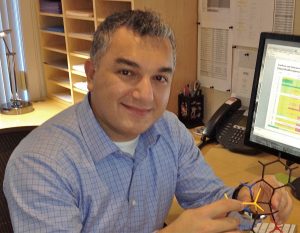
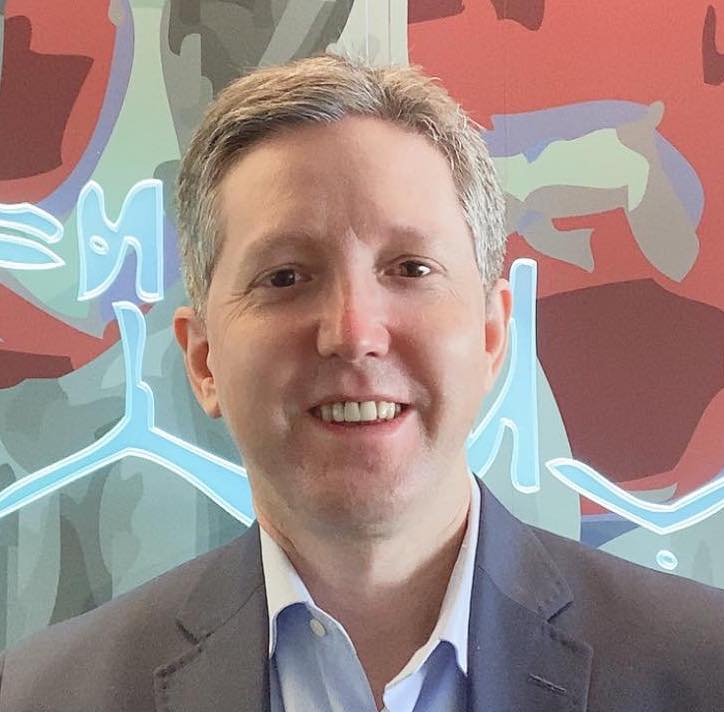
David H. Sherman is the Hans W. Vahlteich Professor of Medicinal Chemistry at the University of Michigan, holding joint appointments in the College of Pharmacy (Department of Medicinal Chemistry), Medical School (Microbiology & Immunology), and College of Literature, Science, and the Arts (Chemistry). He leads the Sherman Lab at the Life Sciences Institute and co-founded the Natural Products Discovery Core. His research focuses on natural product discovery, biosynthetic pathways, and drug development for infectious diseases, cancer, and neurological disorders. Education: PhD in Synthetic Organic Chemistry from Columbia University (1981), BA in Chemistry from UC Santa Cruz (1978). Postdoctoral research at MIT (1984). Research interests include microbial secondary metabolites, enzymatic catalysis (e.g., C-H functionalization, polyketide assembly), and high-throughput drug screening. He pioneered a microbial natural product library with over 50,000 samples. Current projects emphasize developing macrolide antibiotics and advancing compounds toward clinical trials through the Natural Products Biosciences Initiative. Collaborations span global institutions, with a focus on biodiversity conservation and capacity-building in low-income nations. He has mentored 67 PhD students, 60 postdocs, and 85+ undergraduates, fostering interdisciplinary training in chemical biology and microbial biochemistry. Labs/Teams: Sherman Lab (Life Sciences Institute), Center Member at Samuel and Jean Frankel Cardiovascular Center, Center for Computational Medicine and Bioinformatics, Rogel Cancer Center.
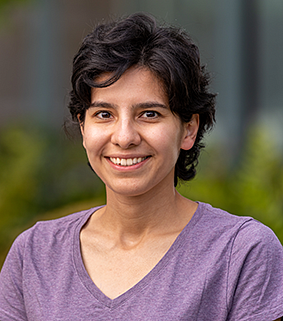
Prof. Paul Stupple is a Professor of Medicinal Chemistry at Monash University, Australia, with over 20 years' experience in pharmaceutical industry and academia. He holds leadership roles at Canthera Discovery and manages the Australian Translational Medicinal Chemistry Facility. His expertise lies in small molecule drug discovery, particularly targeting cancer therapies and epigenetic regulators. Affiliations: Monash University, Faculty of Pharmacy and Pharmaceutical Sciences Canthera Discovery (Director, Medicinal Chemistry) Education: BA and DPhil in Chemistry from the University of Oxford (1992–1999). Early career at Pfizer as a medicinal chemistry leader, delivering 6 clinical candidates. Key contributions include: Licensing deals with Merck (2016) and Pfizer (2018) for preclinical projects Leading the Cancer Therapeutics CRC's medicinal chemistry program Research Interests: Small molecule drug discovery focused on histone acetyltransferase inhibitors, cancer therapeutics, and epigenetic modulation. Notable projects include development of KAT6A/B inhibitors for ER+ breast cancer and STING agonists for immunotherapy. Grants/Projects: Principal Investigator for major initiatives like MedChem Australia (2023–2028) and drug target identification platforms. Collaborates widely with institutions like WEHI and University of Sydney. Over 28 peer-reviewed publications spanning 1997–2025. Labs/Teams: Oversees the Australian Translational Medicinal Chemistry Facility, a key resource for drug discovery in Australia.
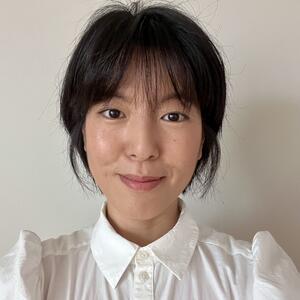
Andrew Regan is a Senior Lecturer in the School of Chemistry at the University of Manchester, specializing in organic synthesis and drug discovery. He holds a B.A. (1981), M.A. (1985), and Ph.D. (1985) from the University of Cambridge. His career includes postdoctoral research at Columbia University and a lectureship at the University of Kent before joining Manchester in 1991. Research interests focus on synthesizing biologically active compounds, such as phosphinic acids for anticancer agents, and developing novel synthetic methods. His work contributes to drug discovery, green chemistry, and efficient chemical processes. He currently supervises two PhD students researching phosphinic acid analogues and simplified erythromycin analogues. Key achievements include the synthesis of epibatidine and advancements in macrolide antibiotic design. His research aligns with sustainable development goals through eco-friendly synthesis methods.
Michael Groll serves as Professor and Chair of Biochemistry at the Technical University of Munich (TUM), where he leads structural biology and enzymology research with a focus on proteasome mechanisms and inhibitor development. His laboratory, located at the Ernst-Otto-Fischer-Str. 8 campus in Garching, maintains active collaborations in drug discovery for cancer and infectious diseases. His primary research domains include proteasome inhibition, enzyme catalysis, and natural product biosynthesis, employing X-ray crystallography, biochemical assays, and bioengineering to dissect molecular mechanisms. Recent work emphasizes AI-guided enzyme optimization, bacterial stress response targeting, and structural characterization of halogenation enzymes, reflecting interdisciplinary approaches bridging chemistry and biology. Analysis of his 2023-2025 publications reveals consistent innovation in proteasome-targeted therapeutics, with 15 high-impact papers featuring structural insights into enzyme-inhibitor complexes and biosynthetic pathways. Key trends include engineering megasynthetases for immunoproteasome inhibitors, optical control of protein degradation, and elucidating metal-dependent mechanisms in antibiotic biosynthesis. No scientific awards were documented in the provided source material. While specific grant details and student mentorship records were not disclosed, his extensive publication record indicates leadership in collaborative research projects involving structural biology and chemical biology methodologies. The Chair of Biochemistry under Prof. Groll operates as a hub for structural enzymology, housing facilities for protein crystallography, enzyme kinetics, and natural product characterization. His team actively contributes to TUM's research ecosystem through partnerships with pharmaceutical groups and international structural biology consortia.
Pim de Vink is a doctoral researcher at Eindhoven University of Technology , affiliated with the Biomedical Engineering department and Chemical Biology group. Supervised by dr. L.-G. Milroy and prof. L. Brunsveld , his work bridges supramolecular chemistry and chemical biology , focusing on host/guest chemistry for protein complex modulation. Education: B.Sc. in Chemistry (2014) from University of Amsterdam M.Sc. in Biomedical Engineering (2016) from TU/e Internship at Max Planck Institute for Molecular Physiology (2016) on gold-catalyzed synthesis Research Themes: His research develops switchable cucurbituril-based systems for light-controlled enzyme activation and artificial signaling networks. Key areas include protein-protein interaction stabilization , thermodynamic modeling , and allosteric nuclear receptor modulation . Publication Trends: Across JACS , Chemical Science , and RSC Chemical Biology , his work from 2017–2023 emphasizes supramolecular tools for biochemical applications. Notable contributions include 100-fold affinity enhancement of 14-3-3 ligands and UV-responsive cucurbituril release mechanisms . Grants: Funded by Netherlands Organization for Scientific Research (NWO) through Gravity program 024.001.035 and VICI grant 016.150.366.
Prof. Dr. Armido Studer is a Full Professor of Organic Chemistry at the Institute of Organic Chemistry, Faculty of Mathematics and Natural Sciences, University of Münster (WWU Münster), Germany. He has been serving as a Full Professor (W3) since November 2009, following his appointment as a Full Professor (C4) in 2004. Studer also serves as the Spokesman of the International Research Training Group IRTG 2678 'Functional π-Systems: Activation, Interaction and Application (pi-Sys)' since 2021 and previously led the Collaborative Research Center SFB 858 'Synergetic Effects in Chemistry - From Additivity towards Cooperativity' from 2010 to 2021. Studer received his education at ETH Zürich, where he completed his diploma thesis and doctoral studies under Prof. Dr. D. Seebach. He conducted postdoctoral research at the University of Pittsburgh with Prof. Dr. D. P. Curran before returning to ETH Zürich for his habilitation. His academic career includes positions as Associate Professor at Philipps-Universität Marburg (2000-2004) and subsequent professorships at WWU Münster. Professor Studer's research focuses on radical chemistry, particularly in the development of new synthetic methods using radical intermediates. His work spans free radical chemistry, electron catalysis, and the application of nitroxides in organic synthesis. Recent research directions include 'Radical Chemistry with the Hydrogen Atom Through Water Activation (H-dot)' and 'The Electron as a Catalyst: e-cat', both funded by ERC Advanced Grants. His group has made significant contributions to C-H functionalization, skeletal editing of heterocycles, and cooperative catalysis involving photoredox and N-heterocyclic carbene systems. The research has applications in pharmaceutical chemistry, materials science, and sustainable chemical synthesis. Studer's publication record shows a strong focus on heterocyclic chemistry, radical reactions, and catalytic methodologies. His recent work demonstrates expertise in meta-selective functionalization of heteroarenes, skeletal editing techniques, and the development of novel radical cascade reactions. The group has published extensively in high-impact journals including Nature, Science, JACS, and Angewandte Chemie. Adolf-von-Baeyer-Denkmünze (2025) Arthur C. Cope Late Career Scholars Award of the American Chemical Society (2024) ERC Advanced Grants (2024, 2016) Multiple Highly Cited Researcher designations (2017-2022) Elected member of multiple academies (European Academy of Sciences, Academia Europaea, German National Academy of Sciences Leopoldina) Pedler Award of the Royal Society of Chemistry (2019) Professor Studer has mentored over 100 PhD students and postdoctoral researchers who have gone on to successful careers in academia and industry worldwide. His research is supported by significant grants including multiple ERC Advanced Grants and funding from the German Research Council (DFG) for collaborative research centers. The Studer Group maintains numerous international collaborations, particularly with institutions in Japan, China, and the United States, reflecting his global impact in organic chemistry. The Studer Group operates state-of-the-art laboratories at the University of Münster, equipped for advanced organic synthesis, photochemistry, and materials characterization. The group is known for its collaborative culture and has been featured in numerous group photos documenting its evolution since the early 2000s, first at Philipps-Universität Marburg and then at WWU Münster.
Massachusetts Institute of TechnologyUnited States
Professor Mohammad Movassaghi is a faculty member in the Department of Chemistry at the Massachusetts Institute of Technology (MIT). He holds the rank of Professor and leads a research group focused on synthetic organic chemistry, particularly the synthesis of complex natural products and the development of new reaction methodologies. His research emphasizes structurally intricate and biologically active molecules, such as alkaloids and polyketides. Key areas include: Synthesis of alkaloids like agelastatins, communesins, and voacangines Mechanistic studies of catalytic processes and asymmetric reactions Biosynthesis-inspired strategies for complex molecules Recent publications highlight advancements in stereocontrolled total syntheses, enzymatic dimerization studies, and applications in cancer research. Notable examples include the synthesis of (+)-Hazuntiphylline (2025), (-)-Voacinol (2022), and Himastatin (2022). His work bridges organic synthesis with biological insights, such as elucidating the role of disulfide reduction potentials in epidithiodiketopiperazines (2020). Professor Movassaghi’s lab collaborates across disciplines, integrating computational modeling (e.g., molecular dynamics simulations of diketopiperazine dimerases) and experimental organic chemistry. His group’s efforts have led to innovations in palladium-catalyzed reactions, diazene fragmentation strategies, and biomimetic dimerization approaches. Lab Website: [Link]
CHI Chunyan is an Associate Professor and Assistant Head (Graduate Programme) in the Department of Chemistry at the National University of Singapore (NUS), within the Faculty of Science. She holds a Ph.D. in Chemistry from the Max-Planck Institute for Polymer Research (2004) and completed a postdoctoral fellowship at the University of California, Santa Barbara (2007). Her research focuses on developing novel π-structured materials, particularly conjugated systems for organic electronics and sensors. She has pioneered studies on carbon nanobelts, aromaticity modulation, and diradicaloid molecules, with breakthroughs in synthesizing fully π-conjugated carbon nanobelts and exploring their electronic properties. Education: Ph.D., Max-Planck Institute for Polymer Research (2004) Postdoctoral Research, University of California, Santa Barbara (2007) Research Interests: Design and synthesis of π-conjugated molecules Organic electronics and sensor materials Aromaticity and diradical character in conjugated systems Novel carbon nanostructures (e.g., carbon nanobelts) Recent Research Highlights: Synthesized the first fully π-conjugated, pentagon-embedded non-alternant carbon nanobelts (2024) Explored global aromaticity in aza-superbenzene derivatives (2024) Developed covalent organic frameworks with radical sites for oxygen reduction reactions (2025) Awards & Recognition: SNIC-AsCA2019 Singapore Award for Distinguished Woman Chemist (2024) NUS Faculty Teaching Excellence Award (2023) Chemical Society of Japan Distinguished Lectureship Award (2017) Asian Core Program Lectureship Awards across multiple countries (2013–2023) Editorial Roles: Associate Editor, Organic Letters (2024–present) Editorial Board Member, Chemistry - A European Journal (2021–present) International Advisory Board Member, Journal of Materials Chemistry C (2017–present) Lab & Group: Laboratory of π-Conjugated Molecules and Materials Recruits postdocs, PhD/Master students, and visiting scholars in organic chemistry, macromolecular chemistry, and materials science Focus on translating molecular design into functional materials for electronics and energy applications
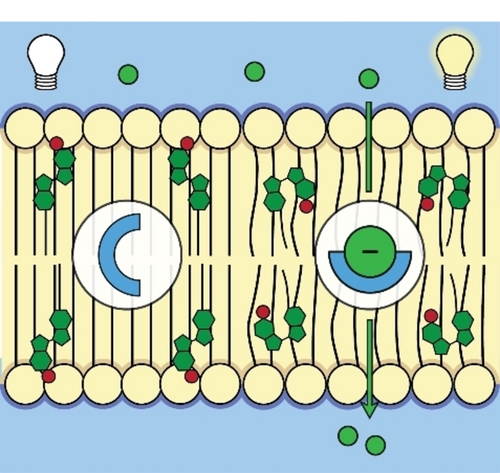
Dr. Sander J. Wezenberg is an Associate Professor at the Leiden Institute of Chemistry, Leiden University, where he leads an independent research group focused on developing stimuli-responsive molecular receptors and self-assembling materials. He was appointed Assistant Professor at the University of Groningen in 2017 and moved to Leiden University in 2019 to establish his research group, where he was promoted to Associate Professor in 2022. Dr. Wezenberg's educational background includes: Master's degree in Chemistry at the University of Nijmegen, conducting research in Prof. Roeland Nolte's group PhD in Supramolecular Chemistry at the Institute of Chemical Research of Catalonia (ICIQ) under Prof. Arjan Kleij (2011) Postdoctoral fellow with Prof. François Diederich at ETH Zurich Postdoctoral work with Prof. Ben Feringa at the University of Groningen His research focuses on using interdisciplinary approaches combining synthetic organic chemistry, supramolecular chemistry, and photochemistry to develop systems that can study and manipulate biological processes. Key research areas include: Photodynamic control of anion binding and lipid bilayer membrane transport Creation of polymeric and self-assembled materials with switchable functions Development of new diagnostic tools and therapeutic agents to improve human health Dr. Wezenberg's recent publications demonstrate strong trends in photoresponsive molecular systems for controlling anion transport and membrane properties. His work bridges chemistry, materials science, and biological applications, with particular emphasis on light-switchable molecular receptors and their applications in biological systems. Scientific awards and recognition: ERC Starting Grant (2018) Veni Grant from NWO (2014) Vidi Grant from NWO (2018) Member of the Young Academy of Europe (2020) Dr. Wezenberg actively mentors PhD and Master's students, with current advisees including Nol Duindam, Sabine Langens, Sofiia Emashova, Lin Xu, Dimitris Piperoudis, and Josien de Graaf. His research is supported by multiple funding sources including Leiden University, the European Research Council, the Dutch Research Council, and the China Scholarship Council. The Wezenberg Research Group is based at the Gorlaeus Laboratories in the new Gorlaeus Building at Leiden University, where they maintain a highly collaborative research environment focused on molecular switches, anion recognition, and dynamic supramolecular systems.
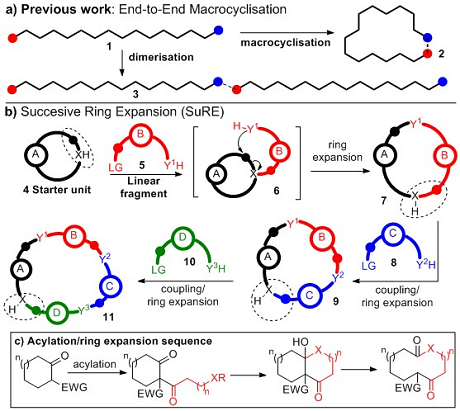
Dr. William Unsworth is a Senior Lecturer in the Department of Chemistry at the University of York. He holds a Leverhulme Trust Early Career Fellowship and the inaugural Eleanor Dodson Fellowship. His research focuses on developing new methods for synthesizing functionalized macrocycles, spirocycles, heterocycles, and natural products, with key interests in ring expansion strategies (e.g., SuRE methodology), photochemistry, catalysis, and spirocyclization reactions. Education: Bachelor's and PhD in Chemistry from the University of Oxford (PhD under Prof. Jeremy Robertson, 2010) Postdoctoral Research Associate with Prof. Richard J.K. Taylor at the University of York (2010–2013) Research Interests: Macrocycle synthesis, medium-sized rings, cascade reactions, photochemical radical processes, and catalyst-driven scaffold diversity. His group’s work emphasizes practical applications in medicinal chemistry and drug discovery. Awards: Thieme Chemistry Journals Award (2020) RSC Hickinbottom Award (2018) European Lead Factory Chemical Library Creativity Award (2017) RSC/BMOS Young Investigator Award (2015) Grants and Projects: Leads initiatives like the ‘Macrocycles for Drug Discovery (MC4DD)’ project funded by the European Commission, and collaborates on projects involving biocatalysis and natural product synthesis. Labs/Teams: The Unsworth Research Group at the University of York includes collaborators like Prof. Richard Taylor and Prof. Gideon Grogan, focusing on interdisciplinary synthetic chemistry and sustainable methods.
Matthew R. Jones is an Associate Professor in the Department of Chemistry at Rice University and holds the Gene and Norman Hackerman Junior Chair and Norman Hackerman-Welch Young Investigator titles. He joined Rice in 2017 after postdoctoral research at UC Berkeley under Paul Alivisatos and a PhD at Northwestern University under Chad Mirkin. His research focuses on systems-level nanoparticle assembly, plasmonics, and metamaterials, with applications in energy storage and biomedicine. Jones has pioneered techniques like 4D-STEM for catalytic nanoparticles and developed adaptive materials via strain-controlled synthesis. Education: B.S. in Materials Science and Biomedical Engineering (Carnegie Mellon University), Ph.D. in Chemistry (Northwestern University as an NSF Fellow). Key awards include the Packard Fellowship (2018) and NSF CAREER Award (2022). His lab hosts over 20 graduate students and postdocs, with notable advisees including Bukky, Zhihua Cheng, and Saxton. Research emphasizes interdisciplinary approaches: combining in-situ microscopy, ligand engineering, and computational modeling to control nanoparticle behavior. Recent studies include strain-preserved nanocatalysts (2024) and chiral superlattices (2024). Collaborations span Rice’s Center for Nanoscale Imaging Sciences and the Electrochemical Society. Lab: Jones Research Group Grants: NSF CAREER, Packard Fellowship, Rice Seed Award Publications: Over 50 peer-reviewed articles, including Science Advances (2024) and Nature Communications (2023)
Vinayak Agarwal is an Assistant Professor at the Georgia Institute of Technology with joint appointments in the School of Chemistry and Biochemistry and School of Biological Sciences within the College of Sciences. His research investigates natural products—small organic molecules produced by living organisms that form the basis of most clinical antibiotics and drugs, while also addressing environmental toxins and pollutants. Dr. Agarwal's work integrates (meta)genomics, biochemistry, structural and mechanistic enzymology, mass spectrometry, and analytical chemistry to answer fundamental questions about natural product biosynthesis. His lab specializes in marine systems, particularly marine sponges and associated microbiomes, with a focus on enzyme discovery, pathway elucidation, and biosynthetic engineering. Key research themes include halogenation enzymes, polyketide synthases, and peptide natural products, driven by the dual goals of drug discovery and environmental protection. Analysis of recent publications reveals a strong emphasis on marine natural product discovery, enzyme characterization, and biosynthetic pathway engineering. His team frequently combines genomic mining with chemical and biochemical validation, with growing attention to environmental implications of natural product chemistry and applications in antibiotic development. Dr. Agarwal has received significant recognition for his research and teaching: ASP Matt Suffness Young Investigator Award (2024) Camille Dreyfus Teacher Scholar award (2023) NSF CAREER award (2023) Cottrell Scholar Award (2021) Blanchard Assistant Professorship (2020) Harold Nation young faculty award (2019) He has mentored multiple PhD students to completion (Ipsita, Dongqi, Luna) and currently advises Vidya and Grace. His lab secures major funding from the NSF (CAREER), NIH (NIGMS MIRA), and Research Corporation for Science Advancement (Cottrell Scholar), alongside the Camille Dreyfus award and Petit Institute seed grants for collaborative marine research. The Agarwal Lab operates from the Petit Biotechnology Building at Georgia Tech and maintains a dynamic team structure with postdocs (Weimao Zhong, Nirmal Saha), graduate students (Sophia, Vidya, Beeta, Grace), and undergraduates. The lab emphasizes interdisciplinary collaboration, particularly with marine biology groups at Georgia Tech and external institutions for sample collection and structural analysis.
Eric W. Schmidt is a Distinguished Professor of Medicinal Chemistry at the University of Utah, with adjunct appointments in Biological Sciences and Chemistry. His research focuses on natural products chemistry, biosynthesis, synthetic biology, and pharmaceutical applications of marine animal microbiomes. University of California, San Diego (BS, PhD) Research areas include: Biosynthesis in animals and their microbiomes Synthetic biology approaches to chemical engineering Drug design from marine natural products Metagenomic analysis of symbiotic relationships Neuroactive compound discovery Antibiotic development against resistant pathogens His lab has pioneered methods for: Biosynthetic gene cluster identification Heterologous expression in E. coli Enzymatic modification of peptides Chemical analysis of marine invertebrates Recent publications highlight discoveries in: Marine animal chemical defense mechanisms Evolution of biosynthetic pathways Antibiotic resistance profiling Ionic channel-targeting compounds Peptide macrocyclization techniques Lipid-polyketide biosynthesis continuum Email: ews1@utah.edu Honors include: Distinguished Professor recognition
Parisa Hosseinzadeh is an Assistant Professor in the Department of Bioengineering at the University of Oregon. Her research focuses on computational protein design and structure-guided rational protein/peptide engineering, with applications in enzyme design, biosensors, and biomedical solutions. She holds a B.Sc. from the University of Tehran, a Ph.D. from the University of Illinois (advisor: Yi Lu), and a postdoc at the University of Washington in David Baker's lab. Her lab emphasizes interdisciplinary approaches at the intersection of computer science, chemistry, and biology, prioritizing diversity and inclusion in STEM. Key projects include designing cyclic peptides as enzyme inhibitors, developing methods for tuning redox potentials in metalloproteins, and creating tools to combat biomedical challenges. Lab members include postdocs, graduate students (e.g., Noora Azadvari, Andrew Powers), and undergraduates. Notable achievements include NSF grants, the Baxter Foundation Award, and the Hans Horse Meyer Award. The lab also emphasizes mentorship, collaborative culture, and outreach initiatives.
Lucia Lee is an Assistant Professor in the Department of Chemistry at Queen's University, affiliated with the Faculty of Arts and Science. Her research focuses on applying green chemistry principles to supramolecular interactions involving main-group elements, particularly sigma-hole interactions, with applications in materials science and medicine. She holds a PhD from McMaster University and has completed postdoctoral studies at the University of Geneva and Weizmann Institute of Science. Dr. Lee's educational background includes a PhD supported by an NSERC grant, which explored chalcogen bonding in supramolecular materials. Her postdoctoral work at Weizmann focuses on stimuli-responsive materials using chalcogen elements for photoswitching applications. She has also contributed to academic governance through roles in the McMaster Graduate Students Association. Her research interests span analytical chemistry, quantum chemistry, inorganic and bioinorganic chemistry, organic chemistry, and free radical chemistry. Key projects include integrating chalcogen bonding into d-metal coordination chemistry, catalysis, and chemical biology to create functional materials. Her lab, located in CHE513, emphasizes sustainable approaches to material design through main-group supramolecular systems. Her articles explore topics like chalcogen bonding mechanisms, anion transport, and photoswitching in confined spaces, reflecting a strong focus on molecular assembly and functional materials. She has no listed scientific awards but demonstrates significant contributions to supramolecular chemistry through her publications and cross-appointments at Queen's Carbon to Metal Coating Institute.