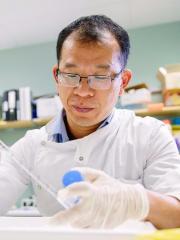
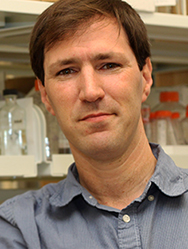
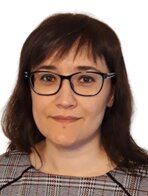
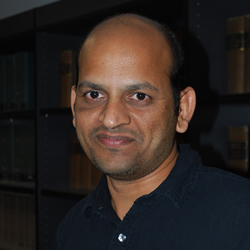
Ganapathi Anantharaman is a Professor in the Department of Chemistry at the Indian Institute of Technology Kanpur (IIT Kanpur) . He earned his PhD from the University of Goettingen, Germany , in 2003 and has since held academic positions at IIT Kanpur, including Lecturer (2004) and Assistant Professor (2007), before being promoted to Professor. His research spans coordination and organometallic chemistry , with a focus on coordination polymers , molecular metal hydroxides , N-heterocyclic carbene (NHC) based multi-site coordinating ligands , and ionic liquids . His work integrates inorganic chemistry , organometallics , and catalysis , aiming to develop supported catalysts with enhanced recyclability and selectivity. His recent publications highlight advancements in luminescent coordination polymers , organotin macrocycles , thio-functionalized NHC-metal complexes , and ionic liquid applications . These studies contribute to materials science, catalysis, and supramolecular chemistry.
Professor Annela M Seddon is an academic at the University of Bristol, affiliated with the School of Physics Infection and Immunity . She holds the title of Professor of Physics and serves as the Associate Pro Vice Chancellor (Research & Innovation) in the Science and Engineering faculty. Her research bridges physics, chemistry, and biology.
William Dougherty is an Associate Professor in the Department of Chemistry at Susquehanna University, where he teaches and mentors undergraduate researchers. His office is located in the Natural Sciences Center (Room 307A). He holds a PhD from the University of Delaware and a BS from Ursinus College. Research Interests: Dr. Dougherty investigates the synthesis, characterization, and redox properties of transition metal complexes, focusing on ligand design (e.g., trispyrazolylborate and Janus head ligands) to develop catalysts for reactions like hydrogen production and dinitrogen reduction. His work bridges inorganic/organometallic chemistry with applications in energy and materials science. A secondary project explores sulfur-containing chelating ligands for novel coordination architectures. Publication Trends: His 15 most recent articles (2012-2015) emphasize electrocatalysis, ligand design, and structural characterization of metal complexes. Common themes include hydrogen production, dinitrogen activation, redox behavior, and crystallographic studies of novel coordination compounds, primarily published in top inorganic/organometallic journals. Grants & Advising: 2015: Susquehanna University Research Partners ($3,000) for amino-acid derived ligand research. 2014: II-VI Foundation Undergraduate Research Program ($17,764) for trispyrazolylborate complex studies. He mentors undergraduate students in synthetic chemistry and electrochemical analysis. Laboratory: Leads a research group focused on transition metal chemistry at Susquehanna, emphasizing hands-on training in synthesis, spectroscopy, and electrochemistry.
Stéphane VIEL is a Professor at Aix-Marseille University specializing in Nuclear Magnetic Resonance (NMR) spectroscopy and materials characterization. He serves as Head of the NMR group within the Applied Spectrometry for Structural Characterization (SACS) team at the Institute of Radical Chemistry (ICR). His research focuses on developing advanced NMR methodologies, particularly solid-state NMR enhanced by Dynamic Nuclear Polarization (DNP), to overcome sensitivity limitations and achieve high-resolution structural analysis of complex materials. His research spans multiple domains including polymer chemistry, materials science, and analytical chemistry. VIEL's work specifically targets structural elucidation, nanostructuring properties, and aging mechanisms of polymer materials. His recent publications reveal a strong emphasis on applying DNP-NMR techniques to study crystallization processes, polymorph transformations, and molecular dynamics in confined environments. His research bridges fundamental science with practical applications in pharmaceuticals, energy storage, and healthcare materials. VIEL's teaching activities concentrate on analytical chemistry and spectroscopy at both Bachelor's and Master's levels. His educational contributions complement his research by training the next generation of scientists in advanced characterization techniques. Junior Member of the University Institute of France (2015-2020) As leader of the NMR group at ICR, VIEL directs research initiatives that combine molecular spectroscopy with materials chemistry to address challenges in health and environmental science. His work on DNP-NMR has significantly advanced the field by improving detection limits by several orders of magnitude, enabling previously impossible structural analyses of complex materials.
Dr. Zhe Yang is a Postdoctoral Research Fellow at the School of Biomedical Sciences, The University of Queensland, specializing in protein trafficking mechanisms and their roles in disease. His research spans molecular biology, neuroscience, and cell biology, with a focus on retromer complex functions in neurodegenerative disorders like Parkinson’s disease and pathogen interactions such as Salmonella invasion. He holds a PhD from UQ and has contributed to 22 journal articles. Research Interests : Protein Trafficking in Neurodegenerative Diseases Retromer Complex Function Endosomal Transport Dynamics Salmonella Effector Mechanisms Lysosomal Activity Regulation Adipocyte Differentiation Publications : His 15 most recent works (2025–2016) highlight his expertise in retromer-mediated cargo sorting, phosphoinositide binding, and disease-related trafficking disruptions. Key themes include Parkinson’s pathology, bacterial pathogenesis, and metabolic regulation. Supervision : Dr. Yang serves as an associate advisor for postgraduate research projects, focusing on retromer-associated proteins, adiponectin secretion, and endosomal pathways. His supervisees include students in biomedical sciences and related fields.
Albert Bowers is an Associate Professor in the Division of Chemical Biology and Medicinal Chemistry at the UNC School of Medicine , with affiliations in the Center for Integrative Chemical Biology and Drug Discovery , Department of Chemistry , and Lineberger Comprehensive Cancer Center . His research focuses on translating natural product insights into next-generation peptide macrocycle therapeutics. Research Interests : Synthesis and modification of natural product-derived therapeutic leads Integration of chemical synthesis, biosynthesis, and computational chemistry mRNA display for high-throughput peptide library screening Biocatalysis using RiPP enzymes for drug-like macrocycles Scientific Awards : Beckman Young Investigator Award (2014) AACP New Investigator Award (2013) NIH NCI Ruth L. Kirschstein Fellowship (2008-2011) NSF/JSPS Fellowship for Kyoto University (2005) Publications highlight advancements in mRNA display libraries, biocatalytic macrocyclization, and targeting protein-protein interfaces through structural and computational approaches.
Wael E Houssen is a Reader (equivalent to Associate Professor) at the University of Aberdeen 's School of Medicine, Medical Sciences & Nutrition , within the Microbiology and Immunity division and the Institute of Medical Sciences . His work integrates natural product chemistry, enzymology, and peptide engineering to develop novel therapeutics. Research Interests Design and biosynthesis of cyclic peptides with therapeutic potential. Characterization of enzymes involved in peptide macrocyclization and post-translational modification. Discovery of antimicrobial and antiviral agents from marine and terrestrial organisms. Application of click chemistry and chemoenzymatic methods for peptide functionalization. Investigation of scorpion venom peptides for anti-SARS-CoV-2 activity. Publications & Impact With 53 peer-reviewed outputs and over 1,800 citations, his recent work (2023–2024) focuses on anti-SARS-CoV-2 cyclic peptides, antimicrobial peptides against resistant pathogens, and expanding the substrate scope of cyanobactin macrocyclases. His research bridges fundamental enzymology with translational applications in infectious disease and cancer. Awards & Recognition 2019 : University of Aberdeen Principal’s Prize for Research and Engagement (Outstanding research team). Collaborations & Funding Dr Houssen leads interdisciplinary teams involving microbiologists, chemists, and pharmacologists. His projects are supported by UK and international grants, fostering collaborations across Europe, the Middle East, and North America. He has supervised numerous PhD and postdoctoral researchers, contributing to the next generation of scientists in natural product and peptide sciences.
Estíbaliz Merino Marcos is a Professor in the Department of Organic Chemistry and Inorganic Chemistry at University of Alcalá, where she leads the Biological Chemistry research group. She earned her PhD Summa Cum Laude from Autonomous University of Madrid in 2007 and completed postdoctoral training at prestigious institutions including Goethe University Frankfurt, RWTH Aachen University, and University of Zurich. Her research focuses on sustainable organic transformations, particularly visible-light photocatalysis and photoredox chemistry. Key areas include development of new synthetic methodologies, synthesis and applications of azaborines, cellular staining agents for bioimaging, and bioactive compounds targeting kidney disease. Specializes in azobenzene photochemistry Develops metal-free and metal-catalyzed reactions Focuses on green chemistry principles Works on pharmaceutical applications Professor Merino Marcos has published extensively in top chemistry journals including Nature Chemistry, Chemical Science, and Journal of Organic Chemistry. Her recent work demonstrates strong trends in visible-light mediated reactions, asymmetric synthesis, and applications in drug discovery. She has successfully translated fundamental photochemistry research into practical applications for pharmaceutical synthesis. Scientific recognition includes: Summa Cum Laude PhD distinction Extraordinary Doctorate Award Multiple competitive research grants She actively supervises PhD students and has established a productive research program with consistent funding from national and regional sources. Her research group collaborates extensively with other departments at University of Alcalá and maintains international partnerships. Professor Merino Marcos also contributes significantly to teaching across multiple chemistry programs, including the Degree in Chemistry, Drug Discovery, and Chemistry for Sustainability and Energy. The Biological Chemistry research group maintains strong laboratory facilities supported by multiple equipment grants, including chromatography systems and specialized reaction setups for photochemical research. The group's work bridges fundamental organic chemistry with practical applications in medicinal chemistry and materials science.
Ana Cristina Faria Ribeiro is a Professor with Habilitation at the Chemistry Department of the Faculty of Science and Technology, University of Coimbra, Portugal. She has been affiliated with the University of Coimbra since 1989, progressing from Research Intern to her current position as Auxiliary Researcher (Investigador Auxiliar) with Habilitation. Her academic journey includes visiting scholar positions at the University of Regensburg (Germany), University of Naples Federico II (Italy), and University of London (Canada). Professor Ribeiro's research focuses on: Electrolytes and non-electrolytes Transport and thermodynamic properties of drugs and cyclodextrins Multicomponent diffusion Supramolecular host-guest compounds Her work has significant applications in pharmaceutical sciences, particularly in drug delivery systems and the development of novel methodologies for studying molecular interactions in complex solutions. Professor Ribeiro has been involved in over 9 National and International research projects since 2001, demonstrating her leadership in advancing knowledge in her field. With an impressive publication record of over 150 ISI journal articles (h-index: 30), 35 book chapters, and co-editor of 23 books, Professor Ribeiro has established herself as a leading researcher in physical chemistry and pharmaceutical sciences. Her recent publications (2023-2026) show continued productivity and relevance in areas such as cyclodextrin-based drug delivery systems, transport properties of complex molecules, and applications in biomedical materials. Professor Ribeiro serves on the editorial boards of four international journals: Journal of Chemical Thermodynamics (since 2016) Biomolecules (since 2021) Pharmaceutical Science Advances (since 2023) Innovation Discovery (since 2024) She has supervised more than 20 MSc students, 6 PhD students, and 2 post-doctoral researchers, demonstrating her commitment to academic mentorship. Professor Ribeiro is also an active member of the Scientific Committee of the Chemistry Department at the University of Coimbra and has organized and served on scientific committees for numerous national and international meetings.
Gaspard Huber is a Researcher at the French Alternative Energies and Atomic Energy Commission (CEA), working within the IRAMIS institute, NIMBE unit, and LSDRM laboratory (Laboratory of Structure and Dynamics by Magnetic Resonance) since 2002. His research focuses on hyperpolarization techniques to overcome NMR's sensitivity limitations, with applications spanning metabolomics, biosensors, and materials science. His educational background includes: Chemical Engineering degree from ESCIL (now CPE Lyon), 1993 PhD from CEA Grenoble (1996, supervised by Dr. Jacques Gaillard) Habilitation to lead research (2006) Post-doctoral positions at University of Florence (1996-1998) and BIP-CNRS Marseille (1998-1999) Huber's research centers on hyperpolarization methodologies using parahydrogen and laser-polarized noble gases, enabling breakthroughs in metabolomic profiling of microscopic specimens and xenon-based biosensors . Current projects include ANR-funded SOFTNMR (flow NMR techniques) and HELPING (noble gas polarization), supporting active PhD and post-doctoral recruitment. His work bridges fundamental NMR physics with biomedical applications through supramolecular host-guest chemistry. Publication trends since 2013 reveal three interconnected domains: 1) Hyperpolarization engineering (SABRE/PHIP techniques for signal enhancement), 2) Supramolecular biosensors (cryptophanes/cucurbiturils for xenon detection), and 3) Metabolomic applications using HR-μMAS NMR. Key innovations include oxygen-carrying cucurbituril derivatives and single-scan diffusion-ordered NMR for hyperpolarized mixtures. He actively supervises students, with a new PhD fellow starting October 2024, and collaborates internationally through the HELPING project with laboratoire Kastler Brossel. His LSDRM laboratory provides specialized infrastructure for magnetic resonance research in materials and biomedicine. Notable patents include: 'Cucurbituril derivatives as oxygen carriers' (2017) NMR-based rubber characterization methods (2001) Reactor-NMR coupling devices (2000) Living cell analysis via NMR (2000)
Nele Konrad is a Junior Research Fellow at Tallinn University of Technology's School of Science, Department of Chemistry and Biotechnology. She has held this full-time position since September 1, 2023, following a part-time Junior Research Fellow role from September 2019 to August 2023. Dr. Konrad earned her Master's Degree in 2019 with research on 'Host-guest interactions of metalloporphyrins with a bifunctional thiourea' under Dzmitry Kananovich's supervision. She is currently completing her PhD with the thesis 'Development of New Supramolecular Sensors' supervised by Riina Aav and Dzmitry Kananovich. Her research focuses on supramolecular chemistry , with expertise in chirality induction , porphyrin-based sensor development , and host-guest interactions . Dr. Konrad's work combines experimental and computational approaches to understand chirality transfer mechanisms in supramolecular systems, with applications in chiral sensing, molecular recognition, and environmental monitoring of chiral pollutants. She is actively involved in multiple significant research projects including the Centre of Excellence in Circular Economy for Strategic Mineral and Carbon Resources (2024-2030), The separation, processing, and recycling of rare earth metals (2023-2029), and Self-assembled Chiral Hemicucurbiturils as a platform for supramolecular sensing (2024-2028). These projects demonstrate her expertise in applying supramolecular chemistry to resource sustainability and chiral compound separation challenges. Analysis of her publication record reveals a consistent research trajectory in supramolecular chirality, with a growing emphasis on practical applications for chiral sensing and separation. The integration of porphyrin chemistry with chiral macrocyclic hosts represents an innovative approach to creating highly selective molecular recognition systems. Dr. Konrad maintains extensive international collaborations, as evidenced by numerous co-authored publications in high-impact journals. Her interdisciplinary work bridges organic chemistry, physical chemistry, and materials science to develop novel solutions for chiral analysis and separation problems.
Máté Erdélyi is a Professor in the Department of Chemistry - BMC at Uppsala University specializing in Organic Chemistry. He leads the Erdelyi Group which conducts interdisciplinary research at the intersection of organic chemistry, medicinal chemistry, and structural biology with significant contributions to multiple scientific domains. Dr. Erdélyi's research program centers on halogen bonding , molecular conformation , and antibiotic resistance . His group has pioneered methods for studying weak interactions in solution using NMR spectroscopy, particularly non-uniform sampling techniques for quantitative NOESY. They investigate how molecular folding affects biological activity, with applications in PROTAC development and understanding cell permeability mechanisms. The group also maintains an active natural products chemistry program, isolating bioactive compounds from plant sources with antimicrobial, antiviral, and antiplasmodial properties. Their work bridges fundamental physical organic chemistry with practical drug discovery applications, focusing on metallo-β-lactamase inhibitors to combat antibiotic resistance. Analysis of Dr. Erdélyi's recent publications (2023-2025) reveals several dominant research themes: 1) Molecular conformation studies of macrocycles and their impact on drug properties, particularly PROTAC cell permeability; 2) Development of novel inhibitors for metallo-β-lactamases targeting antibiotic resistance; 3) Investigation of halogen bonding and chalcogen interactions in molecular recognition; 4) Isolation and characterization of bioactive natural products from plant sources. These publications span top journals in chemistry, medicinal chemistry, and natural products research, demonstrating methodological innovation in NMR techniques and structural analysis. Dr. Erdélyi actively collaborates with researchers across multiple institutions globally. His Erdelyi Group maintains a strong publication record and has contributed to scientific standards development including NMReDATA for NMR reporting. While specific grant information isn't detailed in the provided text, the breadth and impact of his research suggest substantial research support and leadership in his fields of expertise.
Dr. P. Chandrasekaran is an Associate Professor in the Department of Chemistry and Biochemistry at Lamar University. His research group specializes in inorganic and organometallic chemistry, with a focus on photochemical and catalytic applications. Key investigations include metal-dithiolene complexes for dye-sensitized solar cells and organic transformation catalysts. Research interests span: Inorganic Synthesis : Design of metal complexes with tailored properties Energy Materials : Development of solar cell components Catalysis : Novel catalysts for chemical reactions Spectroscopic Analysis : X-ray and electrochemical characterization Publications (2005–2013) emphasize inorganic synthesis, structural analysis, and applications in energy and catalysis. Trends include metal-ligand interactions, macrocyclic complexes, and reversible coordination systems. Students in his lab develop expertise in: Air-free synthetic methods Electrochemistry Density functional theory (DFT) Spectroscopic techniques Lab resources include facilities for advanced chemical synthesis and material characterization, though no specific lab URL is provided.
Amanda Morgenstern is an Assistant Professor in the Department of Chemistry & Biochemistry at the University of Colorado Colorado Springs, part of the College of Letters, Arts & Sciences. Her research program focuses on developing and applying computational methods to understand electron charge density in chemical systems. Dr. Morgenstern received her B.A. from Colorado College in 2010, followed by a Ph.D. from the Colorado School of Mines in 2016 where she worked with the Molecular Theory Group. She completed postdoctoral training at Los Alamos National Laboratory from 2017-2019 in the Theoretical-1 Division. Her research centers on discovering how electron charge density can better understand and design molecules, materials, and enzymes. The most fundamental aspect of her work is the development of gradient bundle analysis, an extension of the quantum theory of atoms in molecules (QTAIM) that provides detailed structural information from electron charge density. Current projects investigate how electric fields can rearrange charge density to catalyze reactions and control product selectivity, propose drug candidates for Human African Trypanosomiasis using molecular docking and QTAIM, and computationally investigate spectroscopy results for tetramine molecules. Analysis of Dr. Morgenstern's publication record shows a strong focus on quantum chemical topology, with particular emphasis on extending QTAIM through gradient bundle analysis. Her work spans theoretical development, enzyme catalysis studies, materials science applications, and medicinal chemistry. Many publications involve collaborations with researchers at Los Alamos National Laboratory and other institutions, reflecting an interdisciplinary approach to computational chemistry. Dr. Morgenstern has received recognition through publications in high-impact journals including Journal of the American Chemical Society, Chemical Science, and Journal of Physical Chemistry. Her work demonstrates both theoretical innovation in quantum chemical methods and practical applications in drug discovery and materials science. As a relatively early-career faculty member (Assistant Professor), Dr. Morgenstern appears to be building an active research program with multiple ongoing projects. Her work at the intersection of theoretical chemistry and practical applications suggests opportunities for students interested in computational methods development and their application to real-world problems in medicine and materials science.
Professor Haoran Sun leads the Fluorinated Materials Group in the Department of Chemistry at the University of South Dakota, focusing on energy conversion and drug development through innovative organofluorine chemistry. His research bridges fundamental C-F bond studies with technological applications in batteries and environmental remediation. Education: PhD, Chemistry, Jilin University (1996) MS, Chemistry, Jilin University (1993) BS, Chemistry, Jilin University (1990) Research centers on two pillars: (1) Creating non-flammable electrolytes for high-energy batteries using polyfluorinated compounds, and (2) Developing circular chemistry approaches to recycle persistent fluorochemicals via photochemical/electrochemical C-F bond activation. The lab's signature strategy leverages perfluoroalkylation to engineer lamellar π-π stacked materials with tunable optoelectronic properties. Publication trends show increasing focus since 2020 on deoxyfluorination chemistry, photochemical transformations of perfluoroalkylated aromatics, and solid-state structural control. Key journals include Journal of Fluorine Chemistry and CrystEngComm, with strong emphasis on practical applications for energy storage and environmental sustainability. Key Awards: President's Award for Research Excellence (Established Faculty, 2025) NSF CAREER Award (2014) President’s Award for Research Excellence (Early-Mid Career, 2014) The lab maintains robust funding through 15+ active grants totaling over $30M, including the NSF Engineering Research Center for Environmentally Applied Refrigerant Technology Hub (EARTH) where Sun leads USD's chemistry team. Students receive comprehensive training in synthesis, electrochemistry, and computational methods, with recent graduates securing industry positions at QuantumScape and Raybow PharmaScience. The Center for Fluorinated Functional Materials ($2.7M state-funded) provides advanced infrastructure including Bruker Compact HR-MS and battery testing systems. The Fluorinated Materials Group operates from Churchill-Haines Labs with active collaborations across six universities in the EARTH consortium. Recent equipment upgrades support cutting-edge research on fluorocarbon recycling and next-generation battery materials.