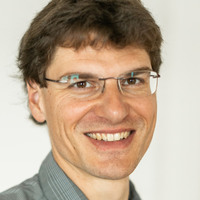
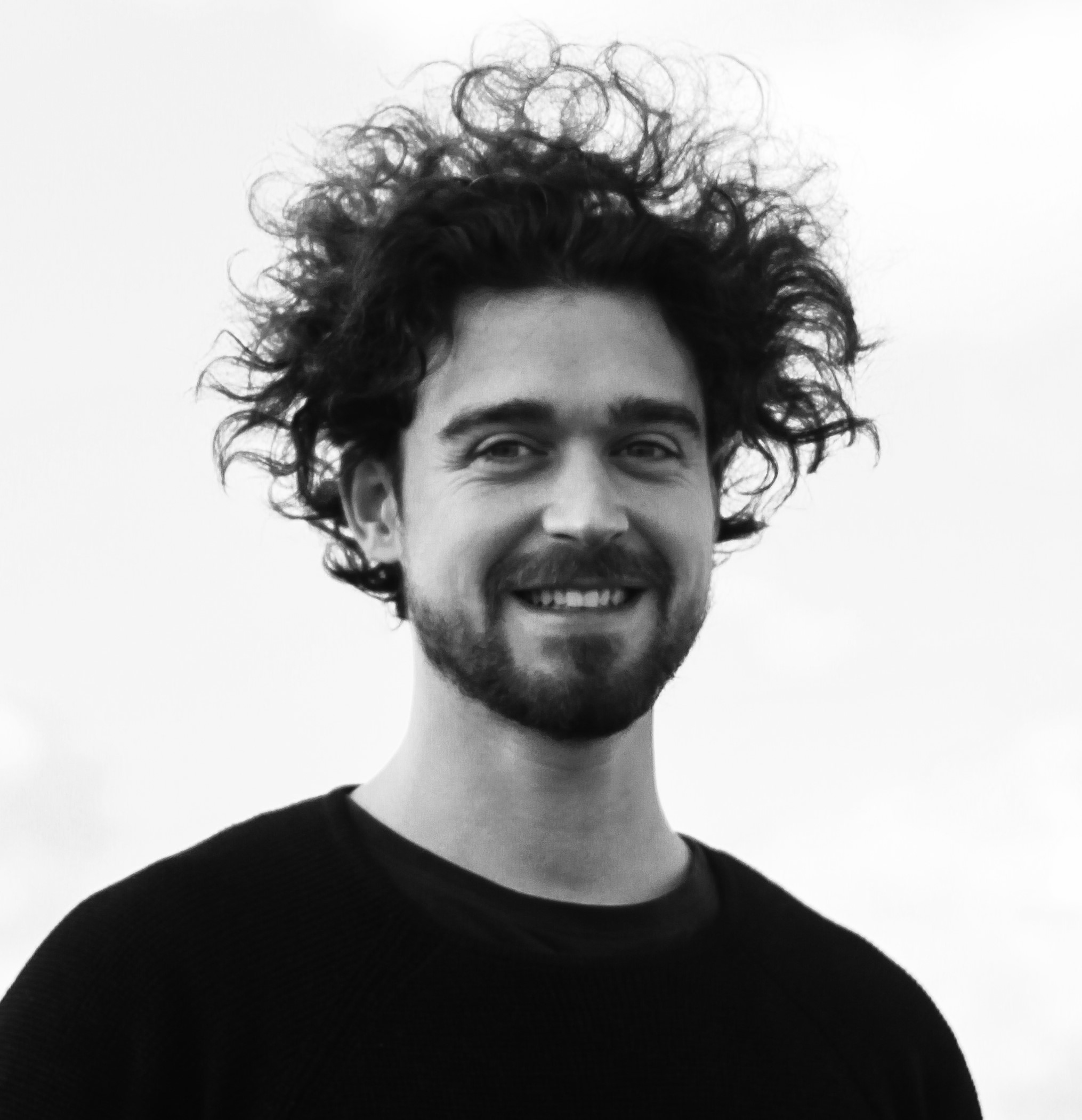
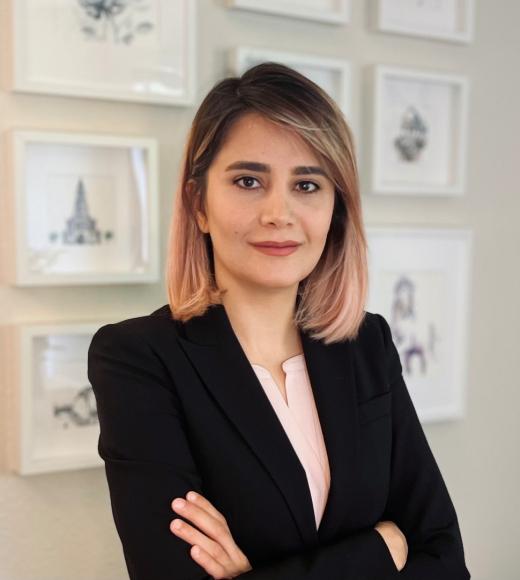
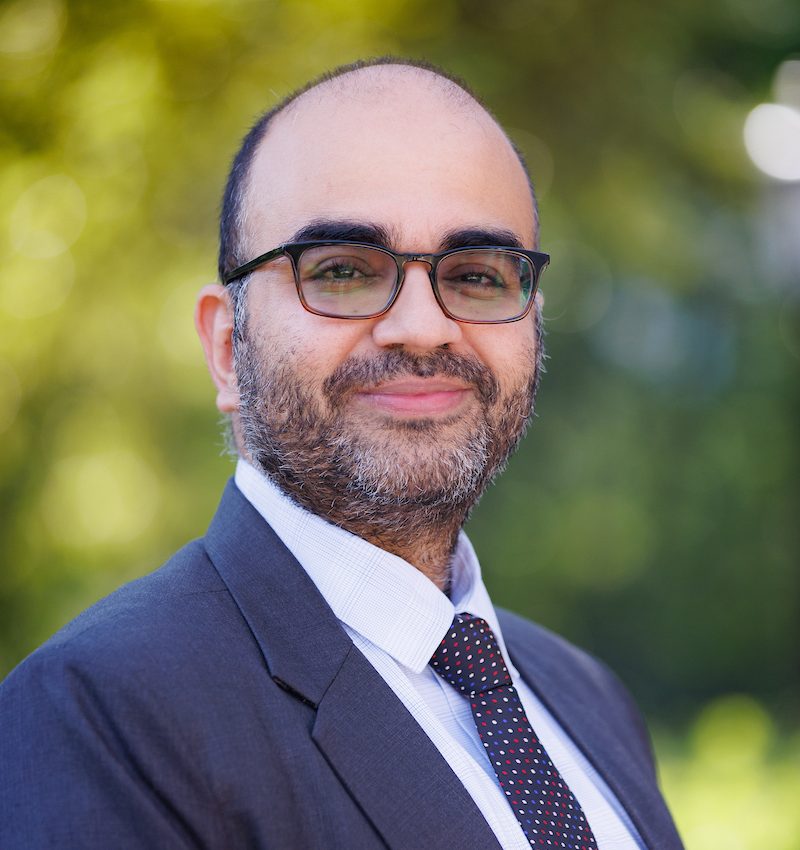
Georg Martius is a Senior Research Scientist at the Max Planck Institute for Intelligent Systems in Tübingen and a full Professor at the University of Tübingen since 2023. His work focuses on autonomous learning in embodied agents, drawing inspiration from child development to create self-motivated robotic systems. Research Areas: Model-based reinforcement learning, intrinsic motivation, deep learning, haptic sensor development, and integration of combinatorial algorithms into neural networks. Affiliations: Former postdoc at IST Austria (Christoph Lampert and Gašper Tkačik groups) and Max Planck Institute for Mathematics in the Sciences (Leipzig). Contact: georg.martius@tuebingen.mpg.de Education: PhD in 2009 (Göttingen), Computer Science studies in Leipzig and Edinburgh.
Gauthier Gidel is an Associate Professor at the Department of Computer Science and Operations Research (DIRO) within the Faculty of Arts and Science at Université de Montréal, where he also holds the prestigious Canada CIFAR AI Chair position. He is a core faculty member of Mila, Quebec's AI research institute, and maintains active research collaborations with leading institutions. His academic journey includes a PhD in Computer Science under the supervision of Simon Lacoste-Julien, with internships at Sierra, ElementAI, and DeepMind during his doctoral studies. Dr. Gidel's research spans multiple critical areas in machine learning, with particular emphasis on generative modeling , adversarial machine learning , and variational inequalities for machine learning. His work explores the intersection of optimization theory and practical AI systems, focusing on challenges like LLM safety alignment, multi-agent cooperation, and robustness against adversarial attacks. He is particularly known for his contributions to understanding the theoretical foundations of generative adversarial networks through variational inequality frameworks. His recent publications reveal a strong trend toward addressing critical challenges in large language model safety and alignment, with numerous 2024-2025 papers focusing on adversarial robustness, safety evaluation methodologies, and alignment techniques for LLMs. Simultaneously, his foundational work continues in optimization theory, particularly in variational inequalities and performative prediction, demonstrating his dual focus on practical AI safety concerns and theoretical machine learning foundations. Canada CIFAR AI Chair Core member of Mila Organizer of popular NeurIPS workshops on smooth games Co-founder of the ICLR blog post track Dr. Gidel actively supervises an extensive research group with approximately 10 current graduate students and numerous alumni who have secured positions at leading institutions including Inria Lyon, Oxford, and industry research labs. His research is supported by multiple substantial grants from CRSNG, MITACS, and IVADO, including the prestigious CRSNG Discovery Grant program and MITACS Acceleration Québec projects focused on fraud detection in music streaming and conditional generation. His laboratory maintains strong connections with both academic and industry partners, fostering a collaborative environment focused on advancing AI safety and theoretical understanding.
Maciej Zięba is an academic researcher affiliated with the Faculty of Information and Communication Technology at Wrocław University of Science and Technology, specifically within the Department of Artificial Intelligence . His work spans machine learning, deep learning, and computer vision, with a focus on hyperspectral imaging, autonomous systems, and 3D modeling. Recent research includes uncertainty-aware sensor deployment for autonomous vehicles, low-light image enhancement algorithms, and probabilistic regression frameworks for tabular data. He has co-authored publications on flow-based models, hypernetworks, and neural radiance fields (NeRF) applied to 3D face rendering. Contact: maciej.zieba@pwr.edu.pl
Professor Dario Farina is Chair in Neurorehabilitation Engineering at the Department of Bioengineering, Faculty of Engineering, Imperial College London. He has previously served as Full Professor at Aalborg University, Denmark, and at the University Medical Center Göttingen, Germany, where he founded and directed the Institute of Neurorehabilitation Systems. His research spans biomedical signal processing, neural control of movement, and neurorehabilitation technology, with extensive contributions to electromyography, motor unit analysis, and neural interfaces. Chair in Neurorehabilitation Engineering, Imperial College London Former Full Professor, Aalborg University and University Medical Center Göttingen Founder and Director, Institute of Neurorehabilitation Systems Key Affiliations: Centre for Neurotechnology, Artificial Intelligence Network, Robotics Forum, Neuromechanics and Rehabilitation Technology His research focuses on biomedical signal processing , neural control of movement , and neurorehabilitation technology . He investigates how neural signals control muscles, develops methods to decode motor unit activity from EMG, and designs neural interfaces for prosthetics and rehabilitation. His work integrates computational modeling, signal processing, and clinical applications to improve bionic systems and neurorehabilitation outcomes. The recent publications (2024–2025) show a strong emphasis on high-density EMG , real-time motor unit decomposition , peripheral and cortical neural interfacing , closed-loop control systems , and AI-driven biosignal analysis . Key themes include decoding spinal and cortical signals, improving prosthetic control, understanding tremor mechanisms, and developing open-source tools for motor unit analysis. The work bridges neuroscience, engineering, and clinical practice. Scientific awards and honors include: Royal Society Wolfson Research Merit Award (2016) IEEE EMBS Early Career Achievement Award (2010) Nightingale Prize for best paper in MBEC (2007) Elected Fellow of EAMBES (2016) Elected Fellow of AIMBE (2012) Professor Farina has advised numerous researchers and students in neuroengineering and rehabilitation technology. He has led major research grants in neural interfaces and neurorehabilitation. He is Editor-in-Chief of the Journal of Electromyography and Kinesiology , an editor for IEEE Transactions on Biomedical Engineering and The Journal of Physiology , and has held editorial roles in multiple journals. He was President of ISEK (2012–2014) and is a Senior Member of IEEE. He leads a research group focused on neuromechanics, neural decoding, and bionic systems. The team develops tools like I-Spin live and MUedit for real-time motor unit identification and contributes to open-source platforms such as NeuroMotion . The lab collaborates internationally on projects involving spinal cord stimulation, prosthetic control, and wearable robotics, aiming to translate neural engineering advances into clinical rehabilitation.
Shima Nazari is an Assistant Professor in the Department of Mechanical and Aerospace Engineering at the University of California, Davis. Her research focuses on dynamics and control with applications to transportation systems, energy systems, and electrified/automated vehicles. She leads the CORE Lab, exploring advancements in hybrid powertrains, autonomous vehicle control, and energy-efficient systems. Education: Ph.D., Mechanical Engineering, University of Michigan (2019) M.S., Electrical Engineering, University of Michigan (2016) M.S., Mechanical Engineering, Sharif University of Technology, Iran (2012) B.S., Mechanical Engineering, Sharif University of Technology, Iran (2009) Her research interests span dynamics and control theory applied to hybrid electric vehicles, powertrain optimization, and autonomous systems. She has contributed to advancements in energy-efficient vehicle designs, regenerative braking, and control strategies for electrified powertrains. Her work often bridges mechanical and electrical engineering disciplines to address real-world challenges in transportation and energy. Recent research trends in her articles emphasize data-driven control methods, hybridization strategies for autonomous systems, and thermal management of energy storage solutions. These studies reflect her commitment to interdisciplinary innovation. Although no scientific awards are explicitly mentioned, her contributions to the field are evident through her active research and publications. She advises students in her lab and collaborates on grants focused on sustainable mobility solutions. Dr. Nazari is affiliated with the UC Davis College of Engineering and actively contributes to graduate programs in Dynamics, Controls, Vehicles, and Robotics. The CORE Lab serves as a hub for experimental and computational research in her areas of expertise.
Vishesh Vikas is an Associate Professor in the Department of Mechanical Engineering at the University of Alabama, College of Engineering. He is based in the South Engineering Research Center (SERC) and leads the Agile Robotics Laboratory (ARL@UA), which focuses on bio-inspired, soft, and tensegrity robotics, as well as inertial sensing and estimation. Education: PhD, Mechanical Engineering, University of Florida, 2011 MS, Mechanical Engineering, 2008 B.Tech., IIT Guwahati, 2005 His research spans autonomous systems, wearable technologies, biomedical devices, guidance and control, intelligent systems, space robotics, and engineering education . The lab’s work integrates mechanical design, sensing, and advanced control to create agile, adaptive robotic systems for unstructured environments. The recent publications highlight a strong trend in soft and tensegrity robotics , with focus on gait synthesis, locomotion planning, shape and joint estimation, and dexterous manipulation. These works combine modeling, data-driven control, and sensor fusion, often using accelerometers, IMUs, and vision for real-time feedback. The research is published in top robotics venues such as IEEE TRO, RA-L, and ASME journals. Scientific Awards: No awards explicitly mentioned in the text. Vishesh Vikas actively advises graduate students, including PhD and Master’s candidates, and has successfully guided several to thesis and dissertation completion. His lab is affiliated with multiple research centers including the Alabama Center for the Advancement of AI, Center for Advanced Manufacturing, and Center for Advanced Public Safety. He is involved in outreach and education, including mechatronics workshops and seminar hosting. Current projects include exosuits for spine support and robotic systems for mobility in extreme environments. Laboratory and Team: The Agile Robotics Lab (ARL@UA) fosters interdisciplinary research in nature-inspired robotics, combining principles from biology, mechanics, and control. The team has hosted eminent scholars and is featured in university and college news for its innovative work on wearable robotics and soft manipulators.
Dr. Jose Luis SANCHEZ LOPEZ is a Research Scientist at the Interdisciplinary Centre for Security, Reliability and Trust (SnT) of the University of Luxembourg, leading the Aerial Robotics Lab (AeRoLab) within the Automation & Robotics Research Group (ARG). He joined SnT in 2017 as a Postdoc Research Associate, promoted to Research Scientist in 2021. His research focuses on autonomous robotics, particularly aerial systems, emphasizing situational awareness, SLAM, and trajectory planning. Education: Ph.D. in Robotics (2017), M.Sc. in Automation & Robotics (2012), and Engineering degree in Industrial Engineering (2010), all from the Technical University of Madrid. Visiting Research: Arizona State University (2012), LAAS-CNRS (2014–2016). Research Interests: Multi-agent robotic systems, sensor fusion, localization/mapping, computer vision, machine learning, and trajectory control. He has authored over 56 peer-reviewed publications, with an h-index of 18. Projects: Leads projects like DEUS (PI), NEDA, ÄerdFly (PI), and RoboSAUR. Contributions span European, Luxembourg, and Spain-funded initiatives, focusing on autonomous systems, 5G integration, and construction-site robotics. Teaching: Lectured in MICS, BiCS, BING (Uni.lu) and GITI (UPM). Actively involved in academic service as a reviewer, editor, and competition participant (e.g., IMAV, IARC). Outreach: National Coordinator for Luxembourg’s Robotics European Week, promotes robotics education in schools and public events.
Dina El-Zanfaly serves as an Assistant Professor in the School of Design at Carnegie Mellon University (CMU), where she directs the hyperSENSE: Embodied Computations Lab. Her work bridges computational design and human-centered interaction, focusing on how physicality shapes sensory experiences and cognitive processes through intelligent systems. Education: PhD in Design and Computation, Massachusetts Institute of Technology (MIT) Master of Science in Design and Computation, MIT (Fulbright scholar) Her research critically examines computational methods for augmenting sensory perception, with emphasis on embodied sense-making in hybrid environments. She investigates co-creative interactions between humans and intelligent systems, exploring how computational tools empower designers and non-designers to shape products, social spaces, and interconnected technologies. Key questions address mutual learning between humans and machines through improvisation and creative production. Analysis of her 2022-2025 publications reveals dominant themes in mixed reality interfaces, AI-augmented skill acquisition (particularly in crafts and welding), and tangible co-creation with generative AI. Her work consistently integrates physical computing with mindfulness applications and privacy-aware smart environments, demonstrating interdisciplinary reach across education, manufacturing, and therapeutic contexts. Scientific Awards: Fulbright Scholarship As lab director, El-Zanfaly mentors students in computational making and embodied interaction projects. Her research is supported through initiatives like Fab Lab Egypt and collaborations with MIT, where she co-founded the Computational Making Group. She chairs major conferences including Fab15 in Egypt and serves on the DESFORUM program committee, indicating significant leadership in maker education and design research communities. She founded and leads the hyperSENSE Lab at CMU, which investigates computational embodiment through projects like Origami Sensei and Sand-in-the-loop. Previously, she co-established the Computational Making Group at MIT and co-founded Fab Lab Egypt (the first community maker space in North Africa/Arab world), demonstrating sustained commitment to global maker ecosystems and interdisciplinary team building.
Professor Kaspar Althoefer is a Professor of Robotics Engineering at the School of Engineering and Materials Science , Queen Mary University of London. He leads the Centre for Advanced Robotics @ Queen Mary (ARQ) and serves as Programme Director for BEng/MEng Robotics Engineering. His research focuses on robot autonomy, soft robotics , and tactile sensing with applications in healthcare, nuclear engineering, and manufacturing. Research Highlights: Soft Robotics, Tactile Sensing, Haptic Perception, Minimally Invasive Surgery, Human-Robot Interaction Key Collaborations: St Thomas Hospital London, EU Horizon Europe, EPSRC, Innovate UK Accomplishments: £10M+ as Principal Investigator, 500+ peer-reviewed papers, 7 patent applications His work spans robot autonomy , soft robotics , and machine learning , particularly in modeling tool-environment interactions and developing tactile sensors for surgical and nuclear applications. Recent projects include intelligent endoscopic microsurgery robots and eversion robots for radiation mapping . Scientific Awards: Senior Member, IEEE He supervises a team of 6 PhD students and postdoctoral researchers, with completed projects in soft robotic gloves , pneumatic actuators , and eversion robot navigation .
Dr. Patrick Kung serves as Associate Professor and Associate Department Head for Undergraduate Programs in the Department of Electrical and Computer Engineering at the University of Alabama's College of Engineering. His research spans nanotechnology, quantum computing, and terahertz photonics with significant contributions to metamaterials and optical systems. Research Focus: Dr. Kung specializes in terahertz spectroscopy, polarization-sensitive imaging, and nanoscale material engineering. His work integrates machine learning with optical systems for applications in underwater imaging, quantum networking, and biodegradable polymers. Recent projects include $1 million Department of Energy funding for quantum networking research (2024) and development of materials for slowing light propagation. Publication Trends: His recent publications (2022-2025) demonstrate a clear trajectory toward multimodal sensing systems combining terahertz technology, polarization control, and AI-driven image processing. Key themes include underwater object recognition using single-photon LiDAR, compact drone-compatible imaging platforms, and cryogenic photonic components for quantum applications. The work consistently bridges fundamental nanophotonics with practical engineering solutions. Department of Energy Funding ($1 Million for Quantum Networking Research, 2024) Dr. Kung actively mentors students in EPA-funded water disinfection projects using UV-LED technology and collaborates with industry partners through the Southeast Executives-on-Roster program. His laboratory work focuses on nanowire-based thin films and metamaterial absorbers, with applications in environmental monitoring and quantum communication hardware.
Mehrdad Salehi is a researcher at the Chair of Computer Science Applications in Medicine at the Technical University of Munich (TUM) . His work focuses on the intersection of computer science and medical imaging, with expertise in ultrasound technology, deep learning, and surgical navigation systems. Key research areas include sonification of medical data, 3D ultrasound reconstruction, and machine learning-based segmentation. He has contributed to innovative projects like PRO-TIP calibration phantoms and ColibriDoc autonomous docking systems. His publications highlight trends in acoustic feedback mechanisms, neural radiance fields for medical imaging, and real-time image analysis. He can be reached at mehrdad.salehi@tum.de .
Toshiharu Sugawara is a Professor in the Department of Computer Science and Engineering at Waseda University's Faculty of Science and Engineering, School of Fundamental Science and Engineering, a position he has held since April 2007. With a Ph.D. in Engineering from Waseda University, his research spans multiple domains in artificial intelligence and multi-agent systems, maintaining active collaborations across international institutions and contributing significantly to the field through numerous publications and awards. Dr. Sugawara received his BS and MS degrees in Mathematics from Waseda University in 1980 and 1982, respectively, followed by his Ph.D. in 1992. Before joining Waseda University as faculty, he worked as a Research Scientist at NTT Laboratories from 1982 to 2007, with a visiting researcher position at the University of Massachusetts at Amherst in 1992-1993. He also held part-time lecturer positions at University of Electro-Communications (2003-2007), Waseda University (2004-2006), and Tokyo University of Agriculture and Technology (1990-1991). His research interests focus on artificial intelligence with particular expertise in multi-agent systems, machine learning, cooperation and coordination mechanisms, soft computing, computational social science, and social informatics. His work bridges theoretical foundations with practical applications in network management and information systems. Recent publications demonstrate a strong trajectory toward interpretable multi-agent reinforcement learning, efficient path planning algorithms, and modeling social behaviors in complex networks. His research group has made significant contributions to multi-agent path finding, cooperative task execution, and understanding virtual economies in social media platforms. Dr. Sugawara has received numerous prestigious awards including multiple Best Paper Awards at JAWS conferences (2014, 2015, 2018), ACM SAC 2015, and various research paper awards from Japanese academic societies. His work on multi-agent systems has been consistently recognized for its theoretical rigor and practical impact. As an advisor, Dr. Sugawara has mentored numerous students who have become prominent researchers in their own right, with many co-authoring papers that have received awards. His laboratory maintains strong collaborations with industry partners, particularly in the areas of network management and intelligent systems. Current research directions include developing interpretable multi-agent reinforcement learning frameworks, optimizing multi-agent coordination in constrained environments, and analyzing social dynamics in virtual economies.
Stéphane Doncieux is a University Professor in Computer Science at Sorbonne University, where he is affiliated with the Institute of Intelligent Systems and Robotics (ISIR), a joint research laboratory with CNRS. Since January 2024, he has served as Director of ISIR, following a term as Deputy Director from 2019 to 2023. He leads the ASIMOV research team and is based at the Pierre and Marie Curie Campus in Paris. His primary research interests lie in cognitive and developmental robotics, with a strong focus on open-ended learning, evolutionary algorithms, and adaptive systems. He investigates how robots can autonomously learn diverse skills through mechanisms such as novelty search, quality-diversity optimization, and intrinsic motivation. His work bridges theoretical foundations in artificial life and practical applications in robotic manipulation, perception, and control. The recent publications highlight a consistent trend in advancing robotic learning under sparse rewards and in open-ended environments. Key themes include quality-diversity optimization for grasping, state representation learning, sim-to-real transfer, and the development of behavioral repertoires. These works are published in high-impact journals such as IEEE Transactions on Robotics, Evolutionary Computation, and Frontiers in Robotics and AI. Coordinator, DREAM FET H2020 project (2015–2018) Principal Investigator, ANR projects on Creative Adaptation by Evolution, Learning Movement Skills, and Grasping with Multimodal Feedback Involved in European initiatives including VeriDREAM and HumanE-AI-Net He has supervised numerous PhD and Master’s students, including Leni Le Goff, Giuseppe Paolo, Alban Laflaquière, and Achkan Salehi, often in collaboration with leading researchers like Olivier Sigaud and Jean-Baptiste Mouret. He teaches computer science and robotics at both undergraduate and graduate levels at Sorbonne University. Doncieux has been instrumental in shaping research directions in evolutionary and developmental robotics, notably through his leadership in the IEEE Task Force on Evo-Devo-Robotics and his editorial contributions. His lab, ASIMOV, fosters interdisciplinary research integrating computer science, neuroscience, and engineering to create more autonomous and intelligent robotic systems.
Sriram Subramanian is an Assistant Professor at the School of Computer Science in Carleton University since July 2025. He holds affiliations with the Vector Institute for Artificial Intelligence and the Schwartz Reisman Institute for Technology and Society in Toronto, and serves as a mentor in the Indigenous Black Engineering and Technology (IBET) PhD Project . Ph.D. in Electrical and Computer Engineering, University of Waterloo (2022) MASc in Electrical and Computer Engineering, University of Waterloo (2018) BE in Geomatics Engineering, Anna University (2016) His research focuses on advancing Multi-agent Systems and Reinforcement Learning through intersections with Game Theory , with applications in generative AI , robotics, finance, and autonomous driving. Recent work emphasizes cooperation mechanisms, constraint learning, and theoretical robustness in large-scale environments. Articles demonstrate cross-disciplinary impacts in chemistry (ChemGymRL) and societal systems. Notable awards include the MITACS Globalink Research Award , Pasupalak Fellowship in AI , and the CAIAC Best Doctoral Dissertation Award (2023) . Publications span top venues like AISTATS, ICML, AAAI, IJCAI, JAIR , and TMLR . He has collaborated with Microsoft, Royal Bank of Canada, Denso, ESRI, and Borealis AI. As a Distinguished Postdoctoral Fellow at the Vector Institute (2022-2025), he advanced algorithmic frameworks while maintaining active roles in conference reviewing and committee work. His advocacy for equity and diversity drives mentorship initiatives in Canadian institutions.
Dr. Sam Ferguson is a Senior Lecturer at the School of Computer Science, University of Technology Sydney (UTS), with a multidisciplinary background in music performance, cognitive science, and psycho-acoustics. His research explores the intersection of sound, music, and human experience through creative coding, machine learning, and interactive systems. Key Research Areas: Sound and Music Computing, Human-Computer Interaction, Creative Coding, Cognitive Science, Installation Art, and Acoustics. Current Projects: ARC Linkage project on creative coding and multiplicitous media; industry collaborations on IoT-based audiovisual systems. Recent Publications: Focus on spatial audio complexity, gestural interaction with networked sound, music emotion recognition frameworks, and robotic performance through genre-based cultural platforms. Leadership Roles: Director of Teaching & Learning Engagement; former Deputy Head of School (Teaching and Learning); active in ACM Creativity and Cognition Steering Committee. Teaching: Courses like Digital Media Studio , Prototyping Physical Interaction , and Data Processing using R within UTS's interdisciplinary Software Development Studio.