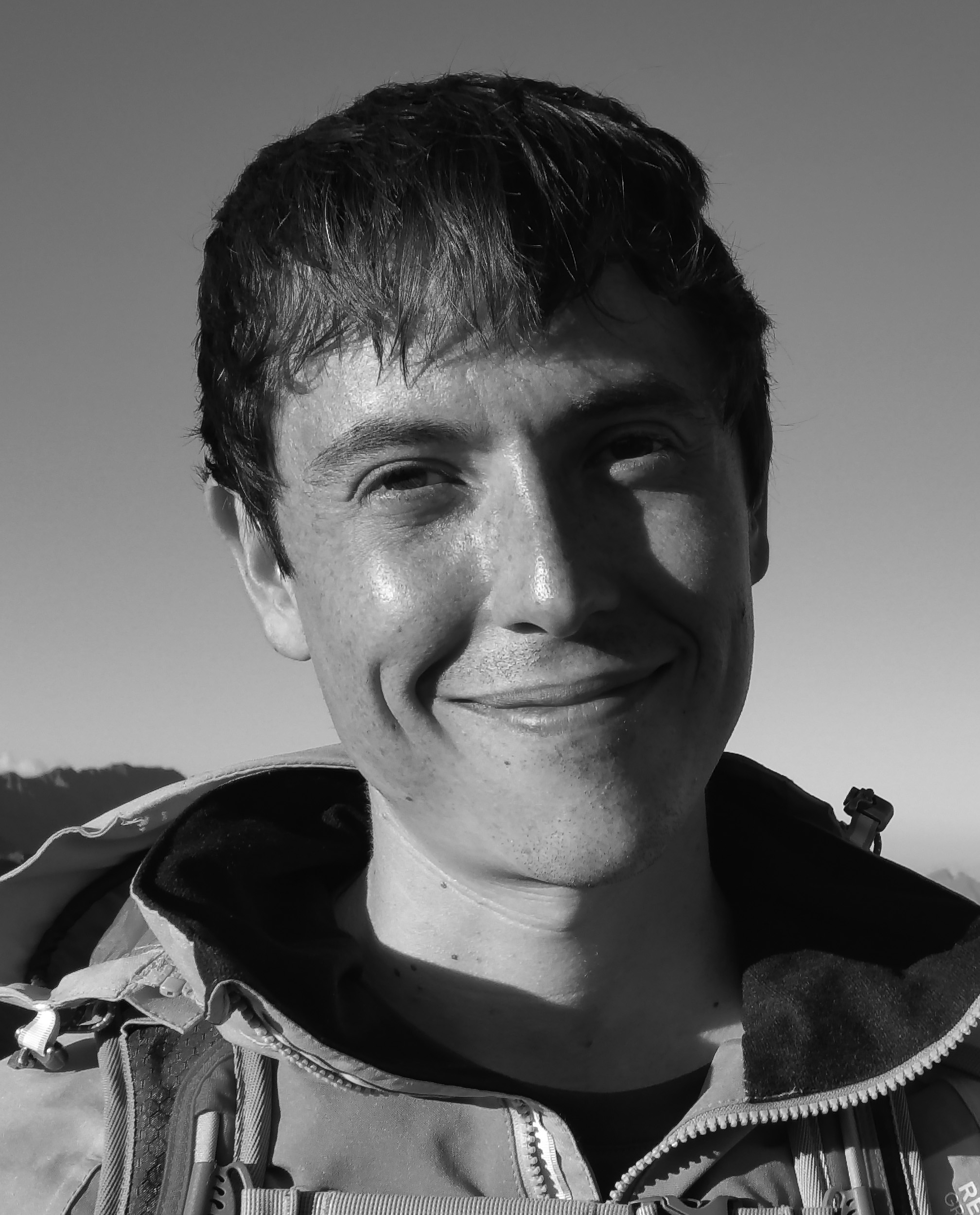
Mirela Ostrek is a Researcher at the Max Planck Institute for Intelligent Systems , where she works under the advisement of Prof. Justus Thies and MPI Director Prof. Michael J. Black. Research Interests: Machine Learning Computer Vision Visual Generative AI Creative AI Digital Humans Head Avatars Faces
Abderrahim Benslimane is a Full Professor of Computer Science at the University of Avignon, France, where he serves as Vice Dean of International Relations at the UFR STS (Unité de Formation et de Recherche en Sciences et Technologies). He is also Head of the master degree SICOM (Systèmes Informatiques Communicants: réseaux, services et sécurité) program at the university. His extensive academic career spans several decades with significant contributions to computer science, particularly in networking and security domains. Professor Benslimane holds a HDR (Title to supervise researches) from the University of Cergy-Pontoise, a Ph.D. from the University of Franche-Comté, along with M.S. and B.S. degrees in Computer Science from the same institution and the University of Nancy respectively. His research interests primarily focus on distributed computing, networking and communication protocols, with particular emphasis on modeling, describing and implementing secure communication protocols and multimedia applications in heterogeneous network architectures. He combines engineering and theoretical approaches using graphs, distributed algorithms, transition systems, and performance evaluation models. Benslimane's scholarly work demonstrates a strong trend toward addressing security and privacy challenges in emerging technologies. His recent publications focus on cybersecurity applications for wireless sensor networks, Internet of Things, blockchain implementations, UAV communications, and vehicular networks. He has pioneered research in energy attack mitigation, trust management systems, and secure group communications, often employing game theory and novel cryptographic approaches. His work bridges theoretical foundations with practical implementations in next-generation networking technologies. IEEE VTS Distinguished Lecturer (2020-2022) Best Paper award at IEEE ICC 2019 Multiple Prime d'Encadrement et de Recherche Doctorale awards (1998-2021) Prime d'Excellence Scientifique (2011-2015) IEEE Senior Member As an academic leader, Benslimane has served as Editor in Chief of Multimedia Intelligence and Security Inderscience Journal, Area Editor of IEEE Internet of Things Journal, and Associate Editor for multiple prestigious publications including IEEE Transactions on Multimedia and IEEE Wireless Communication Magazine. He has founded and led research centers including the Informatics Research center (CRI) at the French University in Egypt and the Multimedia and networking team (RAM) at the Laboratoire d'Informatique d'Avignon (LIA). His laboratory research focuses on security, communication protocols, graphs and distributed algorithms, with applications in ad hoc networks, sensor networks, vehicular networks, and IoT.
Dr. Patrick Kung serves as Associate Professor and Associate Department Head for Undergraduate Programs in the Department of Electrical and Computer Engineering at the University of Alabama's College of Engineering. His research spans nanotechnology, quantum computing, and terahertz photonics with significant contributions to metamaterials and optical systems. Research Focus: Dr. Kung specializes in terahertz spectroscopy, polarization-sensitive imaging, and nanoscale material engineering. His work integrates machine learning with optical systems for applications in underwater imaging, quantum networking, and biodegradable polymers. Recent projects include $1 million Department of Energy funding for quantum networking research (2024) and development of materials for slowing light propagation. Publication Trends: His recent publications (2022-2025) demonstrate a clear trajectory toward multimodal sensing systems combining terahertz technology, polarization control, and AI-driven image processing. Key themes include underwater object recognition using single-photon LiDAR, compact drone-compatible imaging platforms, and cryogenic photonic components for quantum applications. The work consistently bridges fundamental nanophotonics with practical engineering solutions. Department of Energy Funding ($1 Million for Quantum Networking Research, 2024) Dr. Kung actively mentors students in EPA-funded water disinfection projects using UV-LED technology and collaborates with industry partners through the Southeast Executives-on-Roster program. His laboratory work focuses on nanowire-based thin films and metamaterial absorbers, with applications in environmental monitoring and quantum communication hardware.
Arie E. Kaufman is a Distinguished Professor in the Department of Computer Science at Stony Brook University, serving as Chief Scientist of the Center of Excellence in Wireless and Information Technology (CEWIT) and Director of the Center of Visual Computing (CVC). He additionally holds a Distinguished Professorship in Radiology, with a 40+ year career at Stony Brook since joining in 1985 and chairing the CS department from 1999-2009. His seminal research spans computer graphics, visualization, and virtual reality with biomedical applications, pioneering breakthroughs including 3D Virtual Colonoscopy (FDA-approved colon cancer screening), Cube hardware architectures (commercialized as VolumePro), the Reality Deck (1.5 billion-pixel immersive display), and foundational work in volume visualization. His interests focus on real-time rendering, medical imaging, and immersive analytics, with recent work integrating machine learning for healthcare and environmental risk visualization. Recent publications demonstrate continued leadership in high-resolution immersive displays (Silo), XR analytics with LLMs, storm surge visualization, and neural reconstruction techniques. His work bridges theoretical innovation with practical applications, particularly in pancreatic cancer prognosis and disaster preparedness. Major honors include: IEEE Visualization Career Award (2005) Fellow of the National Academy of Inventors (2017) ACM Fellow (2009) IEEE Fellow (1998) Long Island Technology Hall of Fame (2013) European Academy of Sciences membership (2002) As PI on 100+ research grants, Kaufman's work has generated 300+ refereed papers, 40+ patents, and extensive media coverage (New York Times, Science, Wall Street Journal). He leads the Center of Visual Computing with focus on translational research, including VolVis software (5,000+ installations) and Reality Deck deployments for big data analytics. His lab develops cutting-edge visualization infrastructure for medical diagnostics and environmental modeling, with current projects advancing immersive storm surge analytics, neural structure extraction, and VR-based risk communication systems. Future work emphasizes AI-enhanced visualization for precision medicine and climate resilience planning.
Pere-Pau Vázquez is an Assistant Professor in AI for Visual Computing at the Computer Vision Lab, TU Wien, Austria . Previously, he held academic positions at the ViRVIG Group and Facultat d'Informàtica de Barcelona (UPC) , where he taught courses in Programming, Computer Graphics, and Visualization for over 20 years. His research focuses on Information Visualization, Scientific Visualization, Medical Data Visualization, Molecular Visualization, and AI applications to Visual Computing . Current Teaching : Data Visualization, Fast Realistic Rendering, Information Visualization, Medical Images, Scientific Visualization, Virtual Reality, and 3D Medical Visualization. Former PhD Students : Elena Molina, Alexandra Cortez, Jesús Díaz, Pedro Hermosilla, Eva Monclús. His scientific awards include the Best PhD Thesis Award (UPC, 2003), Best Student Paper Award (SPIE, 2012), and Best Paper Award (International Conference on Computer Graphics Theory and Applications, 2013). Recent publications explore AI integration in biomedical visualization, molecular data analysis, and interactive techniques for volume rendering. He serves on the EuroGraphics Executive Board as Secretary and is active in steering committees for EuroVis and Visual Computing for Biology and Medicine . His work bridges Computer Graphics, Artificial Intelligence, and Human-Computer Interaction , with applications in medical and molecular data analysis.
Jacob Gardner is an Assistant Professor in the Department of Computer & Information Science at the School of Engineering and Applied Science, University of Pennsylvania. His research bridges machine learning and scientific discovery with emphasis on computational biology and molecular design. His primary research interests include: Machine Learning Bayesian Optimization Computational Biology Molecular Design Artificial Intelligence Gaussian Processes Analysis of his 2024-2025 publications reveals a dominant focus on Bayesian optimization techniques integrated with large language models for biological applications. Key trends include therapeutic design using knowledge distillation from scientific literature, RNA splicing prediction, antibiotic development, and scalable Gaussian process methods. His work consistently addresses dimensionality challenges in molecular modeling while improving computational efficiency for high-dimensional biological data. No scientific awards were mentioned in the provided text. No information regarding student advising or research grants was provided in the source material. His research appears supported by institutional initiatives including Penn AI, Innovation in Data Engineering and Science (IDEAS), and the Data Driven Discovery Initiative (DDDI).
Vincent Lepetit currently serves as a Director of Research at École des Ponts ParisTech since 2019. His prior academic appointments include: Full Professor at the Institute for Computer Graphics and Vision, Graz University of Technology, Austria Senior Researcher at the Computer Vision Laboratory (CVLab) of École Polytechnique Fédérale de Lausanne (EPFL), Switzerland His research resides at the critical intersection of Machine Learning and 3D Computer Vision, with concentrated efforts on advancing 3D scene understanding from images. This work integrates deep learning methodologies with geometric computer vision to solve complex perception challenges, driving innovations in computational intelligence and visual recognition systems. His expertise spans both theoretical foundations and practical implementations across computer vision subdomains. Prof. Lepetit maintains significant leadership roles within the computer vision community, consistently serving as area chair for premier conferences including CVPR, ICCV, and ECCV. He further contributes through editorial positions as associate editor for top-tier journals such as IEEE Transactions on Pattern Analysis and Machine Intelligence (PAMI), International Journal of Computer Vision (IJCV), and Computer Vision and Image Understanding (CVIU), shaping research standards across the field. No scientific awards or honors were explicitly documented in the provided source material. While the text confirms his past affiliation with EPFL's Computer Vision Laboratory (CVLab), current laboratory or team leadership details remain unspecified. Information regarding doctoral advisees, research grants, or funding mechanisms was not included in the available documentation, though his editorial and conference leadership roles indicate substantial research influence.
Hugh Churchill is a Professor in the Department of Physics at the University of Arkansas, College of Arts & Sciences. His research focuses on quantum materials and devices, particularly condensed matter physics with applications in 2D systems and quantum transport. Education: PhD in Physics from Harvard University, BA in Physics and BM in Music Performance from Oberlin College Recent research trends include studies on 2D materials like transition metal dichalcogenides and black phosphorus, investigating quantum transport phenomena, supercurrent tuning, strain engineering for exciton control, and applications of machine learning in quantum material discovery. His work also explores THz emission mechanisms and quantum noise mitigation strategies. Arkansas Research Alliance Fellow Presidential Early Career Award for Scientists and Engineers NSF CAREER Award ORAU Powe Junior Faculty Award AFOSR Young Investigator Connor Faculty Fellowship Hugh teaches graduate and undergraduate courses in quantum mechanics, modern physics, and 2D materials, including PHYS 5413 Quantum Mechanics I and PHYS 6713 Condensed Matter Physics II.
Professor Ibrahim Khalil is a faculty member in the School of Computing Technologies at RMIT University, Melbourne, Australia. He holds a PhD in Computer Science from the University of Bern (2003) and has extensive industry experience in Silicon Valley focusing on secure network protocols. His research spans Security, Privacy, Federated Learning, Blockchain, Quantum Computing, and Distributed Systems. He leads high-impact projects funded by ARC grants (DP250100582, DP220100215, etc.) and international initiatives like the EU’s SELFY project. His work addresses challenges in secure AI data analytics, privacy-preserving systems, and critical infrastructure protection. Khalil supervises PhD/Masters students on topics ranging from federated learning security to quantum-enhanced machine learning. Education: PhD in Computer Science (University of Bern, 2003); prior roles at EPFL, Osaka University, and industry tech hubs. Research Interests: Privacy-Preserving Technologies Blockchain Applications in Healthcare and Supply Chains Quantum Computing for Machine Learning Secure Edge Computing and Federated Learning IoT Security and Critical Infrastructure Protection Grants & Collaborations: Over 10 major grants since 2017, including ARC Discovery/Linkage Projects and international partnerships (QNRF, EU). Notable projects include Privacy-Aware Digital Twins for Critical Infrastructure and Federated Learning frameworks for GenAI models. Advising & Labs: Active supervisor of 25+ research projects since 2013, focusing on anomaly detection, secure data analytics, and blockchain-based systems. Collaborates with industry partners on defense and healthcare tech.
Virginia de Sa is a Professor in the Department of Cognitive Science at the University of California, San Diego. Her research integrates computational modeling, psychophysics, and machine learning to investigate visual and multi-sensory perception, with a focus on understanding how humans learn and perceive through neural mechanisms. Her work emphasizes the synergy between human learning and machine learning, applying insights from both fields to advance understanding of perception. Notable projects include developing brain-computer interface (BCI) systems and analyzing biases in facial expression recognition algorithms. She leads the de Sa Lab, which explores the neural basis of learning through interdisciplinary methods, including EEG analysis and biologically inspired algorithms. Key research directions include improving BCI usability through adaptive spatial filtering, investigating pain assessment via facial and electrophysiological data fusion, and enhancing AI fairness in facial expression analysis. Dr. de Sa has contributed to grants such as the NSF-funded CHS project to enhance BCI reliability and collaborates on initiatives like AI-READI to improve healthcare data practices. Her lab’s BCI division focuses on interpreting EEG data for assistive technologies, while her work on divisive normalization bridges biological insights with artificial neural network design. Ongoing efforts explore zero-shot learning and the generalization of neural models to unseen tasks. Dr. de Sa’s interdisciplinary approach spans neuroscience, computer science, and engineering, with a commitment to advancing both theoretical understanding and practical applications in human-computer interaction.
Yepang Liu is a tenured Associate Professor in the Department of Computer Science and Engineering at Southern University of Science and Technology (SUSTech) in Shenzhen, China. He leads the Software Quality Lab and serves as director of the Trustworthy Software Research Center within the Research Institute of Trustworthy Autonomous Systems. His educational background includes a B.Sc. with honors from Nanjing University (2010) and a Ph.D. from the Hong Kong University of Science and Technology (2015), where he was supervised by Prof. Shing-Chi Cheung. Prior to joining SUSTech, he worked as a postdoc at HKUST's CASTLE Lab and Cybersecurity Lab. Liu's research primarily focuses on software testing and analysis, empirical software engineering, AI for SE, software security, and trustworthy AI. His work bridges traditional software engineering with cutting-edge AI technologies, particularly in automated testing, security analysis, and quality assurance for mobile, blockchain, and extended reality applications. Recent projects explore how large language models can enhance bug detection, improve testing automation, and address fairness issues in machine learning systems. His contributions have been recognized with three ACM SIGSOFT Distinguished Paper awards (ICSE 2021, ASE 2016, ICSE 2014) and one Distinguished Artifact award (ICSE 2019). He has also received the ACM SIGSOFT Service Award and Distinguished Reviewer Award for his extensive service to the software engineering community. Top-10 Most Active Early-Stage Software Engineering Researcher (2013-2020) Top-10 Most Popular Instructor Among 2024 Undergraduate Graduates at SUSTech Junior Faculty of the Year (2021) SUSTech Teaching Excellence Award (2021) Outstanding Mentor Award (2020, 2024) Liu actively serves on the editorial boards of Empirical Software Engineering (EMSE) and Journal of Computer Science and Technology (JCST). He has participated in over 80 conference committees including leadership roles in ICSE, FSE, ASE, and ISSTA. His research is supported by the National Natural Science Foundation of China, National Key Research and Development Program, and leading Chinese IT companies. He regularly mentors PhD and MSc students and has guided multiple national competition award-winning teams. The Software Quality Lab under Liu's direction focuses on innovative approaches to software testing, security analysis, and quality assurance across various platforms including mobile, blockchain, and extended reality applications. Current projects emphasize the integration of AI techniques with traditional software engineering practices to address emerging challenges in software quality.
Cheung Ngai-Man is an Associate Professor and Associate Head of Pillar (Education) at Singapore University of Technology and Design (SUTD), part of the Information Systems Technology and Design (ISTD) pillar. He holds a Ph.D. in Electrical Engineering from the University of Southern California (2008) and has held research positions at Stanford University, Texas Instruments, IBM, and others. His research focuses on image and signal processing, computer vision, machine learning, and artificial intelligence. Education: Ph.D., Electrical Engineering, University of Southern California (2008); Postdoctoral research at Stanford University (2009–2011). Research Interests: Develops algorithms for multimedia data processing, explores interdisciplinary applications of signal processing and AI, and addresses challenges in computer vision and generative models. Recent work includes fairness in generative models, few-shot image generation, and adversarial robustness. Publications: Over 100+ peer-reviewed papers in top venues (CVPR, NeurIPS, IEEE TIP, TPAMI) focusing on computer vision, generative models, and AI security. Notable 2023 work includes studies on label-only model inversion attacks and fairness metrics in generative systems. Awards: Best Paper Finalist (CVPR 2019), SAIL Award Finalist (WAIC 2019), Outstanding Associate Editor (IEEE T-MM), Croucher Foundation Fellowship. Students: Supervised postdocs (Hossein Nejati, Fang Lu), research assistants (Mohammad Rostami), and visiting students (Ma Rui). Labs/Teams: Leads research groups in AI, computer vision, and multimedia systems at SUTD. Has spun off AI initiatives for wound care and contributed to Singapore’s National AI Strategy.
Aravind Rajeswaran is a Research Scientist at Meta AI (FAIR) and Visiting PostDoc/Collaborator at Berkeley AI Research Lab (BAIR) at UC Berkeley's College of Engineering, Department of Electrical Engineering and Computer Sciences. He completed his PhD in Computer Science at the University of Washington under Profs. Sham Kakade and Emo Todorov, with additional collaborations with Sergey Levine and Chelsea Finn, and previously earned his bachelor's degree with the best undergraduate thesis award from IIT Madras working with Balaraman Ravindran. His research focuses on building generalist AI agents that operate in open worlds, combining reinforcement learning, representation learning, and world models. Key projects include Locate 3D for real-world object localization, OpenEQA for embodied question answering with foundation models, VC-1 as an artificial visual cortex for embodied intelligence, and R3M as a universal visual representation for robot manipulation. His work demonstrates how pre-trained visual representations can significantly enhance robotic capabilities with minimal supervision. Rajeswaran's publication record shows consistent high-impact contributions across premier AI conferences including NeurIPS, ICML, CVPR, and RSS from 2018 through 2025, with research spanning reinforcement learning, representation learning, robotics, and computer vision. His work on Decision Transformer demonstrated how sequence modeling frameworks can effectively train reinforcement learning policies. Best Paper Award, Scaling Robot Learning Workshop at ICRA 2022 best undergraduate thesis award from IIT Madras As an educator and mentor, Rajeswaran has guided numerous PhD students who have gone on to positions at Stanford, MIT, CMU, Berkeley, and top AI companies including Meta, DeepMind, and Anthropic. He designed and co-taught the Deep Reinforcement Learning course (CSE599G) at UW in 2018, with materials adopted by courses at MIT and CMU, and served as lead TA for Machine Learning for Big Data (CSE547). His research has been supported through his role as Principal Investigator for the Cortex Team at FAIR.
Dr. Sheng Yang is an Assistant Professor in the School of Engineering at the University of Guelph. He leads the Design Innovation and Intelligent Manufacturing (DIIM) lab, focusing on advancing additive manufacturing, generative design, and smart manufacturing technologies. His research integrates IoT, big data analytics, and bio-inspired design to address challenges in aerospace, green energy, and healthcare. Key areas include computational design for additive manufacturing, data-driven mass customization, and digital twin-based optimization. Education: Ph.D. in Mechanical Engineering from McGill University (2019), followed by a Postdoctoral Fellowship at McGill (2019–2020). Joined University of Guelph in 2020. Research interests span energy efficiency, complex system optimization, and personalized healthcare products. Recent work emphasizes digital twin synchronization in robotics, machine learning for quality prediction, and sustainable additive manufacturing processes. Notable awards include the 2019 Association of Commonwealth Universities Blue Charter Fellowship and 2018 ASME Best Paper Award. His lab actively seeks partnerships in personalized healthcare, product design, and smart manufacturing. Grants and collaborations focus on advancing manufacturing technologies and sustainability. No formal advisees listed, but active in graduate training through lab projects. The DIIM lab explores cutting-edge solutions for industrial and societal challenges through interdisciplinary approaches.
Hassan Foroosh is a Professor in the Department of Electrical Engineering and Computer Science at the University of Central Florida (UCF), directing the Computational Imaging Laboratory (CIL). He holds a Ph.D. in Computer Science from INRIA-UNSA, France (1996). Prior to UCF, he worked as a Senior Research Scientist at UC Berkeley (2000–2002) and an Assistant Research Professor at the University of Maryland, College Park (1997–2000). Research Interests: His work focuses on Computer Vision, Image Processing, Machine Learning, and Signal Processing. Notable contributions include LiDAR-based perception, adversarial attacks on detectors, medical imaging analysis, and dataset design for action recognition. His research is supported by NASA, NSF, ONR, and industry partners. Publications & Impact: Over 130 peer-reviewed papers, including influential work on super-resolution techniques, transformer networks for 3D object detection, and adversarial machine learning. His recent work explores analytical reasoning in LLMs and multimodal fusion in sports analytics. Awards: Pierro Zamperoni Award (2004), Best ICPR Paper (2004), Sun Microsystems Academic Excellence Award (2004). Labs/Teams: Director of the Computational Imaging Lab (CIL), UCF. Grants: Active funding from NASA, NSF, and industry collaborators.