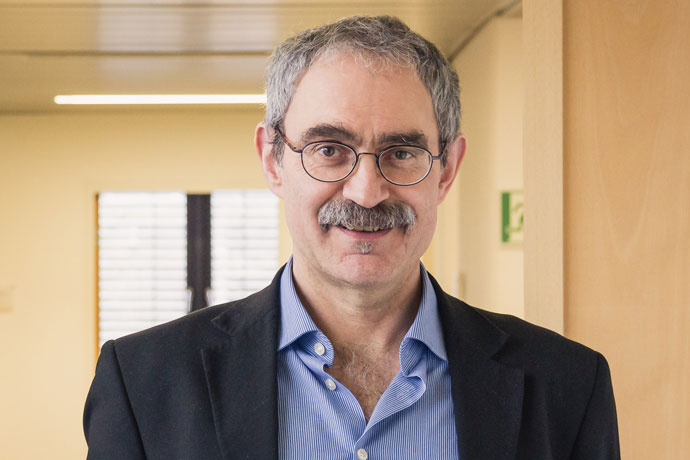
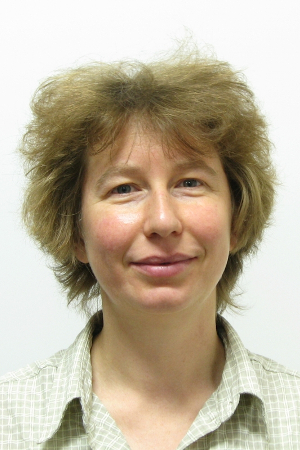
Josef van Genabith is a Scientific Director at the German Research Center for Artificial Intelligence (DFKI) and holds the Chair for Translation-Oriented Language Technology at Saarland University . His work focuses on multilingual technologies, machine translation, and natural language processing. Director of Multilingual Technologies at DFKI (2014–present) Full Professor at Saarland University (2014–present) Advisory roles: LINDAT-CLARIN (2010–present), CTYI (2012), NSF Hindi-Urdu Treebank Project (2009) Research Interests include: Development of integrative language processing systems for cross-lingual applications Deep learning for end-to-end language technology (DEEPLEE project) Quality translation frameworks (QT21 project) EU Council Presidency Translator (EUC PT) initiatives Sign language data acquisition via vision-language models His recent projects address challenges in machine translation evaluation, educational technology enhancements, and multilingual data curation.
Dimitrios Kosmopoulos serves as Professor in the Computer Engineering and Informatics Department at the University of Patras, Greece, with extensive experience across multiple academic institutions including National Technical University of Athens (NTUA), Rutgers University, and University of Texas at Arlington. His research bridges theoretical computer science with practical applications in accessibility, agriculture, and cultural heritage preservation. Education: B.Eng. in Electrical and Computer Engineering, National Technical University of Athens (1997) PhD in Electrical and Computer Engineering, National Technical University of Athens (2002) Professor Kosmopoulos' research integrates computer vision, machine learning, and signal processing to solve real-world problems. His primary focus areas include sign language recognition systems for museum accessibility, precision agriculture applications for crop monitoring and disease detection, and digital restoration of ancient scripts like Mycenaean Linear B. His methodological innovations frequently involve geometric analysis, time-series modeling, and multimodal data fusion techniques that advance both theoretical frameworks and practical implementations. Analysis of his recent publications (2023-2025) reveals three dominant research thrusts: accessibility technologies for deaf communities (particularly museum navigation systems), agricultural automation using computer vision (olive grading, tomato disease detection), and computational archaeology (Linear B tablet restoration). His work consistently employs cutting-edge approaches including geometric knowledge distillation, coupled learning architectures, and 3D motion analysis, demonstrating strong interdisciplinary connections between computer science, agriculture, and humanities. No scientific awards were documented in the provided source materials. While specific advising details and grant information were not explicitly stated, his leadership in projects like HealthSign (sign language healthcare systems) and MuseLearn (museum accessibility platforms) indicates substantial research funding and collaborative supervision activities spanning computer vision, robotics, and assistive technology domains. Professor Kosmopoulos operates within the Division of Hardware and Computer Architecture at the University of Patras, collaborating with the Computer Technology and Architecture Laboratory, VLSI Microelectronics Laboratory, Signals and Telecommunications Laboratory, and Computer Communications Networks Laboratory. His current research integrates these facilities to develop systems like the SignGuide project for museum tours and frameworks for early pest detection in greenhouse crops, emphasizing practical implementations of machine learning in constrained environments.
Vassilis Athitsos is a Professor in the Computer Science and Engineering department at the University of Texas at Arlington . He holds a PhD in Computer Science from Boston University (2006), an MS in Computer Science (1997), and a BS in Mathematics (1995) from the University of Chicago. Education: PhD, Computer Science (2006), Boston University MS, Computer Science (1997), University of Chicago BS, Mathematics (1995), University of Chicago His research focuses on Computer Vision , Machine Learning , Data Mining , and applications in Gesture & Sign Language Recognition , Face Recognition , and Human Activity Analysis . Recent work includes depth-based 3D hand pose estimation, GAN applications for image restoration, and multimodal systems for cognitive assessment in children. Key research trends include depth video analysis , GAN-based translation , action segmentation , and medical imaging applications . He has received multiple scientific awards including the NSF CAREER Award (2011) and ACM Ten-Year Technical Impact Award (2023). Grants: NSF CAREER: $651,563 (2011-2017) NSF Collaborative Research: $1.37M (2016-2023) NSF PFI: $1.03M (2017-2023) NSF MRI: $879,890 (2013-2018) NSF CI-P: $116,000 (2014-2017) Grants from Private/State Sectors: Macnica Americas: $42,813 (2022-2023) Macnica Americas: $88,320 (2017-2018) Gordian Health: $9,001 (2013) Texas State Grant: $50,000 (2010) He has advised over 40 graduate students and served on numerous dissertation, thesis, and doctoral committee roles . His teaching includes Machine Learning , Computer Vision , and Research in Computer Science courses at the graduate level, along with undergraduate programming and algorithms classes.
Alexandra Stefan is an Associate Professor of Instruction in the Department of Computer Science and Engineering at the University of Texas at Arlington. She specializes in Computer Vision, Data Mining, and Sign Language Recognition. She holds a PhD in Computer Science from UT Arlington (2012), an MA from Boston University (2008), and a BS from the University of Bucharest (2002). Education: PhD, Computer Science, The University of Texas at Arlington (2012) MA, Computer Science, Boston University (2008) BS, Computer Science & Mathematics, University of Bucharest (2002) Research Interests: Her work focuses on gesture recognition, time series analysis, and assistive technologies. She has developed algorithms for large vocabulary gesture search and efficient indexing methods for sequence data. Her research bridges computer vision and data mining to solve challenges in human-computer interaction and pattern recognition. Awards: NSF Scholar Award (PETRA Doctoral Consortium, 2011 & 2009) Best Paper Award (CVPR4HB Workshop, 2008) Outstanding Advisor Nomination (UTAAA, 2016 & 2017) Service & Teaching: She coordinates CSE 1310 and CSE 3318 courses, and has led outreach initiatives like FIRST Tech Challenge volunteering. Her teaching spans introductory programming to advanced algorithms, with a focus on student engagement and inclusive education. Grants: Principal Investigator for the ACUE Course in Effective Teaching Practices grant (2022-2023).
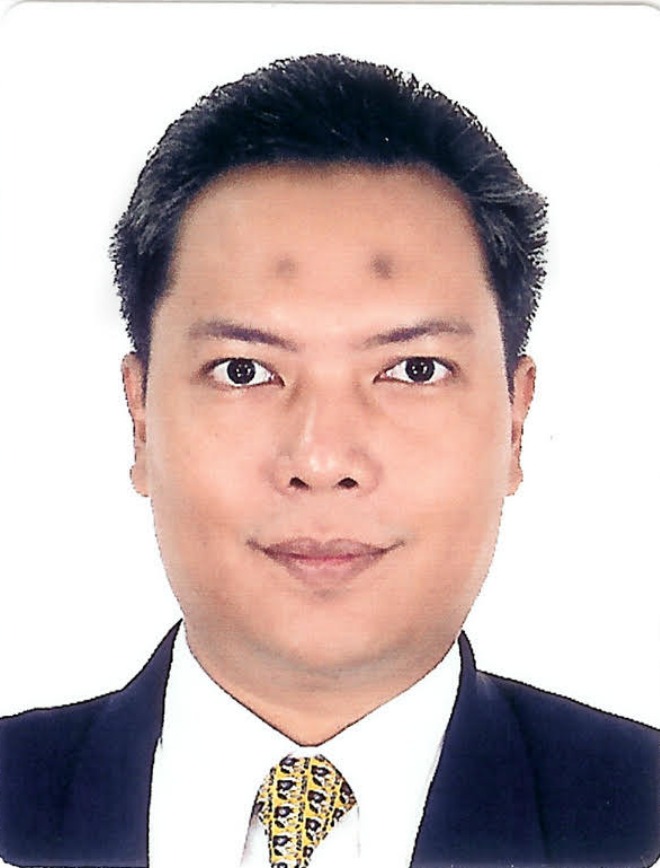
Mr. Judhi Prasetyo is a Senior Lecturer in the CEI department at Middlesex University Dubai, part of the Middlesex University Overseas Campuses. He holds a PhD in Robotics (expected 2024) from Université de Namur, Belgium, an MSc in Engineering Management from Middlesex University, and a Bachelor’s in Electronics and Electrical Engineering from Institut Teknologi Nasional Bandung, Indonesia. His research focuses on swarm intelligence , robotics , and AI applications , with notable contributions to collective decision-making algorithms, object detection systems, and assistive technologies. As the founder of the RoboTechX Laboratory, he leads projects in e-waste recycling robotics and humanoid robots for food quality assessment. He has pioneered teaching strategies for physical computing in online environments during the pandemic. Recent work includes analyzing generative AI trends (2023), developing YOLO-based object detection algorithms (2023), and exploring robot swarm democracy dynamics (2021). His publications span journals like Swarm Intelligence and conferences such as GECCO and ANTS. He currently oversees the Dubai Campus’s robotics initiatives and collaborates internationally on interdisciplinary projects. No scientific awards are explicitly listed, but his research has garnered significant academic engagement.
Richard Bowden is a Professor of Computer Vision and Machine Learning at the University of Surrey's School of Computer Science and Electronic Engineering, leading the Cognitive Vision Group within the Centre for Vision, Speech and Signal Processing (CVSSP). He also serves as Associate Dean for postgraduate research. His research focuses on computer vision applications for human interaction analysis, including sign language recognition, gesture detection, lip-reading, and autonomous systems. He has secured over 40 research grants from UK, EU, and industrial sources, with projects spanning cognitive robotics, activity recognition, and fundamental vision algorithms. Educations: BSc (University of London, 1993), MSc (University of Leeds, 1995), PhD (Brunel University, 1999). Research interests include deep learning, computer vision, and AI with applications in human-centric technologies. His work has been recognized through awards including the Sullivan Thesis Prize (2000), Royal Society Leverhulme Fellowship (2013), and IAPR Fellowship (2016). He has authored over 200 publications and serves on editorial boards for top journals like IEEE TPAMI. Notable contributions include the SLRTP Sign Language Translation Challenge, SMILE sign language assessment system, and advancements in monocular depth estimation. Advising: Supervised over 20 PhD students, with current advisees including Jamie Spencer Martin and Cihan Camgoz. His research teams collaborate on projects like the £8.45m SignGPT initiative for Deaf community AI tools and autonomous vehicle navigation systems. He leads the CVSSP lab, actively involved in international conferences like ICCV and BMVC.
Jules White is a Professor of Computer Science and Senior Advisor to the Chancellor for Generative AI in Education at Vanderbilt University's School of Engineering. He also holds an appointment as Associate Professor of Biomedical Informatics. His research focuses on cybersecurity, mobile/cloud computing, and cyber-physical systems. White has led the online MS in Computer Science program to #1 ranking by Fortune and commercialized research into industry products like PAR Works. Education: Ph.D./M.S. in Computer Science (Vanderbilt University), B.A. in Computer Science (Brown University). Research Interests: Cybersecurity, mobile computing, cyber-physical systems, healthcare informatics, and AI applications. His MAGNUM Group explores these areas with over 160 publications and industry collaborations. Articles Overview: Recent work spans AI-driven prompt engineering, healthcare transparency via NLP, and UAV design optimization. Themes include LLM applications, cybersecurity frameworks, and medical technology integration. Awards: NSF CAREER Award, CES Innovation Award (2013), and multiple best paper awards. Recognized for entrepreneurship with $12M venture funding for startups. Advising & Grants: Directed over 100 students in MOOCs and research. Secured grants totaling ~$1.5M annually, including NSF, AFRL, and industry partnerships. Focus areas include secure IoT systems and blockchain in healthcare. Labs & Teams: Directs the Mobile Application computinG, optimizatoN, and secUrity Methods (MAGNUM) Group. Collaborates with industry (e.g., Siemens, Cloudpoint/PAR Works) and government agencies (NSF, ARO).
Lyne DA SYLVA is Full Professor and Head of the School of Library and Information Sciences (École de bibliothéconomie et des sciences de l’information) within the Faculty of Arts and Sciences at Université de Montréal. She also leads several large-scale interdisciplinary research projects funded by SSHRC and FRQSC, sits on the governing bodies of the Observatory of Sense-Text Linguistics (OLST) and the Interuniversity Research Centre on Digital Humanities (CRIHN), and supervises graduate students in information science. Education B.Sc. in Applied Mathematics, Université d’Ottawa (1987) Certificate in Linguistics, Université de Genève (1991) M.A. in Linguistics, Université de Montréal (1990) Ph.D. in Linguistics, Université de Montréal (1999) Research Focus Da Sylva’s work lies at the intersection of computational linguistics and information science . She employs symbolic, rule-based models to develop tools for automatic indexing, summarisation, and semantic enrichment of digital documents. A second stream examines digital libraries as complex sociotechnical systems, investigating how language technologies can improve discovery and use of multilingual scholarly content. Thirdly, she explores documentary semiotics , analysing the sign systems that underlie information architectures in libraries, archives and museums. Recent projects centre on: automatic back-of-the-book indexing for digital monographs; research-data management ecosystems in Canadian universities; semiotic aspects of entities and identity in semantic-web datasets; algorithmic law and the migration of legal norms into technical devices. Funding & Partnerships Since 2005 she has been principal investigator or co-investigator on more than CAD 5 million in grants from SSHRC, FRQSC and NSERC. She currently co-leads the strategic partnership “Autonomisation des acteurs judiciaires par la cyberjustice” (2018-2026) and heads the FRQSC team grant “Le lexique entre humains et machines” (2025-2030). Scientific Awards & Distinctions While no named awards are explicitly listed, her continuous success in highly competitive tri-council funding programmes and her invitations to keynote or guest-edit leading journals (Document numérique, Documentation et bibliothèques) attest to national and international recognition. Supervision & Teaching At the master’s and doctoral levels she teaches courses on research-data management, indexing methodology, thesaurus construction, digital libraries and NLP tools for information professionals. She has supervised or co-supervised four recent theses covering legal recognition of smart contracts, archival vocabulary for thematic access, linked-data initiatives at Bibliothèque et Archives nationales du Québec, and terminological variation in thesauri. Laboratories & Teams Her research is anchored in the OLST (Observatoire de linguistique Sens-Texte) and the CRIHN (Centre de recherche interuniversitaire sur les humanités numériques), both of which provide computational infrastructure and interdisciplinary collaboration networks for projects in language technology, digital humanities and data curation.
Dr. Nomfundo Moroe is an Associate Professor in the Department of Speech Pathology and Audiology at the University of the Witwatersrand . Her work focuses on hearing conservation programs, occupational noise-induced hearing loss, and accessibility solutions for individuals with communication disorders. Research Interests : Hearing conservation, tele-audiology, machine learning in healthcare, and inclusive education for deafblind learners. Publications : Over 30 works including studies on mining sector hearing programs, AI-based translation systems, and pandemic-era clinical research. Contact : Nomfundo.Moroe@wits.ac.za | ORCiD
Johanna Gerlach is a Professor at the Faculty of Translation and Interpretation at the University of Geneva, affiliated with the TIM/ISSCO research group. With an extensive publication record spanning from 2010 to 2025, she has established herself as a leading researcher in the field of medical translation technology and accessible healthcare communication. Her research focuses on developing innovative translation systems that bridge communication gaps in medical settings, particularly through her work on the BabelDr platform and PROPICTO project. Dr. Gerlach's work spans multiple dimensions of accessible communication including speech-to-pictograph translation systems, sign language production for healthcare, and multilingual medical communication solutions for emergency departments. Her research demonstrates a strong commitment to improving healthcare accessibility for non-native speakers and people with communication difficulties. Analysis of her recent publications (2023-2025) reveals a clear trend toward practical implementation of translation technologies in real-world healthcare settings, with particular emphasis on emergency medicine contexts. Her work integrates computational linguistics, machine learning, and human-centered design to create accessible communication tools that address critical gaps in multilingual healthcare delivery. The research spans both contemporary medical communication challenges and historical text processing applications. Dr. Gerlach has supervised 3 academic works and maintains an active research program with numerous ongoing projects including UNI-ACCESS (focusing on web accessibility for higher education institutions) and PASSAGE (addressing Swiss German TV content subtitling). Her collaborations span multiple disciplines including medical informatics, computational linguistics, and accessibility studies.
Rakan Aldmour is a Senior Lecturer at Staffordshire University's School of Digital, Technologies and Arts and Course Leader for MSc Business Computing. He teaches courses such as Enterprise Systems, Managing Emerging Technologies, and Research Methods, while supervising PhD and MSc students. His research focuses on Mobile Cloud Computing, IoT systems, Risk Assessment, Digital Transformation, and Blockchain, with notable contributions to cybersecurity frameworks for IoT-SCADA systems and smart city initiatives through his internship at the UAE Telecommunication Regulatory Authority. Rakan holds a PhD in Mobile Cloud Computing from Anglia Ruskin University, an MSc in Management Information Systems, and a BSc in Software Engineering, complemented by certifications including MCSE, TOGAF, and CCNA. His professional expertise spans Software Engineering, Business Models, IT Management, and Cloud Computing. He has secured £400,000 in grants through Staffordshire Digital Innovation Partnerships (SDIPs) and contributed to projects like the PETRAS National Centre for IoT Cybersecurity. His work emphasizes practical applications of technology in education, healthcare, and urban development, with publications addressing energy-efficient mobile cloud models, intrusion detection systems, and blockchain-based solutions for transparency and integrity.
Anoop Mayampurath is an Assistant Professor at the University of Wisconsin–Madison, affiliated with the Division of Pulmonary Medicine in the Department of Medicine, School of Medicine and Public Health. He co-leads the ICU Data Science Lab with Drs. Churpek and Afshar, focusing on developing machine learning models to predict clinical outcomes using electronic health record (EHR) data, including structured, unstructured, and imaging data. His research emphasizes explainable AI for pediatric critical care and addressing healthcare disparities through predictive analytics. Key research interests include: Prediction of critical illness outcomes in hospitalized patients (e.g., substance misuse, postoperative complications) Integration of multimodal data (text, imaging, vital signs) for clinical decision support Development of pediatric early warning systems using machine learning Evaluation of bias in clinical documentation and AI-generated language His work spans applications in critical care, oncology, and public health, with a focus on translational research to improve patient outcomes. Notable contributions include models predicting postoperative venous thromboembolism and overdose fatality review tools. Dr. Mayampurath collaborates across disciplines to address gaps in healthcare data science and clinical informatics. Advising and grants: While specific grant details are not listed, his lab’s projects suggest involvement in NIH-funded initiatives and collaborative industry partnerships. His team’s work is published in high-impact journals and presented at major medical informatics conferences. Labs/Teams: Primary affiliation with the ICU Data Science Lab , contributing to the Pediatric Acute Lung Injury and Sepsis Investigators Network (PALISI), and collaborations with UW-Madison’s Department of Biostatistics and Medical Informatics.
Dr. Zhidong Xiao serves as Principal Academic (Associate Professor) at Bournemouth University's National Centre for Computer Animation within the Faculty of Media and Communication. With over ten years of leadership experience including roles as Programme Leader, Head of Education, and Deputy Head of Department, he drives academic strategy and research innovation in computer animation and digital media. His work bridges technical excellence with creative industry applications through extensive collaborations across the UK and China. Dr. Xiao's educational foundation includes a PhD in Computer Graphics (2010) and postgraduate certificates in Education Practice (2010) and Research Degree Supervision (2011) from Bournemouth University, complemented by a BEng (Hons) in Thermodynamics from Taiyuan University of Technology, China (1994). PhD in Computer Graphics, Bournemouth University (2010) PGCE in Education Practice, Bournemouth University (2010) PGCE in Research Degree Supervision, Bournemouth University (2011) BEng (Hons) in Thermodynamics, Taiyuan University of Technology (1994) His research spans Computer Graphics, Motion Capture, Artificial Intelligence, and Virtual Reality with focus on physics-based simulation, sign language recognition, and motion synthesis. Recent work integrates partial differential equations with machine learning to solve animation challenges in facial realism, deformation simulation, and 3D reconstruction. His interdisciplinary approach connects computer science with creative industries, healthcare applications, and educational technology while advancing core techniques in neural rendering and motion analysis. Analysis of his 15 most recent publications reveals consistent innovation in physics-based animation techniques (40%), motion capture processing (25%), and neural approaches to 3D reconstruction (35%). Key trends include the fusion of analytical physics models with deep learning architectures, development of efficient real-time simulation methods, and expansion into accessibility applications through sign language recognition systems. Scientific recognitions include: Fellow of British Computer Society (2023) Fellow of Higher Education Academy (2011) Best Poster Award at Pacific Graphics 2014 He maintains active peer review roles for EPSRC, ESRC, IEEE Transactions on Multimedia, and ACM SIGGRAPH conferences. Dr. Xiao has supervised seven PhD students to completion while currently guiding Alexandra Sergeeva Alexdottir's research on Phantom Touch phenomena. His grant portfolio demonstrates strong industry-academia collaboration: Principal Investigator Capturing and representing sign language (British Council, 2025) VE Communication Programme (Erasmus+, 2020) Co-Investigator Rehabilitation Enhancement via Motion Capture (BU Fusion Fund, 2013) Cross-Channel Film Lab (Interreg, 2012) Digital Beijing Opera Project (2010) As a core member of Bournemouth's Computer Graphics and Visualisation Research Group and Centre for Digital Entertainment, he leads initiatives in motion capture technology through AccessMocap Studio. His international outreach includes invited lectures across China on computer animation education and visual effects techniques, strengthening global partnerships in creative technology development.
Biao Zeng is a Lecturer in Psychology at the University of South Wales, affiliated with the Faculty of Life Sciences and Education. His work bridges clinical psychology, speech science, and neurorehabilitation. He specializes in virtual reality interventions for motor recovery in post-stroke survivors and audiovisual speech perception, particularly in Mandarin language contexts. Research interests include the design of VR mirror therapy frameworks, the role of visual-auditory integration in speech perception, and the application of AI for diagnosing respiratory and voice disorders. His studies often explore the effectiveness of interventions for developmental speech-language difficulties and their cost-effectiveness. Past projects span over two decades, from investigating perceptual processing in developmental dyslexia (2002) to recent advancements in VR therapy feasibility (2022). His publications emphasize translational research, combining experimental psychology with technological innovation to address clinical challenges. Dr. Zeng collaborates across disciplines, integrating neuroscience, linguistics, and engineering. He maintains a lab focused on speech biomarkers and has contributed to systematic reviews assessing therapy efficacy for anxiety disorders and specific phobias.
Joni Dambre is a full-time tenured Professor at Ghent University leading the AIRO research group within the Internet Technology and Data Science Lab (IDLab). She transitioned from digital hardware research to machine learning in 2008 after earning her MSc and PhD in Electrical and Computer Science Engineering from Ghent University. Her educational background includes: MSc in Electrical Engineering from Ghent University PhD in Computer Science Engineering from Ghent University Professor Dambre's research spans machine learning, deep learning, embedded AI implementations, robotics, and brain-inspired unconventional computing. Her work uniquely bridges theoretical foundations with practical applications, evidenced by her team's competitive success in Kaggle competitions. Key thrusts include photonic reservoir computing, sign language technology development, and human-AI interaction studies, with emphasis on both hardware-efficient implementations and societal impacts. Recent publications (2023-2025) reveal strong interdisciplinary convergence, merging machine learning with photonics for unconventional computing architectures while advancing sign language translation through projects like SignON. A notable trend involves expanding from technical implementations to human-centric AI research, including studies on human alignment with large language models and societal implications of AI deployment. No major scientific awards were mentioned in the provided text. Although specific student names were not listed, Professor Dambre leads the AIRO group and serves as principal investigator for significant projects including SignON and cREAtIve, indicating active research supervision and substantial grant funding from both academic and industry sources. The AIRO research group maintains a dual focus on foundational theory and real-world applications, with active projects spanning photonic neural networks for telecommunications, sign language recognition systems, and robotics platforms. Their work demonstrates consistent innovation in translating brain-inspired computing concepts into practical solutions while maintaining strong industry partnerships and competitive performance in applied machine learning challenges.