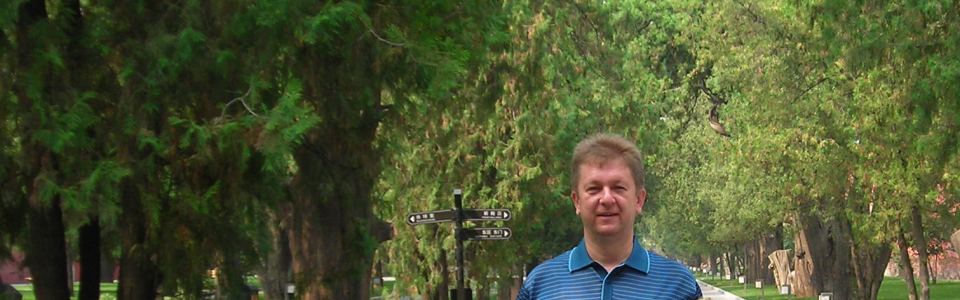
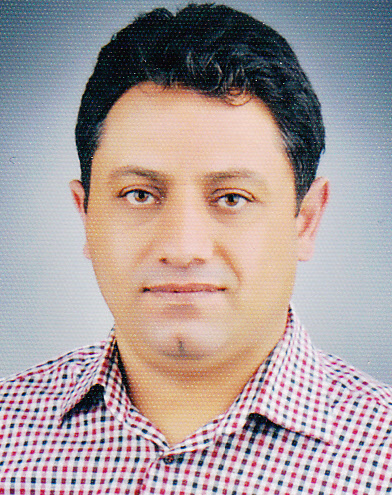
Prof. Dr. Selcuk Paker is a faculty member at the Department of Electronics and Communication Engineering , Faculty of Electrical and Electronics Engineering , Istanbul Technical University. His research spans electromagnetic field theory, microwave systems, and telecommunications, with a focus on antenna design, radar imaging algorithms, and bioelectromagnetics. Research Interests : Electromagnetic scattering, inverse scattering, radar systems, SAR imaging, GNSS algorithms, microwave heating, and wireless communication. Recent publications highlight his work in 5G antenna design , radar-based earthquake detection , and biological effects of RF exposure . He contributes to microwave and radar technologies, including applications in structural diagnostics and sensor networks.
Prof. Dr. Mehmet GENÇTÜRK is a Professor at the Faculty of Economics and Administrative Sciences , Mehmet Akif Ersoy University , with a dual departmental affiliation in Business Administration and Accounting and Finance . His career spans over two decades, with extensive publications and thesis supervision. Education: License: Selçuk University, Business Administration (1993) Master’s: Süleyman Demirel University (1996) Doctorate: Süleyman Demirel University, Business Administration (2002) His research focuses on share structures, financing, accounting practices, and corporate value , with recent studies on pandemic impacts on financial decisions , machine learning in hospital finance , and digitalization in accounting . The 15 most recent articles reflect interdisciplinary work in health economics, organizational behavior, and Islamic finance . Supervised theses include: Demirtaş İbrahim (PhD, 2024) on working capital and firm performance Işık Zeynep (Master’s, 2024) on digitalization in accounting Acar Duygu (Master’s, 2024) on e-applications in accounting
Onur KARDEŞ serves as Assistant Professor in the Department of Computer Engineering at Beykent University's Faculty of Engineering and Architecture since 2020. His prior academic appointments include: Research Assistant, Department of Computer Science, Stevens Institute of Technology (2004-2008) Lecturer, Department of Mathematics and Computer Science, Faculty of Arts and Sciences, Beykent University (2000-2004) His research integrates data mining, privacy-preserving computation, and artificial intelligence with practical applications in educational technology and urban systems. Key contributions include developing privacy-enhancing protocols for distributed data mining and pioneering generative AI solutions for automated student assessment and digital teaching assistants. Analysis of his 2023-2025 publications reveals accelerating focus on generative AI implementations, particularly in educational evaluation (automated examination paper analysis) and urban planning (AI-driven smart city frameworks). This evolution demonstrates strategic adaptation to emerging technologies while maintaining core expertise in secure computation and data mining.
Lale Tükenmez Ergene is a Professor at Istanbul Technical University 's Department of Electrical Engineering, specializing in Electrical Machines and Energy Conversion . Her work bridges theoretical research and practical applications in motor design for electric vehicles and home appliances. Ph.D. in Electrical Engineering from Rensselaer Polytechnic Institute 20+ years of academic and administrative leadership Focus areas: Permanent Magnet Motors, Synchronous Reluctance Motors, and Sensorless Control Systems Her research explores: Optimization of traction motors for electric vehicles Advanced sensorless control algorithms for motor drives Reduction of voltage distortion in high-performance motors Integration of predictive diagnostics in motor systems Applications of neurofuzzy control systems in multicopters Recent publications highlight trends in PMaSynRM parameter estimation , flux weakening capabilities , and real-time motor diagnostics . Her work spans both traditional electrical engineering and cross-disciplinary innovations like VR-based language learning systems for EU workforce mobility. Scientific recognition includes: Best Poster Paper Award (2016) 2nd Prize in Graduation Design Competition (2015) Doctoral Thesis Excellence Award (2015) She leads projects such as: Pmasynrm's Innovative Real-Time Model Diagnostic System (2021-2024) Sensorless Magnet-Supported Motor Drive for Washing Machines (2019-2022) VR-based Business English Training for Engineers (2018-2022)
Betül Boz is an Assistant Professor at the Department of Computer Hardware, Faculty of Engineering, Marmara University. She holds a B.Sc. and M.Sc. in Computer Engineering from Marmara University, and a Ph.D. in Computer Engineering from Boğaziçi University. Her research focuses on computer architecture, optimization, and evolutionary computing. B.Sc., M.Sc., and Ph.D. in Computer Engineering Her research interests include computer architecture, parallel algorithms, optimization techniques, and evolutionary algorithms applied to graph coloring and scheduling. Recent work explores cloud computing scheduling, register allocation, and bioinformatics applications like circRNA-disease prediction. She has published extensively in these areas, utilizing evolutionary computing and machine learning. Key trends in her publications include evolutionary algorithms for graph coloring (2015–2025), register allocation (2004–2024), and cloud computing optimization (2023). She also investigates biomedical applications such as circRNA-disease association prediction. She has advised one thesis, managed one project, and her work aligns with UN Sustainable Development Goals. Her research outputs include 14 WoS-indexed publications, 11 WoS citations, and an h-index of 25 on WoS.
Dr. Gözde Damla Turhan is a Researcher at the Department of Architecture within the Faculty of Fine Arts and Design at İzmir University of Economics, a position she has held since September 2017. She holds a B.Sc. in Architecture from İzmir Ekonomi Üniversitesi (2014), followed by dual Master's degrees: M.Arch in Advanced Architectural Design (2016) and M.Sc. in Architecture (2016). Her Ph.D. in Design Studies (2022) focused on biobased materials, computational design, and digital fabrication. Current research interests include AI applications in design (machine learning, diffusion models, LLMs), and sustainable material innovation. Her work bridges architecture and computational technologies, emphasizing bio-based materials (e.g., bacterial cellulose), digital fabrication methods, and AI-driven design processes. She has explored topics like urban rehabilitation via GANs, NFT art hybrid experiences, and life cycle assessments of unconventional construction materials. Publications (2016–2023) span computational form-finding, material science, and digital tools in architecture. She actively contributes to design pedagogy, investigating how AI tools like diffusion models can reshape educational frameworks.
Ceyhun Burak Akgül is a Part-Time Lecturer specializing in Computer Vision, Machine Learning, and Statistical Data Analysis. His research focuses on interdisciplinary applications of visual data processing, including medical imaging and 3D object recognition. He maintains a personal website at cba-research.com and can be contacted at cb.akgul@gmail.com . His work spans topics such as image captioning, visual dictionaries, and symbolic feature detection. Key contributions include developing algorithms for action recognition using depth cameras and frameworks for leaf and object recognition. His research also integrates medical applications, such as analyzing Alzheimer’s patient movements and automated diagnosis using imaging data. Akgül’s publications frequently address challenges in 3D shape descriptors, feature selection, and interdisciplinary methodologies. His recent work includes exploring visual dictionaries and improving image processing techniques through model-driven approaches. His academic contributions are evident in journals like the Journal of Visual Communication and Image Representation, and he has participated in competitions like SHREC. Despite his extensive publication record, no formal awards or grants are explicitly mentioned in the provided data.
Dr. Amr Abdelnasser is Associate Professor at Istanbul Technical University's Geological Engineering Department. His research examines ore-forming processes in skarn and hydrothermal systems, with focus areas in Turkey and Egypt. He received the 2023 Academic Performance Award. Research investigates geochemical signatures of mineralization, tectonic controls on ore deposits, and remote sensing applications. Recent publications analyze Egyptian ophiolites, Eocene granitoids in NW Turkey, and gold mobility during serpentinization. He leads projects on 'Machine Learning-Based Remote Sensing for Gold Mineralizations' and 'Sarımustafalar Fe-Cu Skarn Mineralization'. His work integrates field studies, mineral chemistry, and isotopic analysis to understand metallogenic processes.
Cavit Fatih Küçüktezcan is an Assistant Professor in the Department of Electrical Engineering at Istanbul Technical University, College of Engineering. His research focuses on power system security, optimization methods, and smart grid technologies. He actively contributes to advancements in electric vehicle energy systems, battery modeling, and resilience of renewable-rich power grids. Research Interests: His work spans power system dynamic security , preventive and corrective control , heuristic and evolutionary optimization (e.g., differential evolution, mean-variance mapping, genetic algorithms), and the application of machine learning for transient stability prediction. He also investigates electric vehicle battery systems , including optimal cell selection and real-time energy consumption modeling. The publication trends show a shift toward data-driven and AI-enhanced approaches in power systems, especially in modeling cyber-attack impacts and improving grid resilience. His recent articles emphasize practical applications in sustainable transportation and secure grid operation under uncertainty. Scientific Contributions: Developed optimization frameworks for preventive control with search space reduction. Applied mean-variance mapping optimization to enhance dynamic security. Explored machine learning benchmarks for transient stability under cyber threats. Contributed to battery modeling and energy efficiency in electric buses. Advising and Grants: While specific details on students or funded projects are not available in the provided text, his collaborative research patterns suggest active supervision and team-based research in power systems and energy technology. He frequently co-authors with researchers from Istanbul Technical University, indicating strong institutional collaboration. Labs and Teams: Though no specific lab or research group is named, his work aligns with smart grid, energy systems, and optimization research teams within the Department of Electrical Engineering at ITU. His focus on real-time data and cyber-physical systems suggests potential involvement in intelligent grid monitoring and control initiatives.
Tamer Ölmez is a Professor in the Department of Electronics and Communication Engineering at Istanbul Technical University (ITU), College of Engineering, where he conducts cutting-edge research in biomedical signal processing, brain-computer interfaces (BCI), and deep learning applications in medical systems. His work bridges engineering and neuroscience, with a strong focus on EEG-based motor imagery classification, medical image analysis, and embedded deep learning systems. His research interests include motor imagery EEG signal processing , brain-computer interfaces , feature extraction , deep neural networks , classification algorithms , and medical image analysis . He applies machine learning and signal processing techniques to improve diagnostic accuracy and system performance in neuroengineering and healthcare technologies. The recent publications highlight a consistent trend in leveraging divergence-based deep neural networks , convolutional neural networks , and small-sized models for efficient and accurate classification in BCI and medical imaging. His work emphasizes performance improvement with reduced channel counts, noise elimination, and real-time applicability in embedded systems. Scientific Awards: Excellent Oral Presentation Certificate, June 1, 2015 Advising and Grants: He is actively supervising 26 theses in progress, indicating a strong mentoring role. He has led multiple funded research projects, including those funded by ITU’s Technology Transfer Office (TTO) and Scientific Research Projects (BAP), such as 'Classification of Medical Images with Deep Learning Method in Embedded Systems' and 'New Approaches to Finding Optimal Protein Folding'. Labs and Research Teams: While specific lab names are not mentioned, his collaborative fingerprint and project leadership suggest he leads or is a key member of a research group focused on biomedical signal processing, neural networks, and intelligent systems at ITU.
Elif Ak is a Researcher at Istanbul Technical University's Department of Computer Engineering, College of Engineering. Her work focuses on cutting-edge network technologies and digital twin systems. Current research in 6G communication frameworks Active in AI-enabled network management Digital twin methodology specialist Her research interests span Digital Twin , 6G Networks , and Machine Learning applications in telecommunications. Recent publications highlight advancements in backbone network security , UWB localization , and semantic communication systems. Key publication trends show 7 Scopus citations with 33 Mendeley readers, featuring collaborations with international experts in IEEE Transactions and Communications Magazine . Research outputs (21 total) demonstrate consistent annual contributions since 2019.
Ayşe Nur Şavkan serves as Assistant Professor in the Department of Horticulture at Kırşehir Ahi Evran University's Faculty of Agriculture since 2025, following her tenure as Lecturer (2020-2025) at the same institution. Her academic foundation includes a PhD (2018-2023), MSc (2015-2018), and BSc (2011-2015) in Horticulture from Selçuk University, establishing her expertise in vegetable crop improvement. Her educational qualifications: PhD in Horticulture, Selçuk University (2018-2023) MSc in Horticulture, Selçuk University (2015-2018) BSc in Horticulture, Selçuk University (2011-2015) Dr. Şavkan's research integrates molecular biotechnology with traditional breeding to enhance vegetable crops' resilience. She specializes in developing stress-tolerant genotypes through molecular marker-assisted selection, with particular emphasis on salinity and cold tolerance in peppers and squash. Her work bridges laboratory techniques with field applications to address climate-related agricultural challenges, focusing on both morphological characterization and physiological mechanisms of stress adaptation. Analysis of her 14 publications (2020-2025) reveals consistent thematic progression in vegetable breeding. Early work established foundational knowledge in dihaploidization techniques for squash, while recent studies demonstrate sophisticated integration of machine learning for germination analysis and molecular screening for dual virus resistance in peppers. Her research trajectory shows increasing methodological complexity—from basic morphological characterization to multi-omics approaches—while maintaining focus on practical crop improvement for Turkish agriculture. Dr. Şavkan has not received documented scientific awards to date. Her research leadership is evidenced through principal investigatorship of a current Kırşehir Ahi Evran University project (2025-2026) investigating low-temperature pepper germination using machine learning. As co-investigator, she has contributed to nine additional projects including TÜBİTAK-funded initiatives on salt-tolerant pepper development and virus-resistant vegetable breeding, demonstrating sustained research productivity. She operates within a robust collaborative network centered at Kırşehir Ahi Evran University, with particularly strong partnerships with Önder Türkmen (13 joint publications) and Ayşe Çandar (7 collaborations). This interdisciplinary team combines expertise in molecular biology, plant physiology, and field horticulture to address complex agricultural challenges through integrated research approaches.
Beyza Eken serves as Assistant Professor in the Department of Software Engineering at Sakarya University's Faculty of Computer and Information Sciences, teaching core courses including Software Project Management, Natural Language Processing, and Graduation Projects while maintaining active research in software engineering and AI applications. Her academic credentials include: Doctorate in Computer Engineering from Istanbul Technical University (2015), thesis: "Software Defect Prediction" Master's in Computer Engineering from Istanbul Technical University (2011-2015), thesis: "Entity Name Recognition in Short Texts" Bachelor's in Computer Engineering from Sakarya University (2007-2011) Dr. Eken's research integrates machine learning with software engineering, specializing in defect prediction models that incorporate personalized developer factors and industrial deployment challenges. Her work bridges natural language processing for Turkish social media analysis with software quality assurance, demonstrating expertise in both theoretical modeling and practical implementation in industrial settings. Recent expansions include neuro-symbolic AI for test oracle generation and MLOps frameworks. Publication trends reveal consistent focus on empirical software engineering from 2018-2021 (defect prediction, community smells, industrial deployment), evolving into cutting-edge domains by 2023-2025 (neuro-symbolic testing, employee feedback analysis, MLOps). Her work shows strong industry-academia collaboration patterns with increasing methodological sophistication. Dr. Eken actively contributes to academic service as reviewer for ACM Transactions on Software Engineering and Methodology (2024) and IEEE Transactions on Software Engineering (2023). She leads research projects including "Developer-specific error prediction modeling" (2020) and the Mevlana exchange project with Ryerson University on data mining for defect prediction (2018), while supervising graduation projects and research area courses that develop student expertise in software engineering practices. Her international research engagement includes participation in the ASTERIx project at Università della Svizzera Italiana's Software Testing and Analysis Research Group (2023), demonstrating ongoing commitment to global collaboration in software engineering advancements.
Professor AYTAÇ GÜVEN is a faculty member at Gaziantep University's College of Engineering, Department of Civil Engineering, specializing in Fluid Mechanics and Numerical Modeling . With a PhD from Gaziantep University (2008), he progressed from Research Assistant (2001-2008) to Professor (2017). His research focuses on Hydrology , Climate Change Impact on water resources, Dam Safety , and Hydropower Assessment using Genetic Programming and Neural Networks . He served as Department Head (2020-present) and Vice Head (2009-2014). Education: PhD (Civil Engineering, Gaziantep University, 2008) MS (Civil Engineering, Gaziantep University, 2005) BS (Civil Engineering, Gaziantep University, 2000) His research interests span: Climate change adaptation in water resources Advanced numerical modeling for hydraulic structures Hydropower potential assessments Scour and sediment yield prediction Machine learning applications in hydrology Dam failure risk analysis His 57 peer-reviewed publications (including 2 books) emphasize hybrid modeling techniques, with recent work on CMIP6 climate scenarios , steppe spillways , and dam safety tools . He has advised 5 PhD and 21 Master's theses. Scientific awards include: 2024 Stanford Career Impact Award 2018 Best PhD Thesis (Baraj Güvenliği Derneği) 2016 Gaziantep University Science Award 2010 Best Master's Thesis (Baraj Güvenliği Derneği) 2018 Best Presentation (International Academic Association)
Habibe Aktay serves as a full-time Lecturer in the Department of Business Information Technologies within the Faculty of Economics, Administrative and Social Sciences at Işık University. Her academic profile bridges technological systems and human behavioral factors in organizational contexts, with teaching responsibilities spanning database systems, web programming, and customer relationship management courses delivered in both Turkish and English. Her educational trajectory demonstrates remarkable interdisciplinary breadth: PhD Candidate in Business Administration, Yıldız Technical University (2019-present) Master's in Business Administration (with thesis), Yıldız Technical University (2016-2019) Concurrent undergraduate studies in Arabic Language and Literature, Istanbul University (2022-present) Bachelor's in New Media and Journalism, Istanbul Yeni Yüzyıl University (2015-2017, full scholarship) Bachelor's in Sociology, Anadolu University (2015-2019, open education) Bachelor's in Management Information Systems, European University of Lefke (2007-2012, full scholarship, English-medium) Her research program centers on the confluence of organizational psychology and digital transformation, particularly examining how psychological constructs like intolerance of uncertainty and emotional intelligence influence decision-making in technology-driven business environments. This manifests in her dual focus on financial sector digitalization and cognitive aspects of Industry 4.0 adaptation. Publication analysis (2019-2024) reveals three dominant thematic clusters: bibliometric investigations of psychological constructs, digital transformation applications in finance, and decision-making dynamics under uncertainty. Her work consistently applies psychological frameworks to contemporary business challenges, with increasing emphasis on Industry 4.0 contexts since 2022. Course listings confirm her active role in delivering core information systems curriculum, including Database Systems, Web Design, and Advanced Java programming across multiple academic years and language mediums.