

Roi Reichart is a Professor at the Faculty of Data and Decision Sciences, Technion - Israel Institute of Technology, where he directs the Natural Language Processing (NLP) research group. He holds the Schmidt Career Advancement Chair in Artificial Intelligence and serves as Co-editor in Chief of the Transactions of the Association for Computational Linguistics (TACL) . His research focuses on robust and sample-efficient NLP methods, causality, and multi-modal learning integration with applications in neuroscience, mental health, and digital healthcare. Artificial Intelligence Cognitive Science Digital Healthcare Machine Learning Natural Language Processing Multi-modal Learning Reichart actively collaborates with industry as a chief scientist and consultant, including roles at suridata.ai (acquired by Fortinet), Yahoo!, Gong.io, and Meta. He also co-edits a special issue on AI in Alzheimer’s disease research in the DADM journal. Scientific awards include: Senior Area Chair Best Paper Award (NNACL 2025) ELLIS Fellowship
جستجوی استاد راهنمای دانشگاهی
برای مسیر پژوهشیتان، استاد راهنما، استاد دانشگاه و پژوهشگر مناسب را پیدا کنید و با آنها ارتباط بگیرید.
نمایش ۱۶-۳۰ از ۴۰ استاد راهنما
اطلاعات پروفایلها از صفحات عمومی دانشگاهها گرفته شده و ممکن است بهروز نباشد.

Dan Garberمشاهده پروفایل
دانشیار
Dan Garber is an Associate Professor at the Faculty of Data and Decision Sciences at the Technion - Israel Institute of Technology. He joined the faculty in 2017 after completing his Ph.D. at the Technion (2015) and a year as a Research Assistant Professor at Toyota Technological Institute in Chicago (2016). His research bridges machine learning, continuous optimization, and algorithm design, focusing on developing efficient methods for high-dimensional optimization with applications in data science and machine learning. Education: B.Sc. in Computer Engineering (2010), Technion M.Sc. in Computer Science (2012), Technion Ph.D. in Computer Science (2015), Technion Garber leads the Technion Optimization Lab (TOL) , which specializes in foundational research on continuous optimization methodologies and their applications in engineering, medicine, and industry. His work emphasizes theoretical guarantees for scalable algorithms, including those used in large-scale data analysis and sequential decision-making systems. Funding & Awards: Israel Science Foundation grants (2018-2022, 2022-2026, ~$250,000 each) ERC Consolidator Grant (2025-2030, ~1.785M Euro) Best Student Paper Award at COLT Conference (2022) with Ben Kretzu Garber supervises graduate students in optimization and machine learning, including M.Sc. and Ph.D. candidates. His laboratory supports research projects and disseminates advancements through workshops, schools, and seminars. Contact: dangar@technion.ac.il | Office: Bloomfield 406
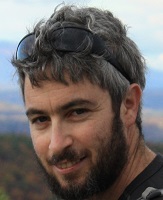
Gili Greenbaumمشاهده پروفایل
استادیار
Dr. Gili Greenbaum is an Assistant Professor at The Hebrew University of Jerusalem's Department of Ecology, Evolution and Behavior. His research focuses on computational population genomics, addressing eco-evolutionary processes through genomic data analysis and mathematical modeling. Key areas include conservation genomics, gene drive technology, and human evolution under disease pressures. He leads a lab with interdisciplinary collaborations, advising students across biology, mathematics, and computer science disciplines. Research emphasizes genomic approaches for endangered species conservation, particularly fragmentation impacts on population genetics. Projects also explore gene drive deployment risks and ecological modeling of ancient human interactions with Neanderthals. His lab develops tools like DORA for ancient DNA visualization and modelRxiv for model sharing. Current projects include predicting conservation risks using machine learning, studying immune-related genomic signatures in human populations, and modeling social evolution dynamics. The lab collaborates with institutions globally and offers training opportunities for graduate students and postdocs in computational biology and theoretical ecology.
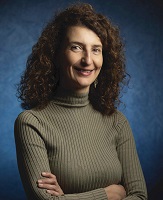
Prof. Julia Shifman is a Professor in the Department of Biological Chemistry at the Hebrew University of Jerusalem. Her research focuses on computational and experimental protein engineering, particularly redesigning protein-protein interfaces to develop novel therapeutic proteins for cancer, degenerative, and inflammatory diseases. She leads a lab investigating enzyme stabilization (e.g., MMP-9 variants) and structural biology of protein interactions, including cold spot analysis. Education: PhD from the University of Pennsylvania, postdoctoral training at the California Institute of Technology. Current lab members include PhD and M.Sc. students working on drug design, protein-ligand interactions, and microbiology. Collaborations involve computational methods like machine learning and mass spectrometry. Key projects include engineering stable proteases for drug screening and understanding cold spots in protein interfaces to enhance binding specificity. Recent breakthroughs include stable MMP-9 variants and structural insights into cold spot formation.

Renana Keydarمشاهده پروفایل
دانشیار
Dr. Renana Keydar is an Associate Professor of Law and Digital Humanities at The Hebrew University of Jerusalem, where she serves as Academic Director of the Center for Digital Humanities (DH@HU) and heads the Alfred Landecker Lab for Computational Analysis of Holocaust Testimonies. She holds additional affiliations as a 2024-25 Fellow at Brandeis University's Institute for Advanced Israel Studies and is a core member of Edut 710, Israel's largest civil initiative documenting survivor testimonies of the October 7, 2023 attacks. Her academic credentials include a PhD in Comparative Literature from Stanford University (2015), and magna cum laude degrees in Law and Political Science from Tel Aviv University (2003). Prior to academia, she served as an advocate in Israel's State Attorney's Office - High Court of Justice Department. Keydar's pioneering research bridges computational methods with humanities scholarship, focusing on: Developing AI models for analyzing mass atrocity testimonies using NLP and machine learning Creating trauma-informed digital archives for Holocaust and contemporary crisis documentation Computational analysis of legal narratives in human rights law and international courts Ethical frameworks for applying AI to sensitive historical materials Her scholarly output demonstrates consistent focus on computational jurisprudence, with recent works examining algorithmic analysis of UN human rights recommendations, judicial attitudes toward sexual violence victims, and computational models for Holocaust testimony. Keydar has received the prestigious Alon Fellowship for outstanding young researchers and leads multiple major initiatives: Designing Edut 710's AI-powered testimony platform documenting 1,600+ accounts from October 7 attacks Developing 'distant listening' computational methods for Holocaust testimonies Directing the Future of the Past research group funded by Israel's Ministry of Science
- Computer Vision
- Machine Learning
- Signal Processing
- +۵ مورد دیگر
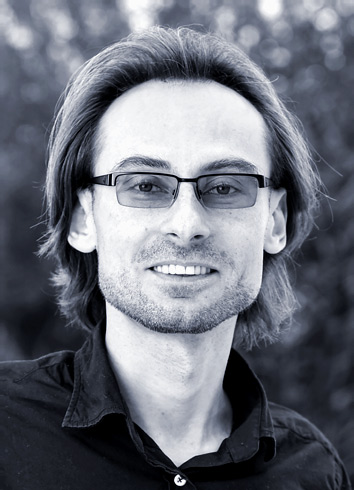
Prof. Alex Bronstein is a Professor at the Henry and Marilyn Taub Department of Computer Science, Technion – Israel Institute of Technology, where he holds the Dan Broida Academic Chair and heads the VISTA Lab and the Center for Intelligent Systems. He concurrently serves as a Visiting Professor at the Austrian Institute of Science and Technology. His research spans computer vision, machine learning, computational geometry, signal processing, and bioinformatics, with a focus on geometric data analysis and AI applications in science. He has held significant industry roles including Principal Engineer at Intel Corporation, co-founding startups such as Invision (acquired by Intel), VideoCites, and Sibylla. His work bridges academia and industry, emphasizing practical applications of theoretical insights. Research interests include foundational AI models for molecular biology, robust machine learning systems, and interdisciplinary applications in healthcare and robotics. Notable projects include protein structure prediction using AlphaFold integration, adversarial robustness frameworks, and medical imaging innovations like T1-PILOT for MRI acceleration. He actively collaborates with global institutions, maintaining labs in Haifa, Vienna, and Sardinia. Recent publications highlight advancements in quantum computing simulations, wearable health monitoring systems, and AI-driven biomedical solutions. While no explicit awards are listed, his leadership roles and industry impact underscore significant contributions to computational science. He mentors graduate students in his VISTA Lab, focusing on cutting-edge projects in AI, computer vision, and computational chemistry.
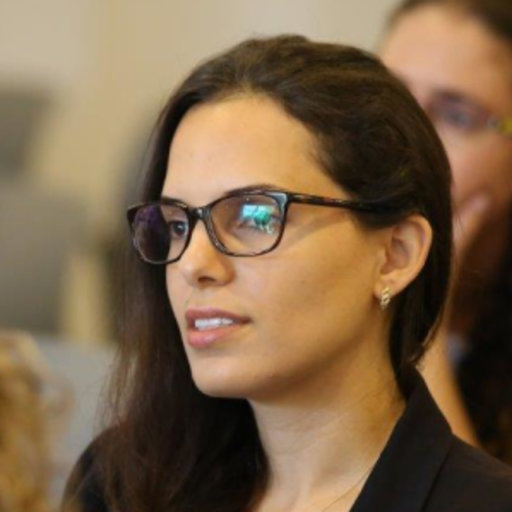
Liron Cohenمشاهده پروفایل
استادیار
- Type Systems
- Computational Models
- Theorem Proving
- +۶ مورد دیگر
Liron Cohen is an Assistant Professor at the Department of Computer Science , Ben-Gurion University , Israel. He earned his PhD at Tel Aviv University under Arnon Avron and was a Fulbright postdoctoral researcher at Cornell University hosted by Robert Constable. Currently on sabbatical at Cornell during 2024-2025, his research focuses on connections between proofs, computation, and mathematics. Education: PhD (Tel Aviv University), MSc (Tel Aviv University) Research Interests Cohen's work bridges logic, type theory, and computational mathematics. Key areas include: Type systems and computational models Theorem proving and automated reasoning Constructive and intuitionistic logic Effectful computation Cyclic proof systems Formal verification Scientific Awards Pazy Memorial Research Award ETAPS Distinguished Paper Award ETAPS Distinguished Artifact Award

Tamar Berenblumمشاهده پروفایل
پژوهشگر ارشد
- victimology
- sociology of knowledge
- cybercrime
- +۲ مورد دیگر
Dr. Tamar Berenblum serves as Research Director of the Federmann Cyber Security Research Center – Cyber Law Program at the Hebrew University of Jerusalem's Faculty of Law. She concurrently holds Post-Doctoral Research Fellow positions at the Netherlands Institute for the Study of Crime and Law Enforcement (NSCR), the Rachel and Selim Benin School of Computer Science and Engineering (Hebrew University), and the Center for Cyber Law & Policy at Haifa University (CCLP). Her research expertise spans victimology , sociology of knowledge , cybercrime , online social control , and digital rights , rooted in her doctoral thesis The Internet as a Sphere of Social Control which examines cyberspace as both a domain and tool for social control over deviant activities. Current projects investigate deterrence mechanisms, online-shaming phenomena, language accessibility in legal proceedings, and juvenile cyber-delinquency. Analysis of her publications reveals consistent focus on human-centered cybersecurity challenges, with recurring themes in ransomware mitigation ( Security Vaccination ), hacking network topology ( Hackers Topology Matter Geography ), and digital justice dynamics ( Viral Justice and E-shaming ). Her methodological approach blends criminological theory with computational analysis of real-world cyber incidents. Beyond research, Berenblum serves as a public representative in Parole Committees of the Court Administration and contributes to policy discussions through the Cyber Law Program's regulatory work on computer crime prevention and IoT security standards.

Michael Elad is a Professor of Computer Science at the Technion - Israel Institute of Technology, where he has held a permanent faculty position since 2003. He also holds a courtesy appointment in the Technion's Electrical & Computer Engineering Department. Elad received his B.Sc. (1986), M.Sc. (1988) and D.Sc. (1997) in Electrical Engineering from the Technion, followed by a research associate position at Stanford University (2001-2003). His educational background includes: B.Sc. in Electrical Engineering from the Technion (1986) M.Sc. in Electrical Engineering from the Technion (1988), focusing on video compression algorithms under Prof. David Malah D.Sc. in Electrical Engineering from the Technion (1997), focusing on super-resolution algorithms for image sequences under Prof. Arie Feuer Michael Elad's research spans signal and image processing and machine learning, with specialization in inverse problems, sparse representations, deep learning, and generative models. He is particularly renowned for his work on sparse representations, having created the influential K-SVD algorithm together with Michal Aharon and Bruckstein. His 2010 book "Sparse and Redundant Representations: From Theory to Applications in Signal and Image Processing" is a leading publication in this field. Elad has also made significant contributions to diffusion models and generative AI, applying these concepts to solve complex problems in signal and image processing. His extensive publication record shows a clear evolution from foundational work on sparse representations to more recent applications in deep learning and generative models. While his early work focused on theoretical aspects of sparse coding and dictionary learning, his more recent publications demonstrate an integration of these concepts with modern deep learning techniques, particularly in the areas of image restoration, super-resolution, and generative modeling. Elad's scientific achievements have been recognized with numerous awards: Rothschild Prize in Engineering (2024) Member of the Israel Academy of Sciences and Humanities (2024) Weizmann Award for contributions in Sparse Modeling (2021) IEEE SPS Sustained Impact Paper Award (2018) IEEE SPS Best Paper Award (2018) IEEE SPS Technical Achievement Award (2018) Fellow of the Society for Industrial and Applied Mathematics (SIAM Fellow) (2018) IEEE Fellow (2012) ERC advanced grant (2013) Throughout his career, Elad has been actively involved in academic service and mentorship. He has served as an Associate Editor for several prestigious journals including IEEE Transactions on Image Processing, IEEE Transactions on Information Theory, and Applied Computational Harmonic Analysis. From 2016 to 2021, he was the Editor-in-Chief for SIAM Imaging Sciences. He has advised numerous students, including Michal Aharon and Yaniv Romano. Elad also headed the Rothschild-Technion Program for Excellence from 2015 to 2018, an undergraduate program for exceptional students. Elad maintains an active research laboratory at the Technion focused on advancing the theory and applications of sparse representations, deep learning, and generative models in signal and image processing. His team continues to push the boundaries of what's possible in image restoration, super-resolution, and other inverse problems in imaging.

Oren Tsurمشاهده پروفایل
استادیار
Oren Tsur is an Assistant Professor in the Department of Software & Information Systems Engineering (SISE) at Ben Gurion University of the Negev, where he heads the NLP and Social Dynamics Lab (NAS-LAB) and directs the Center for the Study of Digital Politics and Strategy (DPS@BGU). He joined the university in September 2017 and teaches core courses including Natural Language Processing, Social Network Analysis, and Introduction to NLP at both undergraduate and graduate levels. His research focuses on computational modeling of social dynamics through language and network analysis. Key interests include social contagion, language evolution, political network analysis, and sentiment analysis. He employs methodologies from exponential random graph models (ERGM), machine learning, and natural language processing to study how language shapes and is shaped by social interactions, particularly in political contexts and online communities. His publication trends reveal strong interdisciplinary work spanning computational linguistics, political science, and social network analysis. Recent research emphasizes hate speech detection in platforms like Parler, suicide risk identification in counseling services, and modeling semantic drift in emoji usage. His work consistently bridges technical NLP innovations with real-world social applications, particularly in political discourse and community dynamics. NSF Political Network Fellowship (2014, 2015, 2016) TIME Magazine's 50 Best Inventions of 2010 for sarcasm detection research Work featured in Science Magazine, BBC, The Atlantic, CNET, and Politico Best Paper award at HICSS 2020 Tsur actively mentors prospective students through his lab, emphasizing excellence in candidates through academic transcripts and research interest statements. His grants include multiple NSF Political Network Fellowships supporting computational social science research. He serves as Director of BGU's Cyber Politics and Policy Research Center and organizes major NLP workshops including the Natural Language Processing and Computational Social Science series at top conferences. His NAS-LAB focuses on data-driven modeling of social coordination and influence, with applications in sentiment analysis, dialogue systems, and digital forensics. The lab maintains strong industry connections through past collaborations with IBM Research (Watson Debater project), Yahoo! Research, and startup consulting.

Professor Noam Goldberg is a faculty member in the Department of Industrial Engineering and Management at the Faculty of Engineering Sciences, Ben-Gurion University of the Negev, joining the university as part of the 2024-2025 academic roster. His appointment marks a return to the Negev region where he spent part of his childhood in Beersheba and Omer. His educational background includes: Undergraduate studies in business administration and computer science at York University and the University of Toronto Master's degree in operations research from Tel Aviv University Doctoral degree from Rutgers University (New Jersey, USA) Postdoctoral research at the Technion, National Institute of Energy (University of Chicago), and Carnegie Mellon University Goldberg's research centers on optimization methods with dual focus on theoretical rigor and practical implementation. His work in sparse optimization develops techniques to identify minimal-variable explanations for complex phenomena, directly applicable to machine learning model simplification and statistical regression analysis. A significant applied focus involves collaborating with oncologists to optimize tumor radiation therapy planning, addressing challenges like biological uncertainty and patient movement through advanced computational models that balance multiple constraints under volatile conditions. He emphasizes the critical synergy between theoretical frameworks and real-world applications, drawing inspiration from Egon Blas' perseverance in mathematical optimization despite extreme adversity. Outside academia, Goldberg values family time and pursues culinary passions including quality coffee, hummus, and wine, occasionally traveling considerable distances for exceptional examples of these specialties.

Itay Safranمشاهده پروفایل
پژوهشگر
Dr. Itay Safran is a faculty member in the Department of Computer Science at Ben-Gurion University of the Negev, Faculty of Natural Sciences. He completed his BSc in computer science and mathematics at Ben-Gurion University, followed by MSc and PhD studies at the Weizmann Institute, and postdoctoral research at Princeton and Purdue Universities in the US. His academic journey reflects a strong foundation in theoretical and applied computer science. Research interests focus on artificial intelligence and deep learning, particularly on developing theoretical foundations to understand the mechanisms behind deep learning technologies and their potential improvements. He aims to establish a laboratory at Ben-Gurion University to advance this research. His academic career emphasizes inspiring students to achieve high professional and human standards while fostering flexibility in research environments. Personal interests include travel, influenced by his postdoctoral experiences in the US, and he expresses a desire to continue exploring Israel.

Tamir Hazanمشاهده پروفایل
دانشیار
Associate Professor Tamir Hazan is a faculty member at Technion - Israel Institute of Technology, where he joined in 2015. His research focuses on theoretical and practical aspects of machine learning, with applications spanning computer vision, natural language processing, and computational biology. His work bridges mathematical foundations with real-world problem solving in complex systems. Professor Hazan received his Ph.D. from the Hebrew University in 2009. His academic trajectory has established him as a leading researcher in machine learning theory and its applications, with a particular emphasis on developing mathematically rigorous approaches to modern AI challenges. Professor Hazan's research centers on mathematically founded solutions to problems demonstrating non-traditional statistical behavior. His work encompasses perturbation models for efficient learning of high-dimensional statistics, deep learning of infinite networks, and primal-dual optimization for high-dimensional inference problems. His research program spans three major interconnected areas: attention models that improve prediction interpretability, perturbation frameworks that integrate optimization and sampling through extreme value statistics, and convex duality approaches to message-passing in graphical models. His work demonstrates both theoretical depth and practical relevance across multiple domains. Analysis of Professor Hazan's recent publications reveals an evolving research trajectory with increasing emphasis on interpretable machine learning, causal modeling, and applications in medical imaging and behavioral science. His work consistently bridges theoretical foundations with practical implementations, with recent publications showing strong connections between perturbation theory, attention mechanisms, and optimization frameworks. The interdisciplinary nature of his research is evident in applications ranging from pedestrian navigation using smartphone sensors to video-text matching systems and medical image analysis. Professor Hazan has mentored numerous students throughout his career, including: Alex Schwing, now Assistant Professor at UIUC Alon Cohen, now Associate Professor at Tel Aviv University Idan Schwartz, currently Postdoc at Tel Aviv University Current Ph.D. students: Guy Lorberbom, Itai Gat, and Hedda Cohen Multiple M.Sc. students including Adi Manos, Ram Yazdi, and others Professor Hazan's research group maintains an active program with several key focus areas: Attention models for interpretable and improved prediction processes in visual question answering and multimodal applications Perturbation models that enable efficient statistical reasoning in complex systems with exponential configuration spaces Markov random fields, convex duality, and message-passing algorithms for structured prediction and distributed computing
Vadim Indelmanمشاهده پروفایل
دانشیار
Vadim Indelman serves as an Associate Professor in the Department of Aerospace Engineering at the Technion – Israel Institute of Technology, affiliated with the Technion Autonomous Systems Program (TASP) and Machine Learning and Intelligent Systems (MLIS) Center. He earned his B.A. (Cum Laude) in Computer Science and B.Sc. (Summa Cum Laude) in Aerospace Engineering from the Technion in 2002, completed his PhD in Aerospace Engineering there in 2011 under Pini Gurfil, Ehud Rivlin, and Hector Rotstein, and conducted postdoctoral research at Georgia Tech's Institute of Robotics and Intelligent Machines (2012-2014). His research focuses on probabilistic perception and state estimation for autonomous systems operating in uncertain dynamic environments, with core contributions in SLAM, vision-aided navigation, distributed information fusion, and belief-space planning for multi-agent systems. This work enables reliable real-time operation through probabilistic graphical models and active sensing methodologies. Indelman holds significant editorial roles including Associate Editor for IEEE Robotics & Automation Letters since 2017, Senior Editor for IROS (2021-2023), Area Chair for MRS 2021, and co-chair of IEEE RAS Technical Committee on Planning and Control Algorithms since 2019.

Yoav Goldberg is a Professor in the Department of Computer Science at Bar Ilan University and serves as the Research Director of the Israeli branch of the Allen Institute for Artificial Intelligence. Previously, he was a Research Scientist at Google Research New York. He completed his PhD at Ben-Gurion University in 2011 under the supervision of Prof. Michael Elhadad. His research focuses on Natural Language Processing and Machine Learning, with specific expertise in: Syntactic parsing and structural analysis Development of structured-prediction models Algorithms for greedy decoding optimization Cross-lingual and multilingual understanding Domain adaptation techniques Neural network architectures for NLP tasks He has authored a book on neural network methods for NLP and maintains active contributions through publications, open-source software, and curated datasets.