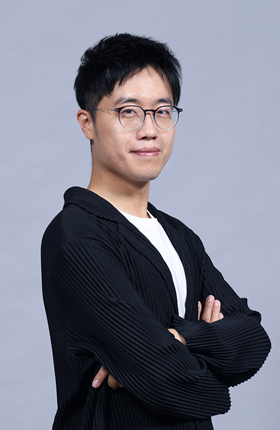
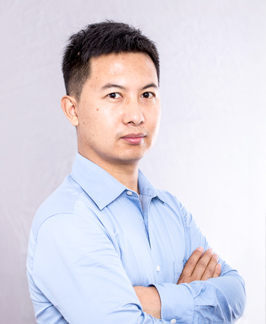
Dr. Qiuyu (Luca) Lu is an Assistant Professor (Presidential Young Scholar) at the School of Design of The Hong Kong Polytechnic University and Director of the Interbeing Lab , which focuses on designing intelligence for mutualism between humans, nature, and machines. He holds a Ph.D. in Design and a B.Eng. in Mechanical Engineering from Tsinghua University. Ph.D. in Design, Tsinghua University B.Eng. in Mechanical Engineering, Tsinghua University His research bridges Ecological HCI, Computational Design , and Bio-inspired Engineering , creating sustainable interactive systems that leverage natural processes. Recent projects include: RoboMoRe (2025): LLM-driven robotic morphology optimization Degrade to Function (2024): Programmable eco-degradable interfaces Sustainflatable (2023): Ambient energy harvesting for morphing devices His work has been exhibited internationally at Ars Electronica and the Milan Triennale . Scientific recognition includes a Best Paper Honorable Mention at UIST 2023. Dr. Lu is actively recruiting PhD students and postdocs across disciplines, including design, computer science, mechanical engineering, and materials science, with research tracks in: Experimental Track: Interactive hardware prototyping Computational Track: AI-aided design tools Design Track: User experience frameworks
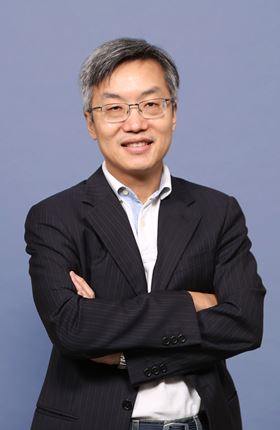
Dan Wang is a Professor in the Department of Computing at The Hong Kong Polytechnic University. He holds a B.Sc. from Peking University, M.Sc. from Case Western Reserve University, and Ph.D. from Simon Fraser University, all in Computer Science. Expertise: Network Architecture, QoS, Smart Building, Big Data, Industry 4.0 Awarded ACM Distinguished Scientist 2023 for contributions to cyber-physical energy systems Recipient of Best Paper Awards at ACM Buildsys (2018), ACM e-Energy (2018), and multiple conference recognitions Research focuses on smart building energy systems, edge computing, and applied AI in industry. Active in organizing conferences like ACM Buildsys 2024 (TPC Co-Chair) and ACM e-Energy 2022 (General Co-Chair). Advises 5-7 students annually, with current Ph.D. candidates and postdocs working on edge computing and AI applications. Former students hold roles at Tencent, Huawei, and JD.com.
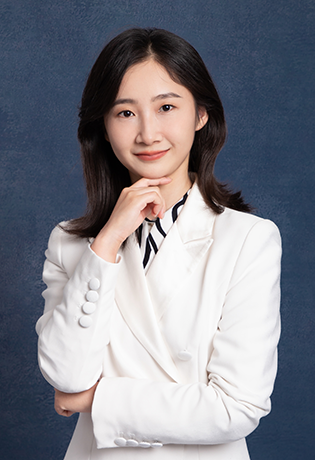
Juanru Fang is an Assistant Lecturer in the Department of Computer Science at the University of Hong Kong (HKU), affiliated with the School of Computing and Data Science. She holds a BEng (2020) and PhD (2025) in Computer Science from the Hong Kong University of Science and Technology (HKUST), supervised by Professor Ke Yi. Her research focuses on data privacy and security, database algorithms, and sampling techniques. Notably, her work has been recognized with a Best Paper Award at SIGMOD 2022. Her research interests span privacy-preserving data management, differential privacy, and algorithm design for database systems. Recent publications explore truncation mechanisms under differential privacy and privacy amplification through sampling. She has contributed to both theoretical foundations and practical applications of privacy-preserving technologies. Juanru has collaborated with institutions like Ashwin Machanavajjhala's group and has published in top venues such as TODS, SIGMOD, and CCS. Her work emphasizes balancing privacy guarantees with query accuracy in complex database environments.
Zihao Fu is a Research Assistant Professor at The Chinese University of Hong Kong (CUHK), specializing in Large Language Models (LLMs) and Natural Language Processing (NLP) . His work bridges computational methods with social sciences, focusing on model instability, repetition, hallucination, and algorithmic fairness. He has held research positions at the Oxford Internet Institute and the Language Technology Lab at the University of Cambridge. Education Ph.D. in Systems Engineering and Engineering Management (2017–2021), CUHK M.Eng. in Aeronautics and Astronautics (2012–2015), Beihang University B.Eng. in Automation Science (2008–2012), Beihang University His research explores the theoretical foundations of LLMs, addressing challenges like repetition , instability , and hallucination . He integrates linguistics , cognitive science , and fairness frameworks to enhance both foundational understanding and real-world applications of language technologies. Recent work includes biomedical NLP applications ( BAND dataset ), parameter-efficient model adaptation, and fairness toolkits ( OxonFair ). Zihao leads projects like BioCaster (disease outbreak monitoring) and CAM-Tool (cloud task distribution). He is actively mentoring postdoctoral researchers at CUHK and CUHK (Shenzhen), with expertise in machine learning , knowledge base integration , and parallel computing systems . His industry experience includes developing distributed algorithms at Alibaba Cloud’s PAI platform.
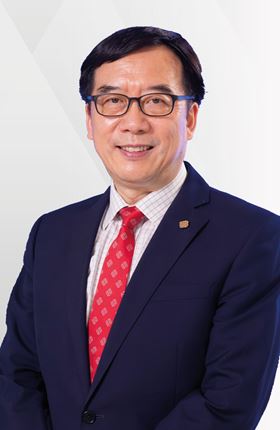
Professor John Shi Wen-zhong is Chair Professor of Geographical Information Science and Remote Sensing at The Hong Kong Polytechnic University, where he serves as Head of the Department of Land Surveying and Geo-Informatics. He also holds leadership positions as Director of the Otto Poon Charitable Foundation Smart Cities Research Institute and Director of the PolyU-Shenzhen Technology and Innovation Research Institute (Futian). Professor Shi is recognized as an international leader in uncertainty modeling and quality control for spatial data and spatial analyses, with contributions dating back to the 1990s. He currently serves as President of the International Society for Urban Informatics and Editor-in-Chief of the international journal Urban Informatics. Professor Shi's research focuses on urban informatics for smart cities, geographical information science and remote sensing, artificial intelligence-based object extraction and change detection from satellite imagery, intelligent analytics and quality control for spatial big data, and mobile mapping and 3-D modelling based on LiDAR and remote sensing imagery. His work has solved fundamental uncertainty issues in spatial data and spatial analyses, making significant contributions to geographical information science. He has authored over 300 research articles in Web of Science-indexed journals and 20 books, and has been granted 44 patents as of July 2023. Professor Shi has received numerous prestigious awards for his groundbreaking work: ESRI Award for Best Scientific Paper by the American Society for Photogrammetry and Remote Sensing (2006) State Natural Science Award (Second Award), China's highest award for fundamental research (2007) Wang Zhizhuo Award by the International Society for Photogrammetry and Remote Sensing (2012) Founder's Award by the International Spatial Accuracy Research Association (2020) CPGIS Distinguished Scholar Award (2021) Gold Medals at both the 2021 and 2023 Geneva Invention Expos Smart 50 Awards (2021) Gold Medal in Asia International Innovative Invention Exhibition (2023) He is also listed among the world's top 2% most cited researchers according to Elsevier BV's standardized citation indicators. Professor Shi has been elected as an Academician of the International Eurasian Academy of Sciences and is a Fellow of the Academy of Social Sciences (UK), the Royal Institution of Chartered Surveyors, and the Hong Kong Institute of Surveyors.
Xiaoyu Zhang is a tenure-track Assistant Professor at the School of Creative Media, City University of Hong Kong , where she conducts research at the intersection of computer science and art design. Her work focuses on integrating data visualization and artificial intelligence (particularly natural language processing ) for applications in education , smart manufacturing , and human well-being . She previously held a Postdoc Research Fellow position at the ETH AI Center , Zurich, and earned her Ph.D. in Computer Science from University of California, Davis under Prof. Kwan-Liu Ma, a Master’s from Zhejiang University, and a dual bachelor’s in Digital Media Art/Advertising from Xiamen University. Ph.D. in Computer Science, University of California, Davis M.Sc. in Computer Science, Zhejiang University B.Sc. in Digital Media Art, Xiamen University Her research bridges visual analytics , human-AI collaboration , and explainable AI through interdisciplinary methods. Key application domains include education technology, industrial AI, and health informatics. Recent publications (2021-2025) span venues like IEEE TVCG, IEEE VIS, ACM CHI, and ACL, with a 2022 Honorable Mention Best Paper Award at IEEE VIS. She has also secured multiple US patents and received recognition as UC Davis' Best Graduate Researcher in 2022. She has served as Associate Chair at ACM CHI (2025, 2026), organized the 6th Workshop on Visualization for AI Explainability at IEEE VIS 2023, and contributed to the AI House Davos 2024 committee. Industrial experience includes internships at Meta , Microsoft Research Asia , and Bosch Research . Her teaching portfolio spans courses in Information Visualization , Creative Coding , and Media Computing at CityU, ETH Zurich, and UC Davis.
Yang Yuxiang is an Assistant Professor at the University of Hong Kong's School of Computing and Data Science. His research focuses on software security, adversarial machine learning, and AI safety, with a particular emphasis on formal methods and large language models. He holds a PhD from Hong Kong. Research interests include: Automated program repair using LLMs Cybersecurity in open-source ecosystems Adversarial attacks on vision-language models Formal verification of theorem provers Ethical implications of AI systems Recent publications explore cutting-edge topics such as causality-aware safety testing for autonomous systems , smart contract vulnerability detection , and large model safety at scale . His work bridges theoretical foundations with practical applications in secure software development and AI ethics.
Professor Shenghua Gao is an Associate Professor at the School of Computing and Data Science of the University of Hong Kong (HKU), concurrently serving as Assistant Director for Shanghai Initiatives. He holds a PhD from Nanyang Technological University. His research focuses on integrating machine learning, spatio-temporal data analysis, and database systems to address challenges in mobility prediction, traffic management, and geospatial representation learning. He has contributed significantly to trajectory modeling, indexing frameworks for multi-dimensional data, and the application of large language models (LLMs) in spatio-temporal contexts. Key research interests include: Spatio-Temporal Data Science: Developing frameworks for efficient processing and analysis of point cloud, trajectory, and traffic data. Machine Learning for Databases: Innovating indexing algorithms (e.g., BMTree, MAST) and query optimization techniques leveraging ML. Trajectory and Mobility Prediction: Creating personalized models for next-location prediction and transfer learning across regions. Geographic AI (GeoAI): Enhancing road network representation and urban function inference using physics-guided and foundation models. Recent work highlights include the ST-LLM+ framework for traffic prediction, the MAST system for point cloud analytics, and the exploration of City Foundation Models for urban challenges. His publications span top venues in databases (SIGMOD, VLDB) and AI/data science (ICML, NeurIPS). While no awards are explicitly mentioned, his prolific output and leadership roles indicate significant academic contributions. He is actively involved in teaching and supervising research in the School’s undergraduate and postgraduate programs, including MSc(AI) and MPhil/PhD tracks.
Yuxiang Yang serves as an Assistant Professor in the Department of Computer Science at the School of Computing and Data Science, University of Hong Kong. He holds a PhD from Hong Kong and is affiliated with the institution established on 1 July 2024. His research spans core computing disciplines with emphasis on: Computer Science fundamentals Artificial Intelligence systems Data Science methodologies Machine Learning algorithms Computational Algorithms Theoretical Computer Science frameworks Contact information: Email: yuxiang@cs.hku.hk Telephone: (+852) 2241 5778 Fax: (+852) 2559 8447 Homepage: https://www.cs.hku.hk/~yuxiang
Professor Henry Duh is Associate Dean (Global & Industry Engagement) and Full Professor at the School of Design, The Hong Kong Polytechnic University. He also serves as Director of the PolyU-NVIDIA Joint Research Centre and Research Centre for Art and Culture Technology. PhD in Psychology, Industrial Design, and Engineering Postdoctoral Training: NASA-Johnson Space Centre His research focuses on human-centric augmented/virtual reality systems, interaction design, and immersive technologies. With over 150 publications and 6,100 citations, he explores cognitive behaviors in digital environments and develops applications for training, education, and cultural preservation. Recent publications demonstrate expertise in adaptive testing frameworks, VR locomotion mechanics, and AI-driven design tools. His work bridges psychology, computer science, and digital art through interdisciplinary approaches. Editor-in-Chief: Journal of Visual Languages and Computing (Elsevier) FAA certified Advanced Ground Instructor and Private Pilot As principal investigator, he secured millions in grants from institutions like the National Research Foundation Singapore, Australian Research Council, and Microsoft. He collaborates with CISCO, Oracle, and Microsoft to align curricula with industry needs. He has led academic units at University of Tasmania and La Trobe University, and held visiting positions at Tsinghua University and National Taiwan University.
Hector Rodriguez is an Associate Professor at the School of Creative Media , City University of Hong Kong . His work bridges art and mathematics , software art , and computational cinema , focusing on the intersection of digital abstraction and cinematic representation . His research interests include: Art and Mathematics Cinema Studies Computational Cinema Ludology and Games Studies Software Art Media Theory Recent publications and projects like Theorem 8 and Gestus: Judex highlight his integration of machine learning , vector analysis , and artistic practice . His articles explore themes such as interactive fiction , cinematic rhythm , and medium-specific theory . Scientific awards include: Artist of the Year (Media Arts) (2020) Achievement Award, Hong Kong Contemporary Art Awards (2012, 2013) Finalist, CyNetArt (2016) Appointed member, Distinguished Group of Experts, International Creative Center of new Media Arts and Design (2016) He supervises PhD students in the School of Creative Media and co-organizes events like Ars incognita and Knowledge Asymmetries in the Age of Machine Learning . His Writing Machine Collective and collaborations with programmers like Philip Kretschmann underscore his interdisciplinary approach.
Dr. Henry Hong-Ning Dai is an Associate Professor in the Department of Computer Science at the Faculty of Science, Hong Kong Baptist University (HKBU). He previously held academic positions at Lingnan University and Macau University of Science and Technology, where he advanced from Assistant to Associate Professor. He holds a Ph.D. from the Chinese University of Hong Kong and a D.Eng. from Shanghai Jiao Tong University. Education: Ph.D. in Computer Science and Engineering, Chinese University of Hong Kong (2008) D.Eng. in Computer Technology Application, Shanghai Jiao Tong University (2012) M.Eng. in Computer Science and Engineering, South China University of Technology (2003) B.Eng. in Computer Science and Engineering, South China University of Technology (2000) Dr. Dai's research focuses on security and reliability of VR/AR systems , Internet of Things , blockchain and distributed systems , federated learning , and cyber-physical systems . His work integrates AI, networking, and software engineering to address real-world security and performance challenges in emerging technologies. He has published over 300 papers in top journals and conferences such as IEEE JSAC, TMC, ICSE, INFOCOM, and AAAI, accumulating more than 24,000 citations. The 15 most recent publications (2023–2025) highlight his leadership in VR/AR security (e.g., AcouListener, Meta VR study), blockchain scalability and fairness (e.g., Porygon, Auncel, Justitia), federated and robust learning (e.g., EBS-CFL, FedDP), and edge-AI and wireless security (e.g., HARBOR, Smart Shield). His recent work also explores AI-generated art evaluation and LLM-driven manufacturing systems , showcasing interdisciplinary innovation. Scientific Awards and Recognition: Holder of 1 U.S. patent and 1 Australia innovation patent Winner of more than 17 awards Senior Member of ACM, IEEE, and EAI Dr. Dai has been Principal or Co-Investigator on over 12 research projects totaling HK$16 million, funded by UGC, NSFC, FDCT, and HKBU. He serves as an Associate Editor for IEEE Communications Surveys & Tutorials , IEEE Transactions on Intelligent Transportation Systems , and several other IEEE journals. He has chaired program committees and served on the PC of top conferences including ICSE, KDD, and INFOCOM. He is actively recruiting Ph.D. students and RAs in security, blockchain, and AI. Laboratories and Research Teams: While not explicitly named, Dr. Dai leads a research group focused on secure and intelligent distributed systems, with active projects in blockchain, VR security, and edge AI. His team has developed open-source tools such as VR-SP Detector , PrettySmart , and RLF for smart contract analysis and security assessment.
Prof. Kenneth K.Y. Wong is an Associate Professor and Division Associate Head (AI & Data Science Division) at the School of Computing and Data Science (CDS), The University of Hong Kong. He holds a BEng from The Chinese University of Hong Kong and MPhil/PhD from the University of Cambridge in Computer Vision. His career spans over 20 years in academia, including roles as Associate Head of the Department (2008-2012) and Programme Director of the BEng(CompSci) programme (2008-2015). Research Focus: Computer Vision, Machine Learning, Medical Imaging, Generative Models Key Roles: Director of Computer Vision Laboratory, Associate Editor of IJCV His research emphasizes camera calibration, 3D model reconstruction, generative AI, and medical image understanding. Over 160 peer-reviewed publications appear in top venues like CVPR, ECCV, and TPAMI. Active in professional service, he serves on program committees of major AI/conference events. Grants include projects in medical imaging (e.g., mitral valve analysis) and autonomous driving (DriveGPT4 series). His lab focuses on cutting-edge topics like video diffusion models, text-to-image synthesis, and 3D avatar generation.
Professor David Wai-lok Cheung is a Professor in the Department of Computer Science at the University of Hong Kong (HKU) and Director of the Center for E-commerce Infrastructure Development (CECID). He holds a BSc in Mathematics from the Chinese University of Hong Kong and MSc/PhD in Computer Science from Simon Fraser University, Canada. His research focuses on database systems, data mining, e-commerce technologies, and secure computation. Key contributions include pioneering work on privacy-preserving data mining, XML schema design, and e-commerce infrastructure development. He has led numerous prestigious grants totaling over HK$60M and developed widely adopted open-source tools like the ebXML gateway. Professor Cheung has received awards such as the HKU Outstanding Researcher Award (1999) and the Distinguished Contribution Award (2009 PAKDD). He actively contributes to academia through leadership roles in conferences like PAKDD and CIKM. His research spans secure computation, data interoperability, and bioinformatics, with over 150 publications in top venues like SIGMOD, VLDB, and KDD. **Grants & Funding**: Highlighted grants include HK$6.6M for eLogistics Appliance (2007-2008) and HK$9.198M for a service-oriented e-transaction platform (2006-2008). **Publications**: Over 150 papers in areas like privacy-preserving data mining, XML query processing, and spatiotemporal data analysis. **Service**: Member of RGC Engineering Panel, Hong Kong Deposit Protection Scheme board, and Certification Board for IT Professional Certification.
Dr. Alan William Dougherty is a Lecturer at the School of Computing and Data Science, University of Hong Kong. He holds an MEng in Electronic Engineering from King’s College London (2013) and a PhD from Hong Kong Polytechnic University (2019), where he received the prestigious Hong Kong PhD Fellowship. His professional background includes engineering roles in compiler design for edge AI on FPGAs, autonomous robotic systems, and computer vision applications such as human emotion classification and 3D mesh generation from single images. Affiliations: School of Computing and Data Science (HKU) Research Interests: Computer Vision, Machine Learning, Medical Robotics, Edge AI, Autonomous Systems His research spans interdisciplinary areas including immersive online learning systems, human pose estimation using transformers, and computational material science for energy applications. Notable contributions include the SAILS platform for young learners and advanced catalyst discovery methodologies. He integrates practical engineering challenges with theoretical research to address real-world problems. Dr. Dougherty has been recognized for his work with awards such as the Hong Kong PhD Fellowship. His teaching philosophy emphasizes bridging theory and practice, fostering critical thinking in emerging tech fields.