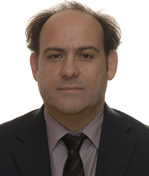
Georgios Alexandropoulos is an Associate Professor in the Department of Informatics and Telecommunications. He received the Best Paper Award at the IEEE VTC2025-Spring conference in Oslo, Norway, for his work on multi-task domain adaptation in edge-intelligence networks. His research focuses on edge computing, network optimization, and machine learning applications in telecommunications. Key contributions include advancing computation offloading techniques for edge systems, leveraging domain adaptation to improve efficiency in distributed networks. His 2025 award-winning paper addresses critical challenges in intelligent edge networks, showcasing interdisciplinary innovations at the intersection of AI and telecommunications infrastructure. Awards: IEEE VTC2025 Best Publication Award Key Article: Published in Proc. IEEE VTC-Spring 2025 (Oslo)
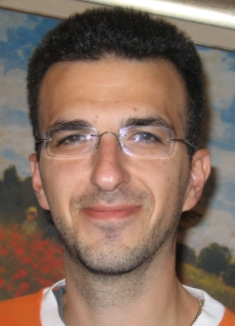
Georgios Pappas is an Associate Professor at the School of Physics , Aristotle University of Thessaloniki since July 2025. Previously, he held positions as Assistant Professor there (2018–present), Researcher at Sapienza University of Rome (2018), and multiple Research Fellow/Postdoc roles at institutions including the University of Nottingham (2017–2018), Instituto Superior Técnico (2016–2017), University of Mississippi (2015–2016), and earlier postdoc/research roles since 2012. PhD in Physics (2005–2012), MSc (2001–2005), and Bachelor's (1996–2001) from the National and Kapodistrian University of Athens His research focuses on gravitational physics , particularly black holes and neutron stars in the context of general relativity , alternative gravity theories , and gravitational wave astronomy . Recent work includes applying machine learning to neutron star universal relations analyzing black hole shadows as tests of the no-hair theorem developing surrogate models for gravitational waveforms He has contributed to international collaborations like the Laser Interferometer Space Antenna (LISA) mission planning and has expertise in spacetime metrics , QPO analysis , and neutron star structure . Peer review activities centered on general relativity and celestial mechanics.
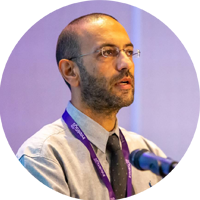
Stamatopoulos Panagiotis is an Assistant Professor in the Department of Informatics and Telecommunications at the University of Athens since May 2001. His career spans roles as Lecturer (1993-2001), Collaborating Researcher (1989-1993), and Research Associate (1989-1993) under EU programs. He holds a PhD in Computer Science (1988) and Physics degree (1982) from the University of Athens. Research Focus: Artificial intelligence, constraint programming, natural language processing, and combinatorial optimization. Teaching: Logic programming and introductory programming courses. His work bridges constraint programming with operations research for solving scheduling/resource allocation problems. No scientific awards or publications were listed in the provided text.
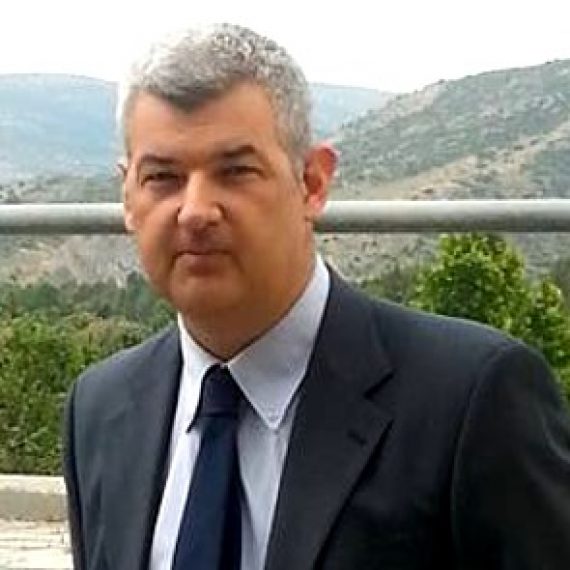
Iraklis Varlamis is a Professor in Data Management at Harokopio University of Athens (HUA). He contributes to Data Science and Artificial Intelligence Cloud and Edge Systems Information Systems Management Digital Transformation and teaches courses in these domains. His research interests span AI applications across healthcare, security, and education, with a focus on Digital Twin technologies Federated Learning Educational Robotics Anomaly Detection . Recent work integrates LLMs for fake news detection and robotics task execution. Key publication trends highlight interdisciplinary efforts in Medical data analysis Edge AI Secure data systems Continual learning .
Professor Dimitrios Koulouriotis serves as Professor of Intelligent Systems in Industrial Engineering and Management at the National Technical University of Athens (NTUA), School of Mechanical Engineering, Section of Manufacturing Technology. Previously, he held leadership roles at Democritus University of Thrace (DUTh) including Head of the Department of Production Management and Engineering (2020-2023) and Director of multiple laboratories until 2023. His academic credentials include a PhD in Intelligent Systems (2001, Technical University of Crete), MSc in Electronics and Computer Engineering (1996, Technical University of Crete), and Diploma in Electrical and Computer Engineering (1993, Democritus University of Thrace). PhD: Intelligent Systems, Technical University of Crete (2001) MSc: Electronics and Computer Engineering, Technical University of Crete (1996) Diploma: Electrical and Computer Engineering, Democritus University of Thrace (1993) His research spans cutting-edge domains in industrial intelligence, with primary focus on Computational and Artificial Intelligence , Machine Learning for manufacturing systems, and Intelligent Systems applications. Significant contributions extend to Decision Support Systems in production environments, Signal Processing for quality control, and Innovation Management frameworks. His work bridges theoretical AI with practical industrial implementation through Manufacturing/Production Systems optimization and Reliability Engineering methodologies. Professor Koulouriotis has earned prestigious recognition including: AD Scientific Index Third Best Scientist in Industrial Manufacturing Engineering (Greece, 2023-2024) Outstanding Reviewer Award from Elsevier's Applied Soft Computing Journal (2013) Consecutive Top Cited Paper Awards (Journal of Loss Prevention, 2011-2012) 2nd Best Paper Award at Panhellenic Urology Conference (1996) He actively mentors through postgraduate programs including coordination of the "Operations Management, Production and Logistics" specialization at DUTh and teaching roles at Hellenic Open University. His laboratory leadership encompassed the Ergonomics and Safety Lab, Logistics Lab, and Industrial Production Lab at DUTh. Current teaching responsibilities at NTUA cover undergraduate courses in Machine Tools, Intelligent Manufacturing Systems, and Advanced Materials, plus postgraduate instruction in CAM, Intelligent Materials, and Industry 4.0 systems. Professional affiliations include membership in the Technical Chamber of Greece, Greek Mechanical and Electrical Engineers Society, and Hellenic Operational Research Society (HELORS), reflecting his multidisciplinary engagement across engineering and operational research domains.
George P. Kafentzis is a Lecturer in the Computer Science Department at the University of Crete, where he teaches Physics for Engineers (CS-112), Digital Signal Processing (CS-370), and Signals and Systems (CS-215). He is a core member of the Speech Signal Processing Lab within the Multimedia Informatics Labs, focusing on advanced signal processing methodologies. His educational background includes a Ph.D. in Signal Processing and Telecommunications from MATISSE Doctoral School (University of Rennes 1) and a Ph.D. in Computer Science and Engineering from the University of Crete (2014), a Master of Science in Computer Science (2010), and a Bachelor's degree in Computer Science (2008), all from the University of Crete. Research interests span speech, audio, and biosignal processing with emphasis on sinusoidal modeling, emotion recognition from speech, deep learning applications, pathological speech analysis, and music signal processing. His work bridges theoretical signal processing with clinical and engineering applications, particularly in non-invasive vocal fold pathology detection through glottal analysis. Recent publications demonstrate a strategic pivot toward cough sound analysis for respiratory diagnostics using AI, while maintaining core expertise in adaptive sinusoidal models for speech transformations. Publication trends reveal an evolution from fundamental speech modeling (2010-2016) toward applied health informatics (2021-present), with increasing focus on real-world diagnostic systems leveraging cough acoustics. Over 50% of recent work integrates deep learning with traditional signal processing for medical applications, particularly in low-resource settings. Graduate student Scholarship - Institute of Computer Science, FO.R.T.H. (2008-2010) Undergraduate Scholarship - Institute of Computer Science, FO.R.T.H. (2007-2008) As an active industry collaborator, Kafentzis has served as Signal Processing Engineer at Hyfe AI (2022-2025) and contractor for VoiceSignals and Toshiba Research Europe. His teaching portfolio includes a widely adopted textbook Continuous and Discrete Time Signal Processing (2019), which integrates MATLAB implementations with theoretical foundations. Current research leverages his signal processing expertise in cough monitoring systems validated through multicenter clinical trials. He leads projects in the Speech Signal Processing Lab including Novel Deep Learning Architectures for Automatic Speech Recognition and Speech Emotion Recognition and Visualization Techniques, with recent work extending to Greek-language pathological speech analysis and respiratory health monitoring systems.
Nikos Komodakis is a Professor in the Computer Science Department at the University of Crete, Greece, where he develops efficient, scalable and mathematically well-grounded algorithms for analyzing visual data including static natural images, video, and medical image data. His research spans deep learning, computer vision, machine learning, and artificial intelligence with significant contributions to self-supervised learning, few-shot learning, and knowledge distillation techniques. His work demonstrates a strong theoretical foundation combined with practical applications, particularly in medical imaging. Komodakis has published extensively in top-tier computer vision venues including CVPR, ICCV, ECCV, and IEEE Transactions on Image Processing. His recent publications (2022-2025) show a growing emphasis on medical image analysis applications while maintaining strong contributions to fundamental computer vision problems. Notable contributions include novel approaches for unsupervised representation learning that surpass state-of-the-art methods, effective techniques for knowledge distillation (such as the QUEST framework), and innovative frameworks for few-shot visual learning. Komodakis serves on the editorial boards of prestigious journals including the International Journal of Computer Vision, Computer Vision and Image Understanding Journal, and Computational Intelligence Journal. He has been a frequent area chair for major computer vision conferences including CVPR, ICCV, ECCV, and BMVC. Spyros Gidaris received the Ponts Foundation Best Thesis Prize and the University Paris-Est Best Thesis prize under Komodakis' supervision Sergey Zagoruyko received the AFRIF 2018 Thesis Prize for his PhD work supervised by Komodakis His research group has developed influential techniques including Online Bag-of-Visual-Words Generation for Unsupervised Representation Learning, which surpassed previous state-of-the-art methods. The group maintains active GitHub repositories for many of their publications, demonstrating commitment to reproducible research. Current research directions include advancing medical image analysis through deep learning, improving self-supervised learning frameworks, and developing more efficient neural network architectures.
Bouras Christos is a Professor in the Department of Computer Engineering at the University of Patras , focusing on advanced research and teaching in computer science and telecommunications. His work spans both theoretical foundations and practical applications. Network Performance Analysis 5G/6G Communication Systems Machine Learning for Network Optimization IoT and Telematics His recent research emphasizes 5G network optimization , with publications on beamforming techniques, resource allocation algorithms, and energy efficiency in MIMO and DUDe architectures. Key subtopics include: Deep learning for user allocation Game theory-based resource management IoT latency reduction Adaptive beamforming Network slicing optimization Techno-economic modeling He contributes to the academic community through leadership in the Division of Applications and Foundations of Computer Science, which includes laboratories focused on distributed systems, combinatorial algorithms, and machine learning applications.
Professor Michael Papoutsidakis is affiliated with the Department of Industrial Design and Production Engineering at the University of West Attica. His academic career spans research in industrial automation, mechatronics, and intelligent control systems, with a focus on applications in hydraulic/pneumatic systems, robotics, and Industry 4.0 technologies. PhD from Bristol Robotics Laboratory (2004) MSc in Automatic Control Systems from University of the West of England (2004) Graduated from TEI Piraeus Automation Engineering (2000) His research interests include: Modeling of fluid power systems AI-driven control algorithms Smart logistics and ERP systems Embedded systems for motion devices Autonomous robotic platforms Wireless sensor networks in industrial applications Recent publications highlight his work at the intersection of 3D printing, robotics, and Industry 4.0, including advancements in digital twins, biomimetic manufacturing, and drone technology. His research emphasizes practical implementations for industrial and educational contexts. 2005 Patent for robotic training base 2025 Digital Twin Systems research 2024 UAV fuzzy control systems Contact: mipapou@uniwa.gr
George Priniotakis is a Professor in the Department of Industrial Production Systems at the University of West Attica. He specializes in innovative textile technologies for multifunctional clothing, with a focus on medical and military applications, wearable sensors, and sustainable materials. His work bridges engineering, ergonomics, and environmental stewardship. University of Leeds – M.Sc. in Fiber Science and Technology (1992) University of Ghent – PhD in Conductive Textile Materials His research interests include: Smart systems using conductive textiles Risk management via wearable sensors Recyclable yarn development Innovative educational tools for engineering Professor Priniotakis has led numerous research projects as a scientific director and coordinator, participated in over 100 international conferences, and maintains an H-index of 12. He serves as President of the Organizing Committee for the biennial AITAE conference.
Vasilios Papadakis serves as an Assistant Professor at the University of West Attica with over two decades of international research and teaching experience spanning Delft University of Technology, Foundation for Technology and Research, University of Crete, and Hellenic Mediterranean University. His expertise centers on non-destructive testing, multispectral imaging, and diagnostic methodology development for material surface analysis under stress conditions. His academic foundation includes dual doctoral achievements: PhD in Spectral Tissue Imaging (Medical School, University of Crete) PhD in Organismal Behavior Observation via Machine Vision (Department of Biology, University of Crete) Dr. Papadakis' research integrates optical physics and engineering to pioneer diagnostic solutions. Core focus areas include: Spectroscopic characterization through Raman, infrared, and fluorescence techniques Material differentiation based on spectral signatures Optoelectronic device design for industrial information systems Dynamic surface analysis during stress exposure Analysis of his 150+ publications reveals dominant themes in Industry 4.0 implementation and sustainable manufacturing . Recent work demonstrates cross-disciplinary impact through 3D-printed infrastructure, biomimetic drone components, and machine learning-driven predictive maintenance systems—bridging theoretical mathematics with practical engineering solutions. As an educator, he teaches foundational engineering mathematics (Linear Algebra, Calculus) and specialized courses including Strength of Materials and Unmanned Aerial Systems. His pedagogical innovations feature low-cost robotics platforms like DuBot and sustainability integration through upcycled materials in mechatronics labs. He directs the Non-Destructive Testing and Systems Diagnosis Methodologies Laboratory , where his team develops imaging solutions for industrial quality control, with particular emphasis on stress-induced surface phenomena and embedded diagnostic systems for material science applications.
Avraam Hatzopoulos is an Assistant Professor at the Department of Industrial Design and Production Engineering of the University of West Attica. His academic work focuses on Embedded Automation, Mechatronics Systems, and Educational Autonomous Robotic Systems within the broader field of Industrial Production Systems. He leads the Industrial Systems and Mechatronics Applications Research Laboratory. Mechanical Automation Degree Master of Telematics Project Management (Danube University of Krems, Austria) Master of Information and Communication Technologies for Education (National and Kapodistrian University of Athens) PhD in Industrial Systems (University of West Attica) His research spans multiple domains including: Embedded systems with automation emphasis Industrial mechatronics applications Small-scale educational robotics STEM education methodologies Predictive maintenance techniques IoT applications in agriculture and smart homes His recent publications analyze trends in: Open-source drone development for engineering education Big data in pharmaceutical sector optimization Low-cost robotics platforms using Arduino Technology Acceptance Model (TAM) evaluations Predictive maintenance with neural networks IoT agricultural education tools Scientific achievements include: Patent on polymorphic robotics testing base (2005) Founder of University of Piraeus Robotics Academy (2017) Contributor to Mechatron educational platform (since 2000) Teaching portfolio includes: Undergraduate: Microcontroller Design, Mechatronics, Robotics, Automotive Design Postgraduate: UAV Applications, Embedded Systems, Production Automation
Constantia Zarkoyannis is a Research Fellow at the School of Electrical and Computer Engineering, National Technical University of Athens (NTUA), affiliated with the Department of Information Transmission Systems and Materials Technology and the Biomedical Simulations and Imaging Technology Laboratory (BIOSIM). She has been a core member of BIOSIM since 2005 and was appointed as a Research Associate in October 2017. Her educational credentials include: Diploma in Electrical and Computer Engineering (2003) from Aristotle University of Thessaloniki Postgraduate Diploma in Electronic and Computer Engineering (2005) from Technical University of Crete Ph.D. (2011) from National Technical University of Athens (NTUA) Dr. Zarkoyannis' research integrates engineering and healthcare through Intelligent Clinical Decision Support Systems and Diabetes Management frameworks. Her work spans Physiological Systems Modeling, Pattern Recognition, and Machine Learning applications for Artificial Pancreas development, alongside innovative approaches in Gamification Mechanisms for Dietary Behavior Monitoring. This interdisciplinary focus bridges Automatic Control Systems with Multilevel Modeling to create predictive healthcare solutions. She has served as guest editor for the Springer Journal special issue 'Emerging Technologies for the Management of Diabetes Mellitus' (2015) and on the Editorial Board of SpringerPlus (2016). As an active reviewer for IEEE Transactions on Biomedical Engineering and other leading journals, she contributes to scholarly discourse while maintaining memberships in IEEE and the Technical Chamber of Greece (T.E.E). Her laboratory work centers on BIOSIM at NTUA, where she develops intelligent health systems through sustained research in physiological modeling and decision support technologies since 2005.
Christos Dion is an Associate Professor at the Harokopio University of Athens, specializing in Artificial Intelligence and Machine Learning. His research spans Data Science, Cloud and Edge Systems, Information Systems Management, and Digital Transformation. Contact: cdiou@hua.gr | Phone: +30 210 9549449. Office hours: Wednesdays 10:00-12:00 in Office 3.5, 3rd floor.
Dimitris Stathakis is a Professor at the University of Thessaly's School of Engineering, Department of Urban Planning and Regional Development Engineering. He directs the Spatial Analysis, Geographic Information Systems and Thematic Cartography Laboratory and chairs the Hellenic Land Registry since 2019. His research specializes in geospatial technologies for urban monitoring, notably using night-time satellite imagery to analyze urban sprawl, population dynamics, and economic activity. Education includes: PhD in Urban Planning (University of Thessaly, 2003) MSc in Geodetic/GIS (University College London, 1995) Engineering degree (University of Thessaly, 1994) Research focuses on GIS-driven urban analytics , including satellite-based population estimation, land use pattern evaluation, and spatial metrics for urban compactness. His work integrates AI techniques (neural networks, fuzzy logic) with geospatial data. Key projects include: Fulbright-funded work at Yale (2016-2017) on urban expansion EU Joint Research Centre postdoc (2004-2008) on food security applications Leading €150K project on seasonal population estimation via night lights (2018-2021) Awards: Fulbright Fellowship (2016-2017). Teaches courses in GIS, thematic cartography, and informatics.