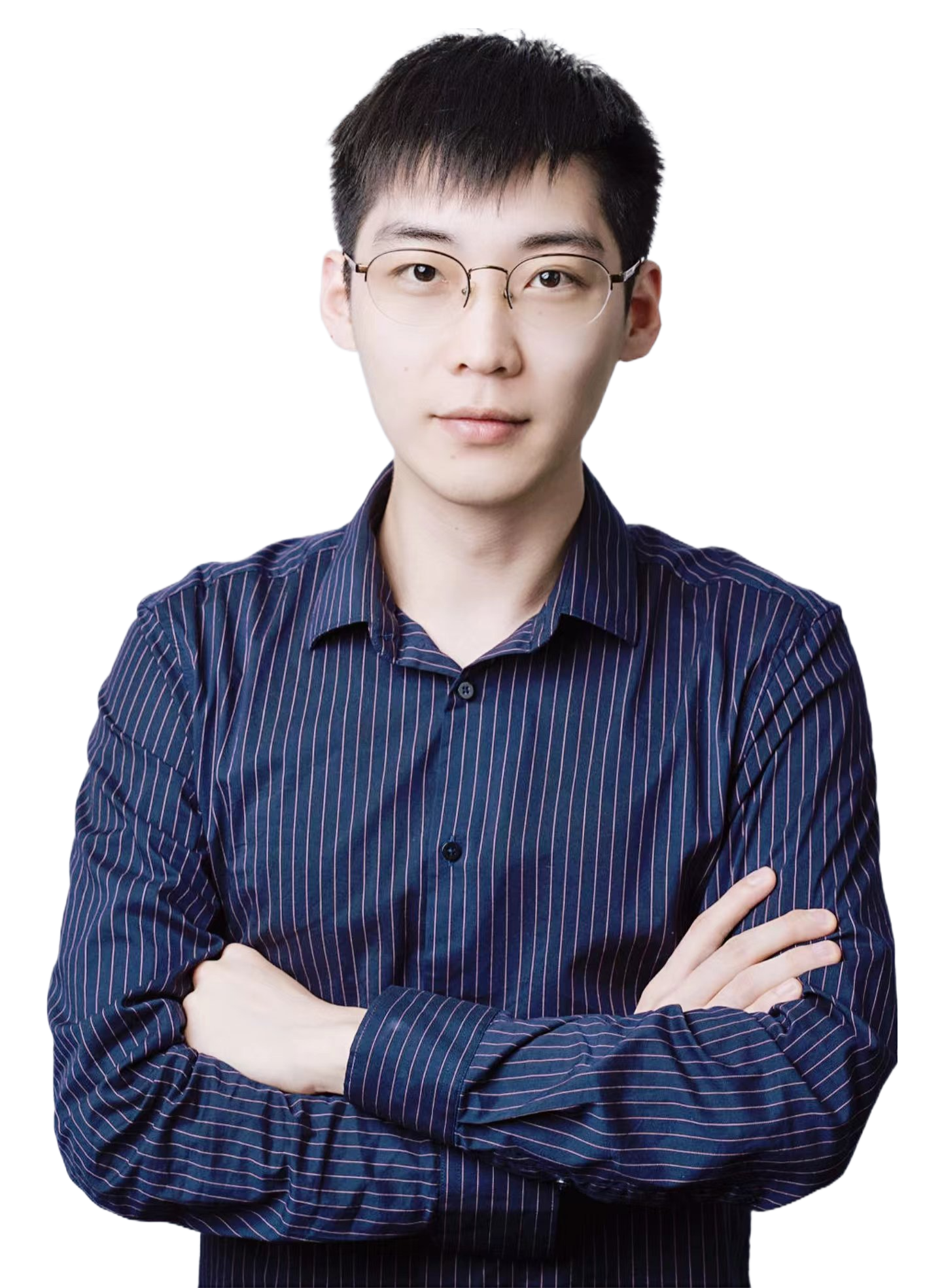
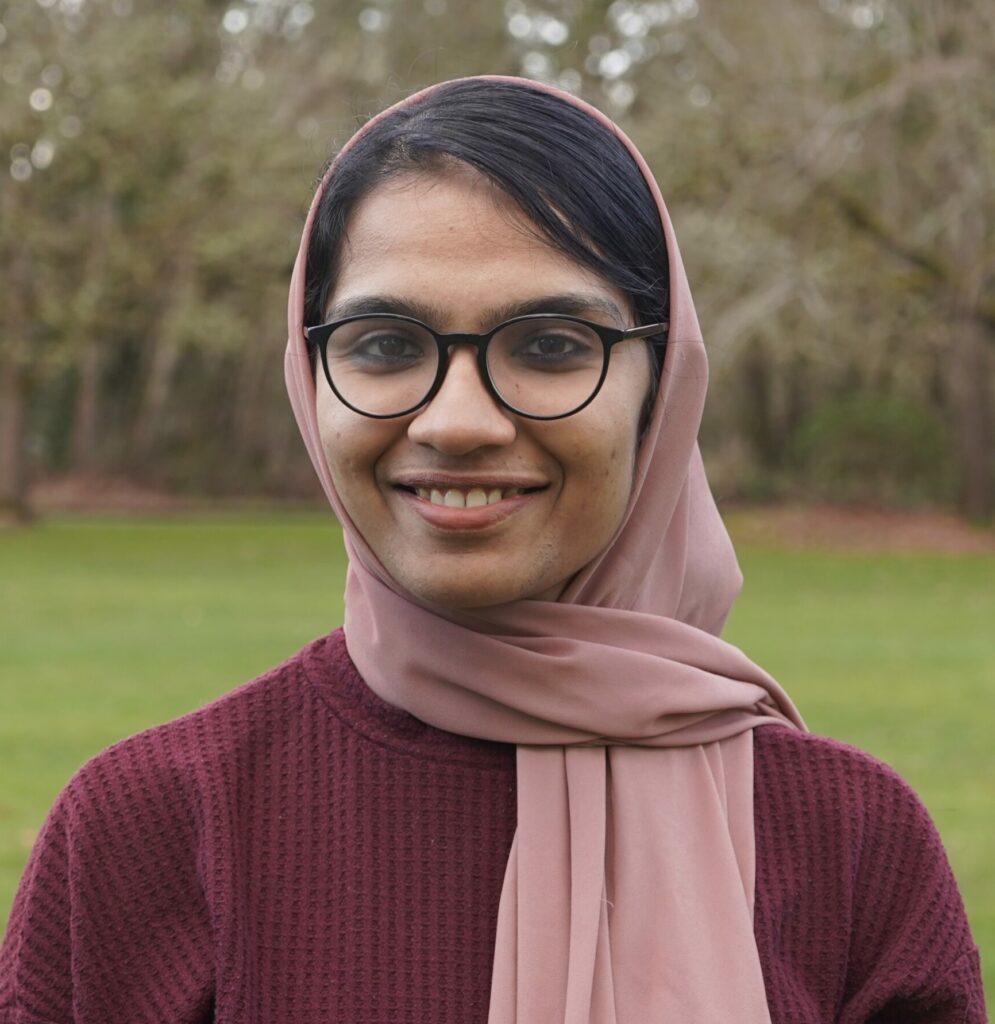
Alina Roitberg is a Junior Professor (Assistant Professor) at the University of Stuttgart , affiliated with the Faculty of Computer Science, Electrical Engineering and Information Technology . Her research focuses on advancing computer vision, machine learning, and robotics applications, particularly in human activity recognition, domain adaptation, and synthetic data generation. She explores challenges in action understanding, cross-domain generalization, and real-world deployment of AI systems in fields like healthcare, autonomous vehicles, and industrial automation. Her work emphasizes robust learning under noisy conditions, multimodal data fusion, and ethical AI applications. Recent projects include foundational studies on large language models in construction (AEC), video-based muscle group estimation, and improving driver activity recognition for autonomous vehicles. She also investigates circular factory design through uncertainty-aware process optimization and human-robot interaction. Dr. Roitberg's contributions span academic publications and industrial collaborations, addressing both theoretical advancements and practical implementations. Her research bridges computer vision techniques with real-world problems, emphasizing scalability and ethical considerations in AI deployment.
Mehrtash Harandi is an Associate Professor in the Department of Electrical and Computer Systems Engineering at Monash University. He joined Monash in 2018 after five years at Canberra Research Laboratory-NICTA working with Prof. Richard Hartley and Prof. Fatih Porikli, and earlier at Queensland Research Laboratory-NICTA with Prof. Brian Lovell. His research focuses on machine learning, computer vision, and geometric learning with applications in medical imaging and diffusion models. Recent Research Trends (2025): 3D Gaussian splatting compression, diffusion transformers for visual correspondence, hyperbolic geometry in hierarchical structures, and robust learning from noisy labels. Scientific Awards: Outstanding Reviewer, CVPR'21 Advising Highlights: Mentored students contributing to papers at ICCV'24, CVPR'25, ICLR'25, and Nature Machine Intelligence. Labs & Teams: Collaborates with Data61-CSIRO, ARC, and US Air Force Research Laboratory.
Maria Chiara Fiorentino is a Research Fellow at the Department of Information Engineering, Polytechnic University of Marche, Italy. Her work focuses on applying deep learning techniques to medical image analysis, particularly in ultrasound, MRI, and CT imaging. Education Master’s in Biomedical Engineering, Università Politecnica delle Marche (Honors) Ph.D. in Information Engineering, Università Politecnica delle Marche (Laude) Research Interests: Dr. Fiorentino specializes in deep learning for medical imaging, with applications in diagnosing neurodegenerative diseases like Parkinson’s, cardiovascular conditions, and musculoskeletal disorders. Her recent work includes federated learning for fetal ultrasound analysis, AI-driven vocal fold pose estimation, and domain adaptation in MRI segmentation. Scientific Awards: Paolo Marziali Thesis Prize for her Master’s research Gruppo Nazionale di Bioingegneria award for her Ph.D. thesis Publications: Dr. Fiorentino’s work spans fetal brain image synthesis, zero-shot learning robustness, and machine learning for catheterization management and stenosis detection.
Aaqib Saeed is an Assistant Professor in the Department of Industrial Design at Eindhoven University of Technology. His research focuses on Human-Centric AI, Federated Learning, Self-Supervised Learning, and Audio Understanding, with applications in Personal Health. He holds a PhD (cum laude) from TU/e and an MSc (cum laude) from the University of Twente. Education: PhD in Computer Science (cum laude), TU/e (2021) MSc in Computer Science (cum laude), University of Twente (2018) Research Interests: Development of robust federated learning frameworks for decentralized data Self-supervised learning for audio and physiological signal analysis AI-driven solutions for healthcare monitoring Key Contributions: DeltaMask: Reducing communication overhead in federated fine-tuning FedNS: Mitigating noisy decentralized data in federated learning Labeling Chaos to Learning Harmony: Handling label noise in FL Professional Experience: Visiting Industrial Fellow, University of Cambridge (2023) Research Scientist, Philips Research (2019–2023) Research Internships: Google Research, TNO/EIT Digital Awards: UT Scholarship (MSc) Cum Laude awards for both PhD and MSc Labs/Teams: EAISI Health, EAISI Foundational, Computational Design Systems.
Keenan Crane is the Michael B. Donohue Associate Professor of Computer Science and Robotics at Carnegie Mellon University , with membership in the Center for Nonlinear Analysis and mentorship in the Geometry Collective . His research bridges differential geometry and computer science to develop fundamental algorithms for geometric data processing. Education : BS from University of Illinois at Urbana-Champaign, PhD from Caltech Fellowships : Google PhD Fellow, NSF Mathematical Sciences Postdoctoral Fellow Research focuses on Discrete Differential Geometry , addressing PDE solutions, mesh processing, and geometric modeling through methods like: Walk on Spheres for PDEs Intrinsic Triangulations for robust geometry Repulsive Energy formulations for collision avoidance Recent publications span 2025–2021 , emphasizing grid-free algorithms , anisotropic mesh generation , and differentiable systems . Scientific accolades include Packard Fellowship and NSF CAREER Award . Students include Nicole Feng , Olga Gutan , and Zoë Marschner . During his 2024 sabbatical at Roblox , he does not accept new researchers. Key software contributions include Penrose (math diagram generation) and I♥Mesh (domain-specific language for mesh algorithms).
Guandong Xu is a Professor in the School of Computer Science at the University of Technology Sydney (UTS), where he has been employed since 2012. He also serves as the Director of the UTS-Providence Smart Future Research Centre, which focuses on disruptive technology for sustainability, and leads the Data Science and Machine Intelligence Lab dedicated to research excellence and industry innovation in data science and artificial intelligence. Dr. Xu holds a PhD in Computer Science from Victoria University, Australia, along with MSc and BSc degrees in Computer Science and Engineering. After holding various research positions at European and Australian universities, he joined UTS in 2012 and was promoted to Associate Professor in January 2017, then to Professor in January 2019. His research spans data mining, machine learning, social computing, recommender systems, text mining, predictive analytics, and user behavior modeling. He has published over 240 papers in these areas with increasing citations from academia. His recent work demonstrates a strong focus on integrating large language models with recommendation systems, causal inference in recommendation, multimodal learning, and fairness in AI systems. His publications reveal sophisticated graph-based approaches and addressing challenges in dynamic recommendation scenarios, particularly through temporal modeling and hypergraph structures. Dr. Xu has received numerous prestigious awards including the Digital Disruptors Winner for ICT Research Project of the Year (2021), eBay's Leaders' Choice Award (2021), and was elected Fellow of Institution of Engineering and Technology (IET), UK (2021) and Fellow of Australian Computer Society (ACS) (2022). He has shown strong academic leadership as founding Editor-in-Chief of Human-centric Intelligent Systems Journal, Assistant Editor-in-Chief of World Wide Web Journal, and founding Steering Committee Chair of the International Conference of Behavioural and Social Computing Conference. He has supervised over 25 high degree research students and secured over $8 million in research funding from ARC, government, and industry sources, including projects like 'Smart Personalized Privacy Preserved Information Sharing in Social Networks' and 'A Secured Smart Sensing and Industry Analytics Facility for Industry 4.0.' Dr. Xu directs the Data Science and Machine Intelligence Lab at UTS, which aligns with UTS research priority areas in data science and artificial intelligence. The lab focuses on research excellence and industry innovation across academia and industry, with particular emphasis on developing advanced techniques for recommendation systems, knowledge graphs, and multimodal learning applications.
Dr Miao Xu is a Research Fellow at the University of Queensland (UQ), affiliated with the School of Electrical Engineering and Computer Science within the Faculty of Engineering, Architecture and Information Technology. She holds an Australian Research Council DECRA Fellowship (ARC DECRA), recognizing her early-career research excellence. Her research focuses on machine learning, data science, and time series analysis, with applications in healthcare, materials science, and algorithmic fairness. Dr Xu's work addresses challenges in noisy label handling, unlearning mechanisms, and adaptive modeling for irregular data. Education: She earned a Doctor of Philosophy (PhD) from Nanjing University. She is actively involved in supervising research and contributes to the Centre for Enterprise AI at UQ. Research Interests: Dr Xu’s expertise spans machine learning , time series analysis , deep learning , and unsupervised learning . Her recent work emphasizes robust learning with noisy or incomplete labels, model unlearning, and applications in alloy design and medical informatics. She explores methods like instance-attention GNNs for irregular time series and confidence-guided techniques for adversarial attack detection. Publications: Her recent work includes advancements in GNN-based time series modeling, bias mitigation in text classification, and active learning for alloy design. Key themes include improving generalization, reducing algorithmic bias, and enhancing model transparency. Awards: Her ARC DECRA fellowship (202X–202X) supports her research on data-driven methodologies. Supervision & Grants: Available for PhD supervision in machine learning and data science. Her grants include funding for projects in unlearning mechanisms and spatiotemporal modeling. Labs/Teams: Affiliated with the Centre for Enterprise AI at UQ, collaborating on enterprise-scale AI applications and interdisciplinary research.
Márk Jelasity is a Full Professor in the Department of Algorithms and AI at the University of Szeged, Hungary, where he has been working since 2016. Previously, he served as a research advisor (equivalent to full professor) and senior research scientist at the Research Group on Artificial Intelligence (RGAI) of the Hungarian Academy of Sciences. His career includes numerous international research positions at institutions in Sweden, Norway, France, Italy, and the Netherlands. Professor Jelasity's research spans distributed systems, peer-to-peer computing, gossip protocols, and decentralized machine learning. His work bridges theoretical foundations with practical applications, particularly in the areas of self-organizing systems and privacy-preserving computation. His research has significant implications for smart grid technologies, secure distributed systems, and robust machine learning. His publication record shows a clear evolution from foundational work in gossip protocols and peer-to-peer systems toward cutting-edge research in decentralized machine learning, adversarial robustness, and privacy-preserving AI. Recent publications demonstrate his leadership in comparing gossip learning with federated learning approaches and exploring novel techniques for enhancing robustness in neural networks. Bolyai Plaquette (2015) 10 years best paper award at ACM/IFIP/USENIX Middleware Conference (2014) Best paper award at IEEE International Conference on Peer-to-Peer Computing (2014) Best paper award at IEEE International Conference on Self-Adaptive and Self-Organizing Systems (2013) Scientific Award of the Faculty of Science and Informatics, University of Szeged (2013) Fulbright Scholarship to visit Cornell University (2013) Multiple Bolyai Scholarships (2007-2014) Professor Jelasity has been actively involved in the academic community as an organizer of major conferences including DAIS'16 (TPC co-chair), SASO 2010 (General Co-Chair), and SASO 2007 (TPC co-chair). His leadership in the field is evidenced by his extensive publication record in top venues and his role in editing special issues and conference proceedings.
Prof. Frank-Peter Schilling is a Senior Lecturer at Zurich University of Applied Sciences (ZHAW) School of Engineering and Deputy Director of the Centre for Artificial Intelligence (CAI). He leads the Intelligent Vision Systems group and coordinates the PhD Programme in Data Science with the University of Zurich. As an Adjunct Professor at Victoria University of Wellington, he specializes in AI, Machine Learning, and applications in healthcare and physical sciences. His research focuses on deep learning-based computer vision, MLOps, and trustworthy AI certification frameworks. Education: PhD in Physics (University of Heidelberg, 2001) Dipl.-Phys. (MSc equivalent in Physics, University of Heidelberg, 1998) CAS University Didactics (PH Zurich, 2024) Research Interests: Developing AI systems for medical imaging (e.g., CBCT artifact reduction) Certification schemes for AI trustworthiness (e.g., certAInty project) Applications of deep learning in particle physics and industrial vision Achievements: Recipient of the EPS HEP Prize (2013) for contributions to the Higgs boson discovery at CERN Lead author of over 20 peer-reviewed articles on AI, MLOps, and medical imaging Principal investigator for projects like AI-BRIDGE (responsible AI development) and GenAI4SKA (Square Kilometre Array simulations) Teaching: Courses in MLOps, Machine Learning Operations, and Computer Vision at BSc and MSc levels. Developed the CAS Advanced Machine Learning program. Labs & Networks: Active in ELLIS (European Lab for Learning and Intelligent Systems), CLAIRE (AI research), and ZHAW’s Digital Health/Datalab initiatives.
van Khang Huynh is a Full Professor in Mechatronics and Energy Systems at the Department of Engineering Sciences , University of Agder , Norway. He is also a member of the Norwegian Academy of Technical Sciences (NTVA) and has served as an Associate Editor for IEEE Transactions on Transportation Electrification . Education: D.Sc. in Electromechanics & Electric Drives, Aalto University, Finland (2012) M.Sc. in Power Electronics and Motor Drives, Pusan National University, South Korea (2008) B.Sc. in Electrical Power Engineering, Ho Chi Minh City University of Technology, Vietnam (2002) Research Focus: His research spans applied AI in condition-based maintenance , electrical machines , power electronics , design optimization , finite element analysis , and smart energy systems . He leads the Intelligent monitoring research group and is a member of the Energy systems , Intelligent mechatronics (iTron) , and Machine design groups. Projects & Funding: Enhancing Capacity in Condition-based Maintenance of Wind Energy (ECO-WIND) Performance and Health Monitoring of Hydroelectric Power Plants Analytics for Asset Integrity Management of Windfarms Industrial Internet methods for electrical energy conversion systems monitoring and diagnostics Operational Management in Interconnected Renewable Resources with ICT Compact Electric Winches PhD Supervision: He has successfully supervised 8 PhD dissertations and mentored 2 additional PhD projects , all in areas related to mechatronics, renewable energy, and intelligent systems. Labs & Teams: He leads the Intelligent monitoring research group and collaborates closely with the Energy systems , Intelligent mechatronics (iTron) , and Machine design groups at the University of Agder.
Univ.-Prof. Dr.-Ing. habil. Volker Rodehorst is a full professor of computer vision at Bauhaus-Universität Weimar, holding positions in both the Faculty of Media and Faculty of Civil Engineering. His research focuses on photogrammetric computer vision, image analysis, 3D reconstruction, and structural health monitoring with applications in civil infrastructure inspection and urban modeling. He leads projects like ev.AI.luate and InfraCloud, leveraging AI and UAS technologies for infrastructure assessment. Education: PhD (2003): Technical University of Berlin, Faculty of Civil Engineering & Applied Geosciences Habilitation (2013): TU Berlin, Faculty of Electrical Engineering & Computer Science Computer Science Diploma (1994): TU Berlin Research Interests: UAS-based structural inspection using multi-view stereo and deep learning Crack detection and segmentation in concrete structures Automated building age estimation for energy modeling Flight path planning optimization for complex structures Integration of computer vision into BIM workflows Publications: Recent work emphasizes robust algorithms for crack detection (Omnicrack30k benchmark), UAS flight path optimization, and semantic segmentation challenges in bridge inspections. Key contributions include MVCrackViT and CISOL datasets advancing structural analysis methodologies. Awards: Best Academic Performance Prize (1994) - TU Berlin ISPRS Presidential Citation (2008) for WG III/2 leadership Grants & Labs: Leads Bauhaus' 3D-RealityCapture-ScanLab and coordinates EU projects like AISTEC-PRO. Active in developing modular solutions like smoodPLAN for infrastructure inspection. Teaching: Offers courses in photogrammetric computer vision, geodesy, and parallel systems. Supervises PhD students in structural health monitoring and computer vision.
Jie Xu is an Associate Professor in the Department of Electrical & Computer Engineering at the University of Florida, part of the College of Engineering. Their primary research area is Computer Engineering, with a focus on Edge computing, wireless communications, federated learning, and reinforcement learning. Xu holds a Ph.D. from UCLA (2015), M.S. and B.S. from Tsinghua University (2010/2008). Key research interests include federated learning frameworks, edge computing optimization, quantum networking, and adversarial machine learning. Their work addresses challenges in distributed systems, IoT integration, and energy-efficient AI solutions. Xu has been recognized with prestigious awards including the NSF CAREER Award (2021) and the Distinguished Ph.D. Dissertation Award (UCLA, 2015). Recent publications emphasize advancements in federated learning techniques (e.g., FedALT, LoRA-FAIR), quantum entanglement routing, and carbon-aware distributed systems (CAFE). Their research bridges theoretical foundations with practical applications in edge computing and wireless networks. Xu’s lab focuses on collaborative edge intelligence, with projects involving automated neural network ensembles and mobility-assisted federated learning. They actively mentor students seeking Ph.D. opportunities in machine learning and communications, requiring strong mathematical and programming skills.
Satoru Hayamizu is a Professor at Waseda University 's Green Computing Systems Research Organization , with a career spanning over four decades. His research focuses on Audio-Visual Speech Recognition , Machine Learning , and Medical Informatics , as evidenced by 126 publications and an h-index of 18. Education: The University of Tokyo (PhD in Mechanical Engineering) Prior affiliations: Gifu University (2002-), National Institute of Advanced Industrial Science and Technology (1981-2001) Research Interests include: Audio-visual speech recognition with sparse representation and DNN techniques Development of low-cost CNN-based road condition detection systems Swallowing function evaluation using acoustic and image processing Human behavior analysis for service operation estimation Research Trends reveal consistent work in multimodal signal processing (2006-2024), deep learning applications (2012-2024), and medical diagnostic systems (2006-2017). His publications show integration of sparsity modeling (2012-2021), industrial equipment diagnostics (2018-2021), and social impact technologies (2013-2024). Research Projects funded by Japan Society for the Promotion of Science include: Swallowing timing estimation (2018-2021) Multimodal silent speech recognition (2016-2020) ICT-based piano learning systems (2013-2016) Keyword display mechanisms (2010-2012) Labs & Collaborations include partnerships with Satoshi Tamura (co-author on 12+ papers), Hidekazu Fukai , and Chiyomi Miyajima . His work bridges academic research and industrial applications , particularly in manufacturing AI (2024 book) and Timor-Leste infrastructure monitoring.
Yu Yao is a Lecturer in Machine Learning at the School of Computer Science, The University of Sydney. He joined in December 2023 and focuses on developing robust and interpretable machine learning systems. His research emphasizes robustness to data noise, adaptable ML systems, and disentangled representation learning. Yao holds a PhD from The University of Sydney under Professors Tongliang Liu and Dacheng Tao, followed by postdoctoral positions at Mohamed bin Zayed University of Artificial Intelligence and Carnegie Mellon University. Education: PhD in Computer Science (University of Sydney), postdoctoral research at MBZUAI and CMU. Research interests include causal inference in ML, multimodal learning, and label noise mitigation. He has published extensively in top venues like ICML, NeurIPS, and ICLR, and served as an Area Chair for AJCAI 2023, NeurIPS 2025, and ICLR 2025. Awards: Outstanding Reviewer (NeurIPS 2023, ICLR 2023), University of Sydney Research Excellence Prize (2019) Teaching: Advanced Machine Learning (USYD), Guest Lectures on noisy label learning (MBZUAI, China University of Petroleum) Service: Action Editor for TMLR, Area Chair for ICML/ICLR/NeurIPS, reviewer for top journals and conferences His lab focuses on trustworthy AI, with ongoing projects on causal mechanisms in robust learning and interpretable multimodal systems. Current advisees include PhD candidates Ruojing Dong and Jiyang Zheng (co-advised with Prof. Liu), and master's student Kai Lian.
Shahana Ibrahim is a tenure-track Assistant Professor at the University of Central Florida under the AI Initiative, holding a joint appointment in the Department of Electrical and Computer Engineering and Computer Science. Her research develops provable methods for robust machine learning systems with applications in critical real-world scenarios. Education: Ph.D. in Electrical and Computer Engineering, Oregon State University (advised by Dr. Xiao Fu) Prior industry experience: System Validation Engineer at Texas Instruments (2012-2017) and NVIDIA GPU intern (2018) Her research spans machine learning, signal processing, and optimization with core expertise in weakly supervised learning, tensor decomposition, and stochastic algorithms. She focuses on enhancing AI reliability through theoretical guarantees for noisy data environments, particularly addressing label noise, incomplete annotations, and structured factorization challenges. Her work bridges signal processing theory with modern AI to solve practical problems in data quality and system robustness. Recent publications (2023-2025) reveal strong thematic consistency in handling imperfect supervision. Key trends include crowdsourced label modeling, instance-dependent noise characterization, and tensor/matrix completion techniques. Her approach uniquely integrates signal processing perspectives with deep learning, emphasizing identifiability conditions and geometric regularization to extract reliable patterns from corrupted data. Scientific Awards: Outstanding PhD Dissertation Award from EECS, Oregon State University (2024) Dr. Ibrahim actively mentors graduate researchers including Faizul and Grey, who co-authored her ICIP 2025 and IEEE CAMSAP 2023 publications. She secured the AI-BTO DARPA grant (December 2024) for physics-informed machine learning research on intrinsically disordered proteins. Current funding supports multiple RA/TA positions for PhD students in her lab. She serves on program committees for AISTATS, AAAI AI for Social Impact, and WiML at NeurIPS. Her research group develops end-to-end learning frameworks for noisy data environments, with active projects funded by DARPA focusing on biomedical applications and robust AI validation. The lab maintains strong industry connections through NVIDIA and Texas Instruments collaborations.