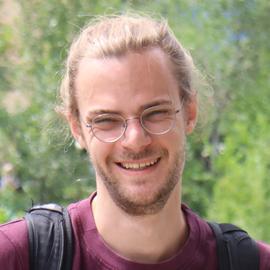
Dr. Paul Meulenbroek is an active researcher at the University of Natural Resources and Applied Life Sciences in Vienna, Austria. His work focuses on freshwater biodiversity , fish ecology , and genetic conservation , with a strong emphasis on environmental DNA (eDNA) metabarcoding and riverine connectivity in both temperate and tropical ecosystems. Research keywords include: Conservation Biology Genetics Fish Biology Aquatic and Terrestrial Ecosystems Freshwater Biodiversity Taxonomy of Fish His recent work spans eDNA-based biodiversity monitoring , hydropower impacts on fish communities , and machine learning applications in morphological differentiation studies . Collaborations include institutions like the Christian Doppler Laboratory and Plant Science and Biodiversity .
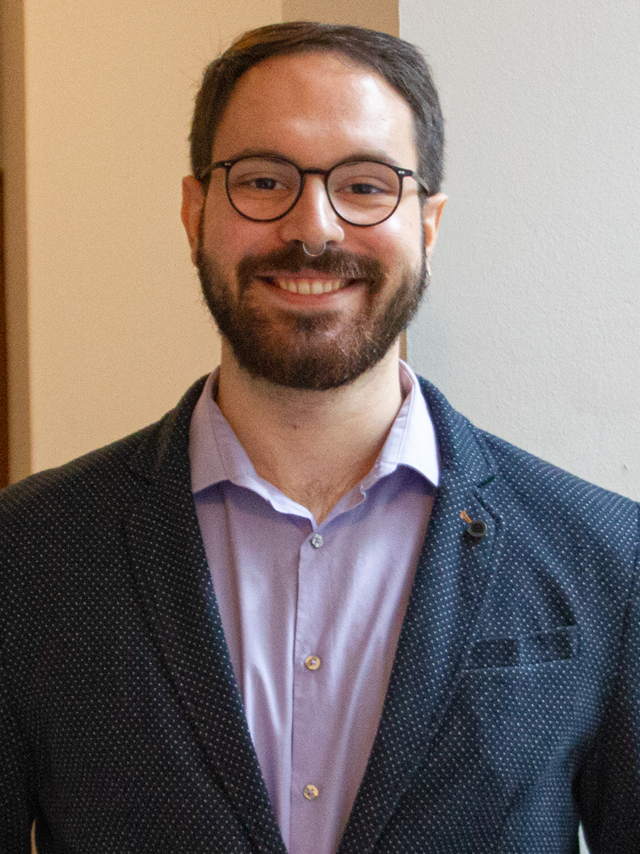
Marta Moscati works at the Institute of Computational Perception at Johannes Kepler University Linz , focusing on advanced recommendation systems and multimodal learning. Her research spans emotion-based music recommendation, privacy-preserving machine learning, and graph neural networks. Recent work includes: Developing multimodal single-branch architectures for cold-start scenarios Creating preference obfuscation techniques in implicit feedback systems Advancing music emotion recognition with semi-supervised graph networks Contributing to the FAME Challenge for multilingual face-voice association She has published extensively in top AI venues while maintaining technical expertise in both deep learning and theoretical physics , with early work on lepton universality violation. At JKU, she contributes to: Recommendation algorithms development Multimodal representation learning research Musical affective computing applications Privacy-preserving AI frameworks
Monika Henzinger is a Professor at the Institute of Science and Technology Austria (ISTA), where she has been serving since 2023, and additionally holds the position of Vice President for Technology Transfer since 2024. Her academic journey includes professorships at the University of Vienna (2009-2023) and EPFL in Switzerland (2005-2009), as well as industry experience at Google (1999-2005) and Digital Equipment Corporation (1996-1999). She earned her PhD from Princeton University in 1993 and served as an Assistant Professor at Cornell University from 1993-1996. Dr. Henzinger's research focuses on the design and analysis of efficient algorithms and data structures, with particular emphasis on dynamic settings where inputs change repeatedly, privacy-preserving algorithms, and translating theoretical algorithms into practical implementations. Her work bridges theoretical computer science with practical applications, addressing fundamental questions about computational efficiency in evolving data environments. Her recent publications (2024-2025) demonstrate a consistent focus on dynamic graph algorithms, differential privacy, and optimization problems. These works explore cutting-edge approaches to maintaining graph structures under continuous updates, developing privacy-preserving mechanisms for streaming data, and creating efficient approximation algorithms for fundamental graph problems. The research shows strong connections between theoretical guarantees and practical implementations, with many papers addressing both theoretical bounds and experimental validation. Dr. Henzinger has received numerous prestigious awards throughout her career, including: The 2024 Best Paper Award at the Symposium on Discrete Algorithms The 2021 Wittgenstein Award Two ERC Advanced Grants (2014, 2021) Fellow of the Association of Computing Machinery (2016) Member of the Austrian Academy of Sciences (2017) The Carus medal of the German Academy of Sciences Leopoldina (2019) She currently leads an active research group comprising PhD students and postdoctoral researchers, and her team is supported by multiple significant grants including an ERC Advanced Grant for 'The design and evaluation of modern fully dynamic data structures,' a Wittgenstein Award from the Austrian Science Fund, and several other projects focused on dynamic graph algorithms and data structures. Her collaborative work spans theoretical computer science, algorithm design, and practical implementations. Dr. Henzinger's research group operates within a vibrant ecosystem of algorithmic research at ISTA, focusing on transforming theoretical insights about computational efficiency into practical tools for handling dynamic data. The group maintains strong connections with both theoretical and applied research communities, bridging the gap between abstract algorithm design and real-world implementation challenges.
Kathrin Hanauer is an Assistant Professor at the University of Vienna, where she is affiliated with the Research Group Theory and Applications of Algorithms and the Research Network Data Science. She conducts research in the design, analysis, and experimental evaluation of fast algorithms, with a focus on Algorithm Engineering connecting theoretical foundations with practical implementations. Her research interests include: Algorithm Engineering for practical algorithm implementation Dynamic algorithms for efficiently handling changing data Graph algorithms and network analysis Reachability problems on directed graphs Ranking problems, particularly the NP-hard Feedback Arc Set problem Network analysis, motif search, and subgraph counting Dr. Hanauer's recent publications demonstrate a strong focus on dynamic graph algorithms, with significant contributions to reachability queries, subgraph counting, and datacenter network optimization. Her work spans both theoretical algorithm design and practical implementation, often with C++ software projects. Notable contributions include the O'Reach algorithm for faster reachability queries in large graphs and several dynamic algorithms for subgraph counting and network analysis. Her scientific contributions: O'Reach: A novel approach to reachability queries in large graphs that outperforms previous methods Dynamic algorithms for four-vertex subgraph counting with efficient update operations Work on demand-aware link scheduling for reconfigurable datacenters Interdisciplinary research on normative reasoning with Aristotelian diagrams Dr. Hanauer actively supervises student research, with numerous completed theses focusing on dynamic graph algorithms, geometric algorithms, and reachability problems. Her lab maintains several software projects related to graph algorithms, including a modular algorithms library for dynamic graphs written in C++ and specialized implementations for reachability queries and subgraph counting.
Peter Filzmoser is a Professor at the Institute for Statistics and Mathematical Economics (E105) of Vienna University of Technology, leading the Computational Statistics Research Area (E105-06) and affiliated with the Network Lab. His research focuses on: Compositional Data Analysis Robust Statistics Outlier Detection Machine Learning for High-Dimensional Data with applications in geochemistry, mobility data, tribology, and sustainable development. Recent publications (2023) demonstrate significant advances in explainable outlier detection using Shapley values, robust techniques for compositional data analysis, and applications in forecasting heterogeneous time series. His work extends compositional data analysis through graph signal processing and develops novel robust methodologies for real-world problems. Professor Filzmoser has advised over 15 Master's and PhD students from 2021-2023. Key research projects he leads include: Automotive Intelligence for/at Connected Shared Mobility CSTAT: Blind Source Separation Generalized relative data and Robustness in Bayes spaces
Prasanna Viktor is a Professor of Electrical and Computer Engineering and Computer Science at the University of Southern California (USC), holding the Charles Lee Powell Chair in Engineering. He also serves as Director of the Center for Energy Informatics and has held leadership roles in interdisciplinary research centers such as the USC Infosys Center for Advanced Software Technologies. With a BE from Bangalore University, ME from Indian Institute of Science, and PhD from Pennsylvania State University, he is a globally recognized expert in reconfigurable computing, FPGA accelerators, and parallel computing. His research focuses on high-performance architectures for applications in networking, security, HPC, and machine learning. Over 25 years, he has secured research grants totaling over $50M, including $12.9M from 2016–2021. He has advised over 70 doctoral students and published over 600 papers, earning 22 best paper awards. His work has led to IP cores with improved throughput, latency, and energy efficiency. Prasanna is a Fellow of the IEEE, ACM, and AAAS, and an elected member of Academia Europaea. He has received prestigious awards such as the W. Wallace McDowell Award (2015) and the Distinguished Alumnus Award from IISc (2019). He currently serves as Editor-in-Chief of the Journal of Parallel and Distributed Computing. He leads interdisciplinary efforts in energy informatics and smart oilfield technologies, bridging computer science, engineering, and energy sectors. His contributions include foundational work in reconfigurable computing and FPGA-based accelerators for diverse applications.
Sebastian Ordyniak is an Associate Professor in the Department of Algorithms and Complexity at TU Wien. His research focuses on parameterized complexity, algorithms, computational complexity, and applications in artificial intelligence and graph theory. He holds a PhD and the prestigious START Prize (2014–2022), a renowned Austrian award for outstanding researchers. Key projects include the ERC-funded 'Parameterized Complexity of Local Search' (2010–2014) and ongoing initiatives like 'Parameterized Analysis in Artificial Intelligence' (2021–2026). His work bridges theoretical foundations with practical applications, such as algorithmic fairness, machine learning interpretability, and graph drawing. Research highlights include contributions to SAT solving, backdoor analysis, and clustering algorithms. He has advised at least one student, Hossein Maleki, on practical algorithms for deletion to small components. His interdisciplinary approach integrates logic, computational geometry, and multi-agent systems.
Alexander Pluska is a PreDoc Researcher at TU Wien's Faculty of Informatics, affiliated with the Department of Formal Methods in Systems Engineering. He holds an MSc and is engaged in research at the intersection of formal methods, logic, and machine learning. His work includes projects like StruDL (2023–2027) and NanoX (2024–2028), focusing on logic embeddings, graph neural networks, and knowledge representation. He teaches courses such as Formal Methods in Computer Science (UE/VU), Program and System Verification (VU), and a project on Trends in Cloud Computing (PR). His research interests emphasize automated deduction, intuitionistic logic, and applying formal methods to AI systems. Recent work includes logical distillation of GNNs and embedding intuitionistic logic into classical frameworks. Alexander contributes to academic events like the ICML 2024 Workshop on Mechanistic Interpretability and the International Conference on Principles of Knowledge Representation and Reasoning (KR 2024).
Maximilian Thiessen is a PhD student in machine learning at Technische Universität Wien , supervised by Thomas Gärtner. He is affiliated with the machine learning research unit and collaborates with the Laila lab in Milan. Research Interests : Learning with graphs Active learning frameworks Convexity theory in ML Computational learning theory Recent Research Trends include: (1) Expressive GNN architectures for outerplanar graphs (2025), (2) Generalized boosting theory through game frameworks (2024), (3) Efficient monophonic halfspace learning (2024), (4) Abstention mechanisms in contextual bandits (2024), (5) Global feature extensions in GNNs (2023), and (6) Expectation-complete graph representations (2023). Scientific Awards : 2024: DOC Fellowship from Austrian Academy of Sciences 2023: Best Poster Award at G-Research's ICML Poster Party Community Contributions : Organizer of Mining and Learning with Graphs (MLG) workshops at ECMLPKDD 2022-2024, co-organizer of Graph Learning on Wednesdays (GLOW) reading group, and session chair at ECMLPKDD'23.
Sascha Hunold is an Associate Professor at TU Wien, affiliated with the Department of Parallel Computing within the Faculty of Informatics. He holds roles as Vice Dean of Academic Affairs for Informatics Bachelor programs and Curriculum Coordinator for the Master's program in High-Performance Computing. His research focuses on parallel computing, MPI optimization, scheduling algorithms, and reproducible HPC experiments. Education: Habilitation (venia docendi) in Computer Science from TU Wien, PhD in Computer Science from the University of Bayreuth, and MSc in Computer Science from Martin Luther University Halle-Wittenberg. Research interests include MPI collective communication performance, HPC benchmarking, algorithm selection, and task scheduling. He has contributed to tools like ReproMPI and Scheduling.jl. Key awards include Best Paper awards at IEEE CLUSTER 2020 and EuroMPI/Asia 2014, and recognition for reproducible research methodologies. His work emphasizes practical applications of parallel computing in large-scale systems. Teaching responsibilities include courses on parallel algorithms, scientific programming with Python, and HPC project supervision. Active in program committees for major conferences like IPDPS and SC.
Alireza Furutanpey is a University Assistant (PreDoc Researcher) at TU Wien's Distributed Systems Group within the Institute of Information Systems Engineering, holding a Master's degree with distinction. His academic role combines research in distributed systems with teaching responsibilities for core computer science courses. His educational background includes: Bachelor of Science (BSc) Master of Science (Dipl.-Ing.) with distinction Furutanpey's research centers on Edge Computing and Edge Intelligence, specializing in Distributed Inference, Neural Data Compression, and AI-Systems integration. He pioneers techniques for neural feature compression in satellite/edge environments and develops frameworks for federated learning orchestration under communication constraints. His work bridges theoretical AI with practical system implementation, focusing on resource-constrained scenarios where bandwidth and computational efficiency are critical. Analysis of his 15+ publications reveals dominant trends in neural compression for distributed systems (60%), federated learning optimization (25%), and serverless edge frameworks (15%). Key contributions include solving satellite downlink bottlenecks through feature compression and enabling adaptive inference in heterogeneous edge networks, with methodologies increasingly incorporating generative modeling and robustness against adversarial attacks. Scientific Awards: None documented in available sources. He actively supervises master's theses, guiding students on adversarial machine learning, neural compression, and image retrieval systems. His research is supported through major projects: AloTwin (2023-2025) focusing on edge intelligence, INTEND (2024-2026) on industrial IoT, and TEADAL (2022-2025) on federated learning. He serves as a reviewer for 15+ IEEE/ACM venues including IEEE Transactions on Mobile Computing and ICDCS. Furutanpey operates within TU Wien's Distributed Systems Group, which specializes in edge-cloud continuum research. The team develops tools like faas-sim for serverless edge simulation and explores quantum-classical hybrid architectures, maintaining strong industry collaborations in industrial IoT and satellite communications.
Matjaž Perc is a Full Professor of Physics at the University of Maribor and holds leadership roles including Vice Dean of Natural Sciences at the European Academy of Sciences and Arts. His research focuses on complex systems, nonlinear dynamics, and socio-physical phenomena. He has been recognized with prestigious awards such as the Young Scientist Award for Socio- and Econophysics (2015) and the Zois Award (2018), Slovenia's highest national research honor. Perc is also a Fellow of the American Physical Society and among the world's top 1% most cited physicists. Research Interests : Phase transitions in social systems, evolutionary game theory, complex networks, stochastic processes, and self-organization mechanisms. Awards : Extensive list includes recognition for refereeing excellence, societal memberships (APS, EPS), and national accolades. Publications : Over 300 articles in top journals like Physical Review E , Chaos , and Scientific Reports , focusing on interdisciplinary applications of physics to social, biomedical, and environmental challenges. His work bridges physics, computer science, and social sciences, addressing global issues through mathematical modeling and network analysis.
Alexander Steinicke is a Professor in the Department of Applied Mathematics, specializing in stochastic analysis and measure theory. His research bridges pure mathematics with applications in finance and fractal geometry, evidenced by 17 publications in high-impact journals including Advances in Mathematics and Stochastic Analysis and Applications . His primary research interests include: Stochastic Analysis Measure Theory Fractal Geometry Mathematical Finance Probability Theory Stochastic Processes Steinicke's recent work reveals a cohesive trajectory in geometric measure theory, particularly through his development of permeable set theory and its applications to fractal structures. His 2025 article on dimension theory represents a significant advancement, while his finance-related publications demonstrate practical extensions of stochastic calculus to market incompleteness problems. The integration of Lévy processes and semimartingale SDEs forms a consistent methodological thread across his publications. As an active academic, Steinicke regularly participates in conferences including the Austrian Stochastics Days and delivers invited talks on stochastic analysis. His consultancy work for research evaluations demonstrates engagement with broader academic governance.
Philipp Alexander Raith is a PreDoc Researcher and PhD student at the Distributed Systems Group of the Institute of Information Systems Engineering at Vienna University of Technology (TU Wien). His research focuses on edge intelligence, serverless edge computing, and AI operations, with a strong emphasis on resource optimization and infrastructure management across the edge-cloud continuum. BSc in Software Engineering (2018) from TU Wien MSc in Software Engineering & Internet Computing (2021) from TU Wien Research Interests encompass: Edge Intelligence Serverless Edge Computing AI/ML Operations Resource-aware Scheduling Distributed Systems Computing Continuum Publication Trends highlight his work in edge-cloud orchestration, neural feature compression, and quantum computing integration. Key areas include elasticity, serverless frameworks, and energy-aware architectures. Scientific Awards : UCC 2022 Best Paper Award SEC 2019 Best Demo Award 2020 Netidee Grant Winner Shortlisted for TU Wien Distinguished Young Alumnus Advising : Supervised multiple Master’s theses on edge-cloud autoscaling, AI workloads, mobile edge computing, and resource-aware offloading. Projects : Key contributor to AUTO-Cloud (2013–2025) and RAINBOW (2020–2022) projects.
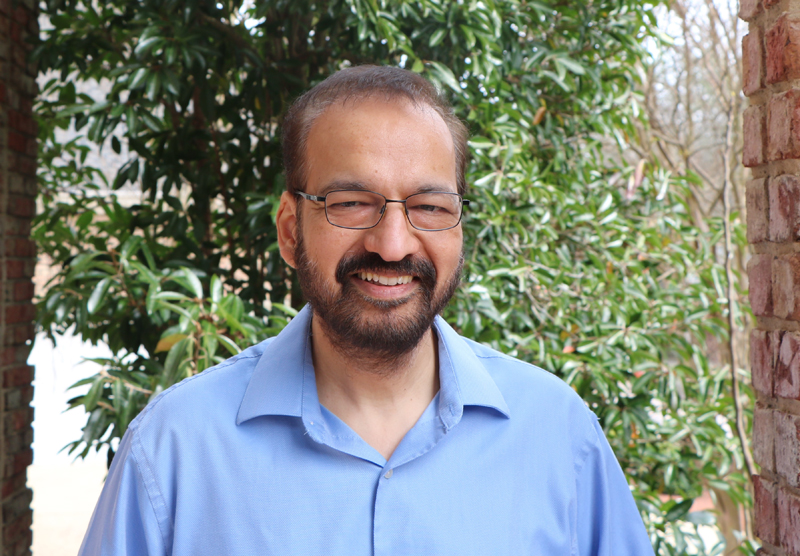
Munindar Singh is an Alumni Distinguished Graduate Professor in the Department of Computer Science at North Carolina State University , where he also serves as Co-Director of the DoD-sponsored Science of Security Lablet . His research spans Artificial Intelligence , Multiagent Systems , and Service-Oriented Computing , with applications in Cybersecurity , Privacy , and Social Computing . His research interests focus on ethical and sociotechnical dimensions of AI, including moral reasoning in social contexts , resilient multiagent systems , and responsible computing for sustainability . His work integrates formal methods with machine learning to address challenges in decentralized systems , agent communication , and cyber deception . Recent publications highlight trends in AI ethics , cybersecurity , and social simulation , with subfields like moral judgment analysis , domain adaptation , and metaverse services . These works often bridge technical and societal concerns, emphasizing trustworthy AI and ethical governance . Fellow, American Association for the Advancement of Science (AAAS) (2020) ACM/SIGAI Autonomous Agents Research Award (2020) IBM Shared University Research Award (2018) NCSU Research Leadership Academy Membership (2017) IFAAMAS Influential Paper Award (2016) National Science Foundation CAREER Award (1996) Munindar has held leadership roles, including editor-in-chief of ACM Transactions on Internet Technology and IEEE Internet Computing . His research is funded by sponsors such as DARPA , NSF , and IBM . He co-directs the Science of Security Lablet , a DoD-funded initiative advancing cybersecurity research.