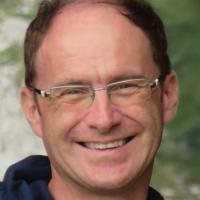
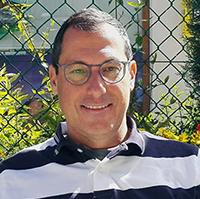
Gioacchino Cafiero is an Associate Professor at the Department of Mechanical and Aerospace Engineering (DIMEAS), Polytechnic University of Turin. His research focuses on data-driven experimental fluid mechanics, particularly applying machine learning techniques like deep reinforcement learning and genetic algorithms to control turbulent flows and optimize fluidic actuators. As a member of the Fluid Dynamics research group, he leads projects such as GREENER (drag reduction via sinusoidal riblets) and WINDED (drone wind investigation), while also directing commercial research on friction stress measurement methodologies. Specializes in turbulent flow control and machine learning applications Teaches PhD courses on Machine Learning for Flow Control Supervises students in aerospace engineering programs Recent publications analyze jet turbulence with explainable AI, heat transfer fluctuations in channel flows, and riblet-induced drag reduction. His work bridges aerospace engineering and fluid dynamics, contributing to SDG goals 9 (Industry Innovation) and 13 (Climate Action). Scientific awards include the Learning to Teach (L2T) Open Badge from Politecnico di Torino.
Stefano Marchesiello is a Full Professor of Applied Mechanics at the Polytechnic University of Turin, Department of Mechanical and Aerospace Engineering (DIMEAS), a position he has held since 2019. His academic work spans theoretical studies, numerical applications, and experimental tests within the field of Applied Mechanics. He maintains active roles in doctoral education, serving on mechanical engineering doctoral colleges from 2013/2014 through 2024/2025, and teaches courses including Dynamics and Identification of Nonlinear Systems, Dynamics of Mechanical Systems, Vibration Mechanics, and Machine Mechanics for Aerospace Engineering. Marchesiello's research focuses on modal analysis and identification, damage diagnosis in structures and construction materials, damping systems, mechanical vibrations, and nonlinear dynamics. His primary research lines include vehicle-bridge dynamic interaction, dynamic identification techniques in linear and nonlinear fields, damage identification, vibrations of continuous systems with non-proportional damping, innovative vibration damping devices, diagnostics and monitoring of rotating systems, and pantograph-catenary dynamic interaction. His work bridges theoretical mechanics with practical engineering applications, particularly in transportation infrastructure and mechanical systems. His recent publications demonstrate a strong focus on nonlinear system identification, structural health monitoring, and vibration analysis across various mechanical and aerospace applications. Marchesiello's research shows increasing integration of machine learning techniques with traditional mechanical engineering approaches, particularly in system identification and damage detection. His work spans from fundamental nonlinear dynamics to practical applications in railway systems, rotating machinery, and structural components. Certificate of reviewing awarded by Journal of Sound and Vibration - Elsevier, Netherlands (2013) Certificate of Excellence in Reviewing - Mechanical Systems and Signal Processing 2013 awarded by Elsevier, Netherlands (2013) Marchesiello serves as Scientific Director for multiple commercial research contracts, particularly with Officina Fratelli Bertolotti SpA, focusing on vibration damping systems for railway catenaries and rotor dynamics modeling. He has led research projects from 2008 through 2023, demonstrating sustained research leadership and industry collaboration. His editorial work includes membership on the Editorial Board of SHOCK AND VIBRATION since 2018, and he has served on program committees for the International Conference on Damage Assessment of Structures (DAMAS) across multiple years. He is actively involved with the Dynamics of Mechanical Systems and Identification research group (DIMEAS), which focuses on developing advanced methods for analyzing and identifying mechanical systems with both linear and nonlinear behaviors. His research integrates computational modeling, experimental validation, and practical applications across multiple engineering domains.
Marco Rossi is a Researcher at the Department of Social and Economic Sciences , Università degli Studi di Roma "La Sapienza." His academic focus includes Economics, Political Economy, and Public Policy , with a specialization in cannabis legalization, sports betting, aging populations, and welfare economics. His research bridges economic theory with interdisciplinary applications, as evidenced by publications on topics ranging from sustainable materials to archaeological conservation . Key areas include economic policy, resource allocation, and social market dynamics. Scientific awards include the 2023 Best Video at the International Symposium for Testing and Failure Analysis and 3rd place in the False Color Image Category at the same symposium. His work also emphasizes non-invasive analytical techniques, such as Tip-Enhanced Raman Spectroscopy and X-ray Microscopy , for studying both modern and historical materials.
Francesco Leccese is Associate Professor of Environmental Technical Physics at the University of Pisa’s Department of Energy, Systems, Land and Building Engineering and serves as Vice-Rector (Pro-Rettore) for Construction and Real Estate since 2022. He has been a full-time faculty member since 2006 and leads the Lighting and Acoustics Laboratory. Education PhD in Energetics, University of Pisa, 2002 Laurea (MSc) in Civil Engineering (Buildings), University of Pisa, 1997 Research Interests Professor Leccese’s research spans the entire spectrum of Environmental Technical Physics . His core themes include: Physical-technical performance of opaque and glazed building-envelope components Thermal, visual and acoustic comfort in indoor environments Energy performance of buildings and HVAC systems Human exposure to physical agents at workplaces Environmental pollution from anthropogenic and natural sources Smart monitoring, IoT and data-driven control for energy savings He combines advanced experimental measurement campaigns with modelling and simulation, leading to over 200 scientific publications and a co-owned national patent for an innovative illuminating device for radiodiagnostic stations. Recent Publication Trends Between 2023 and 2025 his work has concentrated on urban overheating mitigation , textile-based solar shading , thermal resilience of building envelopes , and integrated indoor-environmental-quality (IEQ) assessment . These studies often merge on-site infrared thermography, sensor networks and occupant-centred data analysis to optimise both energy demand and human comfort. Scientific Awards & Patents Co-owner, National patent for an illuminating device for radiodiagnostic reporting stations Institutional Service & Grants President, Joint Council of the Master’s programmes in Structural & Building Engineering and Civil Infrastructure & Environmental Engineering (since 2021) Member, Doctoral School of Energy, Systems, Land and Construction Engineering (since 2015) Member, School of Engineering Council (since 2022) Head, Lighting and Acoustics Laboratory, School of Engineering (since 2006) Laboratory & Teams Professor Leccese directs the Lighting and Acoustics Laboratory at the School of Engineering, where interdisciplinary teams of researchers and graduate students conduct experimental and simulation studies on lighting, acoustics and environmental physics.
Aris Anagnostopoulos is a Professor at the Department of Computer, Control, and Management Engineering (Dipartimento di Ingegneria Informatica, Automatica, e Gestionale) at Sapienza University of Rome since April 2012. His academic journey includes a Marie-Curie fellowship at Sapienza University and a postdoctoral position at Yahoo! Research in Santa Clara, CA. His educational background includes: Ph.D. in Computer Science, Brown University, Providence, RI Sc.M. in Applied Mathematics, Brown University, Providence, RI Sc.M. in Computer Science, Brown University, Providence, RI Diploma in Computer Engineering and Informatics, University of Patras, Patras, Greece Professor Anagnostopoulos's research focuses on the design and analysis of algorithms with applications in data mining and data science. His work spans stochastic analysis of dynamic processes, social network modeling and mining, WWW algorithms, randomized and approximation algorithms, information retrieval, and information security. His research has evolved to address contemporary challenges in federated learning, knowledge graphs, and ethical AI considerations in recommendation systems. His recent publications demonstrate a strong trend toward addressing real-world applications of data science and machine learning, particularly in healthcare, social media analysis, and privacy-preserving techniques. His work shows increasing interdisciplinary collaboration, especially with medical researchers, while maintaining strong theoretical foundations in algorithm design. Among his notable scientific awards are: Google Focused Research Award (1 of 6 PIs), 1M USD Junior Fellow, School for Advanced Studies, Sapienza University of Rome Personal research grant, Swedish Research Foundation, 200K euro, 2011 (declined) Best Poster Award, 4th International Conference on Web Search and Data Mining (WSDM 2011) Marie Curie International Incoming Fellowship, 160K euro, 2010 Paris Kanellakis Fellowship, Brown University Runner Up, Best Paper Award, 14th International World Wide Web Conference 2005 (WWW 2005) Professor Anagnostopoulos serves as the academic responsible for mobility (RAM) for the Data Science master's program and has developed comprehensive teaching materials for data science education. He teaches courses including Social Networks and Online Markets, Algorithmic Methods of Data Mining, Data Mining, and Algorithm Design. His teaching approach emphasizes both theoretical foundations and practical applications, with extensive use of AWS and Python-based tools to prepare students for industry certification.
Domenico Amato is a Researcher (INFO-01/A) at the University of Palermo in the Department of Mathematics and Computer Science . He holds regular office hours on Mondays from 3:00 PM to 4:00 PM at Via Archirafi 34, Room 203, Second Floor. His research focuses on machine learning, biomedical image analysis, and data structure optimization. His recent work includes: Explainable AI for medical imaging (brain MRIs, histopathology) Graph Neural Networks in biomedical applications Development of Learned Indexes and efficient search algorithms Deep learning applications in data analysis and classification The trends in his publications show a strong emphasis on: Medical imaging analysis (gliomas, diabetic maculopathy, histopathology) Neural network interpretability and transparency Optimization of data structures through machine learning techniques Applications of AI in both healthcare and fundamental computer science
Grazia Cottone is an Associate Professor in the Department of Physics and Chemistry at the University of Palermo, Italy. She holds regular office hours on Mondays and Wednesdays from 3:00 PM to 5:00 PM at Studio 102, Dip. DIFC, Viale delle Scienze, Building 18, first floor. Her research focuses on computational and biophysical studies of protein structure and dynamics, particularly in amorphous matrices and ion channels. Her work employs molecular dynamics simulations, FTIR spectroscopy, and SAXS to investigate protein-matrix interactions, bioprotection mechanisms, and ion channel behavior. Articles from 2025-2022 highlight trends in biophysics, toxin research, and biopreservation. Current studies extend to medical physics applications like diffusion correction in hydrogel dosimeters and structural modeling of neurotoxins. Contact: grazia.cottone@unipa.it | Phone: +39 091 23891713
Roberto Basili is an Associate Professor in the Department of Computer Science at the University of Roma, Tor Vergata, where he has been a member of the Artificial Intelligence group (ART) since 1991. His academic appointments span both the Faculty of Engineering and the Department of Linguistics, reflecting his interdisciplinary approach to natural language processing and computational linguistics. Professor Basili's research focuses on Natural Language Processing, Machine Learning, Knowledge Representation, and their applications in Information Retrieval and the Semantic Web. His work particularly emphasizes semantic tagging, word sense disambiguation, ontology engineering, and music genre categorization. He leads the ART (Artificial Agent @ Roma Tor Vergata) research group, which develops frameworks for language-driven ontology learning and question answering systems. His publication record shows consistent contributions from the early 1990s through 2006, with recent work emphasizing kernel methods for semantic role labeling, ontology-driven information retrieval, and hierarchical semantic analysis. The research trends indicate a progression from foundational work in lexical acquisition and parsing toward more sophisticated semantic analysis and ontology integration, reflecting the evolution of the NLP field itself. Professor Basili has secured significant research funding through multiple EU Framework Program projects including PrestoSpace (FP6), FF-Poirot (FP5), and MOSES (FP5), as well as NSF grants and Italian national research initiatives (PRIN). These projects demonstrate his ability to lead large-scale collaborative research efforts addressing both theoretical challenges and practical applications in language technology. His teaching responsibilities include courses on Distributed Databases and Information Retrieval, Database Systems, Fundamentals of Programming in the Faculty of Engineering, and Trattamento Automatico delle Lingue (Natural Language Processing) in the Department of Linguistics. This dual appointment underscores his bridging of computer science and linguistic approaches to language processing.
Simone Paoletti serves as Associate Professor in the Department of Information Engineering and Mathematical Sciences at the University of Siena, where he joined as a Researcher in 2007 and currently chairs the Teaching Committee for the Master's Degree in Artificial Intelligence and Automation Engineering. His international research includes collaborations at Linköping University, Eindhoven University of Technology, and University of Colorado Boulder. Education: Bachelor's Degree in Computer Engineering (Automatic Control & Industrial Automation), University of Rome Tor Vergata, 2000 PhD in Information Engineering, University of Siena, 2004 Research Focus: Dr. Paoletti specializes in robust control of uncertain systems , identification of hybrid systems , and optimization techniques for smart grid management . His work bridges theoretical control systems with practical sustainable energy applications, highlighted by his 2019 seminar invitation at the National Renewable Energy Laboratory (NREL). Publication Trends: Recent works (2023-2025) demonstrate concentrated research on reinforcement learning and mathematical optimization for renewable energy communities, particularly addressing electric vehicle integration and distributed energy resource management within European-scale frameworks. Scientific Awards: No awards documented in provided materials. Teaching & Service: He instructs Discrete-Event Systems (Master's level) and Dynamic Systems (Bachelor's level), with office hours held Thursdays 12:00-13:00 in S.Niccolo' Building Room 229. His research projects focus on renewable energy community management and grid optimization.
Francesco Peri is a Full Professor of Organic and Medicinal Chemistry at the University of Milano-Bicocca, Department of Biotechnology and Biosciences. He holds significant institutional roles including Italian Delegate to the European Chemical Society (Life Sciences division), President of the MicrobiotaMi association, and Rector's Delegate for the Foundation University for Innovation (U4i). His laboratory focuses on antimicrobial resistance solutions through nanoformulation technologies and sustainable biomaterials. Research interests span: Design of TLR4-targeting immunomodulators Nanoformulation strategies for antibiotic delivery Development of protein-based biomaterials from renewable sources Machine learning applications in drug characterization His research is supported by major grants including: TALENT (2023): Targeting antimicrobial resistance through nanoformulation TENET (2022): Reversing pathogen resistance via bacterial envelope targeting Professor Peri leads the Peri Laboratory at the University of Milano-Bicocca, advancing interdisciplinary research at the chemistry-biology interface.
Christian Circi is an Associate Professor of Flight Mechanics at the Department of Astronautical, Electrical, and Energy Engineering, Sapienza University of Rome. He has held this position while actively contributing to space research and education in Italy's premier academic institution. Dr. Circi earned his Bachelor of Science and Master of Science in Aeronautical Engineering, followed by a Master of Science in Aerospace Engineering, and ultimately his PhD in Aerospace Engineering, all from Sapienza University of Rome. His educational background provided the foundation for his specialization in space mission design and orbital mechanics. His primary research focuses on orbital mechanics , with particular expertise in third-body perturbations , interplanetary and lunar trajectories , solar sails , orbits for planetary observation , and launch vehicle ascent trajectories . Dr. Circi's work bridges theoretical celestial mechanics with practical space mission applications, making significant contributions to the understanding of complex orbital dynamics in multi-body systems. Analysis of Dr. Circi's recent publications reveals a strong emphasis on solar sail technology, particularly the Helianthus mission, as well as innovative approaches to orbit design for lunar and planetary exploration. His work increasingly incorporates quantum-inspired optimization techniques and machine learning applications to traditional astrodynamics problems, demonstrating adaptability to emerging computational methodologies. Dr. Circi serves as the scientific director of the Italian Space Agency's "Research and Development on Photonic Solar Propulsion" project, demonstrating leadership in cutting-edge propulsion research. He has also been actively involved in consulting for both public and private space sector organizations. At Sapienza University of Rome, Dr. Circi teaches "Interplanetary Trajectories" and "Launcher Flight Mechanics" in the Master's Degree program in Space and Astronautical Engineering, as well as the second-level Master's program in "Space Transportation Systems." His teaching directly reflects his research expertise, providing students with practical knowledge of space mission design. Dr. Circi has authored 153 scientific articles throughout his career and serves as Associate Editor for several prestigious journals including "Aerospace Science and Technology," "International Journal of Aerospace Engineering," "Astrodynamics," and "Space: Science & Technology," indicating his standing within the international space research community.