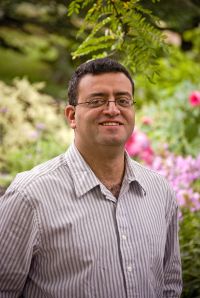
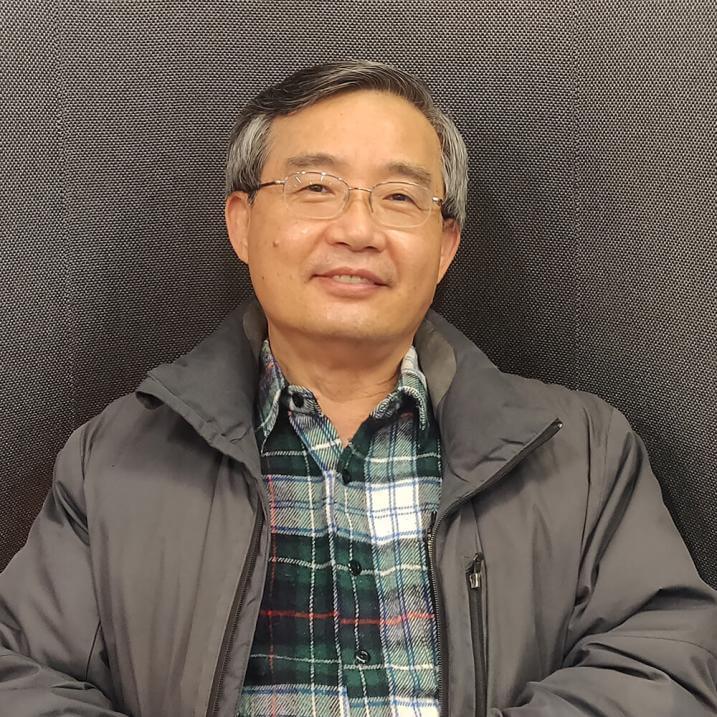
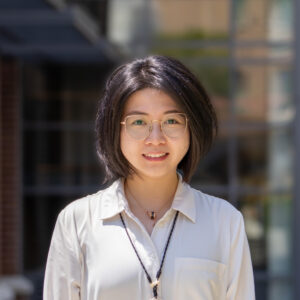
Mohamed F. Mokbel is a Distinguished McKnight University Professor in the Department of Computer Science and Engineering at the University of Minnesota - Twin Cities , where he also serves as the Director of Graduate Studies. He is recognized as an IEEE Fellow and ACM Distinguished Member for his contributions to spatially- and privacy-aware systems. His research focuses on database systems , spatial data management , and GIS (Geographic Information Systems) , with significant work in spatiotemporal data, location-based services, and machine learning for spatial applications. His most recent publications address scalable BERT-based trajectory imputation , spatial logistic regression frameworks , and spatiotemporal big data decay techniques . Key Awards: Distinguished McKnight University Professor (2023) ACM SIGSPATIAL 10-Year Impact Award (2022) IEEE Fellow (2020) ACM Distinguished Member (2017) NSF CAREER Award (2010) Selected Conference Papers: Recathon (2015, IEEE MDM Best Paper) ST-Hadoop (2017, SSTD Best Paper) KAMEL (2023, ACM SIGMOD Demo) Academic Service: Editor-in-Chief, ACM Transactions on Spatial Algorithms and Systems (2024–) General Co-Chair, ACM SIGSPATIAL 2025 Past Chair, ACM SIGSPATIAL (2014–2017)
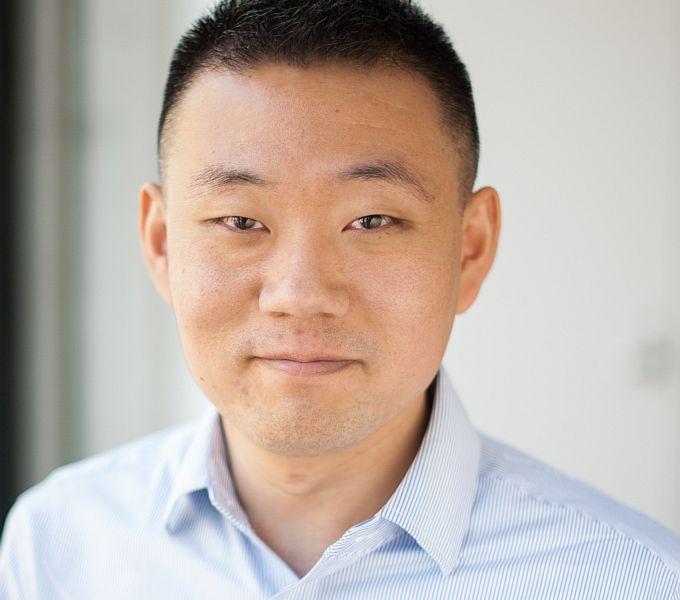
Yan Ma serves as Professor and Chair of Biostatistics at the University of Pittsburgh, with additional appointments in Orthopaedic Surgery and Clinical and Translational Science. Previously, he was Professor and Vice Chair at George Washington University Milken Institute of Public Health (2014-2022) and Assistant Professor at Hospital for Special Surgery/Weill Cornell Medical College (2008-2014). His educational background includes: PhD in Statistics, University of Rochester (2008) MA in Statistics, University of Rochester (2004) MS in Mathematics, Syracuse University (2003) BS in Statistics, Beijing Normal University (2001) Ma's research centers on advanced statistical methodologies including missing data imputation, machine learning, meta-analysis, causal inference, and longitudinal methods, applied across orthopedics, anesthesiology, health disparities, and emergency medicine through team science and translational research frameworks. His publication trajectory demonstrates sustained innovation from methodological foundations (2008-2012) to contemporary applications in health disparities and machine learning (2016-2022), consistently addressing complex biomedical challenges through high-impact journals like JAMA and Health Services Research. His scientific recognition includes: ASA's Statistics in Epidemiology Young Investigator Award (2010) Interorganizational Team Science Award (2012) ORISE FDA Research Fellowship (2017) APHA Achievement in Academia Award Ma has secured R01 funding from NIH/AHRQ for missing data methods in health disparities research while serving as Associate Editor for ASA journals and reviewer for NIH/PCORI/VA panels, demonstrating leadership in statistical methodology development and interdisciplinary collaboration. His team-science approach bridges statistical innovation with clinical implementation across orthopedics and anesthesiology, driving evidence-based practice through methodological rigor and cross-disciplinary partnerships.
Ravid Shwartz-Ziv is an Assistant Professor and Faculty Fellow at NYU's Center for Data Science, with a dual role as Senior Research Scientist at Wand AI. His research bridges theoretical foundations and practical applications in artificial intelligence, focusing on Large Language Models (LLMs), information theory, and neural network interpretability. Ph.D. in Computational Neuroscience, Hebrew University of Jerusalem (2021) B.Sc. in Computer Science and Computational Biology, Hebrew University of Jerusalem (2014) His research spans: Developing min-p sampling for LLM text generation Preventing representation collapse in Transformers Creating contamination-free LLM benchmarks like LiveBench Advancing information-theoretic frameworks for neural networks Exploring representation learning and model adaptation Recent publications demonstrate expertise in LLM efficiency, self-supervised learning, and multi-agent systems. Notable awards include the Google PhD Fellowship, Moore-Sloan Fellowship, and multiple best paper recognitions. He has led research initiatives at Intel and Google AI, focusing on neural network compression, XGBoost comparisons for tabular data, and innovative benchmarking frameworks.
Dr. Xin Zhou is an Oxford-Bristol Myers Squibb Fellow at the Department of Computer Science, University of Oxford. Her research integrates computational modeling, clinical data, and experimental findings to investigate cardiac disease mechanisms and develop human-based simulations for drug evaluation. BSc and MSc in Life Sciences, Beijing Normal University DPhil in Computational Biology, University of Oxford Her work focuses on multi-scale cardiac modeling , particularly in ischemic heart disease and heart failure, exploring ionic currents, tissue conduction, and organ-level dynamics. She develops electromechanical simulations to study cardiac alternans and arrhythmic risks, translating these into clinical applications for patient stratification and pharmaceutical testing. Recent publications emphasize in silico clinical trials , sex-specific cardiometabolic analysis, and Purkinje network modeling. Collaborative efforts with clinicians and pharmaceutical partners highlight her translational approach to regulatory science. Model of the Year 2024, BioModels EPSRC Impact Acceleration Account Microsoft Research Project Award Recognition Award, University of Oxford She supervises PhD and MSc students in computational cardiology, while serving on the editorial board of Frontiers in Physiology . Her current projects involve digital twinning and predictive cardiac safety models to reduce animal testing reliance.
Yevgeni Berzak is an Assistant Professor at the Technion and a Research Affiliate at Mit BCS . He directs the Technion Language, Computation and Cognition (LaCC) Lab and leads the Cognitive Science Track in the Data Science and Engineering degree at the Technion. His academic background includes: PhD in Computer Science at Infolab, MIT CSAIL Postdoctoral research with Roger Levy at MIT CPL Lab Masters in Computational Linguistics at Universities of Saarland and Nancy Bachelors in Cognitive Science and Amirim Honors Program at Hebrew University of Jerusalem His research focuses on the intersection of Cognitive Science and Natural Language Processing (NLP) , studying human language acquisition and processing through computational modeling, linguistic theory, and neuroimaging. He develops datasets like OneStopQA and CELER , and explores how human gaze patterns can improve machine language understanding. Recent publications address topics such as: Eyetracking for language proficiency assessment Repetition effects in reading behavior Readability prediction via scrolling interactions Structured annotation schemes for reading comprehension The LaCC Lab under his leadership combines theoretical linguistics with machine learning to bridge human and artificial language processing.
Oisin Mac Aodha is a Reader (Associate Professor) in Machine Learning at the School of Informatics, University of Edinburgh. He is also an ELLIS Scholar and founder of the Turing interest group on biodiversity monitoring and forecasting, having previously served as a Turing Fellow from 2021-2025. Mac Aodha completed his undergraduate degree in electronic engineering from the University of Galway in Ireland, followed by his MSc and PhD at University College London (UCL). His academic journey includes postdoctoral positions at UCL (2013-2016) working with Prof. Gabriel Brostow and Prof. Kate Jones, and at Caltech (2016-2019) in Prof. Pietro Perona's Computational Vision Lab as part of the Visipedia team. His research centers on computer vision and machine learning with emphasis on 3D understanding, human-in-the-loop methods, and AI for conservation and biodiversity monitoring. He has made significant contributions to monocular depth estimation (including the influential Monodepth2 paper), fine-grained visual categorization, and biodiversity monitoring systems. His work bridges theoretical machine learning with practical ecological applications, developing tools for species identification, range estimation, and conservation efforts. Recent publications reveal a strong trend toward ecological applications while maintaining fundamental contributions to 3D vision and representation learning. His major scientific achievements include: Turing Fellow (2021-2025) ELLIS Scholar Founder of the Turing interest group on biodiversity monitoring and forecasting Co-organizer of the Fine-Grained Visual Categorization (FGVC) workshop series at major vision conferences Mac Aodha advises multiple PhD students and postdocs working on computer vision for biodiversity monitoring, 3D understanding, and human-in-the-loop learning. His team has developed practical tools like Whombat (an open-source annotation tool for bioacoustics) and contributed to field-deployed biodiversity monitoring systems. He has served as Area Chair for top conferences including NeurIPS, CVPR, ICCV, and ICML, demonstrating his standing in the computer vision community. His research group collaborates extensively with ecologists at University College London, particularly with Prof. Kate Jones' team, bridging machine learning expertise with ecological domain knowledge. The Vision at Edinburgh group he contributes to focuses on developing practical AI tools that address real-world conservation challenges while advancing fundamental computer vision research.
Dr. Jay Pujara is a Research Associate Professor of Computer Science at the University of Southern California (USC) and Director of the Center on Knowledge Graphs. He is also a Principal Scientist at the Information Sciences Institute (ISI) and leads research teams in data science and AI. Ph.D., University of Maryland, College Park (2016) M.S. and B.S. in Computer Science, Carnegie Mellon University Research Interests include artificial intelligence, probabilistic models, knowledge graph construction, statistical relational learning, NLP, and streaming inference. His work focuses on scalable algorithms for big data and uncertainty modeling in dynamic environments. Recent Publications highlight advancements in knowledge graphs, LLM reasoning, and table understanding. Notable topics include non-verbal abstract reasoning , faithful conversational datasets , and KGQA re-ranking . Scientific Awards : SWSA Ten-Year Award (2023), Outstanding Paper (IUI 2019), Top Reviewer (NeurIPS 2018), Best Paper (SRL Workshop 2016) Advising & Grants : Mentored 12+ graduate students, including Ph.D. advisees on topics like causal modeling and neuro-symbolic tasks. Secured NSF funding for table understanding in paleoclimate studies.
Bruce E. Hansen is the Mary Claire Aschenbrener Phipps Distinguished Chair and Trygve Haavelmo Professor of Economics at the University of Wisconsin-Madison, Department of Economics. He maintains an active research program with publications extending through 2025, demonstrating his continued prominence in econometric methodology. His research interests include: Econometric theory and methodology Time series analysis and forecasting Model selection, averaging, and shrinkage techniques Threshold and structural change models Statistical inference for clustered and dependent data Hansen's recent work focuses on innovative approaches to model averaging, standard error estimation for complex data structures, and unit root testing. His publications demonstrate both theoretical rigor and practical applicability to economic data analysis, with particular attention to handling clustered data, serial correlation, and model uncertainty. His influential publications include 'Least Squares Model Averaging' in Econometrica (2007) which introduced Mallows Model Averaging, and 'A Modern Gauss-Markov Theorem' (2022), both representing significant theoretical contributions to econometrics. His two textbooks 'Probability and Statistics for Economists' and 'Econometrics' (Princeton University Press, 2022) reflect his commitment to teaching and disseminating econometric knowledge. Hansen's research has been supported by multiple National Science Foundation grants (SES-9022176, SES-9120576, SBR-9412339, and SBR-9807111), highlighting the significance and quality of his contributions to the field.
Sara Hägg is a Senior Lecturer at the Karolinska Institutet , affiliated with the Department of Medical Epidemiology and Biostatistics . She is also a Docent in molecular epidemiology. PhD in Computational Biology (Linköping University, 2009) MSc in Molecular Biology (Stockholm University, 2003) BSc in Computer Science (Stockholm University, 2003) Her research focuses on human biological aging , including measurement of aging markers (telomere length, epigenetic clocks, frailty index), causal pathway analysis, and identification of geroprotectors for age-related diseases. She utilizes longitudinal twin studies (SATSA, GENDER, HARMONY), UK Biobank, and Swedish cohorts with methods like Mendelian randomization and genome-wide analyses . Recent articles demonstrate trends in epidemiological aging research , with emphasis on cardiovascular aging , neurological disease interactions , metabolic profiling , and epigenetic clocks . Her work often involves multivariable modeling and cross-cohort validation . Leadership roles include Director of LifeGene Core Facility (2024-) and Founding Board Member of the Nordic Aging Society (2023-). She serves on expert groups for the Swedish Twin Registry and Strategic Research Area in Epidemiology and Biostatistics .
Carey E. Priebe is a Professor in the Department of Applied Mathematics and Statistics at the Whiting School of Engineering, Johns Hopkins University. He maintains strong affiliations with multiple research centers including the Johns Hopkins University Center for Imaging Science, the Mathematical Institute for Data Science, and the Human Language Technology Center of Excellence. His academic career spans several decades with significant contributions to statistical methodology and theory. Dr. Priebe's research focuses on computational statistics, statistical pattern recognition, and statistical inference for high-dimensional and graph data. His work bridges theoretical statistics with practical applications in areas such as brain connectome mapping, network analysis, and image processing. He has made significant contributions to spectral graph theory, graph matching, and vertex nomination, with applications ranging from neuroscience to national security. His publication record demonstrates consistent contributions to statistical methodology, with a notable emphasis on graph-based statistical methods. His research trajectory shows increasing focus on network data analysis, particularly in the last decade, with applications to brain mapping and connectome analysis as evidenced by his NSF BRAIN Initiative grant and Nature publication. 2013 Erskine Fellow (University of Canterbury) 2011 McDonald Award for Excellence in Mentoring and Advising 2010 ASA SDNS Distinguished Achievement Award 2009 Erskine Fellow (University of Canterbury) 2008 National Security Science and Engineering Faculty Fellow 2008 Pond Award for Excellence in Teaching NSF BRAIN EAGER grant recipient (2014) Professor Priebe has supervised an extensive number of doctoral students whose work spans statistical methodology, network analysis, and machine learning. His students have secured positions at prestigious institutions including academia (University of Wisconsin, Boston University), government research labs, and major technology companies (Microsoft, Facebook, Amazon). His research has been supported by significant grants from NSF, DARPA, and other agencies focused on national security applications and fundamental statistical methodology development. He maintains active collaborations across multiple disciplines and institutions, as evidenced by his numerous conference presentations and visiting appointments including at The Alan Turing Institute and The Isaac Newton Institute. His work bridges theoretical statistics with practical applications in neuroscience, security, and data science.
Dan Suciu is a Microsoft Endowed Professor in the Paul G. Allen School of Computer Science & Engineering at the University of Washington. His research focuses on data management, query optimization, probabilistic databases, parallel data processing, and information theory applications to databases. Awards : ACM Fellow (2011), American Academy of Arts and Sciences (2024), ACM SIGMOD Codd Innovation Award (2022), NSF Career Award (2001), Alfred P. Sloan Fellow (2001-2002). Research Trends : Recent work emphasizes cardinality estimation using Lp-norms, submodular width for query evaluation, dynamic query processing, and tensor program optimization. His publications highlight intersections between database systems and formal methods, driven by mathematical rigor. Key Collaborators : Mahmoud Abo Khamis, Dan Olteanu, Amir Shaikhha, Maximilian Schleich, Kyle Deeds, Moe Kayali. Advising : PhD students Gerome Miklau (2006), Christopher Re (2010), Paris Koutris (2016), Nilesh Dalvi (2008 runner-up), Yisu Remy Wang (2024 runner-up) have excelled in dissertation awards.
Professor Byung S. Lee is a distinguished faculty member in the Department of Computer Science at the University of Vermont's College of Engineering and Mathematical Sciences. He joined UVM in 1999 and continues to be actively engaged in teaching, research, and service. His office is located in Innovation Hall at the Burlington campus, where he maintains regular office hours and oversees his research lab. Professor Lee holds a Ph.D. from Stanford University, an MS from Korea Advanced Institute of Science and Technology, and a BS from Seoul National University. His educational background provided the foundation for his extensive career in computer science research and education. Professor Lee's research spans multiple domains within computer science, with a particular focus on database systems, data mining, and data science. His work increasingly integrates machine learning techniques with traditional database approaches, especially in the analysis of time series data. He has made significant contributions to graph theory applications, anomaly detection methods, and environmental data analysis. His research often bridges computer science with practical applications in healthcare, environmental science, transportation, and astrophysics through interdisciplinary collaborations. An analysis of his recent publications reveals a strong trend toward time series analysis and anomaly detection, particularly applied to environmental monitoring and healthcare data. His work demonstrates a consistent evolution from foundational database research to more applied machine learning approaches, with increasing emphasis on real-world problem solving across multiple scientific domains. Professor Lee has served as primary advisor for numerous graduate students across multiple cohorts, including PhD candidates, Master's students, and postdoctoral researchers. His advising portfolio reflects the breadth of his research interests, with students working on topics ranging from graph neural networks to medical informatics applications. He has also been actively involved in professional service, serving on program committees for major conferences including SAC, PAKDD, DASFAA, and CIKM. Professor Lee leads a vibrant research laboratory that focuses on cutting-edge data science methodologies and their applications. His team collaborates extensively with researchers in environmental science, hydrology, and healthcare, demonstrating the interdisciplinary nature of modern data science research. The lab maintains active projects in time series analysis, graph analytics, and environmental monitoring systems, often working with large-scale datasets from real-world applications.
Dr. Hengrui Cai is an Assistant Professor of Statistics at the University of California Irvine (UCI), affiliated with the Donald Bren School of Information and Computer Sciences. She holds a Ph.D. in Statistics from North Carolina State University (NCSU) and a B.S. in Statistics from Zhejiang University. Her research focuses on causal inference, reinforcement learning, and graphical models, with applications in precision medicine, healthcare analytics, and epidemiology. She develops interpretable solutions for individualized decision-making, particularly in healthcare settings such as ICU patient treatment optimization and pandemic analysis. Notable achievements include the NSF CDS&E-MSS Award (2024), ICS Research Awards (2023–2024), and recognition for contributions to causal discovery and policy evaluation. Dr. Cai advises graduate and undergraduate students on projects involving causal AI, machine learning, and healthcare data analysis. She teaches courses like 'Causal Machine Learning' and 'Introduction to Probability and Statistics,' emphasizing interdisciplinary approaches to real-world problems. Her work integrates statistical theory with practical applications, exemplified by software tools like ANOCE-CVAE for causal mediation analysis and the Sepsis EHR Benchmark Environment for reinforcement learning. Dr. Cai collaborates widely, contributing to projects such as quantifying the impact of the 2020 Hubei lockdowns on virus spread in China through causal graph analysis.
Jian Peng is an Assistant Professor in the Department of Computer Science at the University of Illinois at Urbana-Champaign. His research focuses on computational biology, machine learning, and their applications to protein structure prediction, drug design, and molecular modeling. He has contributed to advancements in antibody engineering, protein-ligand docking, and generative models for biological systems. Key research areas include: Machine Learning for Molecular Modeling Protein Structure Prediction Antibody and Peptide Design Genomics and Single-Cell Analysis Structure-Based Drug Discovery His work emphasizes integrating deep learning techniques with biological datasets to address challenges in precision medicine, drug development, and systems biology. Notable achievements include developing the FastFold system to accelerate AlphaFold training and pioneering flow-based methods for antibody design. Awards include the Overton Prize (2020), recognizing contributions to computational biology. His research has been published in top journals and conferences, spanning topics from protein mutation prediction to geodesic-based immune complex modeling.
Dr. Han Du is an Associate Professor in the Department of Psychology at the University of California, Los Angeles (UCLA). He holds a PhD from the University of Notre Dame and leads the Du Research Lab. His methodological expertise includes Bayesian statistics, longitudinal data analysis, structural equation modeling, meta-analysis techniques, and machine learning applications in psychological research. Dr. Du's substantive research applies quantitative methods to developmental, clinical, cognitive, educational, and health psychology. His recent publications focus on transgender adolescent stress assessment, LGBTQ+ mental health in military contexts, social network interventions for HIV prevention, and minority stress theory applications. He teaches advanced statistical methods and supervises graduate students in quantitative psychology.