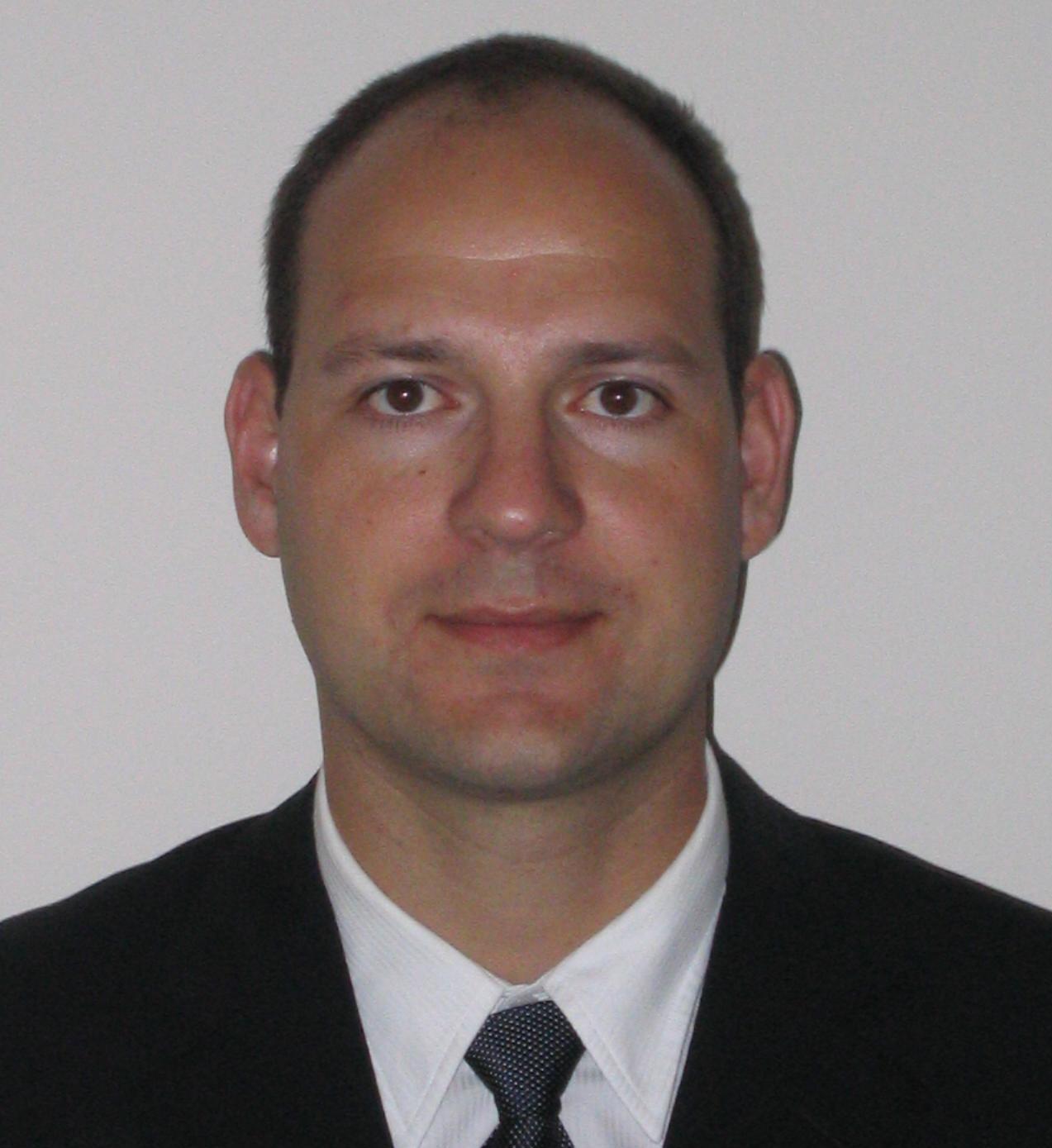
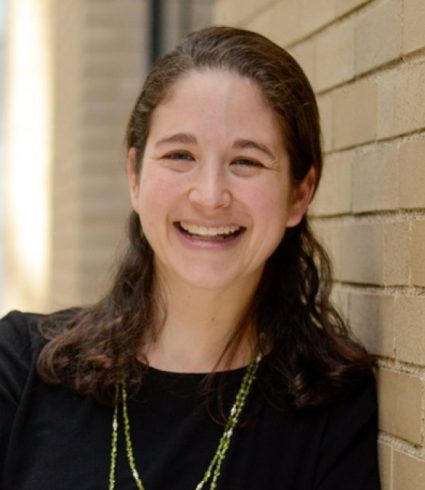
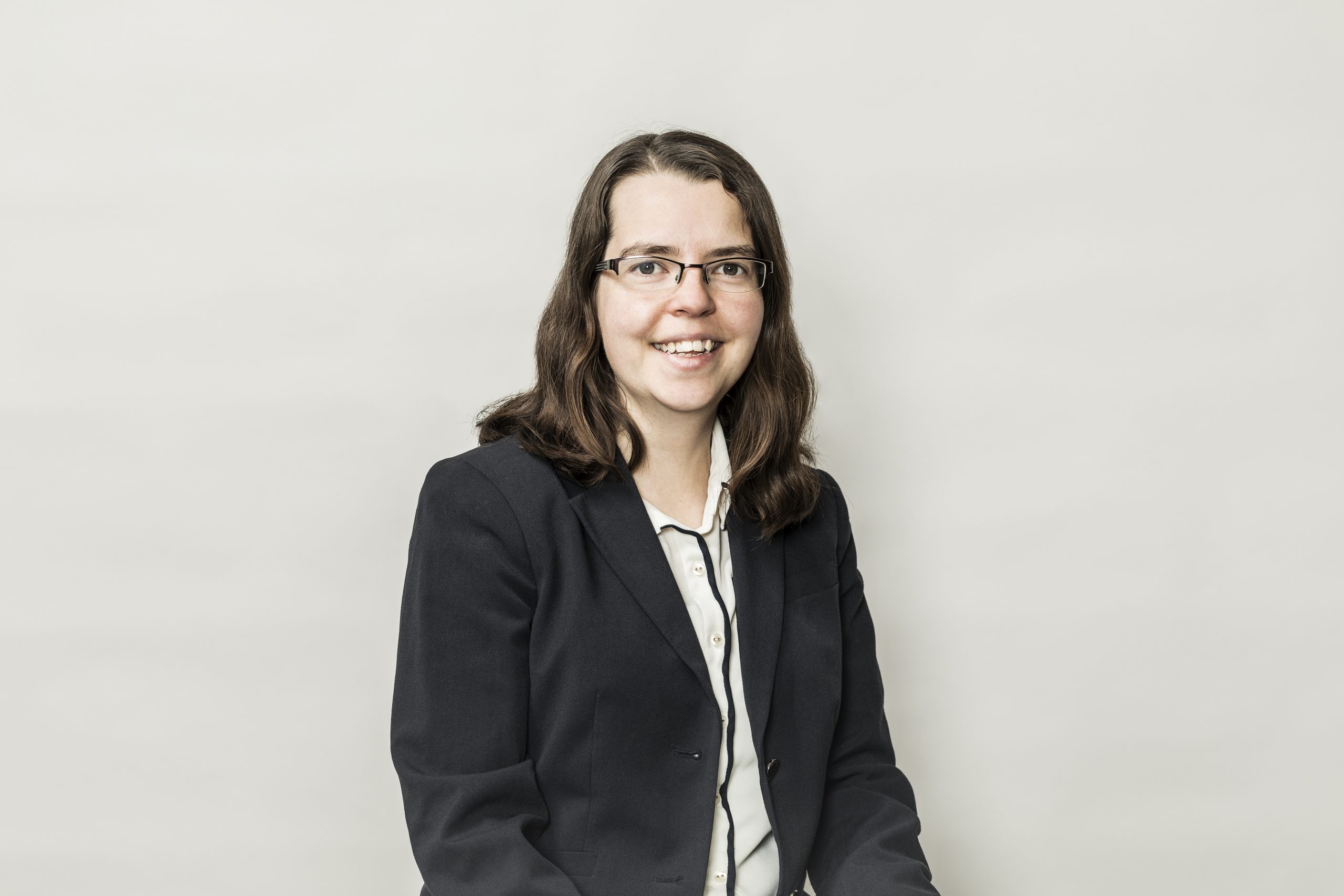
Professor Rodrigo Freitas holds the TDK Professorship in Materials Science and Engineering at MIT. His research focuses on computational materials design, bridging atomistic simulations with mesoscale microstructural analysis. He leads the Freitas Research Group, specializing in machine learning-driven modeling of materials kinetics and solidification processes. Education: B.S. and M.S. in Physics, University of Campinas, Brazil M.S. and Ph.D. in Materials Science & Engineering, UC Berkeley Research Interests: Professor Freitas investigates microstructural evolution in metals and alloys using advanced computational methods. Key areas include solidification mechanisms, interstitial atom behavior in superalloys, and machine learning applications for materials discovery. His work emphasizes bridging atomistic and mesoscale phenomena to guide industrial applications like semiconductor manufacturing and battery design. Publications Trend: Recent work emphasizes machine learning potentials for alloy modeling, short-range order analysis in high-entropy alloys, and kinetic modeling of complex chemical systems. Themes include alloy phase stability, defect dynamics, and data-driven materials discovery. Labs/Teams: Leads the Freitas Research Group at MIT, which develops novel computational tools for materials engineering.
Yiorgos Makris is a Professor in the Department of Electrical and Computer Engineering at the Erik Jonsson School of Engineering & Computer Science, The University of Texas at Dallas, since July 2011. Previously, he was a faculty member at Yale University for over a decade. He holds a Ph.D. in Computer Engineering from the University of California, San Diego, and a Diploma in Computer Engineering from the University of Patras, Greece. Education: Ph.D. in Computer Engineering, University of California, San Diego (2001) M.S. in Computer Engineering, University of California, San Diego (1997) Diploma in Computer Engineering and Informatics, University of Patras, Greece (1995) Research Interests: Hardware Security and Trustworthiness Statistical Side-Channel Fingerprinting Machine Learning in Semiconductor Manufacturing Trusted and Reliable Integrated Circuits Hardware Trojans in Wireless Cryptographic ICs On-Die Learning and Emergent Technologies His work focuses on enhancing hardware security through statistical methods, machine learning, and formal verification, with applications in analog/RF ICs, post-production calibration, and secure IC design. Key Contributions: Co-Founder and Site-PI of NSF CHEST I/UCRC (Hardware and Embedded System Security and Trust) Leader of the Safety, Security, and Healthcare Thrust at TxACE (Texas Analog Center of Excellence) Director of the Trusted and RELiable Architectures (TRELA) Lab Grants and Funding: NSF, NIH, SRC, ARO, AFRL, AFWERX, DARPA, DOE, and industry partnerships with Boeing, Northrop Grumman, IBM, Intel, Qualcomm, etc. Recent grants include projects on DNA storage security, analog neural networks, and malicious hardware detection. Awards and Recognition: IEEE Fellow (2025) Best Paper Awards at DATE'13, VTS'15, DCAS'22 Best Hardware Demonstration Awards at HOST'16 and HOST'18 Erik Jonsson School Faculty Research Award (2020) Labs and Teams: TRELA Lab (Focus: Secure Hardware Design, Trusted Architectures) CHEST I/UCRC (Industry-University Collaboration)
Elsa A. Olivetti is the Jerry McAfee (1940) Professor in Engineering and Professor of Materials Science and Engineering at MIT, and a MacVicar Faculty Fellow. She leads the Olivetti Group, focusing on sustainable materials design, recycling strategies, and computational models for environmental and economic impact assessment. Her work bridges materials science with sustainability, emphasizing circular economy principles and decarbonization. Education: B.S. in Engineering Science from University of Virginia (2000); Ph.D. in Materials Science and Engineering from MIT (2007). Her doctoral research centered on lithium-ion battery electrode materials. She joined MIT’s Department of Materials Science and Engineering (DMSE) in 2014 as an Assistant Professor, later advancing to full Professor. She co-directs the MIT Climate & Sustainability Consortium and chairs the MIT Climate Nucleus. Research interests include: sustainable materials systems, recycling-friendly material design, waste mining, and AI-driven materials discovery. She develops models for cost prediction, environmental impact analysis, and policy-relevant supply chain dynamics. Notable contributions include high-throughput zeolite design and battery recycling frameworks. Awards include the Bose Teaching Award (2021), NSF Early Career Award (2018), and Minerals, Metals & Materials Society Early Career Fellowship (2019). Her work emphasizes education and curriculum development, including courses for MIT’s Climate Scholars program. Labs/Teams: Olivetti Group (MIT), MIT Climate & Sustainability Consortium. Active in global sustainability initiatives, focusing on materials for energy transition and climate resilience.
Dr. Anna Baldycheva is a Senior Lecturer in Electronic Engineering at the University of Exeter, within the College of Engineering, Mathematics and Physical Sciences. She leads the interdisciplinary STEMM Laboratory, focusing on applied R&D in smart materials, photonics, AI, and IoT. With prior research experience at MIT, Trinity College Dublin, and Tyndall National Institute, she has established herself as an internationally recognized innovator and entrepreneur in emerging technologies. PhD in Electronic and Electrical Engineering, Trinity College Dublin (2008–2012) BSc (Hons) in Physics, St. Petersburg State University (2003–2008) Postgraduate Certificate in Academic Practice, University of Exeter (2016–2017) Postgraduate Certificate in Technology Management, Smurfit Business School (2009–2010) Her research spans Nano-Engineering, Opto-Electronics, Photonics, AI, and IoT , with a strong emphasis on real-world applications. She pioneers work in fluid opto-electronics , graphene nanocoatings , and AI-driven emotion recognition and early cancer detection . Her lab develops smart composite materials for flexible electronics, e-textiles, and structural applications, integrating machine learning into healthcare, education, and communications systems. The recent publications highlight a strong trend toward applied interdisciplinary innovation , combining materials science with AI and photonics for healthcare diagnostics, energy-efficient computing, and educational technology. Her work frequently bridges fundamental physics with commercialization potential, as seen in spin-out technologies like GSurf and the Electronic-Nose for lung cancer detection. Fellow, Royal Microscopical Society (RMS) Fellow, Higher Education Academy (FHEA) Expert, Future and Emerging Technologies, European Commission Featured in Forbes and Forbes Tech Council Editor-in-Chief, InSTEMM Journal Associate Editor, Nature Scientific Reports and Discover Nano Trustee, Royal Microscopical Society Founder, STEMM Global Scientific Society Founder, It’s Her! Women in STEMM Initiative Dr. Baldycheva actively supervises PhD students and has secured industrial collaborations with organizations such as Qinetiq and Lumentum. She leads multiple outreach initiatives, including STEMM Junior for underprivileged children, and serves on the committee for the Jocelyn Bell Brunel PhD Scholarship. She has raised significant research funding through national and international grants, though specific grant names are not listed. She leads the STEMM Laboratory , a multidisciplinary research group with divisions in Smart Composite Materials, Machine Learning & AI, and Opto-Electronics & Photonics. The lab emphasizes industry collaboration and technology transfer, having produced a university spin-out (GSurf) and multiple media-highlighted innovations.
Shimon Y. Nof is a Professor of Industrial Engineering at Purdue University's PRISM Center , where he directs NSF-industry supported research on collaborative robotics, cyber-physical systems, and industrial automation. He has held visiting positions at MIT and universities across six countries. Education: B.Sc./M.Sc. in Industrial Engineering & Management (Technion, Israel), Ph.D. in Industrial & Operations Engineering (University of Michigan) Key Achievements: Pioneered computer-aided facility design and Collaborative Control Theory (CCT), with applications spanning factories of the future, agricultural robotics, and transportation security systems His research focuses on cyber-supported integration of distributed e-Work systems and robotics, including precision agriculture with sensor networks. The PRISM Center under his leadership has developed groundbreaking protocols like Best Matching Protocol (BMP) and HUB-CI telerobotics, with real-world implementations across 400+ labs globally. Scientific honors include: Engelberger Medal (2002) Induction into Purdue's Book of Great Teachers (1999) Leadership roles in IFPR and IFAC Multiple book awards from Association of American Publishers The PRISM Global Research Network (est. 2001) now extends his work through 18 books and 6 patents, including the FTTP-TIF communication protocol and Facility Sensor Network (FSN) technology currently applied in greenhouse robotic operations.
Jie Xu is a Scientist at Argonne National Laboratory and a CASE Affiliated Scientist at the University of Chicago, Pritzker School of Molecular Engineering . Her research focuses on engineering durable, scalable, and sustainable polymer semiconductors for skin-like electronics and autonomous material discovery. Education : PhD in Chemistry (Nanjing University), Postdoctoral Fellow (Stanford University) Her research bridges polymer physics , self-driving laboratories , and AI-guided material synthesis to address challenges in stretchable electronics, recyclable polymers, and energy-efficient manufacturing. She pioneered polymer circuits that remain conductive under extreme deformation and developed the first roll-to-roll mass-production method for stretchable semiconductors. Her 15 most recent articles highlight advancements in AI-driven polymer discovery , biodegradable electronics , and multi-modal energy dissipation . Key themes include autonomous experimentation , hydrogen-bonded polymer systems , and machine learning for conjugated polymers , with applications in wearable medical sensors , soft robotics , and human-computer interfaces . Scientific accolades include the Materials Research Society Postdoctoral Award , MIT Technology Review’s Innovators Under 35 , and recognition as a Scialog Fellow . She serves on editorial boards for APL Machine Learning and Flexible Electronics , and her team at Argonne includes postdocs and students working on self-driving labs and degradable polymers .
Peng Li is a Professor in the Department of Electrical and Computer Engineering at the University of California, Santa Barbara. His research focuses on integrated circuits, brain-inspired computing, electronic design automation, and hardware machine learning systems. He holds Fellow status in the Institute of Electrical and Electronics Engineers (IEEE). His work emphasizes neuromorphic engineering, spiking neural networks, and the intersection of machine learning with analog circuit design. Education includes a PhD in Electrical and Computer Engineering from Carnegie Mellon University, an MS in Systems Engineering from Xi'an Jiaotang University, and a BS in Information Science and Engineering from the same institution. His research has been recognized with prestigious awards including the ICCAD Ten-Year Retrospective Most Influential Paper Award and multiple Design Automation Conference Best Paper Awards. Key research trends in his articles include advancements in spiking neural networks (SNNs), hardware accelerators for neuromorphic computing, Bayesian optimization for analog circuit design, and robustness in machine learning systems. He explores topics like adversarial robustness, energy-efficient architectures, and data-efficient prediction techniques. His work bridges theoretical machine learning models with practical hardware implementations, particularly in 3D integration and systolic array acceleration. Notable contributions include pioneering hybrid approaches combining formal verification with machine learning for analog circuits (HFMV framework), and innovations in neuromorphic processors such as the 3D Liquid State Machine architecture. His research also addresses challenges in semiconductor manufacturing, including wafer map pattern recognition and failure detection through semi-supervised learning and contrastive methods. Awards highlight his impactful contributions to both design automation and neural computing. His grants and collaborations likely span industry partnerships in semiconductor technology and neuromorphic computing. He leads a lab focused on next-generation hardware-software co-design for intelligent systems, emphasizing energy efficiency and scalability.
Lawrence M. Wein is the Jeffrey S. Skoll Professor of Management Science at Stanford University's Graduate School of Business, where he also serves as Senior Associate Dean of Academic Affairs. He holds a PhD in Operations Research from Stanford (1988) and has taught operations management at MIT (1988–2002) and Stanford since 2003. His research spans operations management, public health, and homeland security, with notable contributions to HIV therapy optimization, bioterror response logistics, and forensic science innovations. His academic roles include Senior Fellow at Stanford’s Center for International Security and Cooperation, and editorial leadership as Editor-in-Chief of Operations Research (2000–2005). Notable awards include the Kimball Medal, Lanchester Prize, and membership in the National Academy of Engineering. Research interests emphasize applying operations research to real-world challenges, such as optimizing radiation detection systems, analyzing sexual assault kit backlogs, and improving ballistic imaging techniques. His work bridges theoretical models with practical policy, impacting areas like healthcare, counterterrorism, and criminal justice. Key contributions include developing the workload regulating release policy in semiconductor manufacturing, influencing U.S. smallpox vaccination strategy, and advancing mathematical models for cancer treatment and pandemic influenza control. His recent focus includes forensic genetic genealogy and crime-solving technologies. Grants and collaborations span industries, governments, and academic institutions, reflecting interdisciplinary impact. His teaching includes courses on operations management, stochastic networks, and homeland security applications.
Dr. Keng-Te Lin is a Research Fellow at RMIT University's School of Science, specializing in advanced materials for energy, photonics, and biomedical applications. His work focuses on metamaterials, radiative cooling, graphene-based technologies, and nanophotonic devices. He supervises research projects on topics like spectral selective radiative cooling, electro-optically tunable waveguides, and machine learning for thermal-photovoltaic systems. Key research interests include developing high-performance materials for thermal management, energy conversion, and biomedical therapies. His recent publications highlight innovations in flexible radiative cooling films, ultrafast heat transfer mechanisms, and scalable manufacturing methods for sustainable cooling solutions. Dr. Lin collaborates on projects involving structured metamaterials for solar thermal energy, plasmonic nanostructures for photodetection, and nanocomposite materials for enhanced catalytic activity. He actively supervises students exploring topics such as photonic topological insulators, perovskite solar cells, and AI-driven material optimization. His research bridges fundamental materials science with applied engineering solutions, targeting applications in renewable energy, environmental sustainability, and healthcare technologies.
Dr. Marjan Alavi is an Assistant Professor at McMaster University's W Booth School of Engineering Practice and Technology, affiliated with the Mechanical Engineering department as an Associate Member. She holds a Professional Engineer (P.Eng.) license in Ontario and has over 15 years of academic and industrial experience in electrical engineering. Her research focuses on model-based and data-driven approaches for fault diagnosis, prognosis, and fault-tolerant control in hybrid systems, with applications in power electronics, energy systems, and smart infrastructure. Education: B.Sc. (2004) from K.N. Toosi University of Technology, M.Sc. (2007) from Sharif University of Technology, Ph.D. (2014) from Nanyang Technological University (Singapore), and a Postdoc (2015) at the University of Toronto's Energy Systems Group. Teaching: Instructs courses on Real-Time Systems (SEP 6ES3, SFWRTECH 4ES3), Smart Cities and Communities (SMRTTECH 4SC3), integrating real-world engineering challenges with theoretical frameworks. She emphasizes hands-on learning through remote labs and experiential projects. Professional Contributions: Serves as IEEE Toronto Section Executive Member, Technical Reviewer for IEEE Transactions on Industrial Electronics, and Vice Chair of IEEE Industrial Applications Society (2015). Founded Intelligent Diagnosis Corporations, a Canadian startup focused on research and innovation in diagnostics technologies. Key Projects: Developed fault diagnosis strategies for electro-hydraulic actuators, vehicle-mounted infrastructure monitoring systems, and remote laboratory platforms for emergency traffic control. Research spans predictive maintenance, smart city technologies, and railway systems certification benefits. Awards: Recipient of the Singapore International Graduate Award (SINGA) 2010. Recognized for her work in bridging academic research with industrial applications, particularly in enhancing system reliability through advanced control methodologies.
Prof. Gabriele Schrag holds the Professorship of Microsensors and Actuators at the Technical University of Munich (TUM), within the TUM School of Computation, Information and Technology. Her research focuses on MEMS (Micro-Electro-Mechanical Systems), including microsensors, actuators, and their applications in acoustics, microfluidics, and bioengineering. She has pioneered work in virtual prototyping for system-level modeling to enhance device robustness and performance. Education: PhD (summa cum laude) from TUM on 'Modeling coupled effects in microsystems' Habilitation in sensor systems technology (2018) Acting head of the Chair of Technical Electrophysics (2018-2023) Research emphasizes acoustic MEMS transducers , electrohydrodynamic printing , and physics-based modeling . Notable projects include developing piezoelectric MEMS microphones with corrugated membranes and integrated micropump systems. Awards include the Bavarian Prize for Good Teaching (2021) and Eurosensors Fellow Award (2019). Her work bridges virtual prototyping with real-world applications , addressing challenges in miniaturization, energy efficiency, and sensor integration for medical and industrial systems.
Marina Freire-Gormaly is an Assistant Professor in the Mechanical Engineering Department at York University's Lassonde School of Engineering. Her research focuses on renewable energy-powered water treatment systems, machine learning for smart design, advanced manufacturing, and sustainable engineering solutions for remote communities. She holds a PhD and M.A.Sc. from the University of Toronto, specializing in carbon capture and storage technologies. She has worked on nuclear energy projects at Ontario Power Generation and contributed to World Bank sustainability assessments. She currently chairs the Canadian Society of Mechanical Engineers' Student and Young Professional Affairs committee. Education: PhD in Mechanical Engineering, University of Toronto M.A.Sc. in Mechanical Engineering, University of Toronto Research Interests: She pioneers solar-powered reverse osmosis systems, energy recovery mechanisms, and IoT-driven smart systems. Her lab explores nanotechnology applications in environmental sustainability, including carbon capture and aquatic remediation. She integrates machine learning for optimizing energy-water nexus challenges in off-grid regions. Key Contributions: Developed models for membrane fouling in desalination systems, advanced pore network characterization for geologic CO2 storage, and designed automated renewable energy systems. Her work bridges engineering innovation with global sustainability goals. Grants & Collaborations: Engages with industries like Honda Canada and Trane Canada on sustainability initiatives. Supervises graduate students in emerging areas like nanobubble technology and direct air capture systems. Lab Activities: The Freire-Gormaly Lab focuses on clean energy-water systems, with current projects involving nano-technology for space applications (Canadian Space Agency collaboration) and life cycle assessments of carbon storage technologies.
Christopher Bailey is a Professor of Advanced Semiconductor Packaging and Director of the Centre for Advanced Semiconductor Packaging at Arizona State University (ASU). He previously served as Professor of Computational Mechanics & Reliability and Associate Dean for Research at the University of Greenwich, UK. At ASU, he leads research on advanced semiconductor packaging, including roles as Principal Investigator (PI) and Co-Investigator (Co-I) on major projects such as the SRC-funded Thermo-Mechanical Modelling and US Chips Act initiatives (e.g., SWAP-Hub, SHIELD, ITSI). His research focuses on semiconductor packaging reliability, thermal management, co-design methodologies, and multiphysics modeling. Education: MBA (Technology Management), Open University, UK PhD, Thames Polytechnic, UK Research Interests: Advanced Semiconductor Packaging Thermal Management Solutions Co-Design and Multiphysics Modeling Reliability of Electronic Components His work integrates computational mechanics, materials science, and engineering to address challenges in high-reliability electronics. Recent projects emphasize predictive modeling for semiconductor packaging failures under thermal-mechanical stress. Awards: IEEE Region 8 Europe Award (2024) IEEE David Feldman Award (2022) Visiting Professorships at IIT Kharagpur (2018/2022) and Hong Kong (2018) Service & Leadership: Former President of IEEE Electronics Packaging Society (2020–2021) Associate Editor for IEEE Transactions on Components, Packaging, and Manufacturing Technology Conference Leadership (e.g., Program Chair for IEEE PAINE 2024) He has secured over $40M in research funding and authored 400+ archival papers, with expertise spanning industry collaborations (e.g., BAe Systems, Rolls Royce) and government advisory roles (EPSRC Peer Review College, UK Research Excellence Framework).
Mohammed Y Niamat is a full-time Professor in the Department of Electrical Engineering and Computer Science at the University of Toledo's College of Engineering . His research focuses on hardware security, FPGA vulnerabilities, and blockchain applications in cybersecurity. Research Interests : Physical Unclonable Functions (PUFs), FPGA Security, Blockchain-based Security Frameworks, IoT Security, Smart Grid Authentication, Machine Learning Vulnerability Analysis Publications : Over 85 publications from 1986-2024, with recent works on integrations of blockchain and PUFs for secure supply chains, neural network modeling attacks on PUFs, and hardware Trojan detection techniques. Collaborations : Co-authored with Junghwan Kim (4), Weiqing Sun (2), Richard Molyet (1). Recent Article Trends : 2024 works on zero-trust architecture for FPGA supply chains using blockchain and ROPUFs; 2023 studies on IoT device authentication, hardware Trojan detection, and NFT-based IP protection; 2021-2019 research on machine learning attacks against PUFs, lightweight cryptographic designs for IoT, and BER optimization in wireless systems.
Sani Nassif is a Research Fellow at the Technical University of Munich (TUM) under the Rudolf Diesel Industry Fellowship, hosted by Professor Ulf Schlichtmann. With 28 years of experience at Bell Labs and IBM Research, he has led teams in integrated circuit modeling, simulation, statistical analysis, and optimization. Research Interests: His work bridges integrated circuit technology with cross-disciplinary applications in medicine. Key areas include variability analysis in semiconductor manufacturing, low-power circuit design, and reliability engineering for nano-scale systems. He focuses on applying machine learning and statistical methods to solve challenges in energy-efficient computing and biomedical systems. Selected Publications: His research spans circuit variability trends, leakage current modeling, and reliability frameworks for nano-era systems. Work includes foundational studies on SRAM failure analysis and CMOS scaling limitations. Scientific Awards: He is recognized as an IEEE Fellow IBM Master Inventor (75 patents) Rudolf Diesel Industry Fellow