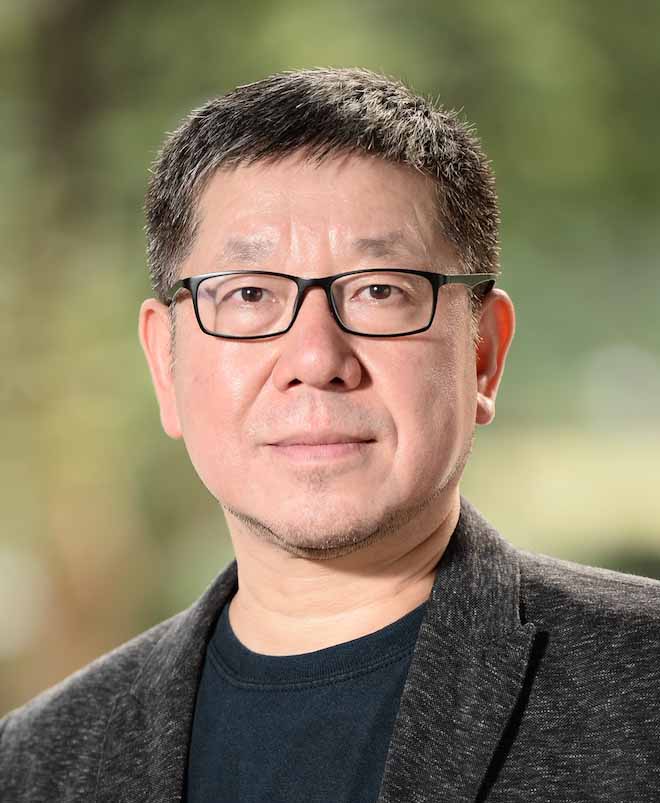
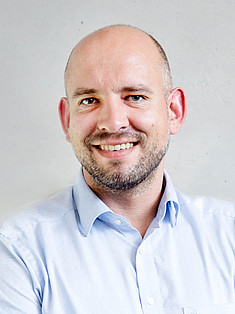
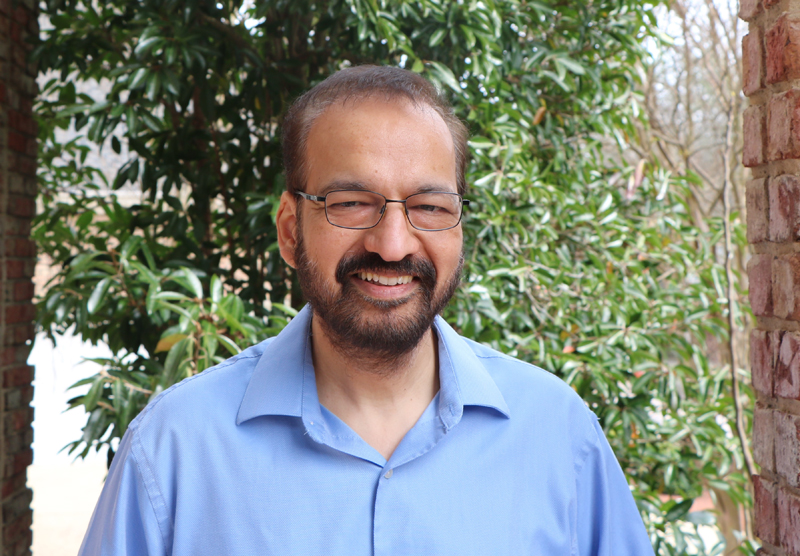
Chao Zhang is an Associate Professor at the Department of Chemistry-Ångström Laboratory, Uppsala University, specializing in computational electrochemistry and multi-scale modeling of electrolyte materials. His research bridges atomistic simulations with machine learning approaches to address challenges in energy storage and conversion systems. Education: Dr. rer. nat. from RWTH Aachen University (2013); Docent from Uppsala University (2020) Appointments: Postdoctoral researcher at the University of Cambridge (prior to joining Uppsala in 2017) His group develops finite-field methods for computational electrochemistry and investigates electrified solid-liquid interfaces. Recent research trends include neural rendering for underwater SLAM systems (2025), robust path-following control in marine robotics, and event-based localization in LiDAR-integrated environments. Scientific Awards: ERC Starting Grant (2020) Junior Research Fellowship, Wolfson College (2015) Jülich Excellence Prize for Young Scientists (2013)
Rizwan Bulbul is a researcher at the Institute of Geodesy , Graz University of Technology (TU Graz), Austria. His work bridges geodesy, geographic information systems (GIS), and computational modeling. Research Interests : Bulbul's research focuses on geospatial modeling, artificial intelligence integration, and sustainable urban development. Key areas include smart tourism simulations, energy transition policy analysis, and off-road robotic navigation using machine learning. His work also addresses forest fire prediction uncertainty, vertical photovoltaic potential, and cattle tracking in alpine environments. Publications : His research spans spatial optimization, 3D city modeling, and semantic routing. Recent projects involve leveraging AI for tourism simulations and energy policy evaluation, demonstrating interdisciplinary applications of geospatial technologies. Contact : Email: bulbul@tugraz.at Office: TU Graz, Steyrergasse 30/I, Room ST01122
Michael Hofbaur is a full Professor at the University of Klagenfurt, where he works in the Institute for Intelligent Systems Technologies within the Faculty of Technical Sciences. His office is located at Lakesidepark Haus B04, Ebene 2, Raum B04.2.206, and he can be contacted at michael.hofbaur@aau.at. Professor Hofbaur has established himself as a leading researcher in robotics with particular expertise in human-robot collaboration, safety systems, and formal verification methods for robotic applications. His research interests focus on the intersection of robotics, safety engineering, and human factors. Professor Hofbaur has made significant contributions to the field of robot safety, particularly in developing methods for safe human-robot collaboration without physical barriers. His work spans multiple dimensions of robotics including kinematic analysis, motion planning, sensor integration, and formal verification techniques to ensure system reliability. He has published extensively on topics such as obstacle avoidance strategies, proximity perception systems, and methods to enhance flexibility in collaborative workspaces while maintaining safety standards. Analysis of his recent publications reveals a clear trend toward integrating formal verification methods with practical robotics applications, particularly focusing on safety-critical aspects of human-robot interaction. His research increasingly incorporates advanced sensing technologies like radar and capacitive proximity sensors to create more intelligent and responsive robotic systems. The work demonstrates a progression from theoretical kinematic analyses toward practical implementations in industrial and collaborative settings, with a consistent emphasis on safety assurance throughout. Professor Hofbaur's research portfolio includes numerous projects related to robotic safety, formal verification, and human-robot collaboration, though specific awards directly attributed to him are not listed in the available materials. His work appears to have significant practical applications in industrial automation and collaborative robotics settings. While specific information about his students and advising activities isn't provided in the available materials, his extensive publication record spanning over two decades suggests he has likely supervised numerous graduate students and postdoctoral researchers. His research activities indicate involvement in both theoretical and applied projects, potentially including collaborations with industry partners given the practical nature of many of his publications. Based on his departmental affiliation and research focus, Professor Hofbaur is likely associated with robotics laboratories at the University of Klagenfurt that specialize in human-robot interaction, safety systems, and formal verification of robotic workflows. These facilities likely include experimental setups for testing collaborative robots, sensor integration systems, and simulation environments for verifying robotic behaviors before physical implementation.
Justus Piater is a Professor of Computer Science at the University of Innsbruck, serving as the Head of the Digital Science Center and an ELLIS Fellow. His primary affiliation is the Department of Computer Science within the Faculty of Mathematics, Computer Science and Physics. He has held academic roles since 2002, including Assistant and Associate Professorships at Université de Liège before joining the University of Innsbruck in 2010. His research focuses on robot learning, perception, and manipulation, emphasizing how robots can learn to perceive and act with understanding. Notable projects include the EU-H2020 IMAGINE project and the Euregio International Project Network OLIVER. Education includes a Ph.D. in Computer Science from the University of Massachusetts Amherst (2001), complemented by earlier studies in Germany and Belgium. His service roles include Dean of the Faculty of Mathematics, Computer Science and Physics (2014–2017) and Vice Chair of the Department of Computer Science (2014–present). His research outputs span robotics, AI, and interdisciplinary education, with a strong emphasis on autonomous systems and cognitive development.
Prof. Matthias Harders is a Professor at the Department of Computer Science, University of Innsbruck. His work focuses on medical imaging, haptic systems, virtual reality, and data-driven simulation. He leads research in interactive visualization tools, medical device development, and machine learning applications in healthcare and environmental engineering. Research areas include haptic augmented reality for surgical training, deformable medical image registration, and synthetic data generation for retinal imaging. Notable projects include SPBView for eye movement analysis and the PoRi device for post-stroke rehabilitation. His work bridges computer science with biomedical applications, emphasizing real-world impact in healthcare technology. Publications span medical simulation, machine learning for biogas prediction, and perceptual interfaces. He collaborates on EU-funded projects involving VR/AR systems and has contributed to open-source tools for point cloud analysis and surgical planning.
Wilfried Elmenreich is a Professor at the Institute for Networked and Embedded Systems at Alpen-Adria-Universität Klagenfurt. He holds roles as Member of the Senate and Member of the Works Council for Academic University Staff. His research focuses on computational systems, energy engineering, and smart technologies, including swarm intelligence, cyber-physical systems, and sustainable energy solutions. Key interests include non-intrusive load monitoring (NILM), renewable energy integration, and decentralized learning paradigms. Research priorities encompass computer simulation, electrical power engineering, complex systems, and self-organization. Notable work includes frameworks like SwarmFabSim for production scheduling and CPSwarm for swarm robotics design. He also explores sustainability education and pandemic-related behavioral shifts in sustainability attitudes. Recent publications highlight advancements in federated learning for smart grids, energy disaggregation using NILM, and applications of biologically-inspired algorithms in critical infrastructure. His work integrates simulation reproducibility, open-source tools like Gradle/Docker, and educational games for renewable energy awareness (e.g., DAYSAM). Labs/Teams: Core member of the Institute for Networked and Embedded Systems, leading projects in CPS design, energy systems, and swarm robotics. Collaborates on EU initiatives like CPSwarm and educational outreach in sustainable development.
Martin Hitz is a Full Professor for Interactive Systems at the University of Klagenfurt , where he founded the Interactive Systems research group (IAS) in 2000. He serves as Chairman of the University Senate (2022-2025) and previously as Vice Rector (2001-2006, 2012-2020) and Dean of the Faculty of Technical Sciences (2007-2012). His academic career includes assistant/associate professor roles at the University of Vienna and visiting positions at Politecnico di Milano, University of Ottawa, and University of Linz.
Martin Kampel is a Senior Scientist at the Computer Vision department of Technische Universität Wien (E193-01), focusing on interdisciplinary research at the intersection of Visual Computing , Human-Centered Technology , and AI Ethics . His work spans 3D Vision , Image Sequence Analysis , Computer Vision for Cultural Heritage , Ambient Assisted Living , and Visual Surveillance . Current roles: Senior Scientist, Principal Investigator in EU and national projects (e.g., Blindsight, visuAAL, KIIS) Contact: martin.kampel@tuwien.ac.at Research Interests Kampel’s research explores: 3D Acquisition & Reconstruction : Camera calibration, hand-eye tracking, and range data processing. Human Behavior Analysis : Motion tracking, multi-camera networks, and action recognition from 4D point clouds. Assistive Technologies : Depth sensor applications for dementia care, privacy-aware AAL systems, and smart toilet configurations. AI Ethics : Fairness, bias, and transparency in criminal justice systems and algorithmic governance of care. Recent Projects & Publications His work includes: Blindsight : WiFi-based person localization and multimodal data synthesis for behavioral classification. visuAAL : Developing trustworthy AI for dementia care and privacy-preserving depth sensor systems. KIIS : Domain-adaptive data synthesis for supermarket product recognition. Notable publications cover 3D human pose estimation , WiFi CSI analysis , trimodal datasets , and ethical AI frameworks .
Prof. Gerald Steinbauer-Wagner is an Associate Professor at TU Graz's Institute of Software Engineering and Artificial Intelligence. He specializes in autonomous intelligent systems, focusing on decision-making architectures for robots in uncertain environments. His research integrates software engineering, AI, and robotics to develop reliable systems for applications in disaster response, planetary exploration, and industrial automation. Research Interests: Steinbauer-Wagner's work addresses challenges such as robot navigation in unstructured terrains, human-robot collaboration, and trustworthiness in autonomous systems. Key areas include explainable AI, fault diagnosis, and multi-robot coordination. His team explores solutions for off-road robotics, collective perception, and certification of autonomous systems. Recent Projects: Current initiatives include developing autonomous systems for subterranean rescue missions (ROBO-MOLE), optimizing robot localization using machine learning, and creating educational frameworks for AI literacy in schools. His group also contributes to the RoboCup Logistics League and planetary exploration cascades through analog missions like AMADEE-20. Awards & Recognition: No specific awards listed, but his work has been recognized through extensive publications in top venues like IEEE/RSJ IROS, ICRA, and RoboCup symposiums. Lab & Teams: Leads the Autonomous Intelligent Systems (AIS) research group at TU Graz, collaborating with industry partners like the Smart Factory. His team develops integrated robot systems for production, logistics, and disaster response scenarios.
Zhang Jun is a Full Professor of Physics and Mathematics and Co-director of the Applied Math Lab at the Courant Institute, New York University (NYU), USA. He also serves as Co-director of the NYU-ECNU Joint Physics Research Institute in Shanghai, China, and holds an Affiliated Professorship at NYU Shanghai. His research focuses on experimental fluid physics, particularly fluid-structure interactions in biological and geophysical contexts, including bio-locomotion, flapping wings, and continental dynamics. Zhang has authored over 290 invited talks and peer-reviewed papers in journals like Nature and Physical Review Letters. He received the 2017 APS Fellow award for pioneering work in fluid-structure interactions. Beyond academia, he is a freelance illustrator with plans to publish a book of sketches. Education: PhD in Physics (1994), Niels Bohr Institute, University of Copenhagen PhD Candidate (1990-1991), Hebrew University of Jerusalem BSc in Physics (1985), Wuhan University Research Interests: Zhang’s work bridges physics, biology, and geophysics, exploring phenomena like flapping wing aerodynamics, animal locomotion, and Earth’s core-mantle interactions. His experiments often use novel fluid dynamics setups to model natural systems. Awards: APS Fellow (2017) Milton Van Dyke Award (2014) Antarctica Service Medal (2015) Labs & Teams: Co-directs the Courant Institute’s Applied Math Lab, specializing in fluid dynamics experiments. Collaborates with institutions globally, including NYU Shanghai and Aix-Marseille University.
Alexander Steinicke is a Professor in the Department of Applied Mathematics, specializing in stochastic analysis and measure theory. His research bridges pure mathematics with applications in finance and fractal geometry, evidenced by 17 publications in high-impact journals including Advances in Mathematics and Stochastic Analysis and Applications . His primary research interests include: Stochastic Analysis Measure Theory Fractal Geometry Mathematical Finance Probability Theory Stochastic Processes Steinicke's recent work reveals a cohesive trajectory in geometric measure theory, particularly through his development of permeable set theory and its applications to fractal structures. His 2025 article on dimension theory represents a significant advancement, while his finance-related publications demonstrate practical extensions of stochastic calculus to market incompleteness problems. The integration of Lévy processes and semimartingale SDEs forms a consistent methodological thread across his publications. As an active academic, Steinicke regularly participates in conferences including the Austrian Stochastics Days and delivers invited talks on stochastic analysis. His consultancy work for research evaluations demonstrates engagement with broader academic governance.
Simon Hoher is a Senior Lecturer at the Department Information Technologies and Digitalisation at Salzburg University of Applied Sciences. He serves as Head of Degree Programme Industrial Informatics & Robotics and Head of Academic Area Systems Theory & Mechatronics, focusing on interdisciplinary research at the intersection of industrial informatics, robotics, and simulation technologies. Head of Degree Programme Industrial Informatics & Robotics Head of Academic Area Systems Theory & Mechatronics Senior Lecturer, Department Information Technologies and Digitalisation Salzburg University of Applied Sciences His research interests include industrial informatics, robotics, material flow simulation, and digital twins. He explores the application of simulation techniques like digital twins and Petri nets in production systems, alongside the development of smart manufacturing solutions and reconfigurable robotic systems. Simon Hoher’s recent publications highlight the integration of real-time simulation with reinforcement learning, the use of topology in time series analysis, and the application of OPC UA in industrial big data architectures. His work spans material flow modeling, virtual commissioning, and human-machine interaction in post-robotics contexts. Contact: simon.hoher@fh-salzburg.ac.at
Jaroslav Klapalek is a PreDoc Researcher in the Cyber-Physical Systems department at Vienna University of Technology (TU Wien). His work focuses on formal verification of distributed timed-automata, resilient control mechanisms, and timing anomalies in automotive architectures. He is affiliated with the Embedded Systems Group (E191-01) and has contributed to research on machine learning for industrial predictive maintenance, consensus algorithms, and energy-efficient scheduling. Research Trends: Recent publications highlight expertise in formal verification of real-time constraints, security analysis in industrial CPS, and timing predictability under clock drift and network delays. Key methods include model checking, hybrid system modeling, and safety-critical protocol validation. Scientific Awards:
Munindar Singh is an Alumni Distinguished Graduate Professor in the Department of Computer Science at North Carolina State University , where he also serves as Co-Director of the DoD-sponsored Science of Security Lablet . His research spans Artificial Intelligence , Multiagent Systems , and Service-Oriented Computing , with applications in Cybersecurity , Privacy , and Social Computing . His research interests focus on ethical and sociotechnical dimensions of AI, including moral reasoning in social contexts , resilient multiagent systems , and responsible computing for sustainability . His work integrates formal methods with machine learning to address challenges in decentralized systems , agent communication , and cyber deception . Recent publications highlight trends in AI ethics , cybersecurity , and social simulation , with subfields like moral judgment analysis , domain adaptation , and metaverse services . These works often bridge technical and societal concerns, emphasizing trustworthy AI and ethical governance . Fellow, American Association for the Advancement of Science (AAAS) (2020) ACM/SIGAI Autonomous Agents Research Award (2020) IBM Shared University Research Award (2018) NCSU Research Leadership Academy Membership (2017) IFAAMAS Influential Paper Award (2016) National Science Foundation CAREER Award (1996) Munindar has held leadership roles, including editor-in-chief of ACM Transactions on Internet Technology and IEEE Internet Computing . His research is funded by sponsors such as DARPA , NSF , and IBM . He co-directs the Science of Security Lablet , a DoD-funded initiative advancing cybersecurity research.
Professor Ralf Terlutter is a faculty member at the University of Klagenfurt's Faculty of Economics and Law, leading the Department of Marketing and International Management. He holds multiple roles, including Head of the International Management program, Coordinator for International Relations, and Director of the Institute for Management. His research focuses on marketing, corporate social responsibility, health communication, consumer behavior, and media effects. Key areas include cross-cultural advertising, sustainable business ecosystems, and digital transformation. He has led numerous funded projects, such as the 'NoFakeFacts!' citizen science initiative promoting media literacy. His work bridges academic research with practical applications in business and healthcare. Notable contributions include studies on political microtargeting avoidance, robotic automation in logistics, and pandemic-era healthcare workforce challenges. Research Interests: Professor Terlutter’s interdisciplinary research spans health marketing, CSR communication, and media convergence. He explores how cultural dimensions influence advertising effectiveness and investigates technological advancements like AI in healthcare and robotics. Recent projects emphasize sustainability in entrepreneurial ecosystems and the ethical implications of digital advertising. Grants & Projects: NoFakeFacts! (2025–2028): Promotes media literacy among youth through citizen science. Heterogeneous multi-agent localization (2025–2028): FFG-funded robotics research for GPS-disturbed environments. Wind Turbine Blade Inspection (2025–2028): FFG project using drones for maintenance optimization. Teams & Labs: Leads the Institute’s Marketing and International Management Unit, fostering collaborative research initiatives with industry partners like Infineon Technologies and NOI AG. Engages in international networks through Erasmus+ programs and OeAD-funded projects.