Professor Tomasz Puzyn is affiliated with the University of Gdańsk , where he serves as Head of the Laboratory of Environmental Chemoinformatics within the Faculty of Chemistry and the Department of Environmental Chemistry and Radiochemistry. His research focuses on advancing predictive models for nanomaterial and chemical safety through chemoinformatics, machine learning, and Adverse Outcome Pathways (AOPs). Research Interests: Environmental Chemoinformatics Nanotoxicology QSAR/QSPR Modeling Machine Learning in Risk Assessment Endocrine Disruption Mechanisms Safe-by-Design Nanomaterials Recent Work Trends: Development of in silico New Approach Methods (NAMs) for nanomaterial genotoxicity and endocrine disruption Integration of transcriptomic data with AOPs for predictive toxicology Adsorption mechanisms of PFAS using modified biochar and metal oxides Quantum chemistry applications for environmental fate prediction Machine learning frameworks for drug delivery nanocarriers Harmonization of data reporting for regulatory acceptance Laboratory: Laboratory of Environmental Chemoinformatics Collaborative projects: CompSafeNano, HBM4EU
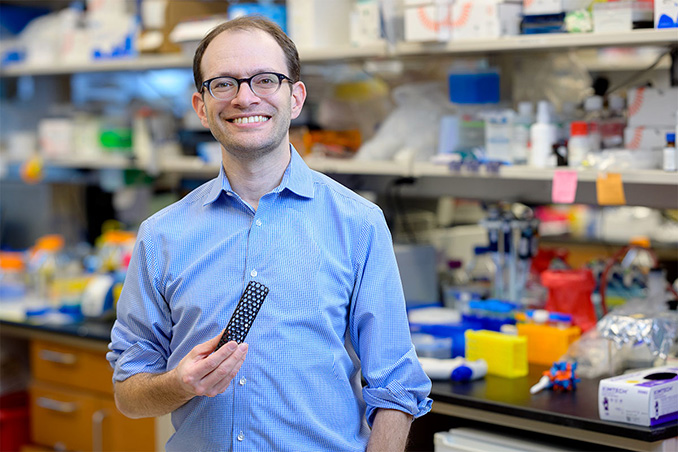
Daniel Heller is a Professor at Cornell University's Graduate School of Medical Sciences and Head of the Cancer Nanotechnology Laboratory at Memorial Sloan Kettering Cancer Center and Weill Cornell Medical College. His interdisciplinary work develops nanotechnologies to revolutionize cancer research, diagnosis, and treatment through engineering innovation. Education: Bachelor of Arts in History, Rice University (2000) PhD in Chemistry, University of Illinois at Urbana-Champaign (2010) Damon Runyon Cancer Research Foundation Postdoctoral Fellowship, MIT Koch Institute (2012) Dr. Heller pioneers cancer nanotechnology with three core research pillars: precision nanomedicines for targeted drug delivery (including blood-brain barrier-penetrating carriers), AI-powered diagnostic sensors for early cancer detection via implantable/wearable platforms, and nanosensors accelerating drug discovery. His lab integrates machine learning with quantum-defect-modified carbon nanotubes to detect multi-analyte cancer fingerprints in serum, enabling real-time biomarker monitoring for high-risk patients and treatment response assessment. Analysis of his recent publications reveals a strategic shift toward clinical translation , with 2021-2023 work focusing on ovarian cancer detection systems and brain metastasis therapies. His Nature Biomedical Engineering (2022) study demonstrates how AI-enhanced nanosensors achieve unprecedented sensitivity in liquid biopsies, while his Nature Materials (2023) paper establishes a mechanistic foundation for nanocarrier-mediated CNS drug delivery—highlighting convergence of nanotechnology, computational biology, and oncology. Scientific Awards: College of Liberal Arts and Sciences Young Alumni Award, University of Illinois (2024) Life Sciences Invention of the Year, UM Ventures (2023) American Institute for Medical and Biological Engineering (AIMBE) Fellow (2021) Pharmacology Teaching and Mentoring Award, Weill Cornell Graduate School (2020) CRS Nanomedicine Junior Faculty Award and American Cancer Society Research Scholar (2018) Pershing Square Sohn Prize (2017) Kavli Fellow, National Academy of Science (2015) Dr. Heller actively mentors graduate students in Pharmacology and Physiology programs, evidenced by his 2020 Teaching Award. His research is funded by competitive grants including the American Cancer Society Research Scholar award and Pershing Square Sohn Prize, supporting high-risk translational projects like implantable sensor clinical validation and next-generation nanocarrier development for treatment-resistant cancers. The Heller Lab operates as a multidisciplinary engine within MSKCC's Sloan Kettering Institute, combining engineers, chemists, and biologists with clinical collaborators. Current initiatives focus on translating ovarian cancer detection platforms to human trials and developing closed-loop therapeutic systems that auto-adjust dosing based on real-time biomarker feedback—positioning nanotechnology at the forefront of precision oncology.
Dr. Evert van Nieuwenburg is an Assistant Professor at Leiden University, affiliated with both the Leiden Institute of Advanced Computer Science (LIACS) and the Leiden Institute of Physics (LION). His research bridges the fields of Quantum Physics , Machine Learning , and Condensed Matter Physics , with a focus on quantum algorithms, reinforcement learning, and quantum game development (e.g., Quantum TiqTaqToe ). He actively contributes to the Applied Quantum Algorithms (aQa) initiative and leads the QuantumPlayed subgroup for quantum games and education. Research Interests: AI-driven quantum experiment control, quantum machine learning, variational quantum circuits, and quantum games for education and intuition-building. Publications: 15+ peer-reviewed works spanning quantum error correction, phase transitions, reinforcement learning in quantum systems, and quantum dot array simulations. Community Engagement: Developer of educational quantum games, open science advocate, and active participant in interdisciplinary initiatives. Selected Trends: His work demonstrates AI's transformative role in quantum physics, from decoding error-correcting codes with graph neural networks to merging reinforcement learning with quantum control systems. Labs & Initiatives: Affiliated with the Applied Quantum Algorithms (aQa) initiative and co-founder of QuantumPlayed , where quantum mechanics meets game theory to engage diverse audiences.
Yuri Rzhanov is a Research Professor at the Center for Coastal and Ocean Mapping at the University of New Hampshire , where he focuses on numerical modeling and image processing for marine applications. His work bridges semiconductor physics foundations with modern underwater 3D scene reconstruction and habitat classification. Education : Ph.D. in Semiconductor Physics, Academy of Science of Russia M.S. in Semiconductor Physics, Novosibirsk State University Research Interests center on 3D modeling/visualization , underwater image processing , refractive effect compensation , and benthic habitat classification using conventional/multispectral imagery. His career evolved from semiconductor quantum effects to solid-state nonlinear phenomena, then to marine signal/image processing. Key Collaborators : Co-investigators: Larry Mayer, Brian Calder, Jennifer Dijkstra, May-Win Thein Co-authors: John Hughes Clarke, Kim Lowell, Thomas Butkiewicz Grants include projects funded by the US Geological Survey , NOAA , and US Navy (2004–2024) related to seafloor mosaicing, unmanned underwater vehicle coordination, and marine acoustic/image data processing.
Albi Mema is a researcher affiliated with the Chair of AI Processor Design (AI-Pro) at Technische Universität München (TUM). His work focuses on emerging technologies for AI applications, including neuromorphic hardware, reliability engineering, and quantum computing. University: Technische Universität München Department: Chair of AI Processor Design (AI-Pro) Key research areas include: Emerging Technologies for AI Neuromorphic Hardware Reliability in Semiconductor Devices Quantum Computing RISC-V Architecture Machine Learning Computer-Aided Design His recent publications address fault-tolerant hyperdimensional computing, analog computing for AI, FeFET-based neuromorphic systems, and compact majority gate design using FDSOI technology. No scientific awards are mentioned in the provided text.
Dr. Andrew L. Miller is a postdoctoral researcher at Utrecht University and the National Institute for Subatomic Physics (Nikhef), focusing on gravitational wave detection and dark matter studies. His work bridges theoretical physics and computational methods within the LIGO/Virgo collaborations. PhD from Sapienza University of Rome and University of Florida MS in Physics from University of Florida BS in Physics from The College of New Jersey Andrew's research centers on gravitational waves from neutron stars , primordial black holes , and dark matter interactions . His methodological innovations include: Machine learning algorithms for detector noise classification Pattern-recognition techniques for continuous wave detection Semicoherent analysis for ultralight boson clouds Frequency-Hough transforms for binary inspirals His publications cover LIGO/Virgo data analysis, Einstein Telescope design, and LISA Pathfinder applications for dark matter detection. He has delivered tutorials on: Machine learning classification Parameter estimation in gravitational waves Frequency-Hough transforms Generalized search frameworks
Thorsten Koch is a Professor for Software and Algorithms for Discrete Optimization at Technische Universität Berlin , with multiple leadership roles including Head of the Applied Algorithmic Intelligence Methods (A²IM) , Digital Data and Information for Society, Science, and Culture (D²IS²C) , Kooperativer Bibliotheksverbund Berlin-Brandenburg (KOBV) , and Forschungs- und Kompetenzzentrum Digitalisierung Berlin (digiS) . Based at Zuse Institute Berlin and affiliated with TU Berlin's Institute for Mathematics, he focuses on integrating mathematical optimization with high-performance computing and artificial intelligence to solve complex real-world problems. Research Pillars : Mathematical optimization algorithms Quantum computing applications AI/ML integration in decision systems Energy systems optimization Scientific software development Leadership Roles : Head of Applied Algorithmic Intelligence Methods (A²IM) Head of Digital Data & Information for Society, Science, and Culture (D²IS²C) Head of Kooperativer Bibliotheksverbund Berlin-Brandenburg (KOBV) Head of Forschungs- und Kompetenzzentrum Digitalisierung Berlin (digiS) Key Collaborations : Working with IBM Quantum on quantum optimization Collaborating across institutions for energy system modeling Developing open-source optimization tools like SCIP Contributing to digital library infrastructure Recent Research Trends : Quantum optimization benchmarking Machine learning-aided optimization Multi-objective decision frameworks Energy infrastructure optimization Adaptive algorithm design CO2 network modeling Impact : Advancing hybrid optimization methods Developing open-source tools for scientific computing Building digital infrastructures for libraries and research Exploring quantum-classical algorithm synergies
Freja Stær Hincheli serves as a Lecturer at the Department of Computer Science , University of Copenhagen. Her work intersects multiple domains within machine learning, with a particular emphasis on quantum-inspired algorithms, medical imaging, and sustainable AI development. Keywords : Machine Learning, Quantum Computing, Medical Imaging, Natural Language Processing, Computational Biology Key Collaborations : SCIENCE AI Centre Her research spans quantum-enhanced neural networks, explainable AI for medical diagnostics, and energy-aware model design. Recent publications highlight applications in cross-cultural recipe adaptation, emotion-aware dialogue systems, and climate-conscious AI strategies. The Machine Learning Section at DIKU focuses on theoretical foundations and applications including medical image analysis , biological data modeling , and quantum computing , aligning with her contributions.
Horacio Dante Espinosa is the James N. and Nancy J. Farley Professor in Manufacturing and Entrepreneurship at Northwestern University's McCormick School of Engineering, holding the rank of Professor in Mechanical Engineering. He also directs the Theoretical and Applied Mechanics Program and the Micro and Nano Mechanics Lab. His research spans bioinspired materials, single-cell analysis, and multiscale experimentation, with a focus on nanoelectronics and energy harvesting. Espinosa earned his Ph.D. in Applied Mechanics from Brown University and has held academic roles at Purdue University and Harvard University. He leads interdisciplinary teams exploring metamaterials, cell engineering, and advanced fabrication techniques. His honors include the Prager Medal (2019) and multiple fellowships. Espinosa's lab combines experimental and computational methods, with capabilities in nanomechanical testing and biological assay development. Education: Ph.D. in Applied Mechanics (Brown University, 1992), M.Sc. in Structural Engineering (Polytechnic of Milan, 1987), Civil Engineering (Northeastern National University, Argentina, 1981) Key Roles: Director of iCET (2015–2018), Faculty Director of NUFAB (2013–2015), Visiting Professorships at Stanford and Harvard Labs: Micro and Nano Mechanics Lab focuses on biomaterials, metamaterials, and single-cell manipulation with advanced microscopy and electroporation systems Grants/Awards: NSF-CAREER Award, ONR Young Investigator Award, and leadership roles in professional societies His research bridges mechanics, materials science, and biology, with applications in healthcare technologies and advanced materials. Current projects include phononic crystal studies, Kirigami engineering, and high-throughput electroporation platforms for cell analysis.
Quanxi Jia is a SUNY Distinguished Professor, Empire Innovation Professor, and National Grid Professor of Materials Research at the University at Buffalo. He holds appointments in the Department of Materials Design and Innovation within the School of Engineering and Applied Sciences and serves as Scientific Director of the New York State Center of Excellence in Materials Informatics (CMI). Education: PhD in Electrical and Computer Engineering, University at Buffalo, 1991 MS in Electronic Engineering, Jiaotong University, Xian, China, 1985 BS in Electronic Engineering, Jiaotong University, Xian, China, 1982 Research Focus: Jia's work centers on advanced electronic and energy materials, particularly epitaxial thin films and heterostructures. His research investigates processing-structure-property relationships, monolithic integration of functional materials, and superconductors for quantum/energy applications. Key methodologies include pulsed laser deposition and polymer-assisted techniques, with emphasis on oxide heterostructures , memristive devices , and multiferroic systems for next-generation electronics. Publication Trends: Recent publications (2023-2025) reveal dominant focus on neuromorphic computing via resistive switching devices (58% of sampled works), superconducting thin films for quantum applications (20%), and strain-engineered oxide heterostructures (22%). His group pioneers HfO 2 -based artificial neurons, NbN superconducting films on CMOS platforms, and multiferroic membranes, demonstrating strong industry-academia translation potential. Scientific Recognition: Fellow of Los Alamos National Laboratory Fellow of Materials Research Society (MRS) Fellow of American Physical Society (APS) Fellow of American Ceramic Society (ACerS) Fellow of AAAS Fellow of IEEE Fellow of National Academy of Inventors (NAI) Leadership & Infrastructure: As CMI Scientific Director, Jia oversees New York's flagship materials informatics initiative integrating AI with experimental materials science. His prior directorship of DOE's Center for Integrated Nanotechnologies (Los Alamos/Sandia) established expertise in national lab collaboration. The group maintains 50+ U.S. patents and 500+ publications, with current work targeting quantum device integration and sustainable neuromorphic hardware. Research Ecosystem: The CMI hub connects Jia's team with industry partners (including National Grid) and national labs, facilitating rapid prototyping of energy materials. Current thrusts include machine learning-guided ferroelectric design, CMOS-compatible superconductors, and recyclable perovskite sensors, positioning the group at the semiconductor-energy nexus.
Dr. Dave Perkins is an Associate Professor (Reader) in Computer Science and Director of Teaching & Learning at Bangor University's School of Computer Science and Engineering. He additionally serves as the University Lead for Technology and Innovation in Teaching at the Centre for Enhancement of Learning and Teaching (CELT), driving educational technology initiatives across the institution. His leadership extends to the North West Wales Computing at Schools (CAS) Hub where he develops computer science education programs. Educational background includes: MEng in Computer Systems Engineering (University College of North Wales, Bangor, 2000) PhD in Optoelectronics (University of Wales, Bangor, 2004) Post Graduate Certificate in Education (University of Newport, 2012) His research focuses on computer science pedagogy , learning analytics , and educational technology innovation . He pioneers novel approaches to teaching through technological repurposing and develops analytical frameworks for understanding student journeys. Current investigations center on predictive modeling of student outcomes using machine learning and visualization techniques to enhance academic interventions. Publication analysis reveals two distinct research phases: early foundational work in optoelectronics and laser physics (2001-2005), followed by a contemporary focus on educational technology and learning analytics (2015-present). Current works demonstrate strong thematic clustering around student journey visualization, early-warning systems, and immersive educational interfaces. Honors and awards: Senior Fellowship, Higher Education Academy (2015) Bangor University Teaching Fellowship (2016) He leads significant projects including the JISC/Bangor Learning Analytics initiative and supervises postgraduate research in learner analytics. As former Regional Coordinator of Technocamps, he established outreach programs connecting universities with schools. Administrative responsibilities encompass admissions, employability programs, and institutional curriculum development.
Xiaoli Fern is an Associate Professor in the School of Electrical Engineering and Computer Science at Oregon State University. She holds a Ph.D. in Computer Engineering from Purdue University (2005) and dual degrees (B.S. and M.S.) in Automation and Computer Science from Shanghai Jiao Tong University (2000). Her research focuses on applied machine learning , graph learning , and explainability in AI systems , with applications in microbiome analysis , ecological monitoring , and human-computer interaction . Research Expertise: Unsupervised learning, clustering, correlation analysis, outlier detection, and scientific data mining. Collaborations: Active involvement in the IGERT Ecosystem Informatics program and interdisciplinary projects with ecologists, roboticists, and biologists. Awards: 2011 NSF CAREER Award for early-career excellence in research. Her recent work includes applying deep learning to microbiome data and developing interactive systems that bridge theory with real-world applications in biology and materials science. She mentors students across all academic levels and emphasizes the importance of collaborative, real-world problem-solving in her research lab.
Andrej Bogdanov is a Professor at the University of Ottawa in the School of Electrical Engineering and Computer Science . He earned his B.S. and M.Eng. from MIT and Ph.D. from UC Berkeley . Before joining Ottawa, he held positions at the Chinese University of Hong Kong , ITCS (Tsinghua) , DIMACS (Rutgers) , and the Institute for Advanced Study . He has served as a Visiting Professor at the Tokyo Institute of Technology (2013) and the Simons Institute (2017, 2021). Research Interests : Computational complexity, cryptography foundations, pseudorandomness, one-way functions, property testing, quantum algorithms, and sublinear-time algorithms. Teaching : Courses on Discrete Mathematics, Great Algorithms, Computational Complexity, and Cryptography at University of Ottawa, Chinese University of Hong Kong, and Rutgers University. Publications : 15+ recent works in TCC , CRYPTO , ICALP , RANDOM , and journals like Journal of Cryptology and Theory of Computing . Service : Program co-chair for SAC 2026 , and committee member for major conferences including CRYPTO , TCC , Eurocrypt , and FOCS . Advising : 12 current and former Ph.D./M.Phil. students, with postdoctoral advisees at institutions like IIT Palakkad and Academia Sinica . His work bridges theoretical computer science with applications in cryptography, quantum computing, and network security.
Emmanuel Baccelli is a Professor for "Open and Secure IoT Ecosystem" at Freie Universität Berlin since September 2019, holding a joint position with Inria and the Einstein Center Digital Future (ECDF). He is also a scientific researcher at Inria since 2007 and co-founder/coordinator of the RIOT open source operating system for IoT devices since 2013. His research focuses on the intersection of low-power protocols, deeply embedded open source software, and security in the Internet of Things (IoT) ecosystem. Baccelli emphasizes the critical trade-off between energy efficiency and security in IoT systems, advocating for privacy-by-design principles and open specifications. His work addresses how users can maintain control over their systems and data in an increasingly connected world. Baccelli's publications demonstrate a clear progression toward secure, efficient IoT systems with recent work focusing on secure firmware updates, TinyML deployment, and privacy-preserving protocols. His research spans from foundational networking protocols to practical implementations for constrained devices, with a consistent emphasis on open source solutions and security-by-design. Baccelli completed his PhD in 2006 at École Polytechnique in Paris on "Routing and Mobility in Large Packet-Based Networks" and received his habilitation from Université Pierre et Marie Curie in 2012. He previously served as a Guest Professor at Freie Universität Berlin in 2013-2014 with a DAAD Grant. His professional activities include significant contributions to IETF standards, particularly RFCs related to routing protocols for low-power networks. Baccelli's research has practical applications across multiple domains including healthcare, smart agriculture, and industrial IoT systems, where security and energy efficiency are paramount concerns.
Louis S. Bouchard is an Associate Professor in the Department of Chemistry at the University of California, Los Angeles (UCLA). His interdisciplinary research spans physical chemistry, biomedical engineering, and quantum computing, with a focus on NMR/MRI technologies, immunotherapy, and materials science. He earned a B.Sc. in Physics and Business Management from McGill University, a M.Sc. in Medical Biophysics from the University of Toronto, and a Ph.D. in Chemistry from Princeton University. His postdoctoral work at UC Berkeley with Alex Pines advanced low-field NMR and hyperpolarization methods. Research Interests : Physical & analytical chemistry, materials for immunotherapy, MRI contrast agents, biosensors, quantum control, machine learning in biomedical imaging. Lab Focus : Operando NMR methods, molecular kinetics, tissue engineering, quantum computing, and machine learning algorithms. His group has developed groundbreaking technologies, including: NMR methods for topological insulator surface states 12% 15N hyperpolarization catalysts for MRI Operando NMR in catalytic reactors Multi-channel 3D tissue bioreactors Scientific awards include the Beckman Young Investigator Award (2012), Dreyfus New Faculty Award (2008), and multiple UCLA faculty development grants. Current projects recruit students in machine learning , molecular kinetics , and quantum computing applications to chemistry and biology.