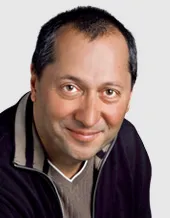
Sani Nassif is a Research Fellow at the Technical University of Munich (TUM) under the Rudolf Diesel Industry Fellowship, hosted by Professor Ulf Schlichtmann. With 28 years of experience at Bell Labs and IBM Research, he has led teams in integrated circuit modeling, simulation, statistical analysis, and optimization. Research Interests: His work bridges integrated circuit technology with cross-disciplinary applications in medicine. Key areas include variability analysis in semiconductor manufacturing, low-power circuit design, and reliability engineering for nano-scale systems. He focuses on applying machine learning and statistical methods to solve challenges in energy-efficient computing and biomedical systems. Selected Publications: His research spans circuit variability trends, leakage current modeling, and reliability frameworks for nano-era systems. Work includes foundational studies on SRAM failure analysis and CMOS scaling limitations. Scientific Awards: He is recognized as an IEEE Fellow IBM Master Inventor (75 patents) Rudolf Diesel Industry Fellow
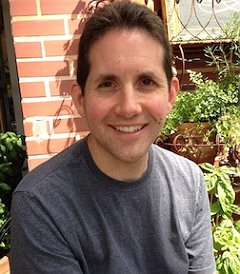
Todd Millstein is a Professor in the Computer Science Department at the University of California, Los Angeles (UCLA). He served as the Computer Science Department Chair from 2022-2025 and is also an Amazon Scholar. His research focuses on making software systems more reliable through programming languages techniques, with significant contributions to network verification and probabilistic programming. Millstein received his Ph.D. from the University of Washington Department of Computer Science, where he was a member of the Cecil group led by Craig Chambers. Prior to that, he completed his undergraduate studies at Brown University under the guidance of Paris Kanellakis and Pascal Van Hentenryck. Millstein's research spans several areas of programming languages and systems with a focus on reliability. He has made significant contributions to network verification, developing the Batfish network configuration analyzer which is now managed by Amazon Web Services and forms the basis of Oracle Cloud's Network Path Analyzer. His work has been recognized with the ACM SIGCOMM Networking Systems Award in 2025. He also works on interactive program verification through lemma synthesis and scalable reasoning methods for probabilistic programming languages. His research bridges programming languages theory with practical systems challenges, as highlighted in his SPLASH/OOPSLA 2024 keynote "Everything is a Program (even if it's not)". Millstein's recent publications demonstrate a consistent focus on verification and reliability across multiple domains. His work shows a progression from foundational programming language techniques to practical applications in networking and probabilistic systems. Key themes include data-driven approaches to program analysis, synthesis of verification artifacts, and applying programming languages techniques to non-traditional domains like network configuration. Millstein's scientific achievements have been recognized with numerous prestigious awards including an NSF CAREER Award, an ACM SIGPLAN Most Influential PLDI Paper Award, an ACM SIGCOMM Networking Systems Award, IEEE Micro Top Picks selection, best-paper awards from PLDI, OOPSLA, and SIGCOMM, a Microsoft Research Outstanding Collaborator Award, an Okawa Foundation Research Grant, an IBM Faculty Award, and a Facebook Research Award. He has also received both the Northrop Grumman Excellence in Teaching Award (for junior faculty) and the Eon Instrumentation Inc. Excellence in Teaching Award (for senior faculty) from UCLA Engineering. Millstein advises several Ph.D. students including Ana Brendel, Poorva Garg (co-advised with Guy Van den Broeck), Rajdeep Mondal (co-advised with George Varghese), and Rathin Singha (co-advised with George Varghese). His research has been supported by various grants including an NSF CAREER Award, Okawa Foundation Research Grant, IBM Faculty Award, and Facebook Research Award. He has also been a Co-Founder and Chief Scientist of Intentionet, which was later acquired by Amazon Web Services. Millstein is actively involved in the Batfish project, an open-source network configuration analyzer that has had significant practical impact. Batfish is now managed by AWS, powers Oracle Cloud's Network Path Analyzer, and is used by dozens of companies. His research group continues to work on network reliability, developing techniques for scalable BGP policy verification and behavioral testing of protocol implementations.
Adilson Motter is the Charles E. and Emma H. Morrison Professor of Physics and Astronomy and (by courtesy) Engineering Sciences and Applied Mathematics at Northwestern University. He serves as Director of the Center for Network Dynamics (CND) and has been a faculty member since March 2006. His academic appointments include affiliations with the Chemistry of Life Processes Institute (CLP), Molecular Biophysics Program, NSF-Simons National Institute for Theory and Mathematics in Biology (NITMB), Paula M. Trienens Institute for Sustainability and Energy, Graduate Program in Applied Physics, Center for Interdisciplinary Exploration and Research in Astrophysics (CIERA), Institute for Quantum Information Research and Engineering (INQUIRE), and Northwestern Institute on Complex Systems (NICO). Professor Motter received his Ph.D. in 2002 from UNICAMP (University of Campinas), Brazil, where he worked with Professor Patricio S. Letelier. Prior to joining Northwestern, he held positions as Guest Scientist at the Max Planck Institute for the Physics of Complex Systems in Germany and as Director's Funded Postdoctoral Fellow at the Center for Nonlinear Studies at Los Alamos National Laboratory. Professor Motter's research focuses on the dynamical behavior and control of complex systems and networks. His work spans theoretical and computational approaches to understanding phenomena in physical, biological, and engineered systems. Key research areas include: Cascading dynamics and network resilience Spontaneous synchronization and symmetry phenomena Network control theory and applications Quantum networks and information transfer Machine learning applications to network science Data-driven discovery in complex systems Applications to quantitative biology, biomedical research, renewable energy, smart power grids, microfluidics, and metamaterials Analysis of Professor Motter's recent publications reveals a strong interdisciplinary focus spanning physics, engineering, biology, and computer science. His work demonstrates consistent innovation in network science, with recent contributions advancing quantum networking architectures, understanding power grid limitations for electric vehicle integration, developing machine learning approaches for genetic analysis, and exploring fundamental synchronization phenomena. A notable trend is the increasing application of his theoretical frameworks to real-world challenges in energy systems, biomedical research, and quantum information technology. Professor Motter has received numerous prestigious awards and honors: Alfred P. Sloan Research Fellowship (2009) Weinberg Award for Excellence in Mentoring Undergraduate Research (2009) Northwestern-Argonne Early Career Investigator Award for Energy Research (2010) NSF Faculty Early Career Development (CAREER) Award (2011) Erdös-Rényi Prize in Network Science (2013) Fellow of the American Physical Society (2013) Simons Foundation Fellowship in Theoretical Physics (2015) Fellow of the American Association for the Advancement of Science (2015) Scialog Fellow (2015) Outstanding Referee, American Physical Society (2016) Fellow of the Network Science Society (2020) Senior Scientific Award, Complex Systems Society (2022) Professor Motter has demonstrated exceptional commitment to mentoring, as evidenced by the Weinberg Award for Excellence in Mentoring Undergraduate Research. His research group has received significant funding through multiple NSF grants, including his CAREER award, and collaborations with Argonne National Laboratory. Current research directions include mechanical metamaterial networks, quantum network science, and other areas of complex systems. The group has been actively recruiting postdoctoral researchers and has seen students recognized with awards and research grants. As Director of the Center for Network Dynamics (established September 2023), Professor Motter leads a multidisciplinary team exploring network phenomena across various domains. The Center has hosted significant events including the 'Brain Architecture and Computing 2024' workshop and is organizing the 2025 CDC Workshop on Neurocomputation and Dynamics in Rio de Janeiro. The Motter Group maintains active collaborations with experimentalists and researchers from diverse disciplines, facilitating the translation of theoretical insights into practical applications.
Carl-Mikael Zetterling is a Professor and Head of Department at Kungliga Tekniska Högskolan (KTH) in Stockholm, Sweden, affiliated with the School of Electrical Engineering and Computer Science (ICT) and the Electronics and Embedded Systems department. His research focuses on process technology and device design for high-temperature, high-power silicon carbide (SiC) electronics, expanding into SiC-based analog and integrated circuits. He has authored over 300 publications, including books on SiC process technology and plagiarism prevention. Dr. Zetterling has held leadership roles such as Vice Dean of the School of ICT (2013–2017) and teacher representative on KTH's faculty board. He has collaborated internationally at Stanford University, Kyoto University, and Kyoto Institute of Technology. His work addresses applications in extreme environments, including Venus exploration and fusion reactor monitoring, with a focus on radiation tolerance and thermal resilience. The 15 most recent publications highlight trends in wide bandgap semiconductors, gamma irradiation effects on SiC devices, and high-temperature integrated circuits. His articles span structural health monitoring with machine learning, novel SiC diode designs, and radiation-hardened electronics. Key contributions include advancements in self-aligned contacts, trench MOSFETs, and compact modeling for extreme conditions. While no formal awards are listed, his roles in technical program committees (TMS Electronic Materials Conference, IEEE SISC Conference) and editorial work demonstrate significant academic service. He teaches courses ranging from digital design to high-temperature electronics, overseeing degree projects in embedded systems, communication, and nanotechnology.
Dr. Barry Cardiff is an Assistant Professor in the School of Electrical and Electronic Engineering at University College Dublin (UCD), where he has been a member of academic staff since September 2013. His career spans both industry and academia, with significant experience at Nokia Mobile Phone (UK) Ltd and Silicon & Software Systems (S3 group) before returning to complete his PhD at UCD. Education: B.Eng (1992), M.Eng.Sc. (1995), PhD (2011) from University College Dublin Professional Experience: Design Engineer at Nokia (1993-2001), Systems Architect at S3 group (2001-2007, 2011-2013) Current Position: Assistant Professor at UCD School of Electrical and Electronic Engineering Dr. Cardiff's research focuses on Digital Signal Processing applications in communication systems, with particular emphasis on theoretical analysis and practical implementation. His work bridges traditional communication theory with emerging biomedical applications, especially in wearable IoT sensors. He has made significant contributions to power/complexity reduction techniques in circuit design, specifically DSP algorithms for digitally assisted analog circuits. His research program addresses critical challenges in biomedical signal processing, sensor fusion, and efficient data transmission for healthcare applications. His recent publications demonstrate a strong trend toward biomedical applications of signal processing techniques, with a focus on ECG analysis, atrial fibrillation detection, and respiratory rate estimation using multimodal sensor fusion. The research shows a clear progression from traditional communication systems toward healthcare applications, with an emphasis on edge computing solutions that reduce power consumption in wearable devices. IEEE BioCas best paper award (2024) IEEE senior member since 2019 Active reviewer for multiple IEEE journals including Transactions on Biomedical Circuits and Systems, Circuits and Systems, and VLSI Systems Dr. Cardiff has supervised numerous research projects and has been instrumental in developing curriculum for digital communications, signal processing, and wireless systems. His teaching philosophy emphasizes open, friendly, and hands-on approaches that encourage independent thinking. He coordinates multiple modules including Communication Theory, Digital Electronics, DSP Technology, and Wireless Systems, demonstrating his commitment to both theoretical foundations and practical applications of electrical engineering principles. His research group works at the intersection of signal processing, machine learning, and biomedical engineering, developing innovative solutions for wearable healthcare monitoring. Current projects focus on event-driven processing architectures, decentralized classification systems, and signal quality-aware fusion techniques that enable robust performance in noisy real-world environments.
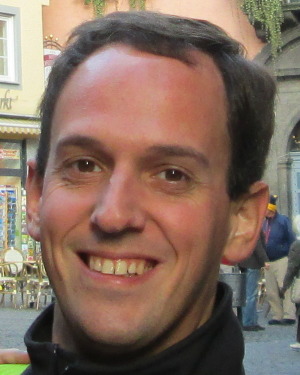
Sebastien Nicolas Gros is a Professor at the Department of Engineering Cybernetics, Norwegian University of Science and Technology (NTNU). His research focuses on safe reinforcement learning (RL) and data-driven model predictive control (MPC), with applications in energy systems, biomedical engineering, and autonomous vehicles. Institution: Norwegian University of Science and Technology Department: Engineering Cybernetics His work emphasizes AI-driven optimization for domestic energy storage, battery integration, and smart building management. Collaborations include Equinor, DNV, Kongsberg, Volvo, and CorPower Ocean. Key themes in his publications include: Control theory for renewable energy systems (wave energy converters, buildings) Biomedical applications (artificial pancreas, glucose monitoring) Transportation systems (electric vehicles, autonomous ships) Machine learning integration with physical models He supervises 6 PhD students and co-supervises projects on multi-rotor wind turbines and industrial PhD collaborations. The articles demonstrate a convergence of RL, MPC, and uncertainty quantification across energy, biomedical, and transportation domains.
Andrea Passerini is a Full Professor in the Department of Information Engineering and Computer Science at the University of Trento, Italy, where he also serves as Coordinator of the PhD programme in Information Engineering and Computer Science (Ministerial Decree 45/2013). His academic footprint spans multiple departments including Mathematics, Sociology, Cellular Biology, and Industrial Engineering, reflecting deep interdisciplinary engagement across computational sciences and life sciences. His research centers on Machine Learning and Data Mining with specialized expertise in Neuro-Symbolic AI , Probabilistic Reasoning , and Statistical Relational Learning . He pioneers methods for graph-based learning, medical AI applications, and explainable systems, with significant contributions to bioinformatics (particularly RNA-protein interactions) and healthcare diagnostics. His work bridges theoretical rigor with practical implementations in critical domains. Analysis of his 2025 publications reveals dominant trends in neuro-symbolic integration for graph data, human-AI collaboration in medical decision-making, and robust recommender systems. His research increasingly focuses on interpretable AI for high-stakes applications like surgical planning and physician support, while advancing foundational techniques in graph neural networks and concept-based modeling. As PhD programme Coordinator, Professor Passerini mentors doctoral candidates across AI and computer science disciplines. His collaborative network extends to medical researchers at CIBIO (Cellular, Computational and Integrative Biology department) and industrial partners, though specific lab structures aren't documented in available materials. Current projects emphasize medical AI validation, temporal network modeling, and LLM integration with structured reasoning frameworks.
Professor Akram Hourani is a Discipline Leader and Professor in the Department of Electrical & Electronic Engineering at RMIT University's School of Engineering. He holds roles as Program Manager for the Master of Engineering (Telecom & Network Eng.) and Deputy Director of the Centre for Opto-electronic Materials and Sensors (COMAS). Prior to academia, he was an ICT Program Manager in the telecommunications industry, leading projects in satellite and telecommunications infrastructure. His research focuses on advanced signal processing, satellite communications, radar systems (including SAR), neuromorphic hardware, and IoT. He has secured grants from ARC, CRC, government departments, and DSTG, with over 130 publications. His work aligns with UN Sustainable Development Goals 9 (Industry, Innovation & Infrastructure), 11 (Sustainable Cities), and 10 (Reduced Inequalities). Education: PhD in Electronics & Telecommunications (2016, RMIT University) Non-academic roles: R&D Engineering Program Manager at Inteltec Emirates (2006–2013) Key research themes include interference mitigation, 5G/6G networks, neuromorphic sensing, and AI-driven satellite IoT. He is listed in Stanford's top 2% scientists for career-long and single-year impact. His teaching includes courses on satellite communications and wireless sensor networks. Grants & Funding: ARC, CRC, DSTG, and government-funded projects since 2017 Collaborations: CSIRO, industry partners in telecommunications and aerospace His lab focuses on next-generation communication systems, with active projects in mega satellite networks, neuromorphic hardware, and AI for IoT sensing. He supervises PhD/Masters research in areas like satellite connectivity and machine learning applications.
Wout Joseph is a Professor in the domain of Experimental Characterization of wireless communication systems at Ghent University (Belgium), where he has been working since October 2009. He is also an IMEC Principal Investigator since 2017. His research is conducted within the wireless, acoustics, environment & expert systems (WAVES) research unit at the Department of Information Technology (INTEC). Dr. Joseph was born in Ostend, Belgium on October 21, 1977. He received his M.Sc. degree in electrical engineering from Ghent University in July 2000. From September 2000 to March 2005 he was a research assistant at the Department of Information Technology (INTEC), where his scientific work focused on electromagnetic exposure assessment around base stations for mobile communications related to health effects. This work led to his Ph.D. degree in March 2005. Professor Joseph's research expertise spans multiple domains within wireless communications and bioelectromagnetics. His primary research interests include electromagnetic field exposure assessment, in-body electromagnetic field modeling, electromagnetic medical applications, propagation for wireless communication systems, IoT, antennas and calibration. He also specializes in wireless performance analysis, industry 4.0 applications, wireless localization, and Quality of Experience metrics. His work is particularly notable for its focus on dosimetric studies in the radiofrequency range, where his research is ranked first in number of peer-reviewed studies. His research has practical applications in wireless network planning, occupational safety, and public health policy related to electromagnetic fields. His extensive publication record (over 886 publications with an h-index of 45 in ISI Web of Science and 66 in Google Scholar) demonstrates a clear trajectory from fundamental electromagnetic field measurements to applied research in industrial wireless networks and bioelectromagnetic applications. Recent work shows a strong emphasis on 5G exposure assessment across multiple European countries, millimeter-wave channel modeling, and the application of machine learning techniques to exposure assessment and wireless localization. EBEA council board member (2015-2018) EBEA board member at large (2019) Bioelectromagnetics Society board member (2022) Bioelectromagnetics Society board member (2024) 24 research awards Professor Joseph leads significant research efforts in electromagnetic field exposure assessment, with particular emphasis on developing measurement methodologies and computational models for real-world exposure scenarios. His work bridges theoretical electromagnetic modeling with practical applications in wireless communications and bioelectromagnetics. His research group within the WAVES unit is highly active in both theoretical and experimental aspects of wireless communications and bioelectromagnetics, with current projects focusing on 5G exposure assessment across Europe, millimeter-wave channel modeling for data centers and industrial environments, and the development of novel exposure assessment methodologies using advanced signal processing and machine learning techniques.
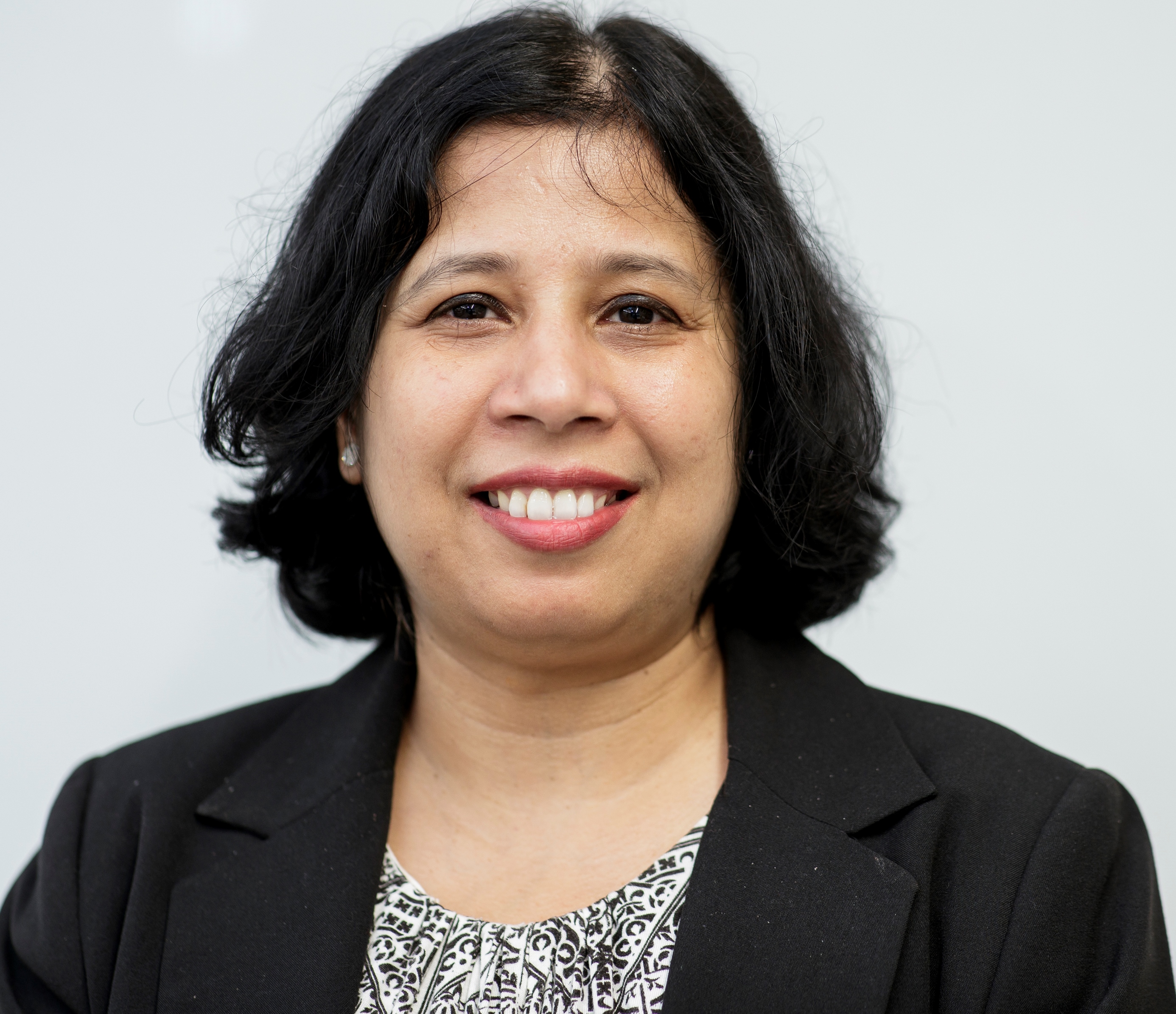
Sule Ozev is a Professor in the School of Electrical, Computer and Energy Engineering at Arizona State University (ASU). She holds a Ph.D. in Computer Science and Engineering from the University of California, San Diego (2002), and has been a faculty member since 2008. Her research focuses on analog and mixed-signal circuit testing, fault-tolerant systems, and RF circuit reliability. She has published over 100 papers and holds a U.S. patent. Notable awards include the NSF CAREER Award (2006) and the ASU Joseph Palais Distinguished Faculty Scholar Award (2023-2024). Her education includes: Ph.D., Computer Science and Engineering, UC San Diego (2002) M.S., Computer Science and Engineering, UC San Diego (1998) B.S., Electrical Engineering, Bogazici University, Turkey (1995) Research Interests: Self-test and calibration techniques for analog/RF circuits, fault simulation, and reliability enhancement. Recent work includes BIST solutions for power management units, MEMS sensor calibration, and IoT security. Publications span RF impedance measurement, low-power systems, and marine sensor applications. Awards also include best paper recognitions at IEEE VLSI Test Symposium (2022) and European Test Symposium (2019). Grants include NSF-funded projects on adaptive test strategies and collaborative research on sensor networks. Service roles include associate editor for IEEE Transactions on VLSI Systems and program chairs for major conferences.
Dr. Patrick W. C. Ho is a Lecturer in the Department of Electrical & Computer Systems Engineering (ECSE) at Monash University Malaysia School of Engineering. He holds a PhD in Electronics Engineering from the University of Nottingham Malaysia Campus (2016), with research focusing on non-volatile FPGA architectures using memristors. His academic journey includes roles as a Scholarly Teaching Fellow and unit coordinator for courses like ECE2131 Electrical Circuits and ECE4063 Large Scale Digital Design. He has industry experience with Intel Microelectronics and Altera Corporation, alongside teaching A-level Physics at Methodist College Kuala Lumpur. Education: BEng (First Class Honours) in Engineering (2009) MSc in Science (2012) PhD in Electronics Engineering (2016) Research Interests: Dr. Ho specializes in memristor-based non-volatile memory systems, VLSI design, and FPGA architectures. His work bridges hardware design with emerging materials, as seen in his Q1 journal article on memristive LUTs. Collaborations with CAD-IT expand his focus into AI, image processing, and object recognition. Recent projects include studies on memristor substrate performance (2023–2026) and UAV communication reliability (2021–2024). Teaching and Industry Engagement: As ECSE’s Industrial Training Advisor and IAP representative, he actively connects academic curricula with industry needs. His teaching spans foundational engineering courses and advanced digital design modules. Labs and Collaborations: Active in CAD-IT partnerships for student FYP co-sponsorship. Research groups focus on nanotechnology, machine learning integration in UAV systems, and memristor material analysis.
Dr. Mehrdad Moallem is a Professor and Graduate Student Supervisor in the Department of Mechatronic Systems Engineering at Simon Fraser University (SFU). He holds a Ph.D. in Electrical & Computer Engineering from Concordia University (1997), an M.Sc. from Sharif University (1988), and a B.Sc. from Shiraz University (1986). His research focuses on control systems in sustainable energy, power electronics, energy harvesting, robotics, and embedded systems. He has authored/co-authored four technical books and serves on editorial boards for journals like IEEE/ASME Transactions on Mechatronics. Dr. Moallem has held academic roles at Duke University and the University of Western Ontario. His teaching includes courses on real-time control systems, mechatronics design, and microprocessors. Research interests span embedded control systems, nonlinear dynamics, and applications in renewable energy and robotics. Recent work includes IoT-enabled lighting systems for agriculture, RF cavity control, and smart energy harvesting. He emphasizes hands-on student projects and industry collaboration, such as the Siemens Certification Program and Industry 4.0 bootcamps. Dr. Moallem's lab develops innovative solutions for energy efficiency and automation, with a focus on sustainable systems and smart manufacturing. He actively advises graduate students on advanced topics like grid-connected inverters, motor drives, and vibration control.
Kevin Vinsen is a Senior Research Fellow at the University of Western Australia, working in the Data Intensive Astronomy (DIA) Program of the International Centre for Radio Astronomy Research (ICRAR) since 2009. He is also affiliated with the UWA Defence and Security Institute and holds an ORCID ID of 0000-0001-5332-3784. His work focuses on translating ICRAR software capabilities into practical industry applications across diverse domains. His research interests include: Peta-scale systems High-performance Computing Machine Learning applications in multiple fields Wave and weather forecasting Digital Assistive Technologies Agricultural applications of ML Large language models Vinsen heads the Translation and Impact work of the DIA team and leads the development of Machine Learning systems. His current projects include ML for wave forecasting on the NW shelf, wind and temperature forecasting, honey traceability and provenance, and digital assistive technology for people with disabilities. His work contributes to UN Sustainable Development Goals related to industry, oceans, agriculture, food, disability, and defense. His research output demonstrates a strong trend toward applying machine learning techniques to solve real-world problems across astronomy, environmental science, agriculture, and disability support. This interdisciplinary approach showcases the versatility of his computational expertise across scientific and social domains. Vinsen has an h-index of 11 with 621 citations across 33 research outputs. As the ICRAR/UWA Summer Studentship Co-ordinator, he mentors emerging researchers and contributes to building research capacity. His collaborative network spans multiple institutions and research areas, reflecting his ability to bridge academic research with practical applications.
Dr. Wenjuan Yu is a Lecturer at the School of Computing and Communications (SCC), InfoLab21, Lancaster University, UK. She holds a PhD in Communication Systems from Lancaster University and has held prior roles, including Research Fellow at the 5G Innovation Centre (5GIC), University of Surrey (2018–2020), and part-time Research Officer at the University of Essex (2017–2018). She is a Fellow of the Higher Education Academy and a Senior Member of IEEE. Her research focuses on communication systems, with emphasis on radio resource management, mMTC, low-latency communications, B5G/6G, MEC, and machine learning. She actively contributes to IEEE conferences as a Technical Program Committee (TPC) member and holds editorial roles, including Executive Editor for Transactions on Emerging Telecommunications Technologies (2019–2022). Current teaching includes CNSCC141 Professionalism in Practice and CNSCC365 Advanced Networking . Dr. Yu supervises PhD students in EE/CS, particularly welcoming applicants from China via CSC scholarships. Her projects include DSI-funded initiatives on sustainable AI-driven resource allocation for 6G and Smart Multi-RAT Traffic Steering for V2X systems. She leads research groups in Security Lancaster (Networks, Systems, Distributed Systems).
Professor Rukmi Dutta is a faculty member in the School of Electrical Engineering and Telecommunications at UNSW, specializing in Energy Systems research. Her academic rank is Professor, and she is actively contributing to the academic community as the Chair of the IEEE IAS Electric Machine Committee and an editor for IEEE Transactions. Education: PhD in Electrical Engineering (UNSW, 2007), BE in Electrical Engineering (Assam Engineering College, 1996). Research focuses on Electric Machines, Drive Systems, Renewable Energy, and Power Electronics, with expertise in high-speed permanent magnet machines and fault-tolerant drives. Notable grants include ARC Discovery Projects (e.g., Lightweight Permanent Magnet Motors for Defence, High-Speed IPMSM Design) and industry partnerships like the CRC-P for HVAC systems. Major projects include grid power quality analysis, fault-tolerant control systems, and high-speed machine prototyping. Awards include IEEE PELS Distinguished Lecturer (2021), UNSW Student Choice Award (2018), and best paper recognitions at multiple conferences. Supervised prominent students including Guoyu Chu and Alireza Pouramin. Labs/Infrastructure: Involved with facilities like the Mark Wainwright Analytical Centre and collaborates with global institutions like CSIRO and University of Wisconsin-Madison. Active in advancing sustainable energy technologies through interdisciplinary research.