Paul De Koninck is a Professor in the Department of Biochemistry, Microbiology and Bioinformatics at Université Laval and Deputy Scientific Director of Fundamental Research at the CERVO Brain Research Center. His work bridges molecular neuroscience with advanced neurophotonics technologies to unravel mechanisms of synaptic plasticity and neuronal signaling. Academic Affiliation: Université Laval (Faculty of Science and Engineering) Leadership Role: Deputy Scientific Director, CERVO Brain Research Center Research focuses on synaptic plasticity , neurophotonics , and optical nanoscopy to study how neurons decode signals and remodel circuits for learning and memory . His lab develops cutting-edge tools like STED microscopy and single molecule imaging to track synaptic molecules in real time. Recent publications highlight his dual focus on neurodegenerative disease mechanisms (e.g., Huntington's disease) and microscopy innovation (machine learning-enhanced STED, fluorescence lifetime imaging). Articles span zebrafish neurobiology , mitochondrial transport regulation , and neurovascular framework development . Scientific Awards: 2018 Université Laval "Professeur étoile" Prize for teaching excellence His lab contributes to major collaborative initiatives, including the Canadian Optogenetics and Vectorology Foundry grant (2021: $4.3M from Brain Canada) and the Greenspine Lab for neurophotonics research. The team combines patch clamp electrophysiology , biochemistry , and quantum dot imaging to study synaptic signaling.
Dr. Qi Wang is a Researcher in the Department of Plant Sciences at the University of Cambridge . She specializes in computational biology and bioinformatics, providing critical support for next-generation sequencing data analysis, machine learning applications, and epigenetic studies in plant systems. Education : PhD from the University of California, Los Angeles (UCLA) Key Research Areas : Developmental biology, evolutionary biology, RNA-seq, DNA methylation, and computational tools Her work focuses on bioinformatics support for plant developmental and evolutionary studies , with expertise in data analysis and computational modeling. She collaborates extensively with the laboratory of Professor Beverley Glover and supports departmental computing clusters. Dr. Wang's recent computational contributions span diverse fields including plasmid segregation dynamics, bacterial cytoskeleton structure, and ferritin-based imaging techniques . These publications reflect her broad expertise in molecular modeling and structural biology. Scientific Awards : Humboldt Research Fellowship (2011) As a certified Carpentries Instructor , she actively trains researchers in data management, RNA-seq analysis, and whole-genome DNA methylation data processing, demonstrating her commitment to advancing computational skills in plant sciences.
Hui Ying Luk, Ph.D., CSCS*D is an Assistant Professor in the Department of Kinesiology & Sport Management at Texas Tech University . Her research focuses on hydration assessment, skeletal muscle physiology, and the impact of nutritional supplements on exercise recovery and metabolic health. Key Research Areas: Exercise-induced oxidative stress, mTOR signaling pathway, inflammation, sleep and recovery, mitochondrial dynamics, sex differences in exercise response. Recent Work: Investigates how dehydration affects muscle thickness and proteome response, the role of curcumin/ginger in mitigating muscle atrophy in diabetic models, and hydration-sleep interactions in young adults. Methodologies: Utilizes proteomics, computer vision for nuclei quantification, and WUT (Weight, Urine Color, Thirst) hydration assessment tools. Collaborations: Engages in interdisciplinary studies with molecular biology and nutritional science, particularly in translational research for muscle and joint health. The department's research labs support her work on physical and cognitive performance metrics.
Prof. Dr. Thomas Schlichthärle is a Tenure Track Assistant Professor at the Technical University of Munich (TUM) , holding the Professorship for AI-Guided Protein Design within the TUM School of Natural Sciences and Department of Bioscience . His research bridges machine learning, structural biology, and synthetic biology to develop synthetic proteins that modulate cellular signaling pathways. Education: B.Sc. in Molecular Medicine, University of Tübingen M.Sc. in Molecular Bioengineering, TU Dresden Research at Wyss Institute (Boston) and Max Planck Institute of Biochemistry (Munich) Research Focus: AI-assisted protein design for controlling cellular decision-making processes, with applications in biomedicine and synthetic biology. His lab develops novel protein design methods validated in cell-based systems, centered on creating synthetic proteins that can detect, modulate, or reprogram signaling pathways through oligomeric assemblies. Scientific Awards: Wübben Foundation Fellow (2025) EMBO Postdoctoral Fellowship (2021) Roland Ernst Scholarship (2014) Germany Scholarship (2013) Ferry Porsche Prize (2007) Collaborations & Grants: Collaborated with Prof. David Baker's lab at the University of Washington and participated in high-impact interdisciplinary projects involving DNA-PAINT microscopy and quantitative protein imaging. His work has been supported by competitive fellowships and institutional grants.
Alejo J Nevado-Holgado is an Associate Professor at the University of Oxford, holding joint appointments in the Department of Psychiatry and the Big Data Institute. He is a key member of Dementia Research Oxford and co-heads the Computational and Molecular Neuroscience laboratory alongside Professor Noel Buckley. His interdisciplinary research team comprises approximately 20 scientists specializing in AI, biochemistry, and bioinformatics, working at the intersection of computational methods and neurological health. Dr. Nevado-Holgado completed his PhD in the University of Bristol, Department of Computer Science, under the supervision of Dr. Rafal Bogacz and Dr. John Terry. His doctoral research focused on mathematical modeling, signal analysis, and machine learning applied to the study of the basal ganglia and Parkinson's disease. Following experimental training at Cambridge, he shifted his focus to applying machine learning and bioinformatics to neurodegeneration research, particularly investigating biomarkers and metabolic networks in Alzheimer's and Parkinson's diseases. Dr. Nevado-Holgado's research program centers on leveraging artificial intelligence and bioinformatics to transform mental health care and drug discovery. His laboratory develops and applies state-of-the-art iPSC, AI, and bioinformatic techniques to better understand neurological disorders. The team's work spans multiple domains including: Neural networks applied to genetics, transcriptomics, proteomics, and iPSC cell microscopy Analysis of Electronic Health Records using natural language processing Integration of biotech laboratory data with real-world clinical evidence Development of personalized medicine approaches and drug repurposing strategies High-performance computing solutions for large-scale biomedical data analysis His recent publication record demonstrates a strong focus on applying AI to mental health diagnostics, neurodegenerative disease biomarkers, and multi-omics data integration. Notable trends include the increasing application of large language models to clinical text analysis, the development of proteomic aging clocks, and the integration of environmental and genetic factors in understanding aging and mortality. His work consistently bridges computational innovation with clinical relevance, seeking to detect neurological disorders in their prodromal stages when interventions could be most effective. Dr. Nevado-Holgado leads or participates in multiple significant research initiatives: Virtual Brain Cloud (EU H2020): €1.5 million European consortium investigating computational simulations for Alzheimer's diagnosis Microbiome in depression (NIH U19): $27 million consortium studying microbiome's role in depression Metabolomics in dementia (MOVE-AD): Consortium investigating metabolomics of dementia Industry projects: £900,000 in funding for applying neural networks to genomics data Blood-brain axis of Alzheimer's disease (AMP-AD): $330,000 project investigating protein levels in Alzheimer's His laboratory team includes lead scientists Laura Winchester (bioinformatics) and Andrey Kormilitzin (AI), along with researchers specializing in genetics, AI microscopy, AI NLP, AI imaging, and iPSC models. The lab actively recruits additional researchers in AI NLP and bioinformatics, reflecting the growing scope of their computational neuroscience work.
Valentina Greco is a Professor at Yale University, with appointments in the Departments of Genetics, Cell Biology, and Dermatology. She is a member of the Yale Stem Cell Center and Yale Cancer Center, and her research focuses on tissue regeneration, stem cell dynamics, and oncogenic mutations using the skin as a model system. Her lab develops novel in vivo imaging techniques to study how stem cells maintain tissue homeostasis amidst cellular turnover, injury, and mutations. Education: BS in Molecular Biology (University of Palermo, 1996), PhD in Cell & Molecular Biology (Heidelberg University, 2003), Post-doctoral Associate (Rockefeller University, 2009) Dr. Greco’s research explores the interplay between stem cell niches, tissue repair, and cancer initiation. Her work has uncovered mechanisms like positional fate determination in hair follicles, phagocytic clearance of stem cells, and metabolic adaptations to oncogenic mutations. Recent studies highlight her innovative use of live mouse imaging and machine learning to decode complex cellular behaviors. Her publications reveal trends in stem cell niche regulation , ERK signaling in oncogenesis , calcium dynamics during repair , and interdisciplinary science-art frameworks . She integrates molecular biology, computational modeling, and physiological imaging to address questions across developmental biology, cancer, and regenerative medicine. Scientific Awards: 2025 American Academy of Arts & Sciences 2021 ISSCR Momentum Award 2019 NIH Director’s Pioneer Award 2018 Carolyn Slayman Endowed Professorship 2022 FASEB Mid-Career Investigator 2021 Connecticut Academy of Science and Engineering (CASE) Member Dr. Greco prioritizes mentoring and inclusivity, fostering a collaborative lab environment that emphasizes trainee development and accessibility in science. She is also a dedicated public servant, serving as Vice President of the ISSCR, and her work has been recognized for its impact on understanding tissue homeostasis and tumor suppression mechanisms.
Gordon Peterson is an Assistant Professor of Chemistry at Haverford University . His research integrates solid-state chemistry , materials science , and machine learning to investigate crystalline structures and properties of inorganic materials. Education: B.A. in Chemistry from Cornell University, Ph.D. in Materials Chemistry from University of Wisconsin-Madison Postdoctoral Training: McElrath Fellow at University of Houston, Maria Goeppert Mayer Fellow at Argonne National Lab Research focuses on: Disordered Materials: Studying local ordering effects on electrical/thermal transport AI-Guided Discovery: Exploring machine learning applications for materials prediction Novel Synthesis: Developing flux-based techniques for unusual materials Quantum Materials: Investigating electronic structures in exotic compounds His lab utilizes synchrotron facilities like the Advanced Photon Source at Argonne National Laboratory for crystal characterization.
Jonathan Dong is a Researcher at the École Polytechnique Fédérale de Lausanne (EPFL) within the School of Engineering. He works at the Biomedical Imaging Laboratory (LIB), focusing on advanced imaging techniques and computational models. PhD Students: Hu Zhiyuan, Liu Yan His research spans biomedical imaging, computational optics, and machine learning applications in imaging inverse problems. Recent work emphasizes phase retrieval, optical reservoir computing, and quantum information in microscopy. Key article trends show expertise in MRI classification , optical tomography , deep learning for imaging, and scattering media analysis . Collaborations include technical development in optoacoustics and super-resolution microscopy. Contact: jonathan.dong@epfl.ch | Office: BM 4141, EPFL, Station 17, Lausanne
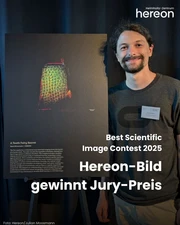
Sami Wirtensohn is a researcher in the Biomedical Imaging Physics Group at the Department of Physics, Technical University of Munich (School of Natural Sciences). His work focuses on advanced X-ray imaging techniques, including nanoscale dark-field imaging, grating-based phase-contrast tomography, and machine learning-driven denoising methods for biomedical applications. Research Focus X-ray nanotomography at synchrotron sources ML-based denoising techniques Grating-based phase-contrast and dark-field imaging Medical imaging applications in mammography and breast CT Scientific Achievements Wirtensohn has published multiple peer-reviewed articles in high-impact journals like Scientific Reports and Optica. He received recognition in the Best Scientific Image Contest 2025 (8th place) for his work titled 'a Tooth Fairy Secret.' Participated in 7+ international conferences (2022–2025) with oral/poster presentations Collaborated on research projects involving tissue freezing monitoring and low-dose breast imaging
János Török is an Associate Professor at the Department of Theoretical Physics, Budapest University of Technology and Economics, affiliated with the Morphodynamics group. His research spans granular materials, social network modeling, and morphodynamics of pebbles. Granular materials: Quasi-static shearing, shear band formation, particle shape effects, hopper flow Social science: Conflicts on Wikipedia, consensus modeling, social network dynamics Morphodynamics: Collective abrasion, fragmentation of pebbles His recent publications focus on computational modeling of granular physics and social dynamics, with applications in machine learning for malaria detection. Articles highlight interdisciplinary approaches to phase transitions, network analysis, and material deformation. Shear zones in granular materials Deep learning for social network parameters Malaria detection software He is involved in open-source projects (WWM, Mozi) and teaches courses in mathematical methods, mechanics, and scientific programming.
Katharina Breininger serves as Professor of Pattern Recognition at the University of Würzburg, leading the Pattern Recognition group within the Center for Artificial Intelligence and Data Science (CAIDAS). Based at Campus Hubland Nord (John-Skilton-Str. 4a, room 04.B.03), she maintains active research operations with office hours by appointment and direct contact via phone (+49 931 31-81914) and email. Her research pioneers robust machine learning methodologies for biomedical applications, emphasizing representation learning, domain shift resilience, and human-AI collaborative systems. She develops open-source tools for semi-automatic annotation workflows and applies these innovations to intraoperative imaging, multimodal medical analysis, and computational pathology solutions. Current research initiatives include multiple funded doctoral and postdoctoral positions (100% TV-L E13) in brain mechanics and clinical research, demonstrating active grant support. Her work bridges computer science with clinical medicine through interdisciplinary partnerships, advancing AI deployment in real-world healthcare settings.
Paolo Bettotti is an Associate Professor in the Department of Physics at the University of Trento. His research spans biomaterials, photonics, and nanotechnology, with a focus on practical applications in sustainable materials and optical communications. Education: Industrial Engineer (PS3) (1995) MSc in Material Science at the University of Padua ("cum laude", 2001) PhD in Physics at the University of Trento (2005) His research integrates nanotechnology with photonics, emphasizing nanocellulose-based materials for environmental applications (e.g., emulsions, flame retardants) and optical neural networks for high-speed communication systems. Recent work demonstrates innovations in green electronics and biocompatible devices. Publications from 2022-2025 highlight two dominant trends: (1) Advanced photonic systems for optical signal processing using neural networks and silicon microresonators, and (2) Sustainable nanocellulose technologies for materials science, including hydrophobic modifications, emulsion stabilization, and waste valorization. No scientific awards, student supervisions, or grant details are mentioned in available sources.
Dr. Leopold Parts is a Group Leader at the Wellcome Sanger Institute, where he leads the Parts Group within the Human Genetics Programme and the Generative and Synthetic Genomics Programme. His research focuses on understanding human DNA function through genome engineering approaches, combining experimental and computational methods to study how genetic variation affects cellular traits. Parts received his undergraduate education at MIT, double majoring in Computer Science and Mathematics, before earning his PhD in Molecular Biology from the University of Cambridge in 2011 under Richard Durbin. His doctoral work on sources of variation in gene expression earned him the Grand Prize of life sciences PhDs in Estonia. He then completed postdoctoral training as a Canadian Institute for Advanced Research Global Scholar at the University of Toronto with Brenda Andrews and Charles Boone, followed by a Marie Curie Fellowship at EMBL Heidelberg and Stanford University with Lars Steinmetz. His research program integrates genome engineering, high-throughput screening, and computational modeling to understand how DNA sequence variation affects cellular phenotypes. The Parts Group develops tools for genetic perturbations using CRISPR/Cas, prime editing, and recombinase systems to create cell lines for randomization, screening, and evaluation. They combine these experimental approaches with probabilistic modeling to analyze large-scale genetic screens and their outputs. The analysis of Parts' recent publications reveals a strong focus on genome engineering technologies, particularly CRISPR-based approaches. His work spans multiple applications including predicting editing outcomes, developing tools for structural variant engineering, and applying these techniques to understand human disease mechanisms, particularly in cancer. His research bridges computational biology and experimental genomics, with increasing emphasis on single-cell technologies and clinical applications. Grand Prize of life sciences PhDs in Estonia Parts leads a diverse research team including postdoctoral fellows, advanced research assistants, and PhD students, with current members including Dr. Alistair Dunham, Mr. Gareth Girling, Elin Madli Peets, and Isabelle Zane. His group collaborates extensively with other research teams at the Sanger Institute, including the Cancer Dependency Map, Cellular Generation, and Cellular Screening groups. The Parts Group is part of the broader Human Genetics Programme, which aims to understand the genetic causes and biological mechanisms of disease susceptibility. The Parts Group maintains strong collaborations with external partners including the Open Targets consortium and the Cancer Dependency Map initiative. Their work combines laboratory-based genome engineering with computational analysis to address fundamental questions about human genome function.
Dr. Orkun Furat is a Lecturer at the Institute of Stochastics, University of Ulm, Germany, where he conducts research at the intersection of machine learning, stochastic modeling, and image analysis for materials science applications. His work focuses on developing advanced computational methods to characterize and reconstruct 3D microstructures from 2D image data, with significant contributions to battery materials and particle systems. His primary research interests include generative adversarial networks (GANs) and spatial stochastic models for tomographic image analysis of functional materials. He has pioneered techniques for super-resolving microscopy images, quantifying electrode degradation in batteries, and modeling particle morphology/separation processes in mineral processing. His interdisciplinary approach bridges statistics, computer science, and materials engineering through rigorous mathematical frameworks. Recent publications (2024-2025) reveal a concentrated focus on lithium-ion and all-solid-state battery technologies, particularly analyzing how operating conditions (charge rate, temperature, cycling) induce electrode degradation. Simultaneously, his particle systems research employs multidimensional stochastic models to optimize mineral beneficiation processes like flotation, using copula-based approaches for particle property distributions. Dr. Furat actively supervises seminar students in generative machine learning and spatial stochastic modeling while teaching core courses including Point Processes and Advanced Statistics. His research impact is evidenced by numerous invited talks at premier venues like the Dagstuhl Seminar (2025) and European Congress for Stereology (2025), where he presents as a plenary speaker on AI-driven microstructure reconstruction. Collaborating with interdisciplinary teams across materials science and engineering, his work on digital twins for battery electrodes and virtual materials testing has been featured in University of Ulm press reports (2024) highlighting applications in efficient battery recycling and sustainable material design. Current projects integrate generative AI with stochastic geometry to solve industrial-scale challenges in energy storage and mineral processing.
Tuomas Eerola is an Associate Professor in Computational Engineering at Lappeenranta-Lahti University of Technology's School of Engineering Sciences. Previously, he served as a Postdoctoral Researcher at the same institution's Machine Vision and Pattern Recognition Laboratory from 2010 to 2020. He also holds the Title of Docent (Adjunct Professor) from 2015 to present. Dr. Eerola received both his M.Sc. and Ph.D. degrees in Information Technology from Lappeenranta University of Technology in 2006 and 2010, respectively. His research spans computer vision, machine vision, pattern recognition, and image processing, with particular focus on wildlife monitoring, plankton recognition, and industrial applications. His publication record shows consistent research output with over 50 publications, primarily focusing on animal re-identification (particularly ringed seals), plankton recognition systems, and wood processing applications. Recent work demonstrates increasing focus on deep learning approaches, multimodal systems, and practical applications in both ecological monitoring and industrial settings. Dr. Eerola actively serves as a peer reviewer for numerous prestigious journals including Ecological Informatics, Expert Systems with Applications, GigaScience, International Journal of Computer Vision, Mammalian Biology, and Measurement. His research has established him as a specialist in applying computer vision techniques to ecological monitoring problems, particularly in developing systems for identifying individual animals based on their natural patterns, which has significant implications for wildlife conservation efforts.