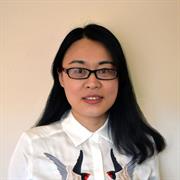
Rebecca Yang is a Visiting Professor at RMIT University's School of Property, Construction and Project Management, specializing in building, construction, and distributed renewable energy research. She integrates theoretical knowledge with cutting-edge technologies to advance sustainable urban development. Her research focuses on solar energy applications in buildings, construction innovation, and international energy policy frameworks through her leadership roles in the International Energy Agency's Photovoltaic Power Systems Programme (PVPS) Task 15 and Solar Heating and Cooling Programme (SHC) Task 66. She established RMIT's Solar Energy Application Lab and has 8 years of BIPV expertise. Notable achievements include: Australian representative in international BIPV standardization (IEC 63092) 2019 Facilitator Prize for BIPV Tool development She supervises research projects related to: Solar building envelope optimization Machine learning for energy systems Fire safety in BIPV installations Blockchain-enabled energy trading Circular economy for PV waste
Eugene Y. Vasserman is an Associate Professor in the Department of Computer Science at Kansas State University's College of Engineering, where he also serves as Director of the Center for Cybersecurity and Trustworthy Systems. His office is located in 2171 Engineering Hall, and he holds office hours on Tuesdays from 2:30 pm to 4:00 pm and Wednesdays from 11:30 am to 1:00 pm during the Fall 2025 semester. Dr. Vasserman's research spans multiple critical areas of cybersecurity including network and distributed system security, privacy and anonymity, censorship resistance, operating system security, medical and IoT security, usable security, and applied cryptography. His work bridges theoretical security concepts with practical implementations, addressing real-world challenges in diverse domains from medical systems to blockchain technologies. His recent publications reveal a research trajectory that has evolved from foundational network security work to increasingly interdisciplinary research intersecting with artificial intelligence, medical systems, and cybersecurity education. The 15 most recent publications demonstrate his ongoing commitment to both theoretical advances and practical security solutions across multiple domains. Outstanding short paper award for 'Hypersparse Traffic Matrix Construction using GraphBLAS on a DPU' at IEEE HPEC 2023 Best graduate student poster award for 'Empowering pre-service teachers to utilize programming in the classroom' at ASEE Midwest Conference 2013 Dr. Vasserman has mentored numerous graduate students through the Systems and Network Security (SyNeSec) Lab, with alumni now working at organizations including Paycom, Corelight, Sandia National Labs, Microsoft, and Cerner. He teaches multiple cybersecurity courses each semester including CIS 525: Introduction to Network Programming, CIS 755: Systems Security, and CIS 351: Cyber Defense Basics, demonstrating his long-term commitment to cybersecurity education since at least 2010. As Director of the Center for Cybersecurity and Trustworthy Systems, he leads initiatives that address critical security challenges across multiple domains, fostering collaboration between researchers, students, and industry partners to develop trustworthy systems for the future.
Lisa Hultman serves as a Professor at Uppsala University's Department of Peace and Conflict Research, where she leads groundbreaking research on peacekeeping operations, civilian protection, and conflict dynamics. Her work bridges academic rigor with practical policy implications for international peace and security institutions. Professor Hultman's research focuses on the empirical analysis of UN peacekeeping effectiveness, particularly examining how different mandate configurations impact violence against civilians and local conflict trajectories. Her work demonstrates sophisticated methodological approaches, frequently utilizing geocoded data and large-N quantitative analyses to assess peacekeeping outcomes at subnational levels. Key contributions include developing innovative datasets like the Geocoded Peacekeeping Operations (Geo-PKO) and examining the economic dimensions of peacekeeping deployments on local development. Her publication record reveals consistent engagement with critical questions in peace and conflict studies, with recent work exploring mandate complexity in UN operations, the relationship between peacekeeping and civilian protection norms, and forecasting models for political violence. Her research often involves extensive collaboration with leading scholars in the field, resulting in publications in top political science journals including the American Political Science Review , American Journal of Political Science , and Journal of Peace Research . Professor Hultman's influential 2019 book "Peacekeeping in the Midst of War" (co-authored with Jacob Kathman and Megan Shannon) synthesized years of research on peacekeeping effectiveness. Her work has been widely cited and referenced in both academic literature and policy discussions, demonstrating significant real-world impact on understanding how international interventions can effectively protect civilians and reduce violence in conflict zones.
Eva Kassens-Noor is an Adjunct Professor of Transportation, Urban and Regional Planning in the School of Planning, Design, and Construction at Michigan State University, holding a joint appointment with the MSU Global Urban Studies Program (GUSP). She also maintains adjunct appointments in the MSU Departments of Civil and Environmental Engineering as well as Geography, Environment and Spatial Sciences. Her educational background includes: Diplom-Ingenieur (equivalent to a BA and one year MS) in Business Engineering from Universität Karlsruhe (TH), Germany Master of Science in Transportation from Massachusetts Institute of Technology PhD from Department of Urban Studies and Planning at Massachusetts Institute of Technology Dr. Kassens-Noor's research centers on how people perceive, cope with, and understand extreme events. Her work spans from examining societal transitions toward living with artificial intelligence and autonomous technologies to investigating how transportation systems enable resilience during disasters, pandemics, and hazards. She employs diverse methodologies including grounded theory, interviews, ethnography, online and mail surveys, big data analysis, and content analysis. Her research aims to create livable communities within an autonomous, sustainable, and resilient society where citizens maintain agency over technological impacts. Her publication portfolio reveals a consistent focus on emerging transportation challenges, with emphasis on autonomous vehicles, pandemic resilience, sociomobility, and mega-event planning. These works demonstrate interdisciplinary approaches connecting urban planning, transportation engineering, and social sciences to address complex societal transitions. Notable recognitions include: 2013-2014 MSU Lilly Teaching Fellow 2014 AT&T Faculty Award Competition in Instructional Technology (best blended course) 2021 AT&T Faculty Award for 'Experiencing Autonomous Futures' Dr. Kassens-Noor has secured significant research funding from the National Science Foundation and Michigan Department of Transportation, supporting projects on autonomous vehicles and public transportation systems. She pioneered the 'flipping, moving and tweeting classroom' teaching methodology that emphasizes experiential learning with emerging technologies. Her work extends to developing Massive Open Online Courses (MOOCs) on mega-event planning, including those focused on the Sochi Winter Games and FIFA World Cup. She actively contributes to several research initiatives including Mega Event Planning, Autonomous Futures, and MSU Mobility, demonstrating commitment to bridging academic research with practical applications in urban planning and transportation systems.
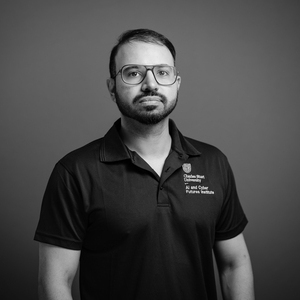
Dr. Ibrar Yaqoob serves as a Senior Research Fellow and Program Lead for the Smart and Resilient Supply Chain strand at the Artificial Intelligence and Cyber Futures Institute (AICF) at Charles Sturt University. He leads a research team comprising PhD students and postdoctoral fellows, and previously held research positions at Khalifa University in the UAE and Kyung Hee University in South Korea. Dr. Yaqoob holds a PhD in Computer Science from Universiti Malaya (2017) and has been a Visiting Academic at the University of Cambridge. His research focuses on blockchain, NFTs, and metaverse applications for healthcare, supply chain and logistics, wireless networks, IoT, and smart cities, with additional expertise in mobile edge-cloud computing and big data. Dr. Yaqoob has published over 100 research articles with more than 24,000 citations and an h-index of 58, with 98.9% of his publications appearing in Q1 journals. His recent publications demonstrate a strong trend toward practical blockchain implementations across diverse sectors including healthcare data management, sustainable supply chains, and smart city infrastructure. His work frequently combines blockchain with emerging technologies like NFTs, metaverse applications, and large language models to solve complex real-world problems in supply chain transparency, medical data security, and sustainable development. Ranked in the world's top 0.1% of researchers for three consecutive years (2023-2021) as a Highly Cited Researcher Listed among the World's top 2% scientists for five consecutive years (2020-2024) 2024 IEEE Consumer Electronics Magazine Best Paper Award (1st Place) 2024 Vice Chancellor's Researcher of the Year Commendation 2024 AICF Research Excellence Award 13 highly cited papers (top 1%) and 21 most downloaded articles Dr. Yaqoob serves as Chief Investigator on multiple significant research projects including the AgriTwins project (AUD $2.38 million), Trustworthy Operations and Supply Chain Management project (AUD $10,000), and Decentralized AI Juries project (AUD $13,875). He actively mentors PhD students and postdoctoral researchers while serving on editorial boards for prestigious journals including IEEE Network Magazine, Future Generation Computer Systems, and IEEE Access. His research team at the AICF Institute focuses on bridging emerging technologies with practical applications to address real-world challenges in supply chain resilience and sustainability.
Laura Brown is an Associate Professor of Computer Science and serves as the Associate Dean of Data Science Initiatives in the College of Computing at Michigan Technological University. She also directs the Data Science M.S. and B.S. programs. Her educational background includes: PhD in Biomedical Informatics from Vanderbilt University MS in Biomedical Informatics from Vanderbilt University MSE in Electrical Engineering and Computer Science from the University of Michigan BS in Engineering from Swarthmore College Laura's research centers on Artificial Intelligence , Machine Learning , and Data Science , with applications spanning energy systems (microgrids and power systems), health informatics , and computer systems . Her work bridges theoretical advancements with real-world problem solving, particularly in optimizing electrical grids and healthcare through data-driven approaches. Her recent publications (2017-2019) demonstrate a strong focus on applying machine learning to energy forecasting and computer architecture. Key trends include solar irradiance prediction, load forecasting for power systems, and memory management in data centers using neural networks and dynamic policies. Laura actively mentors students as co-advisor for Women in Computing Science (WiCS) and organizes Carpentries workshops, ICPC programming competitions, and Google research workshops. Her grant portfolio includes significant funding from NSF ($1.6M+), Google ($53K), and DoD (~$1M) for projects in smart grid technologies, microgrid management, and computer science education. She collaborates through the Institute of Computing and Cybersystems (ICC), Ecosystem Science Center (ESC), and Center for Agile Interconnected Microgrids (AIM) on interdisciplinary research initiatives.
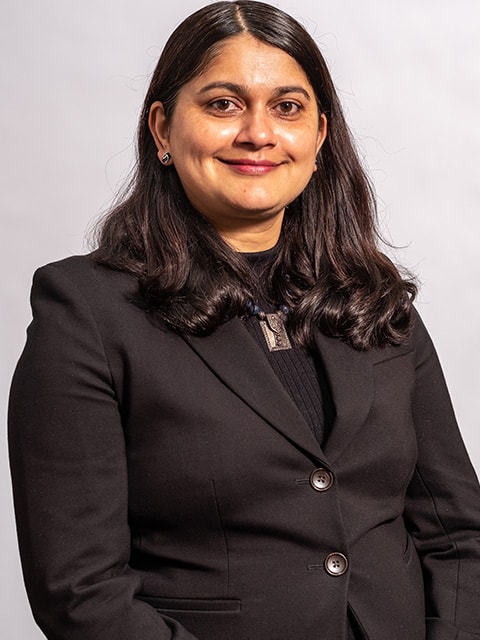
Dr. Kirti Ruikar is a Reader in Digital Construction with 19 years of experience, specializing in applying digital technologies like BIM and AI to enhance safety, resilience, and performance in construction and infrastructure projects. She holds a BArch, MSc, and EngD, and is a Fellow of the Higher Education Academy (FHEA). As a University Special Envoy for India, she bridges international collaborations. Her research focuses on BIM integration for site safety and sustainability, Data-driven solutions for infrastructure projects, AI applications in construction safety, Public-Private Partnerships in developing countries, Enterprise systems optimization, and policy interventions in roadworks management. Notable projects include Data Lakes for Indian highways (collaboration with IIT Delhi), BIM-based safety frameworks for staircases and ladders, Social network analysis for knowledge management, and FCDO-funded automated construction safety systems. Her work spans over 150 publications, including 3 books and 50 journal papers, with a strong emphasis on Q1 journals. She has secured £1m+ in funding from Innovate UK, EPSRC, and international bodies. Collaborations include Asite, Arup, and Derby City Council. Her research outputs highlight trends in Industry 4.0 adoption, AI-driven safety systems, and leveraging data lakes for infrastructure resilience. She advocates for ethical innovation and cross-disciplinary collaboration to address global construction challenges.
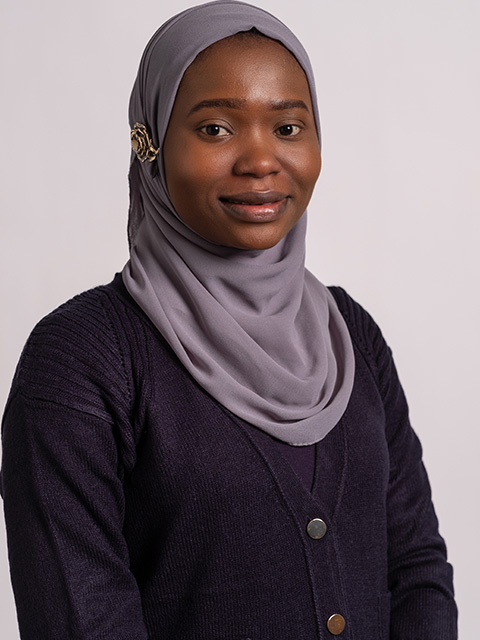
Kudirat Ayinla is a Lecturer in Construction Management and Programme Lead for the BSc (Hons) in Commercial Management and Quantity Surveying at the University of Loughborough. Her research focuses on enhancing construction industry efficiency through digital technologies like AI, BIM, and Digital Twins, with specific emphasis on offsite construction methods and sustainability. Education: BEng, MSc, PhD, PGCert Professional Affiliations: MCIOB, FHEA Key research areas include knowledge-based modeling, AI applications in construction, and circular economy integration in waste management. She leads the British Council UK grant project on Digital Manufacturing and collaborates with the Council for the Heads of the Built Environment on apprenticeship studies. Her recent articles explore TDABC models for offsite manufacturing, AI impacts on costing practices, and BREEAM perceptions in the industry. She actively supervises PhD candidates researching ontology applications and modern construction methods.
Professor Khaled Sobhan is affiliated with the Department of Civil, Environmental and Geomatics Engineering at Florida Atlantic University . His research focuses on geotechnical engineering, pavement design, and sustainable materials. Education: Ph.D. from Northwestern University His work includes studies on soil stabilization, geosynthetic reinforcement, and fatigue analysis of recycled construction materials. Recent projects involve InSAR-based subsidence monitoring and seismic stability of retaining walls. Key trends in his publications (2025–2020) include applications of artificial neural networks in foundation analysis, geosynthetic contributions to pavement durability, and marine corrosion resistance of geopolymer concrete. His lab specializes in geotechnical testing for coastal infrastructure resilience.
Imad Al-Qadi is the Grainger Distinguished Chair in Engineering and Director of the Illinois Center for Transportation (ICT) at the University of Illinois at Urbana-Champaign. He holds a Ph.D. in Civil Engineering from Penn State University and has held academic positions at Virginia Tech and Penn State. His research focuses on sustainable transportation infrastructure, pavement mechanics, and autonomous vehicles. Al-Qadi is a Fellow of the American Society of Civil Engineers (ASCE) and has served as Editor-in-Chief of the International Journal of Pavement Engineering . Education: B.S. (1984) Yarmouk University, M.Eng. (1986) and Ph.D. (1990) Penn State University. Affiliations: Past president of ASCE's Transportation and Development Institute, founder of the Academy of Pavement Science and Engineering. Key Projects: Illinois Autonomous and Connected Track (I-ACT), Illinois Center for Transportation, Smart Road research. His research emphasizes pavement sustainability, recycling optimization, and tire-pavement interaction. He has authored over 1,000 publications and led 180+ research projects funded by federal agencies and industry partners. Recent work includes energy harvesting from pavements and assessing impacts of electric vehicles on infrastructure. Al-Qadi has received prestigious awards including the NSF Young Investigator Award (1994) and TRB Roy W. Crum Distinguished Service Award (2023). He chairs international conferences and serves on technical committees, driving advancements in pavement science and transportation innovation.
Joshua Hunte is a Visiting Professor at Queen Mary University of London's School of Electronic Engineering and Computer Science. His research focuses on applying Bayesian network methodologies to product safety, risk assessment, and medical device risk management. He specializes in causal modeling for safety protocols and consumer risk communication. Key research interests include developing causal Bayesian network frameworks for evaluating risks in smart technologies, medical devices, and consumer products. His work bridges artificial intelligence with practical safety standards, aiming to enhance decision-making processes in risk management. Recent publications highlight advancements in hybrid Bayesian networks for medical device safety and methodologies for building causal idioms in product safety analysis. His research emphasizes both theoretical causal modeling and real-world applications in industry and healthcare. No academic awards or grants are explicitly listed in the provided materials. He contributes to the School's research initiatives in electronic engineering and computer science, particularly in risk-related computational methods.
Lise Getoor is a Professor in the Department of Computer Science at the University of California, Santa Cruz, within the Baskin School of Engineering. She previously held positions at the University of Maryland, College Park and has established herself as a leading researcher in statistical relational learning and neuro-symbolic artificial intelligence. Her research focuses on developing principled approaches to reasoning and learning with rich, relational data. She has made significant contributions to probabilistic soft logic, statistical relational learning, knowledge graph construction, and the integration of symbolic and neural approaches to AI. Her work bridges theoretical foundations with practical applications in areas including social network analysis, sustainable recommendations, cyberbullying detection, and fair machine learning systems. Analysis of her recent publications reveals a strong trend toward neuro-symbolic integration, with increasing focus on combining neural networks with logical reasoning frameworks. Her research demonstrates consistent innovation in developing scalable algorithms for structured prediction across diverse application domains while addressing critical issues of fairness and interpretability in AI systems. Professor Getoor has advised numerous PhD students who have become active contributors to the field, including Connor Pryor, Charles Dickens, Eriq Augustine, and Varun Embar. Her research has been supported by multiple grants from major funding agencies, though specific details aren't provided in the current data. She leads research in the Statistical Relational AI (StaRAI) Lab at UC Santa Cruz, where her team develops frameworks that combine logical reasoning with probabilistic modeling to address complex real-world problems requiring both structured knowledge and statistical learning.
Hamed Nabizadeh Rafsanjani, Ph.D., P.E., ENV SP is a Lecturer at the University of Georgia (UGA) College of Engineering since 2018. He holds a Ph.D. and master’s degrees in Construction Engineering and Management from the University of Nebraska-Lincoln (UNL). Prior to UGA, he served as an assistant professor and visiting lecturer at various universities, earning accolades such as the Best Teacher Award and Best Researcher Award. His research focuses on IoT, AI, and Digital Twin technologies applied to Architecture, Engineering, and Construction (AEC) industries. As director of iSC-LAB, he develops IoT-based platforms to analyze building occupants’ energy-use behaviors and improve learning environments. His research interests span smart building systems, non-intrusive energy monitoring, and occupant behavior analysis. Key projects include a global occupant behavior database and an IoT-based smartphone energy assistant (iSEA). He has secured grants from agencies like the National Science Foundation (NSF), contributing to studies on energy efficiency, construction project management, and sustainability in built environments. Rafsanjani’s publications (2018–2023) emphasize AI-driven solutions for AEC, IoT applications in energy management, and adaptive learning systems. His work bridges technology and human behavior to optimize building performance and educational outcomes. Awards reflect his dual excellence in pedagogy and research, with ongoing contributions to the Sustainable Human-Building Ecosystems field.
Glenn Shafer is a University Professor and Board of Governors Professor at Rutgers University, teaching in the Department of Accounting and Information Systems at the Rutgers Business School. He has been a university educator for 50 years, renowned for pioneering work on the Dempster-Shafer theory of evidence and co-developing the game-theoretic framework for probability. His research spans probability, statistics, causality, and finance, with notable contributions to foundational theories and applications in artificial intelligence and engineering. Education: A.B. in Mathematics (Princeton University, 1968), Ph.D. in Statistics (Princeton University, 1973). Roles: Former Dean of Rutgers Business School (2011–2014), Guggenheim Fellow, Fulbright Scholar, and recipient of the Gorenstein Award for Research and Service. Research Interests: Glenn's work focuses on foundational probability theories, including the Dempster-Shafer theory and game-theoretic probability. He has contributed to the history of probability and statistics, publishing extensively and translating historical works. His recent focus includes the game-theoretic foundations for finance and the historical analysis of martingales. His research bridges philosophical, mathematical, and applied domains, influencing fields like artificial intelligence, finance, and engineering. Awards and Recognition: Honorary doctorate from the University of Economics, Prague (2009); Kampé de Feriet Award (2018); Sarton Medal (2018); Special issue of International Journal of Approximate Reasoning (2022). Grants and Service: Principal investigator on multiple NSF grants, editorial roles at journals like Statistical Science , and service on academic committees at Rutgers. His work has been supported by organizations including the National Science Foundation and the National Endowment for the Humanities.
Dr. Yiqun Pan is a Special Faculty at Carnegie Mellon University's Center for Building Performance and Diagnostics, and a Visiting Professor at Lawrence Berkeley National Laboratory. With 25+ years of experience, she specializes in building performance simulation, energy efficiency, and sustainable design. Her work integrates machine learning and big data to enhance building performance and occupant well-being. Research focuses include low-carbon building technologies, energy flexibility optimization, and carbon reduction strategies. She has led projects funded by the China National Science Foundation and U.S. Energy Foundation. Dr. Pan has authored six books and over 150 publications, including 42 English journal papers. Teaching includes courses on LEED certification, green infrastructure, HVAC systems for low-carbon buildings, and building energy systems integration. Awards include IBPSA Fellow and ASHRAE Membership. She chaired the 2023 Building Simulation Conference, demonstrating global leadership in building science. Her contributions span tool development (e.g., DeST 3.0 simulation platform) and interdisciplinary collaborations. Current work bridges academic research with practical applications, advancing sustainable urban development and zero-carbon building practices.