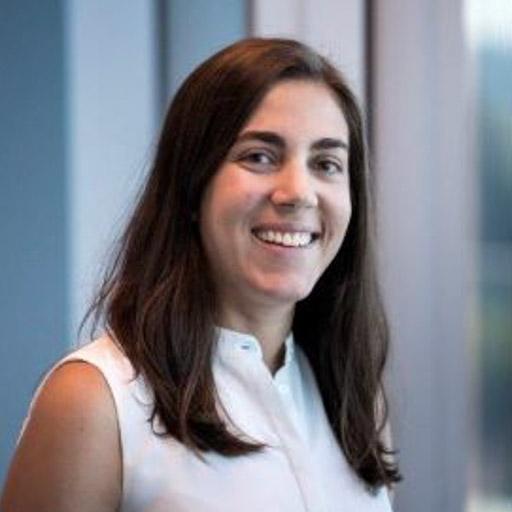
Rebecca Dziedzic is an Assistant Professor in the Department of Building, Civil, and Environmental Engineering at Concordia University. Her research focuses on asset management, water system sustainability, and infrastructure resilience. She holds a PhD in Civil and Environmental Engineering from the University of Toronto. Dr. Dziedzic's work integrates machine learning, data science, and policy analysis to address challenges in urban infrastructure systems. Her research explores topics such as water distribution network optimization, climate change adaptation in infrastructure, and circular economy strategies for construction. Recent projects include predicting water main breaks using multivariate models, developing frameworks for energy-efficient pump operation, and assessing carbon footprints in industrial facilities. Dr. Dziedzic supervises graduate students in Civil Engineering (MASc/PhD) and maintains an active research group through the UrbanLinks initiative. Her work has been published in over 30 peer-reviewed articles, with a strong focus on smart city technologies, disaster risk reduction, and sustainable infrastructure design.
John G Georgiadis is the Interim Chair and R. A. Pritzker Professor of Biomedical Engineering at Illinois Institute of Technology's Armour College of Engineering. He holds affiliations with the Illinois Tech Digital Medical Engineering and Technology (IDMET) Research and Education Center. His academic journey includes a Ph.D. (1987) and M.S. (1984) in Mechanical Engineering from UCLA, and a Diploma in Mechanical Engineering from the National Technical University of Athens (1983). Georgiadis’ research focuses on aging-related changes in the brain and skeletal muscle, leveraging MRI and computational models. Key projects include intramyocellular biotransport, cerebral microvasculature imaging, and multiscale brain mechanics. He has pioneered advancements in magnetic resonance elastography (MRE) for non-invasive tissue stiffness measurement, contributing to clinical applications in neurology and cardiology. His awards include the NSF Presidential Young Investigator Award (1991–1997) and Fellow status in the American Institute for Medical and Biological Engineering. Georgiadis has authored over 150 peer-reviewed publications and holds multiple patents in medical device technology and imaging techniques. His work bridges biomechanical engineering, computational imaging, and clinical diagnostics, with implications for aging populations and chronic disease management. Professional memberships include the Biomedical Engineering Society, IEEE, and AIMBE. His labs focus on translational research, integrating advanced imaging modalities with biomechanical principles to address complex biomedical challenges.
Dr. Patrick Filippi is a Lecturer in Precision Crop Management at the School of Life and Environmental Sciences, University of Sydney. He is affiliated with the Precision Agriculture Laboratory and the Sydney Institute of Agriculture. His work focuses on integrating remote sensing, machine learning, and geostatistics to address challenges in precision agriculture, particularly in crop yield modeling, soil mapping, and environmental monitoring. Research interests include precision agriculture technologies, soil science applications, data-driven crop management, and the use of satellite and proximal sensing for agricultural decision-making. He has contributed to projects funded by the Grains Research and Development Corporation (GRDC) and the University of Sydney, focusing on spatial variability in crop production, soil constraints, and machine learning interpretability. Key achievements include developing the LimeSoDa dataset for soil mapping and winning the 2016 CSIRO AgData Challenge Hackathon. His grants span topics like nitrogen fixation mapping in legumes and frost/heat management analytics. Filippi collaborates closely with industry to translate research into practical tools for farmers. Awards: 2nd Place CSIRO AgData Challenge Hackathon (2016) Labs: Precision Agriculture Laboratory (https://precision-agriculture.sydney.edu.au/) Grants: Includes Strategic Partnership Seeding Grants (2024), GRDC-funded projects (2022–2024), and Start-Up Research Funding (2024).
Felix Leach is an Associate Professor of Engineering Science and Shell-Pocock Fellow at Keble College, University of Oxford. He holds a DPhil from Oxford (Oxon), is a Chartered Engineer (MIMechE), and a Fellow of the Higher Education Academy. His research focuses on thermal propulsion systems and air quality, with projects like Ammospray (green-ammonia propulsion) and OxAria (air pollution monitoring in Oxford). He collaborates with Jaguar Land Rover, Siemens, and local governments on emissions reduction and policy. Education: DPhil (Oxford), MEng. Awards include the 2021 ASME ICED Most Valuable Technical Paper Award and multiple SAE recognitions. He co-authored the prize-winning book *Racing Toward Zero: The Untold Story of Driving Green*. Research interests span engine efficiency, alternative fuels (hydrogen, ammonia), and public health impacts of emissions. He leads interdisciplinary projects combining experimental and computational methods, such as machine learning for flow field analysis and sensor networks for urban pollution monitoring. Grants include EPSRC, NIHR, and NERC funding. He advises on policy for Oxford City Council and serves as associate editor for the ASME Journal of Engineering for Gas Turbines and Power. His work bridges academic research, industry collaboration, and public engagement to address climate and air quality challenges.
Shan Yu is an Assistant Professor in the Department of Statistics at the University of Virginia. His research focuses on developing statistical and machine learning methods for large-scale, complex data, with applications in neuroimaging, genomics, spatial epidemiology, and health disparities. He employs advanced techniques including non/semi-parametric regression, functional data analysis, and distributed learning while emphasizing data privacy. Yu received his Ph.D. in Statistics from Iowa State University (2020), advised by Professors Lily Wang and Dan Nettleton, following a B.S. from the University of Science and Technology of China. His work bridges statistical methodology and real-world problems, addressing challenges in environmental science (e.g., nitrogen dioxide inequalities), public health (e.g., pandemic forecasting), and computational biology (e.g., genotype-environment interactions). He collaborates on tools like the GgAM R package for generalized geoadditive models and contributes to open-source projects such as fFLM for functional linear regression. Key research trends include spatially varying coefficient models, fusion learning for heterogeneous data, and integration of satellite data with environmental health studies. His publications span journals in statistics, epidemiology, and environmental science, reflecting interdisciplinary impact.
Douglas H Fisher is an Associate Professor of Computer Science and Computer Engineering at Vanderbilt University's School of Engineering. His research focuses on artificial intelligence, particularly machine learning, and computational sustainability. He holds a Ph.D., M.S., and B.S. in Computer Science from the University of California - Irvine. His work bridges AI with societal challenges, emphasizing sustainability, education technology, and cognitive modeling. Notable areas include integrating sustainability into computing curricula, leveraging AI for peer review systems (pReview), and exploring bias mitigation in neural networks. He has contributed to foundational machine learning techniques, such as rule induction for medical data analysis and decision tree optimization. Fisher's research spans interdisciplinary applications: from geospatial water resource modeling to MOOCs' social incentives. His educational contributions include blended learning frameworks and open educational resources advocacy. He has authored over 100 publications across AI, sustainability, and education, reflecting a commitment to both technical innovation and societal impact.
Eduardo Gildin is a Professor of Petroleum Engineering and Associate Department Head for Graduate Studies at Texas A&M University's College of Engineering. He holds the L.F. Peterson '36 Professorship and directs the university's graduate studies in petroleum engineering. His research focuses on reservoir modeling, control optimization, model reduction techniques, and CO2 sequestration. Gildin has pioneered data-driven approaches for reservoir simulation, integrating machine learning and physics-based models to enhance efficiency and accuracy. Education: Ph.D. in Aerospace Engineering, University of Texas at Austin (2006) M.S. in Mechanical Engineering, University of São Paulo, Brazil (1998) B.S. in Mechanical Engineering, Faculdade de Engenharia Industrial, Brazil (1995) Research Interests: Model reduction of large-scale dynamical systems Control and optimization of reservoir operations CO2 storage and geological carbon sequestration Machine learning applications in reservoir engineering and drilling automation Geomechanics and compaction damage evaluation Key Awards: 2020: William O. and Montine P. Head Memorial Research Award 2017-2018: Dean of Engineering Excellence Award 2013-2019: Energi Simulation Chair in Robust Reduced Complexity Modeling 2021: Distinguished Membership in Society of Petroleum Engineers Grants and Advising: Gildin has secured major funding for projects on reservoir simulation, drilling automation, and CO2 storage. He advises graduate students on topics such as surrogate modeling and reinforcement learning applications in petroleum systems. His lab collaborates with industry partners to translate research into practical tools for reservoir management and subsurface operations. Labs and Teams: He leads the Reservoir Simulation and Control Lab, focusing on advanced computational methods for reservoir optimization. His team develops open-source drilling models and collaborates globally on projects like the DREAMS (Drilling and Extraction Automated System) initiative.
Chanan Singh is a distinguished academic serving as a Professor in the Department of Electrical and Computer Engineering at Texas A&M University. He holds the Irma Runyon Chair and is a Regents Professor. His affiliations include the College of Engineering and a Guest Professorship at Tsinghua University's Department of Electrical Engineering (2010–2015). Dr. Singh earned his Ph.D. in Electrical Engineering from the University of Saskatchewan, alongside M.S. and B.S. degrees from the same institution and Punjab Engineering College, respectively. His research focuses on reliability and security of electric power systems , including renewable energy integration and cyber-physical systems resilience. He pioneered methodologies for hurricane impact analysis, cyber-malfunction modeling, and wind farm optimization. Key achievements include the IEEE-PES Roy Billinton Award (2010), PMAPS Merit Award (2008), and Fellow of IEEE (1991). His work has been recognized globally, including through over 20 major awards and fellowships. Dr. Singh advises students like Hangtian Lei and leads funded projects on power system resilience. He is affiliated with the Electric Power System Group , advancing interdisciplinary research in energy systems and reliability engineering.
Jonathan W. Chipman is an Adjunct Assistant Professor at Dartmouth College and Director of the Citrin Family GIS/Applied Spatial Analysis Laboratory. He holds an A.B. from Dartmouth College and M.S./Ph.D. from the University of Wisconsin-Madison. Specializing in geospatial science, his work integrates remote sensing, GIS, and spatial analysis to study environmental and social systems. Research focuses include lake optical properties via satellite imagery, land-use changes in Egypt/China, vegetation dynamics in southern Africa, and socio-spatial segregation patterns in the US. Education: A.B., Dartmouth College M.S., University of Wisconsin-Madison Ph.D., University of Wisconsin-Madison Research Interests: Chipman applies geospatial tools to environmental challenges, including climate change impacts on glaciers, land-cover transformations, and socio-environmental linkages. His work bridges disciplines like hydrology, ecology, and public health through innovative GIS methods. Recent projects explore tropical glacier dynamics, greenspace health correlations, and malaria endemicity patterns. Key Article Trends: Publications emphasize remote sensing applications in glaciology, environmental toxicology, and socio-environmental systems. Themes include satellite-based monitoring of river systems, glacier classification in High Mountain Asia, and GIS-driven analysis of human health exposures tied to land cover. Lab & Collaborations: Leads the Citrin Lab, focusing on applied spatial analysis. Courses taught include GEOG 54 (Geovisualization) and EARS 77 (Environmental GIS). Active in 3D landscape modeling collaborations via SketchFab and Google Scholar.
Prof Duncan Robertson is a Professorial Research Fellow at the School of Physics and Astronomy, University of St Andrews, Scotland. He holds a B.Sc. (Hons.) and Ph.D. in Physics from the same institution. His career has focused on millimeter-wave radar technologies with applications in environmental sensing, security systems, and battlefield systems. He leads the Millimetre Wave Group, specializing in radar imaging, radiometry, electron spin resonance instrumentation, and antenna design. Education: B.Sc. (Hons.) in Physics and Electronics, University of St Andrews (1991) Ph.D. in Millimetre Wave Physics, University of St Andrews (1991) Research Interests: Prof Robertson’s work spans millimeter-wave radar systems, including drone detection, glacier monitoring, sea clutter analysis, and holographic metasurfaces. His group develops technologies for security screening, environmental monitoring, and material characterization. Grants & Projects: Environmental Monitoring: Short Range Interferometric Synthetic Aperture Radar (InSAR) MuWMAS: Snowflake Scattering and Microstructure Analysis Drone Detection Radar Commercialization Labs/Teams: Leads the Millimetre Wave Group, collaborating on radar phenomenology and advanced sensor systems. Active in international radar conferences and experimental field trials.
Brian M Deal serves as a Professor of Landscape Architecture within the School of Architecture at the University of Illinois at Urbana-Champaign, holding additional appointments in Urban and Regional Planning, the European Union Center, the Center for Latin American and Caribbean Studies, and the National Center for Supercomputing Applications (NCSA). His expertise bridges sustainable planning theory, energy systems, and spatial modeling to develop practical decision-support tools for community development and climate resilience. His educational foundation includes a PhD in Regional Planning (2002), Master of Architecture (1997), and BS in Architectural Studies (1983), all earned at the University of Illinois at Urbana-Champaign. Prior academic experience encompasses a decade of professional architecture practice and senior research at the Army Construction Engineering Research Laboratory (CERL), where he specialized in sustainable military facility design using spatial simulation. Deal's research centers on sustainable planning systems and climate adaptation, with current projects examining urbanization impacts on Korean rural amenities, advancing the University of Illinois' climate action plan (iCAP), and developing next-generation 'sentient' planning support systems. His work integrates land-use modeling, energy systems analysis, and decision-support technologies to address complex urban environmental challenges through interdisciplinary collaboration. Recent publications reveal a pronounced shift toward data-driven sustainability solutions, featuring AI applications for carbon-neutral planning, multi-scaled green infrastructure optimization, and socio-ecological modeling. Key themes include urban carbon sequestration, post-pandemic park dynamics, and climate-resilient coastal design, demonstrating consistent innovation in translating theoretical frameworks into actionable planning tools for real-world implementation. Professor Deal's scientific awards and honors were not detailed in the provided text. As faculty mentor to the Student Sustainability Committee and chair of campus sustainability planning efforts, Deal actively guides student development and institutional policy. His leadership of the LEAM Laboratory and SEDAC involves managing research grants focused on urban resilience, energy systems, and climate adaptation, fostering partnerships with government agencies and community organizations to deploy planning tools that directly impact community decision-making processes. Deal directs the Land Use Evolution and Impact Assessment Modeling (LEAM) Laboratory and Smart Energy Design Assistance Center (SEDAC), leading interdisciplinary teams in developing spatial simulation models and decision-support systems. His operational leadership extends to authoring the university's climate action plan and chairing campus sustainability committees, positioning him at the nexus of academic research, institutional policy, and community engagement for sustainable urban futures.
Anna Beer is a researcher in the Faculty of Computer Science, specializing in data mining and machine learning with a focus on density-based clustering, spectral clustering, and interactive clustering frameworks. She holds a BSc and MSc in computer science and maintains an ORCID profile (https://orcid.org/0000-0002-6890-997X) for her research contributions. Research Themes: Development of clustering algorithms (e.g., DISCO, Scar, LUCKe), fairness in density-based clustering (FairDen), and applications to molecular dynamics and climate research (DROPP). Collaborations: Works with colleagues like Ira Assent, Christian Plant, and Lars Krieger, with recent contributions to conferences like ICLR 2025. Activities: Presented research on density-connectivity distance at a 2023 oral contribution. Publications: 9 publications since 2019, including 3 in 2025 and 6 in 2024, covering topics from cluster evaluation to deep active learning strategies.
Dr. Qiteng Hong is a Reader in the Department of Electronic and Electrical Engineering at the University of Strathclyde, Faculty of Engineering. He holds a BEng (Hons) and PhD from the same institution and is a leading researcher in power system protection and control for renewable-dominated grids. He is Deputy Director of the MSc in Electrical Power and Energy Systems and a member of the Steering Committee for the Joint MSc with Hong Kong University of Science and Technology (HKUST). BEng (Hons), Electronic and Electrical Engineering, University of Strathclyde, 2011 (Top Graduate of the Year) PhD, Electrical Engineering, University of Strathclyde, 2015 (fully funded by National Grid) His research focuses on novel solutions for monitoring, protection, and control of future power systems, particularly those with high renewable penetration. Key areas include wide-area monitoring using synchronized measurements, protection of converter-dominated systems, fast frequency response in low-inertia networks, and digital twin-based real-time control. His work contributes to UN Sustainable Development Goals in clean energy and climate action. Dr. Hong has published over 110 research outputs, including 59 journal articles. His recent publications (2025) emphasize fault detection and arc suppression in active distribution networks using advanced converter topologies and signal processing techniques. Themes include traveling wave analysis, Hough transform, synthetic zero-sequence signals, and machine learning for frequency prediction, reflecting a strong trend toward intelligent, data-driven power system protection. Gold Medal, 49th International Exhibition of Inventions Geneva (2024) IET Best Paper Award (DPSP APAC 2025) Best Paper Award, IEEE APAP (2019) Principal’s Award Runner Up, University of Strathclyde (2024) Students' Choice Award (2021) British Renewable Energy Awards – 'Highly commended' (2018) IET Prize for Academic Excellence (2011) John Moyes Lessells Scholarship (2013) Shortlisted for Best Innovation Award, Scottish Renewables (2018) Dr. Hong has led or participated in over 50 research and KE projects, securing £11M in funding (PI on £2.26M). He leads a team of 10 researchers, including 5 PhD students, and has developed the LGMVP platform—the UK’s first online tool of its kind. He serves on the University Senate, is a guest editor for 5 journal special issues (Co-Guest Editor-in-Chief for a special issue on zero-carbon power systems), and has delivered teaching across 9 modules. He has been PI or Co-I on major projects such as SETTLE-INSIGHT (NIA), Shell-iCase, and NGET SIF ALPHA. He leads an active research group focused on smart grid protection and digital twin technologies. He is the main developer of four prototype software tools and mentors a team of PhD students and research associates. His lab collaborates with industry partners like SSE, National Grid, and Shell, and he is a key figure in international initiatives through IEEE and CIGRE.
Bernhard Palsson is the Scientific Director at the Novo Nordisk Foundation Center for Biosustainability (DTU Biosustain), Technical University of Denmark (DTU). His research focuses on systems biology, metabolic engineering, and computational modeling in microorganisms such as Escherichia coli and Yarrowia lipolytica . Key roles : Scientific Director, Researcher, PhD Supervisor SDG contributions : Biosustainability, Antibiotic Discovery, Climate Action Research Interests : Palsson's work spans metabolic pathways , regulatory networks , and genome-scale modeling . He explores chemical stress tolerance mechanisms, pangenome structures, and integrates machine learning with transcriptomic data to advance biosynthetic applications. His projects include antibiotic discovery via computational resources and metabolic model reconstruction for Lactobacillus and Escherichia coli species. Recent Article Trends : His 2025 submissions highlight interdisciplinary approaches combining machine learning and experimental evolution to enhance biochemical production and address antibiotic resistance. Topics include transcriptional network analysis , pangenome decomposition , and metabologenomic modeling , emphasizing scalability and data-driven methodologies. Supervision & Collaboration : Palsson mentors PhD students like Omid Ardalani and collaborates on projects such as iimena (Integration of Informatics and Metabolic Engineering for Novel Antibiotics) and pangenome metabolic model reconstruction. His team includes researchers from DTU and international institutions. Projects : iimena: Novel Antibiotic Discovery (2017–2023) Lactobacillus Pangenome Modeling (2021–2025) Networks : Collaborated with institutions in 12+ countries Co-authorships in Escherichia coli and Yarrowia lipolytica studies
Sabine Seidel is a full Professor at the Institute of Crop Production, Department of Agrarwissenschaften, University of Natural Resources and Life Sciences, Vienna (BOKU). Her research integrates plant modeling, sustainable agriculture, and digital farming to enhance climate-resilient and resource-efficient crop systems. Her research interests focus on the development and testing of innovative, diverse (organic) cultivation systems, particularly mixed cropping and intercropping. She investigates ecosystem services such as yield and greenhouse gas emissions through measurements and modeling. Her work emphasizes the interactions between genotype, environment, and management (G×E×M), especially concerning water, nitrogen, and root dynamics. She also explores root growth responses to nutrient deficiency and drought stress, and leads initiatives in digital farming, including AI tools for pollinator detection and digital twin development in agriculture. Analysis of her recent publications (2024–2025) reveals a strong trend in interdisciplinary research combining field experiments with advanced modeling. Her work spans agroecosystem modeling, intercropping systems (especially wheat and faba bean), soil-crop interactions, and the application of AI and machine learning in agriculture. She frequently contributes to multi-model studies and calibration protocols, emphasizing model accuracy and validation. Her research is highly collaborative, involving teams across Germany and Austria. Root:shoot ratio under conservation tillage Phenotypic plasticity in winter wheat Resource acquisition in intercropping Digital crop growth simulation using GANs Soil carbon sequestration and organic matter dynamics She has been actively involved in the PhenoRob Cluster of Excellence as a junior research group leader (2020–2025), focusing on optimizing plant mixtures through field experiments and modeling. Prior to this, she conducted postdoctoral research on subsoil management at the University of Bonn. Her work bridges ecology, plant science, soil science, and digital technologies. She earned her doctorate on plant modeling and irrigation from the Technical University of Dresden and studied agricultural sciences at the Technical University of Munich. She is based in Vienna and maintains an active presence in knowledge transfer, with media contributions in print and online outlets discussing sustainable farming practices.