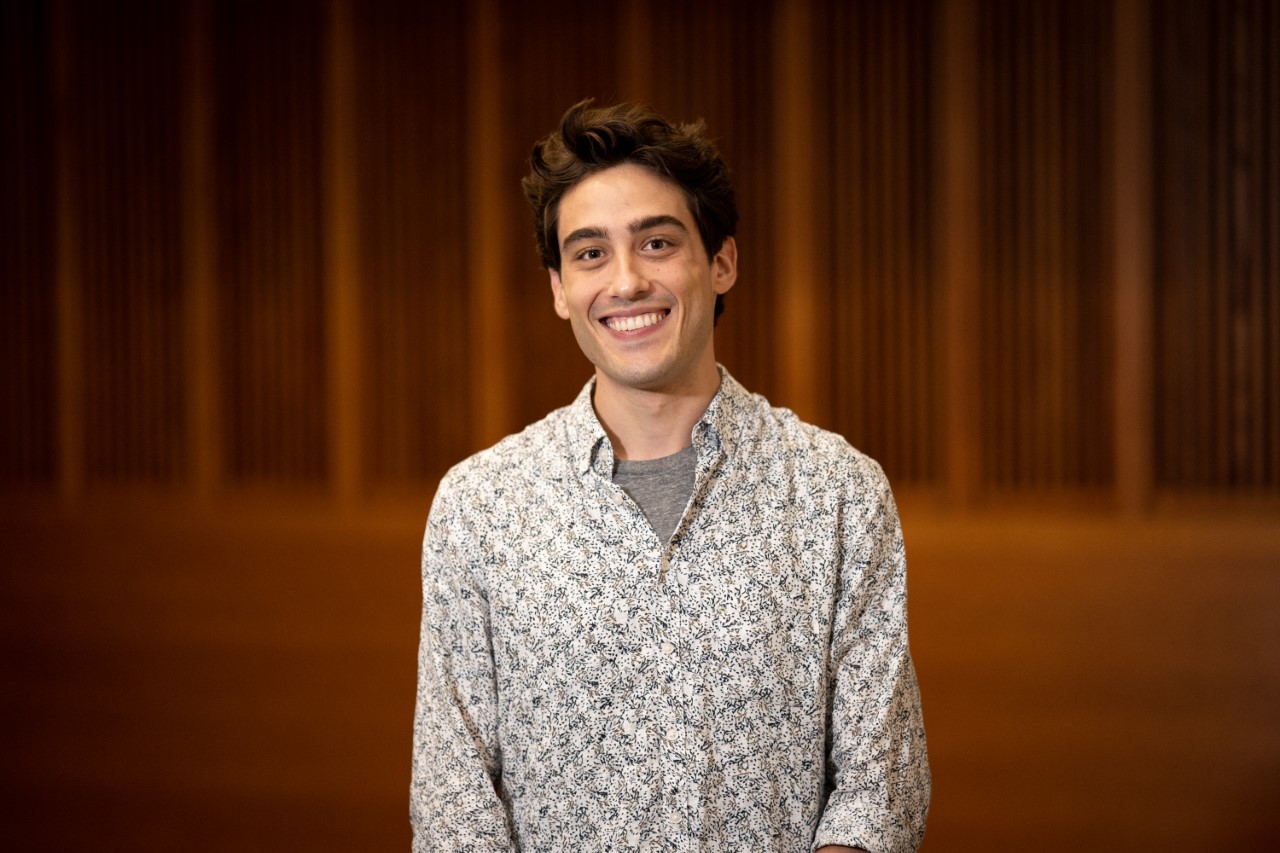
Roger Michaelides is an Assistant Professor of Earth, Environmental, and Planetary Sciences and Environmental Studies at Washington University in St. Louis. He leads the Radar Interferometry and Geospatial Science Laboratory (Radar Lab), focusing on radar remote sensing, geospatial techniques, and Arctic permafrost dynamics. His work integrates InSAR, radar altimetry, and multi-sensor fusion to study environmental processes like wildfire-permafrost interactions, coastal erosion, and climate change impacts. Michaelides earned a PhD in Geophysics from Stanford University (2020) and held postdoctoral positions at the Colorado School of Mines (2020–2022). He joined Washington University in 2022. His research emphasizes developing novel remote sensing methods for cryospheric and terrestrial systems, including NASA-funded studies tracking permafrost thaw and wildfire effects in the Arctic. Recent awards include a NASA Early Career Investigator Program Fellowship (ECIP-ES), supporting his $300,000 project on Arctic permafrost monitoring. He actively mentors graduate and undergraduate students, offering funded PhD opportunities in InSAR applications and climate science. His lab collaborates with agencies like NASA and the Indian Space Research Organization, leveraging satellite data from missions like NISAR. Key interests include radar signal processing, environmental modeling, and interdisciplinary approaches to Earth observation. Michaelides’ work bridges geophysics, ecology, and climate science, with applications to global environmental challenges such as permafrost degradation and wildfire prediction.
Dr. Sen Wang is an Associate Professor in Robotics and Autonomous Systems at Imperial College London's Department of Electrical and Electronic Engineering, affiliated with I-X (Imperial's AI initiative), the Grantham Institute, and the Robotics Forum. He directs the Sense Robotics Lab and founded the MSc in Artificial Intelligence Applications and Innovation. His research focuses on advancing robotic autonomy through probabilistic and machine learning methods, addressing challenges in unstructured environments such as underwater infrastructure inspection and climate change solutions. Key projects include leading the £18M UKRI ORCA Hub, developing underwater robotics for offshore energy infrastructure inspection, and achieving the first autonomous wind farm foundation inspection at EDF's Blyth site. He holds editorial roles at IEEE Transactions on Robotics and other journals. Research interests span robotics, computer vision, SLAM, and AI applications, with recent work emphasizing underwater systems, sensor fusion, and safety-critical autonomy. His publications bridge theoretical advancements with real-world deployments in marine robotics and environmental monitoring. Awards: 2024 AI Most Influential Scholar Award Honourable Mention Grants: £18M ORCA Hub funding (UKRI) Labs: Sense Robotics Lab, I-X AI Initiative
Ales Popovic is a Full Professor of Information Systems at NEOMA Business School, France. He holds a PhD in Management and Information Systems. His research focuses on the value of information systems (IS) in organizations, digitalization, AI, behavioral and organizational issues in IS, and IT in inter-organizational relationships. He has published widely in journals like Journal of the Association for Information Systems and Technological Forecasting and Social Change . Dr. Popovic’s research explores topics such as fake news engagement on social media, blockchain adoption in real estate, and the impact of digital platforms on traditional media. He serves on editorial boards for journals including International Journal of Information Management and Industrial Management & Data Systems . His work bridges theoretical and practical aspects of IS, emphasizing business value creation and ethical considerations in AI. Key contributions include studies on digital transformation, crisis management technologies, and the role of privacy in technology adoption. His research frequently addresses contemporary challenges like misinformation dynamics, gig worker burnout, and healthcare AI applications.
Perry Hystad, PhD is a Professor of Environmental and Occupational Health at Oregon State University (OSU), leading the Spatial Health Lab. He holds affiliations with the School of Nutrition and Public Health and the College of Earth, Ocean, and Atmospheric Sciences. His research focuses on spatial epidemiology and environmental exposure assessment, particularly air pollution, built environments, and climate resilience. He earned his MSc in Geography from the University of Victoria and PhD in Epidemiology from the University of British Columbia. Key achievements include the NIH Early Independence Award for the PURE-AIR global cohort study examining air pollution's cardiopulmonary impacts across 21 countries. Notable contributions include linking greenspace exposure to improved birth outcomes and cardiovascular health, and analyzing traffic pollution’s effects on infant health. Recent recognition includes being named a 2024 Top Scholar by ScholarGPS (top 0.5% globally). Collaborations span OSU’s Environmental Health Sciences Center, Applied Economics, and interdisciplinary teams addressing climate change health impacts. Research integrates geospatial tools, machine learning, and crowd-sourced data to advance environmental health equity. Current projects include studying built environment influences on birth outcomes and highway reclamation’s population health effects.
Prof. Andreas Farnleitner is a Professor at TU Wien, affiliated with the Environmental Microbiology and Molecular Diagnostics Research Group. His research focuses on microbial water quality, molecular diagnostics, and environmental microbiology. Key areas include PCR-based methods for fecal pollution tracking, antimicrobial resistance in aquatic environments, and climate change impacts on waterborne pathogens. He has contributed to advancements in DNA aptamer technology for rapid water quality monitoring and employs machine learning for predictive modeling in hydrology. His work spans collaborations across Europe, addressing One Health challenges and wastewater-based epidemiology. Recent projects include studies on Vibrio cholerae in Austrian bathing waters and the biostability of drinking water resources. Prof. Farnleitner leads interdisciplinary initiatives to improve water safety and environmental management. Publications highlight his expertise in microbial source tracking, climate change effects on infection risks, and antibiotic resistance patterns. His team develops innovative diagnostic tools and models for environmental monitoring, with applications in both academic and applied settings. Current projects emphasize the integration of molecular biology and engineering to address global water quality challenges.
Bernard A. Engel serves as the Glenn W. Sample Dean of Purdue University's College of Agriculture and holds the rank of Professor in the Department of Agricultural & Biological Engineering. He earned his B.S. and M.S. from the University of Illinois and his Ph.D. from Purdue. His research focuses on soil and water engineering, hydrologic modeling, environmental decision support systems, and the integration of GIS and artificial intelligence. He leads initiatives in sustainable watershed management, precision agriculture, and digital tools for environmental stewardship. Dr. Engel's academic contributions include advancing the USDA Water Erosion Prediction Project (WEPP) model and developing web-based tools like GeoAPEX-P for nonpoint source pollution assessment. He is a Fellow of the American Society of Agricultural and Biological Engineers (ASABE) and recipient of the Gilley Academic Leadership Award. His research spans climate change impacts on water resources, flood risk prediction, and invasive species management in China's coastal wetlands. As Dean of the College of Agriculture, he oversees strategic initiatives in food systems, agricultural technology, and interdisciplinary research. His work bridges engineering and agriculture to address global challenges in sustainability, water quality, and environmental resilience. Key collaborations include modeling urban stormwater control, optimizing nutrient management practices, and advancing the water-energy-food nexus framework.
Nik Callow is an Associate Professor at the UWA School of Agriculture and Environment and co-Director of the UWA Centre for Water and Spatial Science. His expertise spans hydrology, geomorphology, remote sensing, and GIS. He leads major projects like the Australian Plant Phenomics Network (APPN) and WaterSmart Dams, focusing on water-dependent ecosystems and spatial science innovations. Callow oversees UWA’s drone operations and supports ~60 drone pilots. He teaches courses in geographical sciences and environmental monitoring, and his research integrates drone technology with climate change studies. Education: PhD in Geography (UWA, 2007), GCHEd (UQ, 2011) Affiliations: Member of the Western Australian EPA Expert Scientific Advisory Council, Resilient Landscapes Hub (NESP), and multiple industry collaborations. Research interests include ecohydrology, marginal snowpacks, and palaeoclimate studies. Projects address water management, biodiversity, and climate resilience in Australia and globally. His work has received the EGU Jim Dooge Award (2020) for contributions to wetland salinity research. Active grants include partnerships with Snowy Hydro, Rio Tinto, and the Grains Research and Development Corporation. Teaching focuses on field science, GIS, and climate processes.
Harvey Miller is a Professor and Reusche Chair in Geographic Information Science at The Ohio State University's Department of Geography, College of Arts and Sciences. He serves as Director of the Center for Urban and Regional Analysis (CURA). His research focuses on GIScience, mobility science, and sustainable transportation, particularly integrating geospatial techniques with transportation equity, time geography, and urban sustainability. He teaches courses in geospatial databases, spatial modeling, and sustainable transportation. Education: Ph.D. (Geography), The Ohio State University, 1991 M.A. (Geography), Kent State University, 1987 B.A. (Geography), Kent State University, 1985 Research Interests: His work explores geospatial analysis of urban mobility, accessibility equity, and smart city technologies. Notable projects include the Ghost Neighborhoods initiative (3D modeling of historic Black neighborhoods), analysis of public transit reliability, and environmental justice tool development. He co-authored a National Academies report on geospatial tools for environmental justice. Achievements: Co-chair of National Academies consensus study on environmental justice tools Lead on Columbus Smart City Operating System project Recipient of U.S. Department of Transportation funding Labs/Teams: Director of CURA, collaborating with institutions like the Ohio History Connection on urban heritage projects. Affiliated with the Sustainability Institute and Translational Data Analytics Institute at OSU.
Dr. Emily Burchfield is an Assistant Professor in the Department of Environmental Sciences at Emory University, where she leads the FACES (Food, Agriculture, Climate, Environment, and Sustainability) Lab. Her research integrates social and environmental data to study agricultural sustainability, with projects focused on land use change, climate adaptation, and rural livelihoods. She holds a PhD in Environmental Engineering from Vanderbilt University and MA in Economics from the University of Louvain. Her work examines how agricultural systems adapt to climate change, the characteristics of productive and resilient farming, and drivers of cultivation and conservation behavior. Dr. Burchfield's research combines geospatial analysis with qualitative methods to understand agricultural transitions at multiple scales. Recent publications explore crop diversification, agricultural data practices, and rural livelihoods. Her group develops computational tools for agricultural analysis and collaborates with farming communities to support sustainable transitions.
Li Li is a Professor in the Department of Civil and Environmental Engineering at Pennsylvania State University. She leads the Li Reactive Water research group, focusing on the Critical Zone and its response to climate change and human activities. Her work examines interactions between water, soils, rocks, roots, and microbes, with implications for water quality and sustainability. Research interests include reactive transport modeling, stream chemistry dynamics, and the impacts of climate extremes on hydrological systems. She has contributed to high-profile studies such as the discovery of ancient carbon release via rivers and the effects of extreme rainfall on nutrient loss in American soils. Recent recognitions include dual awards from the Earth and Space Association (2024) and being named an Institute of Energy and the Environment Fellow. Her lab actively collaborates on projects like the BioRT-HBV model and applications of deep learning in hydrological data analysis. Key projects: Facilitating environmental investigations with single-column models, maximizing CO₂ trapping in geological formations Leadership roles: IEE Fellow, Principal Investigator of NSF-funded research
Prof. Dr. Thomas Ludwig is the Director of the German Climate Computing Center (DKRZ) and a Professor at the Universität Hamburg. He holds a doctoral degree and habilitation from the Technische Universität München, with expertise in High-Performance Computing (HPC), energy efficiency, and data storage systems. His research focuses on optimizing parallel systems, storage technologies, and computational efficiency for climate science applications. He leads projects like AIMES and PeCoH, advancing HPC storage and energy-aware computing. Education: Doctoral degree and habilitation from TU München (1988–2001). Chair in Parallel Computing at Universität Heidelberg (2001–2009). Research Interests: HPC, data reduction techniques, energy-efficient systems, parallel I/O optimization, and climate modeling infrastructure. Recent Research Trends: His work emphasizes storage system efficiency, machine learning in HPC, and convergence between HPC and Big Data. Key contributions include frameworks for portability (Vecpar), automated performance tools, and energy-aware storage solutions. Awards: Some publications received recognition, e.g., a Best Paper award in 2014 for work on energy efficiency. However, no personal awards are explicitly listed. Advising & Grants: Supervised numerous theses in HPC, I/O optimization, and energy efficiency. Leads major projects funded by national and international initiatives. Labs/Teams: Heads the DKRZ team providing supercomputing and data management for climate research, collaborating with global institutions like the University of Hamburg and European research networks.
Parker VanValkenburgh is an Associate Professor of Anthropology and Associate Professor of Archaeology and the Ancient World at Brown University. His research employs archaeological methods to address anthropological questions, focusing on colonialism and imperialism's impacts on Indigenous people and environments in the Peruvian Andes. He directs the Brown Digital Archaeology Laboratory and co-directs several major projects including the Paisajes Arqueológicos de Chachapoyas (PACha) project and GeoPACHA (Geospatial Platform for Andean Culture, History and Archaeology). His educational background includes: PhD from Harvard University (2012) MA from University of London (2005) MPhil from University of Cambridge (2004) BA from Stanford University (2003) VanValkenburgh's research focuses on the long-term impacts of colonialism and imperialism on Indigenous people and environments in the Peruvian Andes. Through studying architecture, ceramics, environmental datasets, and archival documents, he explores how relationships between people, institutions, and environments transform during imperial histories. His work emphasizes how survival and resilience strategies developed by communities dealing with empires are passed down across generations. He applies digital methodologies, particularly GIS, to map and analyze social, political, and environmental change in space and time, while also critically examining how digital mediation transforms archaeological practice. His recent publications reveal a strong trend toward integrating advanced computational methods with archaeological research. There's a clear emphasis on using AI, machine learning, and remote sensing technologies to enhance archaeological survey and analysis in the Andes. His work spans traditional archaeological topics like landscape, ceramics, and colonial architecture with cutting-edge digital approaches including vision foundation models, point cloud processing, and semi-supervised learning for identifying ancient urbanization patterns. His scientific achievements have been recognized with numerous awards: John Carter Brown Faculty Fellow (2023-24) Meenakshi Narain Excellence in Research Mentoring Award (Brown University, 2023) William G. McLoughlin Award for Excellence in Teaching in the Social Sciences (2021) Cogut Center for the Humanities Faculty Fellowship (2018) American Council of Learned Societies Fellowship (2017) VanValkenburgh has successfully secured substantial research funding for multiple projects. His Paisajes Arqueológicos de Chachapoyas (PACha) project has received NSF funding through 2025, while his GeoPACHA initiative has garnered support from ACLS and SPARC grants. He also co-directs the 'Mapping Historical Trauma in Tulsa, 1921-2021' project. His teaching portfolio includes courses on Geographic Information Systems, cartography, critical digital archaeology, and the archaeology of the Andean region, for which he received Brown's prestigious teaching award. He directs the Brown Digital Archaeology Laboratory, which serves as a hub for integrating digital methodologies with archaeological research. His collaborative network includes scholars from institutions like Vanderbilt University (Steven Wernke) and the University of Tulsa (Alicia Odewale), reflecting his commitment to interdisciplinary research that bridges archaeology, anthropology, and digital humanities.
Mitchell L. Neilsen is a Professor in the Department of Computer Science at Kansas State University's College of Engineering, where he also serves as the graduate program director. He holds the Warren and Gisela Kennedy - Carl and Mary Ice Keystone Research Scholar position and maintains an active research program with multiple ongoing projects. His educational background includes a Ph.D. in Computer Science (1992), M.S. in Computer Science (1989), and M.S. in Mathematics (1987), all from Kansas State University, plus a B.S. in Mathematics Education from the University of Nebraska-Kearney (1982). After beginning his career as an assistant professor at Oklahoma State University, he returned to K-State in 1996. Research Interests: Cyber-Physical Systems: Design, Analysis, Verification of systems integrating computing, networking, and physical processes Distributed Systems: Algorithms, design, and analysis of distributed computing systems Scientific Computing: Computational Fluid Dynamics, Finite Element Analysis, High Performance Computing, and Simulation Application Areas: Agriculture technology, Dam safety analysis, Mobile applications, Natural resources management, and Real-time Embedded Systems His research program shows clear evolution toward agricultural technology applications, particularly high-throughput phenotyping, while maintaining strong foundations in cyber-physical systems and scientific computing. Recent publications indicate increasing integration of machine learning and computer vision techniques into traditional research areas. Research Funding: National Science Foundation U.S. Department of Agriculture Sandia National Laboratories Department of Homeland Security Private industry partners Dr. Neilsen has mentored numerous graduate students through their M.S. and Ph.D. programs, with recent advisees focusing on applications in agricultural technology, dam safety, and embedded systems. His advising approach emphasizes practical applications of theoretical computer science concepts. Current Teaching (Fall 2024): CIS 450 - Computer Architecture and Operations CIS 625 - Concurrent Software Systems CIS 720 - Advanced Operating Systems
Dr. Chao Fan is an Assistant Professor in Civil Engineering and Environmental Engineering and Earth Sciences at Clemson University, affiliated with the Glenn Department of Civil Engineering. His research focuses on climate change adaptation, socio-environmental systems dynamics, and urban resilience, leveraging AI and data science. He holds a Ph.D. from Texas A&M University (2020), an M.S. from UC Davis (2017), and a B.S. from China University of Mining and Technology (2016). Dr. Fan's work integrates interdisciplinary approaches to address challenges in disaster management, smart cities, and environmental justice. Key interests include social sensing for infrastructure disruptions, equity in urban mobility networks, and leveraging digital twins for resilience planning. His recent publications explore topics like wildfire impacts, PM2.5 exposure inequity, and carbon market mechanisms for infrastructure adaptation. Professional memberships include ASCE, ACM SIGKDD, AGU, and AAAS. His lab (fanchaolab.com) develops innovative solutions for climate adaptation and equitable urban systems, emphasizing fairness in AI-driven models and network analysis.
Teng Wu is a Professor and Director of Graduate Studies in the Department of Civil, Structural and Environmental Engineering at the School of Engineering and Applied Sciences, University at Buffalo . His research focuses on wind engineering, hurricane risk assessment, and climate change adaptation in infrastructure systems. PhD, Civil Engineering, University of Notre Dame (2013) MS, Civil Engineering, University of Notre Dame (2012) MS, Bridge Engineering, Tongji University (2010) BS, Civil Engineering, Tongji University (2007) Minor, Financial Engineering, Fudan University (2006) Teng Wu's research spans multiple domains including Wind Engineering , Hurricane Engineering , Structural Engineering , and Climate Change Adaptation . He specializes in nonlinear aerodynamics, performance-based wind design, and computational fluid dynamics applications to infrastructure resilience. His recent publications focus on machine learning applications for storm surge prediction, wind-induced structural response analysis, and climate change-informed infrastructure recovery frameworks. Key methodologies include hierarchical deep neural networks, knowledge-enhanced models, and reinforcement learning-based control systems. Contact: tengwu@buffalo.edu | Office: 226 Ketter Hall, Buffalo, NY 14260