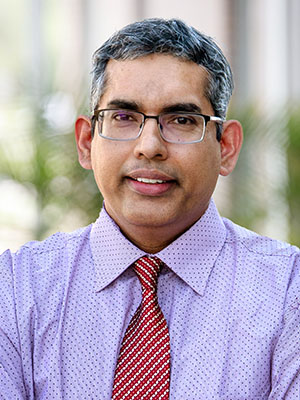
Dr. Jan Petrik is a full-time faculty member at ETH Zürich, affiliated with the Professorship for Advanced Manufacturing. His research focuses on integrating artificial intelligence with manufacturing processes, particularly in deep learning, reinforcement learning, and computer vision applications for metal forming and additive manufacturing systems. Current position: Professor, Advanced Manufacturing, ETH Zürich Research interests: AI-driven manufacturing optimization, microstructural control, and process modeling Recent work: Development of AI frameworks like DeepForge, RLTube, and CrystalMind for metal forming and additive manufacturing
Jorge Eduardo Ibarra Esquer is an Associate Professor in the Department of Computer Science at the School of Engineering, Universidad de Sonora, Mexico. With a publication record spanning nearly two decades from 2006 to 2023, he has established himself as an active researcher in multiple domains of computer science. His work demonstrates consistent collaboration with colleagues Brenda Leticia Flores Ríos, María Angélica Astorga Vargas, and Félix Fernando González-Navarro across numerous publications. His research interests focus on the Internet of Things , Software Engineering , Machine Learning , and Educational Technology . Recent work has explored IoT object categorization, user engagement analysis on social media for scientific dissemination, and software development education during the pandemic. Earlier research examined biosensor modeling, game playing preferences, and driving safety through gamification. His publications appear in reputable venues including IEEE Access, Sensors, and the Colombian Journal of Computing, as well as at national conferences like ENC (Encuentro Nacional de Computación). Analysis of his recent publications (2020-2023) reveals a strategic focus on applying machine learning to practical problems in IoT, educational technology, and social media analytics. His work bridges theoretical computer science with real-world applications, particularly in the Mexican higher education context as evidenced by studies on Facebook engagement at a higher education institution. The interdisciplinary nature of his research spans from healthcare applications (biosensors, physiological monitoring) to educational technology and software engineering practices. While no specific scientific awards are documented in the available publication records, his consistent publication output across multiple high-quality venues demonstrates recognition within his academic community. His research has practical implications for software development education, IoT applications, and human-computer interaction design. Dr. Ibarra Esquer's work shows strong collaborative patterns, particularly with researchers from his home institution. His recent publications suggest active involvement in research teams focusing on educational technology applications during the pandemic, social media analytics for scientific communication, and IoT applications. The continuity of his research program since 2006 indicates sustained scholarly productivity and relevance in evolving technological domains.
Hen-Geul Yeh is an active professor and researcher with a distinguished career spanning nearly four decades in electrical engineering and communications systems. With publications dating from 1986 to the present (2025), Yeh has established expertise in wireless communications, signal processing, and power systems applications. Yeh's research interests encompass wireless communications, signal processing, MIMO systems, OFDM systems, intercarrier interference cancellation, smart grid applications, electric vehicle charging systems, and artificial intelligence applications in communications. The research demonstrates a consistent evolution from foundational signal processing work to contemporary applications in smart grid and 5G/6G communications. Recent publications (2023-2025) reveal a strong focus on practical applications including EV charging infrastructure, UAV communications, fault detection systems, and green communication technologies. The work shows increasing integration of machine learning techniques with traditional signal processing approaches, particularly reinforcement learning for dynamic system optimization. Yeh has established longstanding collaborations with researchers including Donald C. D. Chang, Joe Lee, and Yu Yang, resulting in numerous co-authored publications across IEEE journals and conferences. The research output demonstrates consistent productivity with multiple publications per year, including several in top-tier IEEE journals. Current research directions emphasize sustainable technologies, with significant work on photovoltaic integration, electric vehicle infrastructure, and energy-efficient communication systems that address contemporary challenges in power and communications infrastructure.
Prof. Dr. Karl Gerald van den Boogaart is Head of the Modelling and Evaluation department at the Helmholtz Institute Freiberg for Resource Technology (HZDR). His work focuses on advancing geostatistical methods, compositional data analysis, and their applications in resource technology, mineral processing, and environmental geochemistry. He holds a leadership role in developing stochastic models for geological systems and has contributed significantly to the field of geometallurgy through interdisciplinary research. His research integrates advanced statistical techniques, such as multivariate analysis and Bayesian methods, with practical applications in mineral exploration, ore separation processes, and environmental assessment. Key areas of interest include the development of compositional data-driven tools for decision-making in resource management and the application of machine learning to materials science challenges. Prof. van den Boogaart has published extensively on topics ranging from geostatistical simulation and particle dynamics to organizational culture modeling. His work emphasizes bridging theoretical statistical advancements with real-world industrial and environmental challenges. Notable contributions include the Georges Matheron Lecturer of the Year 2014 award, recognizing his impactful research in mathematical geosciences. His current projects involve optimizing mineral processing techniques, enhancing ionospheric tomography via geostatistical inversion, and advancing compositional data analysis frameworks. He actively collaborates with academic and industrial partners to translate research into practical solutions for sustainable resource utilization and environmental stewardship.
Dr. IŞIL SARAÇ SİVRİKAYA is a Lecturer at Bingöl University's Faculty of Agriculture, Department of Plant Protection. She holds a PhD in Plant Protection from Ankara University (2023) and has conducted postdoctoral research on molecular biology and agricultural sustainability. Her work spans plant pathology, biological control, and phytochemical applications. Educational Background: PhD in Plant Protection, Ankara University (2017-2023) MSc in Plant Protection, Süleyman Demirel University (2011-2014) BSc in Agricultural Engineering (Plant Protection), Süleyman Demirel University (2007-2011) Research Interests: Molecular analysis of plant stress responses, fungal disease management in crops, antifungal properties of essential oils, and sustainable agricultural practices. She has pioneered studies on barley diseases in eastern Turkey and applied machine learning for disease classification. Key Publications: Focus on plant pathogens (e.g., Fusarium solani), biological control strategies using natural products, and regional agricultural epidemiology. Her work bridges traditional plant pathology with innovative techniques like deep learning. Research Projects: Lead: "In Vitro Stress Analysis of Cherry Rootstocks" (TÜBİTAK, 2010-2013) Co-Investigator: "Cherry Tree Disease Diagnosis via Image Processing" (Bingöl University BAP, 2018-2020) Professional Contributions: Authored chapters on sustainable pest management and participated in international conferences on organic agriculture and environmental science. Active in fieldwork across Turkey and Bosnia-Herzegovina.
Mariusz Kleć is a Researcher and faculty member at the Polish-Japanese Academy of Information Technology (PJATK) , affiliated with the Faculty of Information Technology and the Department of Multimedia . He is currently completing his PhD in Computer Science, focusing on music processing with deep neural networks. His work bridges computer science, music engineering, and machine learning, emphasizing practical applications in recommendation systems and healthcare. Education: PhD in progress (2014–present): Research on music classification and organization using DNNs. Postgraduate Sound Engineering (2014–2015): Project on equalizer and dynamic processor usage in music production. MSc in Computer Science (2005–2010): Thesis on sound similarity for music recommendation systems. High School of Visual Arts (2000–2005): Focus on visual identity design. Technical Expertise: Full-stack web development (Java, JavaScript, React, NodeJS, MongoDB), machine learning, graphic design (Adobe Suite), and audio engineering. Research Interests: Mariusz explores intersections of music processing, AI, and multimedia systems. His projects include: Music recommendation systems leveraging personality traits and neural networks. Automated genre recognition using deep learning and wavelet transformations. Applications of AI in healthcare for early symptom detection. Professional Experience: Administrator of Recording Studio (PJATK, 2012–present): Manages equipment and event coordination. Internship at Sony Stuttgart (2013): Developed an audio classification DNN in MATLAB. Web developer (2008–2011): Front-end and WordPress projects, SharePoint system administration. Labs/Teams: Active contributor to the CLARIN-PL project (2019–2021) for speech tool development. Collaborates with the Multimedia Department on sound design and data mining.
Julia Wrobel is an Assistant Professor in the Department of Biostatistics and Bioinformatics at Emory University. Her research focuses on integrating biostatistical methods with bioinformatics and public health challenges, particularly in spatial data analysis, cannabis pharmacology, and functional data modeling. She holds a BA from Swarthmore and a PhD from Columbia University. Education: BA, Swarthmore PhD, Columbia University Research interests span spatial proteomics, cannabis effects on human physiology, and computational methods for single-cell and multiplex imaging data. Her work includes developing tools like scSpatialSIM and GammaGateR for analyzing spatial molecular patterns. Recent studies explore immune cell clustering in tumors and THC's impact on driving performance. Her 2024 Dean’s Pilot Innovation Award supported research into novel statistical methods for spatial and functional data. Collaborations focus on translational applications in oncology and public health, with publications bridging biostatistics, computational biology, and clinical toxicology. Grants/Advising: Recipient of 2024 Dean’s Pilot Innovation Award Focus on interdisciplinary collaborations in bioinformatics Labs/Teams: Active in Emory’s Biostatistics and Bioinformatics core, specializing in multiplex imaging analytics and cannabis-related health studies.
Andrew Peacock is an Associate Professor at the School of Energy, Geoscience, Infrastructure and Society at Heriot-Watt University, and a member of the Institute for Sustainable Building Design. His research focuses on energy demand modelling, climate change mitigation, and sustainable development, particularly in the context of renewable energy systems and community-scale energy solutions. He contributes to UN Sustainable Development Goals, emphasizing clean energy and climate action. Key research interests include heat pump efficiency, demand forecasting, solar-powered irrigation in Nigeria, and the impact of climate change on urban environments. He has published extensively on energy policy, smart grids, and data-driven approaches to energy systems. Notable collaborations include work on India’s cooling demand and South Asian megacity resilience. Peacock has received awards for his research, including the Best Presentation Award (2019) and Rushlight Awards for Resource Innovation (2018) and Water Management (2018). His work integrates technical, behavioral, and policy dimensions to address energy challenges in communities globally.
Asghar Shams is an Associate Professor at Heriot-Watt University's School of Energy, Geoscience, Infrastructure and Society, affiliated with the Institute for GeoEnergy Engineering. His research focuses on reservoir characterization, seismic data analysis, and application of artificial intelligence in petroleum engineering. He has extensive experience in carbonate reservoir modeling, fluid flow dynamics, and integration of geophysical data with reservoir engineering workflows. Research interests include reservoir simulation, production optimization, fracture network modeling, and machine learning applications. His work spans global basins like the Sirt Basin (Libya), Gulf of Mexico, and Middle East carbonate systems. He has published over 52 peer-reviewed articles and actively participates in international conferences such as SEG and EAGE. Professional activities include membership in committees at Imperial College London and Italy's Istituto Nazionale di Oceanografia e di Geofisica Sperimentale. His research emphasizes bridging geoscience and engineering through advanced computational methods.
Sonja Aits is an Associate Senior Lecturer and Research Team Manager at Lund University, focusing on interdisciplinary research at the intersection of Artificial Intelligence, Cell Biology, and Environmental Science. She leads studies on lysosomal biology, cell death mechanisms, and their implications for human health and environmental sustainability. Her work bridges computational methods with biomedical applications, including AI-driven image analysis and text mining in medicine. Affiliations: Lund University Cancer Centre (LUCC), BECC (Biodiversity & Ecosystems), and multiple AI-focused profile areas (e.g., AI and Digitalization). Research Themes: Lysosome regulation, environmental toxin effects, AI in microscopy, and sustainable healthcare. Her research interests emphasize leveraging AI to analyze large-scale biomedical datasets, develop predictive models for protein function, and integrate multi-omics data. Collaborations include NEUBIAS, TRANSAUTOPHAGY, and international networks like eSSENCE and EpiHealth. Publications highlight contributions to high-content microscopy datasets, AI ethics in healthcare, and interdisciplinary AI education. She actively participates in conferences and public outreach on AI’s societal impact, particularly in Sweden. Grants and Projects: Over 22 funded projects, including FORMAS-supported studies on environmental toxins and AI-based text mining for pandemic response. Supervised one doctoral student to date. Labs/Teams: Manages research teams in Cell Death studies and coordinates initiatives like the 'Cell Death Census' and OpenChart-SE medical data projects.
Kaushik Sinha is an Associate Professor at the School of Computing, Wichita State University, part of the College of Engineering. His research focuses on machine learning, optimization, algorithms, and their applications in health informatics. He holds a PhD in Computer Science from Ohio State University and completed a postdoctoral fellowship at UC San Diego under Sanjoy Dasgupta and Kamalika Chaudhuri. His professional activities include serving as an Associate Editor for Neurocomputing (2015–2017) and Technical Program Committee member for conferences like KDD, ICML, and AAAI. He is an affiliated researcher at the Institute for Foundations of Machine Learning (IFML). Dr. Sinha actively mentors PhD students in theoretical and applied machine learning. He currently offers two PhD positions for Fall 2025 focusing on algorithm analysis and applied machine learning, requiring strong mathematical or programming backgrounds. His work emphasizes both foundational research and practical applications, including federated learning, nearest neighbor search, and health data analysis.
Maria Olmedilla Fernandez is an Associate Professor at SKEMA Business School in Paris, France. She holds a Ph.D. in Strategic Management and International Business from the University of Seville (2017) and a Habilitation à Diriger des Recherches (HDR) from Université Paris Dauphine-PSL (2024). Her research focuses on eWOM communities, text mining, machine learning techniques, online user behavior, NLP, and artificial intelligence applications in marketing and digitalization. She is affiliated with the SKEMA Centre for Artificial Intelligence and serves as Academic Director at SKEMA since 2023. Her academic journey includes roles as a PhD Researcher at the University of Seville (2014–2017) and Assistant Professor at École de management Léonard de Vinci (2017–2019). She has received notable awards such as the 2024 Outstanding Paper Award and multiple Pedagogical Innovation awards from SKEMA. She actively contributes to peer-reviewed journals like Decision Support Systems and Technological Forecasting and Social Change , and serves on committees for conferences like CARMA and ICISDM. Her research explores the intersection of technology and consumer behavior, particularly in analyzing online reviews, predicting helpfulness, and detecting fake content using NLP and machine learning models. She has pioneered methodologies for harvesting Big Data in social science and improving educational innovation through gamification tools like Kahoot!.
Luca Di Grazia is a Researcher (Postdoctoral) in the STAR group at the University of Lugano (USI), Switzerland, supervised by Prof. Mauro Pezzè. He holds a PhD (summa cum laude) in Software Engineering from the University of Stuttgart, advised by Prof. Michael Pradel. Previously, he completed his Bachelor's and Master's degrees in Computer Engineering at the Polytechnic of Turin, Italy, with a minor in Embedded Systems. His research focuses on Generative AI, Program Repair, Software Evolution, and Code Search techniques. Education: Bachelor's and Master's in Computer Engineering, Polytechnic of Turin (Italy), with a thesis on "Protein classification using geometrical features for 3D face analysis". PhD in Computer Science (summa cum laude) from University of Stuttgart (Germany), thesis: "Supporting Software Evolution via Search and Prediction". Postdoctoral Researcher at USI, Switzerland. Research Interests: Generative AI for software testing and bug fixing (e.g., winning an Uber competition with a GenAI tool). Program Repair techniques, such as PyTy for Python type errors. Code Search and Change Retrieval (e.g., DiffSearch engine). Software Evolution and Type Annotation studies in Python. Achievements: ACM SIGSOFT Distinguished Paper Award at ESEC/FSE 2022 for work on Python type annotations. Second prize at ACM Student Research Competition at ICSE 2022. Won GenAI Uber competition (2023) with a project to boost developer productivity, beating 103 teams. Summa cum laude PhD (2024). Recipient of national scholarships during his studies at Polytechnic of Turin. Advising: Supervised seven students on projects including automated error repair and testing frameworks. Labs/Teams: STAR group at USI, collaborating with JetBrains and Uber.
Andrew Skidmore is a Professor of Spatial Ecology at Macquarie University and holds an Honorary Professorship at the University of Twente. He specializes in hyperspectral and LiDAR remote sensing technologies for vegetation monitoring, biodiversity conservation, and climate change impact analysis. His research focuses on developing innovative image processing techniques and essential biodiversity variables (EBVs) for sustainable natural resource management. Previously, Skidmore worked for the Forestry Corporation of New South Wales and served as Head of the Department of Natural Resources at the University of New South Wales from 1997. He has directed the Centre for Remote Sensing and GIS and currently leads projects on coastal blue carbon ecosystems, forest community monitoring, and climate adaptation strategies in Australia and Europe. His research interests include canopy structure analysis, ecosystem resilience, and the integration of environmental DNA (eDNA) with satellite remote sensing. Skidmore has contributed to over 450 publications and collaborates internationally on biodiversity observation systems. He has received grants for projects such as 'Monitoring Blue Carbon Ecosystems' and 'Can coastal floodplains survive ferals and rising seas?' Key awards and recognitions are not explicitly listed, but his extensive editorial work includes roles at the International Journal of Applied Earth Observation and Geoinformation . His advisory efforts focus on leveraging remote sensing for ecological conservation and policy alignment with essential biodiversity variables.
Associate Professor Karin Reinke is affiliated with the School of Science at RMIT University, Australia. Her academic role includes supervision of Masters and PhD students in environmental sustainability research projects, such as future forests, wildfire surveillance algorithms, and geospatial AI applications. She holds a permanent full-time faculty position. Education and Industry Background: Prior to academia, she held professional roles in spatial analysis and environmental modeling across multiple organizations including the Department of Sustainability and Environment (Wilson’s Promontory National Park and Melbourne offices), Australian Surveying and Land Information Group, Bureau of Resource Sciences (Canberra), Geomatic Technologies (Melbourne), and RMIT University as a Postdoctoral Research Fellow. Research Focus: Her work emphasizes spatial data quality, uncertainty, and scale in environmental information systems. Key areas include vegetation assessment via remote sensing/GIS, wildfire management applications, and forest fuel structure modeling. She develops methodologies for satellite-based fire detection, flood modeling in data-scarce regions, and integrating low-cost remote sensing technologies for environmental monitoring. Supervision Trends: Recent supervision projects highlight innovations in geospatial AI for sustainability, active fire detection algorithms, and analyzing satellite data's influence on landscape perception. Projects often intersect satellite imagery applications with ecological recovery and human-environment interactions. Collaborations: Involved in cross-disciplinary teams including the Fuels3D project and AusCover CALVAL activities. Works closely with researchers like Simon Jones and Luke Wallace on wildfire surveillance and spatial resolution studies.