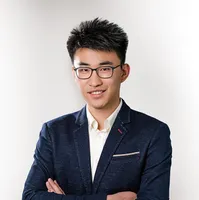
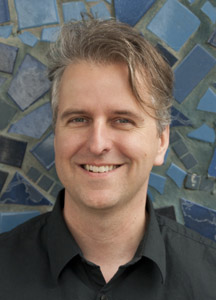
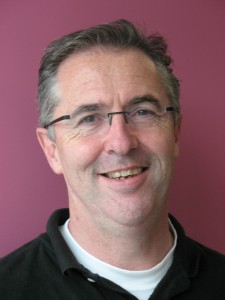
Haiyang Chao is an Associate Professor at the Department of Aerospace Engineering, College of Engineering, University of Kansas. His research focuses on Unmanned Aircraft Systems (UAS) with emphasis on control systems, wind estimation, remote sensing, and cooperative UAV operations. Recent work includes FireCrowdSensing for prescribed fire monitoring Wake vortex hazard estimation for airport UAS operations Thermal imaging for fire spread measurement Vertical wind velocity analysis in fire plumes System identification techniques for flying-wing UAVs Honors include the 2016 Summer Faculty Fellowship at Air Force Research Lab. He leads the Cooperative Unmanned Systems Lab (CUSL) and collaborates with NASA on gust sensing projects. Teaching interests include Avionics, Control Systems, and Autonomous Aerospace Vehicles.
Xiao Bi, M.Sc. , is a Tutor and researcher at the Professorship for Environmental Sensors and Modeling at the Technical University of Munich (TUM) . He is based in room N1506B and contributes to atmospheric pollution research through instrument development, data analysis, and teaching in environmental sensing. Research Focus : Development of NO 2 and air pollutant sensors using CAPS technology, analysis of ground-based and satellite data during the COVID-19 pandemic, and implementation of in-situ and mobile measurement systems in Munich. Teaching Role : Tutor for Lab Courses on Innovative Atmospheric Sensing Devices, Advanced Seminars in Environmental Sensing, and Joint Practical Courses on Electromagnetic Sensors and Measurement Systems. His publications (2018–2022) highlight trends in atmospheric pollution monitoring , sensor technology for greenhouse gases, and machine learning applications in artificial olfaction. Notable collaborations include work with Prof. Jia Chen and Frank Keutsch . Xiao Bi has been recognized with the Hans Fischer Fellowship , underscoring his contributions to urban environmental research and sensor innovation.
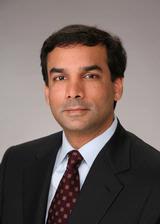
Angelo P Tanna, MD is Vice Chairman and Professor of Ophthalmology and Director of the Glaucoma Service at the Northwestern University Feinberg School of Medicine in Chicago, Illinois. He has served on the faculty since 1999, establishing himself as a leading expert in glaucoma diagnosis and treatment. Dr. Tanna holds multiple leadership positions including Chair of the American Academy of Ophthalmology's Basic and Clinical Science Course Glaucoma Committee. Dr. Tanna's research interests span several critical areas in ophthalmology, with a primary focus on glaucoma. His work encompasses the efficacy and safety of glaucoma medications, detection of glaucoma progression, and assessment of visual function in glaucoma patients. He has made significant contributions to understanding the impact of cataract on visual field testing in glaucoma and has developed new methods to detect visual field deterioration. His research also includes improving outcomes of incisional glaucoma surgery and innovative approaches using hydrogel polymers to prevent fibrosis after trabeculectomy. Analysis of Dr. Tanna's recent publications reveals a strong emphasis on applying advanced technologies to glaucoma management, including deep learning algorithms for visual field progression detection using OCT imaging. His work increasingly explores social determinants of health in glaucoma care, healthcare access disparities, and the relationship between systemic conditions and ocular health. The COAST clinical trial he leads represents a significant contribution to optimizing laser trabeculoplasty protocols for glaucoma treatment. Secretariat Award, American Academy of Ophthalmology (2019) Senior Achievement Award, American Academy of Ophthalmology (2017) Continuously listed in Best Doctors in America since 2005 Outstanding Teacher Award, Northwestern University Feinberg School of Medicine (2020) Multiple visiting professorships at leading institutions including Columbia University (2023) Dr. Tanna has served in various leadership roles in the American Glaucoma Society, including twice as a board member and as Chair (2010-2011). He currently chairs the American Academy of Ophthalmology's Basic and Clinical Science Course Glaucoma Committee and serves on editorial boards of prestigious journals including Ophthalmology and Survey of Ophthalmology. His COAST clinical trial investigates optimal selective laser trabeculoplasty protocols for treating glaucoma, potentially reshaping treatment guidelines. Dr. Tanna also leads research collaborations with biomedical engineers and geneticists, resulting in discoveries such as the association of ANGPT1 region SNPs with primary open-angle glaucoma.
Haakon Bryhni is a Research Professor at Simula Research Laboratory's Center for Resilient Networks and Applications, focusing on telecommunications infrastructure and network resilience. His work spans optical fiber sensing, Cloud-RAN architecture, 5G networks, and network security. Expertise in telecommunications and network infrastructure Contributions to optical fiber sensing and AI-driven network outage classification Active in public outreach and policy analysis for ICT resilience Recent research explores Sagnac loop sensing systems , Cloud-RAN integration , and cybersecurity preparedness in Norway. Collaborations include international conferences and publications in Optics & Laser Technology , Sensors , and IEEE journals. Contact: haakonbryhni@simula.no
Dr. Mehran Masdari is a Lecturer in the Department of Aerospace Engineering at City St George's, University of London, where he has been serving since 2024 after joining as a Research Fellow and Visiting Lecturer in 2022. He previously held the position of Assistant Professor at the University of Tehran from 2012 to 2022, where he founded and led the Experimental Aerodynamic Research Laboratory (EARL). Education: PhD in Aerodynamics, Sharif University of Technology, Iran (2011) Fellow of the Higher Education Academy (FHEA), City, University of London, United Kingdom (2024) Dr. Masdari's research focuses on experimental aerodynamics, measurement techniques, data analysis, and image processing. He specializes in heat transfer optimization using pulsating flows, aeroacoustic analysis of drone propellers, and energy harvesting from flow-induced motions. His work bridges fundamental fluid dynamics with practical engineering applications in aerospace and sustainable technologies. He teaches core courses such as 'Measurements and Data Analysis', 'Advanced Aerodynamics', and 'Aeroelasticity', contributing significantly to aerospace education. The recent publications reflect a strong trend in experimental methods, particularly in image-based diagnostics, unsteady flow control, and energy conversion from fluid-structure interactions. His work spans thermal engineering, aeroacoustics, and smart materials, demonstrating interdisciplinary innovation in aerospace systems. Scientific Awards and Recognitions: Fellow of the Higher Education Academy (FHEA) Fellow of the Royal Aeronautical Society Dr. Masdari has advised numerous graduate students at the University of Tehran and continues to mentor early-career researchers at City St George's. His research has been supported by institutional and national grants related to advanced measurement systems, drone technology, and sustainable energy solutions. He has led projects integrating optical diagnostics with thermal and structural testing, contributing to both academic knowledge and industrial applications. He established and directed the Experimental Aerodynamic Research Laboratory (EARL) at the University of Tehran, a facility dedicated to cutting-edge experiments in flow measurement, heat transfer, and aeroelasticity. His lab work emphasizes innovation in instrumentation and data interpretation, fostering a hands-on research environment for students and collaborators.
Bin Chen is a Lecturer at the School of Computing and Information Systems, University of Melbourne, where he conducts research at the intersection of computer graphics, computational imaging, and human perception. He was previously a postdoctoral researcher at the Max-Planck-Institut für Informatik and a visiting scholar at the University of Cambridge. Research Interests: His work spans Computational Display , focusing on glass-free 3D and VR/AR systems; Perception , studying how humans perceive virtual materials and gloss; and Computational Imaging , developing AI-driven methods for HDR, deblurring, and depth synthesis. He uses both optical hardware and software rendering to enhance visual fidelity. Recent Research Trends: His recent publications emphasize deep learning for image restoration (e.g., deblurring, tone mapping), neural representations for image stacks, and perceptual validation of material rendering. The integration of light field displays and self-supervised learning is a key theme across his recent work. Scientific Awards: CVPR Best Paper Award Finalist (Top 0.4%) – 2022 Service and Mentoring: Bin Chen has served on the Technical Paper Committees for SIGGRAPH, SIGGRAPH Asia, CVPR, and AAAI. He actively mentors PhD students and invites self-motivated candidates to join his research group. He has advised students such as Tao Huang, Lingyan Ruan, Chao Wang, and Jizhou Li. Laboratory and Teams: While no formal lab name is specified, his research group at the University of Melbourne focuses on visual computing, with strong collaborations extending from City University of Hong Kong to Max-Planck-Institut and the University of Cambridge.
John R. Dutcher is a Professor and Research Chair in Novel Sustainable Nanomaterials at the University of Guelph's Department of Physics. His work bridges soft matter physics, biophysics, and sustainable nanotechnology through experimental studies of polymers, biopolymers, and bacterial systems at surfaces and interfaces. PhD in Condensed Matter Physics (Simon Fraser University, 1989) NSERC Postdoctoral Fellow (University of Arizona, 1989-1990) Director of University of Guelph’s B.Sc. Nanoscience program Research focuses on: Phytoglycogen nanoparticles from sweet corn for biomedical/personal care applications Machine learning analysis of polymer degradation in cross-linked pipes Bacterial motility and biofilm formation via optical microscopy Hydration forces and mechanical properties of nanomaterials His lab employs state-of-the-art equipment including AFMs, SPRi, and rheometers, with industrial partnerships like HeatLink. Recent publications analyze β-VAE applications in IR spectroscopy, acid hydrolysis effects on nanomaterials, and bacterial colony dynamics. Scientific honors include: Tier 1 Canada Research Chair in Soft Matter and Biological Physics (2006) Fellow, American Physical Society (2007) University of Guelph Innovation of the Year (2017) He has co-founded spin-off company Mirexus Biotechnologies and mentored over 50 graduate/undergraduate researchers, with alumni holding faculty positions at Waterloo, McMaster, and Lakehead University. Lab facilities include: Custom self-nulling ellipsometer TA Instruments DHR-3 rheometer Brookhaven BI200-SM light scattering system Thermo/Nicolet Continuum infrared microscope Wyatt SEC-MALS system Advanced microbiology/Biophysics equipment
Andreas Fender is a researcher at the Visualization Institute of the University of Stuttgart (VISUS), affiliated with the Schmalstieg Working Group. He has held postdoctoral positions at ETH Zurich (Switzerland) and the University of Sussex (England), following his PhD at Aarhus University (Denmark) with an internship at Microsoft Research (USA). His research focuses on Human-Computer Interaction, particularly in Augmented and Virtual Reality (AR/VR) and camera networks. He develops novel input methods for productivity and artistic expression in Mixed Reality environments, creating hybrid physical-digital systems like OptiBasePen, PressurePick, InfinitePaint, and DeltaPen. Recent work includes contributions to Mixed Reality input methods (UIST 2024, CHI 2022) and collaborative systems (Asynchronous Reality). Projects like GuitarPie (UIST 2025) and OptiBasePen (UIST 2024) demonstrate his focus on mobile interaction and ergonomic design. Scientific accolades include the Best paper award at CHI 2022 Best application paper award at ISS 2019 . At VISUS, he collaborates with Dieter Schmalstieg and leads hiring for PhD students and PostDocs exploring physical-digital workflows, artistic tools, and critical AI engagement. His work integrates machine learning, hardware prototyping, and spatial user interfaces to redefine future workplaces.
Eileen R. Martin is an Associate Professor at Colorado School of Mines, jointly appointed in Geophysics and Applied Math and Statistics with a 60/40 split. She collaborates with two industry-aligned consortia: the Center for Wave Phenomena (CWP) and the Center to Advance the Science of Exploration to Reclamation in Mining (CASERM). PhD, Institute for Computational and Mathematical Engineering, Stanford University (2018) MS, Geophysics, Stanford University BS, Mathematics and Computational Physics, University of Texas at Austin Her research bridges computational science and geophysics with applications to subsurface characterization using advanced sensing technologies. She focuses on distributed acoustic sensing (DAS) , seismic imaging , inverse problems , and machine learning for geoscientific data analysis. Recent work explores permafrost thaw monitoring , glacier hydrology , and mine seismicity through scalable algorithms. Selected 2024-2025 Publications : Modeling permafrost thermodynamics with differentiable computing DAS applications in cryoseismic cataloging and glacier monitoring Urban traffic monitoring via multicomponent seismic data Open-source DASCore Python library development Lossy compression effects on seismic data integrity Scientific Awards : NSF CAREER grant SIAM Geosciences Early Career Prize SEG J. Clarence Karcher Award Presidential Early Career Award for Science and Engineering (PECASE) Academic Leadership : Advising 13 graduate students (MS/PhD) across Geophysics, Applied Math, and Hydrologic Engineering Teaching courses in Parallel Scientific Computing, Digital Signal Processing, and Mathematical Geophysics Co-leading weekly group meetings with industry consortia integration Labs & Collaborations : Center for Wave Phenomena (CWP) at Mines CASERM: Mining Exploration to Reclamation Consortium Stanford Exploration Project (alumni) Lawrence Berkeley National Lab affiliate
Luciano Rolando is an Associate Professor at the Department of Energy (DENERG) in Politecnico di Torino. He is a member of the CARS@PoliTO Interdepartmental Center for Automotive Research and Sustainable Mobility. His academic roles include teaching Hybrid Propulsion Systems at the PhD level and various undergraduate/graduate courses such as Thermal Machines and Structural Mechanics and Fluid Machines across Chemical, Mechanical, and Energy Engineering programs. As Scientific Director and Manager of competitive and commercial research projects like OpThermEV (2021-2022) and Alternative Fuels: Large Bore Ammonia Combustion (2024-2025), he focuses on optimizing thermal management systems, hydrogen combustion, and emission reduction technologies. His research group E3 (DENERG) explores synergies between hybrid propulsion, renewable fuels, and predictive control algorithms. His recent publications highlight advancements in deep reinforcement learning for energy management, hydrogen-fueled powertrains, and dual-diluted combustion systems. Collaborations include industry partnerships and supervision of seven ongoing PhD students. He holds a national patent for predictive thermal control systems in electric vehicles, aligning with SDG goals 7, 12, and 13.
Kevin Dean is an Assistant Professor at the UT Southwestern Medical Center , affiliated with the Lyda Hill Department of Bioinformatics and the Cecil H. and Ida Green Center for Systems Biology . His research focuses on developing and applying advanced microscopy techniques to address complex biological challenges, particularly in cancer metastasis and cellular mechanobiology. Co-developer of autonomous 'self-driving' microscopes using computer vision Expert in spectral unmixing and cyclic immunofluorescence for molecular multiplexing Creator of high-throughput histopathology systems with 300 nm resolution Collaborator with leading scientists (Drs. Danuser, Fiolka, Morrison, Amatruda, Sorger) Principal Investigator for NIH/NCI-funded cancer imaging programs Research Themes: The Dean Lab specializes in cutting-edge imaging solutions that bridge technology development and biological discovery. Their work spans: Cancer Biology: Metastatic colonization mechanisms, tumor microenvironment imaging Biomedical Technology: Light-sheet microscopy, optical probes, time-series analysis software Cellular Mechanobiology: Force-driven morphogenesis, matrix deformation quantification Neuroscience: Stress-induced anhedonia, lateral habenula neuronal signaling Grant Leadership: Dean serves as Principal Investigator for the NCI-funded Imaging Mechanisms of Metastatic Tumor Formation and the NIGMS-supported UTSW-UNC Center for Cell Signaling Analysis , where his team develops open-source platforms like Navigate for smart light-sheet microscopy. Collaborative Networks: Active in multiple interdisciplinary programs including: Prune Belly Syndrome research with Filamin A mutations Drosophila germband extension mechanobiology with micro-cantilevers Lateral habenula functional mapping with multi-modal imaging
Dr. Bill Brocklesby is an Associate Professor at the Zepler Institute for Photonics and Nanoelectronics, University of Southampton. He has been with the university since 1989, initially joining as a lecturer in the Physics Department before moving to the Optoelectronics Research Centre (ORC), now known as the Zepler Institute, in 2003. His work bridges physics, engineering, and biological imaging through advanced optical techniques. Dr. Brocklesby's primary research interests focus on novel imaging and microscopy techniques across the visible and extreme ultraviolet (XUV) spectral regions. His work encompasses: Coherent diffractive imaging of nanoscale systems using XUV radiation generated by high-power ultrashort pulse lasers Large-scale beam combination for applications like wake-field acceleration Raman microscopy and near-field techniques including scanning near-field optical microscopy (SNOM) Atomic force microscopy and scanning tunneling microscopy Optical spectroscopy of rare-earth doped materials and optical fibers Analysis of Dr. Brocklesby's recent publications reveals a strong focus on XUV imaging applications in biological systems, particularly neural tissue. His work increasingly incorporates AI and machine learning approaches for image reconstruction and analysis. The research spans fundamental optical physics, engineering of specialized equipment, and practical applications in fields ranging from neuroscience to fuel quality monitoring. Dr. Brocklesby's significant scientific recognition includes: Being named one of the 'Beacons of the Photonics Industry' in teaching by Photonics Spectra magazine (2016) Multiple teaching awards from the Southampton Students Union, including runner-up for 'best lecturer' (2017) Recognition for innovation in laboratory technology development As an academic advisor, Dr. Brocklesby currently supervises Michael Blakey (MSc Chemistry by Research) and Rhys Jacob William Donovan (PhD ORC). His research has been supported by diverse funding sources including the European Union (ICAN project), Breakthrough Starshot Foundation LLC, Biotechnology & Biological Sciences Research Council, and EPSRC. These projects span from fundamental optical physics to practical applications in biological imaging and industrial monitoring. Dr. Brocklesby is an active member of multiple research groups including the Nanophotonics Group, Institute for Life Sciences, and Southampton Imaging Ultrafast X-ray Group. His work on the ICAN project, conceived by Nobel laureate Gérard Mourou, demonstrates his involvement in cutting-edge international collaborations focused on large-scale beam combination of ultrafast fiber lasers.
Pere Colet Rafecas is an Associate Professor at the University of the Balearic Islands (UIB) and a Research Professor at the Spanish National Research Council (CSIC) since 2007. His work spans statistical and nonlinear physics , with applications to optical systems , power grid stability , and human mobility analysis . He leads the Complex Systems and Sociotechnical Applications (CSSA) research group. PhD in Physics (UIB, 1991) Postdoctoral Fellowship at Georgia Tech (Fulbright, 1992-1994) His research focuses on noise-sustained structures , synchronization of chaotic systems , and delay effects in optoelectronic devices . Recent work integrates geolocated data to model socio-technical systems , including renewable energy grids and urban mobility. Key projects include: APASOS : Physics of socio-technical systems MdM-IFISC : Excellence grant for complex systems research SIESTA : Secure data analytics in European energy grids He has supervised four completed PhD theses and currently mentors two PhD candidates , with publications in Nature Communications , Physical Review Letters , and IEEE Transactions . His work has accumulated over 5,600 Google Scholar citations and a h-index of 35 .
Michael Neff is a Professor at the University of California, Davis, affiliated with the Department of Computer Science and Department of Cinema and Digital Media. He directs the Motion Lab, an interdisciplinary research group exploring the intersection of computation and human movement. Education: PhD in Computer Science from the University of Toronto (2005), Certified Laban/Bartenieff Movement Analyst (CLMA, 2009) Research Interests: Focus on character animation tools, gesture and nonverbal communication modeling, physics-based animation, and applying performing arts concepts to virtual character movement. His work bridges art and science through collaborations with robotics, psychology, and dance departments. Recent Research Trends: Over the past five years, his publications demonstrate a focus on speech-driven gesture synthesis, physics-based character control in VR environments, and multimodal analysis of movement perception. Key themes include tension modeling, motion style transfer, and avatar trust dynamics. Awards & Recognition: NSF CAREER Award (2009-14) Isadora Duncan Award for Visual Design (2009) Best Paper Awards at Intelligent Virtual Agents (2007), Motion in Games (2015, 2016) Alain Fournier Memorial Award (2005) IBM PhD Fellowship for advisee Simbarashe Nyatsanga Advising & Collaborations: Has mentored 18 graduate students (PhD/Masters) and numerous undergraduates. Collaborates across disciplines with computer scientists, dancers, and psychologists. Currently chairs the Department of Cinema and Digital Media. Laboratory Facilities: Established a motion capture lab in 2007 featuring a 12-camera optical system in a 750 sq ft studio, supporting interdisciplinary research in movement analysis.
Professor Rob Krams is Chair of the Division of Bioengineering and Scientific Director of the CVDHub at Queen Mary University of London's School of Engineering and Materials Science. His research integrates engineering and molecular biology to study cardiovascular biomechanics, epigenetic regulation, and atherosclerosis. With over 500 publications, he focuses on mechanotransduction, shear stress effects on vascular biology, and advanced imaging techniques. Research Interests: His lab investigates how mechanical forces influence gene expression in endothelial cells using CRISPR, high-throughput screening, and fluid-structure interaction modeling. Key areas include non-coding RNA networks, synthetic biology approaches for vascular repair, and multi-scale computational models bridging cellular responses to hemodynamics. Publication Trends: Recent work emphasizes machine learning applications in hemodynamics, deep learning for plaque classification, and novel imaging techniques for shear stress quantification. His articles consistently explore intersections of computational modeling, molecular biology, and translational cardiology. Awards & Recognition: Established Investigator Award (2003–2008) Associate Editor for 12 scientific journals Research Infrastructure: Leads a multidisciplinary team at the Centre for Bioengineering, developing pipelines for in vivo endothelial cell isolation, RNA analysis, and CRISPR validation. Collaborates globally on projects involving intravascular imaging, animal models of atherosclerosis, and biomechanical diagnostics.