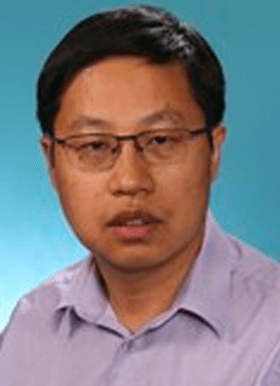
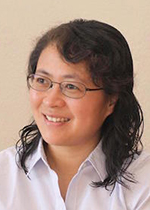
Lei Liu, PhD, is a Professor of Biostatistics, Medicine, and Statistics and Data Science at Washington University in St. Louis. He holds positions in the Roy and Diana Vagelos Division of Biology & Biomedical Sciences (DBBS), the Institute for Informatics, Data Science and Biostatistics (I2DB), and the Center for Biostatistics and Data Science (CBDS). His research focuses on biostatistical and data science methods, including survival analysis, longitudinal data modeling, and machine learning applications in healthcare. He collaborates with clinicians across disciplines like cardiology, ophthalmology, and addiction medicine. Dr. Liu’s work emphasizes high-dimensional omics data analysis, medical cost modeling, and joint multi-outcome models. He is an Associate Editor of Biometrics and a former member of the NIH Biostatistical Methods and Research Design Study Section. He mentors underrepresented minority researchers through the NHLBI PRIDE program.
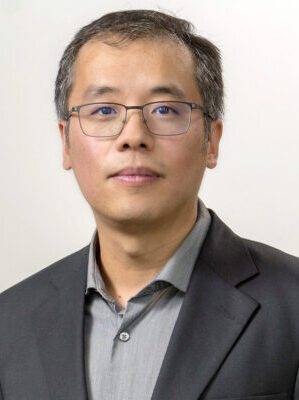
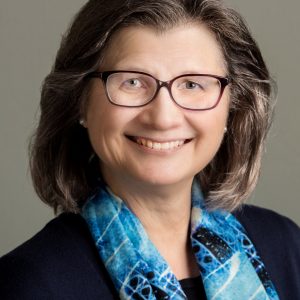
Lexin Li is a Professor in the Department of Biostatistics and Epidemiology at the University of California, Berkeley School of Public Health, with additional affiliations at the Helen Wills Neuroscience Institute, the UC Berkeley-UCSF Joint Program on Computational Precision Health, and the Center for the Theoretical Foundations of Learning, Inference, Information, Intelligence, Mathematics and Microeconomics at Berkeley (CLIMB). He received his BE in Electrical Engineering from Zhejiang University (1998) and PhD in Statistics from the University of Minnesota (2003), followed by postdoctoral training at UC Davis School of Medicine. He joined North Carolina State University as Assistant Professor in 2005, was promoted to Associate Professor in 2011, and served as visiting faculty at Stanford University and Yahoo Research Labs (2011-2013) before joining UC Berkeley as Associate Professor in 2014, where he was promoted to Full Professor in 2018. Dr. Li's research spans statistical methodology development for neuroimaging data analysis, tensor statistics, and machine learning applications to biomedical problems. His work focuses on brain connectivity and network analysis, imaging causal inference, tensor regression, dimension reduction, and statistical machine learning with applications to Alzheimer's disease, Parkinson's disease, and other neurological disorders. His methodological innovations bridge theoretical statistics with practical neuroscience applications, particularly in multimodal neuroimaging analysis and brain network modeling. His recent publications demonstrate a strong trajectory in integrating deep learning with classical statistical inference, particularly in tensor analysis, functional data modeling, and causal inference. The research shows increasing sophistication in handling high-dimensional, complex neuroimaging data while developing rigorous statistical frameworks for inference. His work increasingly focuses on multimodal data integration and developing methods that can handle the complexity of real-world neurological data. Dr. Li has received numerous prestigious honors including being elected as a Fellow of the American Statistical Association (2017), Fellow of the Institute of Mathematical Statistics (2021), Elected Member of the International Statistical Institute, and Fellow of the American Association for the Advancement of Science (2024). Fellow, American Statistical Association (2017) Fellow, Institute of Mathematical Statistics (2021) Elected Member, International Statistical Institute Fellow, American Association for the Advancement of Science (2024) Editor-in-Chief, Annals of Applied Statistics (2025-2027) As an academic leader, Dr. Li serves as Co-Director of the Biostatistics Program (2019-) and Director of Graduate Admissions (2015-) at UC Berkeley. He is an active editor, currently serving as Editor-in-Chief of the Annals of Applied Statistics (2025-2027), and has held associate editor positions at multiple top statistical journals including the Journal of the American Statistical Association and Journal of Computational and Graphical Statistics. He also serves as a Standing Member of the NIH Emerging Imaging Technologies in Neuroscience Study Section (2023-2027). His research has been supported by various NIH grants focused on statistical methodology for neuroimaging analysis. Dr. Li leads a vibrant research group focused on statistical neuroimaging and machine learning methodology, with strong connections to the Helen Wills Neuroscience Institute and collaborations across multiple departments at UC Berkeley. His team develops innovative statistical methods that address real challenges in neuroscience research while maintaining rigorous theoretical foundations. The group maintains active collaborations with neuroscientists and clinicians working on Alzheimer's disease, Parkinson's disease, and other neurological conditions.
Professor Xue Li is a faculty member in the School of Electrical Engineering and Computer Science at the University of Queensland. His research focuses on machine learning, data mining, and their applications in healthcare, materials science, and computer vision. He has authored over 300 publications, including seminal works on knowledge graph completion, video quality enhancement, and alloy design using machine learning. His work bridges theoretical advancements with real-world applications, such as clinical diagnosis andTinyML systems. Key research interests include graph representation learning, medical informatics, and efficient algorithms for multimedia data. Notable contributions include developing commonsense-enhanced relation extraction models and frameworks for compressed video reconstruction. His research also addresses challenges in federated learning and privacy-preserving genomics. Prof. Li has collaborated extensively with industry and academia, contributing to projects in RFID systems, electronic nose pattern recognition, and cybersecurity. His work is published in top-tier venues like IEEE Transactions and ACM conferences. Despite no listed awards, his prolific output underscores academic impact.
Professor Bruce N. Walker holds a joint appointment in the School of Psychology and School of Interactive Computing at Georgia Institute of Technology, within the College of Sciences. His research focuses on human-centered technology design, emphasizing accessibility, auditory displays, and human-AI interaction. He leads the Sonification Lab, pioneering multimodal interfaces and inclusive technology solutions. He earned his Ph.D. in Human Factors and Human-Computer Interaction from Rice University in 2001. Research Interests: Trust in technology, accessible interfaces, sonification, AI-human collaboration, and HCI in non-traditional environments. Current projects include the AccessCORPS VIP initiative to enhance course accessibility and studies on automated vehicle interaction. Awards: Best Paper Award at AudioMostly 2014 for auditory weather reports research. Active in professional organizations like the International Community for Auditory Display and Human Factors and Ergonomics Society. Teaching: Courses include Research Methods for Human Factors, Sensation and Perception, and HCI Foundations. Supervises interdisciplinary teams in the Sonification Lab R&D Studio and AccessCORPS VIP. Labs/Teams: Sonification Lab (multimodal data exploration) and AccessCORPS (disability-inclusive course design). Collaborates on international projects like the Mwangaza initiative for learners with vision impairment in Kenya.
Yu Huang is an Assistant Professor of Computer Science at Vanderbilt University with a secondary appointment in the Department of Teaching and Learning at the Peabody School of Education. She is affiliated with the Institute for Software Integrated Systems, the Frist Center for Autism and Innovation, the Vanderbilt Lab for Immersive AI Translation (VALIANT), and the Vanderbilt LIVE Learning Innovation Incubator. Her research focuses on human-centered AI for software engineering, combining human cognition with machine intelligence to enhance software development processes. Educated at the University of Michigan (PhD, 2021), University of Virginia (MS, 2015), and Harbin Institute of Technology (BS, 2011), her work spans software engineering, human factors, AI, and medical imaging. Key projects include the MIND Lab, studying programmer expertise and cognitive processes, and the HumanAISE workshop on Human-Centered AI for Software Engineering. Huang has received significant recognition, including the 2025 ICPC Vaclav Rajlich Early Career Achievement Award and three ACM SIGSOFT Distinguished Paper Awards. Her research is supported by NSF, GitHub, and Vanderbilt initiatives. She advises numerous graduate and undergraduate students, emphasizing diversity and innovation in programming education.
Joseph Katz is the William F. Ward Distinguished Professor of Mechanical Engineering at Johns Hopkins University's Whiting School of Engineering and a member of the National Academy of Engineering. His research focuses on experimental fluid mechanics, multiphase flow, cavitation phenomena, and advanced optical diagnostics. He directs the Laboratory for Experimental Fluid Dynamics and co-founded the Johns Hopkins Center for Environmental and Applied Fluid Mechanics. Key research areas include: - Turbulent boundary layers and compliant wall interactions - Cavitation dynamics in turbomachinery - Environmental fluid dynamics (oil spills, oceanic flows) - Medical imaging applications of fluid mechanics - Turbomachinery flow control (axial compressors) His work has been funded by agencies including the Office of Naval Research, NSF, NASA, and DOE. Over 150+ journal papers, 220+ conference papers, and 7 patents reflect his prolific output. Notable awards include the ASME Fluids Engineering Award and fellowships from ASME and APS. Key Contributions: - Developed novel optical diagnostics techniques - Advanced understanding of tip clearance flows in compressors - Studied oil dispersion mechanisms in marine environments - Pioneered holographic PIV for 3D flow visualization
Dr. Richard Jiang is a Senior Lecturer (Associate Professor) at Lancaster University's School of Computing and Communications. His research focuses on Artificial Intelligence, Neurocomputing, Quantum AI, Privacy Computing, and Medical Computing. He has pioneered secure pattern recognition in encrypted domains and quantum neuromorphic computing. With over £1M in research grants from EPSRC and others, he has authored 100+ publications and supervised over 20 PhD students. Dr. Jiang's work includes the Face2Brain method for neurodegenerative assessment and explainable models for brain aging analysis. He contributes actively to academic committees, editorial boards, and conferences like the World Conference on eXplainable AI. His research spans ethical AI frameworks, quantum algorithms for medical imaging, and privacy-preserving biometric systems.
Professor Glen Tian is a Professor at the School of Computer Science , Queensland University of Technology . He holds two PhDs: one in computer and software engineering from the University of Sydney (2009) and another in industrial automation from Zhejiang University (1993) . His academic career spans institutions including Hong Kong University of Science and Technology, Curtin University, and the University of Maryland at College Park. Editor-in-Chief of the Handbook of Real-Time Computing (Springer) Associate Editor for Information Sciences (Elsevier) and Asia-Pacific Journal of Chemical Engineering (Wiley) His research focuses on big data computing , cloud computing , computer networks , smart grid communication and control , networked control systems , and cyber-physical system security . Applications include power systems , medical big data , vehicular networks , and transport systems . Recent publications highlight advancements in smart grid communications , distributed optimization , secure multi-agent systems , and medical imaging analysis . He has led QUT's Big Data Lab and served as Leader of QUT's Networks and Communications Discipline . Scientific achievements include Over 20 research grants totaling >$6M 6 Australian Research Council (ARC) grants 1 MRFF-TTRA grant ($745,623) 1 ATN-DAAD Australia-Germany Collaborative Grant 1 DEST International Science Linkage grant He supervises PhD students in big data bioinformatics , smart grid optimization , and cyber-physical security , while mentoring 30+ postdocs and research fellows. Current projects include mitigating cyberattacks on power systems and developing AI-based atheroma diagnostic tools .
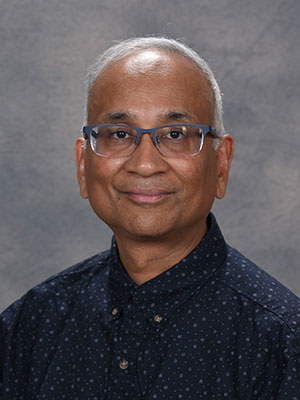
Sandeep Kumar is an Associate Professor in the Department of Computer Science and Engineering at Texas A&M University, College Station. He holds a PhD in Computer Science from Purdue University (1995) and a B.Tech in Electrical Engineering from the Indian Institute of Technology, New Delhi (1985). His research focuses on computer security, networking, and system-level programming. Prior to academia, he worked in industry roles including at VMware in Palo Alto, CA. He currently teaches courses such as CSCE 313 (Introduction to Computer Systems) and CSCE 222 (Discrete Mathematics), emphasizing system software, networking, and cybersecurity. His teaching philosophy incorporates modern tools like GCP and Docker for practical learning. He advises students on technical projects but notes his non-tenure track role limits formal research supervision. Professional interests include curriculum design, educational technology, and bridging industry-academia gaps in cybersecurity. Education: Ph.D., Computer Science, Purdue University, 1995 M.S., Computer Science, University of Tennessee, 1987 B.Tech, Electrical Engineering, IIT Delhi, 1985 Research Interests: Computer Security, Networking, Operating Systems Teaching: CSCE 313 (Computer Systems), CSCE 222 (Discrete Math), CSCE 111 (Java Programming) Industry Experience: VMware (Networking & Security), Former Googler Awards: Hagler Fellow (2023), Google GCP Educational Grants Dr. Kumar’s work emphasizes practical system-level programming and security, with contributions to intrusion detection systems and secure enterprise networks. His courses integrate modern tools like RustRover and Docker, reflecting industry standards. He actively engages with educational technology, including LaTeX-based lecture materials and Gradescope integration.
Ronald Coifman is the Sterling Professor of Mathematics and Professor of Computer Science at Yale University. His research focuses on nonlinear analysis, scattering theory, complex analysis, numerical analysis, and their applications in data science, signal processing, and biomedical imaging. He holds the National Medal of Science and is a member of the National Academy of Sciences and the American Academy of Arts and Sciences. Coifman's work bridges pure mathematics and applied sciences, emphasizing harmonic analysis, manifold learning, and data-driven modeling. His contributions include foundational advancements in wavelet theory, diffusion maps, and nonlinear dimensionality reduction techniques. Key innovations include the development of empirical intrinsic geometry for analyzing complex systems and the use of Wasserstein distances in high-dimensional data analysis. His academic portfolio includes over 250 publications since the 1960s, spanning topics from theoretical mathematics to practical medical diagnostics. Notable applications include methods for stroke detection, medical imaging analysis, and anomaly detection in dynamic systems. Coifman collaborates across disciplines, integrating computational methods with domain-specific challenges in biology, chemistry, and engineering. Education: Ph.D. in Mathematics from the University of Geneva (1965) Awards: National Medal of Science (2001), Member of NAS (1993), Member of AAAS (2006) Key Projects: Development of diffusion maps, manifold learning algorithms, and empirical geometry frameworks Coifman's current research explores the intersection of machine learning and mathematical analysis, with recent focus on intrinsic data organization, emergent dynamical models, and scalable computational methods for large datasets.
Faisal Mahmood is a Professor at the Department of Clinical Research, University of Southern Denmark (SDU), with dual affiliations at Odense University Hospital (OUH). He is a key member of the Research Unit of Oncology and the AgeCare - Academy of Geriatric Cancer Research in Odense, where he leads advanced research in imaging biomarkers for radiotherapy response. His work bridges clinical oncology and medical physics, with a focus on improving cancer treatment through innovative imaging techniques. Research Interests: Dr. Mahmood's research centers on imaging biomarkers of response to radiotherapy , with expertise in radiation therapy , medical image processing , and diffusion MRI . His work explores tumor microstructure using time-dependent diffusion imaging and MRI-Linac systems, with applications in glioblastoma and pancreatic cancer. He is actively involved in developing low-dose, adaptive radiotherapy protocols to enhance treatment precision. The recent trend in his publications shows a strong focus on adaptive radiotherapy , quantitative MRI , and biologically guided treatment . His work integrates engineering principles with clinical oncology, emphasizing reproducibility and feasibility in clinical settings. Topics such as automatic beam gating, diffusion coefficient discrepancies across scanners, and histological validation of imaging biomarkers reflect his translational research approach. Scientific Awards and Recognition: Research supported by Knæk Cancer foundation Advising and Grants: Dr. Mahmood has supervised at least 3 academic works, including PhD-level research. His projects are supported by institutional and external funding, notably from cancer research foundations. He actively collaborates with multidisciplinary teams across Denmark and internationally, contributing to both national and global oncology research initiatives. Labs and Research Teams: He is affiliated with the Research Unit of Oncology and the AgeCare - Academy of Geriatric Cancer Research at OUH, where he contributes to cutting-edge research in geriatric oncology and advanced radiotherapy. His team integrates clinical data, imaging physics, and machine learning to develop personalized treatment strategies for cancer patients.
Zhu-Tian Chen is an Assistant Professor in the Department of Computer Science and Engineering at the University of Minnesota, Twin Cities, where he leads research in data visualization, human-computer interaction, and augmented reality. Prior to this, he held postdoctoral positions at Harvard University and UC San Diego, working with leading researchers in visual computing and interactive design. Ph.D. in Computer Science, Hong Kong University of Science and Technology B.Eng. in Software Engineering, South China University of Technology His research focuses on augmenting human intelligence through hybrid human-AI systems, particularly in everyday and outdoor environments. He specializes in designing intelligent AR interfaces, embedded visualizations, and language-oriented interactions for applications in sports analytics, education, and data analysis. His work integrates human-centered design with applied machine learning to create intuitive and effective visualization tools. The recent trend in his publications shows a strong emphasis on intelligent AR systems for dynamic scenes, LLM-based code generation interfaces, and real-time augmentation of sports videos using natural language and gaze-based interactions. His work frequently appears in top-tier venues such as IEEE VIS, ACM CHI, and UIST. Best Paper Award, ACM CHI'23 Best Short Paper Honorable Mention, EuroVis'23 Best Paper Honorable Mention, IEEE VIS'22 (twice) Certificate of Distinction and Excellence in Teaching, Harvard University Hong Kong Ph.D. Fellowship Dr. Chen actively mentors undergraduate, master’s, and PhD students, as well as visiting scholars and interns, and is building a new research lab focused on visualization for intelligent AR systems. He has served on program committees for major conferences including ACM CHI, IEEE VIS, and EuroVis, and has been invited to speak at institutions such as Apple, JP Morgan, and multiple universities worldwide. He also contributes to the academic community through grant reviewing for NSF and the Department of Energy. He leads research projects in intelligent AR systems for sports, language-oriented interactions with LLMs, and immersive data visualization, often in collaboration with institutions like Harvard, UC San Diego, and HKUST. His lab welcomes students and collaborators interested in visualization, HCI, and applied AI.
Sai Praneeth Karimireddy is an Assistant Professor in the Thomas Lord Department of Computer Science at the University of Southern California (USC), with a courtesy appointment in the Ming Hsieh Department of Electrical and Computer Engineering. He previously held an SNSF postdoctoral fellowship at UC Berkeley under Michael I. Jordan and earned his PhD at EPFL advised by Martin Jaggi. He co-leads the Federated Learning and Data Quality working group at MONAI (NVIDIA) and collaborates with researchers at Apple Research. His research lies at the intersection of optimization, machine learning, statistics, and economics, with a strong focus on federated learning, privacy-preserving machine learning, data valuation, and AI for healthcare. He investigates how data quality, privacy, and incentives shape collaborative ML systems, especially in high-stakes domains like medicine. His work has been deployed at companies such as Meta, Google, OpenAI, and Owkin. His recent publications span top-tier venues including NeurIPS, ICML, ICLR, and JMLR, with influential contributions such as the SCAFFOLD algorithm for federated learning. His research shows a consistent trend toward building robust, private, and incentive-compatible collaborative learning systems, with increasing emphasis on real-world deployment in healthcare and decentralized data markets. 2023 SNSF Mobility Fellowship 2022 Patrick Denantes Memorial Prize for best thesis in computer science 2022 EPFL thesis distinction (top 8%) 2021 Chorafas Foundation Prize for exceptional applied research Capitol One Fellow (2025) He is actively mentoring PhD students and leads a research group focused on foundational and applied challenges in federated and privacy-preserving ML. He teaches graduate courses at USC, including CSCI 599 on Optimization for Machine Learning and CSCI 699 on Privacy-Preserving Machine Learning. He serves as an area chair for ICLR 2025 and co-organizes major workshops on incentives in data sharing and federated learning. His lab collaborates with institutions like NVIDIA, Apple, and Argonne National Laboratory, and he is building a research program centered on sustainable, equitable, and trustworthy AI ecosystems.
Stella Yu is a Professor in the Department of Electrical Engineering and Computer Sciences at the University of California, Berkeley. She serves as the Vision Group Director at the International Computer Science Institute (ICSI) and is a Senior Fellow at the Berkeley Institute for Data Science (BIDS). Her research bridges computer vision, human perception, and artistic vision. Ph.D. in Robotics (2003), Carnegie Mellon University Dr. Yu's work spans artificial intelligence, signal processing, and computational neuroscience. Her research focuses on multi-perspective visual perception, integrating robotic vision, medical imaging, and artistic analysis. Recent projects explore hyperbolic data visualization and computational MRI. Her publications reflect contributions to data visualization and medical imaging. She has received prestigious recognition including the NSF CAREER award. She has advised graduate students in EECS, such as Ke Wang (2023) and Pat Virtue (2019). Her affiliations include the Berkeley Deep Drive (BDD) center and the FHL Vive Center for Enhanced Reality, reflecting her interests in applied vision science.
Maryellen L. Giger, Ph.D. is the A.N. Pritzker Distinguished Service Professor of Radiology, Committee on Medical Physics, and the College at the University of Chicago. She serves as Vice-Chair of Radiology (Basic Science Research) and was the immediate past Director of the CAMPEP-accredited Graduate Programs in Medical Physics/Chair of the Committee on Medical Physics. Her career spans over 30 years of pioneering research in computer-aided diagnosis, machine learning, and deep learning applications in medical imaging. Dr. Giger's research focuses on computational image-based analyses for cancer risk assessment, diagnosis, prognosis, and response to therapy, particularly in breast cancer, lung cancer, prostate cancer, lupus, bone diseases, and more recently, COVID-19. Her work has evolved from developing computer-aided diagnosis systems to utilizing 'virtual biopsies' in imaging genomics association studies for discovery. She has made significant contributions to quantitative imaging, radiomics, and AI applications in medical imaging, with emphasis on translating research into clinical practice. Her publication record shows a clear trajectory from foundational work in computer vision for medical imaging to cutting-edge AI and deep learning applications. The recent publications demonstrate her leadership in large-scale collaborative efforts like the Medical Imaging and Data Resource Center (MIDRC), focus on health equity through AI analysis, and expansion into diverse applications including gynecological imaging, lung cancer screening, and trauma assessment. Her work consistently bridges technical innovation with clinical relevance. Dr. Giger has received numerous prestigious honors including membership in the National Academy of Engineering, the William D. Coolidge Gold Medal (the highest award from AAPM), and being named one of the 50 most impactful medical physicists in the last 50 years. She is a Fellow of multiple professional societies including AAPM, AIMBE, SPIE, SBMR, and IEEE. Her 2019 TIME magazine recognition for QuantX, the first FDA-cleared machine-learning-driven system for cancer diagnosis, highlights her translational impact. As an educator and mentor, Dr. Giger has guided over 100 graduate students, residents, and medical students throughout her career. She has secured substantial research funding including NIH R01 grants and serves as contact PI for the NIH NIBIB-funded & ARPA-H-funded Medical Imaging and Data Resource Center (MIDRC). Her leadership extends to former presidencies of the American Association of Physicists in Medicine and SPIE, and she was the inaugural Editor-in-Chief of the SPIE Journal of Medical Imaging. Dr. Giger co-founded Quantitative Insights, Inc. through the University of Chicago's New Venture Challenge, which developed QuantX - the first FDA-cleared AI system for cancer diagnosis. She leads the Medical Imaging and Data Resource Center (MIDRC), a critical resource for AI development in medical imaging that received the 2023 DataWorks Prize. Her research laboratory bridges engineering, physics, and clinical medicine to develop and validate quantitative imaging biomarkers and AI tools for precision medicine.