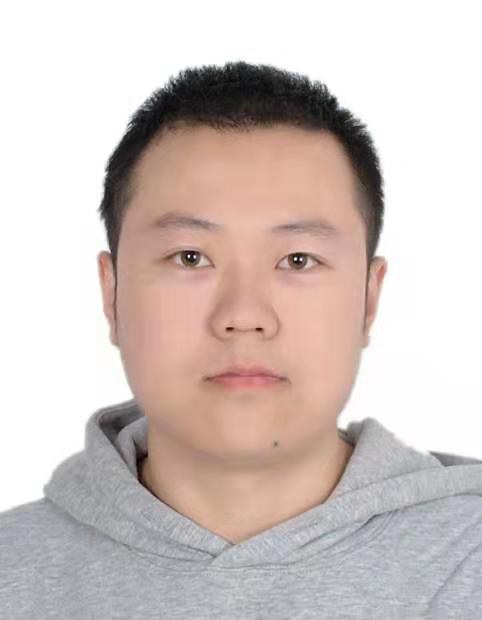
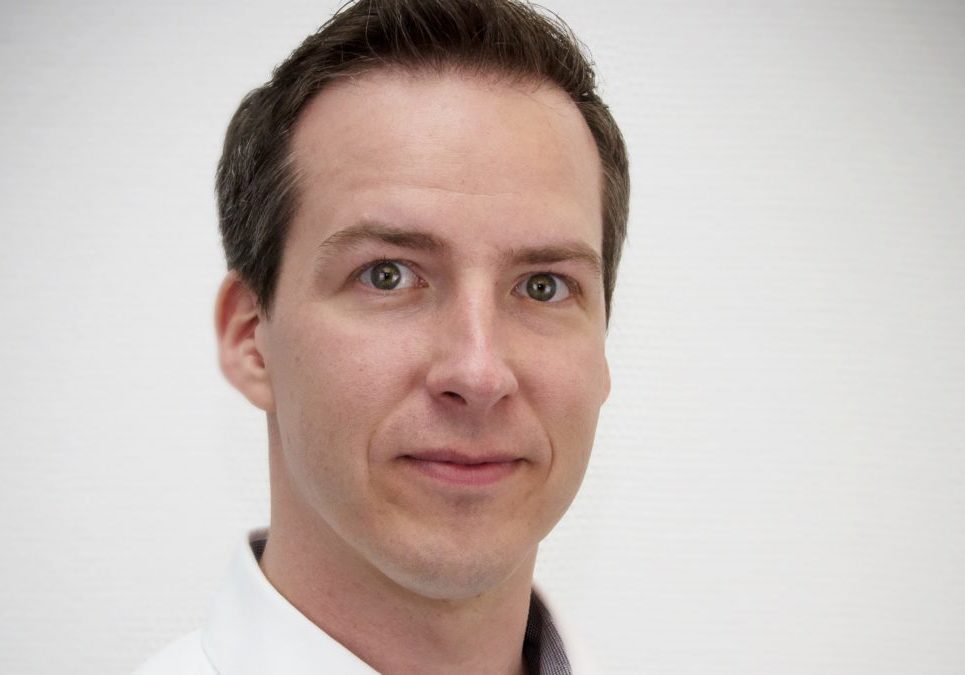
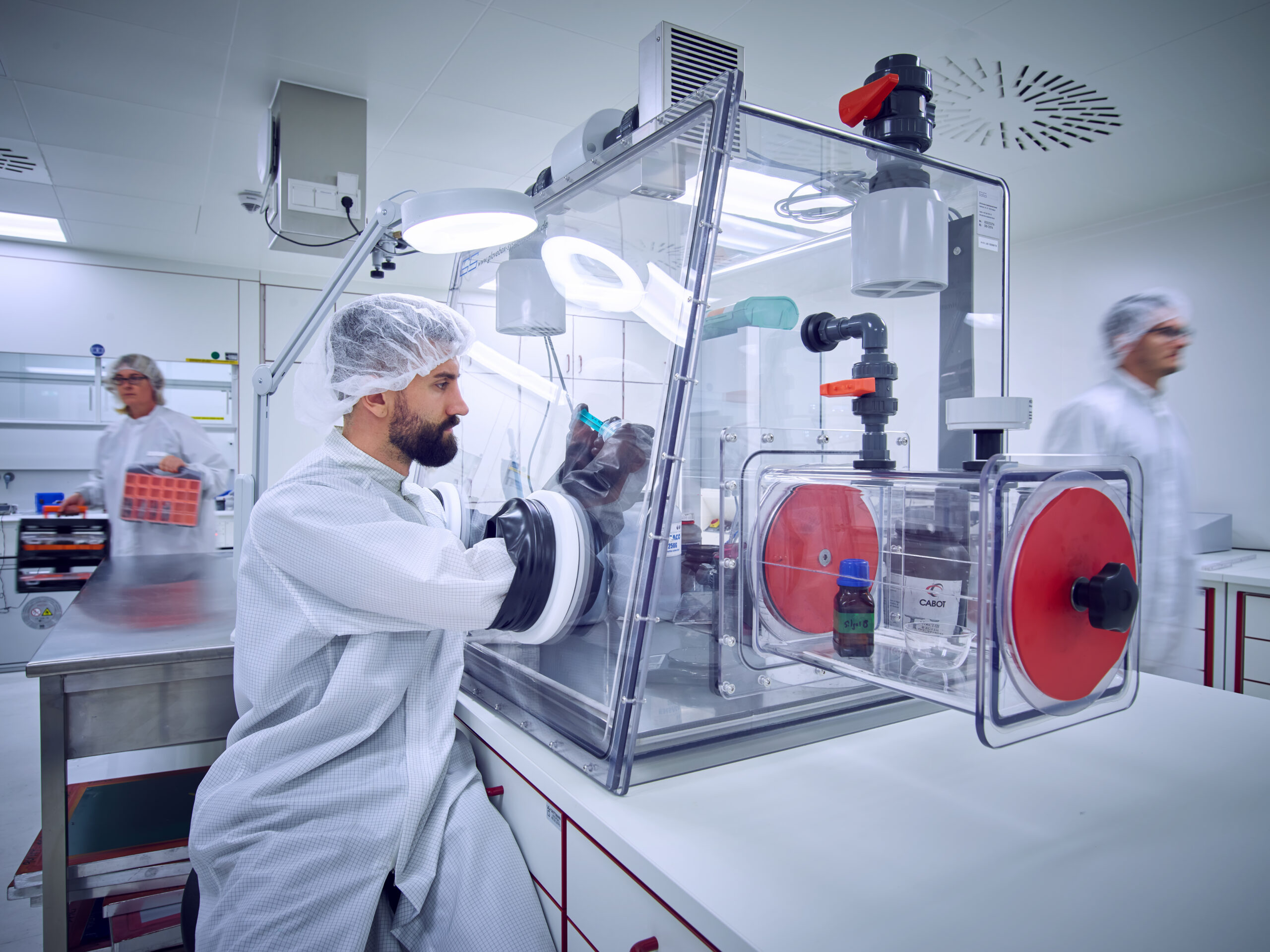
Jianchang Wu is a researcher at Forschungszentrum Jülich GmbH, affiliated with the Helmholtz Institute Erlangen-Nürnberg (HI ERN). His work focuses on advanced materials and automation strategies for photovoltaic technologies, particularly perovskite solar cells. Key Research Areas: Perovskite solar cells, high-throughput experimentation, machine learning in materials optimization, stability engineering, hole transport materials, and thin-film fabrication. Institutional Affiliation: Forschungszentrum Jülich GmbH and HI ERN, a Helmholtz Association institute dedicated to renewable energy research. Recent publications highlight his contributions to automated workflows for material discovery, inverse design of hole transport layers, and stability improvements in perovskite devices. His work integrates robotics, computational modeling, and experimental validation to address multidimensional challenges in energy systems. Labs & Projects: Involved in the Self-driving AMADAP laboratory and the HydroBot project, which explore autonomous optimization and fuel cell-powered robotics.
Marcel Hebing serves as Professor of Data Science at the Digital Business University of Applied Sciences (DBU), founder of Impact Distillery (mStats DS GmbH) and kaleidemoskop GmbH, and Associate Researcher at the Alexander von Humboldt Institute for Internet and Society (HIIG). Previously, he contributed to the Socio-Economic Panel (SOEP) at the German Institute for Economic Research (DIW Berlin) for seven years, developing critical data infrastructure for one of the world's largest social science datasets. His interdisciplinary background in computer science, sociology, statistics, and business informatics underpins his research approach. This foundation enables unique perspectives on data quality, interpretation challenges, and machine learning applications in societal contexts. Research Interests Hebing's work centers on three interconnected pillars: (1) generating robust, application-oriented insights through classical statistics and machine learning; (2) building automated infrastructures for end-to-end data management and analysis; and (3) enforcing rigorous quality standards throughout analytics project lifecycles. His current projects address urgent societal challenges including the BMBF-funded InnoTwin (digital twin of German society), ESG forecasting models for sustainable corporate governance, normative AI frameworks, and exploratory modeling for evidence-based decision-making. These efforts consistently bridge technical data science with social science applications. Publication Trends His publication record reveals a decade-long evolution from foundational data infrastructure work (2012-2017) toward contemporary examinations of AI's impact on research systems. Early publications focused on metadata standards, panel data management, and the sociology of data sharing, while recent work investigates large language models' implications for science (2023) and sustainable impact frameworks. Across all periods, his research maintains strong interdisciplinary connections between computer science, social science, and science policy, with consistent emphasis on practical implementation and societal relevance. Scientific Awards No specific scientific awards, fellowships, or medals are documented in the available sources. Grants and Advising Current Projects: Leading BMBF-funded InnoTwin initiative, ESG forecasting framework development, normative AI deployment systems, and exploratory modeling for robust decision-making (EMA) Advising: No information regarding formal student supervision or advisee relationships is provided in available materials Labs and Teams Through Impact Distillery (mStats DS GmbH), Hebing directs applied data science teams translating technical solutions into business and policy contexts. At HIIG, he contributes to the 'Knowledge & Society' research program examining digital transformations in knowledge production, while co-organizing initiatives like the Impact School workshops and Pop-Up Labs on inclusive AI. His leadership integrates academic research with entrepreneurial execution across multiple organizational contexts.
Taekwan Kim is a Research Fellow at the Max Planck UCL Centre for Computational Psychiatry and Ageing Research, University College London, specializing in computational models of decision-making and psychopathology. His work bridges cognitive neuroscience and clinical psychiatry to decode mechanisms underlying psychiatric disorders. Education: PhD in Brain and Cognitive Sciences, Seoul National University (2021) Research Interests: Dr. Kim investigates adaptive decision-making , goal-directed behavior , and metamemory through neurocomputational frameworks. His lab develops models of control processes during decision-making and translates cognitive/brain evidence into psychopathology diagnostics, with obsessive-compulsive disorder as a primary clinical focus. This integrates machine learning with fMRI and behavioral paradigms to identify circuit-level biomarkers. Publication Trends: Recent work in Brain journal reveals consistent themes: computational modeling of compulsivity (2024) and fronto-striatal circuit imbalances in OCD (2022). These studies employ hierarchical Bayesian models and neuroimaging to map cognitive control failures onto neural circuits, advancing precision psychiatry approaches. Awards: No scientific awards were documented in the source material. Advising and Grants: Student mentorship and grant details were not disclosed; affiliations suggest involvement in UCL's Applied Computational Psychiatry Lab infrastructure. Labs and Teams: He contributes to the Applied Computational Psychiatry (ACP) Lab at UCL, which develops quantitative frameworks for psychiatric nosology using computational modeling, neuroimaging, and large-scale behavioral datasets.
Dr. Thomas Hackl is a senior NMR spectroscopy specialist at the Department of Chemistry , University of Hamburg, MIN Faculty. He leads the Food-NMR working group since 2014 and serves as Academic Council member since 2009, focusing on solution-state NMR applications for food authentication and metabolomics research.
Prof. Dr.-Ing. Paul Motzki holds the professorship ' Smart Material Systems for Innovative Production - SMiP ' at Saarland University (Department of Systems Engineering) and leads the research area ' Smart Material Systems ' at ZeMA - Center for Mechatronics and Automation Technology gGmbH . His work focuses on smart materials like shape memory alloys (SMA) and electroactive polymers (EAP), which exhibit property changes under external stimuli (electric fields, temperature) to enable energy-efficient systems such as self-sensing actuators, soft robotics, and smart textiles. Research Themes : Bio-inspired actuation, elastocaloric cooling, self-sensing technologies, and industrial automation. Scientific Trends : Recent publications emphasize advancements in dielectric elastomer actuators (DEAs), SMA-driven robotics, thermal management in smart materials, and predictive modeling for industrial applications. Key subfields include triply periodic minimal surfaces for elastocalorics, hybrid actuator systems, and textile-integrated feedback mechanisms. Labs & Collaborations : Research is conducted in collaboration with ZeMA, leveraging joint appointments under the Thuringian Model. Key projects involve energy-efficient grippers, soft robotic modules, and medical devices.
Prof. Dr.-Ing. Boris Resnik is a full professor at Berlin University of Technology (BHT Berlin) in the Department of Civil Engineering and Geoinformation. Born in 1960 in Leningrad, he holds a diploma in Geodesy from the Leningrad Mining Institute (1982) and a doctorate from VNIMI (1990). His academic career spans over two decades at BHT Berlin, with prior positions at Rostock University and Brandenburg Technical University Cottbus. His research focuses on: Geodetic monitoring and deformation analysis Structural health assessment of wind turbine foundations AI and neural network applications in structural monitoring Sensor technologies (MEMS, accelerometers, inclinometers) Automated early warning systems for infrastructure He leads significant projects including the IFAF-funded WEsaFE (2014-2016) on wind turbine foundation monitoring and the DAAD Eastern Partnerships initiative (2018-2023) with Central Asian universities. Publication analysis shows a strong evolution toward AI-driven methodologies since 2019, with recent works focusing on neural networks for real-time structural monitoring, vehicle classification, and vibration analysis. His 2023-2025 publications demonstrate increasing integration of drone-based thermography and advanced sensor networks. No scientific awards are documented in the provided materials. Contact is maintained through resnik@bht-berlin.de, with office at Building D (Civil Engineering) Room D 422.
Karsten Reuter is a prominent theoretical and computational chemist with a vast publication record in catalysis, materials science, and surface chemistry. His research is centered on the development and application of first-principles methods, particularly density functional theory (DFT), ab initio thermodynamics, and microkinetic modeling, to understand and predict the behavior of heterogeneous and electrocatalysts. He has made significant contributions to the computational screening of materials for energy applications such as CO₂ reduction, hydrogen evolution, and oxygen evolution reactions. His work often bridges fundamental quantum chemistry with practical catalytic performance metrics. His research interests span a wide range of topics including heterogeneous catalysis , electrocatalysis , surface science , nanomaterials , and machine learning in chemistry . He has pioneered approaches combining machine learning with physical models to accelerate catalyst discovery and has deepened the understanding of catalyst stability under operational conditions. His work on charge transport in molecular materials also extends into organic electronics. The publication trends in his recent work highlight a strong focus on computational catalyst design , ab initio thermodynamics , and advanced simulation techniques for electrified interfaces. He frequently employs and develops methods such as compressed sensing, DFT+U, and implicit solvation models to address challenges in accuracy and scalability. Karsten Reuter collaborates with several leading researchers in the field, including Mie Andersen, Harald Oberhofer, and Johannes Margraf. His publications appear consistently in high-impact journals such as ACS Catalysis , Journal of the American Chemical Society , Chemical Reviews , and The Journal of Physical Chemistry . Although specific details about academic rank and institution are not provided in the text, the volume, impact, and senior authorship of his publications strongly indicate a full professorship or equivalent leadership role in a major research institution. He is actively publishing as of 2023, confirming his current professional engagement.
Prof. Eva Vitting is a Professor in the Department of Design at Aachen University of Applied Sciences, where she leads research and teaching in information visualization and design theory. Her work bridges the gap between complex data systems and human understanding through innovative visual communication approaches. Her educational philosophy emphasizes that "Good design requires dedication and a critical mind. It's about developing new ideas with curiosity, openness, and playfulness, methodically experimenting to create a variety of variants, and using analytical focus to filter out which design most convincingly solves the task." She has developed a conceptual design approach that alternates between experimental and analytical phases to find new solutions, with sustainability as a fundamental principle throughout her projects. Prof. Vitting's research portfolio demonstrates consistent activity from 2008 through 2021, with recent work focusing on interactive data visualizations for Industry 4.0 applications, energy systems, and financial data. Her publications and conference presentations reveal a strong emphasis on making complex information accessible through thoughtful visual coding that considers human perception. Her supervised student projects show expertise across multiple visualization domains including: Interactive weather data visualization (Caelum project) Robotics and human-machine interaction Plastics material properties catalog Time zone visualization for international teams Social media usage patterns Prof. Vitting leads the ongoing research interest in Visual Coding in Information Design and has secured significant research funding through BMBF and BMWI projects including: "Matchbox" (BMBF StartUpLab@FH) "Founded@FH Aachen" (EXIST-Potentiale) ProSense project (2012-2015) with RWTH Aachen Her teaching extends to foundational design principles through the Color Form Composition program where students learn that "All elements of a design should be optimized in their visual form to match the content, because graphic syntax implies semantic messages."
Jürgen Singer is a Professor of Visual Computing at Harz University of Applied Sciences, coordinating the Media Informatics degree program. His academic career spans over two decades, including prior roles as Professor of Computer Graphics, Animation, and Virtual Reality (2006-2015) and senior research positions at institutions like MIT and the University of Texas. Education: PhD in Mathematics (1995), University of Houston Diploma in Theoretical Physics (1988), Friedrich-Alexander University Erlangen-Nuremberg Research Interests focus on visual computing, encompassing image processing, computer graphics, virtual reality, and machine learning. He explores applications in game development, 3D rendering, and web technologies, particularly emphasizing procedural generation, AI integration, and real-time visualization. Teaching Contributions include core courses in Java programming, software tools (Git, Docker, Jenkins), mathematics for computer graphics, and advanced topics like concurrency and distributed programming. His supervised theses reflect ongoing innovation in DevOps, metaverse content creation, and accessibility in UI design. Scientific Awards are not explicitly mentioned in the provided text. Labs & Teams: While specific lab details aren't provided, his work with student theses indicates collaboration in media informatics, game development, and visualization research groups.
Professor Marc Goerigk holds the Chair of Business Decisions and Data Science at the Faculty of Economics, University of Passau, a position he has held since 2023. He previously held academic positions at TU Kaiserslautern, Lancaster University Management School, and the University of Siegen. He earned his doctorate in applied mathematics from the University of Göttingen and is recognized as a leading researcher in robust optimization. PhD in Applied Mathematics, University of Göttingen Research and teaching at TU Kaiserslautern, Lancaster University, University of Siegen His research centers on robust combinatorial optimization, focusing on decision-making under uncertainty. He develops mathematical models and algorithms that yield solutions resilient to data uncertainties, with applications in traffic, logistics, and corporate planning. He emphasizes abstract problem structures over specific instances, seeking generalizable optimization frameworks. His work bridges operations research, data science, and algorithm design, aiming to enhance decision robustness in complex systems. The recent publications highlight a strong trend in robust optimization, particularly in multi-stage and recoverable models, data-driven scenario generation, and interpretable optimization. His work increasingly integrates machine learning concepts with classical optimization, especially in explainability and preference modeling. Applications span scheduling, routing, project management, and logistics, demonstrating both theoretical depth and practical relevance. Scientific Awards: Most research-intensive business professor under 40 in the German-speaking world (WirtschaftsWoche, 2024) Professor Goerigk leads a research group focused on optimization under uncertainty. He supervises doctoral and master's students in seminars on optimization and data science. He teaches courses such as Decision Making Under Uncertainty, Combinatorial Optimization, and Artificial Intelligence and Optimization. His work is supported by ongoing research in robust modeling and algorithm development, with future directions likely involving deeper integration of AI and optimization for real-world decision support systems. No specific grants are mentioned, but his prolific output suggests active funding. He leads the Chair of Business Decisions and Data Science at the University of Passau, where his team works on theoretical and applied aspects of robust optimization, scenario modeling, and decision support systems.
Dr. Simone Pinto Carneiro is a Research Fellow and Group Leader at Ludwig Maximilian University of Munich (LMU), affiliated with the Faculty of Chemistry and Pharmacy across the Departments of Biochemistry, Chemistry, and Pharmacy. She assumed her current leadership role in July 2024 following prestigious positions as a Humboldt Fellow (2022-2024) and Postdoctoral Researcher (2021-2022) at LMU Munich. Education: PhD in Biotechnology, Universidade Federal de Ouro Preto (UFOP), Brazil (2014-2018) M.Sc. in Pharmaceutical Sciences, UFOP, Brazil (2011-2013) Pharmacy Degree, UFOP, Brazil (2005-2010) Visiting PhD Student, Université Paris-Sud, France (2017-2018) Master Intern, Université Lille 2, France (2012) Her research focuses on advanced drug delivery systems with specialization in nanomedicine, pulmonary therapeutics, and nucleic acid delivery. Dr. Carneiro develops innovative nanoparticle platforms (lipid nanoparticles, micelleplexes, polymer hybrids) for targeted delivery of siRNA, mRNA, and CRISPR-Cas9 components to treat lung cancer and respiratory diseases. Her work integrates machine learning for polymer design and emphasizes inhalable formulations for clinical translation. Publication analysis reveals dominant themes in pulmonary nanomedicine , including lipid nanoparticle optimization, CRISPR-Cas9 delivery systems, and RNA therapeutics. Recent work demonstrates increasing focus on targeted cancer therapies and inhalable formulations, with consistent applications in treating lung diseases and infectious conditions through advanced material science approaches. Awards & Honors: Humboldt Fellowship (2022-2024) As Group Leader, Dr. Carneiro directs research in nanotherapeutic development. While specific student advisees and grants aren't detailed, her collaborations include international teams working on pulmonary delivery systems and cancer therapeutics. She holds patents in nanoparticle technologies and contributes to advancing pharmaceutical nanotechnology through translational research.
Matthew Daniel Eddy is a historian of modern science and Chair in the History and Philosophy of Science at Durham University. He co-directs the Institute for Medieval and Early Modern Studies and is affiliated with the Max Planck Institute for the History of Science's Digital Humanities Team. His work bridges cultural history, history of science, gender studies, and manuscript culture. Education: Trained in England, the USA, and Germany. Grants & Fellowships: Funded by the British Arts and Humanities Research Council, Royal Society of London, Wellcome Trust, Mellon Foundation, and Durham's Institute for Advanced Study. Research Interests: Eddy investigates how Enlightenment-era notebooks functioned as paper machines that shaped knowledge production, emphasizing graphic literacy, tabula rasa, and the interplay between material culture and cognition. His work also explores the history of environmental science, chemistry in Edinburgh's medical school, and gendered practices in knowledge-making. Article Trends: His publications focus on notebooks as cognitive tools, visualization in chemistry, and the social history of science. Keywords like History of Science , Manuscript Culture , and Graphic Literacy recur, alongside subfields such as Chemical Diagrams , Victorian Pedagogy , and Enlightenment Notekeeping . Scientific Awards: He has received fellowships from prestigious institutions, including Harvard, MIT, and Caltech. Advising & Grants: Eddy has served on executive councils for professional societies and advised British government organizations. He currently works on a project examining rational observation training during the Scottish Enlightenment.
Hannes Meinlschmidt is an Assistant Professor and Senior Scientist at the Chair for Dynamics, Control, Machine Learning and Numerics – Alexander von Humboldt Professorship at Friedrich-Alexander-Universität Erlangen-Nürnberg (FAU) since March 2021. His work focuses on optimal control of partial differential equations (PDEs) and applied analysis, with a particular emphasis on regularization, regularity theory for elliptic and parabolic evolution equations, and nonlinear PDE systems with nonsmooth data. Degree : PhD in Mathematics (2017), TU Darmstadt Supervisor : Stefan Ulbrich (TU Darmstadt) PostDoc : RICAM Linz (2017), working with Karl Kunisch His research lies at the intersection of control theory and PDE analysis, addressing problems with applications in physics and engineering. Recent work includes regularization in optimal control, Hölder continuity for nonlinear PDEs, and well-posedness of models like the Keller-Segel system and thermistor equations on nonsmooth domains. Publications highlight his expertise in elliptic and parabolic PDEs, mixed boundary conditions, and numerical methods, with applications ranging from semiconductor modeling to biological systems. Collaborations with researchers like Joachim Rehberg and Karl Kunisch underscore his interdisciplinary approach.
Prof. Dr. Stefan Sandfeld is the Director of the Institute for Advanced Simulation (IAS) at Forschungszentrum Jülich , leading the Materials Data Science and Informatics (IAS-9) group. His research focuses on integrating machine learning, data mining, and computational methods to address challenges in materials science, particularly in analyzing dislocation dynamics, microstructure evolution, and high-throughput microscopy data. Key areas include developing AI-driven tools for electron microscopy analysis, creating FAIR-compliant data ecosystems (e.g., Helmholtz Knowledge Graph), and advancing materials informatics for semiconductor and alloy systems. He spearheads projects like the NFDI-MatWerk consortium, aiming to standardize materials data management. His work bridges experimental and computational approaches, with applications in SiC crystal growth, dislocation modeling, and defect characterization. Recent contributions include self-supervised learning frameworks for microscopy images and ontology-based systems for dislocation data (DISO). His research also explores generative models for accelerated materials design and data-driven approaches for microstructure-property relationships. Scientific highlights include: High-throughput analysis of in-situ TEM experiments for dislocation dynamics. FAIR data ecosystems via semantic web technologies (e.g., Helmholtz Knowledge Graph). Machine learning for nanoindentation analysis and 4H-SiC wafer defect detection. He collaborates with Helmholtz institutes and industry partners, driving digitalization in materials science through interdisciplinary initiatives. His lab focuses on advancing AI tools for material discovery, process optimization, and understanding multiscale material behavior.
Nitik Bhatia is a Researcher at the Technical University of Munich (TUM) within the Chair of AI-based Materials Science led by Prof. Patrick Rinke. He is affiliated with the Department of Physics PH-I in the TUM School of Natural Sciences, based at Lichtenbergstr. 4 in Garching bei München, Germany. His research centers on Machine Learning in Materials Science and Electronic Structure Theory , with specialized expertise in Infrared Spectroscopy and Computational Chemistry . He develops AI-driven methods for molecular property prediction, focusing on accelerating materials discovery through data-driven approaches and molecular simulation techniques. Recent 2025 publications demonstrate his leadership in creating foundation models (MACE4IR) and active learning frameworks for infrared spectra prediction, establishing clear trends in AI-enhanced spectroscopic analysis and interatomic potential development within materials informatics. Bhatia operates within TUM's Chair of AI-based Materials Science, a research unit specializing in Electronic Structure Theory Development, Machine Learning for Biomaterials, and AI applications in Atmospheric Science and Clean Energy materials.