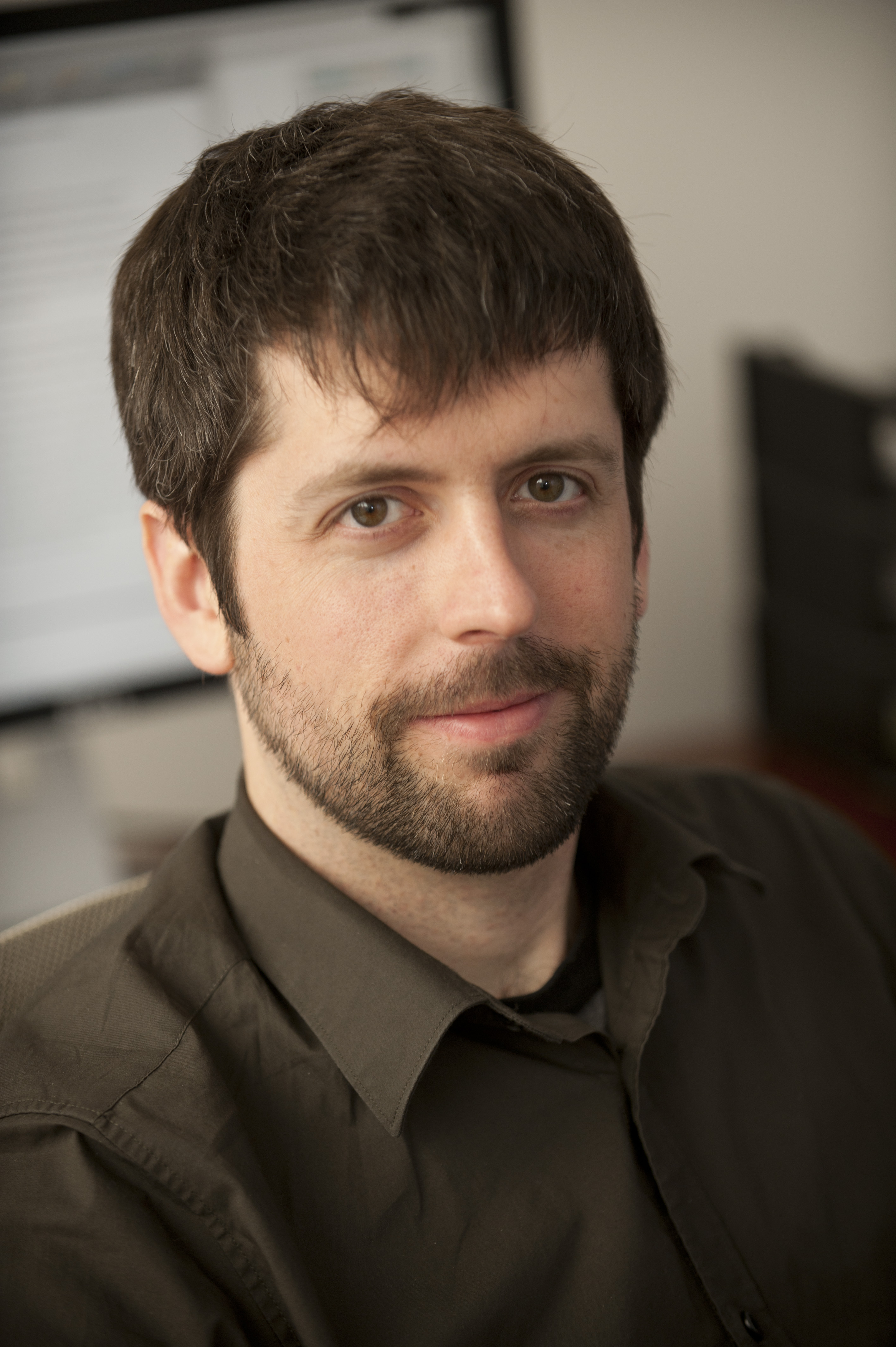
Jiaqi Ma is an Assistant Professor at the University of Illinois at Urbana-Champaign (UIUC), holding dual appointments in the School of Information Sciences and the Siebel School of Computing and Data Science. Their research focuses on machine learning, graph neural networks, and data attribution, with particular emphasis on fairness in AI, large language models, and scalable algorithms. Ma has contributed to frameworks like dattri for efficient data attribution and GraSS for scalable influence functions. Research interests include graph learning (e.g., structural information analysis in text-attributed graphs), fairness in ML models (e.g., mitigating disparities in unlearning processes), and ethical AI applications. Collaborations span topics like data curation (DCA-Bench benchmark) and reinforcement learning transparency (A Snapshot of Influence). Key contributions include improving data removal while maintaining fairness (Fair Machine Unlearning), analyzing LLMs' graph structural utilization, and developing open-source tools like OpenHexAI for explainable ML evaluation. No scientific awards are explicitly listed, but their work reflects significant contributions to trustworthy AI and machine learning systems. Advising and grants: While specific students/grants are unlisted, Ma leads research teams advancing graph learning (e.g., Graph Learning Indexer platform) and safety-critical AI (e.g., unsafe data detection via attribution). Their work bridges theoretical foundations (e.g., influence functions) with practical applications (e.g., MNL model rankings).
Enno Mammen is a Professor of Mathematical Statistics at Heidelberg University, leading the Institute for Applied Mathematics. His career includes roles as Chair for Mathematical Statistics at Heidelberg (2014–present), Chair for Statistics at the University of Mannheim (2003–2014), and various academic positions since 1986. He holds a PhD (1983) and habilitation (1992) from Heidelberg University. Research interests focus on nonparametric statistics, bootstrap methods, additive models, high-dimensional data, and statistical theory. Key contributions include foundational work on the wild bootstrap, penalized nonparametric estimators, and nonparametric diffusion models. He has authored over 150 papers in top journals like the Annals of Statistics and Biometrika. Current research spans Hawkes processes, neural network statistics, and non-Euclidean data analysis. He has supervised 12 PhD students since 2010, with many progressing to academic roles. Awards include the Heinz Maier Leibnitz Prize (1989) and IMS Fellowship (1998). Active in editorial roles for journals like the Annals of Statistics and Bernoulli. Major funding includes leadership of the DFG-funded Research Training Group 'Statistical Modeling of Complex Systems' (2013–2022) and collaborations with Russian institutions on stochastic differential equations.
James Mitchell is a Professor of Public Policy at the University of Edinburgh’s School of Social and Political Science . He holds a MA (Political Studies) from the University of Aberdeen and a D.Phil. (Oxford). His research focuses on British politics, devolution, public policy, territorial politics, and Scottish nationalism. He has supervised over 30 years of PhDs and Masters in public policy, devolution, and constitutional politics. Key research themes include fiscal accountability in Scotland, party membership surges post-referendum, and multi-level governance. Research Projects: ESRC-funded study on SNP and Scottish Greens’ post-referendum membership growth Investigation of fiscal devolution’s accountability gaps Analysis of Scotland’s constitutional questions and local governance Research Interests: Mitchell explores territorial politics, public service reform, and political behavior in sub-state governments. He has contributed to debates on Scottish independence, EU referendum impacts, and intergovernmental relations. Recent work includes studies on the SNP leadership contest (2023) and Holyrood’s fiscal structures. Grants & Awards: He has secured grants from the Economic and Social Research Council (ESRC) for projects on party membership and constitutional dynamics. No specific scientific awards are listed, but his work is widely cited in political science and public policy. Labs & Teams: He is part of the Territorial Politics Research Group and has collaborated on regional economic forecasting and governance studies. His work often bridges academia and policy, influencing debates on devolution and public finance.
Prof. Rocco OLIVETO is a Full Professor at the University of Molise, affiliated with the School of Biosciences and Territory. His research spans software engineering, artificial intelligence, cybersecurity, and healthcare technology. He focuses on empirical studies of developer practices, AI-driven code analysis, vulnerability detection in smart contracts, and human-centric computing. His work also addresses challenges in game development, mobile app optimization, and wearable health monitoring systems. Notable research areas include code readability assessment, machine learning applications in healthcare diagnostics, and the effectiveness of AI tools like GitHub Copilot. He has contributed to projects like QualAI (continuous quality improvement for AI systems) and 2Vita-B (cognitive and physical rehabilitation systems). His empirical studies often bridge academic research with real-world developer workflows, emphasizing practical applicability. Prof. Oliveto's recent work explores topics such as automated gameplay analysis for game debugging, detection of engagement issues in video games, and robust methods for identifying security vulnerabilities. He has also investigated Dockerfile quality, developer frustration metrics, and the ethical implications of AI in administrative document simplification.
Nabil Kahale is an Associate Professor of Finance at ESCP Business School in Paris. His research focuses on financial derivatives, Monte Carlo methods, optimization, and machine learning. He holds a PhD in theoretical computer science from MIT (1993) and an HDR (French habilitation) from Université Paris 1 Panthéon-Sorbonne (2020), enabling him to supervise PhD students. His academic career includes prior roles in theoretical computer science and consulting for banks. He has published widely in top journals such as Mathematical Finance , Management Science , and SIAM Journal on Computing . Education: Bachelor of Science in Engineering, École Polytechnique (1987) PhD in Theoretical Computer Science, MIT (1993) HDR in Economics, Université Paris 1 Panthéon-Sorbonne (2020) Research Interests: His work bridges finance and computational methods, emphasizing practical applications of stochastic models and algorithmic efficiency. Key areas include derivative pricing, risk management, and the integration of machine learning into financial systems. Professional Contributions: He has served as a consultant for banking institutions and a referee for the French Ministry of Economy and Finance. His research also intersects with social and economic policy analysis, such as evaluating the economic impact of public health measures. Labs/Teams: While no specific lab affiliation is mentioned, his collaborations span interdisciplinary teams in finance, computer science, and applied mathematics through his publications and consulting work.
Theocharis Kyriacou is a Reader in Computer Science at Keele University, School of Computer Science and Mathematics. He holds roles as Director of Education and Programme Director for undergraduate and postgraduate Computer Science programmes since 2018. Educated at the University of Sheffield (BEng, 2000) and University of Plymouth (PhD in Computer Science, 2004), his research focuses on Data Science and Machine Learning applied to healthcare, robotics, education, and sports science. He has led a 3-year Knowledge Transfer Partnership (KTP) with Bentley Motors and supports local SMEs through consultancy. His work spans academic research collaborations across disciplines and organizational roles in curriculum development. Research interests include machine learning applications in cardiology (predicting cardiovascular risks), wearable electronics for neurological conditions, and educational technology for curriculum design. He has published widely in journals like International Journal of Cardiology and BMJ Open Sport and Exercise Medicine , with a focus on interdisciplinary problem-solving. Awards and recognitions are not explicitly listed, but his contributions include impactful collaborations with medical institutions and industry partners. Advising and grants include guiding students in KTP projects and securing funding for robotics and healthcare-related research. He has developed new academic programmes in computer science apprenticeships and cross-school initiatives. His involvement in labs/teams includes collaborations with Keele’s pharmacy, sports science, and medicine departments, as well as international partners.
Gunnar von Heijne serves as Professor of Theoretical Chemistry at Stockholm University, a position he has held since 1994, and as Director of the Center for Biomembrane Research since 2006. Previously, he directed the Stockholm Bioinformatics Center from 2000-2006. His academic career includes appointments at Karolinska Institute as Associate Professor (1989-1994), University of Munich as Full Professor of Computer Science (1999-2002), and ETH Zurich as Professor of Computer Science (2003). Dr. von Heijne earned his Ph.D. in Theoretical Physics from the Royal Institute of Technology, Stockholm in 1980. His research focuses on protein sorting and membrane protein biogenesis, with groundbreaking contributions including the discovery of the "(-1,-3)-rule" for signal peptide cleavage sites and the "positive inside" rule for membrane protein topology. He has developed essential bioinformatics tools such as SignalP, TargetP, and TMHMM that are widely used in the field. His work spans both computational methods development and experimental validation across E. coli and eukaryotic systems, with recent emphasis on dual-topology membrane proteins and their evolutionary significance. His research has established fundamental principles in membrane protein biology and provided essential tools for the global research community. Dr. von Heijne's publications have received approximately 75,000 citations with an h-index of 102, reflecting his significant impact on molecular biology, bioinformatics, and membrane protein research. The T. Svedberg Award, The Swedish Biochemical Society (1990) The Göran Gustafsson Prize, The Swedish Academy of Sciences (1995) The Arrhenius Medal, The Swedish Chemical Society (1997) Elected member of the Royal Swedish Academy of Sciences (1997) Elected member of the Academia Europaea (1998) "Excellence" Award, the Swedish Research Council (2002) Honorary Doctorate, Åbo Akademi (2008) The van Deenen Medal, Utrecht University (2009) The Accomplishment by a Senior Scientist Award of the International Society for Computational Biology (2012) Dr. von Heijne has supervised 16 Ph.D. students since 1991 and has served extensively on academic committees, including as faculty examiner for doctoral defenses at multiple international institutions. He has chaired the Nobel Committee for Chemistry since 2007 and has participated on editorial boards of leading journals including Journal of Molecular Biology and EMBO Journal. As Director of the Center for Biomembrane Research, he leads an interdisciplinary team investigating membrane protein structure, function, and biogenesis through integrated experimental and computational approaches, advancing our understanding of fundamental cellular processes.
Sanat K. Sarkar serves as a Professor in the Department of Statistics, Operations, and Data Science at Temple University's Fox School of Business and Management. An internationally renowned expert, he has pioneered foundational work in multiple testing theory with applications spanning genomics, neuroimaging, and high-dimensional data analysis. His methodological innovations address critical challenges in false discovery rate control under complex dependency structures. Research Interests: Dr. Sarkar specializes in Multiple Testing, Statistical Methodologies, High-Dimensional Statistical Inference, and Multivariate Statistics. His work develops rigorous frameworks for hypothesis testing in modern scientific contexts where thousands of simultaneous tests are performed, ensuring reliable discoveries in fields like genetic association studies and brain connectivity mapping. Key contributions include adaptive FDR procedures and methods for structured hypothesis groups. Publication Trends: Over 2020-2025, his 11 publications demonstrate sustained leadership in refining false discovery rate methodologies. Recent work tackles correlated data (2025), knockoff variable selection (2022), and hierarchical hypothesis structures (2021-2024), reflecting his focus on real-world applicability in biomedical big data. His research bridges theoretical statistics with practical computational solutions. Honors and Awards: Fellow, Institute of Mathematical Statistics Fellow, American Statistical Association Elected Member, International Statistical Institute Musser Award for Research Excellence (Fox School) Multiple Dean's Research Honor Roll Inductions Research Support and Service: Funded continuously by NSF and NSA grants, Dr. Sarkar co-organized the NSF-CBMS conference on Multiple Comparisons and serves on editorial boards of Annals of Statistics , American Statistician , and Sankhya . He regularly delivers invited talks at international venues and mentors junior researchers in statistical methodology development.
Nicola Dragoni is a Professor in Cybersecurity Engineering at the Department of Applied Mathematics and Computer Science, Technical University of Denmark (DTU). As Deputy Director and Head of Section, he leads research initiatives focused on securing emerging technologies. Key Research Areas : Internet of Things (IoT) security, machine learning for intrusion detection, cyber-deception techniques, fog computing, malware analysis, blockchain applications, and wireless sensor network security. Supervision : Actively supervising multiple PhD students in projects related to cyber-deception, moving target defense, and bio-inspired security mechanisms. Recent Publications : Contributions to IoT honeypots, drone identification via RF signals, passkey adoption challenges, and cyber range taxonomies.
Abbas Heydarnoori is an Assistant Professor in the Department of Computer Science at Bowling Green State University (USA) since 2022, and previously held a faculty position at Sharif University of Technology (Iran) from 2012 to 2022. He earned his Ph.D. in Computer Science from the University of Waterloo (Canada, 2009), and M.Sc. and B.Sc. in Software Engineering from Sharif University of Technology (2001 and 1999). His research focuses on AI-driven software engineering (AI4SE/SE4AI), leveraging data science and AI to address challenges like fault localization, bug prediction, and code comprehension. He analyzes software repositories (e.g., GitHub, Stack Overflow) to improve developer productivity and software quality. He has contributed to tools like CrowdSummarizer and ExceptionTracer, and his work spans topics such as microservices architecture, API usage analysis, and code summarization. Teaching includes graduate/undergraduate courses on AI for Software Engineering, Database Systems, and Software Engineering. His service roles include editorial board membership at Science of Computer Programming , and PC membership in conferences like MSR, SANER, and FSE. His research group actively publishes on automated code analysis, documentation generation, and developer productivity tools, with a focus on empirical and data-driven approaches.
Juan Felipe Carrasquilla Álvarez is an Assistant Professor in the Department of Physics at the University of Toronto. His research focuses on the intersection of condensed matter physics, quantum computing, and machine learning, emphasizing quantum many-body systems, quantum device validation, and phase identification. He holds affiliations with the Acceleration Consortium and the Centre for Quantum Information and Quantum Control at the University of Toronto, and is a Perimeter Institute Visiting Fellow. Education: PhD in Physics from SISSA (Italy), followed by postdoctoral fellowships at Georgetown University (2011-2013), the Perimeter Institute (2013-2016), and a stint as a Research Scientist at D-Wave Systems Inc. Earlier, he completed the Abdus Salam ICTP Diploma Programme (2005-2006). Research interests span quantum Monte Carlo simulations, machine learning-driven analysis of quantum systems, and applications to quantum computing validation. His work bridges theoretical physics with computational methods, addressing challenges in both classical and quantum computing paradigms. Notable contributions include developing neural network architectures for quantum state reconstruction, error mitigation in quantum simulations, and optimal control strategies for quantum thermal machines. His publications explore topics like topological order detection, shadow tomography, and hybrid quantum-classical algorithms. Awards/Fellowships: Perimeter Institute Postdoctoral Fellowship (2013-2016), Georgetown University Postdoctoral Fellowship (2011-2013), SISSA PhD Fellowship (2006-2010), and Abdus Salam ICTP Diploma Programme Fellowship (2005-2006). Advising/Grants: No formal advisee list provided. Active in interdisciplinary collaborations through affiliations with major quantum research consortia and institutions. Lab/Teams: Part of the Acceleration Consortium and the Centre for Quantum Information and Quantum Control, contributing to cutting-edge quantum computing and machine learning research.
Donato Romano serves as Associate Professor at The BioRobotics Institute of Scuola Superiore Sant'Anna, Italy, where he coordinates the Bio-Robotic Ecosystems Lab and co-founded the spin-off company HUBILIFE srl. His interdisciplinary work bridges robotics, biology, and AI to develop biohybrid systems for biodiversity preservation, sustainable environmental management, and life support in extreme scenarios including space exploration. With over 90 publications and an H-index of 27 (Scopus, March 2025), he has established significant academic leadership through editorial roles across 12+ international journals. Romano's educational foundation includes advanced degrees with honors: an M.Sc. in Agriculture Science and Technologies (2014) and a PhD in BioRobotics (2018), both from Scuola Superiore Sant'Anna. His academic journey includes visiting scholar positions at Khalifa University and substantial industry-academia collaboration through HUBILIFE srl, which commercializes bioinspired devices for human daily life improvement. His research program focuses on bioinspired and biomimetic robotics with particular emphasis on animal-robot interaction, biohybrid systems, and natural intelligence. Key projects address critical global challenges: SENSORBEES develops biohybrid environmental surveillance for ecological monitoring; REGOLIFE investigates lunar soil-terrestrial organism interactions for space agriculture; and OCEAN ROBOCTO explores marine ecosystem solutions. This work demonstrates a strategic progression from fundamental behavioral studies toward applied ecological and extraterrestrial systems. Analysis of his recent publications reveals strong trends in AI-driven behavioral analysis, with deep learning increasingly applied to entomological studies and pest management. The research spans agricultural applications (precision monitoring traps, larval detection systems), ecological conservation (biodiversity surveillance), and extreme-environment adaptation (lunar regolith studies). A distinctive feature is the consistent integration of biohybrid approaches where living organisms and robotic systems create synergistic capabilities exceeding either component alone. Romano's scientific recognition includes election as Junior Fellow of the Italian Academy of Engineering and Technology (2025), the Lucani fuori dal Comune award (2024), and multiple best-thesis prizes. His editorial leadership spans high-impact journals including IEEE Transactions on Medical Robotics and Bionics and Pest Management Science, where he serves as Associate Editor. As principal investigator, Romano coordinates major international projects totaling over €15M in funding: HORIZON-EIC's SENSORBEES (2024-2029), ASI's REGOLIFE (2024-2027), National Geographic's OCEAN ROBOCTO (2024-2026), and PRIN's COSMIC (2023-2025). His teaching portfolio includes PhD courses in Biosystems for Biorobotics and M.Sc. instruction in Bionics Engineering at Scuola Superiore Sant'Anna and University of Pisa. The Bio-Robotic Ecosystems Lab under Romano's direction pioneers biohybrid technologies where living organisms and robotic systems create integrated solutions. Current initiatives include SENSORBEES' environmental monitoring swarms, REGOLIFE's moonworm colonization systems, and HUBILIFE's commercial vector-control devices. The lab maintains active collaborations with space agencies, agricultural institutes, and conservation organizations, positioning biohybrid systems as next-generation tools for planetary-scale challenges.
Dana Brooks is a Research Professor in the Department of Electrical and Computer Engineering at Northeastern University, with affiliations in Bioengineering. He holds a PhD from Northeastern University (1991) and has received the Søren Buus Outstanding Research Award (2006). His primary research focuses on biomedical signal and image processing, medical imaging techniques (including MRI and electrocardiography), and neuromodulation technologies such as transcranial magnetic stimulation (TMS). He is also involved in protein conformation estimation using X-ray scattering and optimization algorithms for medical applications. Dr. Brooks leads the Biomedical Signals Processing Lab and collaborates with the Center for Integrative Biomedical Computing . His work bridges engineering and medicine, with recent grants including a $400K NSF MRI grant for advanced TMS systems and a $600K NSF grant for motor cortical organization studies. He has advised students like Setareh Ariafar (PhD’20) and contributed to innovations in image mosaicking for confocal microscopy and machine learning applications in dermatology. His publications span computational neuroscience, cardiac imaging, and uncertainty quantification in biomedical simulations. Notable achievements include developing algorithms for ECG imaging, optimizing TMS protocols, and creating tools like UncertainSCI for simulation reliability assessment.
Mauro Pezzè is a Full Professor of Software Engineering at the Università della Svizzera italiana (USI) and Università di Milano Bicocca, leading the STAR research group since 2006. He holds a laurea from the University of Pisa and a PhD from Politecnico di Milano. His research focuses on software testing, analysis, self-adaptive systems, and cloud systems. He has held editorial roles, including Editor-in-Chief of ACM Transactions on Software Engineering and Methodologies (TOSEM), and served on numerous program committees. Education: Laurea (Pisa), PhD (Politecnico di Milano). Professional roles include Dean of the Faculty of Informatics at USI (2009-2013), visiting scientist at UC Irvine and Edinburgh, and technical lead for international projects. He co-authored a seminal book on software testing (Wiley, 2007), with over 670 citations. Research Interests: Software Testing, Self-Adaptive Systems, Cloud Computing, AI in SE, Sustainable Software. Projects include work on field-based testing, failure prediction in distributed systems, and neuro-symbolic approaches for test oracles. Grants and Advising: Led STAR Lab projects in self-healing systems, GUI testing, and semantic matching. Advised numerous PhD/postdoc students (e.g., Ciniselli, Di Grazia, Qiu). Collaborations with European tech firms on R&D initiatives. Labs/Teams: STAR Group at USI/Constructor Institute, Bicocca, and Politecnico di Milano. Current members include postdocs and PhD students working on AI-driven testing and cloud reliability.
Mark Kramer is a Professor in the Department of Mathematics & Statistics at Boston University. He belongs to the Applied Mathematics research group, focusing on mathematical, statistical, and machine learning approaches to characterize brain activity. His work bridges data-driven neuroscience with computational methods, exploring topics like biophysical models of neurons, field models of neural populations in epilepsy, and theoretical questions about brain rhythms. His research interests include: Biophysical modeling of single-neuron dynamics Neural population activity in pathological states Machine learning for detecting abnormal brain rhythms Analysis of cross-frequency coupling and coherence Kramer has developed educational resources like Case Studies in Neural Data Analysis using both MATLAB and Python. These materials teach practical data analysis techniques for spike trains and field data, emphasizing hands-on implementation over theoretical mathematics. He has received funding from NIH and NSF for computational neuroscience projects. His recent publications focus on epilepsy research, sleep spindle analysis, and neural signal processing. The work spans from developing statistical frameworks to understanding network dynamics in seizure termination and exploring phase consistency in neural data. Notably, his coherence studies revealed non-intuitive coupling patterns between brain regions, demonstrating that low-amplitude rhythms can be more informative than dominant ones.