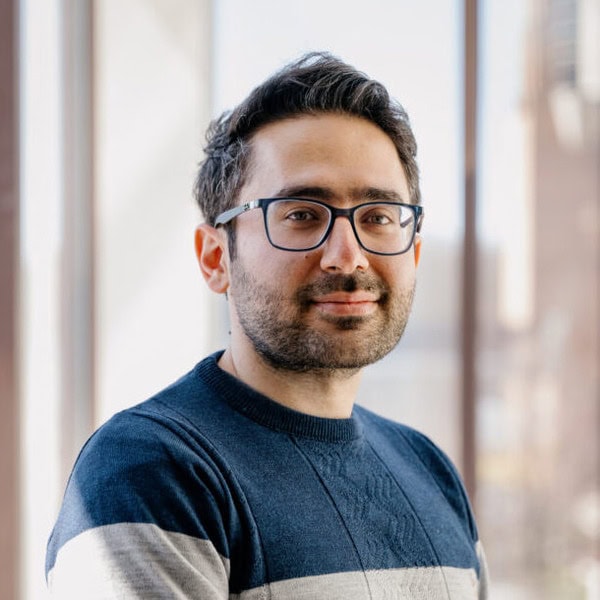
Dr. Patrick Heymans is an Associate Professor at the Faculty of Computer Science, University of Namur, Belgium. His research focuses on Software and Information Systems Engineering , with particular emphasis on Requirements Engineering, Software Product Lines, and Conceptual Modeling. Namur Digital Institute (NADI) research group Director of METADONE project - graphical environments for domain-specific modeling Research interests include: Formal Methods and Computer-Aided Software Engineering Software Evolution and Security Human-centric software configurators Recent publications examine: Variability-intensive systems analysis with RNNs (2024) Ontology-based product configuration (2022) User Experience of web configurators (2022) Scientific honors: Three Most Influential Paper Awards (2016-2024) Keynote speaker at major software engineering conferences Professional engagements: Member of multiple journal editorial boards Co-founder of VaMoS workshop on variability modeling Active in international conference program committees
David S. Thompson is a Professor in the Department of Aerospace Engineering at Mississippi State University, where he holds the inaugural Airbus Helicopters, Inc. Professorship. He is affiliated with the Bagley College of Engineering and has been a key figure in computational fluid dynamics (CFD) research and education. He previously served in leadership roles at the Center for Advanced Vehicular Systems (CAVS) and the Office of Research and Economic Development. Ph.D., Aerospace Engineering, Iowa State University (1987) M.S., Aerospace Engineering, Mississippi State University (1980) B.S., Aerospace Engineering, Mississippi State University (1979) Dr. Thompson's research focuses on computational fluid dynamics , particularly in aircraft icing , unsteady flows , and vortex-dominated flows . He also works on mesh generation, flow visualization, and high-performance computing applications in both aerospace and biomedical systems. His interdisciplinary work spans engineering mechanics, numerical methods, and biological flow modeling. His recent publications reflect a strong emphasis on turbulent wake analysis , flow visualization techniques , and CFD modeling of complex systems such as iced wings and lung airways. The articles demonstrate expertise in hybrid turbulence modeling, vortex detection, and adaptive mesh refinement, often applied to real-world engineering and biomedical challenges. Faculty of the Year, MSU Department of Aerospace Engineering (2015) Royal Academy of Engineering Distinguished Visiting Fellow (2014–15) Inaugural Airbus Helicopters, Inc. Professorship (2013–present) Bagley College of Engineering Hearin Faculty Excellence Award (2010) Mississippi State University StatePride Award (2010, 2011) Bagley College of Engineering Academy of Distinguished Teachers (2010) NASA Group Achievement Award for LEWICE development (2009) NASA TGIR Award for aircraft icing research (2001) Dr. Thompson has secured research funding from major agencies including the National Science Foundation , NASA , Air Force Office of Scientific Research , Army Research Office , Department of Homeland Security , and aircraft industry partners such as Airbus. He has advised numerous students and collaborators across disciplines, contributing to projects in aerospace, energy, and biomedical engineering. His work integrates simulation, visualization, and high-performance computing to solve complex fluid dynamics problems. He is associated with research facilities such as the Autonomous System Research Laboratory (ASRL) and the Center for Advanced Vehicular Systems (CAVS) , where he led the Computational Fluid Dynamics group. His collaborations extend to international institutions, including Cardiff University during his Royal Academy fellowship.
Kartic Subr is a Senior Lecturer (equivalent to Associate Professor) in the School of Informatics at the University of Edinburgh, where he conducts research at the intersection of computer graphics, machine learning, and robotics. He is affiliated with the Institute of Perception, Action and Behaviour and leads an active research group in physics-aware simulation and AI for scientific discovery. His research interests span Computer Graphics , Monte Carlo Rendering , Physics-based Simulation , Machine Learning , Robotics , and Computational Biology . He has made significant contributions to rendering theory, light transport analysis, BRDF modeling, and simulation of fluids and fractures. Recently, his group has applied deep learning to protein design, achieving notable success in international competitions. The recent publications reflect a strong trend toward interdisciplinary research, combining computer graphics with AI and biology. Key themes include explainable AI for physics-aware interfaces (e.g., CueTip), neural rendering (NeRF), protein design with CNNs, and reward learning in robotics. His group regularly publishes in top venues such as SIGGRAPH, NeurIPS, and IEEE RA-L. Royal Society University Research Fellowship (2014–2024) Lead, GCRF Impact Accelerator (2019) Lead, EPSRC First Grant (2017) Royal Society Challenge Grant (2016) Royal Society Newton International Fellow (2010) Marie-Curie Visitor (2006) Best Paper Honorable Mention, I3D 2012 Best Paper, I3D 2011 Kartic Subr actively supervises PhD students and postdocs, including Leonardo Castorina, Zhiyuan Zhang, and Kevin Denamganaï. Former students have gone on to positions at DeepMind, University of Edinburgh, and industry. He has secured multiple grants, including from the Royal Society and EPSRC. His research group collaborates across disciplines, particularly with biological sciences on protein design. He leads projects on approximate physics for robotics, protein design via deep learning, and interactive rendering systems. The group has developed frameworks like TIMED for de novo protein design and tools for explainable physics-aware assistants.
Vincent Sitzmann is an Assistant Professor at the Massachusetts Institute of Technology (MIT) in the Department of Electrical Engineering and Computer Science (EECS), where he leads the Scene Representation Group at MIT's Computer Science and Artificial Intelligence Laboratory (CSAIL). His research focuses on building machines that learn to understand and interact with the world autonomously through 'world models' - mental simulators that enable agents to predict environmental outcomes and the consequences of their actions. His educational background includes a PhD from Stanford University under Gordon Wetzstein and a Bachelor's degree from the Technical University of Munich. Sitzmann's research spans computer vision, graphics, and robotics, with pioneering contributions to neural scene representations. He introduced Scene Representation Networks (SRNs) that enable continuous 3D-structure-aware scene modeling from 2D images. His work on implicit neural representations with periodic activation functions has become foundational to the field. Recent research focuses on scaling 3D reconstruction techniques, improving generative models for visual content, and developing methods for robot control through neural Jacobian fields. His approach emphasizes both theoretical rigor and practical applications across multiple domains. His publication record shows a clear progression toward more sophisticated diffusion models applied to video generation, robotics, and 3D reconstruction. The 2025 Nature paper on robot control via Jacobian fields demonstrates his expanding influence beyond traditional computer vision into robotics. His work consistently bridges theoretical advances with practical implementations, as evidenced by the CVPR 2023 Best Paper Runner-Up for pixelSplat, which offers scalable solutions for 3D reconstruction. His notable scientific achievements include: CVPR Best Paper Runner-Up (2023) for 'pixelSplat' Multiple papers with 'Spotlight' or 'Oral' presentations at NeurIPS and CVPR 2023 Amazon Research Award for '2D and 3D Animation via Image-Conditional Generative Flow Models' NeurIPS Outstanding New Directions Honorable Mention (2019) As leader of the Scene Representation Group, Sitzmann mentors researchers working at the intersection of computer vision, graphics, and AI. The group has secured funding from prestigious sources including Amazon Research Awards. Their work has practical applications in virtual reality, robotics, and content creation industries. Sitzmann teaches advanced courses at MIT, including 'Advances in Computer Vision' (6.8300). The Scene Representation Group focuses on developing novel methods for 3D scene understanding and manipulation. Current projects include research on neural radiance fields, diffusion models for 3D content creation, and methods for autonomous scene understanding. The group maintains active collaborations with industry partners and academic institutions to advance visual computing research.
Mustafa Sert , currently serving as Associate Professor at Başkent University's Department of Computer Engineering and as Vice Dean of the Faculty of Engineering, has made significant contributions to audio signal processing, machine learning, and semantic multimedia. He earned his PhD (2006), MSc (2001), and BSc (1997) in Computer Engineering from Gazi University, supervised by prominent academics. PhD: Gazi University (2006) MSc: Gazi University (2001) BSc: Gazi University (1997) His research focuses on audio-visual content analysis , multimodal information fusion , and machine learning applications in semantic multimedia systems. He leads projects at the intersection of deep learning , speech processing , and acoustic pattern recognition , with work appearing in venues like IEEE Access, ACM Multimedia conferences, and Signal Processing and Communications Applications Conference (SIU). Recent publications demonstrate trends in automated audio captioning , medical speech analysis , and educational data mining , with applications spanning mental health detection, chatbot development, and reviewer selection systems. His work integrates transformer architectures , convolutional networks , and fuzzy decision-making models . Scientific Recognitions: Best Paper Award (7th Eurasian Congress on Emergency Medicine 2021) Outstanding Reviewer Awards (IEEE ICME 2020, 2021) Outstanding Area Chair Award (ACM Multimedia 2024) Academic Leadership includes roles as Senior IEEE Member, technical committee board positions in IEEE CTSoc divisions, and ACM membership. He supervises over 20 graduate students in topics ranging from depression detection through speech to geothermal permeability estimation , while maintaining active involvement in conference organization and journal reviewing for top-tier publications.
Yang Cao is a Professor at the University of Science and Technology of China , Department of Automation, Hefei, China. He holds a PhD from Northeastern University (2004, Shenyang, China) and has active affiliations with institutions like Virginia Tech and Huazhong University of Science and Technology. Research Focus: Spatiotemporal modeling, event-based vision, 3D human-object interaction, and industrial defect detection. Publications: 15 recent articles highlight his work in diffusion models, transformers, and state-space networks for tasks like traffic emission imputation, eye tracking, and PCB defect detection. Collaborative Work: Co-authored with Zheng-Jun Zha, Wei Zhai, Yu Kang, and others in journals like IEEE Transactions on Neural Networks and CVPR Workshops. Scientific Contributions: His research bridges computer vision, machine learning, and industrial applications, emphasizing real-world challenges such as low-light enhancement and sensor fusion.
Dr. Shuting Han leads a Junior Research Group at the University of Zurich under the Helmchen Lab, funded by the SNSF Ambizione Fellowship since 2024. She holds a Research Fellow position focusing on cortical dynamics underlying sensory processing and memory. Her research examines how distributed cortical areas interact during sensory processing and memory formation, utilizing multi-area two-photon calcium imaging, virtual reality behavior paradigms, electrophysiology, and advanced data analysis techniques. Key projects include investigating sensory representation in cortical areas, predictive processing in neural circuits, cortico-cortical interactions, memory consolidation across the neocortex, and developing high-throughput imaging methodologies. Her recent publications demonstrate expertise in cross-modal predictions, cortical microstates during consciousness alterations, and neural ensemble dynamics. She directs research on top-down predictive signals in neocortex and develops tools for volumetric neural imaging. SNSF Ambizione Fellowship Dr. Han mentors PhD students Maï Ly Leclair and Saidong Ma in the Helmchen Lab. Her group develops custom multi-area two-photon microscopes and applies machine learning for neural data analysis, bridging experimental neuroscience with computational approaches to decode cortical information processing.
Professor Remco Veltkamp holds a faculty position at Utrecht University's Faculty of Science with a focus on Game and Media Technology . As Scientific Director of AI Labs and coordinator of the Utrecht Center for Game Research , his work bridges serious games, virtual reality, and human-centered AI applications. He leads the Dynamics of Youth Hub 'Healthy Play, Better Coping' exploring gaming's role in pediatric chronic illness management. Academic leadership in gaming technology Director of Utrecht's AI Labs Founder of Serious Game Society Editor of International Journal of Serious Games Research spans game design, AR/VR interaction, 3D object recognition, and multimedia systems with applications in: Healthcare gamification Energy conservation Bioinformatics Social behavior analysis Computer vision Recent work includes: 2025: Developing fatigue management therapy games 2024: Analyzing protest dynamics through social media 2023: Creating equine pain assessment systems 2022: Gamification in food sustainability As educator, he teaches Game Programming and Small Project Game and Media Technology , while pioneering applications of gaming in healthcare and education sectors.
Salar Fattahi is an Assistant Professor at the University of Michigan, affiliated with the College of Engineering’s Department of Industrial and Operations Engineering. He holds additional appointments with the Michigan Institute for Computational Discovery and Engineering (MICDE), Michigan Institute for Data Science (MIDAS), and the Michigan Center for Applied and Interdisciplinary Mathematics (MCAIM). PhD in Industrial Engineering and Operations Research from UC Berkeley M.Sc. in Electrical Engineering from Columbia University B.Sc. in Electrical Engineering from Sharif University of Technology Research Focus: Developing scalable computational methods for structured optimization and machine learning problems by exploiting sparsity, low-rankness, and benign landscape properties. Applications span gene regulatory networks, power systems, and brain connectivity modeling. 2025: Parametric algorithms for MIQPs over trees 2024: Triple Component Matrix Factorization for global/local/noise separation 2023: Robust subspace recovery and dictionary learning Scientific Recognition: NSF CAREER Award (2023) INFORMS Best Paper Awards (2023, 2024) Dean’s MLK Spirit Award (2024) MICDE Catalyst Grant (2021) Academic Service: Associate Editor for INFORMS Journal on Data Science; Area Chair for NeurIPS, ICML, and ICLR. Mentored students including Jianhao Ma (now Tsinghua University), Geyu Liang (Amazon), and Aaresh Bhathena. Research supported by NSF, ONR, MICDE, MIDAS, START, and DEI Faculty grants.
Ing. Petr Schwarz, Ph.D. , is an Assistant Professor at the Department of Computer Graphics and Multimedia, Faculty of Information Technology, Brno University of Technology. He specializes in speech recognition and biometric systems, with a focus on robustness in real-world conditions. Current roles: Assistant Professor, Researcher, Project Lead Key affiliations: Brno University of Technology (FIT), EU Horizon Europe, Czech Defense Research Program His research spans speech recognition , language identification , and multimodal datasets for security applications. Recent work includes AI-driven emergency call systems and tools to combat voice deepfakes. Notable projects include: Multilingual and Cross-cultural Dialogue Systems (EU Horizon Europe, 2024-2026) Voice Deepfake Detection (Czech Sectech Program, 2024-2026) His publications analyze Gaussian mixture models, i-vector migration, and phonetic search techniques. Trends emphasize robust algorithms for security-critical domains . Scientific accolades include the Silver Medal from BUT Rector (2006) and Brno FIT Bronze Medal (2022). He has contributed to open-source tools like Kaldi and developed systems for NIST evaluations.
Zoey Jiang is an Assistant Professor of Business Technologies at the Tepper School of Business, Carnegie Mellon University since 2020. She holds a PhD from the University of Michigan–Ann Arbor (2020) and dual bachelor’s degrees in BA/BS from Peking University (2014). Her research bridges data science and operations management through innovative applications in AI collaboration, pricing optimization, and healthcare analytics. Education : PhD (University of Michigan–Ann Arbor, 2020), BA/BS (Peking University, 2014) Research Interests focus on: Human-AI collaboration frameworks High-dimensional choice modeling for retail analytics Competitive pricing mechanisms Crowdsourcing contest optimization Healthcare operations through behavioral data Key Publications demonstrate expertise in: Machine learning for substitution patterns in online retail Real-time AI assistance in healthcare Dynamic feedback policies in crowdsourcing Competitive pricing at scale Scientific Recognition : Recipient of Ross T&O Research Productivity Award (2019) Professional Contributions include: INFORMS TIMES Vice President (2025) Editorial reviewing for Management Science , Information Systems Research , and Manufacturing & Service Operations Management Teaching covers data science applications in business through courses like: Data Exploration and Visualization Data Mining & Business Analytics Seminar in Business Tech: Human-AI Interactions
Yu Huang is a Researcher in the Department of Mathematical and Statistical Sciences at Clemson University's College of Science. His work focuses on advancing computational methods in medical imaging, computer vision, and deep learning applications. His research includes developing multimodal models for ophthalmology, enhancing 3D graphics rendering, and improving biomedical image analysis through active learning frameworks. Notable projects involve generative models for retinal imaging and shadow removal techniques in computer vision. His research interests span computational ophthalmology, neural rendering, and AI-driven biomedical solutions. Recent efforts emphasize scalable diffusion models for high-resolution synthesis and robust medical image segmentation using test-time augmentation. Yu Huang's publications reflect a strong emphasis on interdisciplinary research at the intersection of computer science and healthcare. His work addresses challenges in both foundational AI methodologies and their practical applications in clinical settings.
Funda Durupinar is an Associate Professor in the Department of Computer Science at the University of Massachusetts Boston. Her research bridges computer graphics, animation, and psychology to develop believable virtual humans with nuanced emotional and personality-driven behaviors. Education: B.S. from Middle East Technical University, M.S. and Ph.D. from Bilkent University's Department of Computer Engineering Postdoctoral: Center for Human Modeling and Simulation, University of Pennsylvania Her work focuses on: Multimodal personality expression in virtual agents Nonverbal behavior synthesis for immersive environments Emotion contagion in crowd simulations Integration of psychological models into XR systems Data-driven approaches for realistic avatar animation Ethical considerations in affective computing Recent publications highlight trends in: Personality-embodiment interplay for LLM-based agents Dataset creation for facial expression analysis Motion-driven personality expression frameworks Crowd behavior modeling with affective parameters Leadership Roles: Program Chair for ACM Symposium on Applied Perception (SAP 2025) Organizer of MASSXR workshops at IEEE VR (2023-2025) Editorial Board Member, ACM Transactions on Applied Perception Co-organizer of BostonGFX computer graphics education initiative
Marc Pomplun is a Professor and Chair of the Department of Computer Science at the University of Massachusetts Boston, and Director of the Visual Attention Laboratory. His research focuses on analyzing, modeling, and simulating human vision through eye-tracking, cognitive modeling, and interdisciplinary applications in education, neuroscience, and human-computer interaction. Education: Ph.D. in Cognitive Science (University of Bielefeld, Germany, 1998) Diploma Thesis in Computer Science (University of Bielefeld, 1994) Research Interests: Marc’s work spans visual attention, eye movements, dyslexia, human-computer interaction, and computational modeling of vision. He uses eye-tracking to study reading, memory, and visual search, and applies findings to assistive technologies and educational tools. Publications & Trends: His recent work includes AI-driven medical imaging for Alzheimer’s and cancer detection, gaze-based biometric identification, and adaptive learning systems for neurodiverse learners. He has published extensively in journals like Vision Research , PLoS ONE , and Journal of Vision . Scientific Awards: No specific awards are listed in the provided text. Advising & Grants: While no specific students are named, Marc has mentored numerous researchers and received funding for projects like GeoGaze, which integrates gaze data into geoscience education for neurodiverse learners. Labs & Teams: He directs the Visual Attention Laboratory at UMass Boston, focusing on interdisciplinary research in vision science and technology.
Marco Grangetto serves as Full Professor in the Department of Computer Science at the University of Turin, coordinating research in image processing and computer vision. His expertise spans wavelets, image/video coding, data compression, error resilient video coding, and biomedical image processing, with significant contributions to ISO JPEG2000 standardization and editorial roles in IEEE Transactions on Multimedia. His educational background includes a PhD in Electrical and Communications Engineering (2003) and MSc in Telecommunications Engineering (1999), both from Politecnico di Torino. His research integrates Artificial Intelligence and Deep Learning with medical imaging and fundamental compression theory , producing innovations in neural network pruning, capsule networks, and entropy-based models. Recent work focuses on Covid-19 diagnosis from chest X-rays and efficient 3D scene modeling. His publication trends reveal dual trajectories: applied medical AI (Covid-19 diagnostics, lung cancer segmentation) and theoretical advances (learned compression, contrastive learning, bias mitigation). This bridges clinical validation with information-theoretic foundations, particularly in resource-constrained environments. Scientific recognition includes: Premio Optime by Unione Industriale di Torino (2000) Fulbright Grant for research at UC San Diego (2001) He maintains leadership through IEEE editorial positions, ISO standardization participation, and MPAI membership. His research group develops medical datasets (UniToChest, UniToPatho) while advancing neural network efficiency for clinical deployment. Current projects focus on entropy minimization techniques and unbiased representation learning for healthcare applications.