معرفی
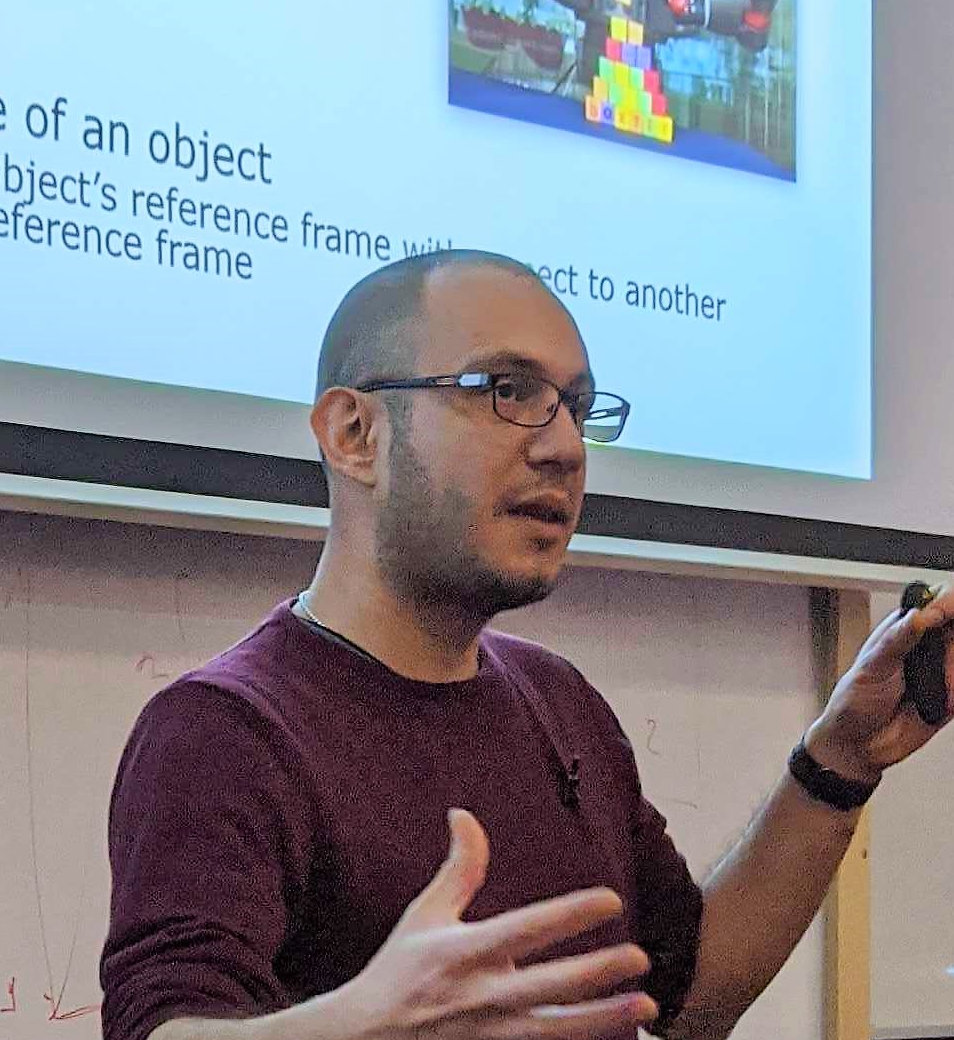
Kartic Subr is a Senior Lecturer (equivalent to Associate Professor) in the School of Informatics at the University of Edinburgh, where he conducts research at the intersection of computer graphics, machine learning, and robotics. He is affiliated with the Institute of Perception, Action and Behaviour and leads an active research group in physics-aware simulation and AI for scientific discovery.
His research interests span Computer Graphics, Monte Carlo Rendering, Physics-based Simulation, Machine Learning, Robotics, and Computational Biology. He has made significant contributions to rendering theory, light transport analysis, BRDF modeling, and simulation of fluids and fractures. Recently, his group has applied deep learning to protein design, achieving notable success in international competitions.
The recent publications reflect a strong trend toward interdisciplinary research, combining computer graphics with AI and biology. Key themes include explainable AI for physics-aware interfaces (e.g., CueTip), neural rendering (NeRF), protein design with CNNs, and reward learning in robotics. His group regularly publishes in top venues such as SIGGRAPH, NeurIPS, and IEEE RA-L.
- Royal Society University Research Fellowship (2014–2024)
- Lead, GCRF Impact Accelerator (2019)
- Lead, EPSRC First Grant (2017)
- Royal Society Challenge Grant (2016)
- Royal Society Newton International Fellow (2010)
- Marie-Curie Visitor (2006)
- Best Paper Honorable Mention, I3D 2012
- Best Paper, I3D 2011
Kartic Subr actively supervises PhD students and postdocs, including Leonardo Castorina, Zhiyuan Zhang, and Kevin Denamganaï. Former students have gone on to positions at DeepMind, University of Edinburgh, and industry. He has secured multiple grants, including from the Royal Society and EPSRC. His research group collaborates across disciplines, particularly with biological sciences on protein design.
He leads projects on approximate physics for robotics, protein design via deep learning, and interactive rendering systems. The group has developed frameworks like TIMED for de novo protein design and tools for explainable physics-aware assistants.
حوزههای پژوهشی