Dr. Mark Green is a Senior Lecturer in the School of Engineering, Computing and Mathematics at Oxford Brookes University. He holds a PhD in Computer Science from the University of Reading, focusing on visualization techniques for formal specifications of communicating systems. His expertise spans metaprogramming, software systems development, and cybersecurity, with over 10 years of teaching experience in higher education. Research interests include Agent-Oriented Programming (via the CAOPLE language), game technologies (including procedural generation and gamification), and semantic systems. He is affiliated with the Artificial Intelligence, Data Analysis and Systems (AIDAS) Institute and the Cloud Computing and Cybersecurity Group (CCC). Notable achievements include the 2017-18 Brookes Union Award for Outstanding Contribution to the Student Experience. Teaching modules include Secure Systems Architecture, Game Technologies and Development, and Software Development with C and C++. He has supervised MSc projects in experimental game development, web UI design, and AI applications. His research outputs include contributions to microservices development (CIDE IDE) and formal methods in system analysis. Awards: Brookes Union Award (2017-18) Professional Affiliations: mBCS member Consultancy: Developed a configurable Fruit Machine simulator for psychological research
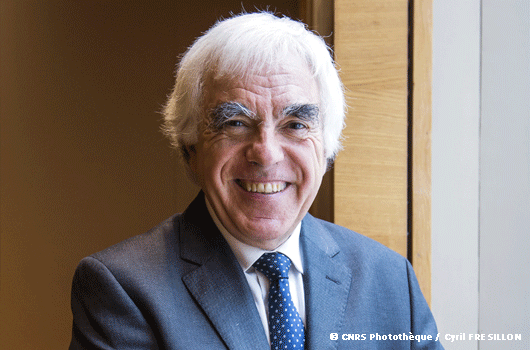
Berry Gérard is a distinguished Professor at Collège de France, holding the Chair in Algorithms, Machines, and Languages since 2012. He previously served as Director of Research at INRIA Sophia Antipolis and Chief Scientist at Esterel Technologies. His academic journey includes roles at École des Mines de Paris and École Polytechnique. Gérard specializes in models of computation, programming language design, and synchronous systems. He has contributed significantly to the development of the Esterel language for embedded systems and formal verification techniques. Education: Docteur d’Etat in Mathematics, Université Paris VII (Computer Science option), 1979 Ingénieur des Mines, Corps National des Ingénieurs des Mines, 1970 École Polytechnique, 1967 Research Interests: Focuses on computational models (e.g., lambda-calculus, synchronous concurrency), programming languages (Esterel, Hop/HipHop), circuit synthesis, and formal verification. His recent work explores diffuse programming and web orchestration. Key Awards: 2014: Médaille d'or du CNRS 2005: Member, Académie des technologies 1993: Member, Academia Europaea 1979: Bronze Medal of CNRS Professional Roles: President of the Council of Education and Research at École Polytechnique Member of the Scientific Council of IRCAM Former President of the INRIA Evaluation Committee Labs/Teams: Active in INRIA’s Indes project on diffuse programming and collaborates with IRCAM on real-time music systems.
Feng Dai is affiliated with Xidian University's National Laboratory of Radar Signal Processing in China. His research spans approximation theory, machine learning, computer vision, and optimization algorithms. He has collaborated extensively with institutions like the National Laboratory and co-authored over 140 publications since 2002. Key research interests include polynomial approximation on multivariate domains, deep learning for computer vision tasks (e.g., object detection, semantic segmentation), and optimization techniques for engineering systems. His work bridges mathematical theory with practical applications in signal processing and imaging systems. Recent publications focus on advancing polynomial mesh theory, developing algorithms for panoramic imaging, and improving federated learning frameworks for IoT applications. Notable contributions include work on universal discretization methods and boundary handling in oriented object detection. His interdisciplinary approach integrates computational mathematics with modern AI techniques, addressing challenges in both theoretical and applied domains such as autonomous systems and medical imaging.
Thomas Schneider is Professor of Cryptography and Privacy Engineering at TU Darmstadt. His research develops privacy-preserving cryptographic protocols for applications including private set intersection, mobile contact discovery, genomic privacy, and secure computation compilers. He leads the Engineering Cryptographic Protocols Group (ENCRYPTO) and has received both ERC Starting (2019) and Consolidator Grants (2023). Schneider's current projects include: Developing efficient private set intersection protocols for mobile applications Privacy-preserving machine learning frameworks Hardware-assisted cryptographic protocols Secure computation for cloud environments
Dr. Dejice Jacob is a Research Fellow at the University of Glasgow's School of Computing Science, working on the EPSRC-funded CapableVMs project. His research focuses on enhancing virtual machine security through capability-enhanced CPU architectures. Previously, he completed his PhD at Glasgow developing automatic parallelization techniques for Python in CPU/GPU systems. Jacob's technical expertise spans compiler design for heterogeneous systems, memory management security, and performance optimization of dynamic language runtimes. His current work explores hardware-assisted security mechanisms for memory safety and efficient garbage collection in capability-based systems.
Hans Hüttel is an Associate Professor in the Department of Computer Science at Aalborg University's Technical Faculty of IT and Design. His research focuses on theoretical foundations of computer science with emphasis on programming languages and formal methods. His research interests span process calculi, type systems, concurrency theory, program synthesis, and security protocols. The fingerprint analysis of his work shows strong emphasis on Type Systems (100%), Process Algebra (27%), Cryptographic Protocols (22%), and Branching Time (18%). His recent work demonstrates a growing interest in the intersection of formal methods with emerging technologies like large language models. Hüttel's publication trend shows consistent output with 97 research outputs including 56 articles in proceedings, 17 journal articles, and 9 conference articles in journals. His most recent work (2024-2025) focuses on type systems for programming languages, program synthesis with LLMs, and functional array programming. Scientific Awards: CONCUR Test-of-Time Award (Sept 2020) Hüttel has participated in multiple research projects including TREsPASS (Technology-supported Risk Estimation by Predictive Assessment of Socio-technical Security), BETTY (Behavioural Types for Reliable Large-Scale Software Systems), and educational initiatives like PBL Exchange. He has 35 media appearances where he discusses topics ranging from AI ethics to university education reform. He leads research within the Distributed, Embedded and Intelligent Systems group and has been active in educational development through problem-based learning (PBL) initiatives at Aalborg University.
Sylvain Boulmé is an Associate Professor (Maître de Conférences) at Grenoble Institute of Technology (Grenoble-INP), France, and a member of the Verimag research laboratory at Université Grenoble Alpes. His research lies at the intersection of formal verification, programming language semantics, and verified compilation, with a strong emphasis on machine-checked proofs using the Coq proof assistant. Research Interests: Formal verification of software and hardware systems Semantics of programming languages Verified compilation (e.g., CompCert and Chamois CompCert) Abstract interpretation and refinement calculi Type theory and dependent types Certification of SAT solvers and verification tools His recent work includes formally verified defensive programming techniques, certified compilation optimizations, and Coq-verified SAT solver certification tools like SatAns-Cert. He actively contributes to open-source projects and collaborates with researchers such as David Monniaux and Thomas Vandendorpe. Teaching & Outreach: He teaches courses at Ensimag (École nationale supérieure d'informatique et de mathématiques appliquées de Grenoble) covering topics like programming languages, compilation, code analysis for safety and security, and formal verification. He also engages in public communication, such as his 2024 Interstices article on building reliable software. Contact & Affiliation: Verimag Laboratory, Université Grenoble Alpes 150 place du torrent, 38401 St Martin d'Hères, France Email: Sylvain.Boulme@univ-grenoble-alpes.fr
Leonard Wörteler is a Researcher at the University of Konstanz's Department of Computer and Information Science, affiliated with the Database and Information Systems group. He joined as a PhD student in 2015 after completing his Bachelor's (2012) and Master's (2015) in Computer and Information Science at the same institution. His research focuses on query optimization, including architectures, parallel heuristic algorithms, and non-relational databases. He has contributed to teaching, including courses on database systems and computer science fundamentals. His research explores advanced optimization techniques, such as neural language models for cardinality estimation and landmark-based algorithms for graph databases. He has published in venues like IDA, DBPL, and SIGRAD, addressing topics ranging from XQuery optimization to real-time transportation visualization. Wörteler's work emphasizes practical implementations, such as optimizing Neo4j's performance through landmark embedding. His contributions bridge theoretical optimization frameworks with real-world applications in databases and data mining.
Xingfu Wu is a Research Professor of Computer Science affiliated with Argonne National Laboratory (ANL). He holds a Ph.D. in Computer Science from Beijing University of Aeronautics and Astronautics and M.S. and B.S. degrees in Mathematics from Beijing Normal University. His research focuses on high-performance computing, performance modeling and analysis, and energy-efficient computing. Education: Ph.D. in Computer Science, Beijing University of Aeronautics and Astronautics, Beijing, China M.S. in Mathematics, Beijing Normal University, Beijing, China B.S. in Mathematics, Beijing Normal University, Beijing, China Research Interests: Xingfu Wu's research is centered around high-performance computing, performance modeling and analysis, and energy and power modeling. His work emphasizes optimizing parallel systems, developing frameworks for performance prediction (e.g., MuMMI), and enhancing energy efficiency in high-performance computing environments. Scientific Awards: Best Paper Award, 14th IEEE International Conference on Computational Science and Engineering (CSE-2011), 2011 Second Place, Beijing Science and Technology Advancement Awards, 1997 Labs/Teams: Wu contributes to research at Argonne National Laboratory, particularly through initiatives like the MuMMI framework for performance modeling and analysis.
Dr. J. Todd McDonald is a Professor of Computer Science at the University of South Alabama's School of Computing. He serves as Director of the Center for Forensics, Information Technology, and Security (CFITS) and has held academic roles including Associate Professor (2011-2014) and Assistant Professor at the Air Force Institute of Technology (2006-2009). His education includes a Ph.D. in Computer Science from Florida State University (2006), MS in Computer Engineering from AFIT (2000), MBA from University of Phoenix (1996), and BS from the U.S. Air Force Academy (1990). Research Interests: Focus on software/hardware protection (obfuscation, watermarking), malware analysis, secure embedded systems, and cybersecurity. Notable projects include Phase-Space Analysis for seizure prediction, CAN network security, and development of the Program Encryption Toolkit (PET) for circuit protection research. Publications: Over 80 peer-reviewed articles in journals/conferences (e.g., IEEE, ACM) covering topics like side-channel analysis, malware detection, and cybersecurity frameworks. Recent work includes 2025 research on embedded system anomaly detection and 2021 studies in Android malware classification. Awarded Best Poster (IEEE HOST 2016) and Best Paper (CISR 2014) Managed NSF Scholarship for Service program ($6M+ funding) Advised 20+ graduate students in cybersecurity and software protection Led USA's DayZero Cyber Defense Competition teams (5th NCCDC 2017) Labs/Teams: SPERG (System Protection & Exploitation Research Group), CFITS directorship, and leadership in SSPREW workshop series. Active in developing cybersecurity education curricula and industry partnerships.
Ruben Acuña is an Assistant Teaching Professor in the School of Computing and Augmented Intelligence at Arizona State University (ASU). He holds a Master of Science in Computer Science from ASU (2015). His primary research focuses on algorithm design, automated assessment tools, educational data mining, and compiler technologies. He has been actively involved in teaching core courses such as data structures and algorithms (SER 222), operating systems (SER 334), and special topics courses like honors thesis and practicum (SER 493/580). Acuña’s research emphasizes improving educational outcomes through advanced assessment systems and exploring compiler optimizations. His teaching spans multiple semesters, reflecting his commitment to foundational computer science education. Though no specific awards are highlighted in the text, his contributions to curriculum development and automated grading systems demonstrate impact in both pedagogy and technical innovation. Academic advising and grants are not explicitly mentioned, but his extensive course load and focus on educational technology suggest active engagement in student mentorship. No specific lab affiliations are noted, though his work aligns with computational and educational technology initiatives within the School of Computing.
Bruce Belson is a Lecturer in the Department of Engineering and Related Technologies at James Cook University. He holds a PhD in Engineering and Related Technologies and specializes in embedded systems design, IoT applications, and asynchronous programming techniques. Teaching Roles: Embedded Systems Design (Lecturer/Tutor: 2021-2025) Design Project (Lecturer/Tutor: 2023-2024) Digital Logic and Embedded Systems (Lecturer: 2025) Special Study A (Lecturer: 2024) Research Interests: Optimizing memory access patterns in edge devices for machine learning inference Coroutine implementation on microcontrollers and IoT systems Vibration analysis for mining conveyor belt systems Development of digital insurance verification frameworks Key Projects: "Vibration analysis of mining industry conveyor belt systems" (2019-2020) "Development of digital apps for Fijian homeowner insurance" (2019)
Ivona Brandić is a University Professor for High Performance Computing Systems at TU Wien's Institute of Software Engineering and Interactive Systems. Born in Gradačac, Bosnia and Herzegovina, she moved to Austria in 1992 as a refugee during the Bosnian War. She earned a master's degree (2002) and doctorate (2007) in business computer science from TU Wien and completed her habilitation in applied computer science there in 2013. Her career includes roles as an assistant professor (University of Vienna, 2002–2007) and postdoctoral researcher (University of Melbourne, 2008). She transitioned to a tenure-track position at TU Wien in 2014 and became a full professor in 2016. Brandić’s research focuses on cloud computing, energy-efficient ultra-scale systems, and hybrid quantum-classical computing. She has been recognized with the MiA Award (2011), the Austrian Science Fund's Start-Preis (2015), and membership in the Austrian Academy of Sciences' Young Academy (2016). Her work emphasizes sustainable computing, edge systems, and optimizing resource management for distributed applications. Education: Bachelor's degree in Business Informatics (University of Vienna/TU Wien) Master's in Business Computer Science (University of Vienna, 2002) PhD in Applied Computer Science (TU Wien, 2007) Habilitation in Practical Computer Science (TU Wien, 2013) Research Interests: Brandić’s work spans cloud computing, energy efficiency in HPC systems, edge computing, and quantum-classical hybrid systems. She explores autonomic resource management, distributed system resilience, and sustainability in ultra-scale infrastructures. Her projects often address real-world applications like drug design, environmental monitoring, and smart energy grids. Publications: Her 2009 paper Cloud Computing and Emerging IT Platforms is a seminal work in the field. Recent publications focus on quantum-edge integration, energy optimization in AI models, and adaptive edge analytics frameworks. These contributions highlight trends toward sustainable, distributed, and hybrid computational paradigms. Awards: 2011: MiA Award for distinguished contributions by international backgrounds 2015: Austrian Science Fund’s Start Prize 2016: Austrian Academy of Sciences Young Academy Membership Advising & Grants: Brandić leads research groups and has secured grants for projects like NESSUS (energy-efficient cloud systems) and CHIST-ERA’s SDCDN (distributed networks). She mentors students in HPC, edge computing, and quantum systems. Advised topics include workload scheduling, fault tolerance, and energy-aware algorithms. Labs & Teams: She directs research on autonomic cloud management, edge intelligence frameworks (e.g., Sea-LEAP, FRESCO), and quantum-classical workflow systems (RIGOLETTO). Her teams collaborate internationally, integrating academia and industry for scalable, sustainable solutions.
Kai-Kristian Kemell is a Research Fellow in the Computing Sciences department, focusing on interdisciplinary research at the intersection of Artificial Intelligence, Software Engineering, and Ethical AI. His work explores practical applications of Large Language Models (LLMs), autonomous agents in software development, and regulatory frameworks like the EU AI Act. Research Interests : His primary areas include AI-driven software development tools, ethical implementation of AI systems, multi-agent systems for code refactoring, and systematic literature reviews on trustworthiness in LLMs. He investigates how LLMs can automate tasks like microservice generation from API definitions and assist early-stage software startups through prompt engineering. Collaborations : Active collaborations include projects with researchers like Prof. Petri Abrahamsson, focusing on topics such as RAG systems, AI ethics governance, and hybrid work practices in software engineering. His work bridges theoretical AI concepts with practical industrial applications. Publications : His 2025 publications emphasize autonomous software development agents, EU AI Act critiques, and ethical alignment strategies for LLM-based systems. Earlier work (2023–2024) addresses AI ethics implementation via user stories, hybrid work impacts, and MLOps challenges. Awards : No specific scientific awards mentioned in the provided texts. Grants & Labs : No explicit details on grants or affiliated labs, but his research frequently involves collaborative projects with industry and academic partners.
Marco Guarnieri is an Associate Professor at the IMDEA Software Institute in Spain. His research focuses on the design, analysis, and implementation of secure systems, with particular emphasis on security at the hardware-software boundary. His work addresses microarchitectural attacks (e.g., Spectre), secure compilation, hardware verification, and database security. Education PhD in Computer Science, ETH Zurich (2017) MSc in Computer Engineering, Università degli Studi di Bergamo (2012) BSc in Computer Engineering, Università degli Studi di Bergamo (2010) Research Focus Guarnieri's research spans several interconnected areas: Hardware-Software Security: Developing foundations for reasoning about security at the hardware-software boundary Microarchitectural Attacks: Analysis and mitigation of speculative execution attacks Formal Methods: Application of verification techniques to security problems Secure Compilation: Ensuring compiler-generated code maintains security guarantees Database Security: Information flow control and access mechanisms Research Trends His recent publications demonstrate a strong focus on hardware-software co-design for security, with increasing emphasis on formal verification of processor security (especially RISC-V), automated testing of speculation countermeasures, and leakage contract frameworks. His work consistently bridges theoretical foundations with practical implementations. Awards and Honors Best Paper Award at CCS 2024 Distinguished Paper Award at CCS 2023 Distinguished Paper Award at CCS 2022 Best Paper Award at S&P 2021 Research Leadership Guarnieri leads research projects on secure speculation and hardware-software contracts. He actively recruits research interns, PhD students, and postdocs to work on security at the hardware-software interface. His group develops tools like SPECTECTOR for detecting speculative information flows and LeaVe for verifying processor security.