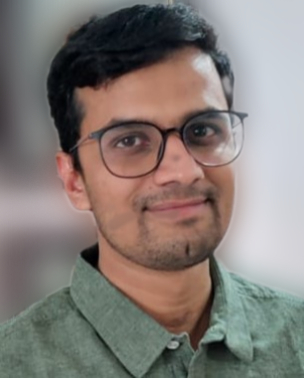
Markus Böck is a PreDoc Researcher at the Software Engineering department of Technische Universität Wien (TU Wien), Austria. His academic work focuses on the intersection of software engineering and machine learning , particularly in performance prediction and probabilistic program analysis . He contributes to automated code analysis and intelligent software systems research. Role: PreDoc Researcher Department: Software Engineering, TU Wien Contact: markus.h.boeck@tuwien.ac.at His research explores: Language-agnostic static analysis of probabilistic programs Context-dependent performance prediction from source code Interactive machine learning systems for software engineering Distributional reinforcement learning applications Code-based performance modeling Program analysis for probabilistic systems Key publication trends include: Advancing probabilistic program analysis (2024-2025) Performance prediction techniques (2022-2023) Reinforcement learning innovations (2020-2022) Application of machine learning to software engineering challenges Game theory algorithm optimization (2025)
Alexis de Colnet is a PostDoc Researcher at the Vienna University of Technology , affiliated with the Faculty of Informatics and the Algorithms and Complexity department. Their work focuses on overcoming intractability in knowledge compilation, computational complexity, and model counting. Research Interests: Knowledge Compilation Computational Complexity Artificial Intelligence Model Counting Answer Set Programming Theoretical Computer Science Recent Publications explore trends in proof systems, compilation efficiency, and translations between machine learning models for explainability. These works are deeply rooted in theoretical computer science and AI, addressing challenges in knowledge representation and computational hardness. Projects: Overcoming Intractability in the Knowledge Compilation Map (2022–2025) QBFPC (2022–2025) Funded by the Austrian Science Fund (FWF).
Martin Pirker serves as a Professor and Senior Researcher at the Institute of IT Security Research within the Department of Computer Science and Security at St. Pölten University of Applied Sciences in Austria. His academic profile demonstrates extensive expertise in IT security, trusted computing, and blockchain technologies, with a particular focus on Trusted Platform Modules, boot integrity, and secure systems development. His research interests span multiple critical areas of modern cybersecurity including Trusted Computing, blockchain-based security solutions, boot integrity verification, secure system design, privacy-preserving technologies, and information security auditing. Dr. Pirker's work consistently addresses practical security challenges in contemporary computing environments, with numerous publications exploring the intersection of hardware security, software implementation, and cryptographic verification mechanisms. His recent publications reveal a strong focus on blockchain applications for security auditing, Trusted Platform Module implementations, and secure boot processes. The research trends show progression from foundational trusted computing work toward more distributed security solutions using blockchain technology and addressing emerging challenges in AI security. His publications demonstrate consistent contributions to major security conferences including ARES (International Conference on Availability, Reliability and Security) and ICISSP (International Conference on Information Systems Security and Privacy). Dr. Pirker leads or participates in several significant research projects including the Josef Ressel Center for Blockchain-Technologies & Security Management, Josef Ressel Center for Unified Threat Intelligence on Targeted Attacks (TARGET), RPM- Rusted Plattform Module, and E³UDRES² Ent-r-e-novators. These projects reflect his commitment to addressing real-world security challenges through collaborative research initiatives. He actively contributes to the academic community through teaching in the IT Security (BA) and Cyber Security and Resilience (MA) programs at St. Pölten University of Applied Sciences. His work bridges theoretical security concepts with practical implementation challenges, making significant contributions to the field of applied cybersecurity research.
Michael Hofbaur is a full Professor at the University of Klagenfurt, where he works in the Institute for Intelligent Systems Technologies within the Faculty of Technical Sciences. His office is located at Lakesidepark Haus B04, Ebene 2, Raum B04.2.206, and he can be contacted at michael.hofbaur@aau.at. Professor Hofbaur has established himself as a leading researcher in robotics with particular expertise in human-robot collaboration, safety systems, and formal verification methods for robotic applications. His research interests focus on the intersection of robotics, safety engineering, and human factors. Professor Hofbaur has made significant contributions to the field of robot safety, particularly in developing methods for safe human-robot collaboration without physical barriers. His work spans multiple dimensions of robotics including kinematic analysis, motion planning, sensor integration, and formal verification techniques to ensure system reliability. He has published extensively on topics such as obstacle avoidance strategies, proximity perception systems, and methods to enhance flexibility in collaborative workspaces while maintaining safety standards. Analysis of his recent publications reveals a clear trend toward integrating formal verification methods with practical robotics applications, particularly focusing on safety-critical aspects of human-robot interaction. His research increasingly incorporates advanced sensing technologies like radar and capacitive proximity sensors to create more intelligent and responsive robotic systems. The work demonstrates a progression from theoretical kinematic analyses toward practical implementations in industrial and collaborative settings, with a consistent emphasis on safety assurance throughout. Professor Hofbaur's research portfolio includes numerous projects related to robotic safety, formal verification, and human-robot collaboration, though specific awards directly attributed to him are not listed in the available materials. His work appears to have significant practical applications in industrial automation and collaborative robotics settings. While specific information about his students and advising activities isn't provided in the available materials, his extensive publication record spanning over two decades suggests he has likely supervised numerous graduate students and postdoctoral researchers. His research activities indicate involvement in both theoretical and applied projects, potentially including collaborations with industry partners given the practical nature of many of his publications. Based on his departmental affiliation and research focus, Professor Hofbaur is likely associated with robotics laboratories at the University of Klagenfurt that specialize in human-robot interaction, safety systems, and formal verification of robotic workflows. These facilities likely include experimental setups for testing collaborative robots, sensor integration systems, and simulation environments for verifying robotic behaviors before physical implementation.
Fikret Basic is a researcher at the Institute of Technical Informatics at TU Wien, specializing in cybersecurity for embedded systems and battery management systems (BMS). His work focuses on integrating RFID, NFC, and secure communication protocols into industrial and automotive applications. He has led/co-led multiple EU-funded projects including SPiDR, OPEVA, and Intelligent & Networked Embedded Systems. Basic has published extensively at IEEE conferences and received awards such as Scientist of the Year 2024 and AVL Hans List Fonds Preis 2023. His contributions span secure data acquisition, wireless BMS architectures, and authentication mechanisms for IoT devices. Research interests include: Battery Management Systems, Cybersecurity for Industrial Networks, RFID/NFC Applications, Embedded System Security, and IoT Architecture Design. He actively participates in workshops like SPICES 2024 (as Chair) and peer reviews for conferences like EuroPLoP. Basic holds a Dipl.-Ing. (Diploma in Engineering) and a Dr.techn. (Technical Doctorate) in electrical engineering. Projects: SPIDR2 (2025-2028), OPEVA (2023-2025), SPiDR (2021-2024) Grants: AVL Hans List Fonds, Austrian Research Promotion Agency Labs/Teams: Member of TU Wien's Embedded Systems Security Group, collaborates with industrial partners like AVL List GmbH Media engagements include a TV interview in Bosnia discussing academic career paths and a feature in Kleine Zeitung highlighting IT talent development.
Marta Moscati works at the Institute of Computational Perception at Johannes Kepler University Linz , focusing on advanced recommendation systems and multimodal learning. Her research spans emotion-based music recommendation, privacy-preserving machine learning, and graph neural networks. Recent work includes: Developing multimodal single-branch architectures for cold-start scenarios Creating preference obfuscation techniques in implicit feedback systems Advancing music emotion recognition with semi-supervised graph networks Contributing to the FAME Challenge for multilingual face-voice association She has published extensively in top AI venues while maintaining technical expertise in both deep learning and theoretical physics , with early work on lepton universality violation. At JKU, she contributes to: Recommendation algorithms development Multimodal representation learning research Musical affective computing applications Privacy-preserving AI frameworks
Gregor Kastner is Professor and Deputy Head of the Institute of Statistics at the University of Klagenfurt. His research focuses on Bayesian statistics, time series analysis, econometrics, and computational methods, with applications in finance, economics, and environmental modeling. He develops statistical software including packages for stochastic volatility modeling in R. Kastner's methodological work centers on Bayesian inference for high-dimensional problems, developing efficient computational algorithms for complex models. His applied research examines volatility dynamics in financial markets, macroeconomic forecasting, and spatial analysis of economic indicators. Recent projects include Bayesian nonparametric clustering for evaluating agricultural subsidies in Europe, sparse vector autoregressions for high-dimensional forecasting, and stochastic volatility models for commodity markets. He maintains active collaborations across economics, finance, and environmental science disciplines.
Alexander Pluska is a PreDoc Researcher at TU Wien's Faculty of Informatics, affiliated with the Department of Formal Methods in Systems Engineering. He holds an MSc and is engaged in research at the intersection of formal methods, logic, and machine learning. His work includes projects like StruDL (2023–2027) and NanoX (2024–2028), focusing on logic embeddings, graph neural networks, and knowledge representation. He teaches courses such as Formal Methods in Computer Science (UE/VU), Program and System Verification (VU), and a project on Trends in Cloud Computing (PR). His research interests emphasize automated deduction, intuitionistic logic, and applying formal methods to AI systems. Recent work includes logical distillation of GNNs and embedding intuitionistic logic into classical frameworks. Alexander contributes to academic events like the ICML 2024 Workshop on Mechanistic Interpretability and the International Conference on Principles of Knowledge Representation and Reasoning (KR 2024).
Sascha Hunold is an Associate Professor at TU Wien, affiliated with the Department of Parallel Computing within the Faculty of Informatics. He holds roles as Vice Dean of Academic Affairs for Informatics Bachelor programs and Curriculum Coordinator for the Master's program in High-Performance Computing. His research focuses on parallel computing, MPI optimization, scheduling algorithms, and reproducible HPC experiments. Education: Habilitation (venia docendi) in Computer Science from TU Wien, PhD in Computer Science from the University of Bayreuth, and MSc in Computer Science from Martin Luther University Halle-Wittenberg. Research interests include MPI collective communication performance, HPC benchmarking, algorithm selection, and task scheduling. He has contributed to tools like ReproMPI and Scheduling.jl. Key awards include Best Paper awards at IEEE CLUSTER 2020 and EuroMPI/Asia 2014, and recognition for reproducible research methodologies. His work emphasizes practical applications of parallel computing in large-scale systems. Teaching responsibilities include courses on parallel algorithms, scientific programming with Python, and HPC project supervision. Active in program committees for major conferences like IPDPS and SC.
Prof. Daniel Müller-Gritschneder is a Full Professor of Computer Architecture at TU Wien's Institute of Computer Engineering (Faculty of Informatics) since 2024. Previously, he held roles as research group leader at TU Munich's Chair of Electronic Design Automation and acting professor for Real-Time Systems at TU Munich. He earned his Dipl.-Ing. (2003), Dr.-Ing. (2009), and Habilitation (2019) from TU Munich. His research focuses on Electronic System Level Design, RISC-V domain-specific architectures, embedded ML compiler toolchains, functional safety, and hardware security. He collaborates extensively with industry partners like Infineon, Bosch, BMW, and Mercedes. Active in the RISC-V community, he co-initiated the RISC-V Summit Europe and serves on steering committees for conferences such as DAC, ICCAD, and DATE. Key Research Themes: RISC-V ISA extensions and toolchain development Edge AI/ML on embedded systems Secure and safety-critical processor design High-level synthesis and performance simulation Awards: Best Student Paper Award (2024), IEEE Winter Conference on Computer Vision Habilitationspreis (2019), TU Munich Alumni Association Senior IEEE Member (2019) Teaching includes courses like 'High-Level Synthesis', 'Computer Organization', and 'Embedded Systems Design'. Current projects involve lightweight software for IoT devices and pre-silicon validation of safety-critical RISC-V systems. His work bridges academic research with industrial application through collaborative projects and open-source tool development.
Jaroslav Klapalek is a PreDoc Researcher in the Cyber-Physical Systems department at Vienna University of Technology (TU Wien). His work focuses on formal verification of distributed timed-automata, resilient control mechanisms, and timing anomalies in automotive architectures. He is affiliated with the Embedded Systems Group (E191-01) and has contributed to research on machine learning for industrial predictive maintenance, consensus algorithms, and energy-efficient scheduling. Research Trends: Recent publications highlight expertise in formal verification of real-time constraints, security analysis in industrial CPS, and timing predictability under clock drift and network delays. Key methods include model checking, hybrid system modeling, and safety-critical protocol validation. Scientific Awards:
Adithya Vadapalli is an Assistant Professor at the Department of Computer Science and Engineering (IIT Kanpur, India). His research focuses on constructing systems that prevent data leaks through cryptographic methods, with broader applications in secure computation and privacy preservation. Education: Ph.D. in Computer Science from Indiana University Bloomington. Prior Role: Postdoctoral Fellow at the University of Waterloo (CrySP group). His research interests include: Secure Multi-Party Computation (SMPC) Oblivious RAM (ORAM) design Metadata protection techniques Privacy-preserving machine learning Recent publications highlight advancements in cryptographic primitives like distributed point functions, bandwidth-efficient distributed ORAM, and round-efficient 3-party MPC for dynamic data structures. These works span theoretical foundations and practical implementations. Currently, no scientific awards or student records are explicitly listed in the provided materials.
Andreas Steininger is an Associate Professor in the Department of Embedded Computing Systems at TU Wien. His primary research focuses on fault-tolerant computing, asynchronous logic, and dependable systems. He leads the Embedded Computing Systems group and serves as Director of the Curriculum Commission for Computer Engineering. His work emphasizes resilient hardware architectures, radiation effects in microelectronics, and timing domain interfacing. He has contributed to numerous projects with industry partners like Intel and TTTech Auto AG, addressing challenges in trustworthy autonomous systems and robust distributed algorithms. Key research interests include asynchronous circuits, clockless processors, and error detection mechanisms. He has over 50 publications in top-tier conferences and journals, including IEEE Transactions and ASYNC. Notable contributions include methodologies for mitigating single-event transients in QDI logic and fault-tolerant clock generation schemes. He teaches advanced courses in digital design, computer engineering, and scientific research methods. His projects span radiation-hardened ASIC design, metastability analysis in FPGAs, and secure IoT architectures. He actively collaborates with automotive and aerospace industries to develop solutions for embedded systems reliability. Recent work explores fault resilience in neural networks and energy-efficient asynchronous microprocessors.
Alice Tarzariol is a Researcher at the Institut für Artificial Intelligence und Cybersecurity within the Faculty of Technical Sciences at Alpen-Adria-Universität Klagenfurt. She specializes in computational logic, optimization algorithms, and their applications in artificial intelligence. Her research focuses on advancing Answer Set Programming (ASP) techniques for complex problem-solving, including production scheduling, symmetry breaking, and constraint learning. She also explores interdisciplinary applications such as cancer data analysis through logic programming frameworks. Her work emphasizes improving algorithmic efficiency and developing tools for combinatorial optimization, formal verification, and bioinformatics. She contributes to projects like the institute’s efforts to strengthen regional knowledge transfer and serves on the Curricularkommission für das Erweiterungscurriculum Gender Studies. Her research spans both theoretical advancements in computational logic and practical implementations in industrial and medical domains. Key themes in her publications include symmetry detection and lifting, constraint satisfaction, and inductive logic programming. Recent work highlights declarative approaches to production scheduling and efficient symmetry-breaking methods. Her research has implications for automated decision-making, systems modeling, and data-driven healthcare solutions.
Univ.-Prof. Dr. Georg Moser is a Professor in the Department of Computer Science at the University of Innsbruck. His research focuses on theoretical computer science, complexity analysis, automated reasoning, and formal methods. He leads the Theoretical Computer Science (TCS) group, with expertise in term rewriting systems, programming language semantics, and algorithmic learning theory. Key research areas include: complexity analysis of programs via rewriting techniques, automated tools for resource analysis (e.g., ATLAS), and foundational work on proof theory and logic. His work bridges theory and practice, addressing challenges in program verification and probabilistic systems. Selected publications (2021–2025) highlight advancements in reinforcement learning, quantum program analysis, and modular rule-based systems. He teaches courses like 'Discrete Mathematics' and 'Introduction to Theoretical Computer Science'.