

Kevin Godin-Dubois is a Researcher at the Faculty of Science, Vrije Universiteit Amsterdam (VU), with affiliations to the Network Institute. His work focuses on advancing artificial intelligence (AI) through interdisciplinary research, particularly in reinforcement learning, human-AI interaction, and evolutionary robotics. He leads projects involving modular frameworks for AI experiments and benchmark generators for agent prototyping. Research Interests: His primary areas include reinforcement learning frameworks, human-AI collaboration systems, neuroevolutionary techniques, and embodied evolution in robotics. His work bridges theoretical AI advancements with practical applications in socially adept agents and modular system design. Recent Trends: His 2024-2025 publications emphasize modular frameworks (e.g., SHARPIE and AMaze), which enable scalable experimentation and benchmarking of AI agents. Earlier work (2017-2020) explored long-term evolutionary dynamics in artificial ecosystems and plant communities, showcasing adaptability in changing environments. Collaborations: Active in international workshops (e.g., ALIFE 2024) and open-source projects (ci-group/revolve2), emphasizing reproducibility and community-driven AI development.
جستوجوی استاد و پژوهشگر
استاد راهنما، استاد دانشگاه یا پژوهشگر مناسب برای مسیر پژوهشیتان را پیدا کنید و با او ارتباط بگیرید.
نمایش ۷۳۶-۷۵۰ از ۱٬۷۸۲ استاد راهنما
اطلاعات این پروفایلها از صفحات عمومی دانشگاهها جمعآوری شده و ممکن است بهروز نباشد.

Elizabeth Van Couvering is an Assistant Professor of Media and Communication Studies at Karlstad University, Sweden. She holds a PhD from the London School of Economics and Political Science, an MBA from the Open University, and a BA in Cultural Anthropology from Bryn Mawr College. Her research focuses on the political economy of digital platforms, search engines, algorithmic gatekeeping, and gig economy labor dynamics. She also explores data visualization and climate communication. Teaching responsibilities include media theory, strategic communications, science and technology studies, and data visualization courses. Current research projects include 'Algorithms and media organisations' and 'SWEGIG' (job intermediary platforms in Sweden). Her work draws from over three decades of industry experience in digital media, including roles at early internet companies like Cyberia, Easynet, and Webmedia. Education: PhD, London School of Economics and Political Science (2002) MBA, Open University BA, Bryn Mawr College Her research highlights platform power structures, algorithmic accountability, and the socio-economic impacts of digital transformation. Recent work examines AI chatbots' political information retrieval and gig workers' resistance to algorithmic management. She has co-authored influential studies on search engine bias, media literacy, and VR immersion theory. Professional activities include advising projects for Nielsen Online and IAB Europe, while personal interests bridge technology and textile crafts—she has hacked knitting machines using Arduino chips. She collaborates with Karlstad colleagues on interdisciplinary projects and teaches in Swedish ("och svenska!").
Alistair Lawson is an Associate Professor at the School of Computing Engineering and the Built Environment , Edinburgh Napier University. He supervises Honours MSc PhD students and serves as Programme Leader for MSc Data Sciences and School Academic Lead for Quality. His research interests span Software Engineering Machine Learning eHealth Cyber-security Information Society Social Informatics with a focus on digital solutions for healthcare, social media analysis, and cloud computing applications. Recent publications highlight trends in AI-powered freelance advisory systems Digital readiness of care homes Deep learning for pathogen detection Reputation dynamics on social platforms Evolutionary design methodologies Healthcare data analytics across interdisciplinary contexts. He leads projects such as Freelance Advisor App (£9,998) FLYSWX AI Feasibility (£23,728) Next Generation Trust Architecture (£149,959) Recovery from SCAD (£184,716) and participates in initiatives like the CyberAcademy and Data Science Special Interest Group .
Martin Zurowietz is a researcher at the Genome Informatics Group , Institute for Bioinformatics Infrastructure (BIBI) , and Center for Biotechnology (CeBiTec) at Bielefeld University . His work focuses on bioinformatics infrastructure, marine data analysis, and deep learning applications for environmental monitoring. Research Interests : Bioinformatics, computational biology, machine learning, marine ecology, and data science. Technical Contributions : Development of platforms like BIIGLE and MAIA for large-scale image annotation, FAIR data principles in marine imaging, and automated diatom taxonomy. Key Collaborations : Projects involving polymetallic nodule fields, Vazella pourtalesii assemblages, and environmental impact assessments using deep learning. Recent Publications highlight his expertise in: Deep learning for biodiversity analysis Marine imaging systems and workshops Digital microscopy methods Data management for marine ecosystems Interactive visualization tools for scientific data
Nikolas Zöllerمشاهده پروفایل
پژوهشگر
Nikolas Zöller is a research scientist at the Max Planck Institute for Human Development 's Adaptive Rationality department. His work focuses on collective intelligence, human-AI collaboration, and computational modeling of social systems. He combines methods from physics, computer science, and psychology to study decision-making processes in both natural and artificial collectives. Ph.D. candidate at Constructor University Bremen (2020-2024) Research Associate at Potsdam University of Applied Sciences (2015-2022) Master of Science in Physics from Freie Universität Berlin (2014) Bachelor of Science in Physics from Freie Universität Berlin (2010) His research spans: Collective intelligence frameworks Human-AI collaborative diagnostics Agent-based modeling of social networks Technological co-diffusion patterns Thermodynamic optimization in physical systems Recent publications highlight his work on: Diagnostic accuracy in human-AI collectives GitHub collaboration topology Affect control theory in group dynamics Co-diffusion of complementary technologies Scientific recognition includes: European Press Prize (2022) as part of a team Springer Best Masters Award (2014)
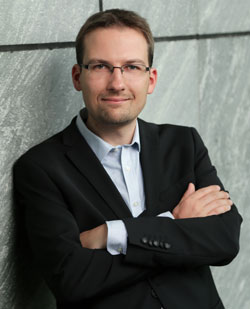
Oliver Hohlfeld is a Professor at the University of Kassel where he leads the Distributed Systems Group . Prior academic appointments include professorships at Brandenburg University of Technology (heading the Computer Networks group) and RWTH Aachen University , with earlier work at TU Berlin/Deutsche Telekom Innovation Laboratories . He has served as visiting scholar at University of Wisconsin-Madison (Paul Barford's group) and holds a Dr. rer. nat. in Computer Science (2013) from TU Berlin under advisor Anja Feldmann. B.Sc. and M.Sc. in Computer Science from Darmstadt University of Applied Sciences, Institute Eurecom, and Darmstadt University of Technology Former Fraunhofer IGD researcher (2004-2006) working on telemedical network architectures His research interests focus on data-driven analysis of internet performance and security through empirical network measurement, psychological user studies, and machine learning. Key areas include DDoS defense mechanisms, TLS deployment analysis, social media interaction patterns, caching strategies, and internet protocol evaluation (HTTP/2, QUIC, BGP). Recent work examines cross-border information control circumvention through unconventional user reviews. Oliver has served on technical program committees for 25+ conferences including SIGCOMM'24 , NSDI'25 , and IMC'24 . His scientific leadership includes: 2022 IETF/IRTF Applied Networking Research Prize 2020 ACM Senior Member status 2018-2021 conference co-chair roles He leads major research projects : AIDOS: AI-based DDoS Mitigation at DE-CIX Internet Exchange (BMBF funded) DFG SFB 1053 MAKI: Multi-Mechanism Internet Adaptation (2017-2020) EU Horizon 2020 SSICLOPS: Secure Cloud Operations Internet Observatory Initiative

- Climate Modeling
- Machine Learning
- Image Analysis
- +۳ مورد دیگر
Prof. John Taylor is a prominent academic at The Australian National University (ANU), affiliated with the School of Computing. His research focuses on interdisciplinary areas spanning climate science, machine learning, and high-performance computing. He has made significant contributions to atmospheric modeling, GPU-accelerated algorithms, and data-driven environmental predictions. Research Interests Climate Modeling and Regional Climate Simulations Machine Learning Applications in Meteorology Deep Learning for Image Analysis and Semantic Segmentation High-Performance Computing and GPU Optimization Statistical Downscaling of Climate Variables Cloud-Based Scientific Workflows Collaborations Prof. Taylor collaborates extensively with institutions globally, including work on projects like the Earth Virtualization Engines (EVE) and the PAUNet precipitation prediction framework. His research often bridges computational methods with real-world environmental challenges, such as heat extremes and hydrological modeling. Key Achievements Over 5000 citations and an h-index of 50 Developed innovative frameworks for climate data assimilation and GPU-accelerated algorithms Leader in applying machine learning to environmental monitoring and prediction Labs/Teams He leads research groups at ANU focused on computational climate science and advanced imaging techniques. His team has developed platforms like the Cloud-Based Image Analysis Toolbox and the DCM software for 3D materials modeling.
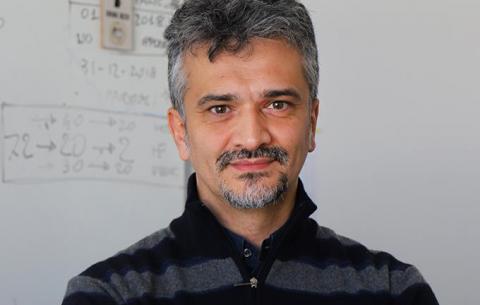
Andrea Polini is a Full Professor at the University of Camerino, focusing on interdisciplinary research at the intersection of blockchain technology, business process modeling, IoT systems, and software engineering. His work emphasizes formal methods for ensuring correctness in distributed systems, smart contract security, and model-driven approaches for IoT integration. Research interests include blockchain-based choreography execution, mutation testing strategies for smart contracts (e.g., ReSuMo and SUMO tools), and frameworks for IoT application portability (X-IoT). He also investigates process mining in public administration and humanitarian contexts, such as analyzing collaboration in crisis mapping platforms like the HOT Tasking Manager. Polini’s contributions span over 60 publications since 2014, with a strong focus on practical tools and methodologies (e.g., BProVe for business process verification, FloBP for IoT-enhanced processes). His work bridges theoretical computer science with real-world applications in healthcare, urban mobility (Tangramob framework), and disaster response systems.

Sophia Shaoمشاهده پروفایل
دانشیار
Sophia Shao is an Associate Professor in the Department of Electrical Engineering and Computer Sciences (EECS) at the University of California, Berkeley. She was promoted to Associate Professor with tenure in July 2024 after serving as an Assistant Professor from August 2019 to June 2024. Previously, she worked as a Senior Research Scientist at NVIDIA from October 2018 to July 2019. Her academic journey began with a Bachelor of Electrical Engineering from Zhejiang University, China (2005-2009), followed by a Master of Science (2009-2014) and Ph.D. (2009-2016) in Computer Science from Harvard University. Shao's research focuses on computer architecture, with special emphasis on domain-specific accelerators, heterogeneous architecture, and agile VLSI design methodology. Her work bridges the gap between hardware and software through systematic approaches to accelerator design and evaluation. She leads research efforts in the Agile Design of Efficient Processing Technologies (ADEPT), Berkeley Emerging Technologies Research (BETR), Berkeley Wireless Research Center (BWRC), and SpeciaLIzed Computing Ecosystems (SLICE) centers. Her recent publications reveal a strong trend toward holistic hardware-software co-design for machine learning acceleration, with particular focus on efficient neural network accelerators, multi-tenant execution environments, and automated design methodologies. Her research spans from low-level circuit design to system-level architecture, demonstrating expertise across the entire computing stack. Notably, her work on Gemmini, Stellar, and Virgo represents significant contributions to the field of domain-specific accelerator design and integration. Sloan Research Fellowship (2024) Anita Borg Early Career Award (2024) NSF CAREER Award (2023) Google Research Scholar Award (2023) IEEE TCCA Young Computer Architect Award (2022) Intel Rising Star Faculty Award (2022) ISCA Distinguished Artifact Award (2023, 2024) Best Paper Award at DAC 2021 Professor Shao actively mentors a large group of graduate and undergraduate students, with several former students now at leading technology companies including NVIDIA, Microsoft, and Apple. Her research has been supported by multiple grants from NSF, Google, Intel, and other organizations. She leads several open-source research projects including Gemmini, Stellar, Chipyard, and RoSÉ, which have gained significant traction in both academic and industrial research communities. Her lab, part of the SLICE ecosystem, focuses on creating next-generation computing platforms through vertically integrated hardware-software approaches.
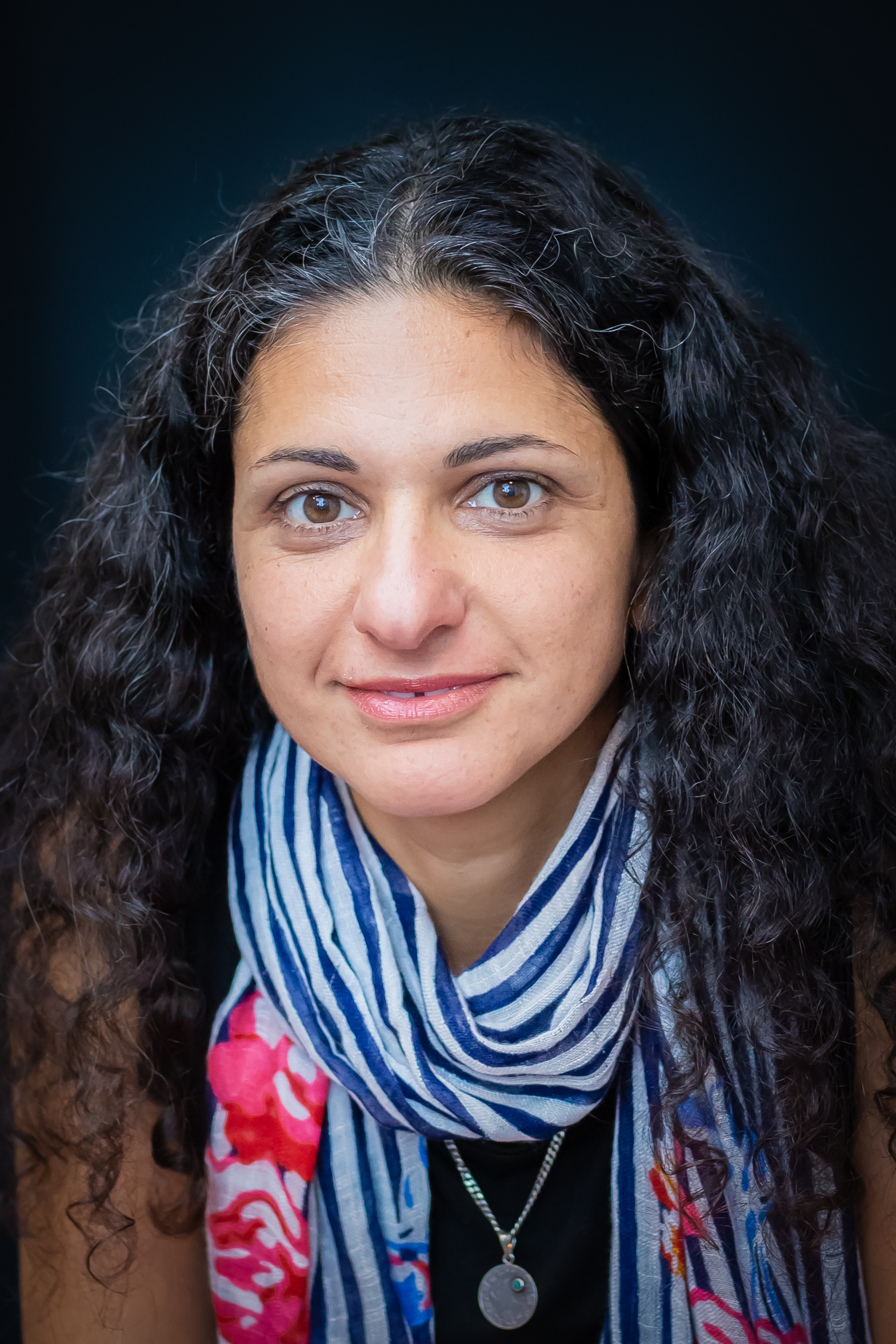
Nadia Saad Noori is an Associate Professor at the Department of Information and Communication Technology at the University of Agder (UiA). Since 2016, she has conducted research and teaching at CIEM - Centre for Integrated Emergency Management , and joined NORCE Norwegian Research Center as a Senior Researcher in 2018. Her work bridges industry experience (Cisco, hi-tech startups) with academic rigor , focusing on technology integration in crisis management , cybersecurity , and industrial monitoring systems . Her educational background includes: B.Sc. & M.Sc. in Computer Systems Engineering M.A.Sc. in Technology Innovation Management Ph.D. in Electronic and Information Systems Engineering Research interests span machine learning , autonomous systems , and security frameworks through: Disaster response coordination systems Industrial condition monitoring Humanitarian technology solutions Cyber-physical systems Recent publications demonstrate technical breadth : 2024: Thermal gesture recognition and UAV navigation in industrial spaces 2023: Cybersecurity frameworks and ecological pattern recognition 2022: Industrial seal diagnostics and autonomous systems She leads research groups in: Autonomous and Cyber-Physical Systems (ACPS) CIEM - Integrated Emergency Management Communication and System Security
Robert Schweppe is a Researcher at the Department of Computational Hydrosystems , Helmholtz Centre for Environmental Research (UFZ) in Leipzig, Germany. He has held this position since 2017, following prior roles as Project Engineer at HYDRON GmbH (2014-2017) and Research Assistant at UFZ (2013). Expertise in hydrological modeling using mHM, ECLand, LARSIM Developed pyflow configuration tools and MPR software for environmental data processing Key contributor to 4DHyro project integrating Earth Observation data with hydrological models His research interests span hydrological modeling , drought forecasting , machine learning applications , and climate change impacts on water systems. His 2022 publications on parameter regionalization and floodplain modeling demonstrate methodological innovations in environmental data analysis. Notable scientific recognitions include the Deutschlandstipendium scholarship (2012-2013) and Helmholtz Field Study Fellowship (2022). He collaborates extensively with European institutions on compound environmental risks and smart monitoring technologies .

- Metabolomics
- Cancer Biology
- Computational Biology
- +۱۲ مورد دیگر
Gary Patti is a Professor of Chemistry and of Genetics and Medicine at Washington University in St. Louis, with appointments in the Department of Chemistry, Department of Genetics, and Department of Medicine (School of Medicine). He serves as Senior Director of the Center for Metabolomics and Isotope Tracing, Director of the Clinical Research Core in Medicine, and Director of Faculty Affairs in Chemistry. His research focuses on the intersection of cancer biology , metabolomics , and computational biology . The Patti laboratory investigates how cancer cells rewire metabolism to support proliferation, how tumors manipulate host metabolism across tissues, and develops cutting-edge tools in isotope tracing, mass spectrometry imaging, and metabolomics data analysis. His work spans cancer metabolism , single-cell metabolomics , spatial omics , and bioinformatics tool development . The recent publications highlight a strong trend in quantitative metabolic imaging , isotope-based flux analysis , and machine learning for metabolomics . His lab integrates stable isotope tracing with LC/MS , MALDI/DESI imaging , and spatial transcriptomics to resolve metabolic dynamics at the cellular and tissue level. A major focus is overcoming data annotation bottlenecks through tools like DecoID and PeakDetective . Selected scientific awards include: Alfred P. Sloan Award (2014) Pew Biomedical Scholars Award (2015) Camille Dreyfus Teacher-Scholar Award (2015) Mallinckrodt Scholar Award (2016) Inaugural NIEHS Award for Visionary Research (2017) Blavatnik National Finalist (2020) ACS Midwest Award (2023) Professor Patti advises a multidisciplinary research team and leads multiple institutional cores. His grants support technology development in metabolomics, cancer metabolism studies using zebrafish and mouse models, and software tools for omics data integration. He collaborates with instrument manufacturers to improve data acquisition strategies and promotes inclusive research practices. He leads the Center for Metabolomics and Isotope Tracing and the Clinical Research Core in Medicine , fostering collaboration across chemistry, genetics, and medicine. His lab is at the forefront of advancing single-cell metabolomics and in vivo metabolic imaging .

Gao Niuمشاهده پروفایل
دانشیار
Gao Niu serves as Associate Professor in Actuarial Science and Professor of Mathematics and Economics at Bryant University, concurrently holding the position of Department Chair for the Department of Mathematics and Economics. His academic leadership spans interdisciplinary domains including quantitative finance, data science, and earth systems research. Dr. Niu's educational foundation comprises: Ph.D., University of Connecticut M.S., Western Illinois University B.S., Iowa Wesleyan University His research program exhibits extraordinary interdisciplinary range, anchored in Actuarial Science and Financial Risk Management while extending into Big Data Analytics, Historical Linguistics, and Paleoclimatology. Core contributions include pension plan analysis, financial protection frameworks for families with special needs children, and innovative applications of statistical modeling to reconstruct ancient climate conditions through plant fossil analysis. Methodologically, he integrates computational techniques from fog computing and machine learning to address complex problems across finance and earth sciences. Analysis of Dr. Niu's publication trajectory (2017-2024) reveals a distinctive cross-disciplinary evolution: initial work focused on actuarial applications in insurance and financial planning progressively incorporated big data visualization techniques, culminating in significant contributions to paleoclimatology since 2020. His earth science collaborations demonstrate how statistical models originally developed for financial risk assessment can be repurposed to analyze stomatal parameters in fossilized plant material, creating novel pathways for ancient CO2 reconstruction. This fusion of quantitative finance with geological data processing represents a unique scholarly signature.

Dr. Riccardo Coppola is a post-doctoral researcher at Politecnico di Torino's Department of Control and Computer Engineering. With a PhD in Control and Computer Engineering (2021), his work focuses on automated GUI testing, gamification mechanics in software engineering, and non-functional property evaluation. He actively contributes to conferences like ICSE, ESEM, and A-TEST as organizer, chair, and author. M.Sc. & PhD: Politecnico di Torino Current Role: Researcher Research spans: Automated GUI testing for web & mobile applications Software metrics for gamification effectiveness Non-functional property evaluation (maintainability, accessibility) Integrating gamification mechanics into testing frameworks His publications demonstrate trends in gamification-driven testing tools, visual element identification algorithms, and LLM applications for UML modeling. Conference contributions show interdisciplinary focus bridging gamification, accessibility, and traditional software engineering. Roles include: 2025 Gamify Workshop Organizer & Session Chair 2024 A-TEST Programme Committee 2023 INTUITESTBEDS Organizing Committee

Prof. Christian Zenger is a Junior Professor at Ruhr University Bochum's Faculty of Electrical Engineering and Information Technology, leading the Secure Mobile Networking department. He co-founded PHYSEC GmbH in 2015, developing anti-tamper radio technology for IoT security, recognized with awards from MIT, BMWi, and ECSO. His academic roles include previous positions as a Lecturer and Post-Doc researcher at Ruhr University, alongside board memberships and advisory roles in cybersecurity and water management sectors. Education: PhD in Electrical Engineering (Ruhr University Bochum, 2013–2017) Research: Focuses on IoT security, wireless systems, nuclear disarmament, and start-up ecosystems. His work bridges academic research with industrial applications, highlighted by PHYSEC's commercial success. Publications: Over 30 peer-reviewed articles since 2013, emphasizing physical-layer security, 6G vulnerabilities, and tamper detection mechanisms. Notable recent work includes anti-tamper radio systems and reconfigurable intelligent surfaces. Awards: MIT Award (2023), BMWi Innovation Prize (2022), and ECSO Security Excellence Award (2021). Advisory Roles: Member of Competence Center Digital Water Management’s Advisory Board and Cube 5’s Technical Board, reflecting his interdisciplinary impact. His lab, Secure Mobile Networking, collaborates with the Horst Görtz Institute for IT Security and promotes start-up culture through academic mentorship.