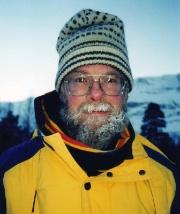
Professor Hans Peter Blankholm at UiT The Arctic University of Norway specializes in Scandinavian Stone Age hunter-fisher-gatherer societies and Northern Fennoscandian Metal Age studies. His work integrates GIS and remote sensing with ecological analysis to examine prehistoric settlements, resource management, and human responses to climate change. Department of Archaeology, History, Religious Studies and Theology Research group: Foodways, lifeways and climate change Key projects: LARM Investigations in Interior Troms, ECOGEN – Ecosystem change, ARCWAYS Recent publications focus on: Paleoenvironmental reconstructions using sedimentary DNA Macro-level predictive modeling of pioneer settlements Heavy metal contamination in Stone Age seafood Storegga tsunami impact analysis Historical GIS applications Lithic resource mapping Contact: hans.peter.blankholm@uit.no
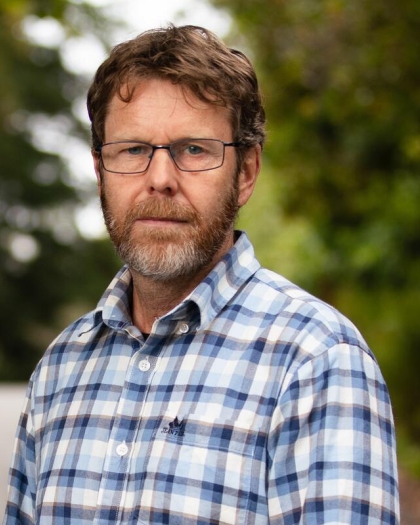
Professor Talal Rahman is a faculty member at the Western Norway University of Applied Sciences, where he works in the Department of Computer Science, Electrical Engineering and Mathematical Sciences. His office is located at Bergen KRONSTAD D305, and he can be reached at phone number +47 55 58 72 46. Professor Rahman's research spans several key areas in computational mathematics and scientific computing. His primary research interests include: Scientific Computing Numerical Analysis Numerical Methods for Partial Differential Equations Preconditioning Finite Element with Domain Decomposition Methods Variational Image Processing Artificial Intelligence and Machine Learning applications Professor Rahman's extensive publication record demonstrates a strong focus on domain decomposition methods, particularly Schwarz methods and their applications to multiscale problems. His recent work shows an increasing integration of machine learning techniques with traditional numerical methods, as evidenced by publications on neural network applications for environmental modeling and capelin migration patterns. His research also extends to biomedical applications, including computational analysis of biodegradable materials and bone tissue engineering scaffolds. He has made significant contributions to the development of adaptive preconditioners and parallel algorithms for solving complex numerical problems, with his work on the TV-Stokes model for image processing representing an important contribution to the field of variational image processing. Professor Rahman has supervised numerous research projects and students, though specific student names are not provided in the available information. His research appears to be supported by grants related to computational science and engineering, though specific grant details are not mentioned in the provided text. Based on his research areas, Professor Rahman likely collaborates with various research groups focused on computational science, with potential connections to biomedical engineering labs and environmental research teams studying the Barents Sea ecosystem.
Tiina Komulainen is a Professor at Oslo Metropolitan University's Faculty of Technology, Art and Design, specifically within the Department of Mechanical, Electronics and Chemistry. Her work focuses on environmental technology, biogas production, and wastewater treatment through advanced simulation and control engineering techniques. Key affiliations: Applied Artificial Intelligence research group Collaborative projects: MaxBiogas (with OsloMet and Veas) Research themes: Digital competence development in water industry, smart water technology Her research integrates mathematical modeling, machine learning, and technical cybernetics to optimize biological wastewater processes. Recent projects involve virtual sensors, nutrient estimation, and dynamic simulation for sustainable biogas production. Publications highlight collaborations with international institutions like Linköping University and Mälardalen University, focusing on municipal MBBR processes, energy-efficient wastewater treatment, and district heating network optimization. She contributes to educational advancements through simulation-based learning technologies and has developed teaching materials on model predictive control at Metropolia University of Applied Sciences.
Gabriele Lobaccaro is a Professor at the Department of Civil and Environmental Engineering, NTNU, within the Faculty of Engineering. His primary focus is on sustainable urban development, renewable energy integration, and climate-resilient architectural design. He leads research in solar energy planning through initiatives like the IEA SHC Task 51 and COST Action PEARL PV. Education: MSc from Politecnico di Milano (2008), PhD in Structural Engineering (Politecnico di Milano/UNSW Sydney, 2013) Research interests include Smart Cities, urban solar potential analysis, and building-integrated photovoltaics (BIPV). Key projects involve the HELIOS-NFR FRIPRO program and collaborations with French institutions via the Åsgård Program. Publications emphasize solar irradiance modeling, urban energy systems, and legislative frameworks for solar neighborhoods. He co-leads Subtask C of the IEA SHC Task 51, focusing on case studies and action research. Awards: ISSNAF/CNI Scholarship for MIT collaboration, Åsgård Research+ Program (2019-2020)
Evi Zouganeli is a Professor at the Department of Mechanical, Electrical and Chemical Engineering, Faculty of Technology, Art and Design, Oslo Metropolitan University (OsloMet). She leads the Automation, Robotics, and Intelligent Systems (ARIS) research group and serves as a board member of the Norwegian Artificial Intelligence Society (NAIS). Her work bridges academic research and industrial applications in intelligent systems. Research Focus: Zouganeli specializes in Machine Learning and Computer Vision applications for Cognitive Robotics, with emphasis on assistive technologies, smart cities, and smart industry. Her research explores neuromorphic computing, sensor network optimization, and multi-modal AI integration. Publications Trends: Recent works focus on AI-enabled robotics, sensor placement optimization in smart homes, and neuromorphic reservoir networks. Earlier contributions include European collaborative research in photonic technologies and broadband networks. Additional Contributions: She actively participates in public discourse about AI implementation challenges and Norway’s AI development potential, engaging with industry leaders and policymakers.
Asgeir Sorteberg is a Professor at the University of Bergen's Geophysical Institute and affiliated with the Bjerknes Centre for Climate Research. His research focuses on climate dynamics, extreme weather events, and their societal impacts. Key areas include projections of windstorm damages under climate change, offshore wind energy potential, and climate adaptation strategies. He has contributed to projects like StormRisk, examining damage modeling and future wind climates. His work integrates meteorological data, machine learning, and climate modeling to address challenges in environmental science and renewable energy. Notable collaborations include the Bergen Offshore Wind Centre (BOW) and the Norwegian Meteorological Institute. His presentations at workshops and conferences highlight contributions to climate policy, infrastructure resilience, and Arctic climate studies. Sorteberg's research spans regional climate analysis, hydrological responses to precipitation extremes, and validation of high-resolution climate datasets like NORA3. He frequently addresses interdisciplinary topics such as the impact of atmospheric rivers on Norwegian precipitation and the mitigation of energy intermittency through interconnected offshore wind systems. His findings inform climate adaptation policies and sustainable energy planning in Norway and beyond.
Gaute Tomas Einevoll is a Professor in the Department of Condensed Phase Physics at the University of Oslo. His research focuses on computational neuroscience, neurophysics, and theoretical biophysics. He leads the COBRA project (COMPUTING BRAin signals) and contributes to the Condensed phase physics research group. His work integrates physics-based approaches with neuroscience to study brain signal analysis, synaptic plasticity mechanisms, and neuron modeling. Recent research includes computational modeling of schizophrenia-related synaptic impairments and topological analysis of neural population activity in visual cortex systems. He has published extensively in top journals like PLoS Computational Biology and PNAS, with notable contributions on electric brain signal predictions and genetic mechanisms in mental health. Einevoll collaborates internationally and engages in multidisciplinary projects at the intersection of neuroscience, computing, and technology. His research has implications for understanding brain disorders and advancing neurotechnology applications.
Tor Jarle Wergeland is an Associate Professor in the Department of Visual Arts and Drama at the University of Agder, Norway. His academic work bridges visual arts, digital storytelling, and educational innovation, with a strong focus on creative processes in teaching and learning. Research Interests: Visual Arts Education Digital Storytelling Integration of Artificial Intelligence in Art Creative Workshops and Formative Assessment Educational Technology in Art and Craft His recent publications reflect a consistent engagement with digital tools in art education, particularly in exploring how AI can function as a co-creator. He investigates collaborative cultures, assessment practices, and the transformation of traditional artistic methods through digital media. His work often appears in educational anthologies and institutional publications. Scientific Contributions: Active contributor to the ProDig project on digital tools in art and craft education. Regular publications on digital storytelling, formative assessment, and creative digital practices. Emphasis on practical, workshop-based, and student-centered pedagogy. Wergeland has collaborated with colleagues such as Tor Jørund Føreland Pedersen and Cornelia Brodahl, and his work is disseminated through the University of Agder’s Cristin repository. He has no listed scientific awards, and no information is available about students he may have supervised. He maintains an active academic profile with recent outputs extending into 2025.
Tom Ryen is an Associate Professor and Head of the Department of Electrical Engineering and Computer Science at the University of Stavanger (UiS), Faculty of Science and Technology. He plays a key leadership role in advancing artificial intelligence research and education, including co-founding the Stavanger AI Lab and chairing the board of the Norwegian Artificial Intelligence Research Consortium (NORA). His work bridges technical research and public engagement, particularly on the societal implications of AI. His research focuses on artificial intelligence, machine learning, digital signal processing, and bioinformatics. He has made significant contributions in gene prediction, splice site analysis using neural networks, ECG signal compression, and GPU-based optical flow algorithms. His recent work emphasizes AI ethics, education, and public understanding, reflecting a shift toward societal impact and policy. Tom Ryen's publications from 2024 show a strong trend in public outreach, with articles and lectures on AI literacy, misinformation, workplace integration, and educational challenges. These works highlight his role as a thought leader in Norway’s AI discourse, advocating for responsible adoption, national infrastructure, and ethical guidelines. Scientific Awards: No scientific awards mentioned in the text. Tom Ryen actively mentors students and collaborates across disciplines, though specific advisees are not listed. He has been involved in significant initiatives such as launching new master’s programs, expanding IT education, and promoting AI in medical and urban technologies. He has not received any mentioned grants, but his leadership in NORA and the Stavanger AI Lab suggests substantial project involvement. He is a founding figure in the Stavanger AI Lab, a research unit at UiS dedicated to AI innovation, education, and collaboration with industry and public sectors. The lab focuses on practical applications and ethical deployment of AI, aligning with national and regional development goals.
Soledad Gonzalo Cogno is a Group Leader at the Kavli Institute for Systems Neuroscience (Norwegian University of Science and Technology, NTNU), where she heads the Neural Dynamics and Computation Lab. She is also affiliated with the Center for Algorithms in the Cortex. Research focuses on understanding how neural networks compute through synergistic computational and experimental approaches. Key areas include population coding, synaptic plasticity, and dynamics of hippocampal and entorhinal cortex circuits. Her recent work on 2023 publications in Nature and Neuron explores minute-scale oscillatory sequences and object-centered coding in hippocampal regions. Earlier studies (2013-2016) examined visual cortex orientation selectivity, bursting neurons, and bistable dynamics. Lab members include PhD candidate Lea Marie Braun, researcher Ivan Andres Davidovich, and postdoctoral fellow Julien Ballbe Y Sabate. Teaching involves advanced mathematics courses for biologists.
Professor Gaute T. Einevoll is affiliated with the Department of Physics at both the University of Oslo and the Norwegian University of Life Sciences (NMBU) . His research focuses on computational neuroscience , integrating methods from physics, mathematics, and computer science to understand neural mechanisms underlying biological intelligence. Key areas: Neural network modeling , brain signal analysis (EEG, MEG, LFP), computational psychiatry Leadership roles: Co-leader of Norwegian node of INCF since 2007; Partner in EU Human Brain Project since 2013 His recent work explores topological neural representations , GABAB receptor signaling , and ultra-high density electrode technology , as evidenced by publications in 2024-2025. He also develops open-source tools like LFPy and Uncertainpy for biophysical modeling. Active in science communication, he hosts the podcast "Vett og vitenskap med Gaute Einevoll" , discussing neuroscience and related disciplines.
Luca Cibinel is a Doctoral Research Fellow at the University of Oslo, affiliated with the Department of Mathematics and the Statistics and Data Science group. His PhD project, supervised by Basil Ell, Johan Pensar, and Riccardo De Bin, focuses on developing statistical learning techniques for assessing and generating transition metal complexes based on observational data and theoretical knowledge. Prior to this, he earned a master's degree in mathematics from the University of Trento (2023), with a thesis on penalized likelihood inference for Gaussian covariance graph models. He also worked as an early-stage researcher at the University of Padua, investigating probabilistic graphical models for count data in high-dimensional scenarios. His research interests include statistical relational learning, probabilistic logic, and machine learning applications for graph-structured data. Luca is based at the Niels Henrik Abels hus in Oslo. Education: Master's in Mathematics, University of Trento (2023) Early-stage Researcher role at University of Padua (2024) Research Focus: Luca's work bridges statistical methodology and computational modeling, particularly in contexts requiring integration of theoretical and empirical data. His current project aims to create frameworks for evaluating and generating transition metal complexes, with potential applications in materials science and chemistry. Professional Affiliations: Faculty of Mathematics and Natural Sciences (student status), Statistics and Data Science research group. Links: LinkedIn Profile
Alexander Karl Rothkopf is affiliated with the University of Stavanger (UiS), where he holds a position in the Department of Mathematics and Physics under the Faculty of Science and Technology. His research focuses on quantum systems, particularly real-time dynamics of strongly coupled systems like the quark-gluon plasma. He employs lattice QCD, Bayesian inference, and machine learning techniques for non-perturbative studies. Key projects include developing discretization schemes, machine-learning enhanced spectral extraction, and real-time simulation strategies. Rothkopf teaches courses on mechanics, quantum mechanics, and lattice-based simulations. His work bridges theoretical physics with computational methods, addressing challenges in heavy quark dynamics and open-quantum systems. Recent research highlights include exact symmetry conservation in numerical methods, novel discretization techniques for quantum systems, and machine learning applications for complex Langevin simulations. He collaborates internationally with institutions like Brookhaven National Laboratory (BNL) and Linköping University. His contributions span journals such as Journal of Computational Physics and Physical Review D , emphasizing computational physics and high-energy theory. Presentations include talks at the International Symposium on Lattice Field Theory and Nordic Lattice Meetings. Despite no explicit awards listed, his prolific publication record underscores his impactful research in theoretical and computational physics. Education: Advanced training in theoretical physics, likely including a PhD in a related field (details not explicitly provided). Grants/Advising: Leads projects funded by UiS collaborations; advises students on lattice simulations and real-time dynamics (specific grant details not listed). Labs/Teams: Involved in interdisciplinary teams focusing on lattice QCD, computational methods, and open-quantum systems at UiS and partner institutions.
Marianne Løvstad is a **Part-Time Professor II** in the Department of Psychology at the University of Oslo (UiO). Her primary affiliation is with Sunnaas Rehabilitation Hospital, where she has worked since 2000. She holds a PhD from UiO (2012) and is a Specialist in Clinical Neuropsychology (2005). Her research focuses on clinical neuropsychology, traumatic brain injury (TBI), cognitive rehabilitation, and electrophysiological methods like Event-Related Potentials (ERP). She teaches courses such as *PSYC2201 Neurobiology, Genetics, and Neuroanatomy* and *PSYC6300 Practical Training*. **Education History:** Cand. psychol, University of Oslo, 2000 Specialist in Clinical Neuropsychology, 2005 PhD, University of Oslo, 2012 **Research Interests:** Dr. Løvstad investigates disorders of consciousness post-TBI, executive function deficits, and pediatric TBI outcomes. She collaborates with international research groups in Europe and the U.S., particularly within the ENIGMA consortium for brain imaging studies. Her work emphasizes translational research, bridging preclinical models to clinical practice (e.g., environmental enrichment protocols for post-stroke recovery). **Key Themes in Publications (2022–2025):** **Pediatric TBI:** Focus on school participation, family experiences, and telerehabilitation feasibility. **Adult Rehabilitation:** Studies on home-based interventions, VR-based cognitive training, and workplace accommodations. **Methodological Innovations:** Use of semantic textual similarity for symptom inventory standardization and neuroimaging data integration. **Grants/Labs:** She leads projects like *Cognitive rehabilitation of executive dysfunction* and *Electrophysiological correlates of residual consciousness*, and is affiliated with the CHARM Research Centre for Habilitation and Rehabilitation Models & Services.
Xing Cai is a Professor at the Department of Informatics, University of Oslo, specializing in Scientific Computing and Machine Learning. His academic career spans several decades with a consistent focus on high-performance computing and its applications to complex scientific problems. He maintains an active research profile with numerous publications in top-tier journals and conferences. Professor Cai's research interests encompass parallel programming and high-performance computing, performance modeling and optimization, automated code generation, heterogeneous computing, and numerical methods for solving partial differential equations. His work extends to specialized applications in computational cardiology, computational geoscience, and biomedical computing. His research bridges theoretical computer science with practical applications in medicine and earth sciences, demonstrating exceptional interdisciplinary reach. An analysis of his recent publications (2019-2024) reveals a strong trend toward leveraging novel hardware architectures (GPUs, AI processors, specialized accelerators) for scientific computing, with particular emphasis on cardiac modeling applications. His work shows increasing sophistication in hardware-aware algorithm design, with publications spanning from fundamental performance modeling to domain-specific applications. The interdisciplinary nature of his work is evident in the diverse range of journals and conferences where he publishes, from computer science venues to specialized medical and geoscience publications. Professor Cai leads or participates in several significant research projects including the EuroHPC Centre of Excellence: Numerical Modeling of Cardiac Electrophysiology at the Cellular Scale (MICROCARD-2), High resolution simulation of cardiac electrophysiology on realistic whole-heart geometries, Maelstrom Associate Team, ODISSEE, Simula-Berkeley Education and Research collaboration (SIMBER), and aCG eX3: Experimental Infrastructure for Exploration of Exascale Computing. These projects reflect his leadership in both computational methodology development and domain-specific applications. His research group maintains strong collaborations with medical researchers, particularly in cardiac electrophysiology, and with geoscientists working on reservoir simulation. The publications list demonstrates consistent mentorship of junior researchers, with frequent co-authorship patterns suggesting an active supervision of PhD and postdoctoral researchers. His work on the EMI model for cardiac tissue represents a significant contribution to computational cardiology with potential clinical applications. The laboratory environment surrounding Professor Cai's work appears to be well-equipped for high-performance computing research, with access to advanced hardware platforms including GPU clusters, AI processors, and specialized accelerators. His publications on the use of Graphcore IPUs, Xeon Phi processors, and NVIDIA architectures indicate a well-resourced research environment capable of experimenting with cutting-edge hardware.