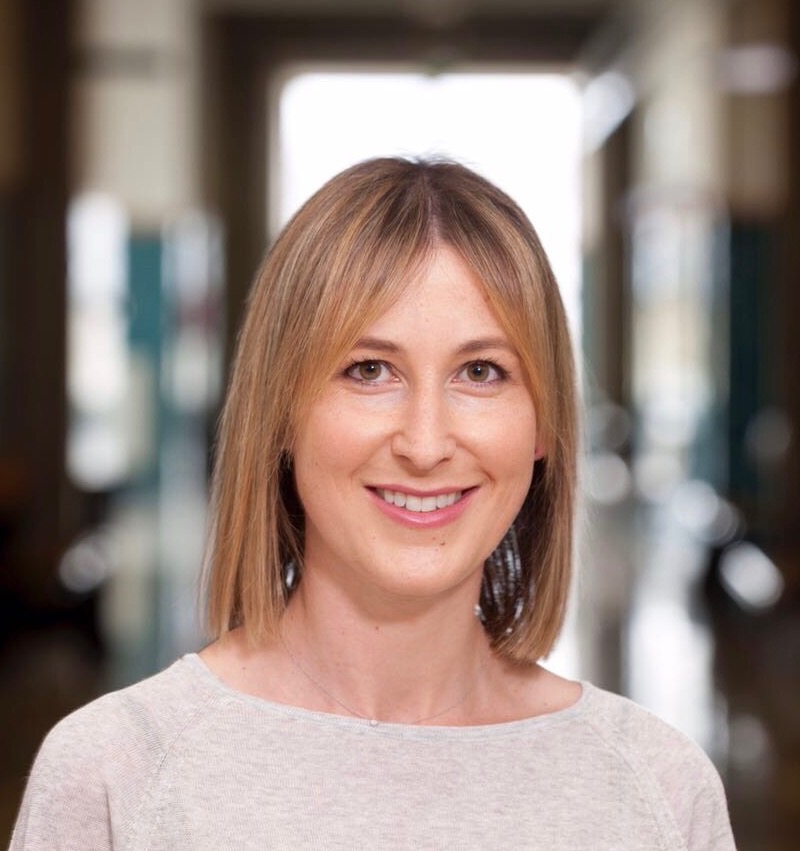
Verónica Bolón Canedo is a Full Professor in the Department of Computer Science and Information Technology at the University of A Coruña (UDC) and a researcher at the ICT Research Center (CITIC). She earned her PhD in Computer Science (2014) from UDC after a postdoctoral stint at the University of Manchester (2015). Her work focuses on Artificial Intelligence, particularly sustainable AI, feature selection, and big data applications. Doctoral thesis: Machine learning methods (awarded UDC’s extraordinary doctoral award) Over 100 publications in journals and conferences Four Highly Cited Papers Her research spans healthcare (retinopathy diagnosis, sleep apnea detection), engineering (oil spill monitoring), and education (automated exam grading). She has secured major grants, including a 2018 BBVA Leonardo Grant for wearable feature selection research. Scientific recognition includes the Dona TIC Revelación, Ada Byron, and Young Researchers medals. She mentors PhD students and leads the A Coruña node of the Inspira STEAM project to promote girls’ STEM engagement.
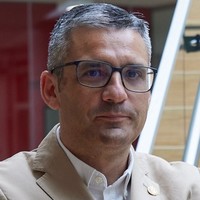
Miguel Castro Garcia is a researcher at the University of Córdoba's Department of Graphic Expression in Engineering, specializing in 3D modeling, additive manufacturing, and historical industrial heritage documentation. His work bridges engineering graphics with advanced manufacturing techniques and biomedical/biotechnological applications. PhD in Graphic Expression Engineering (2013, University of Córdoba) Specialization in 3D modeling, CAD/CAE, and cultural asset documentation Active in energy storage technologies (SOFC, LiB) and biomedicine Research focuses include: Fractal/multifractal analysis of microstructures Embedded phase change material systems Genetic studies in viticulture Finite element analysis of biological systems Ceramic additive manufacturing techniques Cultural heritage reconstruction Recent publications (2021-2025) demonstrate interdisciplinary expertise spanning biomedical engineering, agricultural genetics, and advanced ceramic manufacturing. Key trends include: Integration of 3D printing in energy storage systems Computational modeling of thermal/fluid dynamics Application of machine learning to biological systems Preservation of industrial heritage through digital methods Material science innovations in ceramic processing Development of decentralized crisis management systems
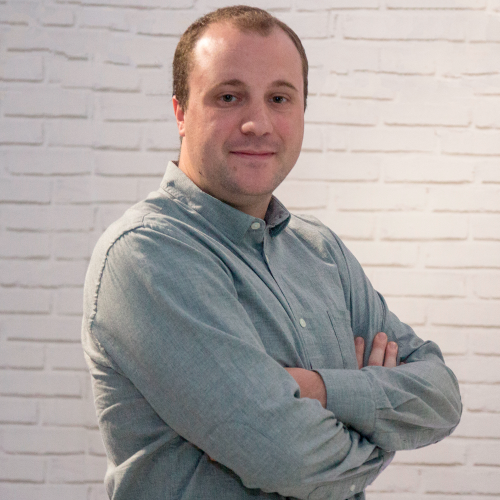
Manuel Valverde Ibáñez is an Associate Professor at the University of Jaen, Department of Electrical Engineering. His career spans advanced research in energy systems and cloud computing, with a focus on integrating renewable energy solutions and optimizing virtual machine migration frameworks. Education: Doctorate from UNED (2006) with thesis on fuzzy logic control in solid oxide fuel cells. Research Interests: Design and control of power systems for fuel cells and microturbines. Energy sustainability in cloud data centers using AI-driven migration strategies. Application of generative AI and H5P tools in electrical engineering education. Integration of Google Workspace for academic management in higher education. Publication Trends: Recent works (2021–2025) highlight cross-disciplinary innovation, merging cloud computing with energy sustainability (e.g., VM migration frameworks) and advancing educational technologies for electrical engineering curricula.
Dr. Luca Tiozzo Pezzoli serves as a Visiting Professor in the Department of Applied Economics at the University of the Balearic Islands. His teaching portfolio spans undergraduate and graduate programs including Business Administration, Economics, and the Master's Degree in Economics of Tourism, where he instructs courses such as Economic Data Analysis, Microeconometrics, and Causal Analysis and Prediction. His research focuses on the intersection of econometrics and machine learning, with particular expertise in big data applications for economic forecasting. Key interest areas include: Real-time nowcasting using mixed-frequency data News sentiment analysis for financial markets Climate economics and event-driven market shocks Alternative data sources in crisis monitoring Interpretable AI for economic policy analysis His publication record reveals a strong trend toward integrating unconventional data streams (news, social media, seismic economic indicators) with machine learning techniques to enhance economic forecasting precision, particularly during volatile periods like the COVID-19 pandemic. Recent work emphasizes Bayesian interpretability and climate-economic linkages. Dr. Pezzoli actively contributes to the Econometrics and Data Science (ECD) Consolidated R+D+I Group at UIB. His teaching responsibilities include supervising numerous Final Degree Projects across Business Administration programs, though specific student names aren't documented. He maintains technical engagement through ORCID and Dialnet profiles while utilizing advanced data infrastructure for his research initiatives.
Dr. Emilio García Fidalgo is an Associate Professor at the University of the Balearic Islands (UIB) within the Department of Mathematics and Computer Science. He earned his B.Sc., M.Sc., and Ph.D. in Computer Science from UIB in 2007, 2011, and 2016 respectively. Ph.D. in Computer Science (2016), UIB M.Sc. in Computer Science (2011), UIB B.Sc. in Computer Science (2007), UIB His research focuses on mobile robotics , visual and LiDAR SLAM , appearance-based scene recognition , and unmanned aerial vehicles . He develops algorithms for robust loop closure detection, hierarchical topological mapping, and maritime inspection applications. The 15 most recent publications analyze frontier-based exploration strategies, trajectory planning for aerial robots, UWB calibration methods, and visual SLAM in low-textured environments. These works demonstrate his consistent contributions to Robotics , Computer Vision , and Autonomous Systems disciplines. Robust Loop Closure Detection (2020-2024) Visual Inspection Frameworks (2015-2021) Topological Mapping Solutions (2016-2022) LiDAR and Visual Odometry (2017-2023) He contributes to academic education through teaching roles in courses like Computer Structure I , Digital Systems , and Advanced Perception for Mobile Robotics . His work integrates with the Systems, Robotics, and Vision (SRV) research group.
Dr. Miquel Miró Nicolau is a Lecturer at the University of the Balearic Islands (UIB), holding a PhD in Information and Communication Technologies (2024). He is affiliated with the Computer Graphics, Vision and Artificial Intelligence Unit (UGIVIA) and the Artificial Intelligence Applications Laboratory (LAIA@UIB), where his research emphasizes interpretability and trust in medical image analysis using advanced Explainable AI (XAI) techniques. Degree in Computer Engineering (2018) Master's in Intelligent Systems (2020) PhD in Information and Communication Technologies (2024) His educational contributions span courses in Artificial Intelligence, Machine Learning, Computer Vision, Programming, and Algorithmics and Data Structures , taught across multiple undergraduate and graduate programs. His research integrates theoretical advancements in AI with practical applications in healthcare and data analytics, supported by his involvement in consolidated R+D+I groups like UGIVIA and SCOPIA.
Naroa Burreso Pardo is a contracted researcher at the University of the Basque Country (UPV/EHU), working within the Faculty of Social and Communication Sciences and specifically in the Department of Audiovisual Communication and Advertising. Based at the Bizkaia campus, she is affiliated with the NOR research group and holds a degree in Mathematics. Her work focuses on media studies, audience research, and the application of data science in communication studies, with particular emphasis on Basque language media and sociolinguistic aspects of communication. Dr. Burreso Pardo's research interests span multiple areas including media studies, audience research, Basque language media, digital humanities, data science applications in communication, sociolinguistics, communication technology, and language policy. Her work often involves quantitative analysis of media consumption patterns, particularly focusing on how Basque language media functions within the broader communication ecosystem. She has developed expertise in applying machine learning techniques to traditional media consumption analysis, effectively bridging her mathematical background with communication studies. Her recent publications demonstrate a strong focus on audience measurement for Basque media platforms, the role of urban environments in Basque language communication, and the monitoring of language diversity on streaming platforms across the European Union. Her research methodology often combines quantitative and qualitative approaches, with a growing emphasis on data fusion techniques to create more comprehensive audience analyses. Monitoring language diversity on streaming platforms in the EU Audience measurement methodologies for Basque media Application of machine learning in media consumption analysis Sociolinguistic aspects of Basque language media Quantitative analysis of social media language use among youth Urban communication environments and language policy Dr. Burreso Pardo is actively involved in research projects examining the digital transformation of media ecosystems, particularly as it affects minority languages like Basque. Her work contributes to understanding how traditional media consumption patterns are evolving in the digital age and how linguistic minorities can maintain their media presence in increasingly globalized digital environments.
Ignacio Negueruela Díez is a Full Professor in the Applied Physics Department at the Faculty of Sciences, University of Alicante. He holds an office in the Faculty of Sciences II building (P2 - 0007P2060) and can be reached at ignacio.negueruela@ua.es or +34 965903400 x 2754. He is affiliated with the Institute of Computer Research and leads the Stellar Astrophysics research group. His academic credentials include a Doctorate in Sciences from the University of Zaragoza (2000), a PhD from the University of Southampton (1997), and a Licentiate in Physical Sciences from the University of Zaragoza (1993). Negueruela Díez specializes in astrophysics with particular focus on massive stars, stellar evolution, and binary star systems. His research encompasses red supergiants, high mass X-ray binaries, stellar clusters, and massive star populations across the galaxy. He has made significant contributions to understanding the properties of massive stars, their evolution, and their role as progenitors of supernovae and gravitational wave sources. His work combines observational data with theoretical models to advance our understanding of stellar physics. His publication record shows a consistent focus on massive stars and their environments, with recent work centered on creating large-scale spectroscopic databases of massive stars, studying stellar evolution in clusters, and investigating binary interactions. His research spans from stellar formation to end states, including supernova progenitors and gravitational wave sources. Negueruela Díez has directed 8 doctoral theses, with several receiving 'Excellent Cum Laude' distinctions. His research is supported by numerous competitive grants from Spanish and Valencian government agencies, including projects running through 2025 on massive star research and AI applications for stellar analysis. He is actively involved in research management, having coordinated multiple research projects including 'Herramientas de Inteligencia Artificial para estrellas masivas' (2022-2025), 'Exploración exhaustiva de la infancia y vejez de las estrellas masivas' (2022-2025), and previous projects on massive star evolution and databases.
Daniel Santiago Marcos serves as an Associate Professor in the Department of Public Law at the University of Girona's Faculty of Law, specializing in Financial and Tax Law. He teaches undergraduate and master's level courses while maintaining an active research profile focused on contemporary taxation challenges. His academic credentials include: Doctor of Law from the University of Girona (2023), awarded the Extraordinary Doctoral Award for his thesis "The taxation of telework" Dr. Santiago Marcos's research centers on International Taxation of Income from Work, Housing Tax Policy, and Digital Taxation. His work critically examines telework taxation frameworks, fiscal policies for housing access in depopulated areas, and environmental aspects of vehicle taxation. He investigates how digital transformation impacts taxpayer rights and administrative efficiency, with particular attention to AI applications in fraud detection and electronic communication systems with public administrations. Analysis of his 2022-2024 publications reveals a consistent focus on the intersection of tax law with societal challenges: remote work arrangements, housing crises, and environmental sustainability. His scholarship demonstrates increasing emphasis on cross-border taxation complexities and the integration of digital tools in tax administration, reflecting broader trends in legal adaptation to technological and demographic shifts. His scientific recognition includes: Extraordinary Doctoral Award 2023 Dr. Santiago Marcos currently participates in the Ministry of Science and Innovation-funded research project "A multidimensional approach to housing: a focus from tax and public expenditure law" and is a member of the Consolidated Interuniversity Research Group on Fiscal Law (IDEF), recognized by the Generalitat de Catalunya. While specific student supervision details aren't provided, his faculty position involves mentoring graduate researchers. His research group affiliations drive collaborative work on fiscal policy solutions for housing and depopulation challenges. He maintains active membership in the Research Group on Public Law Analysis (specializing in financial and tax law) and the IDEF research group, where he contributes to advancing fiscal law scholarship through interdisciplinary collaboration.
Francisco Javier Gil Cumbreras is an Associate Professor at Universidad Pablo de Olavide, currently affiliated with the Department of Sports and Information Technology. He is a member of the DASE (Data Analytics Science & Engineering) research group and operates within the PAIDI area of Information and Communication Technologies. His research focuses span data analytics , machine learning , and sports technology , with an emphasis on integrating computational methods into sports science and information systems. The DASE group supports interdisciplinary projects combining data science with engineering applications. No scientific awards, students, or publications were listed in the provided text.
Jose Francisco Torres Maldonado serves as an Associate Professor in the Department of Sports and Information Technology at the School of Engineering, Pablo de Olavide University. He concurrently holds teaching positions at the National University of Distance Education (UNED) and as an invited lecturer for master's programs in Artificial Intelligence (AEPIA) and Internet of Things (Instituto Politécnico de Beja, Portugal). Torres Maldonado earned his Bachelor's (2017) and Master's (2018) degrees in Computer Science from Pablo de Olavide University, followed by a PhD in Computer Science from the same institution in 2022. His doctoral research focused on predictive models based on deep learning for massive temporal data, supervised by Dr. Alicia Troncoso Lara and Dr. Francisco Martínez-Álvarez. His research centers on Data Science, Big Data analytics, and Deep Learning applications for time series forecasting, with emphasis on energy consumption prediction, water resource management, and environmental monitoring. He develops advanced machine learning models addressing real-world challenges in smart city infrastructure and sustainable resource management, particularly through LSTM networks and ensemble methods. Analysis of his 15 most recent publications reveals consistent innovation in temporal data analysis, with 60% focused on energy applications (electricity markets in Algeria/Spain) and 30% on environmental systems (water management, wildfires, forestry). His work increasingly integrates transfer learning, metaheuristic optimization, and quantum-classical hybrid approaches, demonstrating methodological evolution from pure deep learning toward cross-domain adaptation techniques. No specific scientific awards were documented in the available materials. He participates in Spanish Ministry-funded projects including "Big Data Streaming" and "Big Time-Aware Data", alongside industry collaborations with DETEA (CONBIDA construction analytics), ISOTROL (ANAMERLEC electricity forecasting), and Lantia IOT (smart city initiatives). While specific student supervisees aren't listed, his active research program and teaching roles across bachelor's, master's, and PhD programs indicate significant mentoring responsibilities in computer science education. As a core member of the Data Science & Big Data Lab, Torres Maldonado contributes to predictive modeling research for massive temporal datasets. The lab maintains European Union partnerships (POCTEP-funded earthquake resilience projects) and industry collaborations focused on transforming theoretical AI advancements into practical solutions for urban infrastructure and environmental sustainability.
Ana Zulima Iglesias Cruz is a researcher affiliated with the Faculty of Communication at the Pontifical University of Salamanca , specializing in Journalism . She leads research in Media Cartography and Technological Management and Ethics of Knowledge , focusing on television news evolution, social media analysis, and AI applications in media. Education: PhD in Journalism from the Pontifical University of Salamanca (2004), with doctoral research on local television content in Castile and León. Her work addresses live broadcasting quality , post-truth dynamics , and media convergence , particularly in Spanish private TV networks' social media adaptation. Recent publications explore AI-driven dysphagia detection through voice analysis and ethical implications of authoritarian discourse patterns. Research trends highlight cross-disciplinary approaches integrating media ethics , technological innovation , and audience behavior . She has contributed to frameworks for evaluating live TV journalism's legal compliance and journalistic integrity. While not explicitly mentioning scientific awards, her work appears in specialized Spanish-language publications spanning 2004–2025. She collaborates within formal research teams and has participated in projects related to connected healthcare systems using IoT technology.
Luis Miguel Hernández Acosta serves as an Associate Professor in the Department of Telematics Engineering at the University of Las Palmas de Gran Canaria (ULPGC), affiliated with both the GIR IUMA: Information and Communications Systems research group and the IU of Applied Microelectronics. His academic work spans software engineering and telematics systems within the School of Engineering. His research interests focus on Software Engineering , Mobile Computing , and Computer Vision , with significant contributions to practical applications including web/mobile platforms for service management, computer vision for medical diagnostics, and communication systems. Current projects demonstrate strong industry alignment in restaurant management, transportation optimization, and telemedicine solutions. Analysis of recent publications reveals consistent expertise in full-stack development, real-time systems, and cross-platform frameworks, with increasing integration of machine learning techniques since 2022. Key thematic trends include Practical implementation of publish/subscribe architectures for real-time notifications Computer vision applications in medical diagnostics Optimization algorithms for transportation and service platforms Advising Activities: Supervised 28 bachelor/master theses (2021-2025) Specializes in guiding telecommunications and computer engineering students Projects span mobile development (65%), web platforms (25%), and AI applications (10%) Research Infrastructure: Works within the Department of Telematics Engineering's ecosystem, leveraging resources from both GIR IUMA and the Applied Microelectronics Institute for hardware-software integration projects.
María Dolores Afonso Suárez is a Contract Professor at the University of Las Palmas de Gran Canaria , affiliated with the Department of Information Technology and Systems . Her research focuses on Artificial Intelligence, Neural Networks, Machine Learning, and Data Engineering , as evidenced by her membership in the GIR SIANI research group and IU Intelligent Systems and Numerical Applications. Research Interests : Her work bridges theoretical and applied aspects of AI and data engineering, particularly in interdisciplinary contexts. While no specific articles are listed, her involvement in GIR SIANI highlights expertise in algorithmic models and numerical applications. Projects : She led a 2020 service contract between the Technological Institute of the Canary Islands and the University of Las Palmas de Gran Canaria to develop medical technology training infrastructure under an international program. This reflects her role in curriculum design and technology transfer. Contact : marilola.afonso@ulpgc.es
Cayetano Guerra Artal is a Professor at the Department of Informatics and Systems, University of Las Palmas de Gran Canaria. He actively contributes to the GIR SIANI research group focused on Artificial Intelligence, Neural Networks, Machine Learning, and Data Engineering. Research Focus: His work spans multiple domains including Artificial Intelligence methodologies Modular Neural Network architectures Educational content engineering Computer vision and visual tracking Data-driven learning systems Intelligent systems development Academic Contributions: His most recent 2023 thesis work on modular neural networks builds upon earlier research in educational technology (2013) and computer vision (2002). The articles demonstrate a consistent focus on AI applications and data engineering across different domains. Mentorship: Professor Guerra Artal has advised two doctoral students: David Alejandro Bolado Castle (2023) on neural network methodology María Dolores Afonso Suárez (2013) on educational content engineering