- Ethics
- Bioethics
- Environmental Ethics
- +۵ مورد دیگر
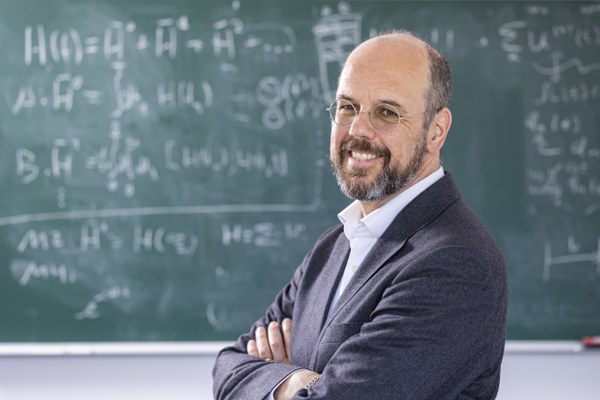
Thomas Potthast is a full Professor for Ethics, History and Theory of Biosciences at the Faculty of Science, Department of Biology at the University of Tübingen. He serves as the Speaker of the International Center for Ethics in Sciences (IZEW) and has held this position since 2014. Since 2016, he has also been the Speaker of the Thematic Area on Sustainability, Protection and Management of Natural Resources within the Excellence Strategy's Platform 3 on Environmental Systems. His academic journey includes a habilitation at the University of Tübingen in 2010, where he received teaching authorization for Ethics, Theory and History of Sciences. Prior to this, he was a Feodor-Lynen Fellow of the Humboldt Foundation at the University of Wisconsin-Madison (2002-2001) and a Post-Doc Research Scholar at the Max Planck Institute for the History of Science in Berlin (1998). Potthast's research focuses on environmental ethics, bioethics, and the philosophical foundations of sustainability science. His work critically examines the relationship between scientific knowledge and ethical decision-making, particularly in the context of nature conservation, biodiversity, and technological interventions in ecological systems. He has made significant contributions to understanding epistemic-moral hybrids in environmental decision-making and the ethical dimensions of sustainability transformations. His recent publications reveal a strong emphasis on the ethical challenges of emerging technologies (including gene drives and affective computing) in relation to environmental sustainability, the role of universities in sustainability transformations, and transdisciplinary approaches to real-world sustainability challenges. His work consistently bridges theoretical ethics with practical applications in conservation and sustainability contexts. As an educator and mentor, Potthast has supervised numerous doctoral and master's students working on diverse topics spanning sustainable development education, animal ethics, nature conservation, and the ethical dimensions of technological interventions in natural systems. He leads the Competence Center for Sustainable Development, which is part of the Excellence Strategy since 2018, and has been instrumental in developing the whole-institution approach to sustainability at the University of Tübingen. His work connects academic research with practical implementation of sustainability principles across the university's operations, teaching, and research activities.