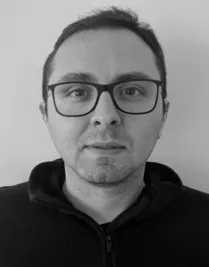
Aleksey Zaytsev is a Senior Lecturer at Skoltech, where he leads the Applied Research Laboratory «Skoltech-Sberbank» at the Center for Applied Artificial Intelligence. He holds a PhD in Physics and Mathematics and is a laureate of the Moscow Government Prize for Young Scientists. Education: PhD in Physics and Mathematics His research focuses on artificial intelligence, particularly on developing predictive models for geospatial analysis, drilling safety, and aerospace engineering. He has created practical AI solutions for drought prediction, accident prevention, and aircraft quality monitoring. His work also emphasizes model reliability and safe deployment in industrial contexts. The recent studies highlighted his contributions to neural network accuracy in banking applications, algorithmic hesitation for improved decision-making, and geospatial data optimization. These works demonstrate interdisciplinary applications of AI in environmental, financial, and engineering domains. Scientific Awards: Moscow Government Prize for Young Scientists As head of the Artificial Intelligence Center's applied research lab, Zaytsev bridges academic research with industry needs, particularly in AI safety and real-world implementations. He also engages in public education through lectures like 'How to Deceive Artificial Intelligence' at the Yeltsin Center, addressing AI vulnerabilities and security implications.
Dr. Angela Capel Cuevas is an Assistant Professor at the University of Cambridge's Department of Applied Mathematics and Theoretical Physics since April 2024. Previously, she held a Junior Professorship (W1) at Eberhard Karls Universität Tübingen's Mathematical Physics area (2021-2024), and was an MCQST Distinguished PostDoc at Technische Universität München (2020-2021). Her research sits at the intersection of Quantum Information Theory and Quantum Many-Body Systems , focusing on quantum dissipative evolutions and their mathematical characterization through quantum functional inequalities and entropic bounds . 2023-26: CRC TRR 352 grant on "Mathematics of Many-Body Quantum Systems" (7M€) 2024-27: QuantERA project "Towards a useful quantum advantage" (TouQan, 1.25M€) Her recent work demonstrates rapid thermalization in 1D quantum systems with logarithmic time scaling and establishes exponential mutual information decay for Gibbs states. She co-organized BIRS-IMAG workshops on quantum information theory and received the Jack Keil Wolf ISIT Student Paper Award (2023). Her PhD thesis (ICMAT/Universidad Autónoma de Madrid, 2019) introduced quasi-factorization techniques for relative entropy, leading to groundbreaking results in quantum functional inequalities. 2023: Simons Emmy Noether Fellowship at Perimeter Institute 2023: Forbes 30 Under 30 Spain 2022: Vicent Caselles RSME-FBBVA Award
Sebastian van der Linden has been a Professor of Geography at the University of Greifswald since 2019, heading the Earth Observation and Geoinformation Science Lab within the Institute of Geography and Geology. His institutional roles include: Member of the Greifswald Moor Center (GMC) since 2020 Member of the EnMAP Science Advisory Group (EnSAG) since 2021 Deputy Director of the Interdisciplinary Research Centre on Baltic Sea Region Research (IFZO) since 2022 His research centers on Earth observation methodologies using multi- and hyperspectral remote sensing data to analyze spatiotemporal dynamics of land use, land cover, and environmental processes. Specialized expertise includes peatland monitoring (particularly rewetting impacts), climate change effects on vegetation systems, and machine learning-driven land cover mapping at local to regional scales. This work integrates quantitative approaches to understand human-environment interactions and ecological transformations. While no specific scientific awards are documented in the source material, his leadership positions in major research consortia reflect significant professional recognition. He actively supervises doctoral candidates including Farina de Waard, whose research examines peatland degradation in northern Germany using spatiotemporal remote sensing techniques. Current projects such as EnMAP-Box and ReWetSpec demonstrate applied research in environmental monitoring, supported through institutional frameworks and partnerships like the Deutsche Bundesstiftung Umwelt scholarship funding. The Earth Observation and Geoinformation Science Lab (formerly Remote Sensing and Geoinformation Processing Working Group) operates as a multidisciplinary research hub developing advanced methodologies for environmental assessment. The team implements machine learning algorithms and sophisticated learning strategies to enhance accuracy and temporal robustness in land cover classification, with field-based validation components integrated into advanced teaching modules.
Prof. Dr. Alexander Pretschner is a leading academic in software and systems engineering at the Technical University of Munich, with additional roles as Chair of the bidt Board of Directors, Member of the Executive Committee, and Chair of the Scientific Directorate at fortiss (Bavarian Research Institute for Software-Intensive Systems). His expertise spans software engineering, information security, and ethical deliberation in agile processes. Professor for Software & Systems Engineering, TUM Founding Director and Chairman of bidt Chair of Scientific Directorate at fortiss Research interests focus on software engineering with emphasis on testing and information security , alongside pioneering work in AI ethics , digital sustainability , and data privacy . Key projects include EDAP (Ethical Deliberation for Agile Processes), DetDat (Determinants of Data Disclosure), and AIffectiveness in Education. Publications and lectures address critical issues like "What makes Munich attractive for Open AI?" , "How generative AI transforms creative work" , and "Balancing benefits and risks of AI assistants in workplaces" . Collaborations include prominent researchers like Julian Nida-Rümelin and Niina Zuber.
Arash Akbarinia is a researcher at the School of Psychology and Sports Science at Justus Liebig University Giessen. His work operates at the intersection of biological and artificial neural networks , focusing on visual information processing and the psychophysics of perception. Primary research areas include computational modeling of vision, contrast sensitivity, color categorization, and haptic saliency Active in developing deep learning frameworks for sensory processing analysis Recent publications highlight collaborations with Prof. Karl Gegenfurtner and colleagues, exploring phenomena like color constancy , gloss perception , and haptic stimulus modeling through deep neural architectures. His repository contributions include tools for analyzing sensorimotor processing and tactile perception using PyTorch implementations.
Prof. J. Rod Franklin, PhD is a Full Professor of Logistics and Academic Director of Executive Education at Kühne Logistics University (KLU) in Hamburg, Germany. With an extensive background spanning both academia and industry, Professor Franklin brings deep practical experience to his academic role. He has held significant leadership positions at KLU, including Dean of Programs, and was instrumental in the university's planning stages as he states: "KLU is near and dear to my heart, because I was one of the individuals that helped plan the university." His unique blend of academic rigor and industry expertise makes him a central figure in KLU's mission of providing world-class logistics education and research. Professor Franklin's academic foundation is impressive: Doctorate of Management, Case Western Reserve University, USA (2000) Master of Business Administration, Harvard Graduate School of Business, USA (1979) Master of Science in Mechanical Engineering, Stanford University, USA (1975) Bachelor of Science in Mechanical Engineering, Purdue University, USA (1974) His research focuses on applying modern management techniques to supply chain operations, with pioneering work in sustainable business models, green logistics, corporate social responsibility, and cloud-based supply chain management. Professor Franklin is a leading authority on the Physical Internet concept, which seeks to revolutionize logistics through interconnected systems inspired by the digital internet. His research consistently bridges theoretical frameworks with practical industry applications, addressing critical challenges in modern logistics networks while promoting sustainability and efficiency. Professor Franklin's publication record over the past two decades reveals a clear evolution from traditional logistics service innovation toward cutting-edge research on the Physical Internet, predictive analytics, and big data applications in supply chains. His recent work demonstrates increasing emphasis on urban logistics solutions, sustainability challenges, and the integration of digital technologies with physical logistics networks. His seminal 2020 paper "From the Digital Internet to the Physical Internet" has significantly advanced the conceptual framework for this emerging field, while his 2024 protocol design work continues to push the boundaries of practical implementation. Professor Franklin leads significant research initiatives including "Accelerating the Path Towards Physical Internet - SENSE," "Internet of Food and Farm 2020," and "URBANE - Upscaling innovative green urban logistics solutions." His work has been published in top-tier journals including Journal of Business Logistics, IEEE Transactions on Systems, Man and Cybernetics, and International Commerce Review, demonstrating substantial scholarly recognition. While specific individual awards aren't detailed in available information, his leadership in major funded research projects indicates significant institutional support for his work. As Academic Director of Executive Education at KLU, Professor Franklin oversees programs that effectively bridge academic theory with industry practice. His teaching portfolio includes MBA courses on Critical Thinking, Design Thinking, Managing Multiple Complex Expectations, and Systems Thinking - all emphasizing practical application of theoretical concepts. His extensive industry background, including executive roles at Kühne + Nagel and other major logistics firms, directly informs his approach to academic supervision and executive education. Professor Franklin has successfully secured research funding for multiple projects focused on sustainable logistics innovation, demonstrating his ability to translate theoretical concepts into impactful research initiatives. Professor Franklin leads collaborative research teams focused on the Physical Internet concept and its applications in modern logistics. Through projects like SENSE and URBANE, he works with international researchers, industry partners, and policymakers to develop innovative solutions for sustainable urban logistics. His research integrates expertise from computer science, operations research, and business management to address complex supply chain challenges. The BizSLAM App, developed as part of his work on multi-level SLA management, exemplifies his team's ability to create practical tools with direct industry applications, demonstrating the real-world impact of his research vision.
Tracy Camp is a Professor in the Department of Computer Science at Colorado School of Mines, College of Applied Science and Engineering. With a distinguished career spanning over three decades, she has established herself as a leading researcher in wireless networking, mobility modeling, and computing education. Her work has evolved from foundational research in mobile ad hoc networks to impactful contributions in broadening participation in computing. Dr. Camp's research interests span wireless networking, mobility modeling, machine learning applications in networking, and computer science education. Initially focusing on mobility models for ad hoc networks, she published seminal work including the widely cited survey 'A survey of mobility models for ad hoc network research' (2002). More recently, her work has shifted toward computing education, particularly broadening participation in computing, K-12 teacher preparation, and supporting underrepresented students through scholarship programs like S-STEM. Her recent publications reveal a strong emphasis on machine learning applications for network security, particularly in analyzing encrypted messaging applications and smart device traffic. Simultaneously, she has become a national leader in departmental strategies for broadening participation in computing, developing frameworks for BPC (Broadening Participation in Computing) plans that are now required by the NSF. Dr. Camp has been instrumental in developing the CS@Mines program, creating successful scholarship ecosystems for low-income and underrepresented students, and leading Colorado's strategic approach to prepare K-12 computer science teachers. Her work bridges technical research with practical educational initiatives that address critical challenges in the computing field. She has served in leadership roles for major computing education conferences including SIGCSE, where she has contributed to shaping the national conversation about computing education, enrollment surges, and diversity in the field. Her collaborative work with organizations like CRA-W (Computing Research Association-Women) demonstrates her commitment to addressing systemic issues in computing.
Leonardo Tonetto is a researcher at Technical University of Munich (TUM) within the Chair of Connected Mobility, working under Prof. Jörg Ott. His office is located in FMI 01.05.038 and he maintains an active presence in both academic research and open-source development with significant GitHub contributions (19 repositories, 73 stars). His work bridges theoretical research and practical implementation in mobility systems. Dr. Tonetto's research spans Mobile User Modeling , Deep Learning & Data Analysis , Signal Processing , and Complex Networks . His work demonstrates particular expertise in extracting meaningful patterns from human mobility data while addressing critical privacy concerns. Recent publications show increasing focus on ethical implications of location-based data and energy-efficient computing for augmented reality applications. Analysis of his publication record from 2014-2025 reveals a consistent research trajectory evolving from fundamental mobility pattern analysis toward more complex systems integrating privacy considerations and energy efficiency. His work increasingly intersects computer science with social implications, particularly in location-based services and epidemic modeling. The research shows strong methodological diversity, employing machine learning, network analysis, and signal processing techniques across various application domains. Through his GitHub profile and open-source contributions, Tonetto demonstrates commitment to reproducible research and community engagement. His technical skills span multiple programming languages and systems, supporting both theoretical research and practical implementation of mobility-aware systems. While specific grant information isn't publicly available, his consistent publication output suggests successful research funding.
Iryna Gurevych is a Full Professor (W3) at the Computer Science Department of the Technical University Darmstadt, Germany, and head of the UKP Lab. She has held adjunct professorships at the Mohamed bin Zayed University of Artificial Intelligence (UAE) and an affiliated professorship at INSAIT (Bulgaria). Her research focuses on natural language processing, machine learning, and interdisciplinary applications in the humanities and social sciences. Education: PhD in Computational Linguistics (University of Duisburg-Essen, 2003), Diploma in English and German Linguistics (State University of Vinnytsia, Ukraine, 1998) Her research interests span large language models, AI safety, responsible AI, argument mining, and semantic text processing, with emphasis on cross-disciplinary integration of NLP in social sciences and humanities. She has received prestigious awards including the Royal Society Milner Award (2025), ERC Advanced Grant (2022), LOEWE-Spitzen-Professur (2021), ACL Fellow (2020), and early-career recognitions like the Lichtenberg and Emmy-Noether prizes (2007-2008). She is a member of the Academia Europaea, Leopoldina, and Berlin-Brandenburg Academy of Sciences and Humanities. As a principal investigator, she leads missions in AI security and privacy at ATHENE, contributes to the Hessian Center for Artificial Intelligence, and directs CEDIFOR. Her leadership roles include past-Presidency of the Association for Computational Linguistics (ACL) and co-direction of the ELLIS NLP program.
Dr. sc. nat. Hilko Hoffmann is a researcher at the German Research Center for Artificial Intelligence (DFKI) within the Agents and Simulated Reality department in Saarbrücken, Germany. His work focuses on the intersection of artificial intelligence, cloud-based IoT systems, and smart living environments, with particular emphasis on security, contextual awareness, and human-AI collaboration. Role: Researcher Institution: DFKI Saarbrücken Research Unit: Agents and Simulated Reality Key research interests include: Secure orchestration of heterogeneous IoT devices Context-sensitive smart living services Federated data ecosystems for autonomous systems Human-centric AI integration in safety-critical domains Recent publications analyze technical and sociotechnical aspects of AI in cloud-IoT architectures, with specific applications in building automation and energy systems. Collaborations span 11 European countries through the InterConnect project, demonstrating cross-domain integration of smart homes, buildings, and electricity grids.
Martin Hebart is a Professor for Computational Cognitive Neuroscience and Quantitative Psychiatry at Justus Liebig University Giessen and an Independent Max Planck Research Group Leader at the Max Planck Institute for Human Cognitive and Brain Sciences in Leipzig, Germany. His work bridges cognitive neuroscience, computer science, and psychology to explore visual perception, object recognition, and computational models of brain function. PhD in Psychology from Bernstein Center for Computational Neuroscience Berlin (2014) M.Sc. and B.Sc. in Neuro-cognitive Psychology from Ludwig Maximilian University Munich His research integrates psychophysics , neuroimaging (fMRI, MEG), and machine learning to decode how visual input transforms into stable object representations and how these insights inform psychiatric conditions like hallucinations. Articles highlight his focus on computational models , neural network alignment , and large-scale behavioral-neuroimaging datasets (e.g., THINGS-data). His group’s work spans from basic visual cognition to translational applications in psychiatry. Scientific awards include postdoctoral fellowships from the National Institute of Mental Health (2016) and Alexander von Humboldt Foundation (Feodor Lynen, 2016), alongside doctoral and study scholarships. He leads a multidisciplinary team at the intersection of JLU Giessen’s Medical Department and MPI, mentoring students in visual neuroscience , AI-driven modeling , and clinical applications .
Dr. Nathan Leroux is a postdoctoral researcher at Forschungszentrum Jülich, affiliated with the Peter Grünberg Institute and its Neuromorphic Software Ecosystems (PGI-15) group. He completed his Ph.D. in Physics at Paris-Saclay University in 2022 under the mentorship of Julie Grollier and Frank Mizrahi in the Albert Fert Laboratory. Education: Ph.D. in Physics (2022), Paris-Saclay University Research Interests: Focuses on developing energy-efficient hardware architectures for artificial intelligence using emerging technologies. Current projects include applying In-Memory Computing to accelerate Large Language Models and bio-signal analysis for advanced Human-Machine Interfaces. Current Work: Part of the Neuromorphic Software Ecosystems group led by Emre Neftci at Jülich Research Centre, leveraging neuromorphic engineering and machine learning for AI applications.
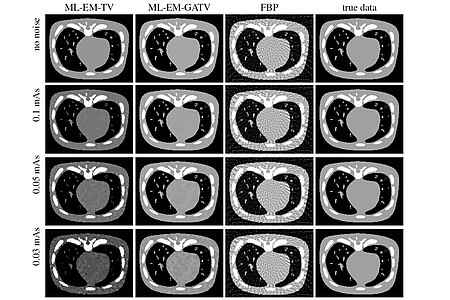
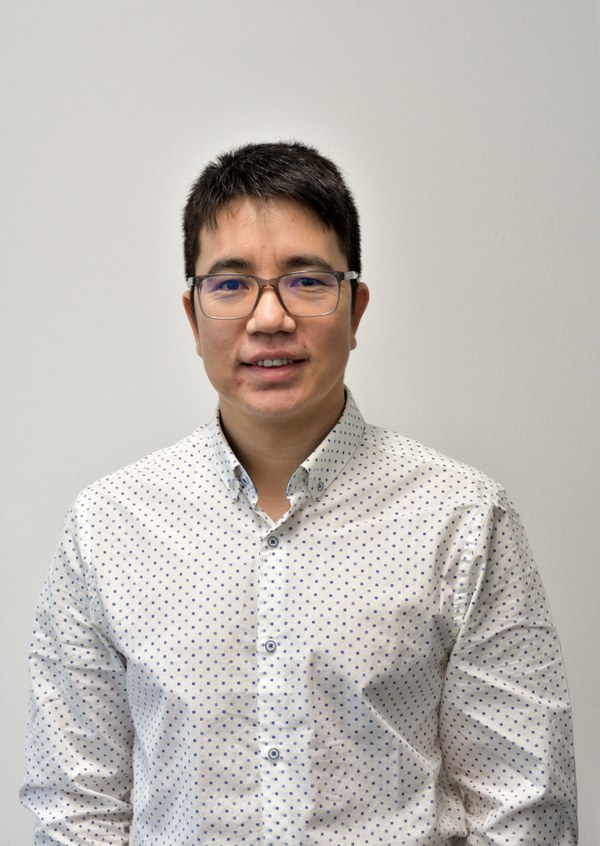
Jürgen Hesser is a Professor at the Mannheim Medical Faculty , Heidelberg University, specializing in Experimental Radiotherapy and Medical Imaging . His research focuses on solving inverse problems in imaging, particularly for CT reconstruction , brachytherapy planning , and low-dose imaging . Current affiliations: Clinic for Radiotherapy and Radiooncology, Mannheim University Hospital Collaborative ties: Interdisciplinary Center for Scientific Computing (IWR) and Center for Bioinformatics (ZITI) at Heidelberg University Research interests center on anisotropic total variation techniques for medical and industrial applications, including MR-guided interventions and real-time radiation therapy . His work has led to a 1000x speed improvement in brachytherapy planning algorithms. Recent publications highlight expertise in image reconstruction (CT/X-ray), noise optimization , machine learning for cancer classification, and big data management solutions. His methods are applied to both clinical and industrial imaging challenges. Additional contributions include scientific data infrastructure development and variance stabilization techniques for medical sensors. The research group maintains strong interdisciplinary links with Physics, Mathematics, and Computer Science faculties.
Prof. Dr. Thomas Schack is a faculty member in the Department of Sport Science at Bielefeld University , specifically within the Faculty of Psychology and Sport Science and the Center for Cognitive Interaction Technology (CITEC) . His research focuses on the intersection of Neurocognition and Movement - Biomechanics , with significant contributions to understanding motor learning, cognitive representations in sports, and neurophysiological adaptations. Key Research Areas : Academic resilience, EEG neurofeedback applications, sport emotion validation, motor imagery classification, and balanceability enhancement through spinal cord stimulation. Notable Methodologies : Psychometric validation across cultures, longitudinal studies on student engagement, and ERP/EEG studies on motor planning and execution. Impact : His work bridges sports science with cognitive neuroscience, emphasizing cross-cultural applications (e.g., Ghanaian educational contexts) and technological interventions in athletic performance. Publications show a strong emphasis on academic resilience in educational settings, motor skill acquisition through neurocognitive frameworks, and cross-cultural psychometric validation. His recent studies analyze balanceability support systems and expertise-dependent cognitive performance in sports and chess.
Dr.-Ing. Bashir Kazimi is a group leader at the Materials Data Science and Informatics (IAS-9) department within the Institute for Advanced Simulation at Forschungszentrum Jülich. His work focuses on advancing deep learning and computer vision techniques for electron microscopy data analysis, enabling efficient material characterization. Expertise: Deep Learning, Computer Vision, Image Analysis Collaboration: Works closely with the Ernst-Ruska-Center (ER-C) for electron microscopy expertise Research Interests: Bashir develops and applies deep learning methods for tasks such as denoising, super-resolution, semantic segmentation, and tracking in electron microscopy. His applications span nanomaterial characterization, crystallographic defect identification, and orientation mapping. Scientific Trends: His recent publications highlight advancements in self-supervised learning, semantic segmentation of TEM images, and applications of deep learning to both materials science and archaeological monument detection in geospatial data. Scientific Achievement: Admitted to the Young Excellent Scientist Program (YESP) in 2024, supporting leadership development and scientific visibility Advising: Supervises Shrindhi Bhat , a PhD student in his group. He is involved in projects like FAST-EMI (Deep-learning assisted fast in situ 4D electron microscope imaging), with a focus on enhancing materials analysis through AI.