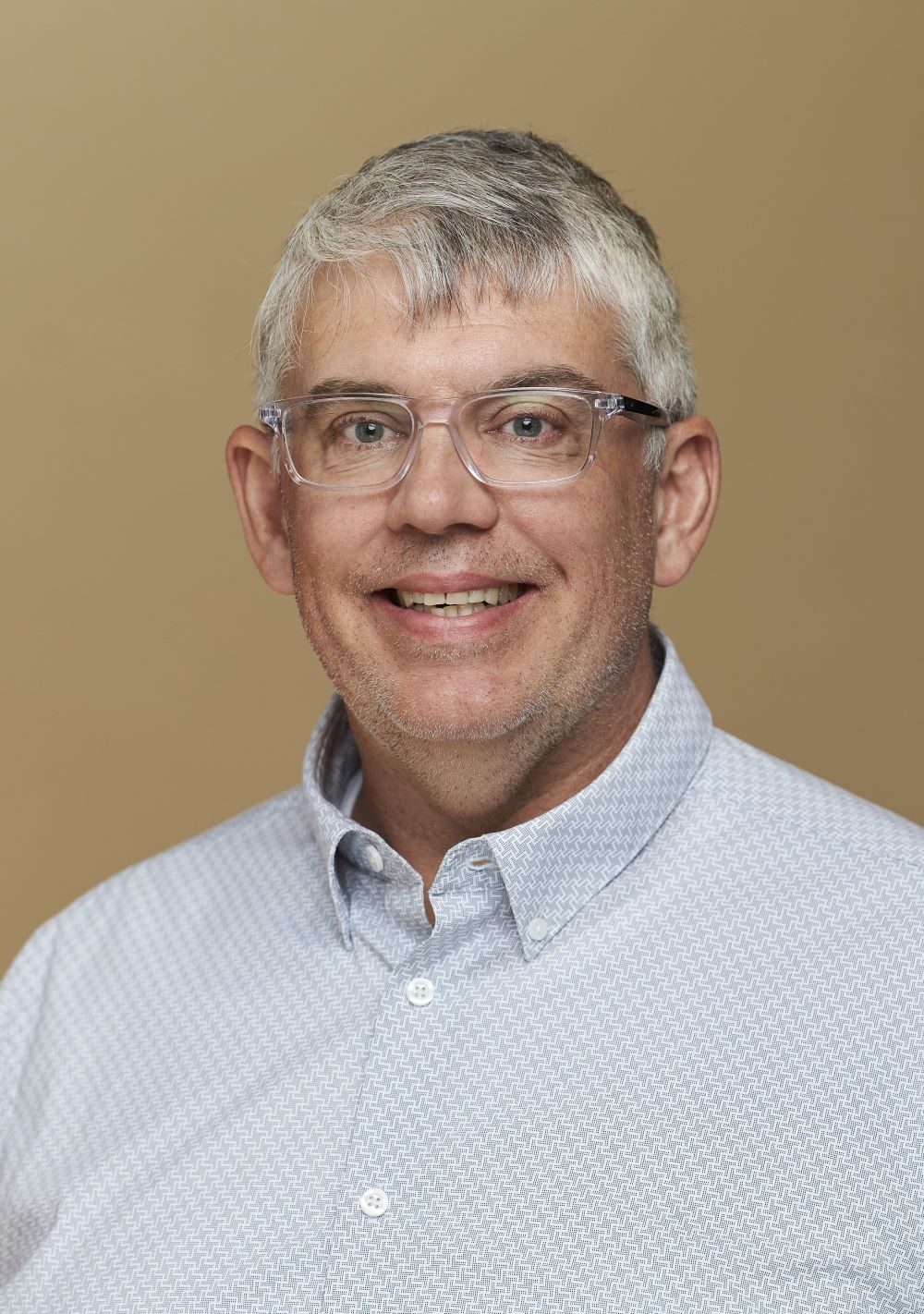
Christopher Storie is a Professor of Geography at the University of Winnipeg, specializing in GIS, Remote Sensing, and Urban Geography. He holds an office in Lockhart Hall (5L03) and teaches courses such as Introduction to GIS, Remote Sensing, and Urbanization in the Developing World. His research focuses on Deep Learning applications for automated land use/land cover mapping, informal settlement mapping, and urban-rural fringe detection. Key research interests include leveraging neural networks for geospatial analysis, urban dynamics in regions like Mexico City, and collaborative international fieldwork. He has contributed to over 20 peer-reviewed articles since 2000, emphasizing satellite imagery analysis and environmental monitoring. His work bridges technical geospatial methods with socio-environmental challenges in urban and developing regions.
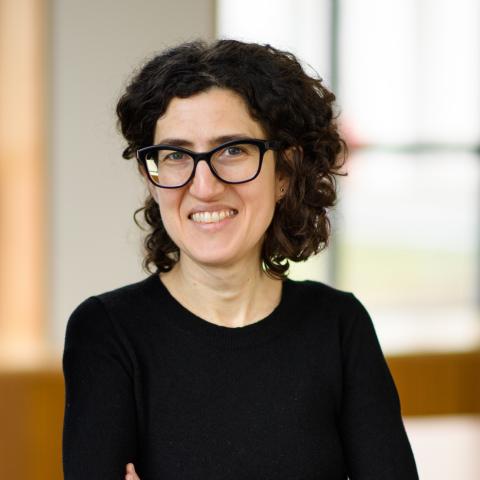
Rocío Titiunik is a Professor of Politics at Princeton University and Director of the Data-Driven Social Science Initiative. She holds affiliations with the School of Public and International Affairs, the Department of Operations Research and Financial Engineering, the Center for Statistics and Machine Learning, the Program in Latin American Studies, the Center for the Study of Democratic Politics, and the Research Program in Political Economy. Her work bridges quantitative methodology, political economy, and statistical analysis, focusing on causal inference and program evaluation through regression discontinuity (RD) designs. She earned her undergraduate degree at the Universidad de Buenos Aires and a Ph.D. in Agricultural and Resource Economics from UC-Berkeley (2009). Before joining Princeton, she served as faculty at the University of Michigan’s Department of Political Science, where she was affiliated with the Center for Political Studies and the Michigan Institute for Data Science. Rocío’s research emphasizes the application of quasi-experimental methods to study political institutions, democratic accountability, and party systems in developing democracies. Her methodological contributions include advancements in RD designs, synthetic controls, and uncertainty quantification. Recent substantive work investigates charismatic leaders’ impact on democratic stability and the effects of voter registration reforms on public safety. Her scholarly achievements include the 2016 Emerging Scholar Award from the Society for Political Methodology and 2020 fellowship in the same society. She currently serves as an associate editor for Science Advances and a Board member for Science, while previously holding roles at the American Journal of Political Science and the NSF’s Social, Behavioral, and Economic Sciences Directorate. Rocío’s advising and grant activities include co-leading the EITM Summer Institute and securing federal research funding for projects on political methodology and democracy. She teaches advanced quantitative analysis courses and collaborates across disciplines to strengthen empirical research practices. Her work is anchored in collaborative initiatives like the Center for Statistics and Machine Learning, which integrates computational tools with social science inquiry, and the Program in Latin American Studies, reflecting her commitment to regional and methodological innovation.
Dr. John Hastings is a Professor in the Department of Computer Science at Dakota State University, part of the Beacom College of Computer & Cyber Sciences. With nearly 35 years of experience, he specializes in teaching and curriculum development in computer science, combining academic rigor with industry insights from his roles as an AI/ML engineer, team leader, and business owner. Education: Ph.D., Computer Science, University of Wyoming M.S., Computer Science, University of Wyoming B.S., Computer Science, University of Wyoming Research interests include machine learning, AI applications in natural language processing (LLMs), generative AI, computer vision, ecological/environmental AI, AI in games, and gamification in education. Recent publications focus on cybersecurity challenges, AI ethics, and insider threat detection. His work has been recognized with awards such as the AAAI’s Innovative Applications of Artificial Intelligence (IAAI) Award and an International IPM Award for Excellence related to the CARMA AI tool. Teaching emphasizes active learning and practical skills, including courses on programming, data structures, AI, and cybersecurity. He advocates for gamification in education to enhance student engagement and success.
Yading Yuan, PhD is an Associate Professor of Radiation Oncology (Physics) at Columbia University Irving Medical Center and a member of the Data Science Institute. He holds a PhD in medical physics from the University of Chicago (2010) and completed clinical residency at Harvard Medical Physics Program (2013). His research focuses on AI-driven innovations in radiation oncology, including automated medical image analysis systems, federated learning frameworks for tumor segmentation, and data-driven approaches to personalized cancer treatment. He is certified by the American Board of Radiology and licensed in New York State. Education: PhD in Medical Physics (University of Chicago, 2010); Clinical Residency (Harvard Medical Physics Program, 2013). Research interests include: automated knowledge-based treatment planning, large-scale clinical AI systems, medical image reconstruction algorithms, and panomics integration for precision oncology. His work emphasizes translating data science advancements into clinical practice to improve patient outcomes. Key trends in his publications include federated learning for privacy-preserving medical AI, tumor segmentation in multi-modal imaging (PET/CT, MRI), and AI-driven prediction of treatment outcomes and recurrence risks. Recent work emphasizes decentralized learning architectures and cross-institutional collaboration systems. Scientific Awards: Distinguished Reviewers 2013 (selected by peer review committees) Advising/grants: No specific student names or grant details listed in provided text. His work is supported through institutional and collaborative research initiatives. Labs/teams: Active member of Columbia's Data Science Institute and Radiation Oncology department, contributing to interdisciplinary medical AI research groups.
Jian Tang is an Assistant Professor at HEC Montréal and a core member of the Montreal Institute for Learning Algorithms (MILA). His research focuses on graph representation learning, generative models, and their applications in drug discovery and material science. Prior to this, he was a postdoctoral researcher at the University of Michigan and Carnegie Mellon University, and a researcher at Microsoft Research Asia (2014-2016). He has received several prestigious recognitions, including the Canada CIFAR Artificial Intelligence Chairs (CCAI Chair) and best paper nominations at WWW’16. His work on LINE (WWW’15) was recognized as the most cited paper in its year. Tang’s research spans theoretical foundations and practical systems, such as GraphVite for scalable graph embedding and TorchDrug for drug discovery. Key research interests include geometric deep learning for molecular structures, generative models for protein design, and neural-symbolic reasoning for knowledge graphs. He actively collaborates with leading biological labs and leverages industry partnerships for GPU resources. Recent publications emphasize molecular property prediction, 3D conformation generation, and algorithmic reasoning frameworks. He has secured grants from IBM/MILA, Amazon, and the National Research Council Canada, supporting projects like molecular pretraining and geometric representation learning. Tang teaches courses on graph representation learning and deep learning, and mentors a vibrant team of PhD and master’s students. His lab has developed impactful software tools like LINE, PTE, and LargeVis, widely used in the research community.
Dr. Chutima Boonthum-Denecke is a Professor in the Department of Computer Science at Hampton University's School of Science. She joined Hampton University in 2006 as an Assistant Professor and now serves as Director of the Information Assurance and Cyber Security Center (IAC@HU). She leads the NSF CyberCorps Scholarship for Service program and has contributed to NSF initiatives like ARTSI and STARS Alliances. Her educational background includes a Ph.D. in Computer Science from Old Dominion University (2007), an MS in Applied Computer Science from Illinois State University (2000), and a BS in Computer Science from Srinakharinwirot University (1997). Dr. Boonthum-Denecke's research integrates artificial intelligence, natural language processing, and cybersecurity. Key interests include: Developing intelligent tutoring systems and educational games Secure coding practices for software engineering NLP applications in information retrieval and assessment tools Cyber-physical security for IoT and robotics Her recent publications (2016-2021) focus on machine learning applications in cybersecurity, including sentiment analysis for threat detection, blockchain-enhanced IoT security, and vulnerability assessments of emerging technologies. Collaborative work with students frequently addresses privacy ethics in AI assistants, RFID implants, and cloud systems. She mentors students through the IAC@HU lab, resulting in award-winning conference presentations on cybersecurity topics. As Principal Investigator of NSF CyberCorps, she oversees scholarship programs that bridge academic research with national security needs.
Dr. Yar Muhammad is a Principal Lecturer in Computer Science at the University of Hertfordshire's School of Physics, Engineering & Computer Science. His research develops Brain-Computer Interface applications using AI/ML techniques for healthcare. He holds a PhD in ICT (Tallinn University of Technology) and dual master's degrees. Research Leadership: Supervised PhD students: Nimra Memon (fault-tolerance in web services), Dmytro Zabolotnii (agent behavior prediction), Mahir Gulzar (context-aware modeling) Accepts self-funded PhD candidates in BCI/AI applications Awards: Young Investigator Award (Springer/IFMBE, 2014) Best Paper Award Runner-up (26th ISSC 2015) Professional Recognition: Fellow of Higher Education Academy IEEE Senior Member Editorial board member for multiple journals
Mustafa A. Mustafa is a Senior Lecturer (Associate Professor) in the Department of Computer Science at The University of Manchester, where he leads the Trusted Digital Systems Cluster as part of the university-wide Centre for Digital Trust and Society. His academic journey spans prestigious institutions including The University of Manchester, where he completed his PhD, and KU Leuven in Belgium, where he served as a post-doctoral research fellow. Dr. Mustafa earned his educational qualifications through an impressive academic path: a B.Sc. in communications from the Technical University of Varna, Bulgaria (2007), an M.Sc. in communications and signal processing from Newcastle University, UK (2010), and a Ph.D. in computer science from The University of Manchester, UK (2015). His doctoral research focused on "Smart Grid Security: Protecting Users' Privacy in Smart Grid Applications," laying the foundation for his subsequent research career. Dr. Mustafa's research expertise centers on information security, data privacy, and applied cryptography with particular focus on smart grid systems, smart city applications, e-health, and IoT. His work addresses critical challenges in securing peer-to-peer electricity trading markets, smart metering infrastructure, electric vehicle charging systems, and health data management. He has developed innovative solutions for keyless car sharing systems, frictionless authentication mechanisms, and privacy-preserving protocols for data collection and distribution. His scholarly contributions demonstrate a consistent trajectory toward increasingly sophisticated privacy-preserving techniques applied across multiple domains. Recent work shows a growing integration of artificial intelligence and machine learning approaches with traditional cryptographic methods, particularly in federated learning systems and large language model verification. His research bridges theoretical cryptography with practical implementations in energy systems and healthcare applications. Dr. Mustafa's scientific achievements have been recognized with several prestigious awards: Winner of the Student Video Competition at IEEE SmartGridComm 2017 for "Secure and Privacy-friendly Local Electricity Trading" Best Paper Award at SECURWARE 2017 Distinguished Achievement Award as Postgraduate Research Student of the Year nominee by the School of Computer Science of The University of Manchester (2015) Dame Kathleen Ollerenshaw Research Fellowship (2018-2023) As an academic supervisor, Dr. Mustafa has mentored numerous graduate students through their PhD and Master's research, with a particular focus on privacy and security challenges in emerging technologies. His current supervision portfolio includes research on privacy-friendly multi-agent systems for smart grids, security for IoT in e-health, vulnerability detection in IoT cryptography, and bot detection systems. He has secured significant research funding through multiple competitive grants including EnnCore: End-to-End Conceptual Guarding of Neural Architectures (EPSRC, 2020-2024), SCorCH: Secure Code for Capability Hardware (EPSRC, 2019-2023), and SNIPPET: Secure and Privacy-friendly Peer-to-peer Electricity Trading (FWO-SBO project, 2019-2023). Dr. Mustafa leads the Trusted Digital Systems Cluster within the Centre for Digital Trust and Society at The University of Manchester. His research group comprises PhD students, postdoctoral researchers, and collaborators working on cutting-edge security and privacy solutions. The team maintains strong international collaborations, particularly with KU Leuven in Belgium, and contributes to standards development as evidenced by Dr. Mustafa's role as an expert in the IEC/SYC/WG 3 "IEC Smart Energy Roadmap."
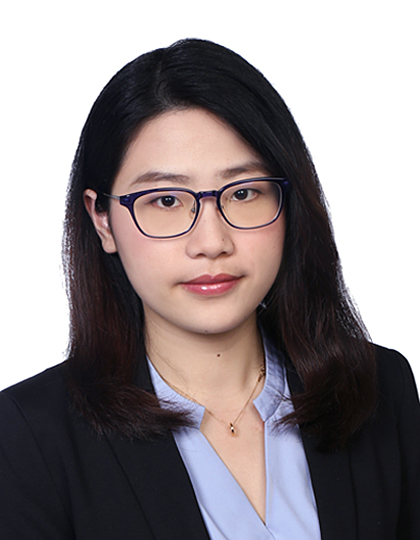
Yuan Tian is an Assistant Professor in the School of Computing at Queen's University, Faculty of Arts and Science. She holds a PhD in Information Systems from Singapore Management University (2017) and a B.Sc. in Computer Science from Zhejiang University (2012). Her research focuses on integrating heterogeneous data sources to enhance software engineering practices, including data mining, recommender systems, and social network analysis. Prior to Queen's, she was a data scientist at Living Analytics Research Centre (LARC), SMU. She has held visiting positions at Carnegie Mellon University, INRIA Paris, and SAIL Canada. Research Interests: Data Mining Software Engineering Social Network Analysis Information Retrieval Recommender Systems Computer Security Recent Research Trends: Her work emphasizes AI-driven solutions for software bug management, code translation, vulnerability detection, and developer behavior analysis. Notable contributions include leveraging LLMs for technical debt repayment and enhancing code vulnerability detection via Graph Neural Networks. Awards: SMU Presidential Doctoral Fellowship (2015-2016) Best Paper Award at SANER 2017 Grants & Advising: No formal advisees listed, but active in collaborative projects with industry and academic partners. Labs/Teams: Previously associated with SOAR Group at SMU and currently leads research in Queen's School of Computing.
Yuanzhu Chen is a Professor in the School of Computing at Queen’s University, affiliated with the Faculty of Arts and Science. He previously served as Professor and Department Head at Memorial University of Newfoundland (2005–2021). His research focuses on computer networking, mobile computing, complex networks, and applied machine learning, emphasizing wireless innovation beyond traditional wired systems. He holds a PhD from Simon Fraser University (2004) and a B.Sc. from Peking University (1999). Education: PhD in Computing Science (Simon Fraser University, 2004); B.Sc. in Computer Science (Peking University, 1999). Earlier roles include Post-doctoral Researcher at Simon Fraser University (2004–2005) and leadership positions at Memorial University, including Department Head (2019–2021). Research Interests: Network Coding and Opportunistic Routing Mobile and Wireless Network Protocols Complex Network Analysis Machine Learning Applications Indoor Positioning Systems Social Network Dynamics Selected Awards: Recipient of Queen’s University President's Award for Distinguished Teaching. Lab Affiliation: Director of the Wireless Networking and Mobile Computing Lab (WineMocol). Active in collaborative projects involving smartphone sensors, community-based environmental monitoring, and stock market prediction using web data.
Dr. Dijiang Huang is an Associate Professor in the School of Computing and Augmented Intelligence at Arizona State University (ASU). He joined ASU in 2005 after completing his Ph.D. in Telecommunications and Computer Networking from the University of Missouri-Kansas City (2004). His research focuses on cybersecurity, mobile computing, and cloud computing, supported by grants from the National Science Foundation (NSF), Office of Naval Research (ONR), and industry partners like HP. He has received prestigious awards, including the ONR Young Investigator Award and HP Innovative Research Award. Education: B.E. in Telecommunications, Beijing University of Posts and Telecommunications (1995) M.S. in Computer Science, University of Missouri-Kansas City (2001) Ph.D. in Telecommunications and Computer Networking, University of Missouri-Kansas City (2004) Research Interests: Huang’s work emphasizes secure communication protocols, privacy-preserving techniques, and resilient network architectures. He has pioneered frameworks like Secure Group Communication (SeGCom) and Attribute-Based Cryptography , addressing challenges in VANETs, SDN, and edge computing. His recent projects include developing Waterfall for SDN security and SmartDefense for DDoS mitigation. Grants & Awards: ONR Young Investigator Award (2008) HP Innovative Research Award (2008) NSF grants for secure mobile cloud frameworks and cyber-physical systems Professional Contributions: Huang has served as a reviewer for journals like IEEE Transactions on Wireless Communications and conferences such as ACM MobiArch. He co-developed the Open Human-Robotic Mobile Networking and Security Testbed (OHReST) and the Virtual Laboratory (VLab) for cybersecurity education.
Abraham Silberschatz is the Sidney J. Weinberg Professor of Computer Science at Yale University. He previously served as Vice President of the Information Sciences Research Center at Bell Laboratories and held a chaired professorship at the University of Texas at Austin. His research focuses on database systems, operating systems, and network management. Silberschatz has advised over a dozen PhD students, many now in academia and industry. Education: Ph.D., Computer Science, Stony Brook University (SUNY) Research Interests: His work spans database systems, operating systems, storage systems, and network management. Notable contributions include foundational textbooks like Operating System Concepts and Database System Concepts , which have become industry standards. He has also developed innovative systems like DataPlay and contributed to projects such as NetInventory. Publications: His 15+ years of research include influential papers on database architecture, network routing, and distributed systems. Recent work explores leveraging non-volatile memory technologies in systems design. Awards: ACM Karl V. Karlstrom Outstanding Educator Award (1998) IEEE Taylor L. Booth Education Award (2002) VLDB Test of Time Award (2019) Multiple Bell Laboratories President's Awards for innovation Grants & Patents: Recipient of over two dozen grants and over four dozen patents, including foundational IP in multimedia storage and distributed systems. His team's HadoopDB project merged MapReduce and DBMS technologies. Labs/Teams: Collaborates with Prof. Robert Soulé on projects in database systems and networking, focusing on next-gen memory technologies. Active in mentoring graduate students and postdocs in their research group.
Weiwei Lin is an Associate Professor in the Department of Civil Engineering at Aalto University, specializing in structural engineering with a focus on bridge systems, composite materials, and structural health monitoring. His research explores fatigue behavior of steel structures, seismic performance of composite systems, and innovative repair techniques. He holds a PhD from Waseda University (2012), MSc from Southeast University (2009), and BEng from Southwest Jiaotong University (2006). Key research areas include: steel-concrete composites, bridge redundancy evaluation, replaceable energy dissipaters, and AI-driven infrastructure diagnostics. Lin leads projects like CCU Structure (EU Horizon Europe) and RCF Mobility initiatives, focusing on sustainable construction and material recyclability. He has published 120+ peer-reviewed articles and secured 6 major grants. Lin has received prestigious awards including the IABMAS Young Award (2014) and Outstanding Reviewing Award (2017). His lab collaborates globally, hosting researchers from institutions like Israel Institute of Technology and Tsinghua University. Current work emphasizes crowdsourcing-based bridge monitoring and physics-guided AI frameworks for infrastructure diagnostics.
Lei Lei is an Associate Professor at the University of Guelph, specializing in Computer Engineering. Her research focuses on Machine Learning/Deep Reinforcement Learning, Internet of Things (IoT)/Internet of Vehicles (IoV), Mobile Edge Computing, and Smart Grid Optimization. She explores cutting-edge applications in energy-efficient systems, autonomous vehicles, and intelligent transportation networks. Her work integrates advanced AI techniques with real-world challenges in communication and control systems. Key research areas include optimizing electric vehicle charging schedules using hierarchical deep reinforcement learning and enhancing vehicular networks through 6G communication protocols. She has pioneered methods for joint communication-control systems, securing federated learning models, and developing robust resource allocation strategies in IoT and edge computing environments. Lei Lei’s publications emphasize interdisciplinary solutions, bridging computer science, electrical engineering, and transportation systems. Her recent work addresses challenges in smart grid security, multitimescale control systems, and the application of AI tools like ChatGPT in connected vehicles. She is affiliated with the AI Affiliated Faculty at the University of Guelph, reflecting her contributions to artificial intelligence research.
Erald Troja is a Tenured Associate Professor in the Mathematics, Computer Science and Science Division at St. John's University's Collins College of Professional Studies. He serves as the acting Program Director for the Cyber Security Systems program and the Director of the National Security Agency Center of Academic Excellence in Cybersecurity (NCAE). He holds a Ph.D. in Computer Science from The Graduate Center, CUNY, and previously served as an Assistant Professor at IONA College. With over 20 years of industry experience, he worked as a Sr. Systems Engineer at Time Warner Cable and Charter Communications. His research focuses on cybersecurity, privacy-preserving computations, location privacy, applied cryptography, and mobile computing. Recent work includes gamification of cybersecurity education using the metaverse, AI integration in cybersecurity curricula, and mitigating threats in autonomous systems. He has published in top-tier venues like IEEE Access, Ad Hoc Networks, and IEEE VTC. Teaching interests include network security, wireless security, and cryptography. He has developed innovative pedagogical methods like escape room-style learning and virtual reality-based training. His contributions to cybersecurity education and research have positioned him as a leader in advancing practical cybersecurity solutions and educational frameworks.