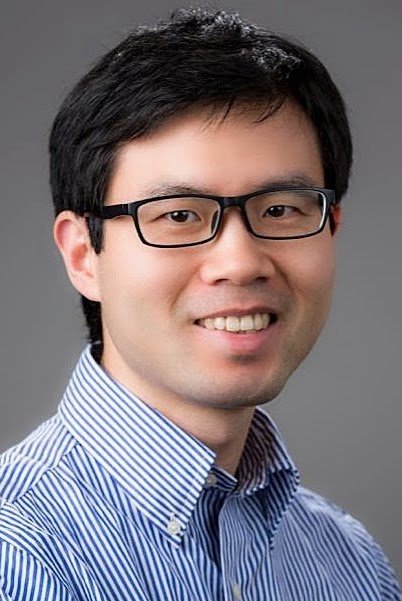
Adrian Sebastian Müller is a Doctoral Researcher in the Department of Computer Science at Aalto University. His research focuses on applying machine learning techniques to study quantum systems, particularly methods designed for quantum computers. He also explores quantum information theory, complex systems theory, and related pure mathematics, while engaging with interdisciplinary topics such as ethics of AI, psychological studies of the mind in therapeutic contexts, and metaphysics. His work emphasizes collaborative research in areas like variational methods on quantum computers, singular learning theory, and machine learning applications to social sciences (e.g., institutional theory). Müller advocates for inclusive and safe work environments, aligning with DEI principles. He is open to collaborations and debates, maintaining a flexible perspective on research challenges.
Amir Mahdian is a Doctoral Researcher at Aalto University's School of Chemistry and Materials, focusing on computational chemistry and electrochemical modeling. His work bridges theoretical approaches, such as density functional theory (DFT), with experimental data like cyclic voltammetry, particularly in the context of redox flow batteries (RFBs). Role: Doctoral Researcher University: Aalto University School: Chemistry and Materials Research Interests Application of DFT and machine learning to electrochemical reactions Development of theoretical frameworks connecting squarescheme prediction with experimental data Modeling quinone-type molecules for energy storage solutions Publications highlight his expertise in leveraging computational methods to advance electrochemical understanding, with a specific focus on scalable solutions for redox flow batteries. His work integrates quantum mechanical modeling and data-driven approaches to address challenges in energy storage technologies.
Prayag Tiwari is a Senior Lecturer at Halmstad University's School of Information Technology, where he conducts cutting-edge research at the intersection of artificial intelligence, quantum computing, and healthcare applications. With an SMIEEE designation and an active research profile, Dr. Tiwari contributes significantly to both academic and practical advancements in intelligent information systems. His research interests span a diverse spectrum including Artificial Intelligence, Quantum Machine Learning, Deep Learning, Healthcare, Bioinformatics, NLP/LLM, Computer Vision, Multimodal Learning, and Intelligent Systems. This interdisciplinary focus enables him to tackle complex problems across multiple domains, particularly in developing quantum-inspired algorithms for healthcare applications and advancing multimodal learning techniques for real-world challenges. Dr. Tiwari's publication record demonstrates consistent high-impact contributions across multiple domains, with recent work showing a clear trend toward quantum machine learning applications, particularly in healthcare and bioinformatics. His research frequently combines traditional deep learning approaches with quantum computing principles to develop novel solutions for drug interaction prediction, medical data processing, and multimodal analysis. The interdisciplinary nature of his work is evident in publications spanning computer vision, natural language processing, and blockchain applications for healthcare security. 2022 Best Paper Award for a publication in Neural Networks Multiple Highly Cited Papers in various journals Editor for Neural Networks and IEEE Transactions on Fuzzy Systems As an academic leader, Dr. Tiwari serves as an editor for prestigious journals including Neural Networks and IEEE Transactions on Fuzzy Systems, contributing to the advancement of knowledge in his fields of expertise. His extensive publication record in top-tier venues such as TMLR, IJCV, TNNLS, AAAI, ACL, CIKM, ICASSP, ECIR, and ECML demonstrates significant scholarly impact. While specific grant information isn't detailed in the provided materials, his research output suggests active funding for projects in quantum machine learning and healthcare applications. Dr. Tiwari's work appears to be conducted within collaborative research environments at Halmstad University, particularly within the School of Information Technology's research groups focused on artificial intelligence and quantum computing applications. His publications frequently involve multi-institutional collaborations, suggesting active participation in both national and international research networks focused on advancing machine learning techniques for practical applications.
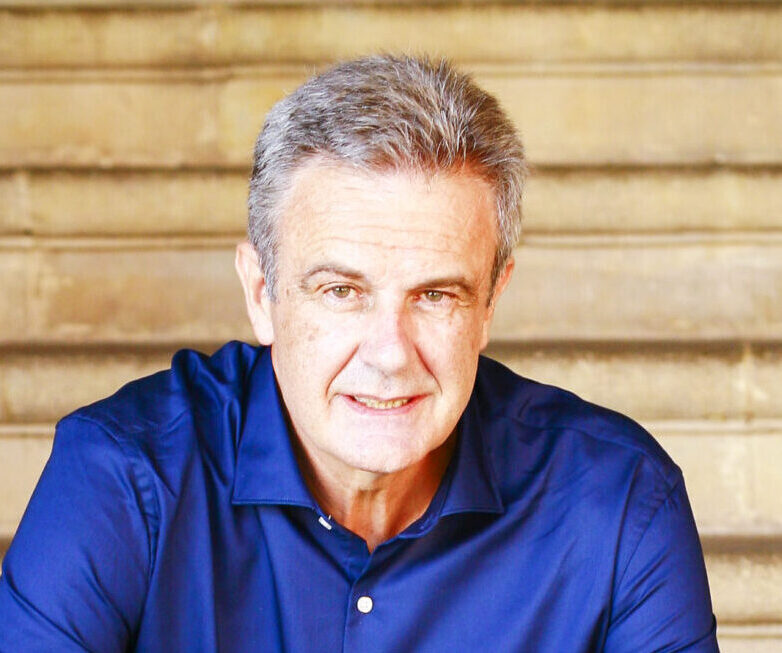
Concha Bielza is a Full Professor of Statistics and Operations Research at the Department of Artificial Intelligence, Technical University of Madrid, since 2010. Her academic journey began with an M.S. in Mathematics from Universidad Complutense de Madrid (1989) and a Ph.D. in Computer Science from Technical University of Madrid (1996), where she received the extraordinary doctorate award. Her research focuses on Probabilistic graphical models Decision analysis Metaheuristics for optimization Data mining and classification models Applications in biomedicine, bioinformatics, neuroscience, industry, and sport analytics Recent publications emphasize Bayesian networks for dynamic microbial community simulation Advancements in Estimation of Distribution Algorithms Quantum computing integration with probabilistic models Feature selection in data streams Causal reinforcement learning in industrial contexts Semiparametric methods for optimization Explainability in Bayesian networks She has been recognized with 2014 UPM Research Prize 2020 Research Award in Machine Learning (India) 2024 National Award of Statistics (Spain) ELLIS Fellow (2023) Asia-Pacific Artificial Intelligence Association Fellow (2024) Bielza has supervised 23 PhD theses and contributes to scientific governance as a member of NorwAI's Scientific Advisory Board (2021). Her work spans theoretical advancements and real-world applications, with over 160 impact factor publications.
Pedro Larrañaga is a Full Professor in Computer Science and Artificial Intelligence at the Technical University of Madrid (UPM) since 2007. Previously, he held academic positions at the University of the Basque Country as Assistant Professor (1985–1998), Associate Professor (1998–2004), and Full Professor (2004–2007). He earned his MSc in Mathematics (Statistics) from the University of Valladolid and a PhD in Computer Science from the University of the Basque Country, receiving an excellence award. His research spans probabilistic graphical models, optimization, data mining, and applications in biomedicine, bioinformatics, neuroscience, industry, and sports. Larrañaga leads extensive work on Bayesian networks, evolutionary algorithms, and high-dimensional data analysis. His recent publications emphasize scalable probabilistic modeling, quantum computing interfaces, and interpretable AI for biomedical and industrial contexts. Over 200 journal publications reflect sustained contributions to machine learning theory and computational intelligence. Awards & Fellowships: Fellow, European Association for Artificial Intelligence (2012) Fellow, Academia Europaea (2018) Fellow, Asia-Pacific Artificial Intelligence Association (2021) Fellow, Jakiunde—Academy for the Sciences, Arts, and Letters of the Basque Country (2022) Fellow, European Laboratory for Learning and Intelligent Systems (ELLIS) (2023) Fellow, IEEE (2023) Fellow, Industry Academy within the International Artificial Intelligence Industry Alliance (2024) Spanish National Prize in Computer Science (2013) Spanish Association for Artificial Intelligence Prize (2018) Amity Research Award in Machine Learning (2020) He has supervised 36 PhD theses and contributes to large-scale neuroscience collaborations, including brain morphology analysis and computational neuroanatomy. Research grants focus on Bayesian methodologies for industrial IoT, health informatics, and quantum algorithm development.
Ke-Thia Yao is a Research Professor at the University of Southern California's Information Sciences Institute (ISI), where he leads initiatives in the Artificial Intelligence Division. With a Ph.D. in Computer Science from Rutgers University and a B.S. in Electrical Engineering and Computer Science from UC Berkeley, his career spans 25+ years in research and development across artificial intelligence, machine learning, and multidisciplinary engineering design. B.S., Electrical Engineering and Computer Science, UC Berkeley (with honors) M.S. and Ph.D., Computer Science, Rutgers University His research focuses on leveraging AI and machine learning for predictive modeling in engineering systems, quantum computing applications for neural networks, and data-driven approaches in environmental and medical contexts. He has authored influential work on knowledge graph augmentation, simulation data analysis, and automated machine learning pipelines. Recent trends in his publications highlight interdisciplinary applications, including quantum-assisted Boltzmann machines for materials science, environmental toxicology studies linking PM2.5 exposure to corneal diseases, and scalable cyber warfare test environments. His work bridges high-performance computing, neuromorphic systems, and quantum architectures for advanced AI solutions. Ke-Thia Yao is affiliated with the University of Southern California's Information Sciences Institute, collaborating with experts in computer science, quantum computing, and environmental health. His projects emphasize scalable simulation frameworks, failure prediction systems, and semantic interoperability in data management.
Professor Klaas Wynne serves as Chair in Chemical Physics within the School of Chemistry at the University of Glasgow. His research group, the Ultrafast/slow Chemical Physics group, investigates fundamental phenomena in chemical physics using advanced spectroscopic techniques, particularly terahertz and ultrafast methods. His work spans both fundamental physical chemistry and applied biomedical research, with a notable focus on malaria detection applications in recent years. Wynne's research interests encompass several interconnected areas including liquid-liquid transitions, nucleation and crystallization phenomena, water dynamics in various environments, molecular glasses, and the application of spectroscopic techniques to biomedical problems. His group has pioneered approaches using mid-infrared spectroscopy combined with machine learning for malaria vector surveillance and diagnosis, demonstrating significant translational impact. The research combines fundamental physical chemistry with practical applications, particularly in global health contexts. Analysis of Wynne's recent publications (2023-2025) reveals three major research thrusts: (1) fundamental studies of nucleation processes and amorphous materials, showing that glassy solute aggregates dominate solution structure even before supersaturation; (2) investigations into water dynamics and the Hofmeister effect, particularly how cations impact hydrogen bonding and clustering; and (3) the development and refinement of spectroscopic methods combined with machine learning for malaria surveillance, including mosquito age grading, species identification, and infection detection. These research areas demonstrate both depth in fundamental chemical physics and breadth in practical applications. Wynne leads a collaborative research group with strong international partnerships, particularly evident in the malaria-related work which involves researchers from multiple continents. His team works at the intersection of physical chemistry, spectroscopy, and biomedical applications, developing novel methodologies that bridge fundamental science and real-world health challenges. The group maintains strong connections with both academic collaborators and potential end-users of their diagnostic technologies in malaria-endemic regions.
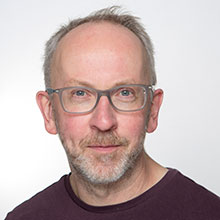
Aminu Bello Usman serves as an Associate Professor of Computer Science and leads the Cybersecurity Research Group at York St John University's York Business School. His academic career spans international institutions including the University of Sunderland where he was Head of the School of Computer Science, and prior positions at Auckland University of Technology, NorthTech, and Bayero University, Kano. As a Senior Fellow of the Higher Education Academy (D3), he mentors academics across the UK through Advance HE. Dr. Usman's research centers on critical cybersecurity challenges with particular focus on data privacy, IoT security, biometric authentication systems, applied artificial intelligence, and trust-based security mechanisms. His work emphasizes privacy-preserving models for healthcare applications, developing frameworks that integrate security from the ground up (Privacy by Design), and exploring trust dynamics in human-AI interactions, especially within culturally diverse contexts. His research bridges theoretical innovation with practical applications to address real-world security vulnerabilities. His recent publications reveal a consistent trajectory toward securing healthcare IoT systems through biometric authentication, with significant emphasis on privacy preservation. His work spans multiple domains including quantum-inspired encryption for medical data, voice biometrics for IoT authentication, and chaos-based cryptographic approaches. The research demonstrates interdisciplinary convergence between cybersecurity, healthcare technology, and artificial intelligence, with growing attention to cultural dimensions of trust in security systems. Senior Fellow of the Higher Education Academy (D3) As an editorial leader, Dr. Usman serves as Editor of the Journal of Disability Research and Lead Editor of the Journal of Networking and Telecommunications, while also contributing as Associate Editor for the International Journal of Computers and Applications. He actively participates as an external examiner and academic review panel member for multiple institutions, helping maintain academic standards across the sector. His professional activities extend to keynote speaking at conferences on cybersecurity topics and mentoring emerging researchers in the field. Leading the Cybersecurity Research Group at York St John University, Dr. Usman directs research efforts focused on privacy, biometric security, IoT security, and trust-based systems. His team explores practical applications of theoretical security frameworks, particularly in healthcare contexts, while investigating how cultural factors influence trust in AI-driven security systems. The group maintains strong industry connections to ensure research addresses current cybersecurity challenges faced by organizations.
Joonas Iivanainen is a Postdoctoral Researcher in the Department of Neuroscience and Biomedical Engineering at Aalto University. His research focuses on magnetoencephalography (MEG), magnetic sensor design, and computational modeling of magnetic fields in biomedical contexts. He works with advanced magnetometer technologies, including induction coil magnetometers and optically pumped magnetometers, to improve neural signal acquisition and environmental magnetic sensing. Institution: Aalto University Department: Neuroscience and Biomedical Engineering Role: Postdoctoral Researcher His research explores novel approaches to MEG sensor array design, thermal magnetic noise computation, and magnetic field modeling. Recent publications highlight advancements in single-trial neural response classification, high-sensitivity rf detection, and calibration techniques for optically pumped magnetometers. His work bridges theoretical physics and practical biomedical engineering applications. Key trends in his publications include: Development of on-scalp MEG systems for improved spatial resolution Quantification of thermal noise in conducting materials Integration of active ambient-field cancellation in sensor arrays Comparative studies of OPM and SQUID-MEG technologies Optimization of electromagnetic coil configurations Advancements in generalized spatial-frequency analysis for neural signals
Arnaud Dion is an Associate Professor at ISAE-SUPAERO (Institut Supérieur de l'Aéronautique et de l'Espace), the French Aerospace Engineering Institute, since 2022. Previously, he worked as a research engineer at ISAE from 2004 to 2022. He obtained his PhD from ISAE in 2014. His academic work is centered in the Engineering for Critical Systems (DISC) department, specifically within the Critical Systems Analysis and Design (CASC) research team. Dr. Dion's research interests span multiple domains in aerospace engineering and computing systems: Embedded Systems design and implementation Electronic architecture design for aerospace applications Hardware-software co-design methodologies Satellite navigation algorithms and systems Real-time operational systems Quantum computing applications in engineering His recent work shows a significant expansion into quantum computing, where he has gained hands-on experience with the Q# programming language to explore quantum algorithms and their potential applications. This represents a strategic extension of his established aerospace engineering expertise toward cutting-edge computational approaches that could transform aerospace system design. Dr. Dion has secured research funding from prestigious organizations including the European Space Agency (ESA), French Space Agency (CNES), French Armament Agency (DGA), and regional bodies like Occitanie. His projects address critical challenges in aerospace systems, navigation technologies, and secure communications. As an educator, he heads the Advanced Master on Embedded Systems program and teaches across multiple degree programs, covering topics from fundamental digital design to emerging quantum computing applications. His teaching spans both theoretical concepts and practical implementation in aerospace contexts.
Yulong Lu serves as an Assistant Professor at the School of Mathematics, University of Minnesota, and holds affiliated faculty status with the Data Science Initiative in the College of Science and Engineering. His research bridges theoretical mathematics and practical applications in data science, with active recruitment of undergraduate and graduate researchers. Lu earned his Ph.D. in Mathematics and Statistics from the University of Warwick under Andrew Stuart and Hendrik Weber. His academic trajectory includes an Assistant Professorship at the University of Massachusetts Amherst (2020-2023) and a Phillip Griffiths Research Assistant Professorship at Duke University (2017-2020) mentored by Jonathan Mattingly and Jianfeng Lu. His research spans mathematical foundations of machine learning , applied probability , stochastic dynamics , applied analysis , PDEs , Bayesian statistics , and uncertainty quantification . Recent work demonstrates deep integration of diffusion models, transformers, and operator learning to solve complex physical systems while establishing theoretical convergence guarantees. Analysis of his 15 most recent publications reveals dominant trends in physics-informed generative modeling for PDEs, in-context learning for dynamical systems, and theoretical analysis of deep learning approximations. His work consistently connects abstract mathematical frameworks with concrete scientific computing applications across fluid dynamics, quantum mechanics, and optimization. No scientific awards were documented in the provided materials. Lu actively mentors researchers through open positions for Ph.D. students (Fall 2026 intake), postdocs via Mathjobs, and UMN internships focused on deep learning theory and scientific applications. His group emphasizes self-motivated collaboration on theoretical and applied challenges in machine learning. He leads a research group developing theory for deep learning applications in scientific computing, with current projects including diffusion-based PDE solvers, transformer architectures for dynamical systems, and uncertainty quantification for inverse problems.
Ian Walter Orzel is a PhD Fellow in the Machine Learning section at the Department of Computer Science, University of Copenhagen . He is affiliated with the SCIENCE AI Centre and contributes to interdisciplinary research bridging machine learning with quantum computing, healthcare diagnostics, and environmental sustainability.
Lucas Alexander Kock is an Instructor at the Department of Computer Science , University of Copenhagen . His research spans Machine Learning and its applications in diverse domains including medical data analysis, quantum computing, and sustainable AI. Role: Lecturer in Machine Learning Affiliation: SCIENCE AI Centre, University of Copenhagen Research interests focus on: Quantum machine learning Neuroscience applications Cross-cultural AI systems Environmental sustainability in computing Medical informatics Deep learning explainability Recent publications demonstrate expertise in quantum computing applications , neural signal interpretation , and ethical AI frameworks . No formal awards or advisees are listed in available public data.
Thor Alexander Bøje Simonsen is an Instructor at the Department of Computer Science , University of Copenhagen , focusing on interdisciplinary research at the intersection of machine learning, quantum computing, and real-world applications. He is affiliated with the SCIENCE AI Centre and contributes to projects in sustainability, medical data analysis, and quantum-enhanced algorithms. His research spans theoretical and applied domains, including: Quantum computing for biomolecular simulations Environmentally sustainable AI systems Medical data analysis and clinical decision support Image reconstruction and remote sensing Explainable AI for large language models Thor's work engages with cutting-edge challenges in machine learning, from hardware acceleration to ethical considerations in clinical contexts. He is part of the university's Machine Learning Section , which has access to a dedicated compute cluster and collaborates with initiatives like TreeSense for global tree resource monitoring.
Pasquale Malacaria is a Professor of Computer Science at Queen Mary University of London, affiliated with the School of Electronic Engineering and Computer Science. He serves as a faculty member in the Centre for Fundamental Computing and AI and is part of the Leadership Team for academics. His research interests span the theoretical foundations of computer science and their practical applications, with particular focus on information theory, logic, and game theory applied to understanding information transformation and leakage in computational processes. He has made significant contributions to program analysis and the use of model-checkers for detecting and quantifying information leakage in programs and side channels. Analysis of his recent publications reveals a strong trend toward cybersecurity decision support , with emphasis on quantitative methods for risk assessment, security investment optimization, and attack graph analysis. His work bridges theoretical information theory with practical security applications, particularly in areas like smart home security, healthcare cybersecurity, and industrial control systems. The research demonstrates a consistent evolution from foundational work on information flow to applied cybersecurity frameworks. Research funding includes significant grants from major organizations: "Unrestricted donation: Formal verification of privacy properties" from Meta Platforms Inc (£58,029, 2022-2025) "CHAI: Cyber Hygiene in AI enabled domestic life" from EPSRC (£329,505, 2020-2023) "Optimal Cybersecurity Investment" from EPSRC (£388,777, 2017-2021) Professor Malacaria teaches Logic in Computer Science at the postgraduate level, covering propositional logic, temporal logics, predicate logic, and program logics with practical applications using SAT solvers and model checkers. He also teaches Object-Oriented Programming at the undergraduate level, focusing on core concepts like classes, objects, methods, and inheritance in practical software development contexts.


/prod01/yorksjacuk/media/content-assets/staff-profile-images/Aminu-Bello.jpg)