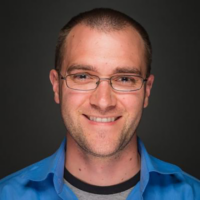
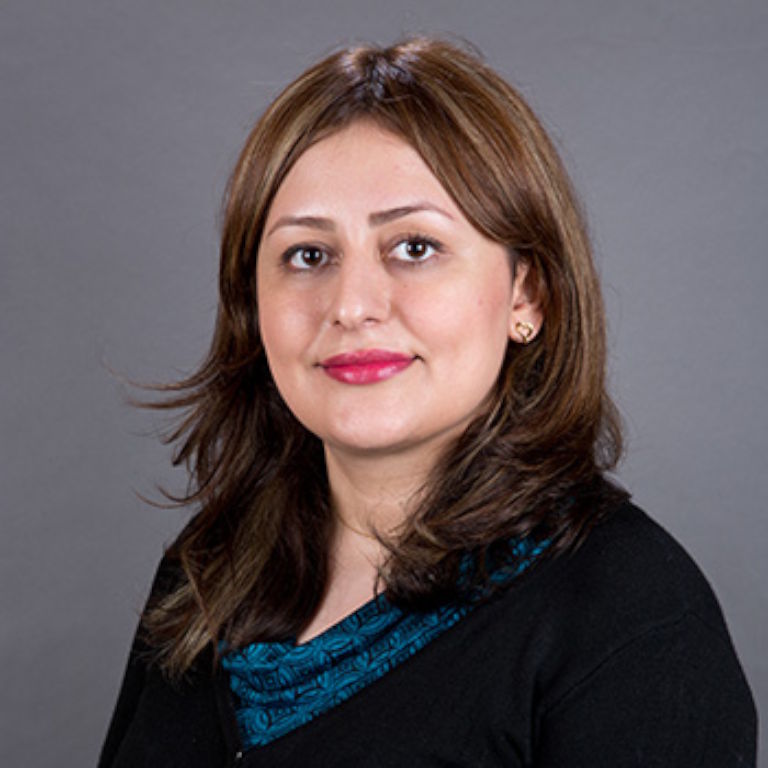
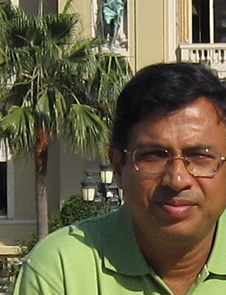
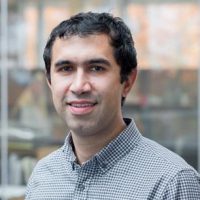
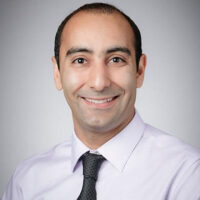
Joerg Sander is a Professor and Chair of the Department of Computing Science at the University of Alberta's Faculty of Science. His research focuses on knowledge discovery in databases, particularly density-based clustering (e.g., DBSCAN, OPTICS, HDBSCAN*) and outlier detection (e.g., LOF). He is a leading contributor to foundational algorithms in data mining, including the DBSCAN paper which received the 2014 SIGKDD Test-of-Time Award. Education: M.A., Philosophy of Science (University of Munich, 1989) Diploma in Computer Science (University of Munich, 1996) Ph.D., Computer Science (University of Munich, 1998) Research Interests: Design and theoretical analysis of clustering algorithms Outlier detection methodologies Spatial and high-dimensional data mining Algorithm scalability and visualization Key Contributions: DBSCAN (density-based spatial clustering of applications with noise) OPTICS (ordering points to identify the clustering structure) LOF (local outlier factor) Awards: SIGKDD Test-of-Time Award (2014)
Dr. Christopher Morton is an Associate Professor in the Department of Mechanical Engineering at McMaster University, specializing in fluid-structure interaction, UAV technology, and energy systems. His research focuses on aerodynamics, flow control, and sustainable energy solutions, with applications in aerospace and environmental engineering. Education background includes a BASc in Mechatronics Engineering (University of Waterloo, 2008), MASc (2010), and Ph.D. (2014) in Mechanical Engineering from the same institution. His work bridges experimental and computational methods, particularly in flow estimation and control using advanced diagnostics like PIV and spectral analysis. His research interests span vortex-induced vibrations (VIV), unsteady aerodynamics, and energy harvesting through fluid-structure interactions. Recent publications highlight innovations in flow field reconstruction, sensor-based monitoring, and turbulence control. His work has been recognized through awards such as the Departmental Research Excellence Award (2021-2022) and multiple teaching accolades, reflecting his dedication to both research and education. Dr. Morton currently teaches MECH ENG 4FM3 (Advanced Instrumentation for Thermo-Fluids) and MECH ENG 723 (Flow Induced Vibrations), emphasizing hands-on experimental techniques and theoretical analysis. He actively supervises graduate students and collaborates with industry partners like Atlantis Research Labs and Plains Midstream Canada. Key Research Clusters: Advanced Materials & Manufacturing, Digital & Smart Systems, Energy, and Environment. Teaching Excellence: Awarded “Professor of the Year” multiple times and recognized for outstanding teaching performance.
Dr. Marzieh Amini is an Associate Professor at Carleton University, cross-appointed to the School of Information Technology and Department of Systems and Computer Engineering . She coordinates the Optical Systems and Sensors undergraduate program and leads research in computer vision, sensor fusion, and biomedical signal processing . PhD in Electrical and Computer Engineering (2016), Concordia University Postdoctoral Fellow (2020), McGill University Research Interests focus on autonomous vehicle perception systems integrating machine learning and statistical modeling . Her work addresses multi-sensor integration for reliable operation in diverse environments, including biomedical applications and critical infrastructure monitoring . Recent publications emphasize wildfire management , LiDAR-based infrastructure monitoring , and adverse weather adaptation in autonomous systems . She has received grants from NSERC, NRC, and FRQNT . Honors & Awards include: Volunteer Recognition Awards (IEEE Montreal, 2022 & 2019) FRQNT Postdoctoral Fellowship (2018) IEEE ISCAS Travel Support (2016) Professional Service includes leadership roles in IEEE committees and conference organization.
Dr. Amir Keyvan Khandani is a Professor and Senior Ciena-NSERC Industrial Research Chair in the Department of Electrical and Computer Engineering at the University of Waterloo. He holds prestigious research chairs including Tier 1 Canada Research Chair in Wireless Communications and former Senior NSERC Chairs with Blackberry and Nortel. His research focuses on information theory, wireless and optical communications, and signal processing, emphasizing foundational principles and practical applications. Dr. Khandani earned his BEng and MEng from Tehran University (1985) and PhD from McGill University (1992). He joined Waterloo in 1993, supervising over 45 PhD students, 35 master’s candidates, and numerous postdoctoral researchers. His alumni work globally in academia and industry. Research interests include Network Information Theory , Media-Based Modulation , Full-Duplex Systems , and Quantum-Safe Encryption . Recent work explores secure key generation, interference management, and next-generation wireless innovations. Notable awards include NSERC/Ciena Industrial Research Chair and multiple Canada Research Chairs. His publications span foundational and applied topics in communications, with recent focus on cybersecurity and 5G/6G technologies. Dr. Khandani actively contributes to conferences, consults for industry/government, and teaches ECE 307 - Probability Theory and Statistics . His lab develops cutting-edge solutions in wireless networks, optical systems, and secure communication protocols.
Dr. Sylvester Boadi Aboagye is an Assistant Professor in the School of Engineering at the University of Guelph, Canada. His research focuses on next-generation wireless communication and sensing systems, including reconfigurable intelligent surfaces (RIS), physical layer security, visible light communication (VLC), terahertz networks, and integrated sensing-communication frameworks. He received his Ph.D. and M.Eng. from Memorial University (Canada) and B.Sc. (Honors) from Kwame Nkrumah University of Science and Technology (Ghana). Prior to joining University of Guelph, he was a Postdoctoral Fellow at York University (2023). Dr. Aboagye's expertise includes machine learning for resource allocation, energy-efficient network design, and prototyping optical RIS systems. He currently serves as an Editor for IEEE Communications Letters and has received notable awards including the Governor General’s Gold Medal and recognition as an Exemplary Reviewer. His work addresses challenges in 6G systems, underwater communications, and sustainable network architectures.
Professor Brian Surgenor is a faculty member at Queen's University's Department of Mechanical and Materials Engineering, part of the Smith Engineering faculty. He holds a B.Sc. (1977), M.Eng. (AECL/Whiteshell), and Ph.D. (1983) in Mechanical Engineering from Queen's University. His research focuses on machine vision systems for automation, autonomous vehicle navigation, and mechatronic system design education. He has held key administrative roles including Department Head (1993-2002), Associate Dean (2008-2013), and Vice-Dean (2013-2016). His work emphasizes interdisciplinary innovation, such as the Mitchell Hall design project and contributions to Ingenuity Labs. Education: B.Sc. Mechanical Engineering, Queen's University (1977) M.Eng. Engineering Physics, McMaster University (AECL/Whiteshell) Ph.D. Mechanical Engineering, Queen's University (1983) Research interests include: - Pneumatic servosystems - Intelligent algorithms for machine vision - Off-road autonomous vehicle systems - Mechatronics education methodologies - Hybrid powertrain systems for vehicles His recent publications (2017–2024) explore autonomous systems, machine vision applications, and fuel cell hybrid technologies. Notable trends include advancements in UAV-based infrastructure inspection, terrain-adaptive autonomous driving, and low-cost machine vision solutions for small part sorting. His work bridges theoretical control systems with practical industrial automation challenges. He has contributed to laboratory design for CDIO curricula and pioneered mechatronics education through problem-based learning. His administrative leadership has shaped Queen's engineering graduate programs and research infrastructure. Currently involved in Ingenuity Labs, fostering cross-disciplinary innovation.
Roman Krems is a Professor and Distinguished University Scholar at the University of British Columbia (UBC) in the Department of Chemistry, with affiliations to the Stewart Blusson Quantum Matter Institute. His research focuses on the intersection of quantum physics, machine learning, and chemistry, particularly in quantum materials and quantum technologies such as quantum computing and sensing. Key Roles: Professor at UBC (2013–present), Distinguished University Scholar (2017–present) Education: Ph.D. from Göteborg University (2002), Postdoctoral Fellow at Harvard-MIT Center for Ultracold Atoms (2003–05) Research Interests include: Quantum machine learning (QML) for solving complex physics problems Quantum scattering theory in electromagnetic fields Applications of quantum computing to chemistry Developing machine learning algorithms for quantum dynamics Recent publications highlight advancements in extrapolating quantum observables, Gaussian process models for collision dynamics, and quantum walks in disordered systems. His work bridges theoretical physics, computational methods, and experimental applications in cold molecule research. Scientific Awards include the UBC Killam Teaching Prize (2017), election as Fellow of the American Physical Society (2015), and the Keith Laidler Award (2013). He has held editorial board positions for journals such as Machine Learning: Science & Technology and New Journal of Physics . Research Group members include graduate students and postdocs working on quantum technologies, machine learning, and molecular scattering. He also contributes to outreach through invited talks and seminars at institutions like MIT and Lawrence Berkeley National Laboratory.
Dr. Shahram Shirani is a Professor and holds the L.R. Wilson/Bell Canada Chair in Data Communications in the Department of Electrical & Computer Engineering at McMaster University. He also serves as Acting Chair of the department. His research focuses on multimedia communications, image/video processing, medical imaging, and hardware architectures. He teaches courses like Image Processing (COMPENG 4TN4) and 3D Image Processing and Computer Vision (ECE 736). Shirani earned his B.Sc. from Isfahan University of Technology (1989), M.Sc. from Amirkabir University of Technology (1994), and Ph.D. from the University of British Columbia (2000). His achievements include the Faculty of Engineering Leadership Fellowship (2014–15) and leadership roles in editorial boards for IEEE Transactions on Multimedia and Circuits and Systems for Video Technology. Research interests include video quality assessment, biomedical signal processing, and edge computing for traffic monitoring. His lab develops algorithms for multimedia representation, compression, and hardware implementation. Recent work includes AI-driven medical sound datasets, real-time noise removal in MRI, and efficient CNN pruning techniques. He advises over 15 graduate students and collaborates on projects like the HLS-CMDS dataset and cardiac segmentation reviews. His lab’s contributions span biomedical engineering, autonomous systems, and smart sensor technologies.
Amir Shmuel is a Professor at McGill University's Faculty of Medicine, holding appointments in the Department of Neurology and Neurosurgery, Department of Biomedical Engineering, and Department of Physiology. He serves as Director of the Brain Imaging Signals Lab and Core Faculty at the McConnell Brain Imaging Centre of the Montreal Neurological Institute. His leadership includes chairing the 2018 International Society for Brain Connectivity conference and securing an $18.7M Canada Foundation for Innovation grant for Quebec's first large-bore 7 Tesla MRI scanner. Dr. Shmuel's research focuses on understanding neuronal mechanisms underlying functional brain imaging signals and visual information processing. His integrative approach combines fMRI, optical imaging, multi-channel neurophysiological recordings, and optogenetics across multiple spatial and temporal scales. Current research priorities include resting-state functional connectivity mechanisms, cortical lamina-resolved neurophysiology, and computational modeling of brain signals. His lab emphasizes parallel model development with experimental data acquisition. Recent publications demonstrate strong trends in multimodal neuroimaging integration, with emphasis on high-resolution fMRI techniques (especially 7T applications), resting-state connectivity analysis across species, and computational modeling of neurovascular coupling. Key subfields include laminar-specific activity mapping, artifact detection in medical imaging using deep learning, and cross-species functional connectivity frameworks. Dr. Shmuel's research is currently funded by the Canadian Institutes of Health Research (CIHR), Natural Sciences and Engineering Research Council of Canada (NSERC), and the US Department of Defense. His lab maintains active collaborations through initiatives like the International Society for Brain Connectivity and the PRIME-DE database consortium. Operating within the Brain Imaging Signals Lab at the Montreal Neurological Institute, Shmuel's team develops and applies advanced multimodal techniques including simultaneous fMRI-electrophysiology, voltage-sensitive dye imaging, and computational modeling frameworks. The lab maintains strong ties with the McConnell Brain Imaging Centre and participates in major open-science initiatives including the Tanenbaum Open Science Institute.
Amiya Nayak is a Professor at the School of Electrical Engineering and Computer Science of the University of Ottawa. His research focuses on Fault-Tolerant Computing , Distributed Systems , and Ad hoc and Sensor Networks . He specializes in cybersecurity, IoT security, blockchain integration, and machine learning applications in healthcare and vehicular networks. His work addresses challenges in secure communication protocols, distributed learning frameworks, and energy-efficient network designs. Notable research areas include: IoT Security : Developing frameworks for threat detection, privacy-preserving systems, and blockchain-empowered IoT defenses. Federated Learning : Enhancing healthcare predictions and IoT management through decentralized, privacy-aware machine learning. Vehicular Networks : Securing Vehicle-to-Everything (V2X) communication and optimizing QoS in cooperative internet of vehicles (IoV). Network Optimization : Leveraging deep reinforcement learning and graph neural networks for WDM network restoration and edge computing. His publications (2020–2025) highlight contributions to: Secure authentication protocols in medical sensor networks. AI-driven metaverse security solutions. Decentralized energy trading using NFTs. Energy-efficient sleep scheduling in wireless body area networks (WBANs). Nayak holds a Ph.D. and is a P.Eng. (Professional Engineer). His work bridges theoretical computer science with practical applications in telecommunications and healthcare systems.
Dr. Jeff Lundeen is an Associate Professor in the Department of Physics at the University of Ottawa's Faculty of Science. His research focuses on experimental and theoretical quantum physics, particularly in photonics and quantum computing. He leads the Lundeen Lab, developing methods to manipulate single photons and entangled photon pairs for quantum logic, communication, and metrology applications. Research interests include experimental photonics, quantum-enhanced sensors, quantum metrology, and quantum optics. His work addresses challenges in quantum device development, such as ultra-thin imaging systems and quantum state tomography. Key contributions include direct measurements of quantum wave functions and density matrices, weak value amplification techniques, and space-compressing optics. His recent publications (2023–2025) explore neural adaptive quantum tomography, quantum metrology in noisy environments, and reconfigurable optical systems. Dr. Lundeen collaborates internationally on projects like quantum state estimation and photon pair generation in fibers. His lab emphasizes practical applications of quantum principles in sensors, communication, and imaging technologies.
Peyman Servati is a Professor in the Department of Electrical & Computer Engineering at the University of British Columbia (UBC), affiliated with the Faculty of Applied Science. He leads the Flexible Electronics and Energy Lab (FEEL) and the Centre for Flexible Electronics and Textiles (CFET), and is part of the Clean Energy Research Centre (CERC) and Microsystems and Nanotechnology (MiNa) Group. His research focuses on low-cost flexible solar cells, wearable technology, nanomaterials, and energy systems. Education: BASc (University of Tehran, 1998), MASc and PhD (University of Waterloo, 2000 and 2004). Pre-UBC roles included Research Associate at the University of Cambridge (2005–2011) and Senior Research Scientist at Ignis Innovation Inc. Research interests include smart textiles, flexible electronics, nanocomposites, and renewable energy applications. He has over 80 peer-reviewed publications, 4 patents, and 10 patent applications. Awards include the 2006 NSERC Canada-UK Millennium Award and 2005 NSERC Doctoral Prize. Advising highlights include supervising numerous PhD and MASc students in areas like wearable sensors, energy storage, and biomedical applications. Key labs include FEEL and CFET, focusing on textile-based electronics and sustainable energy solutions.
Dr. Amin Reza Rajabzadeh is an Associate Professor at the W Booth School of Engineering Practice and Technology, McMaster University, with affiliate roles in the McMaster School of Biomedical Engineering and Mechanical Engineering. He specializes in biochemical engineering, focusing on biosensors, bioseparation processes, and bioprocess monitoring. His research includes developing biosensors for biological process monitoring and nanotechnology-based cancer therapies. He holds a Professional Engineer license (P.Eng.) and is a member of the Canadian and American Engineering Education Associations. Dr. Rajabzadeh's teaching spans core biochemical engineering courses like Bioreactor Design and Bioprocess Control. He has received the McMaster President’s Award for Teaching and a MacPherson Leadership in Teaching Fellowship. His research clusters span Energy, Environment, Health & Bio-innovation, and Micro-Nano Systems. Recent work includes nanoplatforms for photothermal cancer therapy (ACS Applied Materials & Interfaces, 2021) and innovations in sustainable protein enrichment via tribo-electrostatic separation. Collaborations span biomaterials, environmental engineering, and nanotechnology. Awards: Teaching Excellence Awards, Leadership Fellowships Research Themes: Biosensors, Nanomedicine, Bioseparation Technologies Labs/Teams: Biomedical Engineering Research Group, Nanotechnology Applications Lab
Aaron Shugar is a Professor and current Bader Chair in Art Conservation at Queen’s University. With a background in archaeometallurgy and conservation science, he specializes in non-destructive analysis techniques for cultural heritage, including X-ray fluorescence (XRF), Raman spectroscopy, and hyperspectral imaging. His work bridges art history, material degradation, and technological innovation. Honours H.B.A. in Anthropology and Law & Society from York University M.S. in Archaeological Materials from the University of Sheffield Ph.D. in Archaeometallurgy from University College London His research focuses on historic artist’s pigments , ancient metallurgy , and technical history of artifacts , with particular interest in degradation pathways and manufacturing processes. Recent publications highlight trends in AI integration with XRF analysis and preservation of modern materials in art conservation. Bader Chair in Art Conservation Mellon Foundation Professor in Conservation Science Aaron co-directed the Archaeometallurgy Laboratory at Lehigh University, served as a guest scientist at NIST, and remains a research associate at the Smithsonian Institution. He actively contributes to TEFAF’s Scientific Vetting Committee and acts as a forensic materials expert for the Court of Arbitration for Art.
Md. Zoheb Hassan serves as an Assistant Professor in the Department of Electrical Engineering and Computer Engineering at Laval University, where he leads cutting-edge research in wireless communications and spectrum management. His academic role includes graduate recruitment and active participation in the university's research ecosystem, particularly through the Establishment of the Next Generation of Professors program funded by FRQNT. Dr. Hassan's research centers on spectrum sharing and management, wireless communication systems, and communications network control systems. He pioneers the integration of digital twin technology and machine learning to solve critical challenges in next-generation networks, including interference management in 5G/6G aerial corridors, Internet of Vehicles, and satellite-terrestrial integration. His work emphasizes practical implementations such as proof-of-concept demonstrations for tactical networks and proactive resource allocation in dynamic environments. Analysis of his 2024-2025 publications reveals a dominant trend toward AI-driven wireless resource optimization, with 12 of 15 recent papers featuring digital twins for interference management, spectrum sharing, and energy efficiency. Key thematic clusters include vehicular communications (4 papers), underwater IoT networks (2 papers), and hardware-impairment resilient designs (3 papers), demonstrating his focus on bridging theoretical advances with real-world deployment challenges across diverse network topologies. Dr. Hassan has secured significant competitive funding for his research initiatives: Digital Twin-Enhanced Interference Management for Next-Generation Radio Access Networks in the FR3 Band (FRQNT, 2025-2027) Center for Radio Frequency and Communications Systems, Technologies and Applications (FRQNT, 2024-2030) Context-Aware Spectrum Sharing and Management for Next Generation Wireless Networks (NSERC, 2024-2029) Development of innovative technologies for modeling predictive systems in urban mobility (MITACS, 2022-2026) Springboard to Discovery supplement for Context-Aware Spectrum Sharing (NSERC, 2024-2025) He actively mentors doctoral candidates, currently supervising Mahima Karim (PhD in Electrical Engineering, expected 2025) and Mohammadamin Parhizgar (PhD in Electrical Engineering, expected 2024). His supervisory approach combines theoretical rigor with practical problem-solving, focusing on spectrum management algorithms and digital twin implementations for next-generation networks. While specific laboratory affiliations aren't detailed in the source material, his projects indicate strong alignment with Laval University's wireless research infrastructure and the Center for Radio Frequency and Communications Systems.