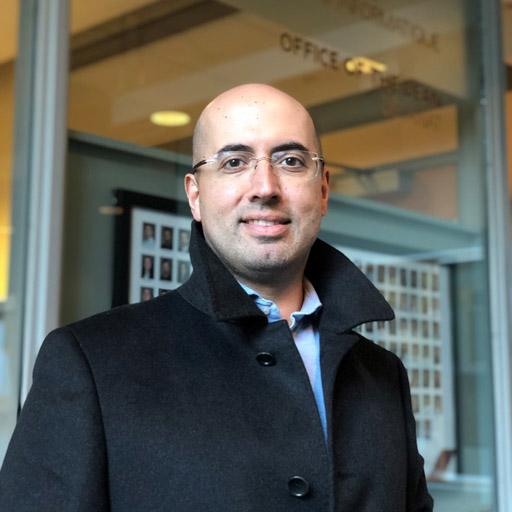
Masoud Asgharian is a Professor in the Department of Mathematics and Statistics at McGill University. His research focuses on survival analysis, changepoint problems, nonparametric Bayesian methods, and data envelopment analysis. He has contributed to influential studies on dementia survival rates, censored data methodologies, and statistical efficiency measures. His work bridges biostatistics and operations research, with applications in public health and medical sciences. Key contributions include methodologies for prevalent cohort survival analysis, input relaxation efficiency measures in stochastic DEA, and causal inference techniques. Asgharian has collaborated extensively with researchers in epidemiology and biomedical engineering, as evidenced by his co-authored publications on topics ranging from tooth enamel properties to low-precision neural network quantization. His research has been published in high-impact journals such as New England Journal of Medicine , Journal of the American Statistical Association , and Biometrics . Current affiliations include leadership roles in statistical research at McGill, with ongoing projects in computational statistics and healthcare analytics.
James T. Enns is a Professor and Distinguished University Scholar in the Department of Psychology within the Faculty of Arts at the University of British Columbia. His research primarily focuses on the role of attention in human vision, with secondary interests in developmental psychology and human-machine interaction. Dr. Enns' research interests span perception, attention, vision, cognition, development, and human-machine interaction. His work explores how the human mind selects information, with particular emphasis on visual attention mechanisms. His laboratory research investigates the fundamental processes of visual perception and how attention modulates these processes across different contexts and developmental stages. Analysis of Dr. Enns' publication record reveals consistent engagement with visual perception, attentional mechanisms, and cognitive processing. His research demonstrates expertise in both theoretical frameworks and experimental methodologies related to visual attention, with applications spanning basic cognitive science to potential implementations in human-computer interaction systems. His work often bridges theoretical cognitive psychology with practical applications. Canadian Society for Brain, Behaviour and Cognitive Science Donald O. Hebb Distinguished Contribution Award (2013) Distinguished University Scholar, UBC (2004) Robert E. Knox Master Teaching Award (2004) Royal Society of Canada Fellow (2002) Killam Faculty Research Prize (1994) Killam Faculty Research Fellowship (1993) Society of Experimental Psychology Fellow Dr. Enns has served as Editor for the Journal of Experimental Psychology: Human Perception and Performance, and as Associate Editor for Psychological Science, Consciousness and Cognition, and Visual Cognition. His research has been supported by grants from NSERC, the Canadian Foundation for Innovation, the Australian Research Council, BC Health, and Nissan. He has authored textbooks on perception, edited research volumes on the Development of Attention, and published numerous scientific articles on vision, attention, and cognitive science. Dr. Enns is currently accepting graduate students and continues to mentor the next generation of cognitive scientists. Dr. Enns leads the UBC Vision Lab, which focuses on how the human mind selects information. The lab conducts research on visual attention, perception, and cognitive processes using a variety of experimental methodologies.
Dr. Thomas E. Doyle is an Associate Professor at the McMaster School of Biomedical Engineering and the Department of Electrical & Computer Engineering at McMaster University. His research focuses on biomedical signal processing, human-computer interfacing (HCI), and machine learning applications for healthcare augmentation, rehabilitation, and enhancement. He holds a Ph.D. from Western Ontario, Canada, and teaches courses like COMPENG 2DI4 (Logic Design). His work bridges cybernetics and clinical applications, emphasizing AI-driven solutions for medical diagnostics, patient monitoring, and space exploration. Education: B.E.Sc, B.Sc, M.E.Sc, Ph.D. from Western Ontario, Canada Recent Projects: Developed AI systems for remote healthcare diagnostics (2023) Collaborated with NASA on medical emergency simulators for deep space missions (2017–2023) Led ventilator development efforts for local hospitals during the pandemic (2020) His research interests span machine learning for mental health diagnostics, trust quantification in medical AI, and extended reality (XR) for medical training. He emphasizes interdisciplinary approaches, integrating computational methods with healthcare challenges. Recent publications highlight applications in pediatric emergency care, chronic pain management, and reliable medical device design. Dr. Doyle actively engages in educational initiatives, including first-year engineering pedagogy and experiential learning programs. He has received funding for projects such as the Educating the Engineer of 2025 (EtE-25) awards and contributes to initiatives like the Digital & Smart Systems and Health & Bio-innovation research clusters at McMaster.
Soo Jeon is a Professor in the Department of Mechanical and Mechatronics Engineering at the University of Waterloo, part of the Faculty of Engineering. He holds a PhD from the University of California at Berkeley (2007) and prior degrees from Seoul National University. His research focuses on mechatronics, dynamic systems, and control, with applications in robotics, autonomous systems, and precision motion control. He has held roles as Assistant Professor (2009–2015), Associate Professor (2015–2024), and Full Professor (2024–present). Professor Jeon’s expertise includes intelligent sensing and control for mechatronic systems, nonlinear dynamics, and autonomous systems. He has received notable awards such as the 2022 Engineer of the Year Award (AKCSE/KOFST), 2015 NSERC Discovery Accelerator Supplement, and 2010 ASME Rudolf Kalman Best Paper Award. He serves as an Associate Editor for several journals, including the ASME Journal of Dynamic Systems and IEEE Transactions on Automation Science and Engineering. His research interests span robotics, control systems, and automation, with recent work on autonomous navigation, tactile exploration, and model predictive control. He supervises graduate students in MASc and PhD programs and teaches courses like ME 649 (Control of Machines and Processes) and ME 360 (Introduction to Control Systems). Jeon holds patents in areas like low-power magnetic locks and remote plasma source seasoning. His lab, the Waterloo Mechanical Systems & Control Laboratory (WMSCL), focuses on advanced mechatronics and robotics projects, including collaborations with international institutions such as the Korea Institute of Machinery & Materials (KIMM).
Xilin Liu is an Assistant Professor at the Edward S. Rogers Sr. Department of Electrical & Computer Engineering (University of Toronto) and the Center for Advancing Neurotechnological Innovation to Application (CRANIA) . He obtained his PhD from the University of Pennsylvania and previously worked at Qualcomm Inc. in California. Expertise in integrated circuits and systems for brain-machine interfaces , neuromodulation , and edge AI Published in top venues including Nature Electronics , IEEE JSSC , and ISSCC Recipient of multiple best paper awards and IEEE Senior Member His research spans three main themes: High-speed data converters for wireless/wireline communication IC design for neural interfacing Accelerating machine learning via hardware Recent publications focus on closed-loop neuromodulation , ultra-wideband transceivers , and flexible biomedical sensors . These works integrate analog IC design , edge AI , and real-time neural interfacing across medical rehabilitation , parkinson's monitoring , and memory research . Awards include: IEEE Solid-State Circuits Society Predoctoral Achievement Award (2016) Best Paper Award at BioCAS (2015) ECE Department Teaching Award (2022) Multiple conference best paper finalists His lab collaborates with UHN , EMBS , and global institutions while maintaining strong commitments to equity, diversity, and inclusion (EDI) in research practices.
James Tung is an Associate Professor at the University of Waterloo’s Faculty of Engineering, Department of Mechanical and Mechatronics Engineering. His research focuses on assistive technology, rehabilitation engineering, and mobility solutions for individuals with disabilities. He leads the Neural and Rehabilitation Engineering (NRE) Lab, which develops wearable sensors, robotics, and machine learning tools to enhance mobility and monitor motor rehabilitation. He teaches courses including BME 355 (Physiological Systems Modelling), BME 540 (Neural and Rehabilitation Engineering), and ME/MTE engineering modules. The lab collaborates with clinical and industry partners to translate research into practical solutions, addressing real-world mobility challenges and aging demographics. His research spans real-world gait analysis, fall risk assessment, and prosthetic design, with a focus on pediatric neurodevelopmental disorders and elderly mobility. The NRE Lab emphasizes interdisciplinary work, combining biomechanics, robotics, and data science to improve healthcare outcomes. Lab Alumni: Includes researchers like Robin Murdock (Myant Inc.), Andrew Hart, and Raj Senthilkumar, contributing to prosthetics and gait analysis. Partnerships: Engages clinical and industry stakeholders for knowledge translation and commercialization. Current projects include developing smart rollators, biofeedback prosthetics, and sensor-based assessment tools to address mobility limitations in aging populations and individuals with disabilities.
James M. Piret is a Professor at the University of British Columbia (UBC), affiliated with the School of Biomedical Engineering and the Michael Smith Laboratories. He holds a Sc.D. from MIT (1989), an S.M. from MIT (1986), and an A.B. from Harvard College (1981). His research focuses on bioprocessing, biomedical engineering, and cell therapy biotechnology, with emphasis on optimizing therapeutic cell production and biomanufacturing processes. Education : Sc.D. in Chemical Engineering, Massachusetts Institute of Technology (1989) S.M. in Chemical Engineering, Massachusetts Institute of Technology (1986) A.B. in Chemistry, Harvard College (1981) Professor Piret’s research integrates bioreactor engineering, Raman spectroscopy, and data analytics to advance cell-based therapies for diseases like cancer and diabetes. Collaborations with stem cell biologists (e.g., Drs. Kieffer and Levings) and engineers (Drs. Turner and Gopaluni) drive innovations in bioprocess optimization and device development. His lab emphasizes multidisciplinary approaches to accelerate biotechnology production processes and cell therapy manufacturing. Awards : William F. Meggers Award (2022) R.S. Jane Memorial Award (2015) Cell Culture Engineering Award (2012) Fellow, Chemical Institute of Canada (2004) His work includes developing novel methodologies for CHO cell glycosylation engineering, optimizing fed-batch bioreactor systems, and advancing Raman spectroscopy techniques for real-time cell analysis. The lab actively recruits motivated graduate and postdoctoral researchers to tackle high-impact challenges in biomedical and chemical engineering.
Dr. Saeed Gazor is a full Professor in the Department of Electrical and Computer Engineering at Queen's University. He holds a cross-appointment in the Department of Mathematics and Statistics. His research focuses on signal processing applications in electrical energy systems, communications, and medical imaging. He has supervised postdoctoral fellows Babak Ghaffari and Yaser Esmaeili Salehani. Professional affiliations include Senior Member IEEE and membership in the Institution of Engineering and Technology. Education: PhD (1994) in Signal and Image Processing from Télécom ParisTech; M.Sc. (1989) and B.Sc. (1987) from Isfahan University of Technology with highest honors. Academic roles include former Assistant Professor at Isfahan University of Technology (1995–1998) and research associate at University of Toronto (1999). Research interests span detection theory, smart energy systems, hyperspectral imaging, and medical signal processing. Notable contributions include innovations in radar signal processing, sparse signal reconstruction, and adaptive filtering. Active in academic service, including editorial roles in IEEE journals. Awards: Professional Engineer designation from Professional Engineers Ontario. Over 200 peer-reviewed publications with recent focus on AI-driven hyperspectral analysis, robust beamforming, and energy-efficient communication systems. Labs/Teams: Leads signal processing research initiatives at Queen's, collaborating on projects involving smart energy grids, distributed radar networks, and biomedical signal analysis. Current work emphasizes integrating deep learning with traditional signal processing techniques.
Mahdi S. Hosseini is an Assistant Professor in the Department of Computer Science and Software Engineering at Concordia University and a faculty member of the Applied AI Institute. He holds a PhD from the University of Toronto (2016) and completed a postdoctoral fellowship at UofT, supported by MITACS-Elevate and NSERC fellowships. His research focuses on advancing deep learning and computer vision for computational pathology and healthcare technologies, aiming to develop AI tools for clinical diagnosis. He currently supervises graduate students and has published over 30 papers and two patents. Education: PhD in Electrical and Computer Engineering from the University of Toronto (2016), postdoctoral training at UofT collaborating with Huron Digital Pathology Inc. (Waterloo, Ontario). Research interests include deep learning, computer vision, computational pathology, medical imaging, and AI ethics (P4AI project). His work emphasizes developing explainable AI systems for clinical pathology, biomarker discovery, and efficient learning algorithms. Professional service includes serving as Area Chair for NeurIPS 2023, CVPR 2023-2024, and ECCV 2024. He reviews grants for CIHR, NSERC, and serves on program committees for key conferences (ICCV, CVPR, NeurIPS). Teaching includes courses on applied AI, machine learning, and deep learning for computational pathology at both graduate and undergraduate levels. Awards: MITACS-Elevate Fellowship (postdoc), NSERC Research Funding (2016-2017). His work has led to patents in diagnostic systems and has collaborated with hospitals and pathologists to advance clinical applications. Labs/Teams: Active collaborations with the Applied AI Institute at Concordia, Huron Digital Pathology, and healthcare institutions. Research emphasizes interdisciplinary approaches between computer science and clinical medicine.
Dr. Joshua Brinkerhoff is an Associate Professor in Mechanical Engineering at the University of British Columbia Okanagan Campus. He serves as the Associate Director for Research & Industrial Partnerships in the School of Engineering and leads the UBC-Okanagan Computational Fluid Dynamics Laboratory. His research spans computational fluid dynamics, turbomachinery, multiphase flows, hydrogen safety, wind energy, and biofluid mechanics. He teaches courses in mechanics of materials, alternative energy systems, turbulence, computational fluid dynamics, and aircraft design. PhD, Aerospace Engineering (Carleton University, Ottawa, ON) BEng, Aerospace Engineering (Carleton University) Dr. Brinkerhoff’s research interests include: Computational Fluid Dynamics (CFD) for laminar-to-turbulent transition and instability analysis Wind energy systems and turbine aerodynamics Hydrogen storage and safety protocols for transportation Biofluid mechanics for respiratory diseases and aneurysm modeling Multiphase flows in industrial and environmental contexts His publications focus on CFD simulations for: Aerosol dispersion and mitigation in indoor environments Wind farm interactions and atmospheric gravity waves Cavitation and phase transitions in cryogenic and LNG systems Heat transfer optimization in industrial and thermal systems Instability dynamics in buoyancy-driven and swept flows Turbulent structures in fluidized beds and reactors Dr. Brinkerhoff has no listed scientific awards in the provided data but has extensive contributions to renewable energy, hydrogen safety, and medical fluid dynamics. His laboratory develops open-source tools like TOSCA for large-eddy simulations and investigates practical applications in urban air quality, dental aerosol control, and turbine wake modeling.
Dr. Ameer Abdelhadi is an Assistant Professor in the Department of Electrical and Computer Engineering at McMaster University. His research focuses on application-specific custom-tailored computer architectures, hardware-efficient deep learning, neurotechnology, and reconfigurable computing. He holds a PhD from the University of British Columbia and has held academic positions at the University of Toronto, Imperial College London, and Simon Fraser University, alongside industry experience in semiconductor design. Education: PhD in Computer Engineering (University of British Columbia, 2016). Research Interests: Hardware acceleration for machine learning and neurotechnology Reconfigurable computing and FPGAs/ASICs Asynchronous circuits and synchronization protocols VLSI physical design and CAD algorithms Publications span high-impact venues such as IEEE Journal of Solid-State Circuits, IEEE Hot Chips, and IEEE Micro. Notable achievements include the 2017 Best Paper Award at ASYNC for work on synchronization FIFOs. Teaching includes COMPENG 4DV4 (VLSI System Design) and ELECENG 4OI6B (Engineering Design). His lab focuses on advancing hardware systems for next-generation applications in AI and biomedical engineering.
Mahmoud El-Sakka is an Associate Professor at the Department of Computer Science, University of Western Ontario since 1999. Previously, he was a faculty member at the University of Waterloo (1997–1999). He holds a B.Sc. and M.Sc. from Alexandria University (Egypt) and a Ph.D. in Systems Design Engineering from the University of Waterloo. His research focuses on medical imaging, image processing, and computer-aided diagnostics. He has served as Chair of the graduate program (2002–2007) and undergraduate program (2017–present) in Computer Science at Western Ontario. El-Sakka is a Senior Member of the IEEE and a licensed Professional Engineer in Ontario. His work spans grants from NSERC, internal university funding, and industry collaborations. Major research areas include image compression, segmentation, and medical applications like vascular analysis and echocardiography. He has led over 20 funded projects since 1999, emphasizing interdisciplinary approaches in healthcare technology. Academic contributions include advisory roles in summer programs, thesis evaluations, and conference participation. His service includes roles as Pro-Chancellor at convocations and involvement in equipment purchasing committees. Collaborations include consulting with NCR Canada and VRP Web Technology.
Bryan Tripp is an Associate Professor at the University of Waterloo, specializing in computational neuroscience, deep learning, robotics, and medical AI. He leads the BRAIN Lab, which focuses on developing neural system models that interact with the physical world through robots. His research integrates neurobiological models with advanced machine learning techniques to study visuomotor processes and robotic applications. Tripp teaches courses such as Computational Neuroscience (SYDE 552), Deep Learning (SYDE 577), and Biomedical Engineering Design Workshops (BME 461/462). His lab has achieved milestones including the OREO robotic head, the first spiking neural network model for complex action planning, and comprehensive datasets for robotic grasping. His recent work emphasizes Medical AI applications, with graduate positions available. The BRAIN Lab is affiliated with the Centre for Theoretical Neuroscience and Waterloo.AI, contributing to interdisciplinary AI research initiatives.
Soosan Beheshti is a Professor and Program Director in the Department of Electrical, Computer, and Biomedical Engineering at Toronto Metropolitan University. She holds a B.S. from Isfahan University of Technology and M.S./Ph.D. from MIT. Her research focuses on signal processing, statistical learning, and information theory, with applications in biomedical systems, data denoising, and system modeling. She has received awards such as the Dean's Teaching Award (2010) and the EECS Carlton E. Tucker Award (1998). Education: B.S., Electrical Engineering, Isfahan University of Technology (1996) M.S. & Ph.D., Electrical Engineering, MIT (2002) Research Interests: Statistical Signal Processing Information Theory Data Denoising & Compression System Modeling & Control Machine Learning Applications Awards: Dean's Teaching Award (2010) Gold Paper Award (PacRim 2009) Best Paper Award (Remote Sensing 2008) MIT Teaching Excellence Award (1998) Teaching: Courses include Signals and Systems, Control Systems, and Statistical Inference. She has supervised numerous graduate students and postdocs in her Signal and Information Processing (SIP) Lab. Labs/Teams: Director of the SIP Lab, conducting research in signal processing, information theory, and biomedical applications. Collaborates with industry partners like Myant Inc. and Huawei Technologies.
Jean Provost is a Full Professor in the Department of Engineering Physics at Polytechnique Montréal , with affiliations to the Montreal Heart Institute , IVADO , and the Institute of Biomedical Engineering . His research focuses on ultrasound imaging , cardiac and cerebral vascular imaging , and superresolution image reconstruction using machine learning and optimization . Based on 96 publications, his work emphasizes ultrasound localization microscopy , neural network applications , and microvascular hemodynamics . Education : Ph.D. (Columbia University), MPhil (Columbia University), M.Sc.A. (École Polytechnique Montréal), Engineering Degree (École Centrale Paris), License (Université Paris XI), B.Eng. (École Polytechnique Montréal) Research trends from 15 recent articles include: 3D and dynamic ultrasound localization microscopy for microvascular mapping Deep learning for image reconstruction and neural network pruning Machine learning-driven aberration correction and superresolution imaging Acoustoelectric and cavitation-based imaging techniques Applications in cardiac diagnostics and dementia detection Supervision includes 2 Ph.D. and 8 Master's theses completed at Polytechnique Montréal (2023), covering topics like optical ultrasound detection , microbubble modulation , and spatiotemporal sampling .