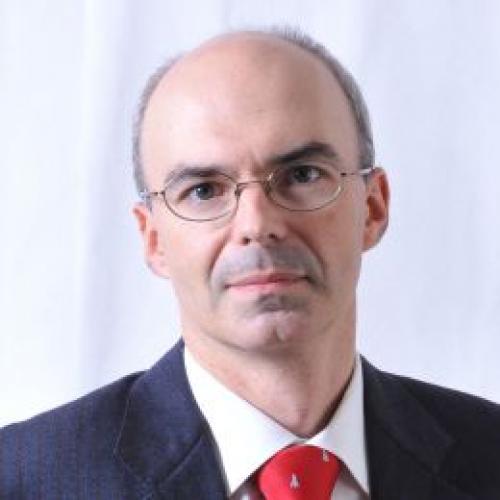
Dr. Simone Cenci is a Lecturer in Economics and Finance of Sustainability at the Institute for Sustainable Resources , part of the Bartlett School of Environment, Energy & Resources at University College London (UCL). His research focuses on corporate decarbonization strategies, climate risk management, and data-driven insights for sustainable investment and policy design. Education: PhD in Applied Statistics, Massachusetts Institute of Technology (2019) MSc in Physics, University of Pisa (2015) BSc in Physics and Astrophysics, Sapienza University of Rome (2012) His work bridges empirical analysis with sustainability finance, particularly in energy and energy-intensive sectors. Recent publications examine corporate environmental actions, greenhouse gas reporting gaps, and nonlinear dynamics in ecological systems. Scientific Awards: Rising Leaders Fellow, Aspen Institute UK He previously held academic positions as an Advanced Research Fellow at Imperial College Business School (2021-2024) and a postdoctoral research associate at Blackstone Credit (formerly DCI, LLC) in San Francisco (2019-2021). He welcomes collaborations with industry, government, and NGOs in climate finance and policy.
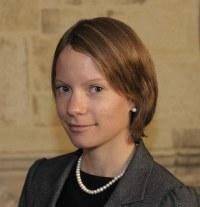
Dr. Emilie Ringe is a researcher at the University of Cambridge, Department of Earth Sciences, focusing on metallic nanoparticles for sustainable energy applications. Her work centers on localized surface plasmon resonances (LSPRs) to enhance solar fuel generation from CO 2 reduction. Email: er407@cam.ac.uk Program Affiliation: Cambridge NERC Doctoral Landscape Awards (CREATES) Her research spans fundamental synthesis of earth-abundant magnesium nanoparticles and applied exploration of scalable reactor designs for commercial applications. Projects include catalysis, plasmonic engineering, and environmental nanoparticle stability. Recent publications highlight advancements in Mg nanoparticle synthesis (2025), innovative microemulsion methods for luminescent nanoparticles, and stability studies of Cu(0) nanoparticles. Key themes include nanoplasmonics , photocatalyst protection , and optoplasmonic effects across diverse nanostructures. Scientific Recognition: C&EN’s Talented 12 Award (2021) Her group explores interdisciplinary topics combining materials chemistry with environmental sustainability, emphasizing scalable solutions for solar fuel technologies.
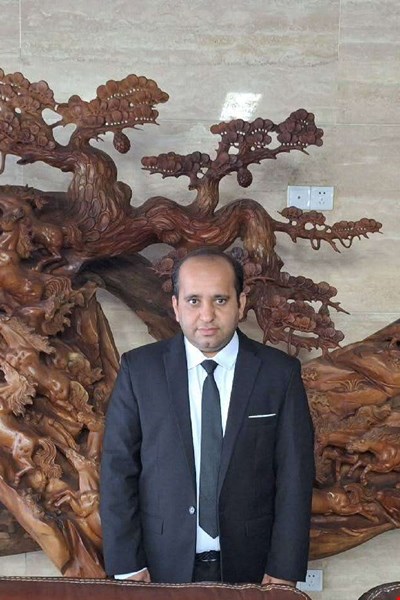
Muhammad Shahid is a Lecturer (Education) in Civil Engineering at Brunel University London, within the Civil and Environmental Engineering department of the College of Engineering, Design and Physical Sciences. With over a decade of academic and professional experience, he has taught at leading institutions including Brunel University London, North China University of Technology, University of Engineering & Technology (UET) Lahore, and National University of Sciences and Technology (NUST) Islamabad. Dr. Shahid earned his Ph.D. in Hydraulic Engineering from Tsinghua University in 2019, followed by an MSc in Water Resources Engineering & Management from NUST, Islamabad in 2014, and a Bachelor of Science in Civil Engineering from UCE &T BZU Multan in 2011. Dr. Shahid's research focuses on hydrological response under changing environments, with particular emphasis on urban hydrology, precipitation products, and sustainable water management practices. His work significantly contributes to understanding the impacts of climate change and land-use dynamics on water resources. He investigates eco-hydrology, climate change impacts on water resources, urban hydrology challenges, precipitation estimation techniques, and the analysis of floods and droughts. His research integrates cutting-edge hydrological modeling with practical applications to develop innovative solutions for sustainable water management in the face of environmental change. His publication record demonstrates a strong focus on hydrological modeling, climate change impacts, and water resource management, with increasing attention to data-driven approaches and the integration of remote sensing technologies. Recent work shows particular emphasis on drought analysis, streamflow prediction in Asian water towers, precipitation estimation techniques, and the development of novel modeling approaches for runoff estimation and flood prediction. Dr. Shahid has been actively involved in the academic community, having reviewed over 450 manuscripts for renowned journals including Hydrological Sciences Journal, Water Resources Management, and npj Climate and Atmospheric Science. He has served as a reviewer for research papers, grant proposals, and Masters/PhD thesis evaluations. His current research projects include 'Economic and environmental implications of Water harvesting practices under changing climate and land use scenarios across Pakistan' (Higher Education Commission China Pakistan Economic Corridor Grant No. CPEC-161, 2021-2024) as Co-PI, and 'Numerical modeling of landslide dam breach case studies from China and Pakistan' (State Key Laboratory of Water Resources Hydropower Engineering Science, Wuhan University, China, National Key Research and Development Program of China under Grant No. 2020SDS01, 2020-2022) as Co-PI.
Andrea Trucco is a Full Professor at the University of Genoa, affiliated with the Polytechnic School under the Department of Naval, Electrical, Electronic, and Telecommunications Engineering (DITEN). He teaches courses in Electrical Communications, Acoustic and Electromagnetic Emission of the Ship, Fundamentals of Telecommunications and Signal Processing, and Signals and Systems for Telecommunications across various degree programs including Biomedical Engineering, Naval Engineering, Computer Engineering, and Electronic Engineering and Information Technology. Research Interests: Telecommunications and Signal Processing Underwater Acoustics Environmental Noise Prediction Behavioral Dynamics in Biological Systems Beamforming and Antenna Design Publication Trends: His recent articles focus on underwater noise analysis, with applications in environmental monitoring (wind turbine noise, rainfall/wind prediction), bio-inspired modeling (fish collective behavior), and signal processing advancements (superdirective beam patterns, supervised learning integration). Teaching & Contact: Teaches graduate and undergraduate courses in telecommunications, naval acoustics, and signal processing Office hours by appointment, contact via email: andrea.trucco@unige.it
Dr. Alexandria Johnson is an Assistant Professor in the Department of Earth, Atmospheric, and Planetary Sciences at Purdue University, affiliated with the College of Science. She holds a PhD in Atmospheric Science (2014) and a BS in Physics (2009) from Purdue University and Michigan Technological University, respectively. Her research focuses on cloud dynamics across planetary atmospheres, including Earth, Mars, Exoplanets, and Titan, with recent emphasis on novel instrumentation for atmospheric particulate analysis. Key achievements include developing a single-particle light scattering instrument and contributing to studies of Martian ice nucleation and exoplanetary cloud microphysics. Her research interests span diverse topics such as lunar atmosphere nucleation processes, Titan's methane-ethane-nitrogen cloud systems, and the climatological impacts of Martian clouds. Awards include the 2016 Simons Foundation Instrument Grant and the 2015 Postdoctoral Fellowship. She directs the Johnson Cloud Lab, which explores atmospheric processes through experimental and computational methods. Scientific awards highlight her contributions to origins-of-life research and postdoctoral excellence. Grants from the Simons Foundation have supported her instrumentation development and collaborative projects. Her work bridges laboratory studies with field observations, addressing fundamental questions in planetary science and climate modeling. Current projects include investigations into transient lunar atmospheres and exoplanet analog studies, aiming to advance understanding of volatile cycling and cloud formation under varied planetary conditions. The Johnson Cloud Lab collaborates across disciplines to address unresolved questions in atmospheric science through innovative experimental approaches.
Nic Surawski is an Associate Professor in Environmental Engineering at the University of Technology Sydney (UTS), specializing in alternative transportation fuels, emissions, and sustainability. He holds a PhD from Queensland University of Technology (2012) and has conducted postdoctoral research at CSIRO and The Cyprus Institute. His work bridges academia and industry, addressing climate change through transport innovation. Education: PhD in Environmental Engineering, Queensland University of Technology (2012) MSc/BS qualifications (not explicitly listed in text) Research Interests: Dr. Surawski focuses on resolving the transport-air quality-climate nexus. Key areas include hydrogen economy impacts, vehicle emissions modeling, low-cost air quality sensing, and sustainable transportation systems. He emphasizes real-world emissions testing and policy-relevant research to drive climate action. Grants & Leadership: Secured over $4M in career funding, including a $540K lead role Deputy Head of School for Teaching & Learning (2022–2024) Recipient of the 2021 Early Career Learning & Teaching Award (UTS) Service & Engagement: Treasurer of NSW/ACT branch, Clean Air Society of Australia and New Zealand Member of Fuel Standards Consultative Committee (Department of Climate Change) Peer reviewer for IPCC Working Group III and major journals like Nature Climate Change Lab/Teams: Leads research on transport emissions, hydrogen economy, and urban air quality through collaborative projects with industry and government agencies.
Christopher Wong is an Assistant Professor in the Department of Forestry and Environmental Management at the University of New Brunswick (UNB). He holds a PhD in Ecology and Evolutionary Biology from the University of Toronto, an MSc in Earth and Atmospheric Sciences from the University of Alberta, and a BSc in Biology from the same institution. Prior to joining UNB in 2024, he worked as a Postdoctoral Research Scholar and Assistant Project Scientist at the University of California, Davis. His research focuses on leveraging remote sensing and plant ecophysiology to study ecosystem responses to environmental and climate change. He employs techniques across spatial scales—from leaf-level measurements to satellite imagery—and temporal scales to develop monitoring tools for forestry, agriculture, and ecological systems. Dr. Wong teaches courses such as FOR 2416 (Structure and Development of Woody Plants) and FOR 3303 (Remote Sensing). His work emphasizes interdisciplinary approaches, including high-throughput phenotyping, drone-based monitoring, and the integration of spectral data to track plant stress, photosynthetic capacity, and ecosystem resilience. He has contributed to initiatives like the Global Spectra-Trait Initiative and pioneered tools like the TSWIFT platform for frequent timeseries data collection. His research spans topics such as post-fire forest recovery, drought impacts on crop species (e.g., beans), and the use of optical signals to monitor photosynthesis in tropical forests. Notably, he explores the application of Sentinel imagery and hyperspectral sensing to address real-world challenges in conservation and agriculture. While no scientific awards are explicitly listed, his prolific publication record highlights his significant contributions to ecological and remote sensing research. Dr. Wong collaborates on projects involving satellite and drone technologies, and his work often addresses global ecological questions while maintaining practical applications. He is affiliated with UNB’s Fredericton campus and actively engages in advancing methods for ecosystem assessment and climate change mitigation strategies.
Dr. Umer Izhar is a Senior Lecturer in Mechatronics Engineering at the University of the Sunshine Coast (UniSC), Queensland, Australia. He holds a Ph.D. in Electrical Engineering from Lehigh University (USA) on a Fulbright Scholarship. Previously, he worked as an Assistant Professor at NUST, Pakistan, and contributed to developing the Mechatronics curriculum at Central Queensland University (CQU). His research focuses on MEMS sensors/actuators, robotics, and automation, with applications in environmental monitoring, medical imaging, and assistive technologies. Dr. Izhar teaches courses like Engineering Statics and IoT, and coordinates the Bachelor of Engineering (Mechatronic) (Honours) program. His work includes patents in powerline communication and IoT-based compliance systems. Education: Ph.D. (ElecCompEng, Lehigh University), MSc (ElecCompEng, LU), MSc (MechatronicsEng, UET Pakistan), BE (MechatronicsEng, NUST, Pakistan). Research Interests: Design/fabrication of MEMS-based sensors, robotics automation, micro mechatronics, and brain temperature monitoring sensors. He has published widely in journals and conferences, with notable works on robotic systems for environmental monitoring and electrothermally actuated MEMS braille dots. Awards: Recipient of the Fulbright Scholarship Award. His research has led to patents like the 'Powerline Communication Impedance Conditioning Circuit' and IoT solutions for pandemic compliance. Advising & Grants: Coordinates the Mechatronics Honours program and oversees research projects in MEMS and robotics. Collaborates on grants focused on embedded systems education and renewable energy integration. Labs/Teams: Engages in multidisciplinary projects at the School of Science, Technology and Engineering, focusing on applications in healthcare, environmental monitoring, and assistive technologies.
Dr. James Garland is a Lecturer in the Department of Electronic Engineering and Communications at South-East Technological University (SETU), part of the engCORE academic unit. He holds a PhD in Computer Science from Trinity College Dublin (2022). His research focuses on micro-architectural implementations of deep learning algorithms in FPGA/ASIC/embedded systems, with applications in robotics and aerospace engineering. Key areas include defect detection via unmanned aircraft systems, image classification, and GAN-based enhancement for license plate recognition. Education: PhD in Computer Science (Trinity College Dublin, 2022). Research interests span machine learning optimization, embedded systems design, and aerospace robotics. His work emphasizes low-complexity hardware solutions for high-performance computing and energy efficiency. Recent articles explore topics like super-resolution GANs, zero-shot learning in pre-trained models, and spatial mapping for aircraft defect localization. He actively contributes to peer-reviewed journals, including Journal of Universal Computer Science and IEEE Access . Media coverage includes collaborations with the Irish Department of Aerospace and Mechanical Engineering. Teaching responsibilities include courses on artificial intelligence, control systems, and avionics fundamentals.
Emma Helena Palm is a Doctoral researcher at the Luxembourg Centre for Systems Biomedicine (LCSB) within the Department of Environmental Cheminformatics at the University of Luxembourg. Her research focuses on environmental cheminformatics, non-target screening, transformation products, and the study of persistent, mobile, and toxic compounds. Key research topics include developing methods for structural annotation of chemicals using LC/HRMS, assessing persistent pollutants through grouping strategies, and analyzing gas-phase reactivity of PCBs. She has contributed to tools like ShinyTPs for curating transformation products via text mining and frameworks for predicting retention times in chromatography. Her work emphasizes FAIR principles and open science, particularly in studying PFAS and environmental contaminants. She collaborates with interdisciplinary teams to advance analytical methodologies and environmental risk assessment. Contact: emma.palm@uni.lu
Jezabel Curbelo is a Ramón y Cajal Researcher at the Polytechnic University of Catalonia (UPC), affiliated with the Department of Mathematics, IMTech Institute, and Centre de Recerca Matemàtica. She holds a PhD from the Autonomous University of Madrid (UAM) and has held postdoctoral positions at institutions including UCLA and the University of Lyon. Her research focuses on applied mathematics in geophysical fluids, dynamical systems theory, and planetary mantle convection. She is an editor for Nonlinear Processes in Geophysics , EMS Magazine , and Physica D , and actively contributes to academic leadership roles, including the UPC’s Department of Mathematics Chair Office. Education: Bachelor’s in Mathematics, University of La Laguna (2009) Master’s in Mathematics and Applications, UAM (2010) PhD in Mathematics, UAM (2014) Research Interests: She investigates fluid dynamics in geophysical settings, including atmospheric and oceanic transport, Lagrangian coherent structures, and planetary mantle convection. Her work combines analytical and numerical methods to model complex fluid behaviors, with applications to climate science and pollution tracking. Recent projects include analyzing the 2019/2020 Australian wildfire smoke plume and stratospheric mixing patterns. Awards & Grants: 2022 BBVA Foundation Leonardo Fellowship 2020 L'Oréal-Unesco For Women in Science Award (Spain) 2015 Donald L. Turcotte Award (AGU) 2015 Vicent Caselles Award (RSME-BBVA) Current funding: 'Research Consolidation' grant (State Research Agency) Teaching & Outreach: She teaches advanced mathematics courses at UPC and actively engages in science communication, including media interviews and public lectures. Notable outreach includes features in El País and La Vanguardia , and her inclusion in the Canary Islands’ 'Scientific Women' calendar. Leadership & Conferences: Co-organizes the UB-UPC Dynamical Systems Seminar and chairs sessions at the European Geosciences Union. She co-organized the 2025 conference 4th Nonlinear Processes in Oceanic and Atmospheric Flows in Barcelona.
Ryan T. Glasser is an Associate Professor at Tulane University's School of Science and Engineering, leading research at the intersection of quantum information, nonlinear optics, and machine learning. He directs the Quantum Information and Nonlinear Optics Group, investigating quantum communication protocols, quantum state estimation, and optical technologies enhanced by machine learning. Dr. Glasser's research focuses on: Machine learning applications in quantum state reconstruction Quantum communication through turbulent channels Development of open-source tools for experimental control Optical analogues of quantum phenomena His lab explores four-wave mixing processes in atomic vapor to generate entangled photon states and develops neural network approaches for correcting atmospheric turbulence in free-space optical communications. Recent work demonstrates quantum-enhanced sensing using classical light and machine-learning-assisted Bayesian quantum state estimation. Professor Glasser organizes the annual Quantum Information Technologies in Louisiana (QuILT) conference to foster regional collaboration in quantum sciences. His research has been supported by grants from the U.S. Army Research Office, DARPA, Northrop Grumman, and the Office of Naval Research.
Dr Mahdi Erfanian Nakhchi Toosi has served as a Lecturer in Mechanical Engineering at Northumbria University since 2022. Recognised as a Fellow of the Higher Education Academy (FHEA), he combines robust academic credentials with a prolific research portfolio focused on thermal science and renewable energy systems. Education & Qualifications PhD in Mechanical Engineering – 30 September 2018 Fellow of the Higher Education Academy (FHEA) Research Interests Dr Erfanian’s research spans experimental and computational investigations into heat-transfer augmentation , exergy analysis , and entropy generation minimisation . His work addresses critical challenges in designing high-efficiency heat exchangers for renewable-energy applications, employing innovative geometries such as louver-punched baffles, delta winglets, and V-type inserts. Recent studies integrate advanced CFD techniques to optimise thermal–hydraulic performance and to quantify second-law efficiency in solar air heaters and tubular heat exchangers. Research Output & Trends Across more than ten high-impact publications since 2024, Dr Erfanian has consistently advanced the field of thermal engineering . His papers illuminate the synergistic effects of geometric modifications—flapped baffles, trapezoidal louvered winglets, staggered V-baffles—on heat-transfer coefficients, pressure losses, and exergy destruction. The trajectory of his work signals a commitment to bridging fundamental thermal science with practical energy-system design, directly supporting the global transition toward more efficient renewable-energy technologies. Scientific Awards & Recognition Fellow of the Higher Education Academy (FHEA) Postgraduate Supervision & Grants Dr Erfanian currently supervises: Kiran Perkins – PhD project: “Wake and power prediction of onshore horizontal-axis wind farms under atmospheric flow using machine learning” (commenced 1 October 2024) Laboratories & Collaborative Networks Operating within Northumbria University’s vibrant Mechanical Engineering research environment, Dr Erfanian leverages state-of-the-art computational laboratories and collaborative links with international partners to deliver cutting-edge research. His affiliations support interdisciplinary projects that integrate fluid dynamics, renewable-energy engineering, and machine-learning-driven optimisation.
Georgios Kossioris is a Professor at the Department of Mathematics and Applied Mathematics of the University of Crete . He holds a Ph.D. in Applied Mathematics from Brown University (1991) and a Diploma in Naval Architecture from the National Technical University of Athens (1986). His research focuses on Partial Differential Equations and Applications , with significant contributions to stochastic equations, Hamilton-Jacobi modeling, and interdisciplinary work in environmental and biomedical domains. His publications span Numerical Analysis , Stochastic Modeling , and Environmental Economics , including key works on the Shallow Lake Problem , Wind Energy Assessment , and Abdominal Aortic Aneurysm Segmentation . He has secured major grants for projects like Extreme Weather Phenomena Prediction (SYNERGASIA, 2011-2014) and Optimal Control of Dynamic Systems (THALIS, 2012-2014). He has organized workshops such as the 2019 SDEs/SPDEs: Theory, Numerics, and Data Science and taught courses like Weak Theory of PDEs , Differential Equations , and Dynamic Meteorology . His computational methodologies bridge mathematics, economics, and biomedical engineering.
Scott Mundle is an Assistant Professor in the Department of Chemistry and Biochemistry at the University of Windsor, Faculty of Science. He holds a Ph.D. from the University of Toronto. His research focuses on environmental chemistry and geochemistry, specifically investigating contaminant degradation, nutrient cycles, and the impacts of industrial, agricultural, and oil/gas pollutants in environmental systems. His lab, Mundle Lab (www.mundlelab.com), explores dynamic relationships between pollutants and natural systems, including methane transport in shales, microbial activity in deep subsurface environments, and nutrient dynamics in aquatic ecosystems. Education: Ph.D. (University of Toronto). Research interests include environmental geochemistry, subsurface biogeochemistry, and pollution mitigation strategies. Recent work emphasizes methane emissions from oil/gas operations, nutrient retention in agricultural watersheds, and carbon sequestration in coastal ecosystems. His publications address topics like carbon isotope fractionation during contaminant degradation and the role of sabkhas in blue carbon sequestration. Collaborations with international researchers and use of advanced techniques like compound-specific isotope analysis (CSIA) and machine learning highlight his interdisciplinary approach. The lab also engages in citizen science initiatives to monitor aquatic invertebrate declines and water quality. Labs/Teams: Mundle Lab at University of Windsor, focusing on innovative solutions to environmental challenges through field and laboratory-based research.