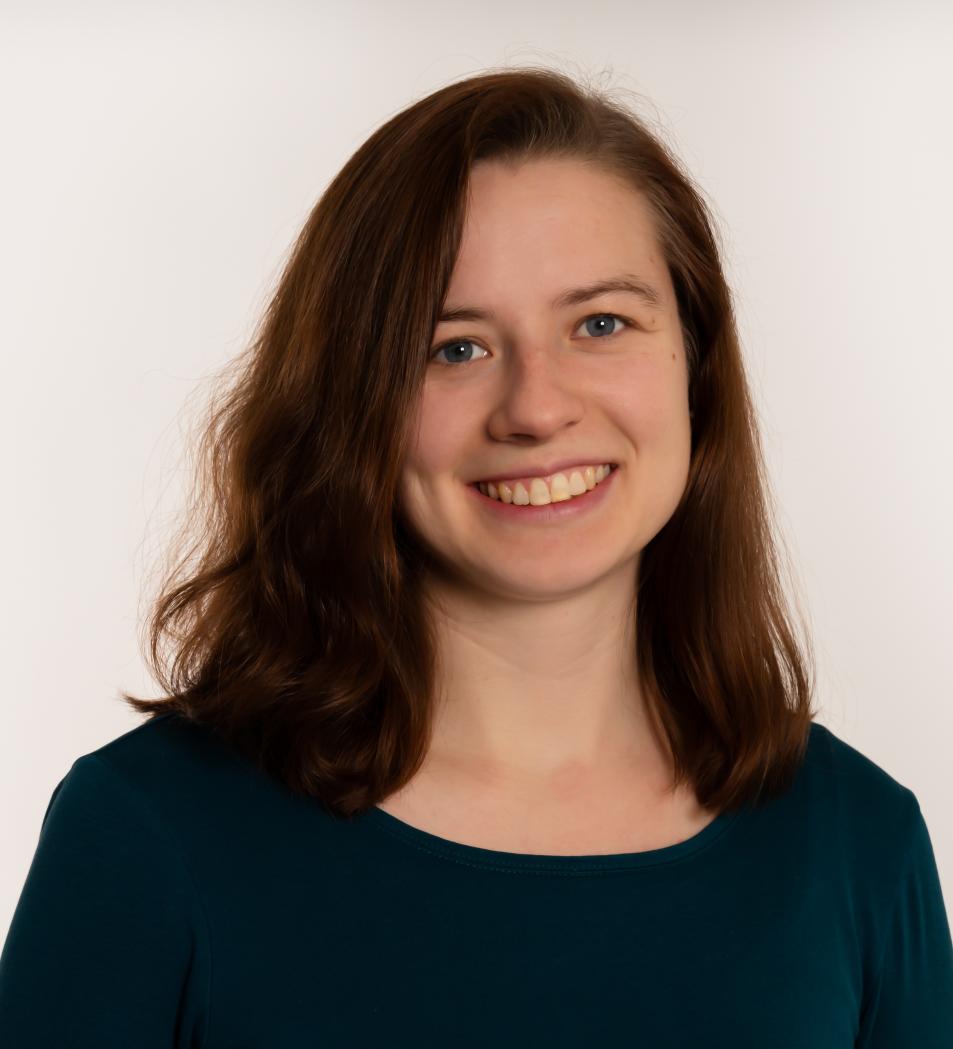
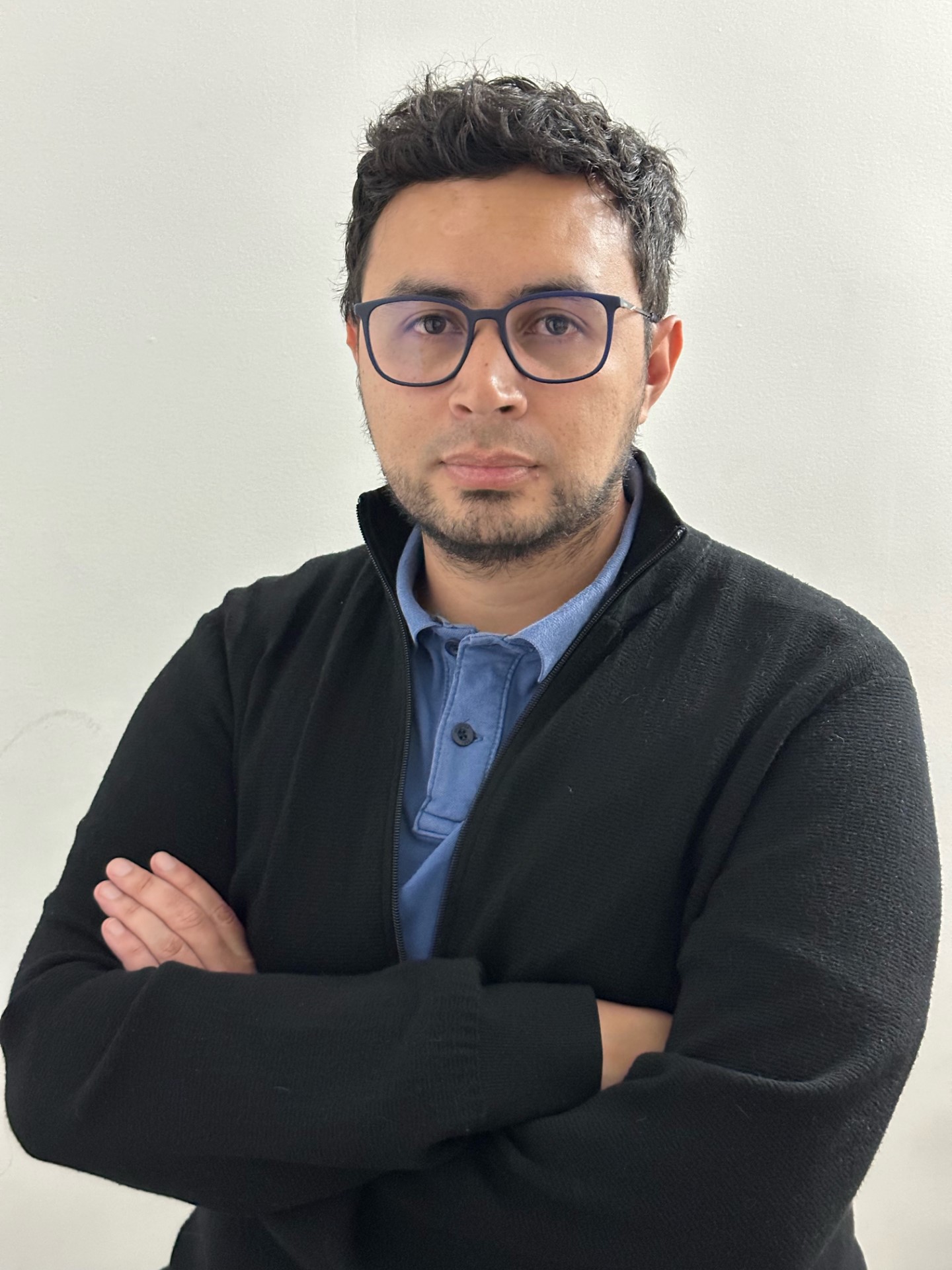
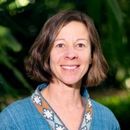
Pia Ruttner-Jansen is an External Doctoral Student at the WSL Institute for Snow and Avalanche Research SLF and affiliated with the GSEG group at ETH Zurich since March 2021. Her work focuses on remote sensing and geomatics applications in snow and avalanche research . Education : BSc in Geodesy and Geoinformation (Technical University of Vienna, 2018) MSc in Geomatic Engineering (ETH Zurich, 2021) Her research explores high-resolution snow depth monitoring using drones, terrestrial laser scanning (TLS) , and GNSS technologies to improve avalanche risk assessment and infrastructure safety in alpine regions. Key methodologies include: Low-cost lidar and optical sensors for snow depth mapping Probability-based avalanche run-out modeling Machine learning integration for GNSS residual analysis Recent publications highlight her contributions to automated railway infrastructure monitoring , avalanche core-powder cloud simulation , and keypoint-based TLS deformation detection . Her work emphasizes practical applications for mountain hazard mitigation . Current affiliations include: PhD Student at WSL Institute for Snow and Avalanche Research SLF PhD Student at ETH Zurich's Department of Civil, Environmental and Geomatic Engineering
Dr. Camilo A. Riano-Rios is an Assistant Professor in the Department of Aerospace, Physics and Space Sciences at Florida Institute of Technology's College of Engineering and Science, where he leads the Space Vehicle Robotics (SVR) laboratory. His research focuses on developing robust Guidance, Navigation, and Control (GNC) algorithms for space applications using nonlinear adaptive control and machine learning techniques. His educational background includes a M.S./Ph.D. in Aerospace/Mechanical Engineering from the University of Florida, a M.S. in Project Management from Universidad EAN (Colombia), and a B.S./M.S. in Mechatronics Engineering from Universidad Militar Nueva Granada (Colombia). Dr. Riano-Rios's research integrates spacecraft dynamics, adaptive control theory, and robotics with applications in spacecraft formation flying, orbital debris removal, and CubeSat technologies. His work emphasizes hardware-in-the-loop validation using advanced testbeds including Florida Tech's Helmholtz cage and spherical air bearing systems. Analysis of his recent publications reveals strong focus on: adaptive control strategies for spacecraft attitude/orbital control, machine learning applications in multi-agent space systems, propellant-less maneuvering techniques, and robust algorithms for uncertain space environments. The research consistently bridges theoretical control frameworks with practical spacecraft implementation challenges. He currently advises one Ph.D. student (Morokot Sakal) and four undergraduate researchers (Ishaben Trada, Zuleyka Priscila Figueroa Pineda, Kian Jamal, Cole Schumacher). The SVR lab maintains active projects including post-capture attitude control of space debris, fault-tolerant actuator systems, and development of a 3-DOF attitude testbed for experimental validation of GNC algorithms.
Dr. Liu Junmin is an Assistant Professor at the School of New Materials and New Energy , Shenzhen University of Technology. He holds a PhD in Engineering from Shenzhen University and has a strong background in optical communication technologies and all-optical information devices. Education: PhD (2016-2019), Shenzhen University, School of Optoelectronic Engineering Master (2010-2013), Hunan University, School of Information Science and Engineering Bachelor (2006-2010), Hunan University, School of Information Science and Engineering His research spans high-speed optical communication systems, orbital angular momentum mode multiplexing, and intelligent optimization algorithms applied to optical signal processing. He has pioneered work in atmospheric turbulence compensation using deep learning and developed novel optical devices for beam shaping and modulation. Recent publications demonstrate expertise in diffractive neural networks (2021), turbulence mitigation (2019), and Q-switched fiber lasers (2018), with a focus on practical implementations for next-generation optical networks. He currently leads multiple high-impact research projects, including the Shenzhen Basic Research Key Project (RMB 2.5M) and Guangdong Natural Science Foundation initiatives, focusing on stable support for photonic innovation and talent development.
Dr. Serkan Girgin is an Associate Professor at the Department of Geo-information Processing, Faculty of Geo-Information Science and Earth Observation, University of Twente. He leads the Center of Expertise in Big Geodata (CRIB) and contributes to global initiatives in geospatial big data, cloud computing, and disaster risk assessment. His work bridges academic, private, and scientific sectors with over two decades of experience since 1996. M.Sc. and Ph.D. in Environmental Engineering Second M.Sc. in Geodetic and Geographic Information Technologies Research interests span geospatial data science, machine learning for remote sensing, open science frameworks, and Natech risk assessment. He has designed systems like ITC's Geospatial Computing Platform, eNatech Database, and RAPID-N for risk mapping. Recent publications focus on digital twins for soil-plant systems, SAR benchmark datasets, and automated workflows for Sentinel-1 interferometry. His projects include ESA EO AFRICA R&D Facility, SURF's Next Generation Data Repositories, and Netherlands eScience Centre's EcoExtreML. eScience Center Fellow (2022) SURF Research Support Champion (2022) Multiple early-career awards in programming (1993-1996) and thesis excellence (2005) He actively develops tools for citizen science (e.g., QGIS Light) and advocates for FAIR data management. His collaborations extend to Zenodo datasets and international conferences on geospatial resilience.
Xiaodan Pang is a Tenure Professor at Riga Technical University (RTU) specializing in cutting-edge photonics and communications research. Her work focuses on developing next-generation optical and wireless technologies for high-speed data transmission systems, with significant contributions to silicon photonics, terahertz communications, and integrated sensing and communication architectures. Her primary research interests include: Digital signal processing Wireless communications Signal processing Fiber optics Optoelectronics Photonics Professor Pang's recent publications demonstrate leadership in overcoming fundamental challenges in high-speed communications. Her 2025 work spans silicon photonics ring-resonator modulators for optical-amplification-free links, photonic terahertz chaos systems for secure ranging, and analog fronthaul solutions for 6G networks. Key themes include neural network equalization for ultra-high baudrate transmission, energy-efficient unamplified optical links, and integrated sensing-communication systems leveraging terahertz frequencies. This research directly addresses critical bottlenecks in data center interconnects, 6G mobile infrastructure, and secure high-precision wireless applications. Her technical profile is documented through ORCID (0000-0003-4906-1704), Scopus (54407301300), and Web of Science (D-5032-2015) identifiers, with active professional engagement via LinkedIn.
Alessandro Fasso is a full professor of Statistics at the School of Engineering, University of Bergamo, Italy, where he has been teaching since 2000. He serves as Editor in Chief of Environmetrics (2019-) and has held various editorial positions for prestigious journals including Stochastic Environmental Research and Risk Analysis and Advances in Statistical Analysis. His international recognition includes serving as President of The International Environmetrics Society (TIES) from 2017-2019 and as a member of the Council of the International Statistical Institute (ISI) from 2013-2017. Professor Fasso's research focuses on statistical methods and applications to environmetrics, air quality, climate variables, and spatio-temporal data analysis. His work spans functional data analysis for atmospheric profiles, multivariate spatio-temporal modeling of air pollution, and statistical approaches for environmental monitoring networks. He has made significant contributions to understanding collocation uncertainty using heteroskedastic functional regression models and studying vertical smoothing mismatch uncertainty when comparing satellite and radiosonde data. His recent publications (2023-2025) demonstrate a strong focus on PM2.5 pollution modeling, particularly examining livestock-related emissions in the Lombardy region using advanced spatio-temporal techniques. His work increasingly integrates functional data analysis, regularization methods, and uncertainty quantification in environmental applications. The articles show a progression from theoretical statistical developments to practical environmental problem-solving with policy implications. President of The International Environmetrics Society (TIES) (2017-2019) Member of the Council of the International Statistical Institute (ISI) (2013-2017) Elected member of the International Statistical Institute (ISI) Founder and previous Coordinator of GRASPA (2013-2015) Member of WG-GRUAN, Working Group on Atmospheric Reference Observations (2013-) Professor Fasso has successfully supervised numerous PhD students including Emilio Porcu, Michela Cameletti, and Francesco Finazzi. His research has been supported by significant grants including EU Horizon 2020: GAIA-CLIM (budget €500,000), Project AQ2009-EN17 (budget €850,000), and PRIN-2006 (budget €260,000). He has served on evaluation committees for the Italian Research Quality Exercise (VQR 2015-2019) and as a referee for international research councils. His international lecturing activities include PhD courses at Peking University and the University of Bolzano-Bozen.
Dr. Felix Fauer is a Researcher at the Institute of Meteorology within the Department of Geosciences at Free University of Berlin, where he has served as a PhD student and research assistant in the ClimXtreme project since March 2020. His work focuses on statistical analysis of extreme precipitation events and intensity-duration-frequency (IDF) curve modeling, with strong collaborations across German climate research institutions. His academic background includes: M.Sc. in Meteorology from Free University of Berlin (2017-2020), thesis: "Weather Influence on Traffic - How Machine Learning Can Enrich Impact Research" B.Sc. in Meteorology from University of Leipzig (2015-2017) B.Sc. in Biophysics from Humboldt University of Berlin (2012-2015) Fauer's research centers on extreme precipitation statistics using Bayesian hierarchical modeling and machine learning. He investigates large-scale atmospheric influences on rainfall extremes, seasonal variations across timescales, and non-stationary behavior in central Europe. His work bridges theoretical statistics with practical applications in climate risk assessment and infrastructure design, particularly through IDF curve development for changing climate conditions. His publication record reveals consistent focus on statistical innovations for precipitation extremes, with contributions to flexible quantile estimation methods, seasonal modeling frameworks, and event-specific analyses of major floods. Recent work demonstrates increasing integration of machine learning techniques and transdisciplinary approaches to climate impact studies. No scientific awards are documented in available sources. Fauer operates under the ClimXtreme project framework (B2.5: Precipitation Extremes), contributing to Germany's climate extremes research infrastructure. While no formal advisees are listed, his collaborative publications involve extensive teamwork across meteorological, hydrological, and geoscientific domains. Current work emphasizes improving extreme event modeling through large-scale atmospheric pattern integration. He is embedded in the Statistical Meteorology working group at FU Berlin's Institute of Meteorology, actively collaborating with the Potsdam Institute for Climate Impact Research and Leibniz Institute for Tropospheric Research on projects including AMBER, Natural Hazards and Risks in a Changing World, and WEXICOM.
Tomislav Hengl serves as Senior Researcher at ISRIC (International Soil Reference and Information Centre) within Wageningen University in the Netherlands, while also holding the position of CEO at OpenGeoHub and EnvirometriX. His professional focus centers on producing open global soil datasets and developing open-source software solutions for environmental research and decision-making. Dr. Hengl specializes in creating accessible soil information systems, driven by his conviction that comprehensive soil data is essential for scientists, land managers, policymakers, and civil society to effectively protect this vital resource. As a passionate advocate for open science, he actively develops and promotes open-source software tools while championing reproducible research methodologies across the environmental sciences. His research portfolio prominently features SoilGrids, a global system providing open access to diverse soil properties and classification data. His work addresses critical environmental challenges including soil carbon storage (noting that soils contain more carbon than vegetation and atmosphere combined), soil biodiversity, and the development of practical applications for land management. Dr. Hengl's 2017 publication highlighted how modern technology unlocks soil's vital secrets, emphasizing that while forests may regrow in 50 years, recovering just 10 cm of lost soil requires approximately 1,000 years. Through OpenGeoHub, he advances the mission of creating 'an environmentally sound future for all based on trust, transparency and the accuracy of our data,' promoting FAIR data principles and empowering researchers worldwide with accessible geospatial tools and educational resources.
Alexey Konstantinovich Shaitan is a Professor at the Department of Big Data and Information Retrieval and a Leading Researcher at the International Bioinformatics Laboratory within the Faculty of Computer Science at the National Research University Higher School of Economics (HSE). He also serves as a Leading Researcher at the Department of Bioengineering, Faculty of Biology, Lomonosov Moscow State University since 2012. With 17 years of scientific and teaching experience, Shaitan holds the prestigious titles of Professor of the Russian Academy of Sciences and Corresponding Member of the Russian Academy of Sciences (both awarded in 2022). Education: 2022: Professor of the Russian Academy of Sciences 2022: Corresponding Member of the Russian Academy of Sciences 2021: Doctor of Physical and Mathematical Sciences from Lomonosov Moscow State University 2010: Candidate of Physical and Mathematical Sciences 2007: Specialty in "Physics of Condensed Matter," qualification "Physicist" from Lomonosov Moscow State University Shaitan's research focuses on epigenetics, nucleosomes, and structural bioinformatics , bridging computational approaches with molecular biology to understand chromatin structure and function. His work spans from fundamental studies of nucleosome dynamics to applied research in drug discovery and disease mechanisms. He has made significant contributions to molecular dynamics simulations of nucleosomes and the application of AI in computational biology. Analysis of his recent publications reveals a strong trajectory in nucleosome structure and dynamics, epigenetic mechanisms, and computational methods development. His work demonstrates increasing integration of artificial intelligence with traditional bioinformatics approaches, particularly evident in his 2025 publications on AI in drug development. The interdisciplinary nature of his research connects physics, biology, and computer science to address complex biological questions. Scientific Recognition: Corresponding Member of the Russian Academy of Sciences (2022) Professor of the Russian Academy of Sciences (2022) Rector's personal allowance (2021-2022) Bonus for publication in a journal from List A (2025-2026) Shaitan actively contributes to academic education through teaching courses such as "Molecular Modeling" for both undergraduate and master's students at HSE. His international collaborations are evidenced by his previous visiting fellowship at the National Center for Biotechnology Information, National Institutes of Health, USA (2013-2017) and research position at Ulm University, Germany (2009-2011). He regularly participates in major conferences including the Ascona B-DNA Consortium meetings and the Moscow Conference on Computational Molecular Biology. As a key member of the International Bioinformatics Laboratory at HSE and the Department of Bioengineering at Moscow State University, Shaitan leads research at the intersection of computer science, biology, and physics. His laboratory work focuses on advanced computational techniques for understanding chromatin structure, DNA-protein interactions, and their implications for disease mechanisms and therapeutic development.
Heike Kalesse-Los serves as a W1 (Tenure Track) Professor for Arctic Climate Change at the University of Leipzig since April 2018. She is affiliated with the Institute of Meteorology and specializes in atmospheric remote sensing research with a strong focus on Arctic climate systems. Leipzig University, Institute of Meteorology (2018-present) Leibniz Institute for Tropospheric Research (2015-2018) McGill University, Montreal (2011-2014) Education: Doctorate, Johannes Gutenberg University, Mainz (2006-2010) Diploma in Meteorology, University of Leipzig (2000-2006) Professor Kalesse-Los's research centers on remote sensing of the Arctic climate system , with particular expertise in analysis of Doppler spectra from cloud radar devices and development of atmospheric retrieval algorithms . Her work integrates multiple remote sensing instruments to investigate cloud microphysics, dynamics, and radiation interactions. She also conducts research at the atmosphere-biosphere interface , focusing on flying insect retrievals and precipitation shadowing effects. A significant portion of her recent work applies machine learning techniques to improve short-term power forecasts for renewable energy systems, particularly wind and photovoltaic applications. Her recent publications (2019-2022) demonstrate a strong methodological focus on applying artificial neural networks to cloud radar data analysis . These works address critical challenges in cloud physics including riming prediction, cloud liquid detection, and identification of cloud droplets beyond lidar attenuation. The research consistently bridges atmospheric science with advanced computational techniques, establishing new methodologies for atmospheric retrieval using radar Doppler spectra. Research Funding: TRR 172/B07: Influence of water channels in sea ice and polynyas on Arctic cloud properties (DFG, 2020-2023) PICNICC: Polarimetry influenced by CCN and INP in Cyprus and Chile (DFG, 2018-2023) CORSIPP: Characterization of orographically influenced frosting and secondary ice production (DFG, 2023-2026) PV-WOV: Improving photovoltaic performance forecasts (EU ESF, 2022-2025) Professor Kalesse-Los leads multiple collaborative research projects funded by the German Research Foundation and European Union, focusing on Arctic climate processes and renewable energy applications. Her work involves extensive collaboration with researchers across atmospheric physics, climate science, and machine learning domains. She maintains active research partnerships with institutions in Germany and internationally, including previous affiliations with McGill University in Canada. Her research group operates within the Arctic Climate Change research unit at Leipzig University, working with advanced remote sensing instrumentation including cloud radar systems and microwave radiometers. The team participates in international field campaigns focused on Arctic atmospheric processes and contributes to major collaborative research centers including the SFB Transregio 172: Arctic Amplification.
Szymon P. Malinowski is a full Professor at the Department of Atmospheric Physics, Institute of Geophysics, Faculty of Physics, University of Warsaw, and a corresponding member of the Polish Academy of Sciences since 2020. He served as Director of the Institute of Geophysics from 2016 to 2024 and previously as Head of the Department of Atmospheric Physics (2002-2013). His institutional affiliations include the Polish Academy of Sciences (2020-present) and research collaborations with institutions like Université de Lille (2023-2024) and Johannes Gutenberg-Universität Mainz (2013-2014). Master of Science in Physics (University of Warsaw, 1982) Doctor of Natural Sciences in Geophysics (Institute of Geophysics PAN, 1988) Habilitation in Physical Sciences (Institute of Geophysics PAN, 1998) Professor of Earth Sciences (2008) Malinowski's research centers on atmospheric physics with emphasis on cloud processes and turbulence. His work integrates laboratory experiments (e.g., Π Chamber), field campaigns (EUREC 4 A, ACORES), and numerical modeling to investigate turbulence dynamics in boundary layers, cloud microphysics using shadowgraph imaging, and climate-relevant processes like aerosol-cloud interactions. He pioneered fractal reconstruction techniques for turbulence modeling and developed novel optical hygrometers for airborne measurements. His experimental approach bridges fundamental fluid dynamics with atmospheric applications, particularly in marine stratocumulus systems. Analysis of his 15 most recent publications (2022-2025) reveals three dominant research thrusts: (1) High-resolution turbulence characterization using aircraft and laboratory data, focusing on dissipation scaling and non-equilibrium states; (2) Advanced measurement techniques for cloud microphysics, including low-cost optical sensors and shadowgraph systems; (3) Climate science communication through book chapters on Earth's energy balance and climate crisis mitigation. His work increasingly integrates machine learning approaches for turbulence analysis while maintaining strong connections to observational campaigns. 2017: National 'Science Popularizer' award (team category) for naukaoklimacie.pl 2022: Foundation for Polish Science Award for public science communication 2023: Honorary membership in Chapter Zero Poland Malinowski has supervised 14 PhD students across atmospheric physics and cloud dynamics, with recent graduates including Stanisław Król (2025) on turbulent mixing and Moein Mohammadi (2023) on shadowgraph imaging. He leads the Climate Education Foundation (founded 2021) which produces educational materials reaching over 500,000 annual visitors. His grant portfolio includes EU-funded projects like EUREC 4 A and national initiatives on climate crisis mitigation. He co-founded and directs the Climate Education Foundation, which operates the naukaoklimacie.pl platform and develops educational materials for schools. His research group participates in the European Turbulence Conference organizational committee and conducts field work at the Umweltforschungsstation Schneefernerhaus. Current projects focus on turbulence-cloud interactions in marine environments using data from the EUREC 4 A campaign and developing machine learning tools for atmospheric data analysis.
Yuriy Serdyuk is an Assistant Professor at the Department of Electrical Engineering at Chalmers University of Technology. His academic position focuses on research in electrical insulation phenomena and teaching within the Master of Science in Electrical Power Engineering program. Dr. Serdyuk's research primarily centers on phenomena in electrical insulating materials exposed to strong electric fields. His work investigates processes associated with charge transport in gaseous, liquid and solid insulating materials, including their compositions and interfaces. His research aims to develop modern electrical insulation for components of future sustainable high-voltage electric power systems. His expertise spans across dielectric materials, high-voltage engineering, transformer technology, and cable insulation systems. Analysis of Dr. Serdyuk's recent publications reveals a strong focus on practical applications of electrical insulation research. His work demonstrates increasing integration of computational methods including physics-informed neural networks for studying charge dynamics. Key research trends include sustainable insulation solutions for electric vehicles, improved testing methodologies for insulation systems under power electronics-induced stresses, and investigation of material properties under various environmental conditions. His research increasingly addresses challenges in HVDC systems, subsea cable applications, and the interface between power electronics and traditional power systems. Dr. Serdyuk is actively involved in teaching two courses in the Master of Science in Electrical Power Engineering program at Chalmers. His extensive publication record spanning from 2003 to 2025 (with 155 publications documented) indicates sustained research productivity and relevance in the field of electrical insulation and high-voltage engineering. His collaborative work involves numerous research projects addressing contemporary challenges in electrical power systems.
Phil Dennison is a Professor of Geography at the University of Utah's School of Environment, Society & Sustainability, where he serves as Director of the URSA Lab (University of Utah Remote Sensing and Applications Laboratory). Based in Gardner Commons Room 4848, he teaches core remote sensing courses including GEOG 3110 (The Earth from Space) and advanced courses in optical remote sensing and vegetation mapping. Ph.D., Geography, University of California Santa Barbara, 2003 M.A., Geography, University of California Santa Barbara, 1999 B.S., Geography, Penn State University, 1997 Dr. Dennison's research bridges remote sensing technology with critical environmental challenges. His primary focus areas include: Wildfire Safety Systems - Developing geospatial tools like GeoLCES for firefighter lookouts and escape routes Vegetation Monitoring - Using imaging spectroscopy for non-photosynthetic vegetation and biomass mapping Greenhouse Gas Tracking - Satellite-based methane emission detection and quantification Natural Hazard Assessment - Drought impacts on forest mortality and fuel moisture monitoring Analysis of his 15 most recent publications (2024-2025) reveals a strategic shift toward operational safety applications , with 60% of articles directly addressing wildfire fighter safety through geospatial decision support. His technical approach increasingly integrates machine learning with multi-sensor platforms (lidar, hyperspectral, satellite), while maintaining strong field campaign components like NASA's FireSense. The work demonstrates exceptional cross-domain applicability from Piñon-Juniper woodlands to global methane monitoring. As Director of the URSA Lab, Dr. Dennison leads a research ecosystem focused on translating remote sensing data into actionable public safety tools. His team actively collaborates with federal agencies including NASA and USFS, with recent work directly informing wildfire evacuation protocols and emission monitoring standards. The lab maintains strong field validation components through campaigns like FIREX-AQ, ensuring practical relevance of technical innovations.
Dr. Monika Korte is the Acting Head of the Geomagnetism Section (Section 2.3) at the GFZ German Research Centre for Geosciences. She leads the working group on the 'Evolution of the Earth's Magnetic Field' and has been instrumental in advancing research on geomagnetic field reversals, secular variation, and space weather effects. Her work integrates paleomagnetic data, satellite observations, and computational modeling to understand Earth's core dynamics and their climatic impacts. Education & Career: PhD in Geophysics, Free University of Berlin (1999) Diploma in Geophysics, Ludwig Maximilian University (1996) Acting Head of Section 2.3 since 2021 Leadership roles in international projects, including the ERC Synergy Grant GERACLE (2024–2030) Research Interests: Geomagnetic field reversals/excursions Global and regional magnetic field modeling Geomagnetic observatory networks Cosmogenic isotope analysis Machine learning applications in geophysics Awards & Grants: ERC Synergy Grant (2024): €10M for GERACLE project GFZ Research Award (2003) Feodor-Lynen Fellowship (2001) Labs & Collaborations: Leading the Niemegk Geomagnetic Observatory Coordinating the GERACLE international consortium Member of IAGA Executive Committee and AGU editorial boards
Steven Beyea is a Professor at Dalhousie University, holding joint appointments in the Department of Physics and Atmospheric Science, Department of Diagnostic Radiology, and School of Biomedical Engineering. He leads the Biomedical Translational Imaging Centre (BIOTIC) , focusing on developing and clinically translating novel diagnostic imaging technologies. His work integrates MRI, MEG, and multimodal imaging to advance pre-surgical functional neuroimaging, abdominal/pelvic cancer diagnostics, and biomarker-driven patient stratification. Research Interests : His interdisciplinary research spans compressed sensing algorithms for parametric mapping, automated analysis of functional neuroimaging data, and machine learning applications in healthcare. Projects include high-resolution liver iron/fat quantification without a priori assumptions and enhancing reliability in pre-surgical brain mapping. Infrastructure includes clinical 3T MRI/MEG and preclinical PET/SPECT/CT systems strategically located in Halifax’s major hospitals. Key Projects : Compressed Sensing for High-Temporal-Resolution Parametric Mapping Algorithms for Functional Neuroimaging Reliability in Pre-Surgical Mapping Novel MRI Pulse Sequences for Iron/Fat Quantification Machine Learning for Patient Stratification using MRI/MEG Grants & Labs : As head of BIOTIC, he oversees translational research infrastructure. Ongoing work explores imaging biomarkers for neurological diseases and cognitive impairment in systemic lupus erythematosus.