معرفی
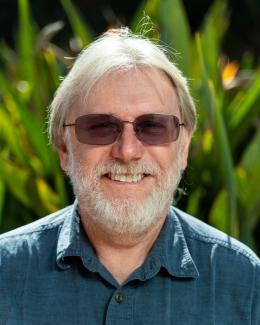
Phil Dennison is a Professor of Geography at the University of Utah's School of Environment, Society & Sustainability, where he serves as Director of the URSA Lab (University of Utah Remote Sensing and Applications Laboratory). Based in Gardner Commons Room 4848, he teaches core remote sensing courses including GEOG 3110 (The Earth from Space) and advanced courses in optical remote sensing and vegetation mapping.
- Ph.D., Geography, University of California Santa Barbara, 2003
- M.A., Geography, University of California Santa Barbara, 1999
- B.S., Geography, Penn State University, 1997
Dr. Dennison's research bridges remote sensing technology with critical environmental challenges. His primary focus areas include:
- Wildfire Safety Systems - Developing geospatial tools like GeoLCES for firefighter lookouts and escape routes
- Vegetation Monitoring - Using imaging spectroscopy for non-photosynthetic vegetation and biomass mapping
- Greenhouse Gas Tracking - Satellite-based methane emission detection and quantification
- Natural Hazard Assessment - Drought impacts on forest mortality and fuel moisture monitoring
Analysis of his 15 most recent publications (2024-2025) reveals a strategic shift toward operational safety applications, with 60% of articles directly addressing wildfire fighter safety through geospatial decision support. His technical approach increasingly integrates machine learning with multi-sensor platforms (lidar, hyperspectral, satellite), while maintaining strong field campaign components like NASA's FireSense. The work demonstrates exceptional cross-domain applicability from Piñon-Juniper woodlands to global methane monitoring.
As Director of the URSA Lab, Dr. Dennison leads a research ecosystem focused on translating remote sensing data into actionable public safety tools. His team actively collaborates with federal agencies including NASA and USFS, with recent work directly informing wildfire evacuation protocols and emission monitoring standards. The lab maintains strong field validation components through campaigns like FIREX-AQ, ensuring practical relevance of technical innovations.