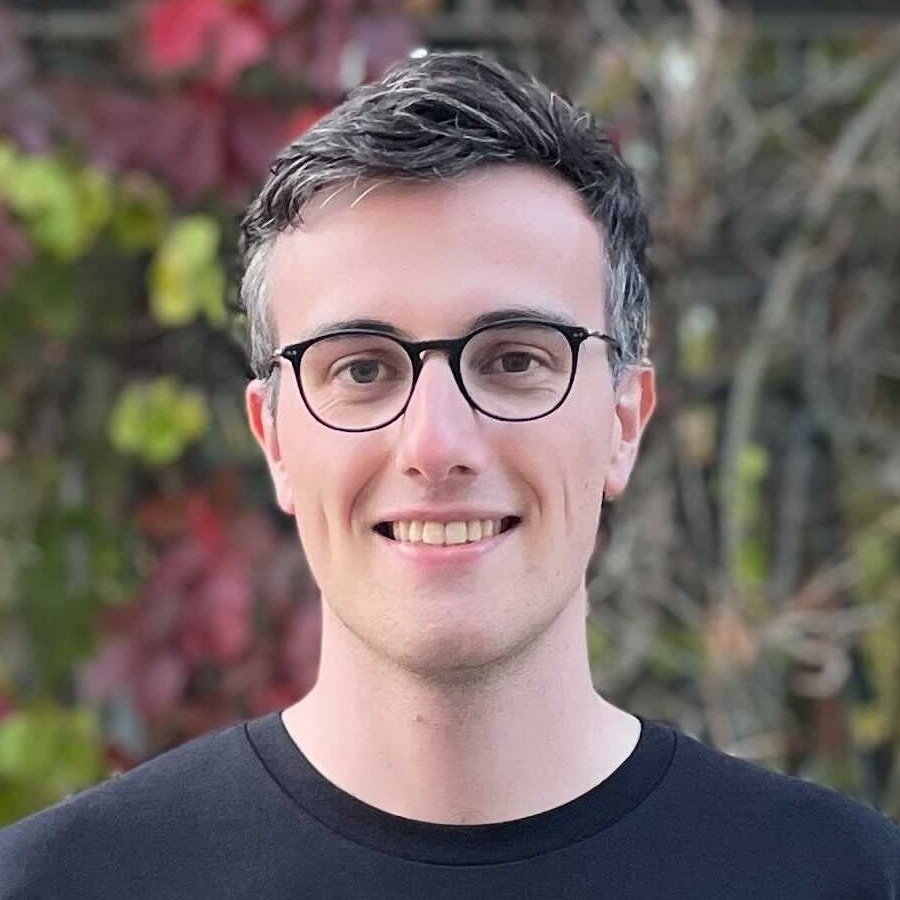
Dr. Arnout Devos is a Lecturer at the Department of Computer Science at ETH Zurich and a staff member at the ETH AI Center and ELLIS. His work focuses on Artificial Intelligence research and education, with specializations in generative AI, few-shot learning, and accelerating deep tech innovation. He co-founded the Sciencepreneurship Community to foster entrepreneurial scientists and leads initiatives like the ETH AI Center Academic Talk Series (AICATS) to bridge academic collaborations. Education: PhD in Machine Learning (EPFL, 2024) as a Marie-Curie fellow; Master’s in Computer Science (USC, 2018); degrees in Management, Electrical Engineering, and EECS (KU Leuven). Awards include the EPFL Teaching Assistant Award (2024). Research interests span AI ethics, healthcare applications, and interdisciplinary collaborations. His PhD thesis advanced few-shot learning techniques for efficient model adaptation. Projects include the Sciencepreneurship Summer School and investments via S2S Ventures, including exits like Digit Soil. Key Activities: Academic leadership, startup mentorship, venture capital advising Labs/Teams: ETH AI Center, ELLIS, S2S Ventures Grants: Marie-Curie Fellowship (PhD funding)
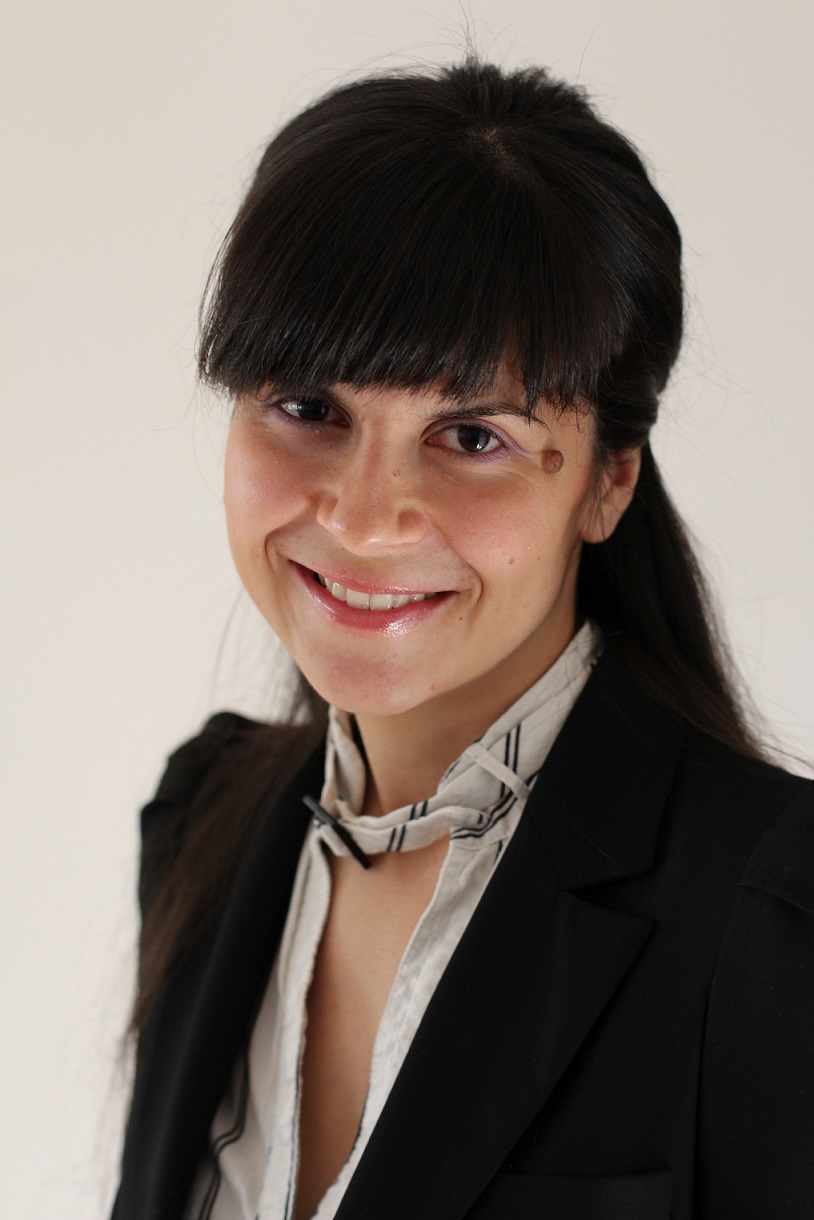
Alberto Ferrante is a Lecturer and Researcher at the Faculty of Informatics of the Università della Svizzera italiana (USI), affiliated with the IDSIA (Dalle Molle Institute for Artificial Intelligence) USI/SUPSI. His work bridges cybersecurity, embedded systems, and AI applications, particularly in IoT and pest control. He holds a PhD from Università degli Studi di Milano (2006) and an MSc from Politecnico di Milano (2002). Research Interests: Ferrante focuses on Secure communication protocols and embedded systems security Malware detection and resource-optimized hardware solutions Machine learning applications for IoT, including agricultural pest monitoring and healthcare diagnostics Cyber-physical systems design and security-enhanced embedded systems His publications emphasize practical implementations, such as AI-driven UAVs for pest control and low-power drone systems for environmental monitoring. He actively contributes to tech transfer projects with industry partners and participates in major conferences like ICC and Globecom as a TPC member. He teaches the Master’s course Edge Computing in the IoT and collaborates on hardware-software co-design for security-critical systems. His work often integrates real-world constraints like energy efficiency and computational resource limitations. Key contributions include frameworks for dynamic security adaptation in wireless sensor networks and hardware-accelerated security for embedded systems.
Renata Borovica-Gajic is an Associate Professor in Data Analytics and an ARC DECRA Fellow at the School of Computing and Information Systems (CIS), University of Melbourne. She also serves as Associate Dean (Diversity and Inclusion) for the Faculty of Engineering and IT, demonstrating leadership in both research and academic community development. Her research lies at the intersection of database systems, machine learning, and artificial intelligence, with a vision of creating adaptive, self-driving database engines that optimize query execution in real-time. Her work spans learned indexes, query optimization, data quality, and data-driven traffic optimization, aiming to reduce costs and improve performance in data analytics. The recent publications reflect a strong trend toward integrating machine learning into core database operations—particularly through learned indexes, bandit-based tuning, and reinforcement learning for traffic systems. These works emphasize automation, provable guarantees, and real-time adaptation, showcasing a cohesive research agenda focused on intelligent, self-optimizing data systems. Her scientific excellence is recognized by numerous awards, including: L'Oréal-UNESCO for Women in Science Fellowship (2023) Victorian Young Tall Poppy (2024) Test of Time Award at SIGMOD 2022 Multiple Research and Teaching Excellence Awards from the University of Melbourne Google Research Inclusion Award (2021) She actively mentors PhD students and leads significant research projects funded by the Australian Research Council, Google, and Telstra. Her service includes roles as Associate Editor for SIGMOD Record, conference organization (e.g., aiDM, ADC, VLDB), and leadership in diversity and inclusion initiatives. She has also contributed to influential publications such as a chapter in the 7th edition of Database System Concepts . Her research lab focuses on AI-powered databases, traffic optimization via reinforcement learning, and self-healing data systems, positioning her at the forefront of next-generation data management.
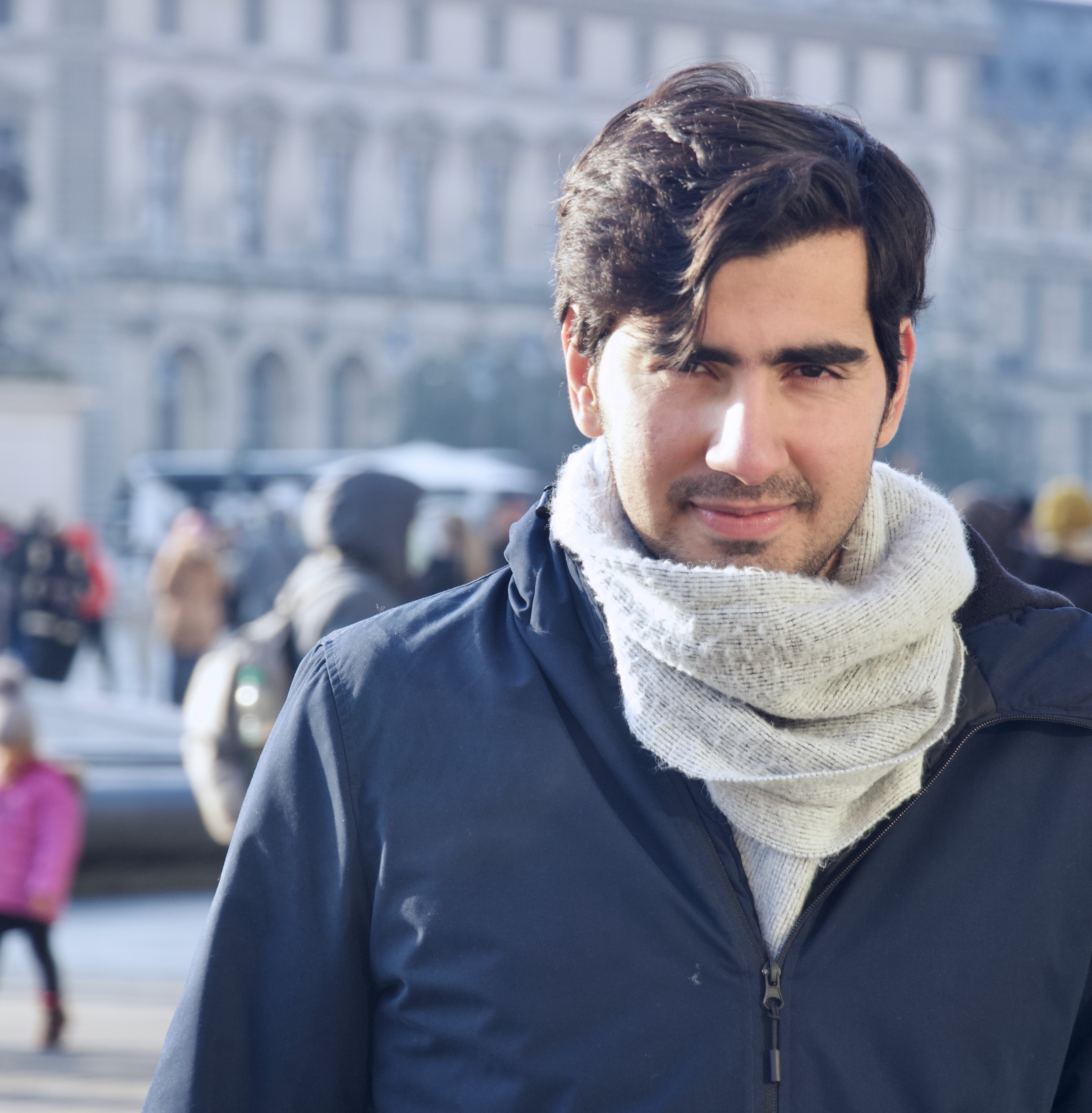
Dr. Julian Tachella is a CNRS Research Scientist at the Sisyph Laboratory of École Normale Supérieure de Lyon, with co-founder/CSO roles at Blur Labs. His career spans signal processing, machine learning, and computational imaging, focusing on inverse problems and self-supervised learning. Affiliation: CNRS (French National Centre for Scientific Research), Sisyph Laboratory, École Normale Supérieure de Lyon Co-founder & CSO: Blur Labs (AI/Imaging startup) Research Interests: At the intersection of signal processing and deep learning , his work addresses imaging inverse problems through self-supervised methodologies (e.g., UNSURE, Generalized R2R) that eliminate ground-truth requirements. Key contributions include equivariant imaging frameworks for stability, spline sketches for photon-counting lidar compression, and uncertainty quantification techniques with equivariant bootstrapping. Recent Trends: 2025 publications emphasize lightweight architectures for multi-domain reconstruction (CT, super-resolution) and noise-agnostic SURE methods. 2024 works focus on audio declipping , compressed lidar , and nonlinear algorithm unrolling with applications in autonomous vehicles and medical imaging. Scientific Awards: Best Student Paper Award at ICASSP’22 Collaborations & Leadership: He leads the DeepInverse open-source project and develops algorithms for real-time 3D lidar reconstruction. His team includes researchers from University of Edinburgh and Grenoble INP, with applications in automotive lidar and underwater imaging.
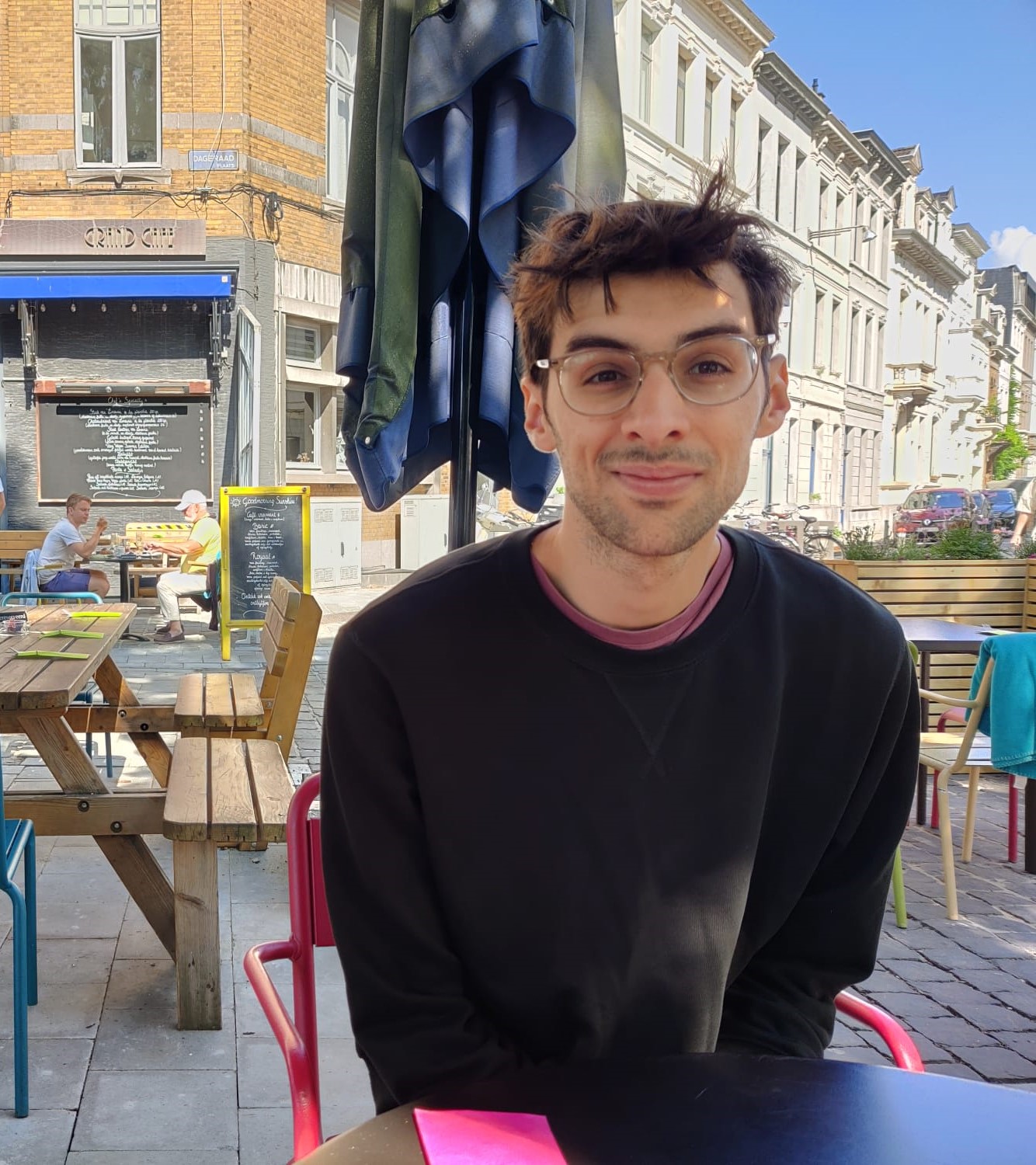
Saleh Ashkboos is a Ph.D. student in the Computer Science Department at ETH Zurich, advised by Professors Torsten Hoefler and Dan Alistarh. He is also a Research Assistant at the Scalable Parallel Computing Lab and an affiliated doctoral student of the ETH AI Center. His research focuses on accelerating deep neural network training and developing systems for large-scale graph processing. Prior to ETH Zurich, he earned his Master's degree in Computer Science from Sharif University of Technology, advised by Professor Amir Daneshgar. His work has led to notable contributions, including the best paper award at SC22 for 'ProbGraph.' Recent research emphasizes efficient LLM training and quantization techniques, with publications on topics like 4-bit inference, quantization-aware training frameworks, and scalable meteorological modeling. He has interned at Apple and Microsoft, and his work is accessible via Google Scholar and GitHub. Key projects include GPTQ (post-training quantization for transformers), SliceGPT (LLM compression), and ProbGraph (high-performance graph mining). His technical contributions span distributed systems, neural network optimization, and climate-related machine learning.
Laura Pozzi is a Full Professor at the Faculty of Informatics, Università della Svizzera italiana (USI), Switzerland, since 2015. She previously held positions as Associate Professor (2011–2015) and Assistant Professor (2005–2011) at USI. Prior to joining USI, she was a postdoctoral researcher at EPFL's Processor Architecture Laboratory (2001–2005), a research engineer at STMicroelectronics (2000), and an Industrial Visitor at UC Berkeley (2000). Education: MS and PhD in Computer Engineering from Politecnico di Milano, Italy (1996–2000). Her research focuses on the interaction between compiler and architecture design, particularly in embedded systems , with key areas including approximate computing , coarse-grained reconfigurable arrays (CGRAs) , high-level synthesis (HLS) , and fuzz testing . She has led projects on automated design space exploration, compiler optimizations for reconfigurable architectures, and error estimation in approximate circuits. Recent Publications span topics like SAT-based mapping for CGRAs , grammar-based fuzzing of shell interpreters , and approximate logic synthesis , reflecting her interdisciplinary work bridging hardware/software co-design and software verification. Scientific Awards: Credit Swiss Best Teaching Award IEEE DAC Best Paper Award Leadership Roles: Co-Program Chair, IEEE Symposium on Application Specific Processors (SASP) Editorial Board Member, IEEE Design and Test Students: Current: Rodrigo Otoni (Postdoc), Morteza Rezaalipour (PhD), Riccardo Felici (PhD), Cristian Tirelli (PhD) Alumni: Ilaria Scarabottolo (PhD/Postdoc), Lorenzo Ferretti (PhD/Postdoc), Georgios Zacharopoulos (PhD), Giovanni Ansaloni (PhD/Postdoc), Paolo Bonzini (PhD)
Anastasios Vassilopoulos serves as Head of the Composite Mechanics Group (GR-MeC) and Adjunct Professor at École Polytechnique Fédérale de Lausanne (EPFL), within the School of Architecture, Civil and Environmental Engineering. He directs the Doctoral Program in Civil and Environmental Engineering while maintaining active roles in the Structural Engineering Group and School Council. His research focuses on composite materials for renewable energy infrastructure , particularly wind turbine rotor blades. Key areas include fatigue analysis of adhesively bonded joints, experimental methods for FRP composites under complex loading, and design methodologies for composite structures. His work bridges fundamental mechanics with industrial applications through extensive collaboration with wind energy stakeholders. Analysis of his 15 most recent publications reveals dominant themes in thick adhesive joint mechanics (73% of articles), fatigue/fracture characterization (67%), and machine learning applications (40%). The research consistently targets wind turbine blade challenges, with 87% of articles addressing specific aspects of renewable energy infrastructure. Methodological trends show increasing integration of computational-experimental approaches and AI-driven predictive modeling. Dr. Vassilopoulos has secured 18 major research projects since 2000, primarily funded by Swiss National Science Foundation and international collaborations. Current projects include NSF-funded work on wind turbine blade adhesive joints (2020-2024) and fire-resistant composite bridge decks. His teaching portfolio includes advanced courses on composites design, structural mechanics, and floating offshore renewables. As Doctoral Program Director, he oversees PhD training while personally supervising 17 doctoral students to completion.
Tao Lin is a Tenure-Track Assistant Professor and Principal Investigator of LINs Lab at Westlake University, School of Engineering. He leads cutting-edge research in deep learning optimization, generalization, and robustness, particularly in distributed and federated settings. Prior to this, he was a Ph.D. student at École Polytechnique Fédérale de Lausanne (EPFL), Switzerland, under the supervision of Prof. Martin Jaggi and Prof. Babak Falsafi. Doctor of Science, School of Computer and Communication Sciences, EPFL, Switzerland (2017–2022) Master of Science, School of Computer and Communication Sciences, EPFL, Switzerland (2014–2017) Bachelor of Engineering (with honors), College of Electrical Engineering, Zhejiang University, China (2010–2014) His research focuses on the intersection of optimization and generalization in deep learning, leveraging theoretical and empirical insights into loss landscapes and training dynamics to design efficient and robust learning and inference methods. This includes work on decentralized and federated learning under noisy, heterogeneous, and hardware-constrained environments. His work spans algorithmic innovation, theoretical analysis, and practical system integration. The recent publications from his lab demonstrate a strong trend in advancing federated learning, efficient inference for large language models, multimodal foundation models in pathology, and robust training under distribution shifts. Key themes include communication efficiency, model personalization, gradient tracking, and hardware-aware learning. His group has published at top venues including NeurIPS, ICML, ICLR, CVPR, and ECCV, with several papers receiving oral or spotlight presentations. ECCV Best Paper Candidate, 2024 Top 2% Scientists Worldwide 2024 (Stanford University) Doctoral Program Thesis Distinction Award, EPFL, 2022 Outstanding Performance Bonus, EPFL, 2021–2022 Top Reviewer: NeurIPS, ICML, AISTATS He advises multiple Ph.D. and master’s students, including Yongxin Guo, Futing Wang, Peng Sun, and Yuxuan Sun, whose work has been accepted at premier conferences. He has secured competitive grants as PI and participant, including the National Natural Science Foundation of China for Excellent Young Scientists Fund (Overseas) and the Science and Technology Innovation 2030 – Major Project. He also contributes to the community through service as an area chair (NeurIPS, ICML), reviewer for top journals and conferences, and organizer of workshops and academic events. His open-source contributions, such as Post-local SGD, have been integrated into PyTorch. Tao Lin teaches graduate courses such as Research Methodology of Computer Science and Technology and Deep Learning at Westlake University. He is actively involved in academic governance, serving on committees for student seminars, academic exchange, doctoral studies, and teaching leadership. The LINs Lab runs a regular research seminar on Deep Learning and Optimization, fostering a collaborative and dynamic research environment.
Francesco Regazzoni is a Senior Researcher at the Faculty of Informatics, Università della Svizzera italiana (USI), and affiliated with the Dalle Molle Institute for Artificial Intelligence (IDSIA USI-SUPSI). His work bridges embedded systems, cybersecurity, and artificial intelligence, with a focus on securing hardware and cyber-physical systems. Research Interests: His expertise spans embedded and cyber-physical systems security, side-channel attacks, post-quantum cryptography, hardware trojans, random number generators, and the security of AI and approximate computing. He also contributes to hardware/software co-design and operating systems security. The analysis of his recent publications reveals a consistent focus on hardware and system-level security , particularly in resource-constrained environments like IoT and embedded devices. His work integrates machine learning for attack detection and applies formal methods to ensure trust in hardware. A growing emphasis is placed on securing AI systems from physical and adversarial threats. Scientific Contributions: Over 100 peer-reviewed publications One book and one patent Extensive international collaboration (Belgium, Netherlands, USA, Switzerland, Singapore) Advising and Grants: While specific advisees and grants are not listed, his leadership in funded research projects and involvement with ALaRI and IDSIA suggest active mentorship and project coordination. His work has been supported by industry (e.g., ST Microelectronics, HP), the Swiss National Foundation, and the European Union. Labs and Teams: He is part of the Graph Machine Learning Group (GMLG) at IDSIA, which evolved from the Advanced Learning and Research Institute (ALaRI). This group focuses on graph machine learning, reinforcement learning, and dynamical systems, particularly in non-stationary environments.
Rafael Pereira Pires is a Lecturer and researcher at École polytechnique fédérale de Lausanne (EPFL) , affiliated with the Scalable Computing Systems Laboratory (SACS) and IC-SIN units. His research focuses on systems solutions at the intersection of privacy, efficiency, and machine learning in distributed environments. Education PhD in Computer Science (2019, University of Neuchâtel, Switzerland) Professional Master in Mechatronics (2014, IFSC, Brazil) Master in Computer Science (2009, UFSC, Brazil) His work explores privacy-preserving decentralized learning , trusted execution environments , and resource-efficient distributed systems . Recent publications address techniques like model fragmentation, approximate caching, and secure aggregation in decentralized learning contexts. Key trends in his 2023-2025 publications include: Advancements in federated learning and Mixture-of-Experts (MoE) models Applications of Trusted Execution Environments (SGX) to decentralized systems Optimization techniques for energy-aware and low-cost learning Scientific recognition includes the 2019 Léon Du Pasquier et Louis Perrier award for his PhD thesis. He has contributed to open-source tools like DecentralizePy and served as reviewer/PC member for top conferences including NeurIPS , Middleware , and ICDCS .
Franck Iutzeler is a Professor of Applied Mathematics at Université de Toulouse, working within the Statistics & Optimization team of the Institut Mathématique de Toulouse and teaching in the Department of Mathematics. He previously served as an Assistant Professor at Université Grenoble Alpes from 2015 to 2023 and completed his Habilitation à Diriger des Recherches in 2021. His research focuses on the intersection of optimization, statistics, and optimal transport theory to develop robust data-driven models. Key areas include numerical optimization, statistical learning, stochastic programming, and optimal transport. He is particularly interested in distributionally robust optimization using Wasserstein metrics and has developed the skwdro Python library for implementing these methods. Iutzeler's recent publications demonstrate a strong focus on Wasserstein Distributionally Robust Optimization (WDRO), with multiple papers in top venues like NeurIPS and SIAM Journal on Optimization. His work bridges theoretical guarantees with practical implementation, particularly through the skwdro library which provides efficient code for WDRO in machine learning applications. ANR JCJC grant for project STROLL: Harnessing Structure in Optimization for Large-scale Learning Co-PI of ANITI chair on Trust and Responsibility in Artificial Intelligence led by JM. Loubes and J. Bolte Iutzeler actively supervises PhD students including Yu-Guan Hsieh (awarded Université Grenoble Alpes's PhD award), Gilles Bareilles, Waïss Azizian, and Victor Mercklé. He has secured research funding through the ANR (MAD project on Automatic Differentiation) and ANITI. His current research includes statistical fairness using optimal transport theory and automatic differentiation for stochastic optimization. He leads the development of the skwdro library for Wasserstein Distributionally Robust Optimization and is involved with ANITI (Toulouse's AI Cluster), where he also took responsibility for the 2nd year of the Master SID in Data Science & Engineering in September 2024.
Lukas Fesenfeld is an environmental governance and political economy researcher at ETH Zurich and a lecturer at the Oeschger Centre for Climate Change Research and the Policy Analysis and Environmental Governance group at the University of Bern. His interdisciplinary work focuses on identifying drivers and outcomes of transformative processes in environmental policies, particularly in energy and agri-food systems, to accelerate biodiversity protection and climate change mitigation. His research interests span the political economy of climate policy, food system transformation, and the interplay between policy, behavioral, and technological changes in socio-technical systems. Fesenfeld employs innovative mixed-method approaches combining quantitative and qualitative techniques including surveys, field experiments, advanced econometrics, and machine learning to understand complex feedback dynamics in sustainability transitions. His work has been published in leading journals including Nature Climate Change, Nature Food, and Global Environmental Change, addressing critical issues like the political feasibility of transformative climate policies and the governance of food system transformation. His research has identified key levers for systemic change rather than incremental improvements in food systems, with particular focus on meat consumption and food waste reduction. Theodor Kocher Prize (50,000 CHF) from the University of Bern SNIS Award 2021 for best PhD thesis on International Studies PhD scholarship by the Heinrich Böll Foundation Multiple competitive research grants totaling over EUR 1.7 million as principal investigator Fesenfeld has supervised over ten Bachelor's theses and eight Master's theses while teaching diverse courses on environmental governance, political economy, and climate policy. He actively engages with the science-policy interface through collaborations with NGOs, public administration, and participation in global policy assessment reports. His founding of the NAHhaft Institute for Sustainable Food Strategies demonstrates his commitment to translating research into practical solutions for food system transformation.
Zapater Sancho Marina is an Associate Professor at the ReDS Institute (Institute of Reconfigurable and Embedded Digital Systems) within the School of Engineering and Management Vaud (HEIG-VD), part of the University of Applied Sciences and Arts Western Switzerland (HES-SO). She holds dual master's degrees in Electronic and Telecommunication Engineering from Universitat Politècnica de Catalunya (2010) and a PhD in Computer Science from Universidad Politécnica de Madrid (2015). Her career includes postdoctoral work at EPFL (2016-2020) and assistant professorship at Universidad Complutense de Madrid (2015-2016). Education BSc & MSc in Electronic Engineering (UPC 2010) PhD in Computer Science (UPM 2015) Research Focus spans cross-layer optimization of heterogeneous architectures for performance and energy efficiency, with emphasis on: Embedded systems (IoT/edge computing) High-performance compute architectures Analog in-memory computing for AI Thermal/power management in 3D chips Cloud-edge AI workload orchestration Publication Trends show expertise in RISC-V simulation frameworks, analog computing tiles for CNNs, virtual memory redesign, and AI-driven cloud performance prediction. Her recent work explores thermal-aware 3D chip management, hybrid-cache reliability optimization, and open-source teaching platforms for radio theory. Awards include a Spanish government PhD fellowship. She has led 4 European H2020 projects since 2016 and currently serves as PI for 4 industrial collaborations (Facebook/Intel/Huawei), Innosuisse projects, and HES-SO initiatives. Labs & Teams include the ReDS Institute, EPFL's Embedded Systems Laboratory, and collaborations with Yale/Edinburgh. She co-developed the ALPINE simulation framework and SO3 operating system modifications for Midgard project validation.
Feiran Zhao is a Researcher at the Institute of Automatic Control, part of the Department of Mechanical and Process Engineering at ETH Zürich. He holds a B.S. in Control Science and Engineering from Harbin Institute of Technology (2018) and a Ph.D. from Tsinghua University (2024). His research focuses on data-driven control, adaptive control, reinforcement learning, and their applications in engineering systems. Zhao is currently a postdoc under Prof. Florian Dorfler at ETH's Automatic Control Lab. Research interests span topics like policy optimization for LQR systems, quantized feedback control, and model predictive control acceleration. His work bridges machine learning and classical control theory, with applications in robotics, power systems, and aerospace engineering. His publications (2019–2025) explore theoretical foundations of policy gradient methods, convergence analysis, and practical implementations in autonomous systems. Though no awards are explicitly listed, his active research in high-impact areas suggests potential recognition. As part of the Automatic Control Lab, Zhao collaborates on projects involving data-enabled control strategies and real-world system applications. No student advisees are currently listed.
Demetri Psaltis is a **Professor honoraire** at the École Polytechnique Fédérale de Lausanne (EPFL), affiliated with the School of Basic Sciences (STI) and the Department of Physics (PH-STI). He holds roles as **Chargé de cours** (Lecturer) across multiple departments including Microengineering (SMT-ENS), Electrical and Electronics Engineering (SEL-ENS), and serves as **Professeur hôte** (Host Professor) at the Laboratoire d'hémodynamique et de technologie cardiovasculaire (LHTC). His research focuses on advanced optical systems, biomedical imaging, nonlinear optics, and the integration of machine learning with optical technologies. Key affiliations include the Institute of Bioengineering (IBI-STI) and administrative roles in the IBI-STI-GE management unit. He has advised over 20 PhD students at EPFL, contributing significantly to their thesis work. His laboratories develop cutting-edge tools for applications in medical diagnostics, energy systems, and optical computing. Research interests span computational optical imaging, optical computing architectures, 3D printing with light, and AI-driven wavefront shaping. Recent publications emphasize innovations in hybrid neural networks, optical diffusion models, and scalable optical circuit switching. His work bridges fundamental physics with practical applications in healthcare and renewable energy sectors. Labs: Laboratoire d'hémodynamique et de technologie cardiovasculaire (LHTC), IBI-STI Institute Teaching:** Courses include Computational Optical Imaging, Optical Computing, and 3D Printing with Light.