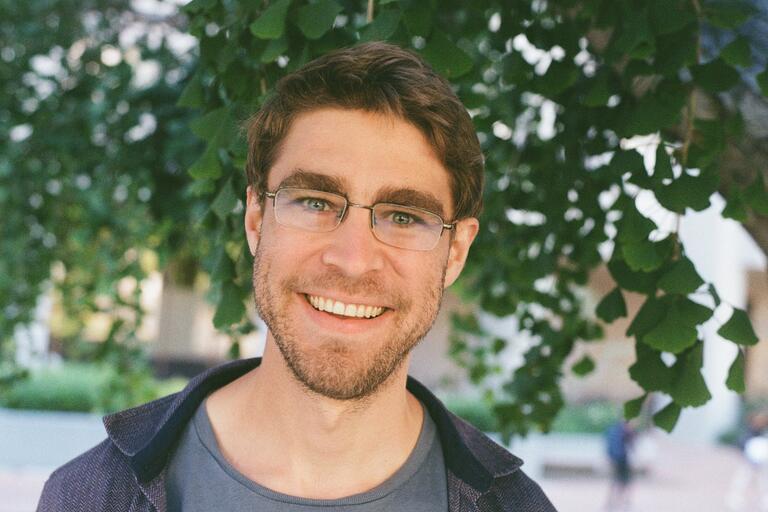

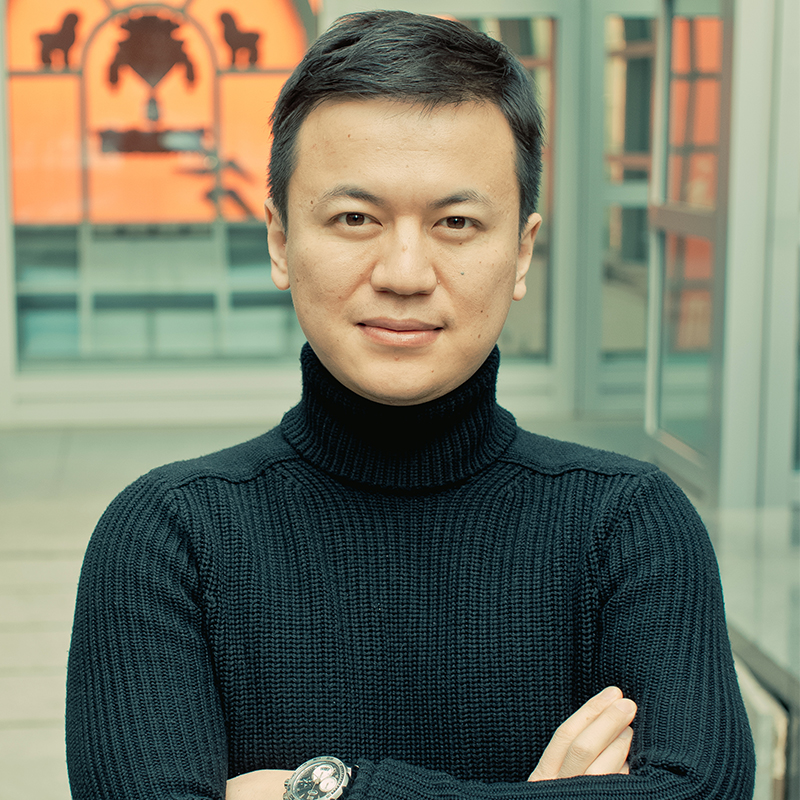
Michael J. Lindsey is an Assistant Professor in the Department of Mathematics at the University of California, Berkeley, and a Faculty Scientist at Lawrence Berkeley National Laboratory. His research focuses on computational methods driven by Numerical Linear Algebra , Optimization , and Randomization , particularly for High-Dimensional Scientific Computing in quantum many-body problems and applied probability. University : UC Berkeley (Assistant Professor since 2022) Lab Affiliation : Mathematics Group at Lawrence Berkeley National Laboratory Email : lindsey@berkeley.edu His work includes Semidefinite Relaxation for quantum and classical problems, Monte Carlo Sampling techniques, and Tensor Networks for high-dimensional functions. He has pioneered Variational Embedding theory with guaranteed energy bounds and scalable solvers for quantum systems. Recent publications span Quantum Chemistry , Machine Learning , and High-Dimensional Probability , with applications to Electronic Structure , Molecular Dynamics , and Optimal Transport . He received the 2024 Hellman Fellowship and the 2019 SIAM Student Paper Prize . Teaching includes graduate and undergraduate courses in numerical analysis and applied mathematics at UC Berkeley and New York University. He also organizes the HDSC Seminar on high-dimensional scientific computing.
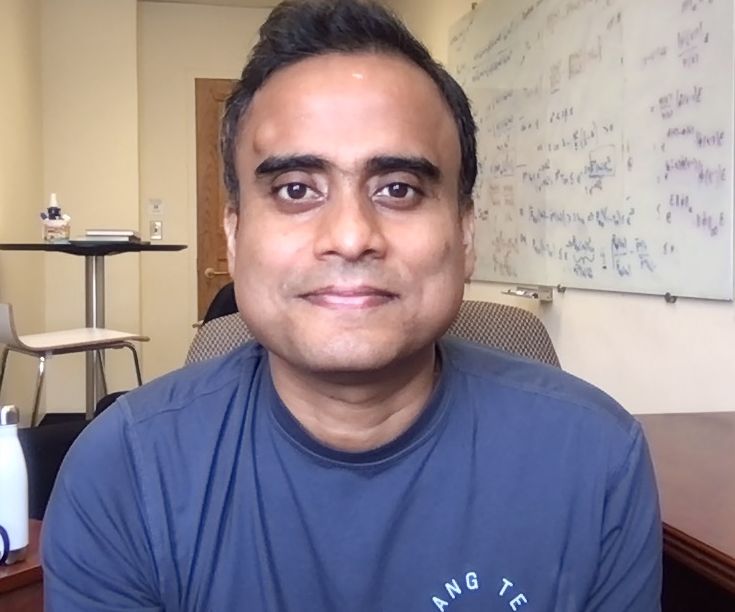
Surya Tapas Tokdar is a Professor of Statistical Science at Duke University and a Faculty Network Member of the Duke Institute for Brain Sciences. His research bridges Bayesian statistics, machine learning, and neuroscience. Ph.D. from Purdue University (2006) Research Interests include neural signal processing, Bayesian density regression, Gaussian process modeling, and quantile regression. He focuses on understanding how statistical methods can decode brain activity patterns and address high-dimensional data challenges. Recent Publications highlight his work on neural multiplexing, Bayesian topic models, and spatial data analysis. His studies often explore how neurons encode information and how statistical tools enhance interpretability. Awards include the Leonard J. Savage Dissertation Award and participation in prestigious Bayesian inference seminars. Grants span projects on neural information preservation, dependent extremes analysis, and gene-environment interactions.
Dr. Bracha Laufer is a senior lecturer at the School of Electrical Engineering , part of the Iby and Aladar Fleischman Faculty of Engineering at Tel Aviv University. Her research focuses on acoustic source localization, speech signal processing, and machine learning techniques for audio engineering. Her recent work explores conformal prediction and manifold-based approaches for robust source localization, deep learning architectures for sound source separation, and simplex geometry in multichannel signal analysis. These publications highlight interdisciplinary applications of machine learning and statistical methods in acoustics. Dr. Laufer's research integrates Bayesian inference , probabilistic graphical models , and uncertainty quantification to address challenges in adverse acoustic environments. She has contributed to advancements in multi-microphone speaker localization and speech inpainting .
Christian Germain is a Professor of Computer Science at Bordeaux Sciences Agro, an engineering school specializing in agronomy. He focuses on information technologies and their applications to agriculture and environmental science, conducting research in image analysis at the IMS laboratory. His work spans remote sensing, embedded agricultural imaging, and digital tool development for vineyards. Key Roles: Co-holder of the AgroTIC business chair (29 corporate sponsors), Scientific Director of DigiLab (open platform for wine-growing experiments). Research Themes: Remote sensing, agricultural imaging systems, covariance pooling in machine learning, and texture analysis for material science. His recent publications highlight collaborations with industry and academic partners, emphasizing applications in vineyard health monitoring, carbon composite modeling, and vine disease detection. Germain’s team utilizes CNNs, Gaussian mixture models, and SAR imaging techniques to advance agricultural and materials engineering. He has contributed to international conferences and journals, integrating computational methods with real-world agricultural challenges, including proximal sensing for crop management and 3D microstructure simulation.
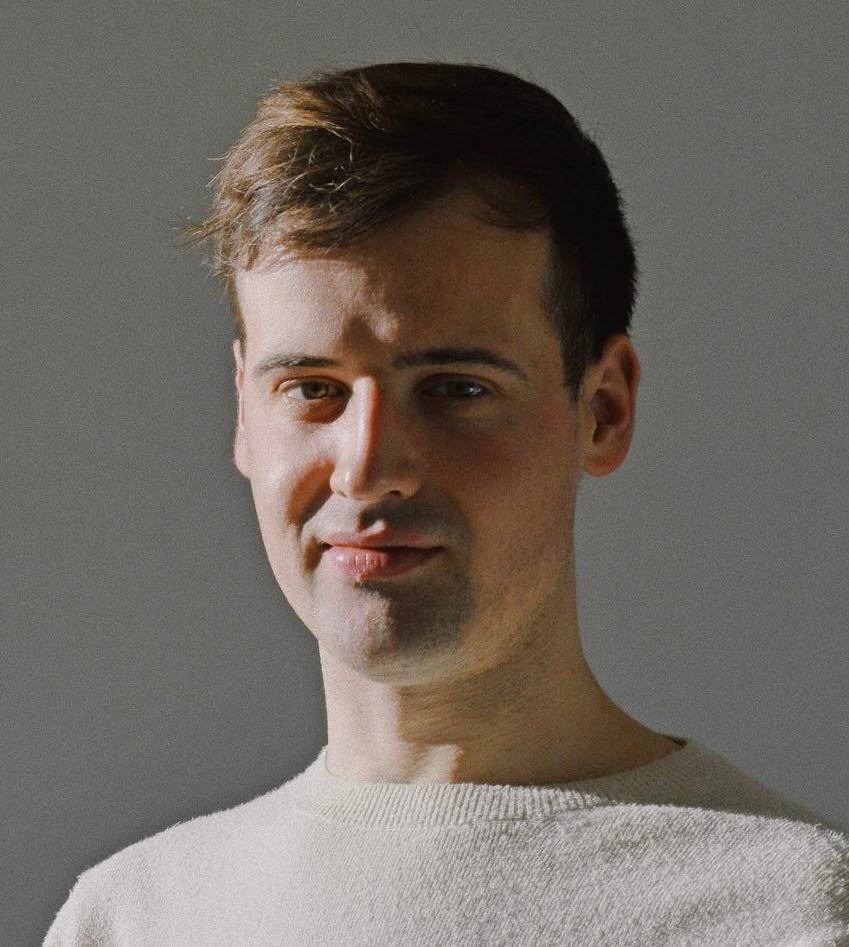
Joe Watson is a Postdoctoral Researcher at the University of Oxford within the Applied Artificial Intelligence Lab at the Oxford Robotics Institute . He earned his PhD in 2024 from the Technical University of Darmstadt , supervised by Prof. Jan Peters, and holds an MEng in Information & Computer Engineering from University of Cambridge . His research focuses on statistical methods for robot learning , particularly the duality between entropy-regularized optimization and Bayesian inference. Key interests include uncertainty quantification , policy optimization , and incorporating structural knowledge into robotics. Scientific contributions include Coherent Soft Imitation Learning (NeurIPS 2023, spotlight) and Monte Carlo Posterior Policy Iteration (CoRL 2022, oral). Recent publications address safe foundation models and tensor motion planning in 2025. 2022 : R:SS Pioneer for robotics research 2016 : Charles Babbage Senior Scholarship at Cambridge He has contributed to open-source projects like i2c and monte-carlo-posterior-policy-iteration , with 534 GitHub contributions in the last year.
Tarik Kelestemur is a roboticist specializing in autonomous systems, with affiliations including Boston Dynamics AI Institute and Northeastern University. His work bridges robotics, artificial intelligence, and computer engineering, focusing on tactile manipulation, 3D semantic understanding, and policy learning frameworks. His research interests include: Robotics Artificial Intelligence Machine Learning Computer Engineering Autonomous Systems Human-Robot Interaction Recent publications highlight advancements in diffusion policies, vision foundation models, and 3D relational object graphs. Tarik received an Outstanding Paper Award Finalist at CoRL 2024 and contributes to open-source robotics projects like point_cloud_proc and icub_arm_imitator .
Dr. Rickard Karlsson works as a Lecturer at Linköping University's Department for Swedish as a Second Language, Rhetoric and Language Support (SAROS) under the Department of Culture and Society (IKOS). His teaching focuses on Swedish language didactics, grammar, and assessment of learner languages, with supervision across academic levels. PhD in Languages and Cultures of Europe Upper Secondary School Teacher in Swedish as a Second Language Research spans empirical analysis of adult language acquisition , historical linguistics , and multilingualism ideologies . Google Scholar publications reveal interdisciplinary contributions to particle filter algorithms and automotive sensor systems from 2001-2025. Notable collaborations include Fredrik Gustafsson and Per-Johan Nordlund. Recent publications (2025-2016) merge automotive engineering and historical Linguistics, covering tire diagnostics, cultural exchange patterns, and vibration-based navigation. This dual expertise reflects his transition from technical research to language education, maintaining academic connections across disciplines.
Manolis Zampetakis is an Assistant Professor of Computer Science at Yale University. Previously, he was a postdoc at UC Berkeley's EECS Department working with Michael Jordan, and earned his PhD from MIT's EECS Department under Constantinos Daskalakis. His research spans Theoretical Machine Learning, Statistics, Optimization, Computational Complexity, Game Theory, and Mechanism Design. He has received the ACM SIGEcom Doctoral Dissertation Award and a Google PhD Fellowship. Current affiliation: Yale University (Assistant Professor) Prior affiliations: UC Berkeley (Postdoc), MIT (PhD student), NTUA (Undergraduate) His research focuses on algorithmic game theory, robust statistics, and optimization challenges in machine learning. He explores computational complexity in multi-player games, truncated linear regression, and strategy-proof mechanisms. Recent work includes backdoor attacks in neural networks and jailbreaking black-box LLMs, with publications in top venues like NeurIPS, COLT, FOCS, and STOC. Notable scientific contributions have been recognized through awards and special issues. He co-organized workshops at FOCS 2018, WALE 2019, and WALE 2022. His students include Anay Mehrotra, Jane Lee, Katerina Mamali, Shuchen Li, and Nikolaos Koumpis, often co-advised with prominent researchers like Amin Karbasi and Tuomas Sandholm.
Matt J. Kusner is an Associate Professor in the Department of Computer Engineering and Software Engineering at Polytechnique Montréal. He holds additional affiliations as a Senior Academic Member at Mila - Quebec Artificial Intelligence Institute and as a Member at the Institute for Data Valorization (IVADO). Previously, he served as an Associate Professor at University College London and the University of Oxford. Professor Kusner's research spans machine learning, with particular focus on causal inference, fairness in algorithms, representation learning, and domain adaptation. His work bridges theoretical foundations with practical applications in natural language processing, algorithmic fairness, and scientific computing domains including plasma physics and renewable energy systems. His research interests include Pattern Analysis and Artificial Intelligence, Algorithms, and Learning and Inference Theories. His publication record shows consistent output across top machine learning venues including NeurIPS, ICML, and ICLR, with recent work trending toward causal machine learning methods and applications in scientific domains. Professor Kusner has 42 publications spanning from 2014 to 2025, demonstrating sustained research productivity. Turner Dissertation Award for best doctoral dissertation in Computer Science & Engineering Professor Kusner received his PhD in Computer Science from Washington University in St. Louis in 2016 under Kilian Weinberger. His work has been featured in major media outlets including The Guardian, Forbes, and the Harvard Business Review, and he has presented at prestigious institutions including the Federal Reserve Banks, Cambridge Centre for Mathematical Sciences, and the Royal Society.
Raghav Gnanasambandam is an Assistant Professor in the Industrial & Manufacturing Engineering department at Florida A&M University-Florida State University College of Engineering. He holds a Ph.D. in Industrial and Systems Engineering from Virginia Tech (2024) and a dual bachelor's/master's degree in Mechanical Engineering from IIT Madras (2019). His research focuses on Scientific Machine Learning, Surrogate Modeling, Uncertainty Quantification, and Metal Additive Manufacturing. Educational Background: Ph.D., Industrial and Systems Engineering, Virginia Tech (2024) Dual Degree (B.S./M.S.), Mechanical Engineering, IIT Madras (2019) He develops physics-informed machine learning techniques for digital twins in manufacturing, with applications in laser scan path optimization, thermal modeling, and multi-physics simulations. His work combines deep learning with physical constraints to improve process efficiency and predictive accuracy. Scientific Awards: ISE Outstanding Doctoral Student, Virginia Tech, 2023 As principal investigator of the M2M Research Group, he leads projects supported by Amazon Web Services. His teaching includes courses in manufacturing systems and machine learning applications.
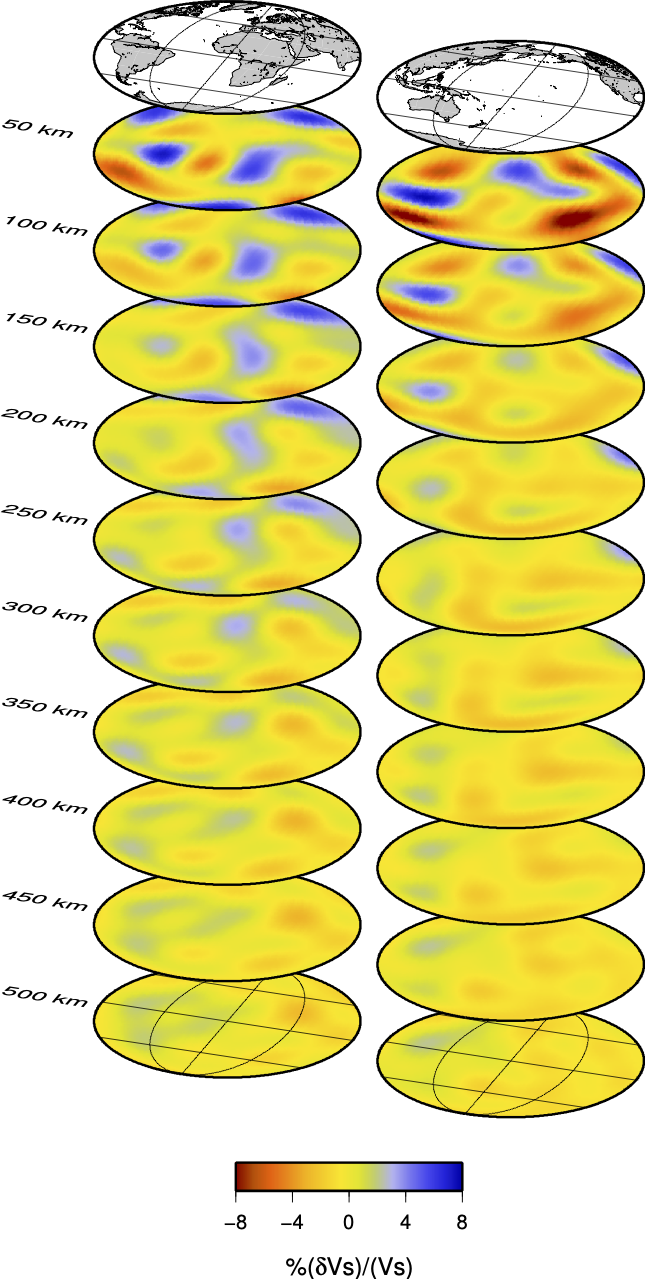
Dr Andrew Valentine is currently an Associate Professor in the Department of Earth Sciences at Durham University, a position he has held since 2023. Previously, he served as Assistant Professor at Durham (2021-2023), Fellow at the Research School of Earth Sciences at The Australian National University (2016-2021), and Postdoctoral Researcher at Utrecht University (2011-2016). He holds significant leadership roles including Director of Education for the Department of Earth Sciences (2025-present) and Secretary of the IUGG Commission on Mathematical Geophysics (2023-present). DPhil in Earth Sciences, University of Oxford (2006-2010), supervised by Prof. J.H. Woodhouse BA/MSci in Natural Sciences (Physics), University of Cambridge (2002-2006) Valentine's research focuses on mathematical and statistical tools for extracting information from observational data, with expertise in geophysical inverse theory, global seismology, and machine learning applications in Earth Sciences. His work bridges theoretical mathematics with practical geophysical problems, developing novel approaches to data analysis and interpretation. He has made significant contributions to probabilistic inversion methods, seismic tomography, and the application of deep learning to geoscience problems. Analysis of his recent publications reveals a strong trend toward integrating machine learning with traditional geophysical methods. His work spans from theoretical developments in Bayesian inference and optimal transport to practical applications in seismic modeling, mantle dynamics, and volcanic processes. A notable pattern is his focus on uncertainty quantification in geophysical models and the development of efficient computational frameworks for complex inverse problems. His research increasingly incorporates neural networks and other AI techniques to address longstanding challenges in Earth Sciences. Harold Jeffreys Lectureship, Royal Astronomical Society (2025) ARC DECRA Fellowship (2018-2021) Multiple Geophysical Journal International Outstanding Reviewer citations Geophysical Journal International Student Author Award (2010) Valentine has supervised numerous PhD students including Buse Turunçtur, Matthias Scheiter, Suzanne Atkins, Paul Käufl, and Ralph de Wit, with thesis topics spanning sparsity-constrained inversion, Monte Carlo methods, mantle convection patterns, and probabilistic source inversion. His supervision extends to current students Arijit Chakraborty, Charlotte Aulton, Hanna-Riia Allas, Isaac Abbott, and Ugurcan Cetiner. He has served on various editorial boards including as Editor for Geophysical Journal International (2020-2025) and has been involved in major collaborative projects through organizations like CIG. As Director of InLab since 2018, Valentine leads a research group focused on developing innovative computational approaches to geophysical problems. His team has produced influential open-source software like pyprop8 for seismic modeling and has pioneered applications of deep learning to problems ranging from glacial isostatic adjustment to volcanic glass properties. The group maintains strong international collaborations, particularly with researchers at The Australian National University where Valentine holds an Honorary Senior Lecturer position (2021-2025).
Ami Wiesel is a Professor at The Rachel and Selim Benin School of Computer Science and Engineering at The Hebrew University of Jerusalem. His research focuses on statistical signal processing, machine learning, and covariance estimation. Previously, he completed his postdoctoral studies at the University of Michigan with Professor Alfred Hero, earned his PhD in Electrical Engineering from Technion under Professors Yonina Eldar and Shlomo Shamai, and obtained his MSc and BSc in Electrical Engineering from Tel Aviv University. His research interests include robust covariance estimation , statistical learning , signal detection , and MIMO communications . Wiesel has made significant contributions to the field of structured covariance estimation, particularly in elliptical distributions and Tyler's estimator. His work bridges theoretical statistics with practical applications in radar systems, wireless communications, and hyperspectral imaging. Wiesel's publications show a clear trend toward integrating deep learning with traditional statistical signal processing methods. His recent work explores unbiased estimation using neural networks, fair principal component analysis, and deep learning applications for target detection with constant false alarm rate. His research spans theoretical foundations in covariance estimation to practical implementations in radar and communications systems. Among his notable scientific achievements are: Young Author Best Paper Award (2019) for 'Learning to Detect' Young Author Best Paper Award (2006) for 'Linear precoding via conic optimization for fixed MIMO receivers' Student Paper Award (2017) for 'Deep MIMO detection' Wiesel has advised numerous graduate students who have gone on to publish significant work in the field. His research has been supported by various grants focusing on statistical signal processing, machine learning applications, and radar systems. His monograph 'Structured Robust Covariance Estimation' (2015) has become a reference in the field. He maintains an active research group focusing on the intersection of statistical learning and signal processing, with applications in communications, radar, and medical imaging.
Yang Li serves as Associate Professor of Marketing and Associate Dean for the MBA Program at Cheung Kong Graduate School of Business (CKGSB). Holding a PhD in Marketing from Columbia Business School alongside dual master's and bachelor's degrees from Columbia and Peking University respectively, he bridges advanced statistical methodologies with practical business applications. His research centers on statistical machine learning and Bayesian nonparametrics applied to consumer behavior analysis, with specialization in online personalization, text mining, and choice modeling. Recent work demonstrates significant focus on fragmented attention economies, ethical AI frameworks, and NFT network dynamics, reflecting contemporary digital market challenges. Management Science Marketing Science Journal of Marketing Research Journal of Consumer Research Harvard Business Review Professor Li's publications reveal evolving expertise from foundational pricing elasticity studies toward cutting-edge AI applications in consumer contexts. His work increasingly integrates generative models and graph neural networks to decode complex consumer collection behaviors and digital ecosystem dynamics. Scientific recognition includes being a Finalist for the 2021 Paul E. Green Best Paper Award. Industry impact is demonstrated through executive education programs and strategic consultancies with Tencent, Haier, and Tmall. As Associate Dean for MBA Programs, he oversees curriculum development while maintaining active corporate governance roles on boards of publicly traded companies across China and Hong Kong, directly applying his research insights to strategic decision-making in digital transformation initiatives.
Jean-René Cudell is a Professor at the University of Liège's Department of Astrophysics, Geophysics and Oceanography. His academic affiliations include: Current: University of Liège (Professor) Past: University of Wisconsin–Madison (Research Assistant, 1983-1987) McGill University (PostDoc, 1993-1995) Brown University (Visiting Researcher, 1995) His research spans fundamental physics domains with particular emphasis on: Gravitational wave astrophysics : Developing detection algorithms for LIGO-Virgo collaborations Particle cosmology : Investigating dark matter and cosmic anisotropies Quantum field theory : Studying strong-interaction physics and scattering models Recent publications demonstrate three primary research arcs: (1) gravitational lensing and detector characterization for Advanced LIGO/Virgo; (2) machine learning approaches for early inspiral detection; and (3) unitarisation models for high-energy particle collisions. His 265 publications show consistent focus on theoretical and observational aspects of extreme astrophysical phenomena. Professor Cudell maintains active involvement in large-scale physics collaborations, contributing to gravitational wave searches and theoretical particle physics without recorded awards or formal research lab infrastructure.
Sinho Chewi is an Assistant Professor of Statistics and Data Science at Yale University, where he conducts research at the intersection of mathematics, statistics, and machine learning. His work focuses on theoretical aspects of computational statistics, particularly leveraging optimal transport theory for solving complex problems in sampling and inference. Chewi earned his B.S. in Engineering Mathematics and Statistics from the University of California, Berkeley in 2018, followed by a PhD in Mathematics and Statistics from the Massachusetts Institute of Technology in 2023 under the supervision of Philippe Rigollet. Prior to joining Yale, he was a postdoctoral researcher at the Institute for Advanced Study during the 2023-2024 academic year. His research interests span optimal transport theory , log-concave sampling , variational inference , and theoretical foundations of machine learning . Chewi is currently authoring a comprehensive book on the complexity of log-concave sampling, building on his extensive publication record. His work bridges theoretical mathematics with practical applications in statistical computing and artificial intelligence. Analysis of Chewi's publication record reveals a strong focus on developing rigorous mathematical frameworks for sampling algorithms, with particular emphasis on complexity analysis, convergence guarantees, and connections between functional inequalities and optimization. His recent work extends into diffusion models, neural network theory, and parallel sampling algorithms, demonstrating both depth in core statistical theory and breadth across machine learning applications. ICLR 2023 (Notable Top 5%) ALT 2023 (Best Student Paper) NeurIPS 2021 (Spotlight) ICLR 2025 DeLTA Workshop (Best Short Paper Award) Chewi has received significant research support through his postdoctoral position at the Institute for Advanced Study and collaborations with leading researchers at institutions including MIT, NYU, and Microsoft Research. His teaching portfolio includes advanced courses in optimization techniques and sampling methods, reflecting his expertise in theoretical foundations of machine learning algorithms.